
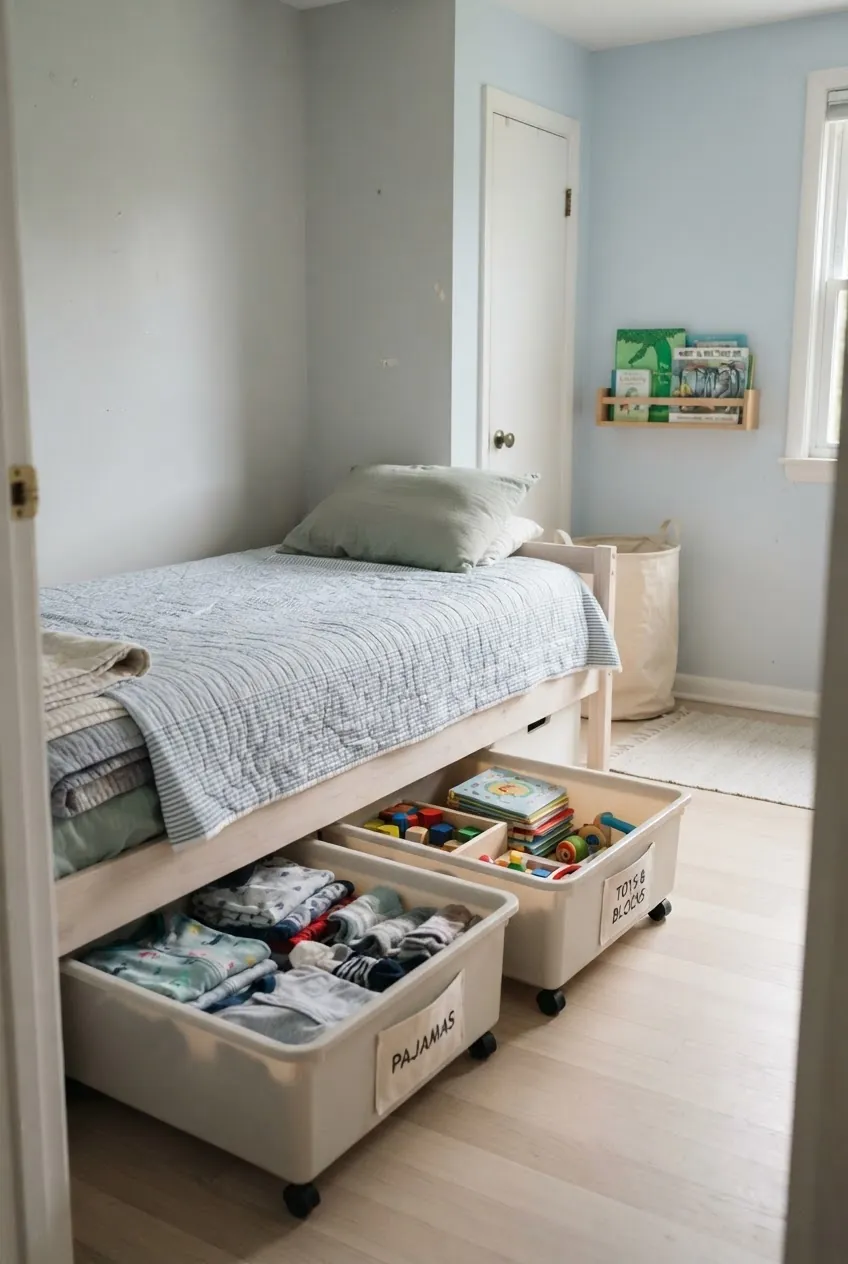
Under bed storage can make a small kids room feel calmer, but only when it is treated like real storage instead of a hiding place. The space under the bed is easy to waste because it looks large from the doorway and then turns into a dusty pile of mismatched bins, missing toys, and clothes nobody can reach. In a child’s bedroom, the best system is shallow, labeled, easy to pull out, and limited to categories that make sense for a small room.
If you are figuring out how to use under bed storage in a small kids room, start with one practical question: what needs to leave the floor every day? For some families, that is toy storage. For others, it is extra clothes storage, out-of-season bedding, craft supplies, or bulky dress-up items. The answer matters because a daily-use drawer needs handles and wheels, while seasonal storage can be lidded, zipped, or tucked farther back.
Measure The Clearance Before Buying Anything
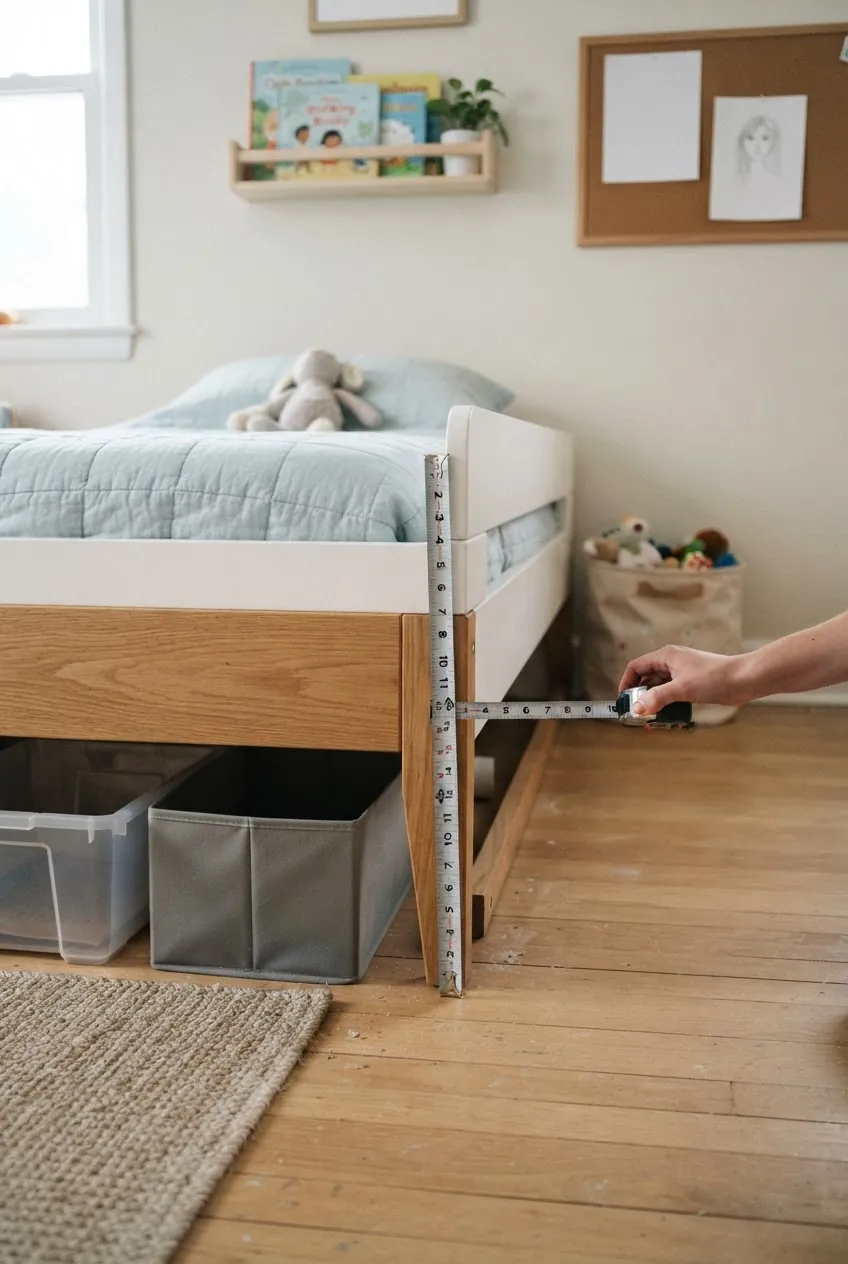
The first mistake is buying cute bins before measuring the bed. Measure from the floor to the lowest part of the bed frame, not just the mattress edge. Then subtract a little space so the bin can slide without scraping. Check the width between bed legs, the depth from the side of the bed to the wall, and whether a rug makes rolling bins harder to move.
For a small kids room, shallow storage usually works better than deep storage. A shallow drawer lets a child see what is inside. A deep bin may hold more, but it often becomes a second closet with no memory. If your child cannot pull it out, open it, find the item, and push it back without help, it is not daily storage.
Use Rolling Drawers For Everyday Items
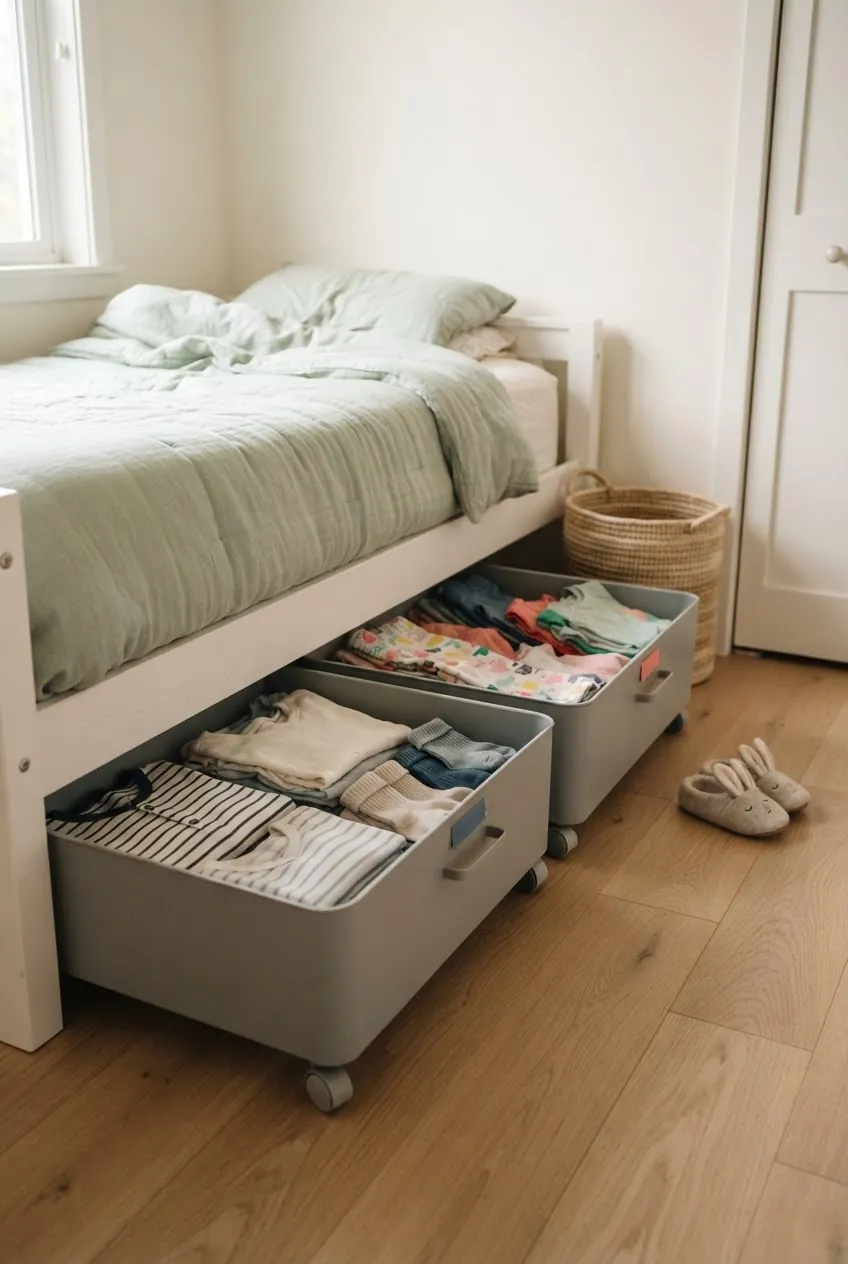
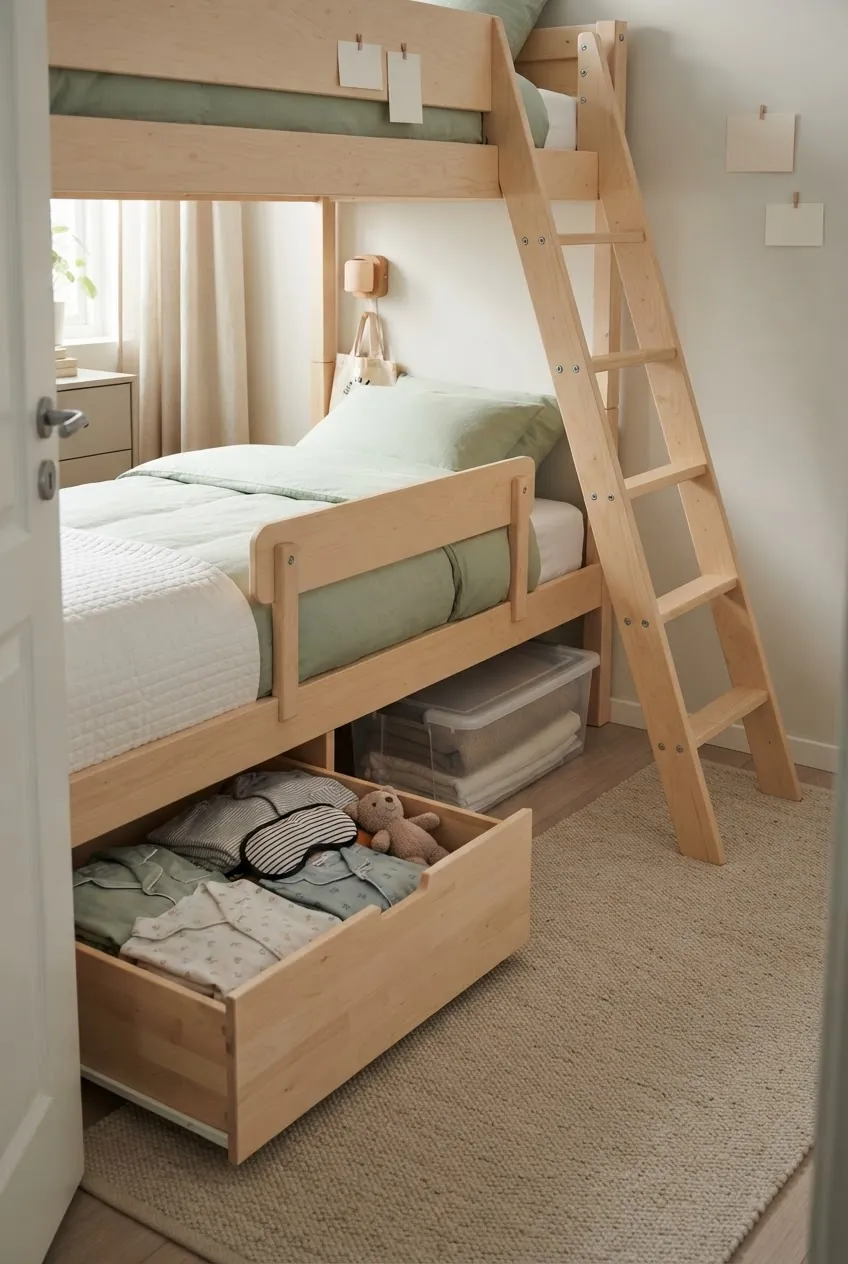
Everyday under bed storage should behave like a low dresser drawer. That means a handle, wheels or smooth glides, and a category narrow enough that the contents do not turn into layers. Pajamas, socks, leggings, dress-up clothes, train tracks, blocks, and favorite small toy sets can work well. Random overflow does not.
A good rule is one drawer, one job. If one drawer holds pajamas, keep it pajamas. If one drawer holds building toys, do not add stuffed animals and hair accessories because there is still space. Empty space is not a problem. Mixed categories are the problem because they make cleanup harder for kids and sorting harder for parents.
Choose Lidded Bins For Seasonal Storage
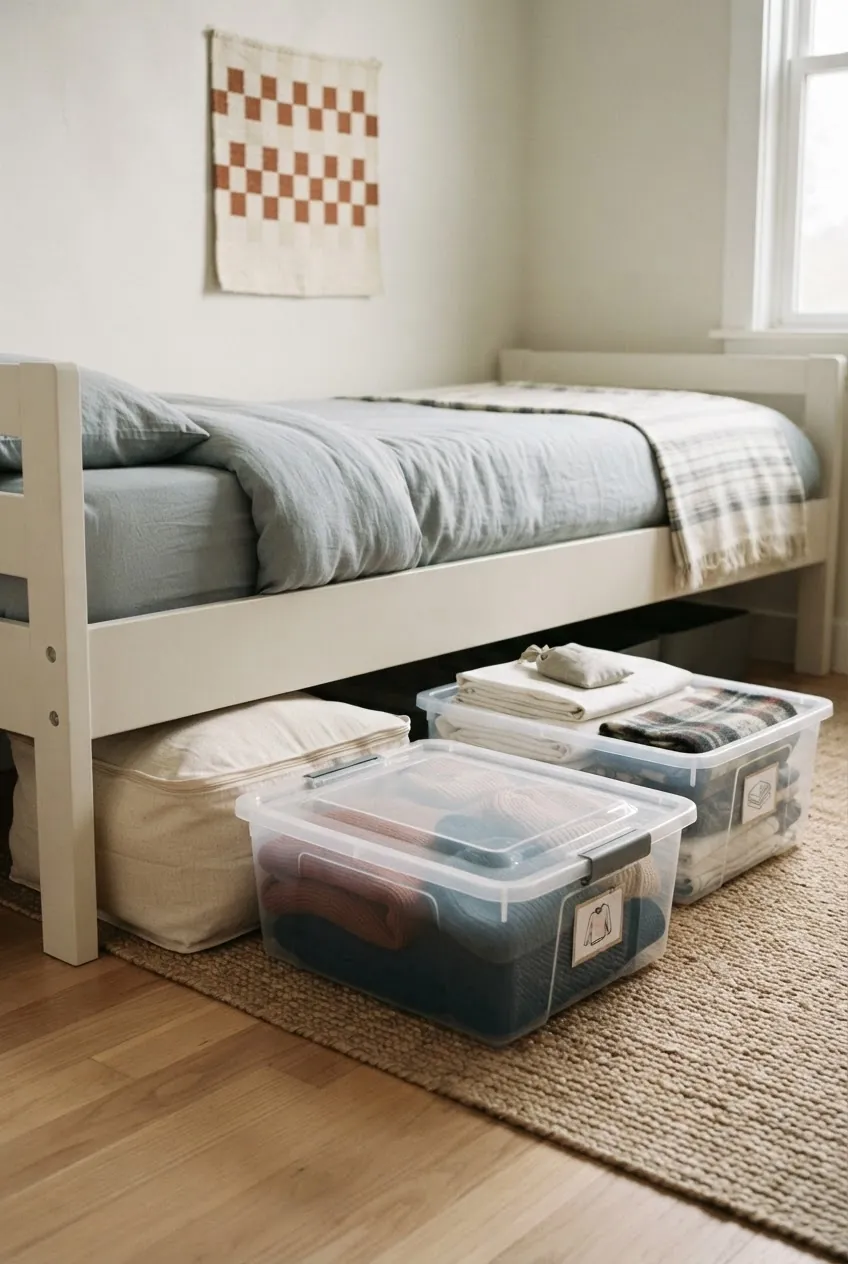
Not everything under the bed needs to be touched daily. Lidded bins, zip cases, and breathable fabric bags are better for seasonal clothes, extra bedding, sentimental keepsakes, spare blankets, and costumes that only come out occasionally. These items can sit farther back because they are not part of the morning or bedtime routine.
Clear lids help if your child is old enough to identify contents visually. Picture labels help younger kids. Fabric bags are useful for linens and soft items, but avoid overstuffing them until they bulge and snag. The point of small space storage is not to pack every inch. It is to make the room easier to reset.
Make Bunk Bed Storage Easy To Reach
Bunk beds create more floor space, but they can make storage awkward if the lower bed blocks drawers or the ladder sits in front of the only pull-out area. Before adding bins, test how far each drawer needs to open. If a child has to move the ladder, crawl under the bed, or drag a heavy bin sideways, the system will fail.
For bunk bed storage, divide by access. The easiest side can hold daily pajamas, socks, or toys. The harder-to-reach back area should hold seasonal clothes, extra bedding, or rotation items. Keep the ladder side clear so bedtime does not become a pileup of bins, blankets, and shoes.
Use Under Bed Space For Toy Rotation
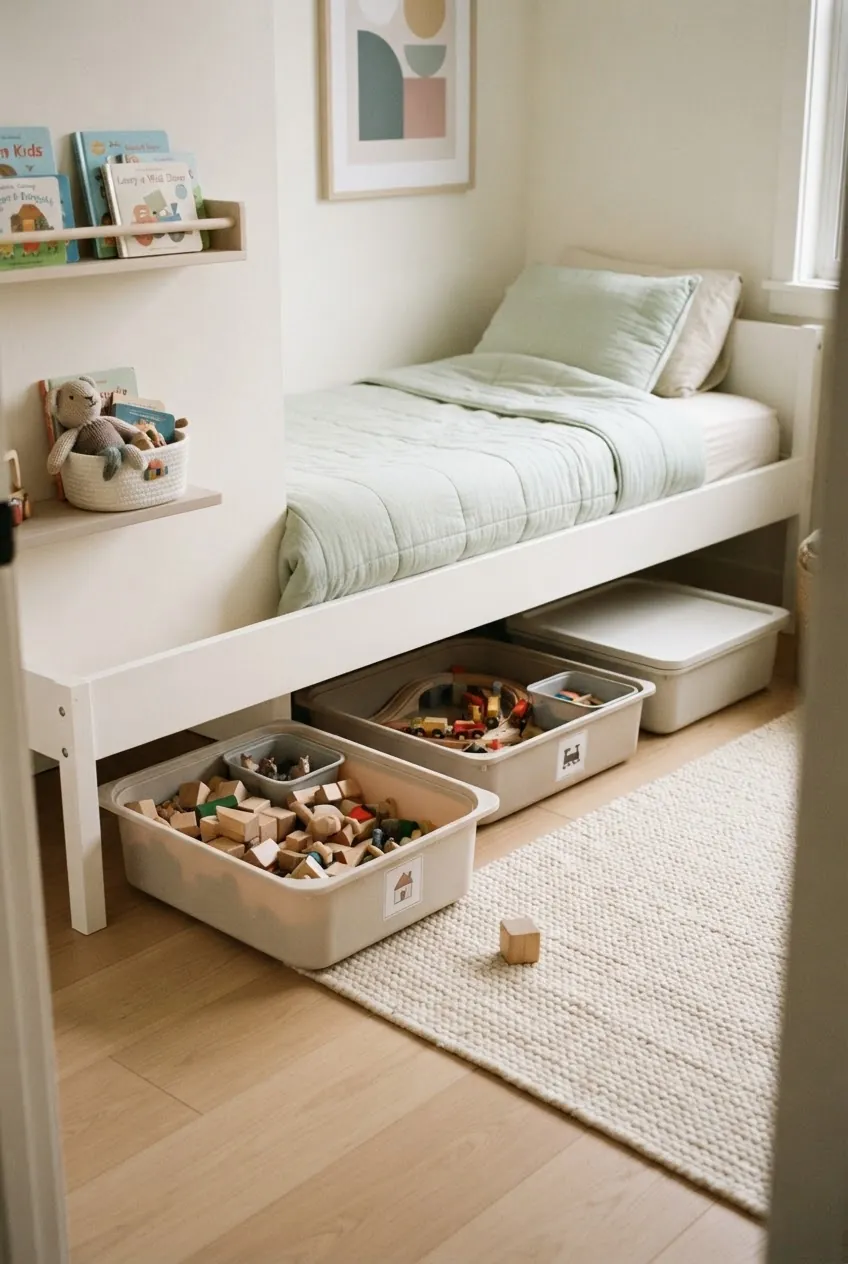
Under bed storage is perfect for toy rotation because it keeps extra toys nearby but not constantly visible. Choose one or two active toy bins for the room and place the rest in lidded under-bed containers. When the room starts feeling messy or the kids stop using what is out, swap categories instead of buying more organizers.
Rotation works especially well for blocks, trains, pretend play, dolls, puzzles, and craft kits. Keep tiny pieces in smaller boxes inside the main bin so one missing lid does not turn the whole drawer into a junk tray. For younger kids, use a picture label. For older kids, use a simple written label and let them help decide which bin comes out next.
Keep The System Clean And Kid-Friendly
Under bed storage collects dust faster than a dresser. Use containers that close fully for soft goods, and vacuum under the bed before switching seasonal items. If the room has a damp wall, poor airflow, or a bed pushed tightly into a corner, be careful with fabric bags and stored bedding. Leave breathing room and check the bins regularly.
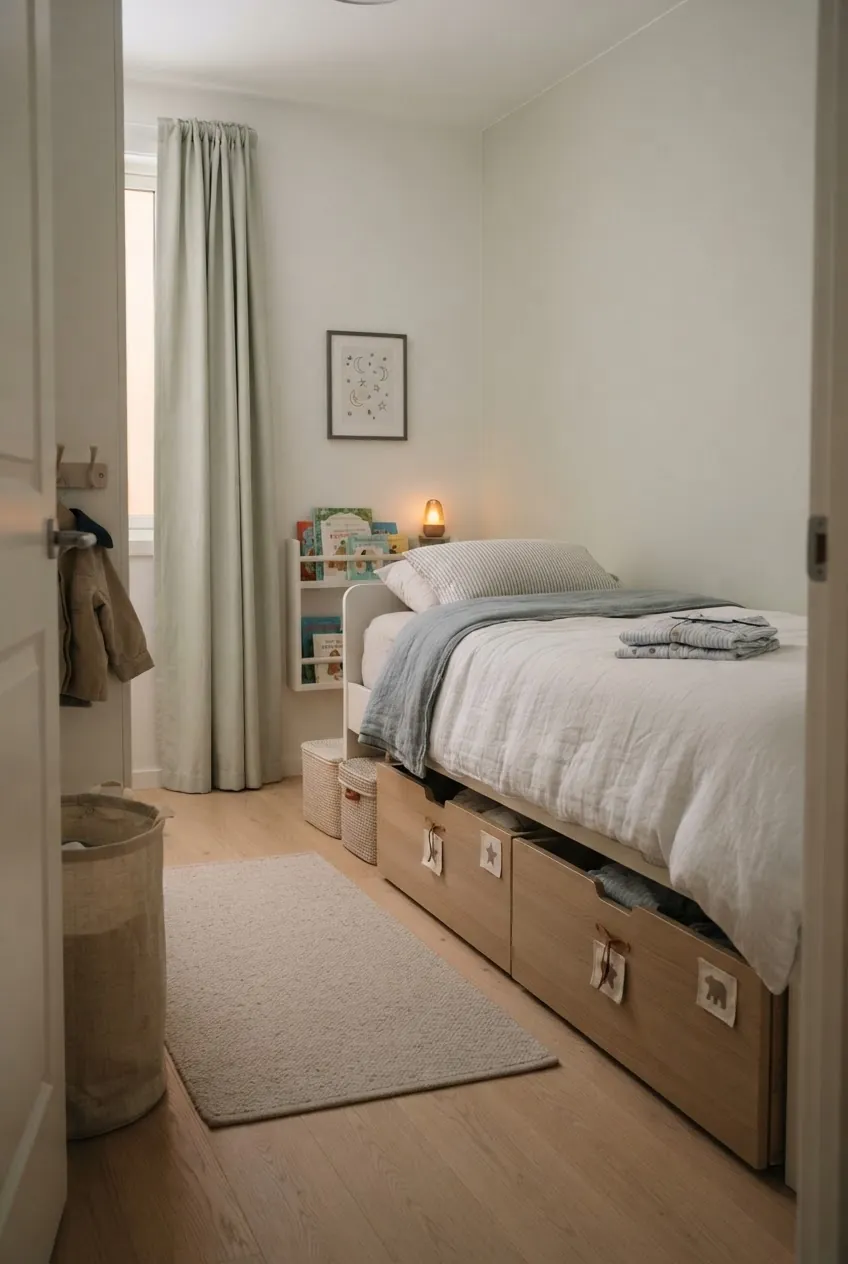
- Best for daily use: rolling drawers, open-front drawers, or low bins with sturdy handles.
- Best for seasonal use: lidded bins, zip cases, breathable fabric bags, or vacuum bags inside a protective tote.
- Best for kids: picture labels, color-coded handles, lightweight contents, and categories they already understand.
- Avoid: heavy bins, mixed categories, lids that pinch, bins taller than the clearance, and anything that blocks the walkway.
The best kids bedroom storage does not ask children to act like tiny professional organizers. It gives them fewer decisions, easier access, and clear homes for the things they use most. Under the bed can be a powerful storage zone in a small kids room, but only if it stays simple enough to use on a normal school night.