
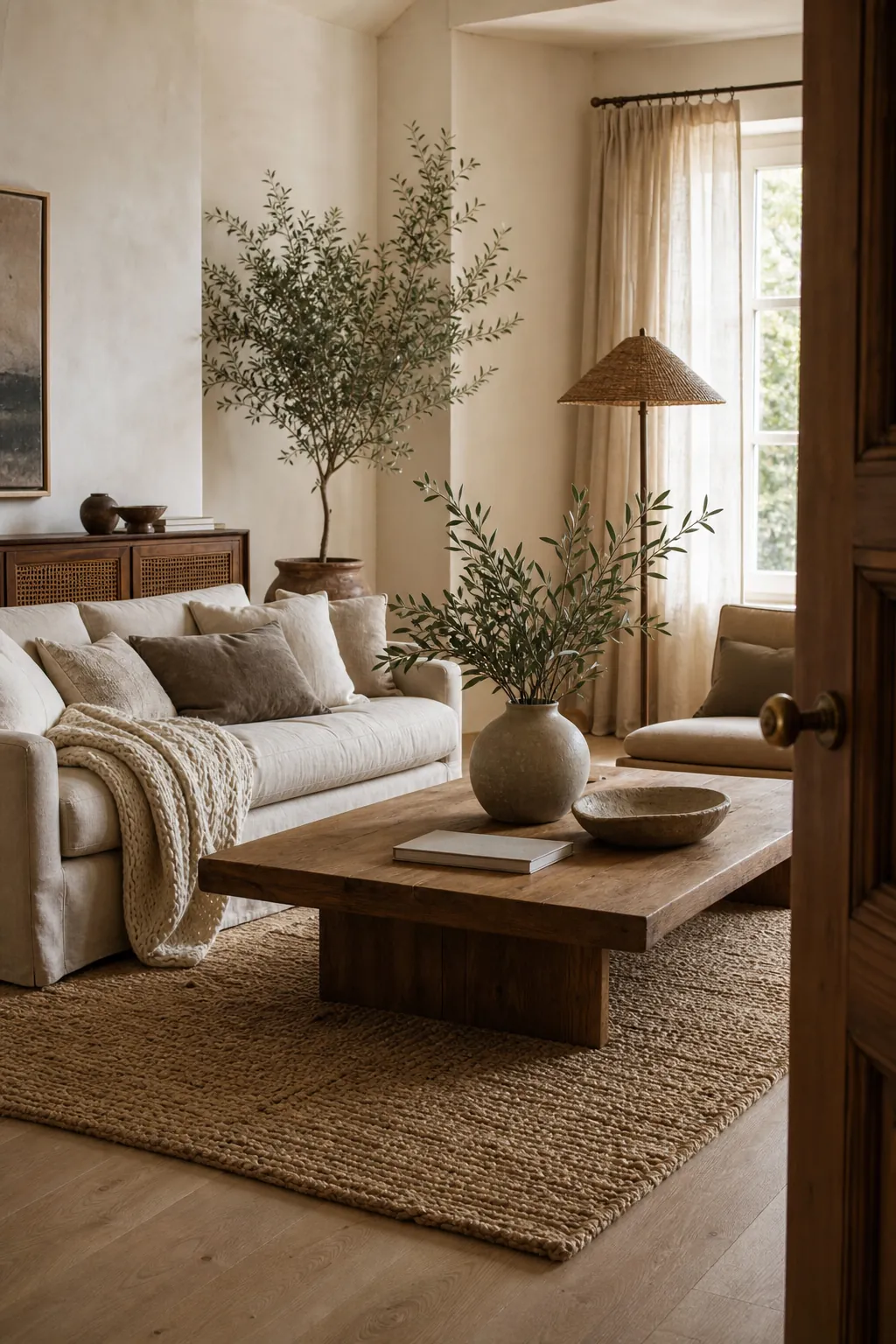
A neutral room usually does not feel cold because it is neutral. It feels cold because the room is missing touchable contrast: nubby fabric against smooth walls, wood grain against pale upholstery, woven fibers beside clean lines, and warm light moving across those surfaces.
That is good news. You do not have to repaint the whole room, buy a bright sofa, or abandon the calm look you wanted. A warm neutral room is built through layers: tone, texture, natural materials, and lighting. When those layers are right, beige decor, cream upholstery, greige walls, and quiet earthy interiors can feel soft and lived-in instead of flat.
Warmth Starts With Undertone, Not More Stuff
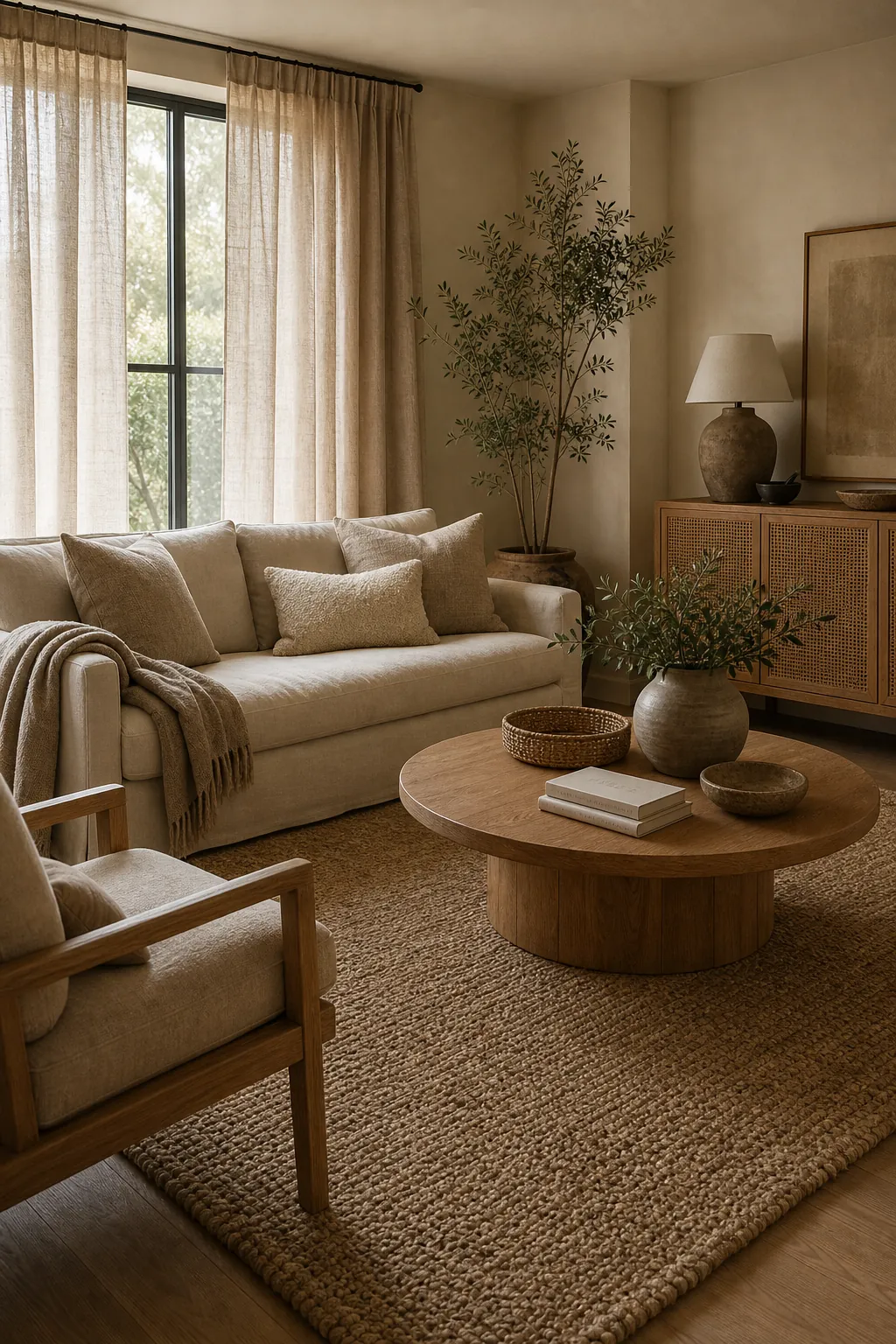
The fastest way to diagnose a chilly neutral room is to look at the undertones. A white wall with blue undertones, a gray rug, chrome details, and cool LED bulbs can make even expensive furniture feel like a waiting room. A room with cream, oatmeal, taupe, clay, warm gray, natural oak, and soft lamp light reads differently before you add a single new accessory.
For warm neutral decor, keep the largest areas in the same family. If your walls are creamy, choose textiles that lean ivory, flax, mushroom, sand, or warm taupe. If your sofa is a cool gray, pull the room warmer with camel leather, walnut wood, woven shades, and a rug that contains beige, tan, and soft brown. The goal is not to match everything. The goal is to make the room feel related.
A useful rule: let 70 to 80 percent of the room stay quiet, then use the remaining 20 to 30 percent for deeper natural tones. That could be a walnut coffee table, a tobacco leather chair, a dark woven basket, an aged brass lamp, or a piece of textured art in a wood frame. This keeps neutral home decor calm while giving the eye enough depth to rest on.
Begin With the Biggest Texture in the Room
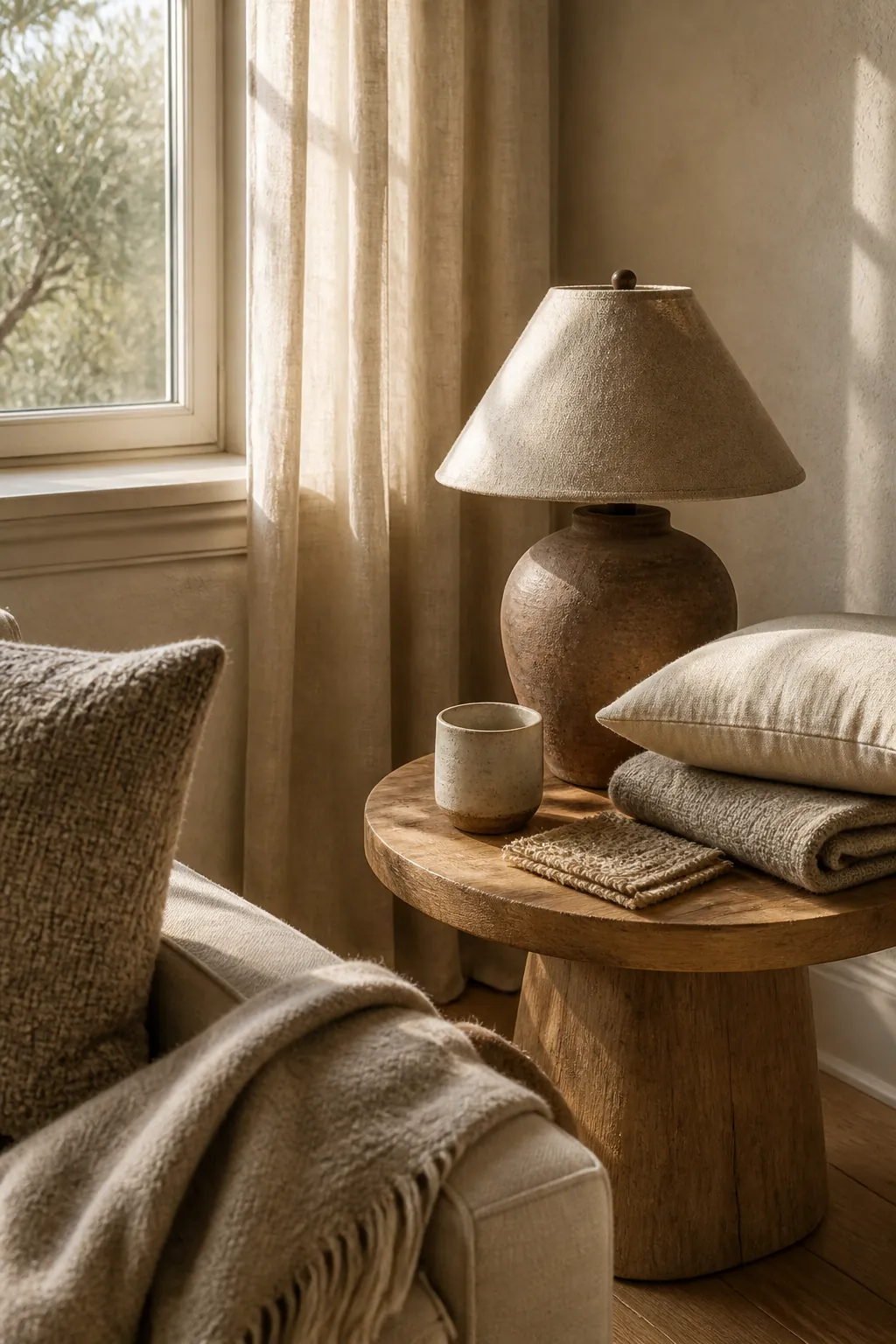
Small accents help, but the biggest textures set the mood. In a living room, that usually means the rug, curtains, sofa fabric, armchairs, and coffee table. If those surfaces are all smooth, pale, and low-contrast, the room will still feel thin even if you add five throw pillows.
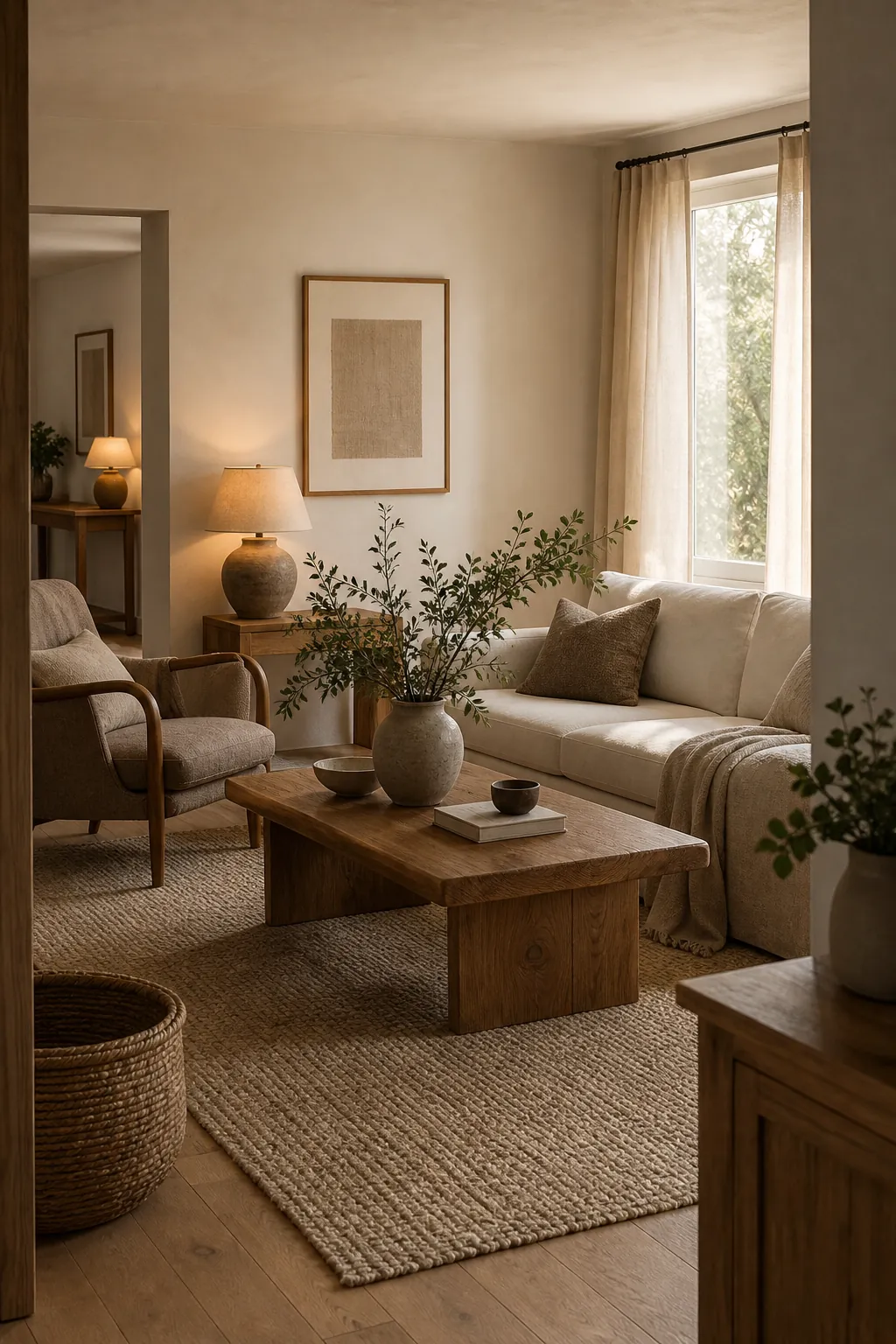
Start with the floor. A larger rug in wool, jute, sisal, or a wool-jute blend can make a neutral room feel warmer instantly because it covers the hard reflective plane underfoot. Choose a rug large enough for at least the front legs of the main seating pieces to sit on it. A rug that is too small makes the room feel scattered; a generous rug makes the room feel settled.
Then look at the windows. Bare windows can make a room feel exposed and unfinished, especially if the window frame is sharp or the outside light is cool. Linen curtains, cotton-linen panels, bamboo shades, woven wood shades, or relaxed Roman shades soften the edges. They also bring vertical texture into the room, which matters because too many neutral rooms only have texture at sofa height.
- If the room feels echoey: use curtains, a thicker rug, and upholstered pieces to absorb harshness.
- If the room feels flat: mix tight weaves with looser weaves, smooth ceramics with rough baskets, and matte wood with soft fabric.
- If the room feels cluttered: reduce the number of objects, but increase the material contrast of the few you keep.
Use Wood Decor as Structure, Not Sprinkles
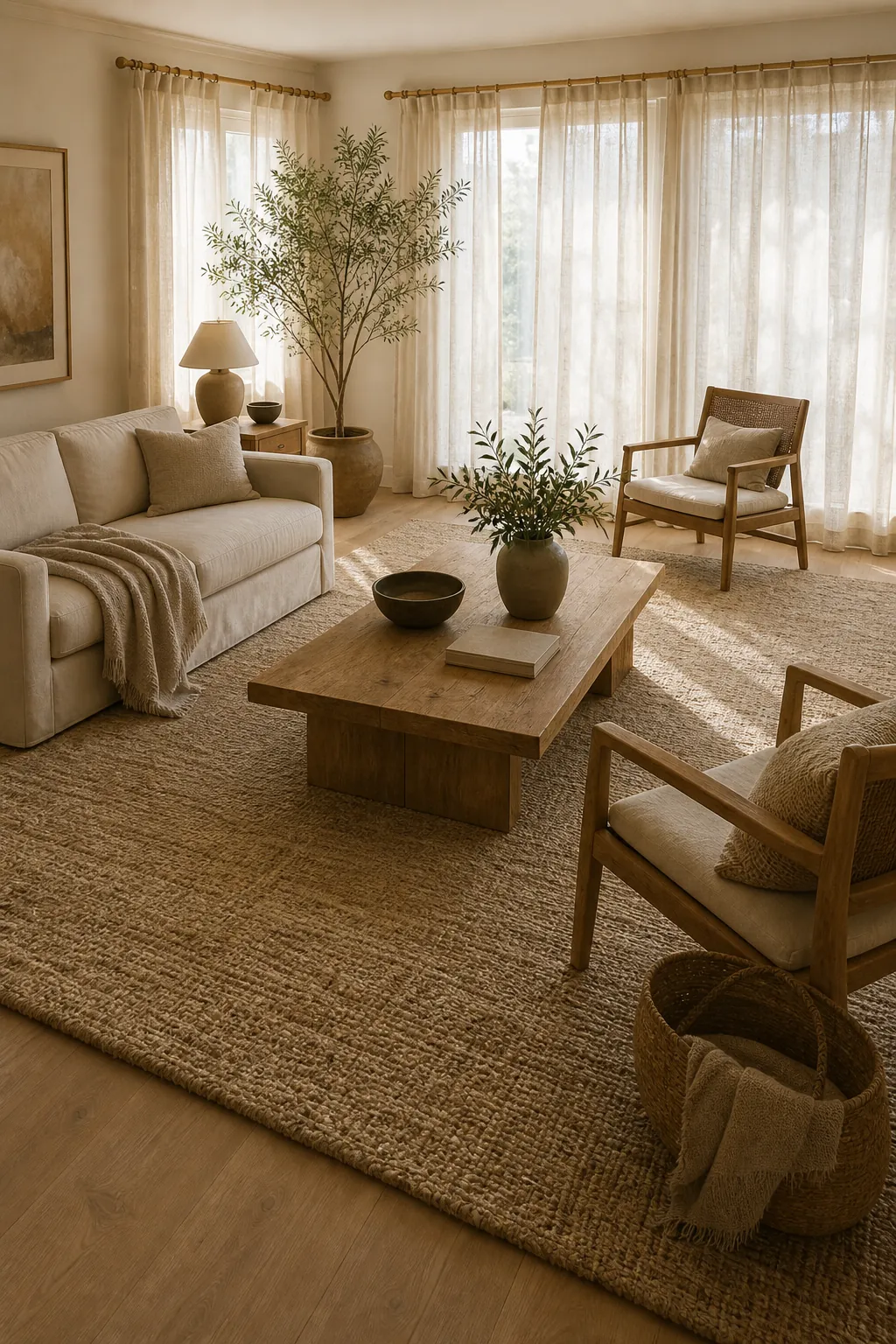
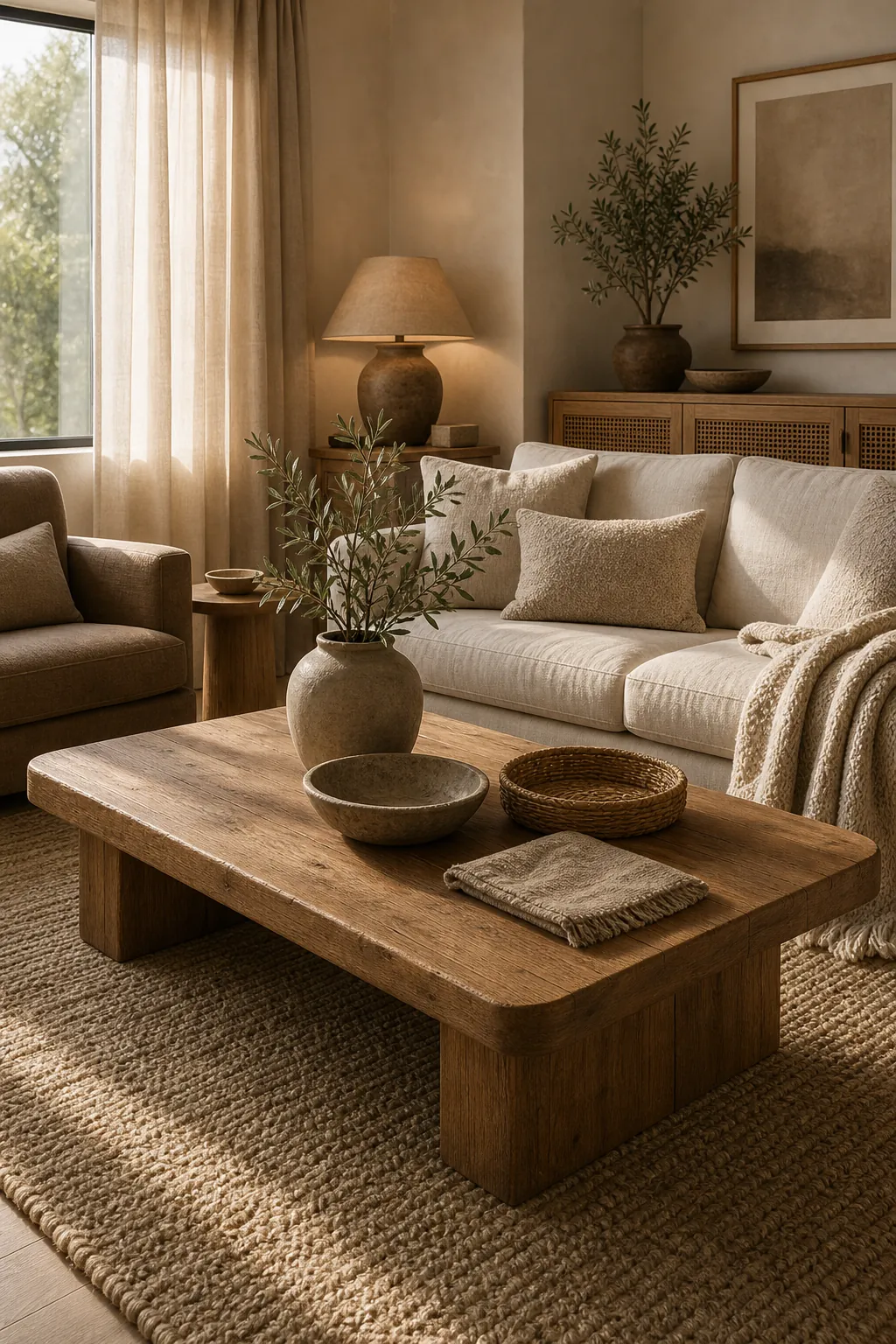
Wood is one of the easiest ways to warm a neutral room, but it needs enough visual weight to matter. One tiny wooden bowl on a white shelf will not change the temperature of the room. A wood coffee table, a pair of oak side tables, a walnut picture frame, a cane cabinet, or floating shelves with visible grain can.
Think of wood decor as the room’s quiet anchor. Pale oak feels airy and organic modern. Walnut feels richer and more grounded. Reclaimed wood adds age and irregularity. Bamboo, cane, and rattan introduce a lighter natural home decor feeling without making the room heavy. If your room already has a lot of beige decor, wood keeps beige from becoming bland because grain creates movement.
A practical test: stand in the doorway and squint. Can you see a warm wood tone from across the room? If not, the wood is probably too small, too pale, or too hidden. Add one medium-to-large wood piece before buying more little accessories.
Layer Textiles by Feel, Not Just Color
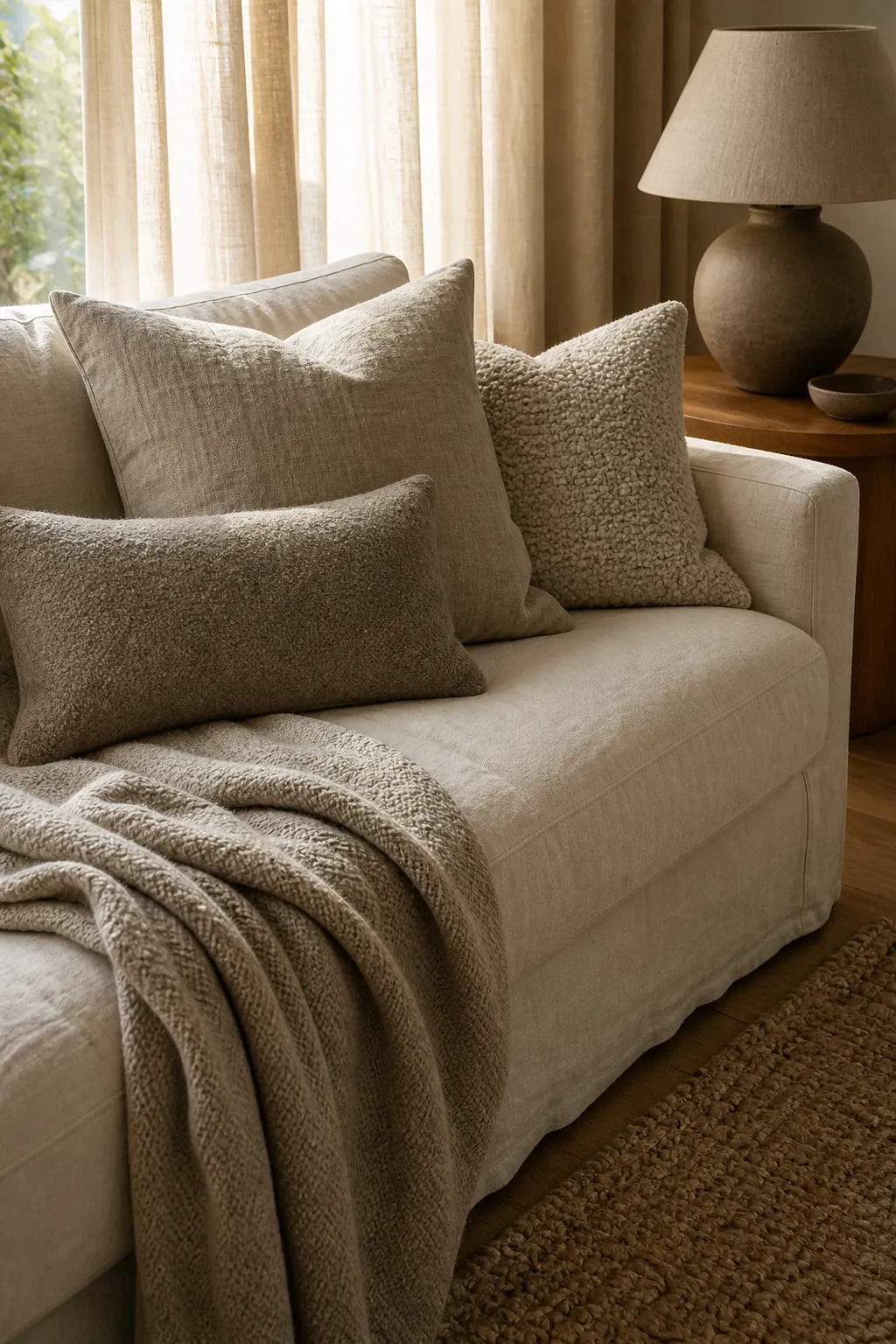
Many neutral rooms have pillows, but they still do not feel cozy because every fabric has the same finish. Smooth cotton on smooth cotton is technically layered, but it does not create much warmth. A better mix is linen, boucle, wool, velvet, slub cotton, muslin, raw silk, or a chunky knit. The color can stay quiet; the hand-feel should change.
On a sofa, try three levels of texture: a base fabric such as linen or cotton, a raised texture such as boucle or nubby wool, and a relaxed layer such as a throw blanket with fringe, waffle weave, or visible knit. Keep the palette soft, but vary the scale. A small woven pillow, a larger lumbar cushion, and a loose throw will look more natural than identical square pillows lined up like samples.
This is especially useful for a cozy living room that still needs to feel tidy. Warm minimalist decor is not empty; it is selective. The difference is that each object earns its place through material, shape, or comfort. One excellent wool throw can do more than four thin synthetic blankets. Two oversized linen pillows can feel calmer than a pile of small decorative cushions.
Add Woven and Handmade Surfaces
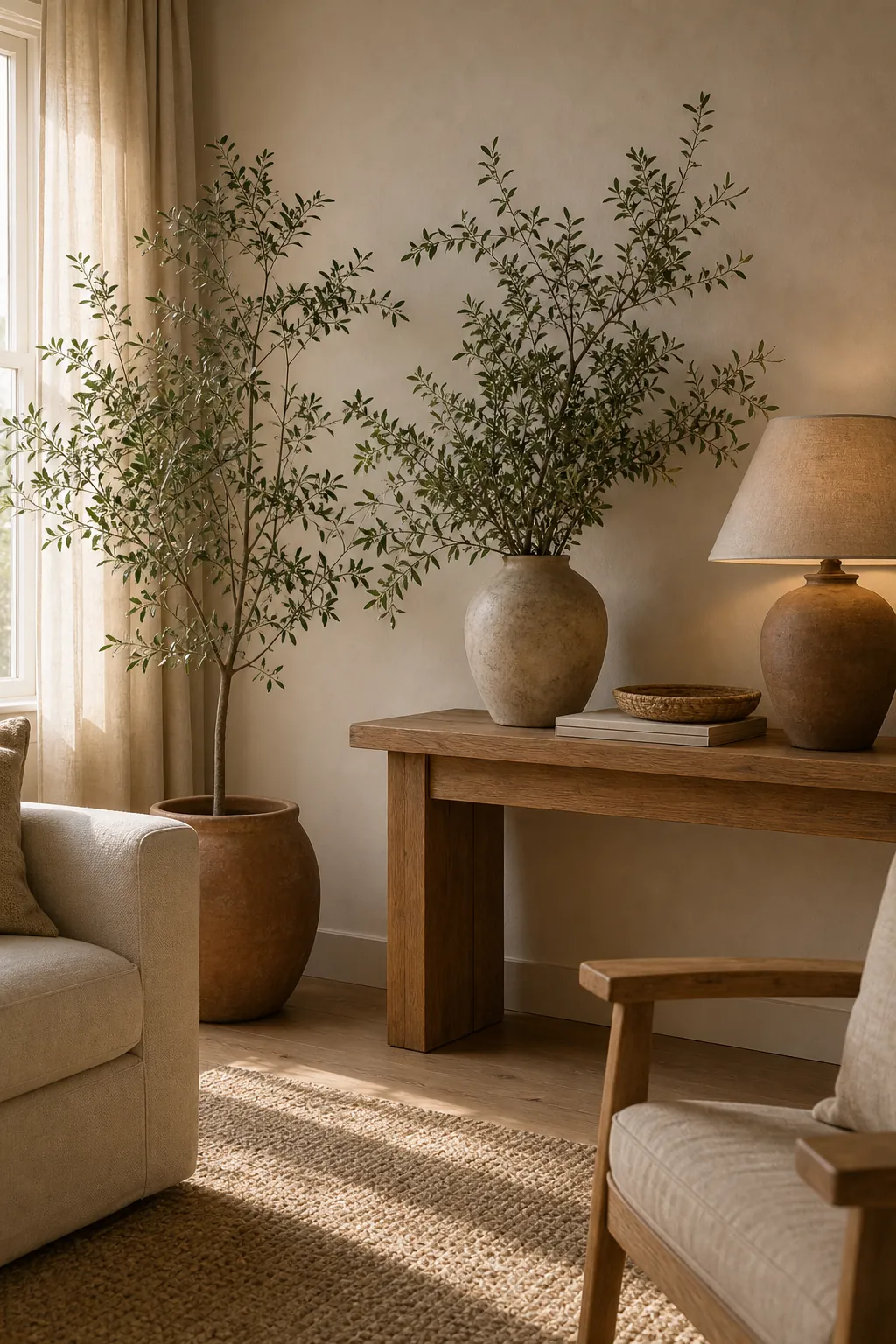
When a neutral room feels too polished, bring in surfaces that look touched by hand. Woven baskets, rattan trays, cane cabinet fronts, grasscloth, hand-thrown ceramics, stoneware bowls, carved wood, and textured plaster all interrupt the slickness of flat paint and smooth furniture.
The key is restraint. A basket beside the sofa, a ceramic lamp on a side table, a woven tray on a coffee table, and a handmade vase on the mantel are enough. If every object is highly textured, the room starts to feel busy. If every object is smooth, the room feels cold. The sweet spot is a clear contrast between smooth, soft, rough, and matte.
For earthy interiors, repeat a material two or three times in different ways. A rattan shade, a woven basket, and a cane-front cabinet feel connected without looking like a set. A matte ceramic vase, a stone bowl, and a clay lamp base create the same effect. Repetition gives the room rhythm; variation keeps it from feeling staged.

Bring in Greenery With Natural Shape
Greenery warms a neutral room because it breaks the straight lines. A cream sofa, rectangular rug, square coffee table, and straight curtains can feel rigid even when the colors are soft. Plants, branches, dried grasses, and imperfect stems add movement. They also make a calming home feel alive rather than decorated once and left alone.
You do not need a jungle. One tall plant in a ceramic or woven pot can soften an empty corner. A branch arrangement in a stoneware vase can give height to a console. Olive stems, eucalyptus, dried grasses, or seasonal branches can add an organic line without bright color. If you prefer very quiet neutral home decor, choose planters in clay, stone, warm white, or weathered wood.
Avoid tiny plants scattered everywhere. They read as clutter from across the room. Larger, simpler greenery looks more intentional and works better with organic modern decor.
Make the Lighting Warm Enough for Texture to Show
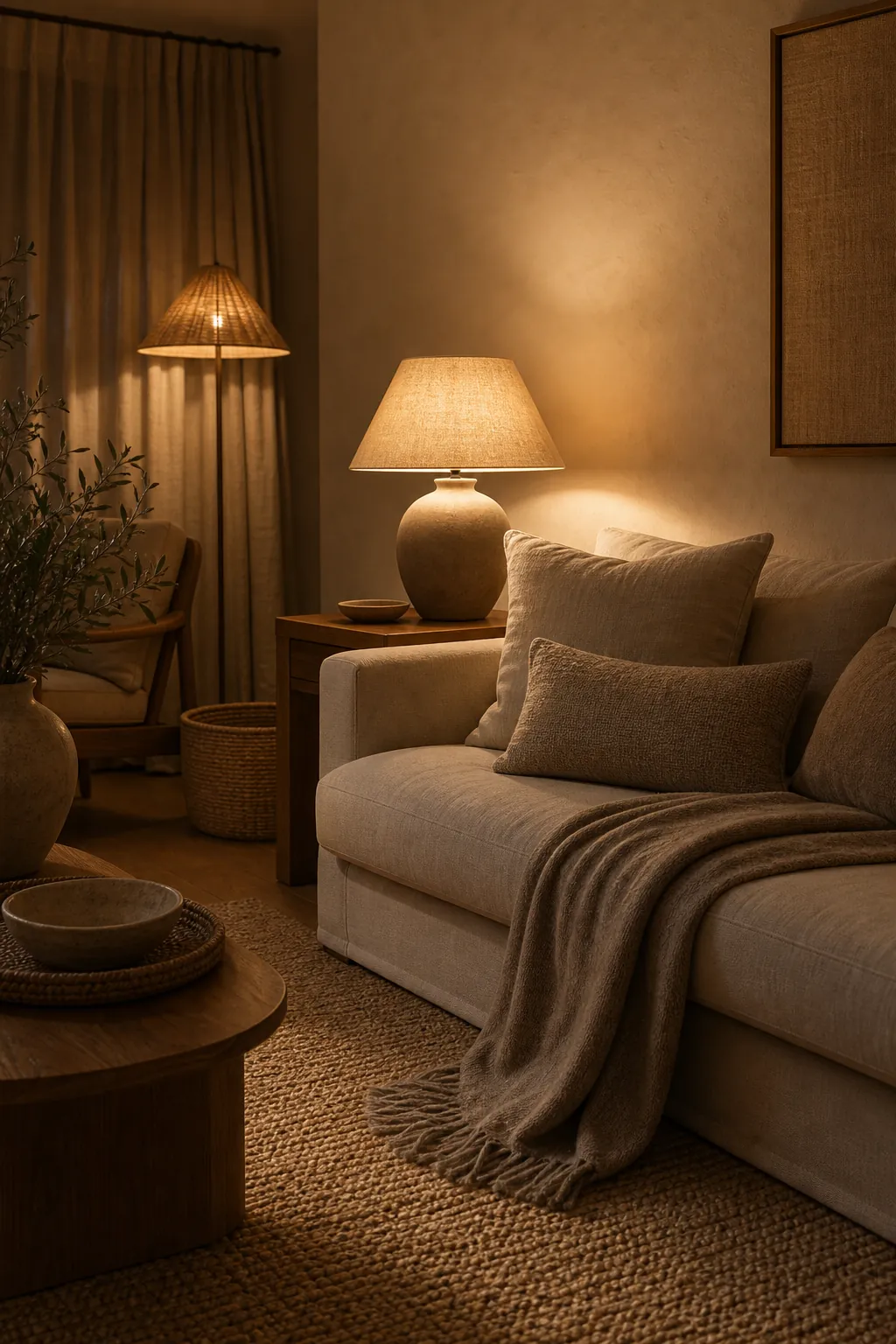
Texture only works when light can reveal it. Cool overhead lighting flattens fabric, washes out wood, and makes beige look gray. Warm lamps, shaded sconces, dimmers, candles, and lower light sources make shadows softer and give natural materials more depth.
For most living rooms and bedrooms, warm white bulbs around 2700K to 3000K create a softer evening mood. Place lamps at different heights: a table lamp beside the sofa, a floor lamp near a chair, a small lamp on a console, or a shaded wall light near art. This creates pools of light instead of one flat wash from the ceiling.
If your room has limited natural light, do not fight it with stark white everything. Use deeper warm neutrals, heavier textiles, and richer wood. A darker taupe throw, a walnut table, a textured cream shade, and a wool rug can make a dim room feel cocooned instead of gloomy.
Use Pattern Quietly
A neutral room can use pattern without becoming colorful. The trick is to choose patterns that are close in tone but different in scale: a subtle stripe on a pillow, a handwoven rug with small irregular lines, a block-printed cushion in oatmeal and taupe, or a textured curtain with a visible slub.
Pattern is helpful when everything feels too plain, but it should not compete with the natural textures. If the rug has a strong pattern, keep the pillows simpler. If the curtains have a visible weave or stripe, keep the sofa layers quieter. Warm neutral decor works best when one or two elements speak clearly and the rest support them.
A Simple Layering Formula
If the room feels cold and you do not know where to start, use this order. It prevents random shopping and gives every change a purpose.
- Warm the light first: change cool bulbs, add lamps, and reduce harsh overhead lighting.
- Fix the floor: choose a larger rug with wool, jute, sisal, or a soft woven texture.
- Soften the windows: add linen curtains, woven shades, or fabric Roman shades.
- Add one visible wood anchor: use a coffee table, side table, cabinet, shelves, or wood-framed art.
- Layer the sofa by texture: combine linen, boucle, wool, knit, or slub cotton in related neutral tones.
- Bring in handmade contrast: use ceramics, baskets, stoneware, cane, rattan, or carved wood.
- Finish with organic shape: add one larger plant, branches, dried grasses, or natural stems.
Stop before the room feels full. A warm neutral room needs negative space because the textures need room to be noticed. The best version feels collected, not crowded.
What to Avoid
The most common mistake is buying more beige. If the room already feels flat, another smooth beige pillow will not help. Add a different material instead. Choose wool over more cotton, wood over more painted surfaces, linen curtains over bare windows, or a ceramic lamp over a metal one.
Also avoid mixing too many unrelated neutrals. Bright white, blue-gray, yellow beige, pink beige, and green taupe can clash even though they are all technically neutral. Pick a warm lane and repeat it. Cream, flax, oatmeal, mushroom, taupe, tan, camel, and warm brown usually work together more easily than cool gray mixed with yellow beige.
Finally, do not confuse warmth with clutter. A room can feel warm with very few objects if the materials are good. A wool rug, linen curtains, oak table, ceramic lamp, one plant, and two textured pillows can do more than a shelf full of small decor.
The Room Should Feel Touched, Not Filled
The point of natural texture is not to decorate every surface. It is to make a neutral room feel human. Linen wrinkles a little. Wood grain is irregular. Wool has depth. Ceramic edges are not perfectly identical. Plants lean toward the light. Those small imperfections are what keep a neutral room from feeling cold.
If you want a warmer room, start where the body notices first: the floor under your feet, the light beside your seat, the fabric under your hand, the curtain at the window, the wood you see from the doorway. Keep the palette calm, but let the materials do the work. That is how a neutral room becomes warm without losing the quietness that made you choose neutrals in the first place.