
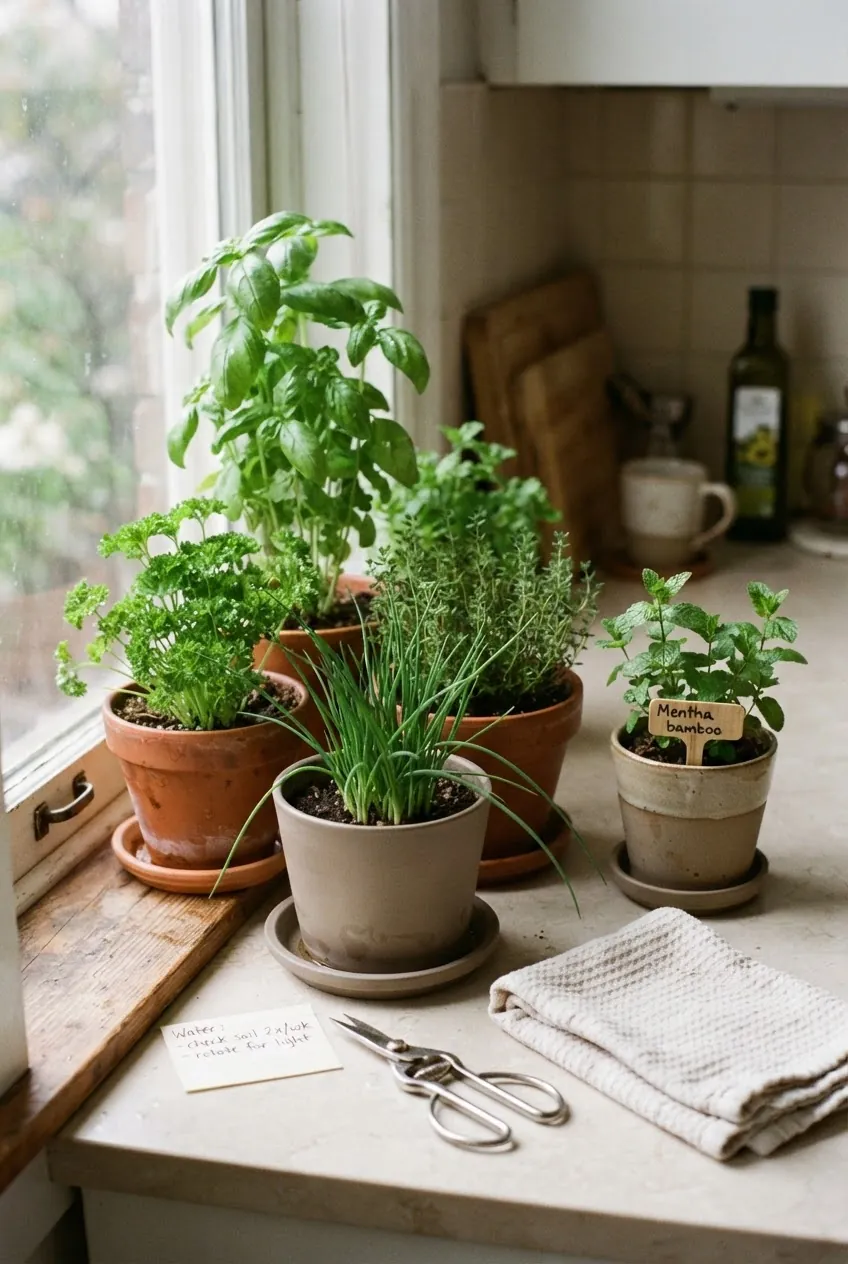
An indoor herb garden for beginners works best when it starts small: a few useful herbs, real drainage, enough light, and a watering habit you can repeat. The common beginner mistake is trying to make one pretty planter do everything. Basil, rosemary, mint, parsley, and cilantro do not all want the same life.
The easier path is to build a kitchen herb garden around how you actually cook and how much light your space gives you. Use the first week to observe, not to buy every herb on the rack.
Start With The Light You Actually Have
Most indoor herb garden ideas fail before watering becomes the problem. Herbs need bright light to replace the energy they lose when you keep cutting them. A sunny south or southwest window is the easiest starting point, but an east window can still work for softer herbs if you harvest lightly.
Set the pots where the leaves receive several hours of direct or very bright light, then watch the stems. Long, pale, leaning growth means the plant is reaching. Compact leaves, new shoots, and steady fragrance are better signs than a strict calendar rule.
Choose Herbs That Match Beginner Habits
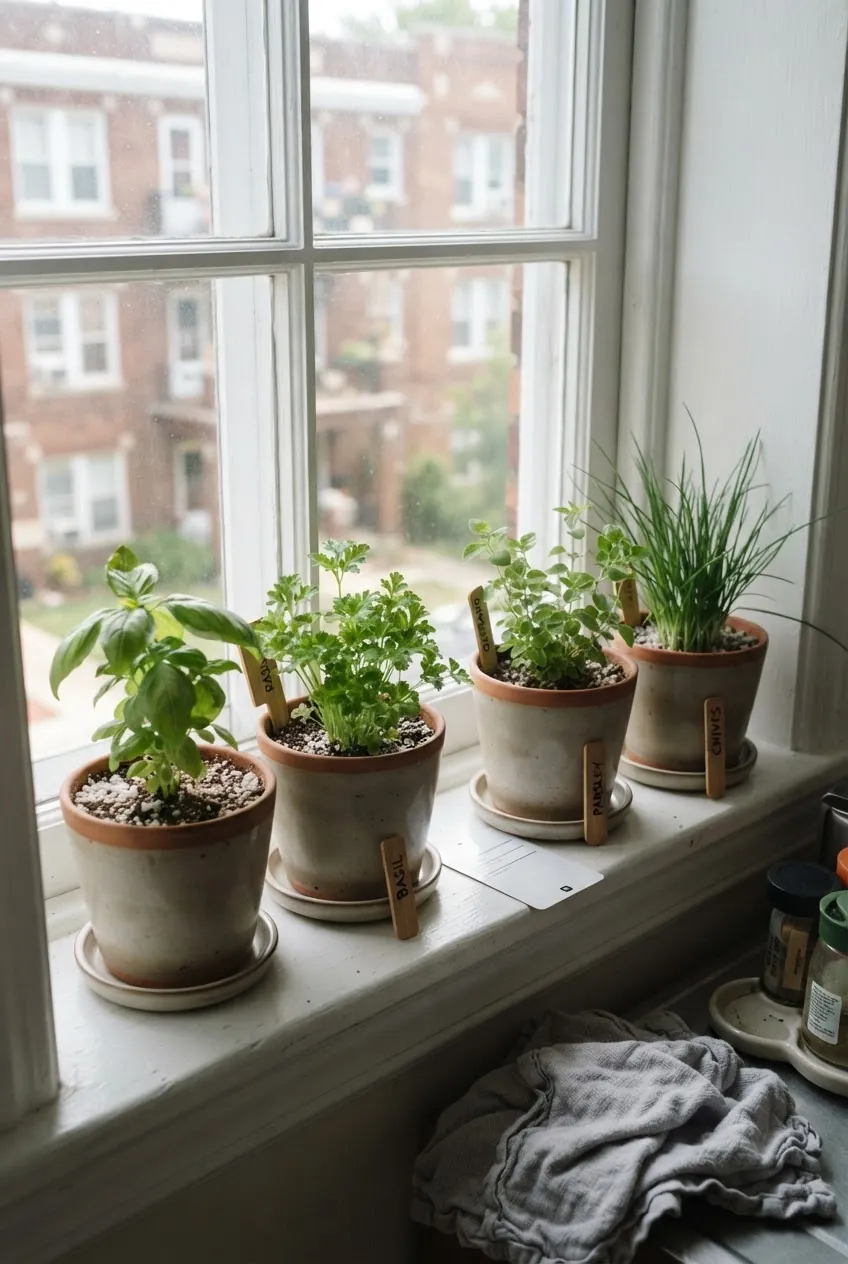
For a first indoor setup, choose herbs you will use every week. Basil is rewarding because it grows fast when warm and bright. Parsley is slower but forgiving. Chives stay compact. Thyme and oregano handle drier soil. Mint grows aggressively, so keep it in its own pot even indoors.
Cilantro can be useful, but it has a shorter life indoors and often needs repeat sowing. If you are brand new, treat cilantro as a rotating crop rather than a permanent houseplant. The best beginner herb is not the trendiest one; it is the one you will harvest before it declines.
Use Separate Pots Before A Shared Planter
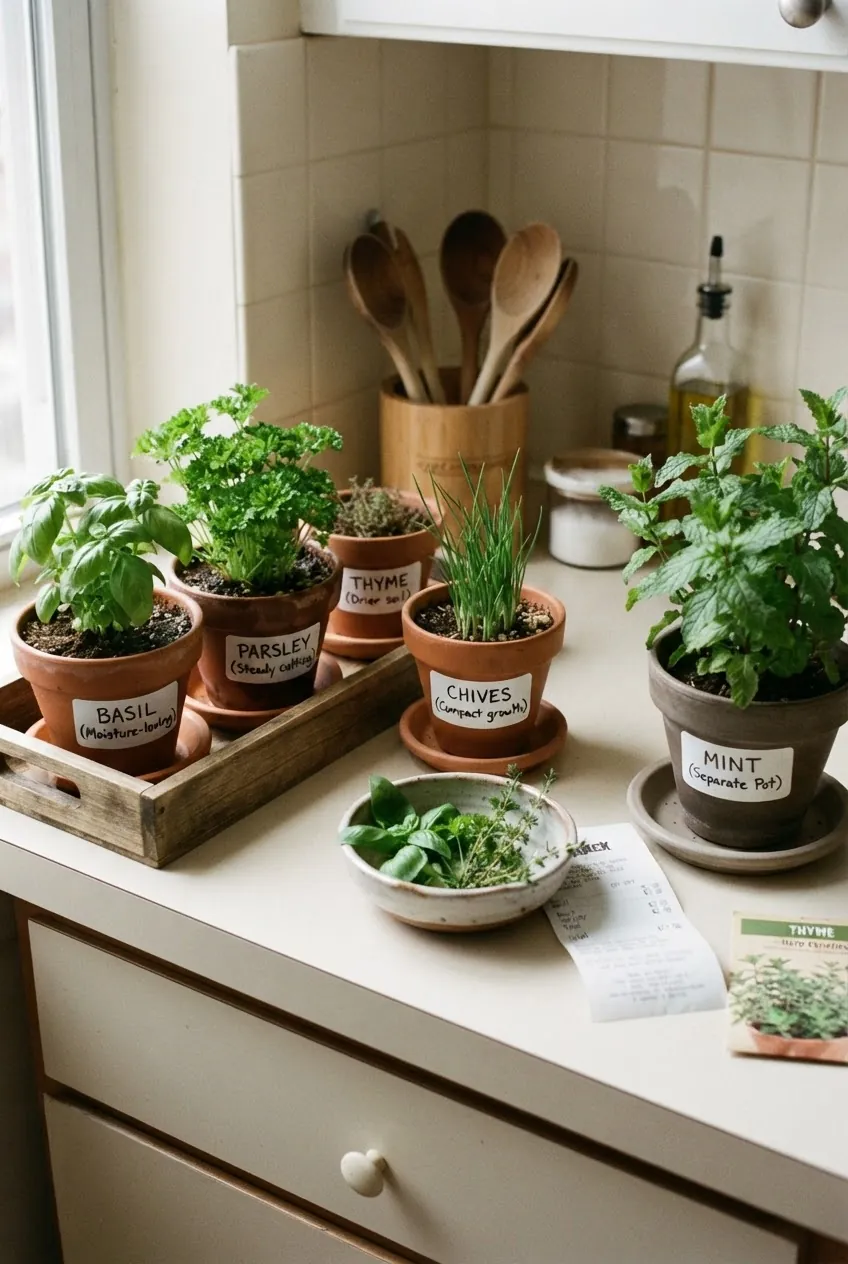
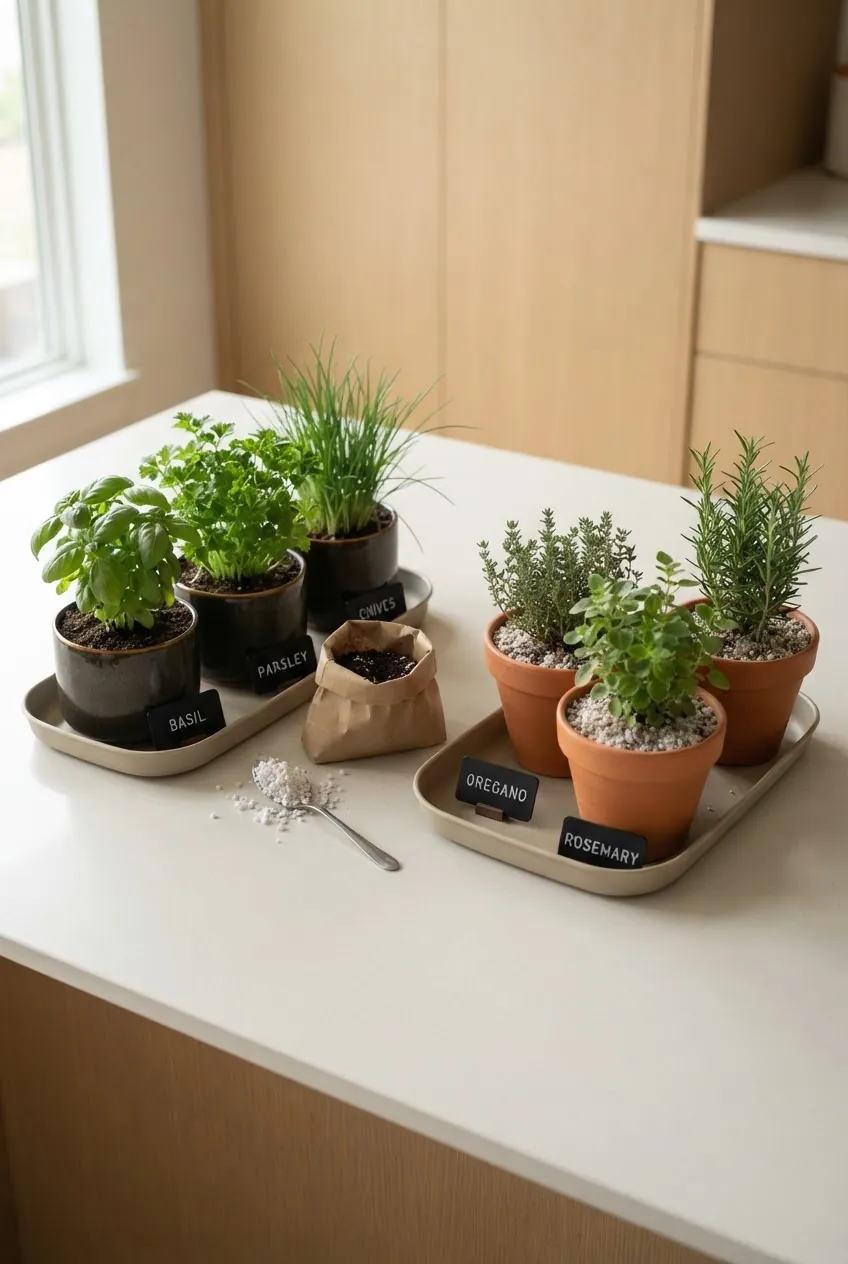
A single DIY herb planter looks tidy, but separate pots are easier for beginners. Rosemary, thyme, and oregano prefer the soil to dry more between waterings. Basil, parsley, and cilantro usually want more consistent moisture. Put them together too soon and one group is always stressed.
Start with containers that have drainage holes and saucers. Terra-cotta helps dry-loving herbs. Glazed ceramic can work for moisture-loving herbs if the pot drains. Separate pots also let you rotate one struggling plant without disturbing the rest of the indoor herb garden.
Water The Soil, Not The Calendar
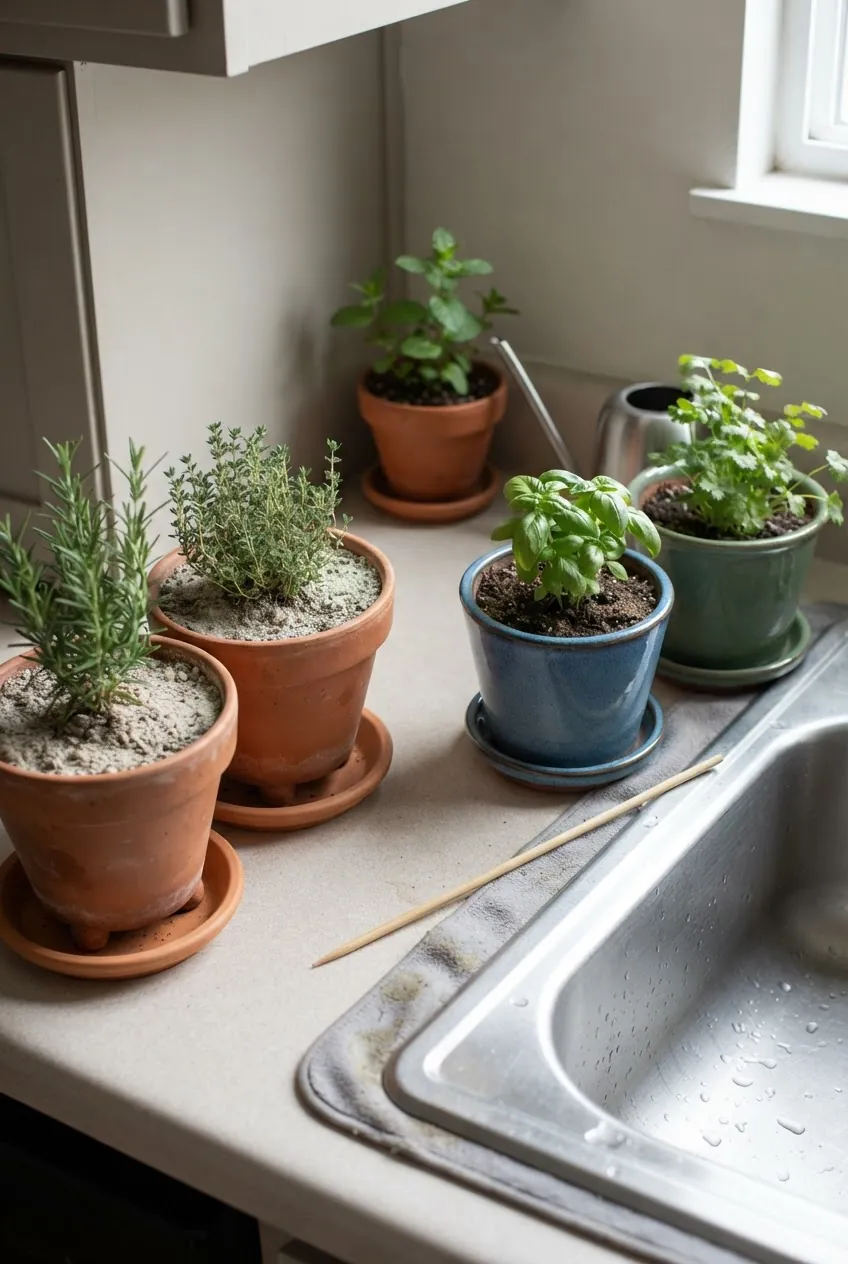
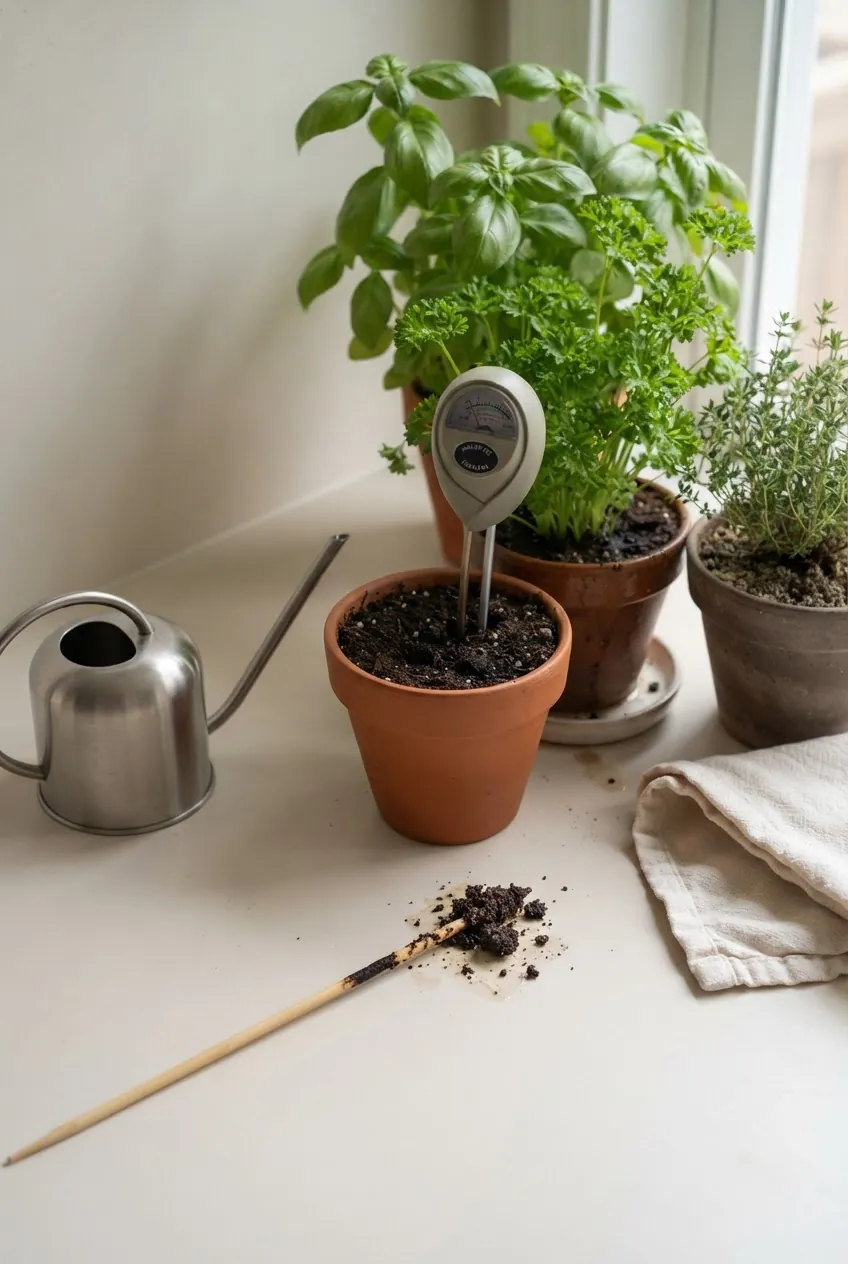
The safest beginner watering habit is simple: check the top inch of soil, water thoroughly when the plant is ready, then let extra water drain away. Small sips every day keep roots shallow and wet. A deeper watering followed by a drying period creates stronger roots.
Use your finger, a bamboo skewer, or a basic moisture meter. If the skewer comes out with damp soil stuck to it, wait. If the pot feels light and the top layer is dry, water until you see runoff, then empty the saucer. Standing water is where many apartment herb gardens start to rot.
Add A Small Grow Light When The Window Is Weak
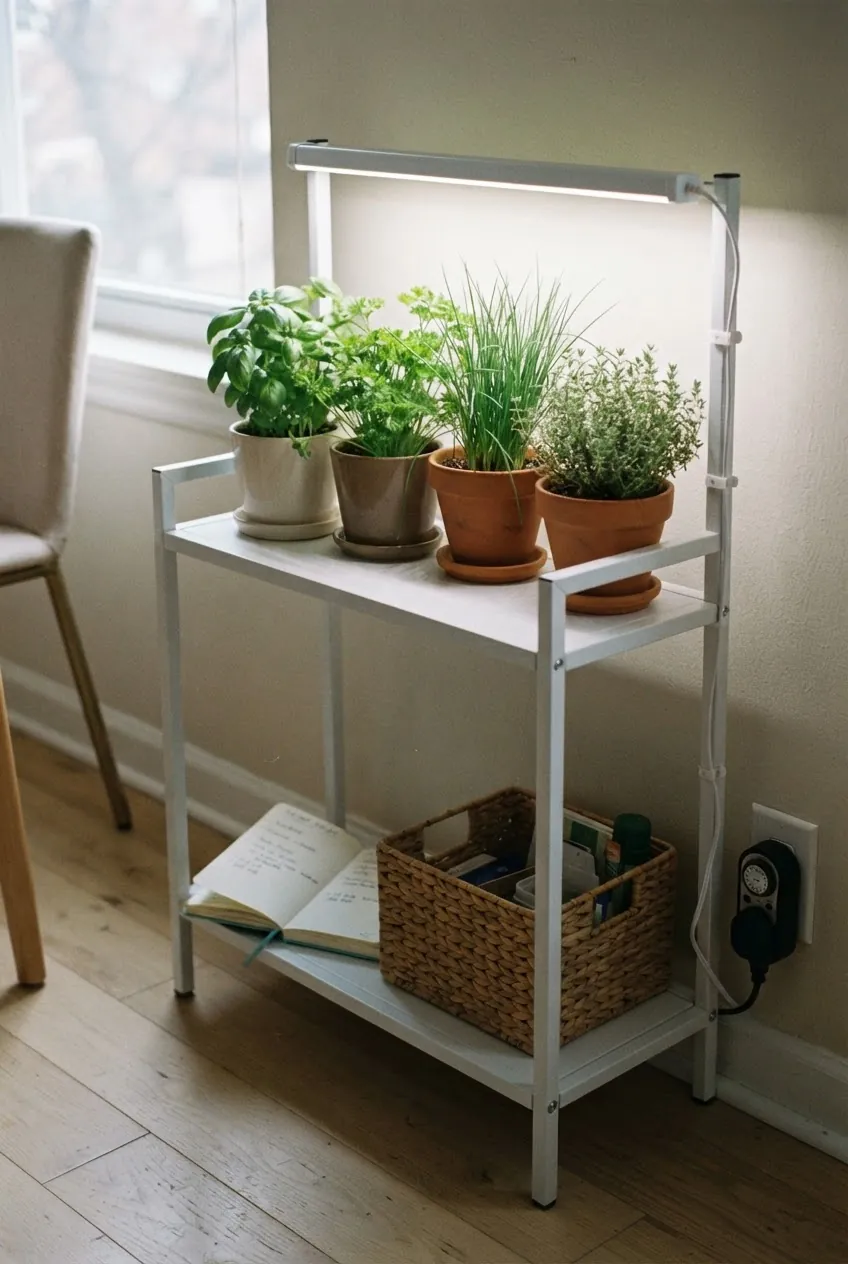
If your herbs lean, fade, or stop producing after a few harvests, the window may not be enough. A small LED grow light on a timer can rescue inside herb garden ideas that otherwise work in summer but stall in winter.
Keep the light close enough to reach the leaves, but not so close that the tops dry out. A shelf, clip-on bar, or under-cabinet strip is usually enough for a modest herb planter ideas indoor setup. You do not need a large indoor vegetable gardening system to keep a few kitchen herbs productive.
Group Herbs By Care Needs Before Planting Together
If you eventually want herbs to plant together in one larger container, group them by care needs first. Basil, parsley, and chives can sit near each other because they tolerate more regular moisture. Thyme, oregano, sage, and rosemary belong in a drier group. Mint should stay separate unless you want it to dominate the planter.
This is where many growing herbs in pots guides sound too tidy. Real homes have changing light, drafts, air conditioning, and different cooking habits. Use separate pots for the first month, then combine only the herbs that behave well together in your space.
Harvest Early And Keep The Plants Compact
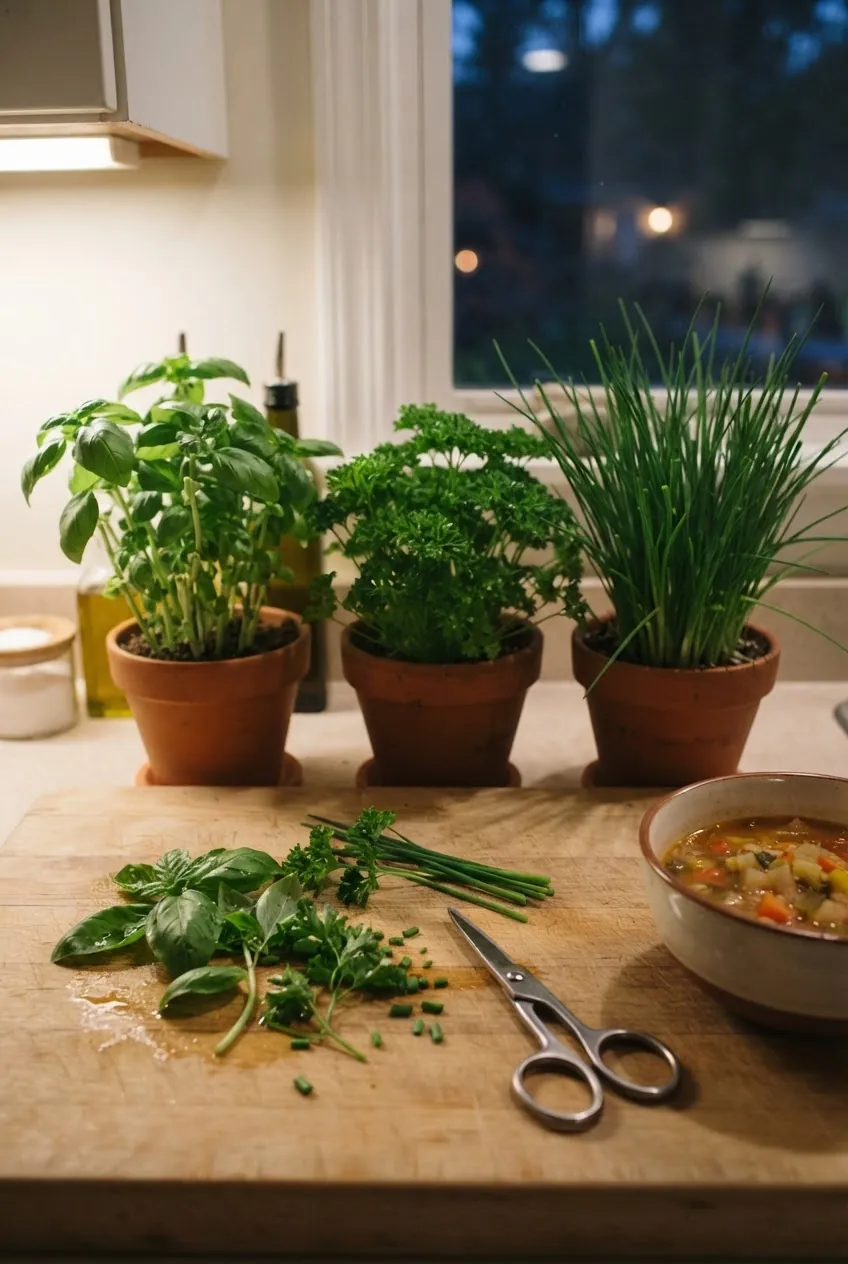
Herbs are not decorations. They stay healthier when you use them. Once a basil plant has several sets of leaves, pinch above a leaf pair so it branches. Snip chives near the base. Cut parsley from the outside stems. Take small harvests often instead of stripping the plant bare.
Regular trimming solves two beginner problems at once: it gives you fresh flavor and prevents tall, weak growth. If a plant becomes woody, sparse, or bitter, replace it without guilt. A successful indoor herb garden is a working kitchen habit, not a permanent display.
Start with three to five pots, keep the light honest, water only when the soil asks for it, and harvest before the plants get leggy. That is enough to turn a beginner windowsill into a useful kitchen herb garden.