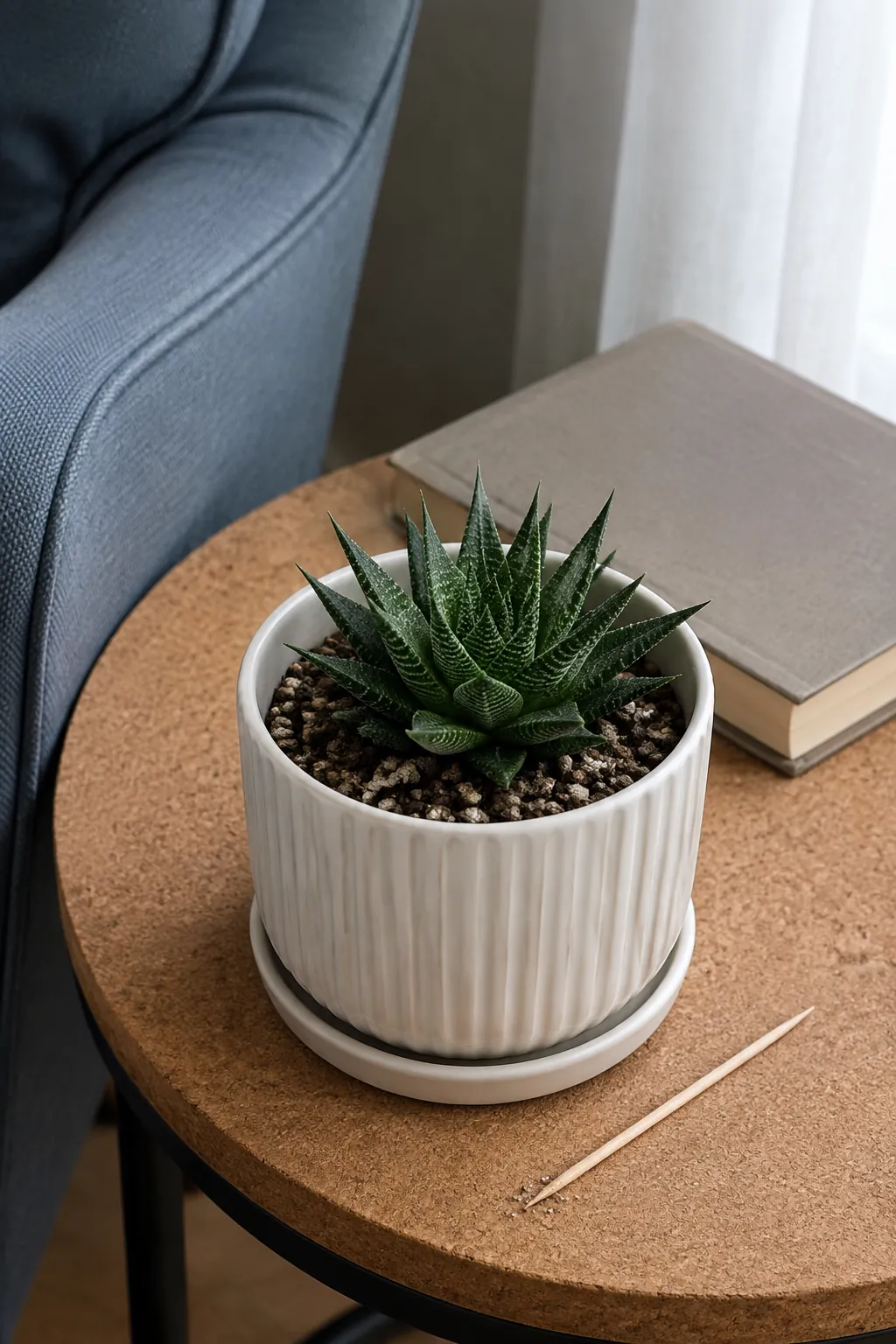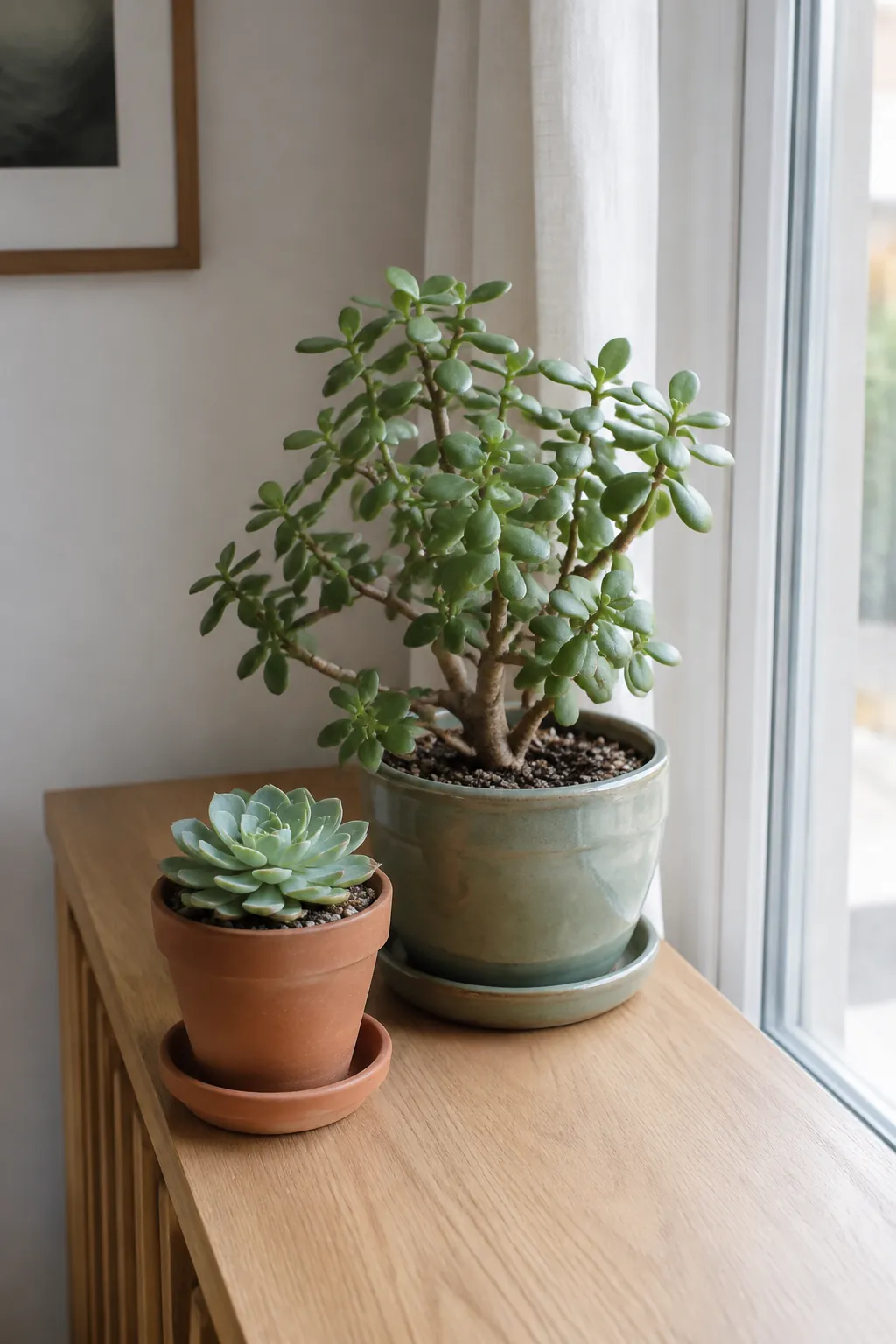
A beautiful pot can hide the very thing that kills a succulent: wet soil with nowhere to drain. Start with the place the plant will live and how you will water it, then choose a container that makes both practical. You can keep the decorative look without turning every watering into a guess.
Match the plant to the window
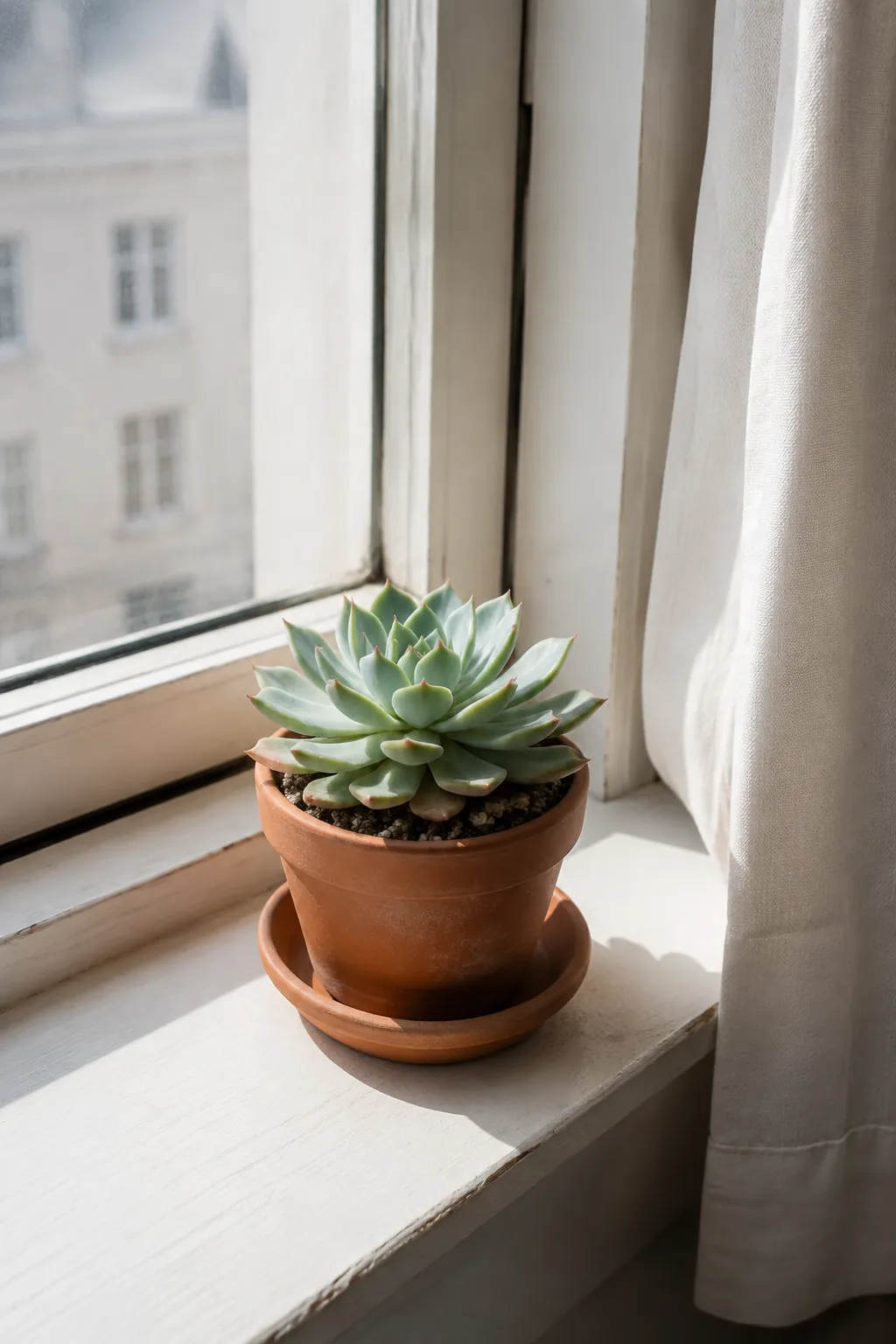
An empty corner is not automatically a growing spot. Watch where daylight actually falls before buying a plant, because a room that feels bright to you can still be too dim for compact succulent growth. Echeveria usually needs substantial light and often some direct sun indoors, while haworthia or gasteria can suit bright filtered light. Introduce stronger sun gradually so leaves have time to adjust instead of scorching.
Place the pot close enough to benefit from the window without pressing leaves against hot or cold glass. If new growth becomes stretched with wider gaps between leaves, reassess the light before adding fertilizer. A suitable grow light can make a shelf usable, but follow its distance guidance and give the plant a regular dark period.
Give water a real exit
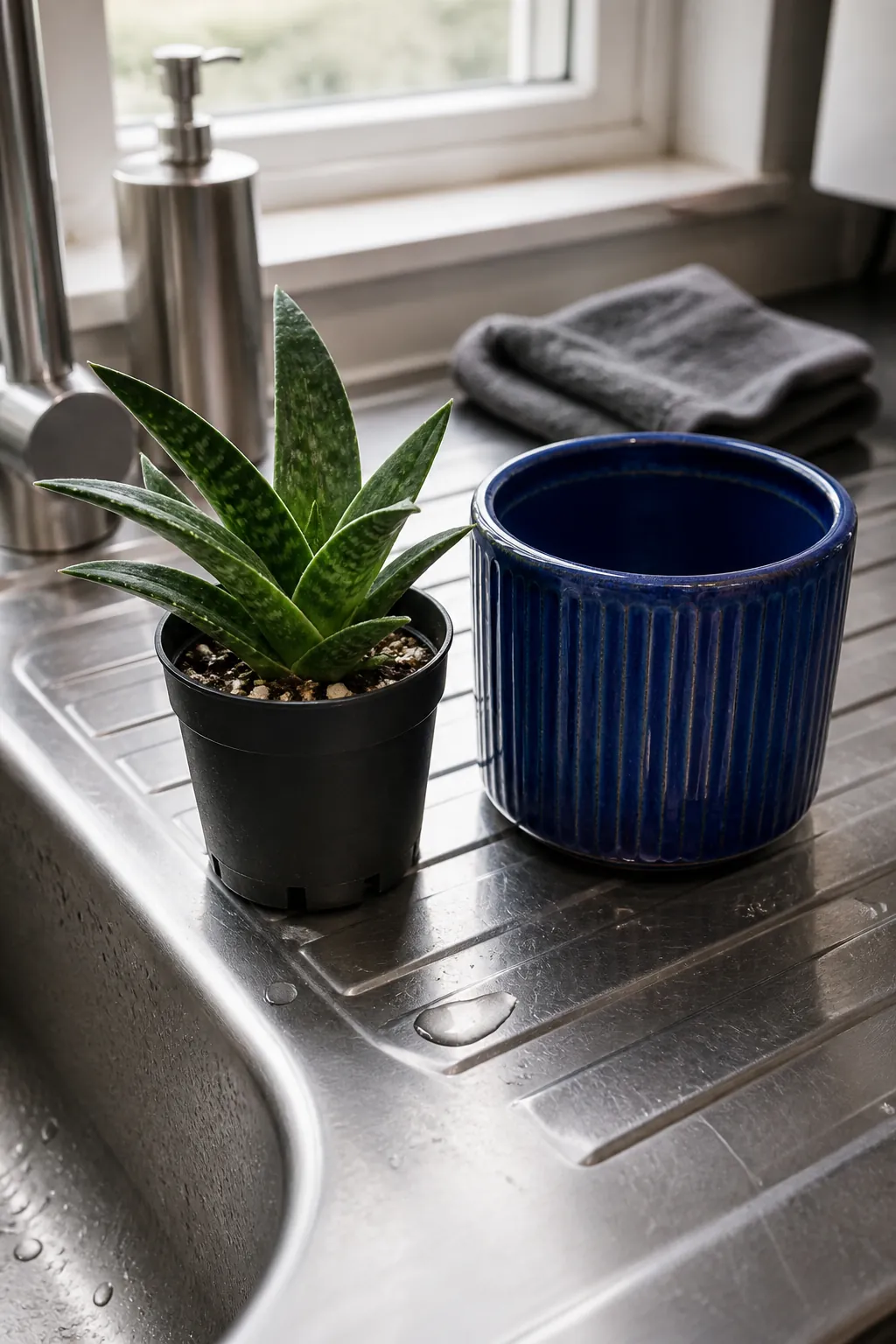
A drainage hole makes succulent care easier because surplus water can leave the root zone. Choose a small terracotta pot with a saucer, or keep a draining nursery pot inside a decorative cachepot that you can empty. Lift the inner pot out for watering, let it drain completely, and check that no water remains in the outer container before returning it. A layer of stones at the bottom cannot make a sealed vessel drain.
This matters especially when browsing succulent terrarium ideas, because closed glass traps humidity and leaves nowhere for excess water to go. Keep a glass container as decoration around removable pots if you like the look, with an open top and easy access. Protect wooden furniture with a waterproof tray rather than relying on a porous clay saucer alone.
Build a mix that dries through
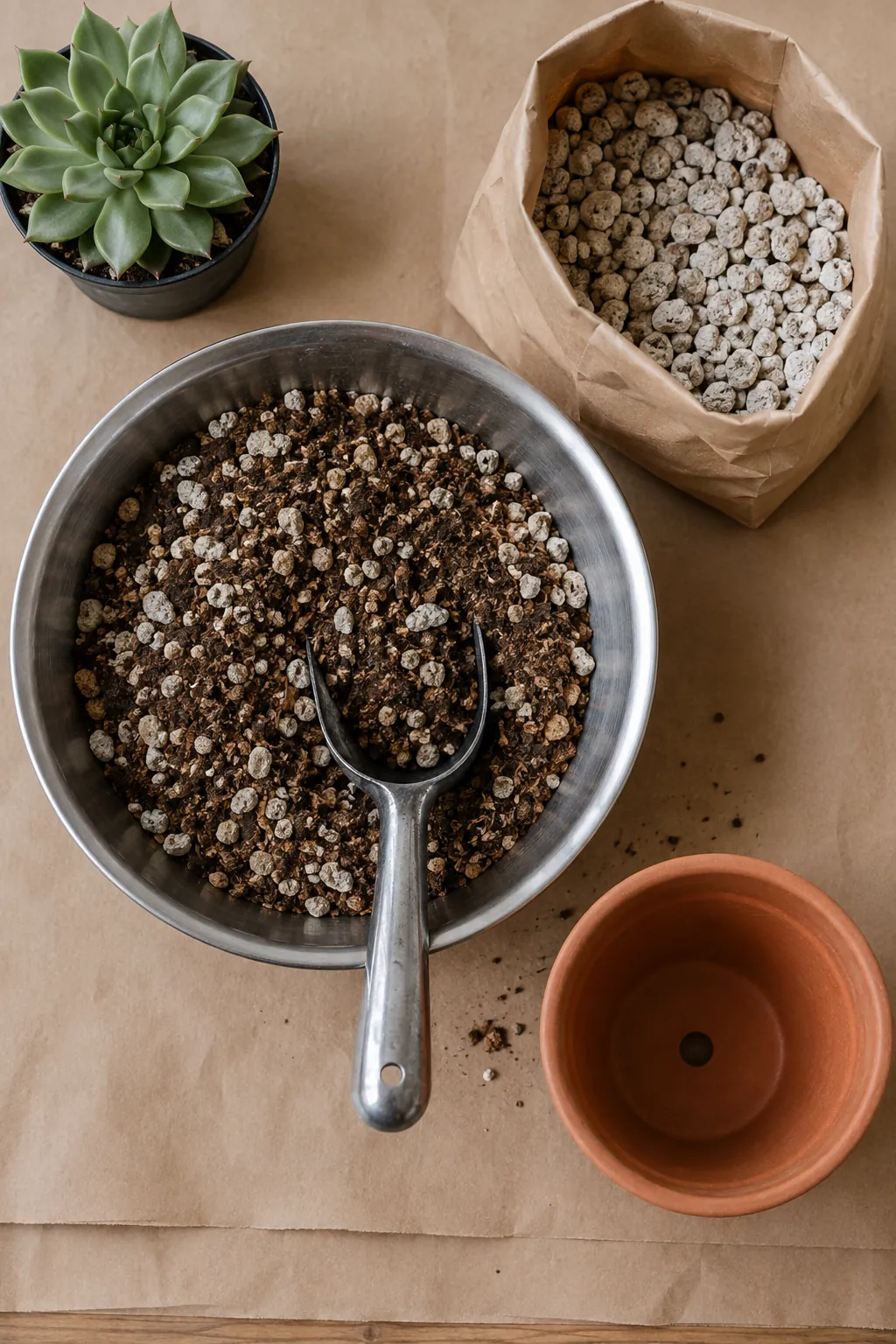
Bagged cactus mix is a starting point, but products vary in how much moisture they retain. Look for a loose texture with visible mineral particles rather than a dense mass of fine organic material. Pumice or coarse perlite can improve air space when mixed throughout the substrate, with the amount adjusted to your plant, pot, and indoor drying conditions. Avoid garden soil, which can compact badly inside a small container.
A modest pot only slightly larger than the root system is usually easier to manage than an oversized bowl. Deep spare volumes of damp mix can stay wet long after the surface looks dry. Leave enough space below the rim to water without washing soil over the edge, and keep thick decorative gravel away from the stem base.
Group plants without crowding roots
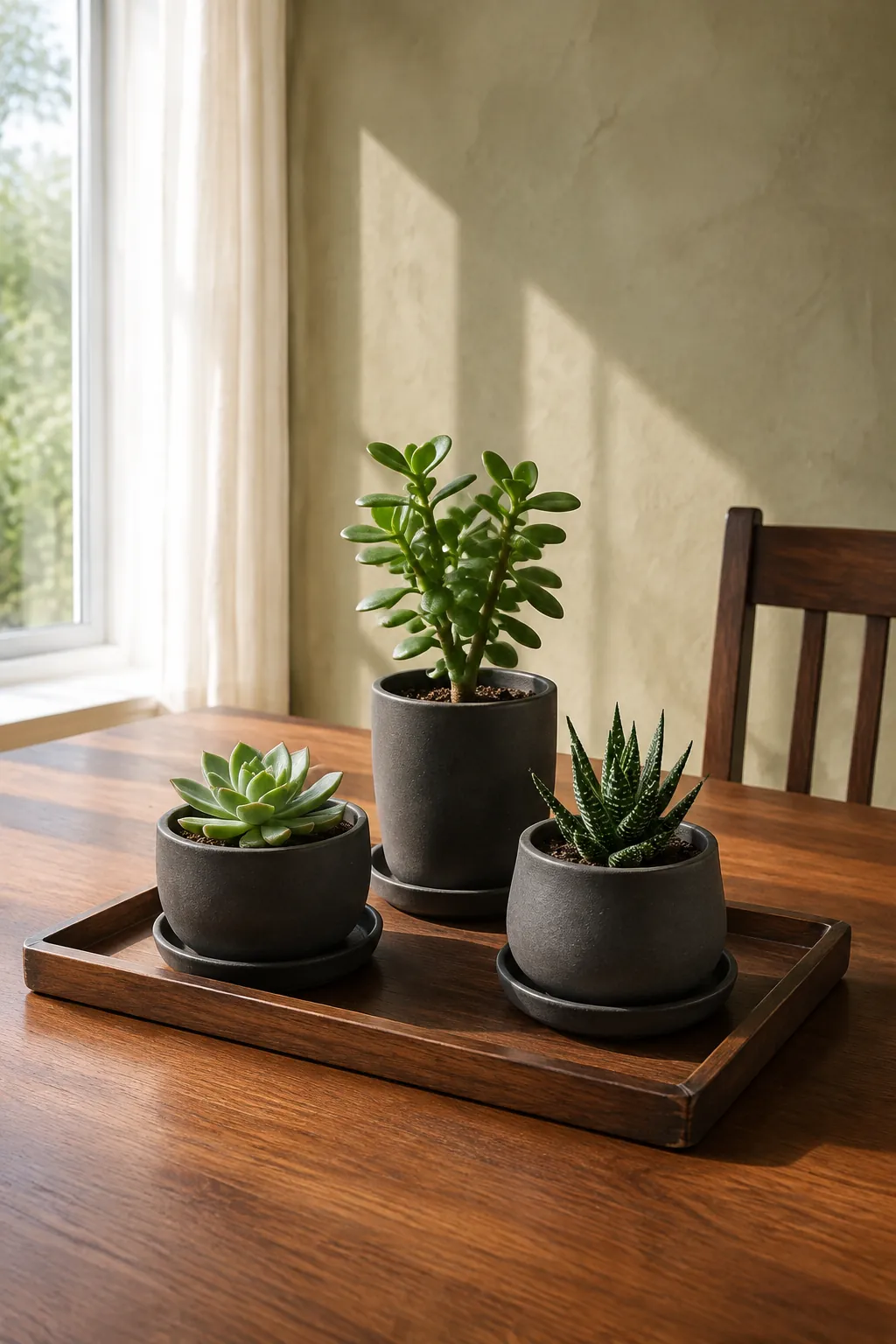
An indoor succulent garden does not need to share one root zone. Set individual pots in a shallow tray so you can give each plant different light or water as its needs become clearer. Repeated pot colors create a coherent display even when the plant shapes differ. Leave gaps between the leaves so you can lift each container without breaking a neighboring stem.
For a planted arrangement, select species with similar requirements and give them room to expand rather than packing every gap. A compact rosette beside a small upright plant can supply contrast without adding thirsty moss or unrelated foliage plants. Treat a dining table arrangement as a temporary display if the table receives less light than the plants normally need.
Repot with room for recovery
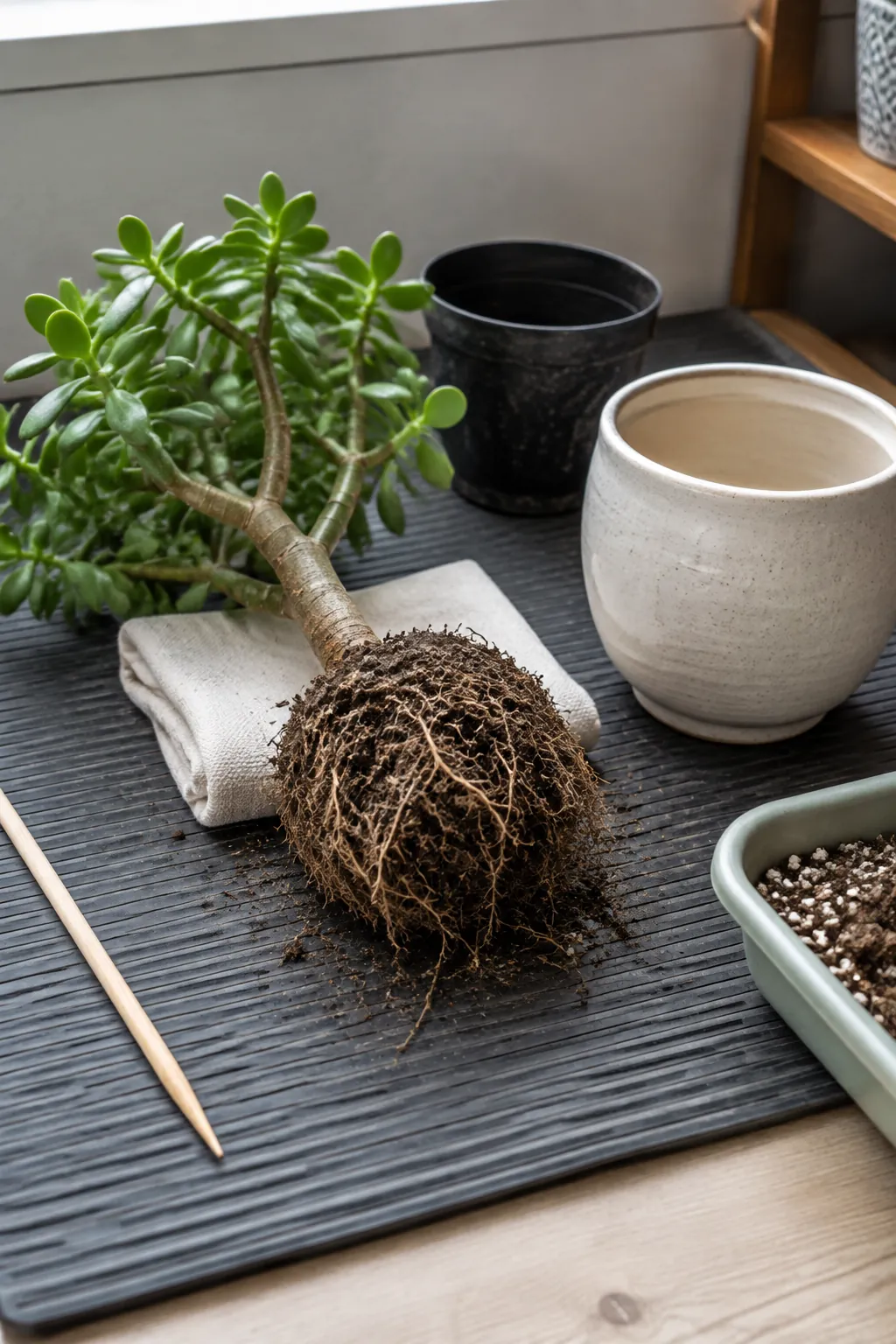
Repotting succulents is useful when roots crowd the container, the mix stays wet too long, or the nursery substrate has become difficult to rewet. Slide the plant out gently and support its base rather than pulling on leaves. Loosen only what releases easily, and inspect for roots that are black, mushy, or foul smelling. Remove damaged tissue with a clean tool and allow wounds to dry before settling the plant into fresh suitable mix.
Keep the original planting depth so the lower leaves and stem are not buried. If roots were injured, postpone watering for several days while the wounds dry, adjusting to the species and conditions. Return the plant to bright sheltered light during recovery and resume stronger sun gradually.
Water by the root zone
Check the mix below the surface and learn the weight of the pot when it is dry instead of following a fixed weekly schedule. For many common fleshy indoor succulents, allow the mix to dry through before watering thoroughly and letting the excess drain. Seasonal growth, temperature, light, and the species all change how quickly the next watering is needed. Misting the leaves cannot replace wetting the roots.
If water runs straight down the sides while the root ball stays dry, apply it slowly in several passes or briefly soak the draining pot until the mix moistens, then drain fully. Soft translucent leaves in wet soil suggest a different problem from gently wrinkled leaves in a dry pot, so check the roots before adding more water. The useful test for your next DIY succulent planter is simple: can you reach the soil, remove surplus water, and move the plant toward better light?