
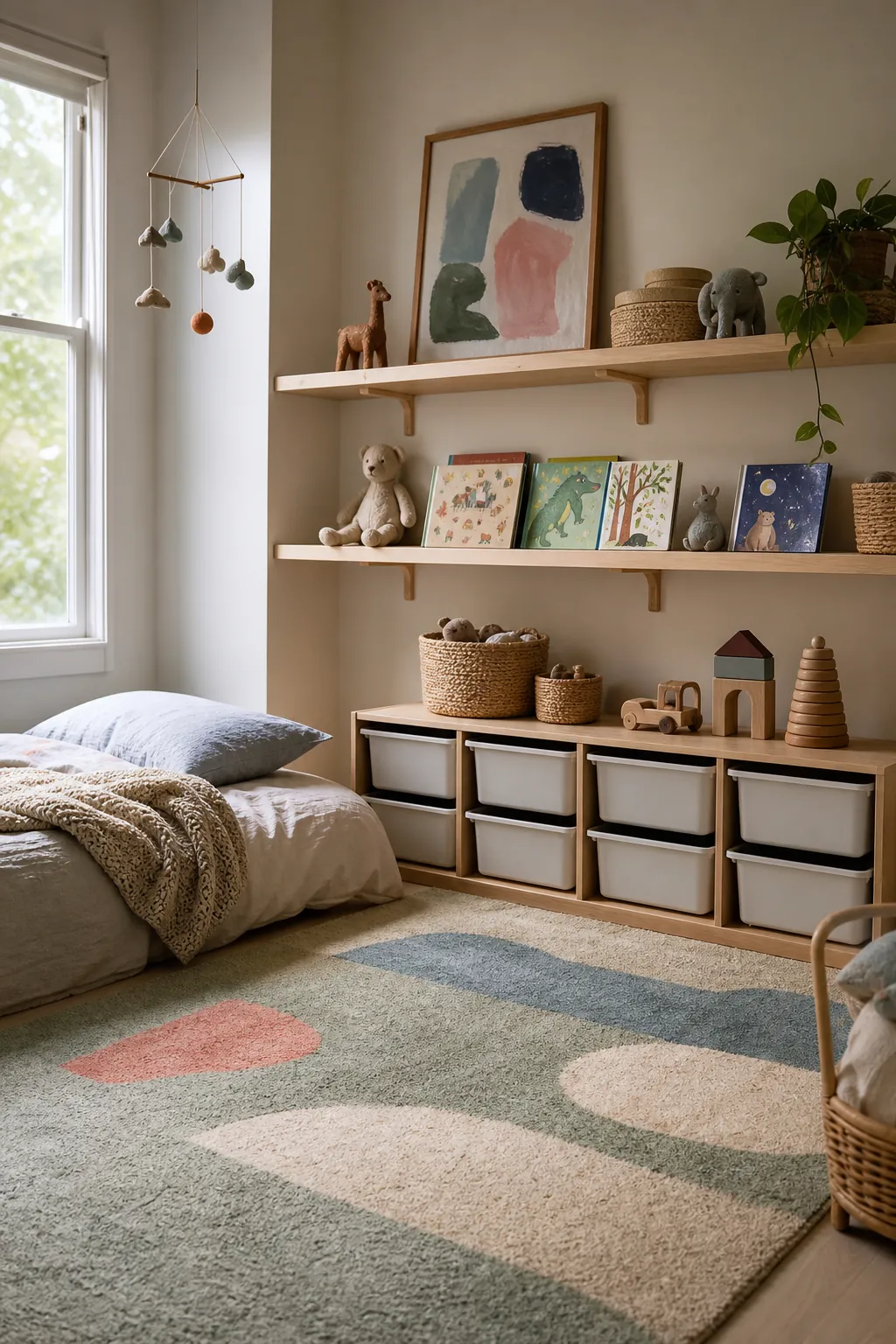
A kids room rarely fails because it is missing more things. It usually fails because the things are fighting each other: the rug is too small for real floor play, the shelves become a parking lot for random toys, and the wall art is either so precious nobody touches the room or so busy that the room never feels calm.
The better approach is to let three pieces do most of the work. Use a soft rug to define where life happens, use wall shelves to control what stays visible, and use kids wall art to give the room a point of view without locking it into a theme. That works for a kids bedroom, a shared playroom decor corner, or a nursery decor setup that needs to grow up without a full redesign.
Start With The Rug, Not The Wall
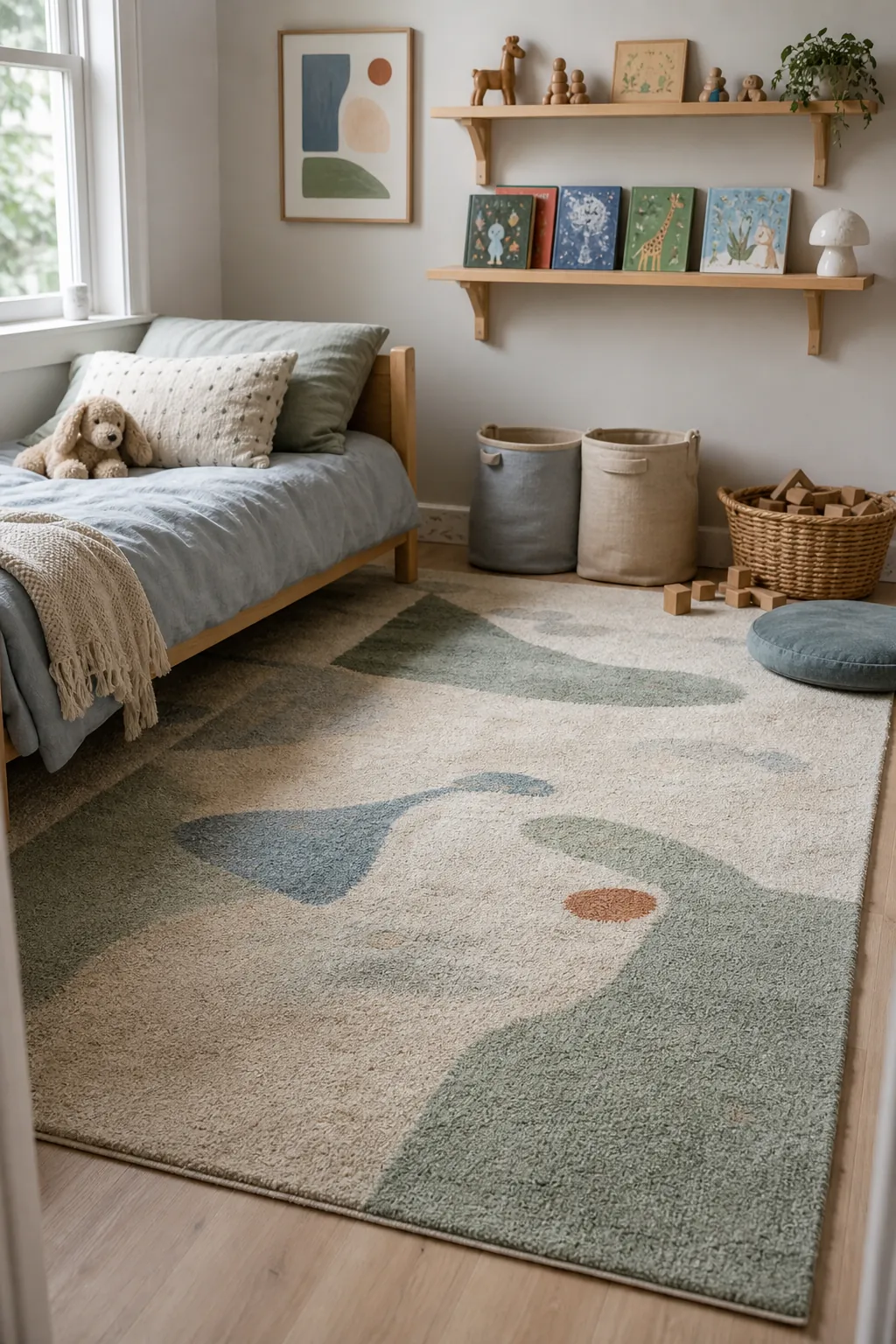
When parents try to style a room from the walls down, they often end up with cute art and nowhere comfortable to sit. Kids use the floor constantly: building, reading, sorting tiny toys, changing clothes, making forts, and landing hard after jumping off something they should not have climbed. The rug is not an accessory in a kids room. It is the room’s working surface.
For most kids room ideas with soft rugs, the best choice is not the thickest rug you can find. It is a rug that feels good under bare knees, hides small marks, and still lets blocks, train tracks, dollhouses, and storage bins sit flat. A low-pile wool, cotton, washable blend, or dense synthetic rug is usually easier than a long shag. Pattern helps, but the pattern should be calm enough that toys do not disappear into it.
Size matters more than people expect. If the rug floats like a postage stamp, the room feels chopped up and the floor play shifts to the hard edges. Try to let the rug touch at least two zones: the bed, the shelves, the storage cabinet, or the reading chair. That one move makes the kids bedroom feel intentional before you buy a single new piece of decor.
- For a small bedroom: tuck the rug under the front half of the bed and let it run into the open play area.
- For a playroom: center the rug where children actually sit, not where it looks symmetrical in an empty room.
- For a nursery-to-kid transition: choose a rug that works with a crib today and a floor cushion or reading chair later.
Let Kids Wall Art Feel Personal, But Keep It Edited
Kids wall art is where the room can become theirs. The mistake is turning every inch of wall into proof that a child lives there. Too many prints, decals, name signs, and themed pieces can make the room noisy fast. A better rule is simple: choose fewer pieces, give them breathing room, and let at least one piece be made by the child.
Child-made art works best when it is framed or mounted with the same respect as a print. A scribbly painting in a simple wood frame can look stronger than a whole set of themed posters. Pair it with one quieter piece, such as leaves, shapes, animals, stars, or abstract color blocks. That gives the room character without making it depend on one cartoon, sport, animal, or trend.
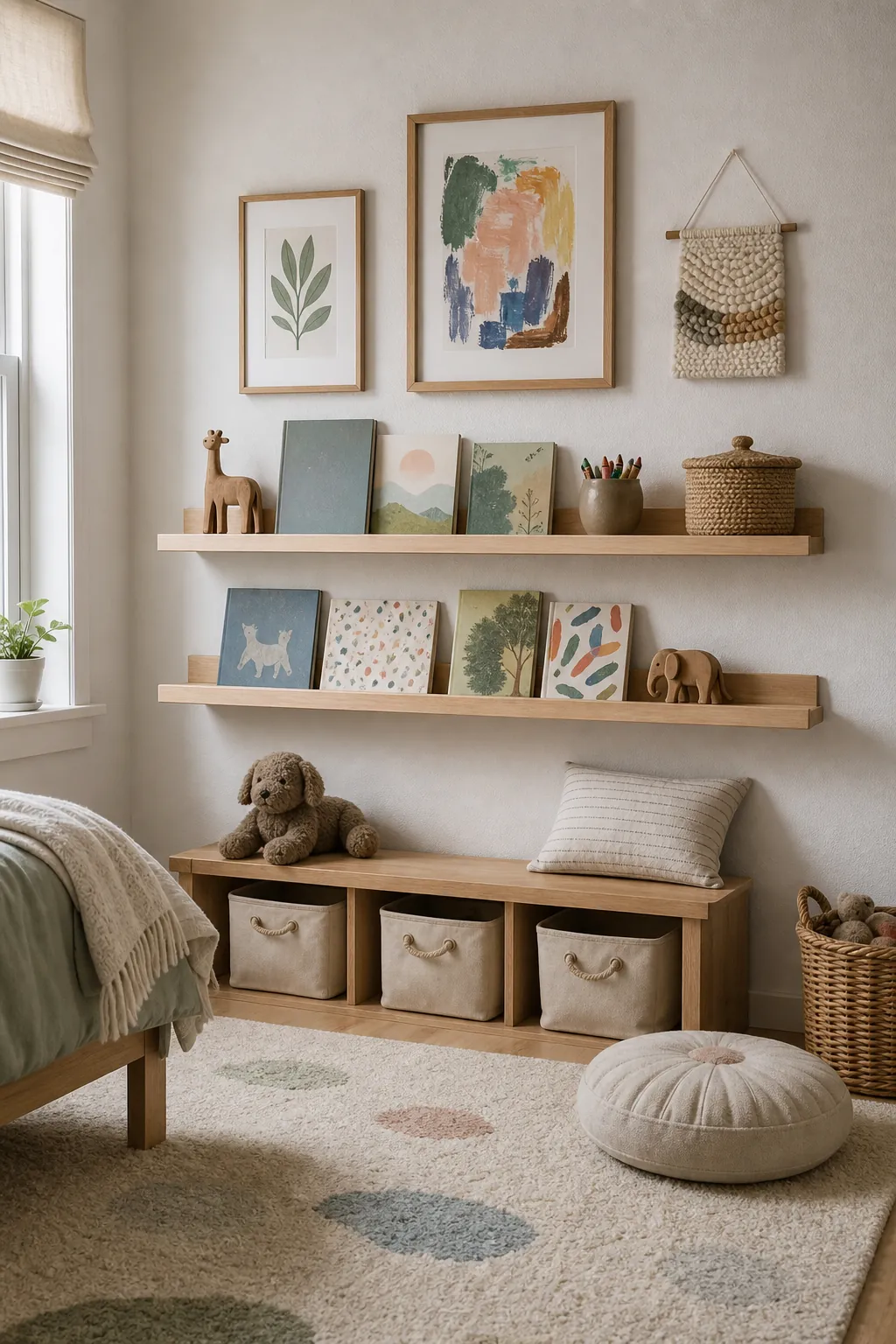
Picture ledges are useful because they make rotation easy. Instead of committing to a permanent gallery wall, you can swap one drawing, one seasonal print, or one favorite book cover whenever the room starts to feel stale. This is especially helpful in kids room decor because children’s interests move faster than furniture budgets.
Use Wall Shelves For Display, Not Daily Chaos
Wall shelves are tempting because they promise storage without taking floor space. In a child’s room, though, open shelves can become visual clutter unless each shelf has a job. I like to separate them into three zones: display shelves, reachable storage, and rotation storage.
Display shelves should hold light, edited objects: a framed art piece, a few front-facing books, a small woven basket, or a wooden toy that looks good even when the room is not perfect. Reachable storage should live lower, where a child can put things away without climbing. Rotation storage can sit higher, but it should not hold heavy items over a bed or play spot.
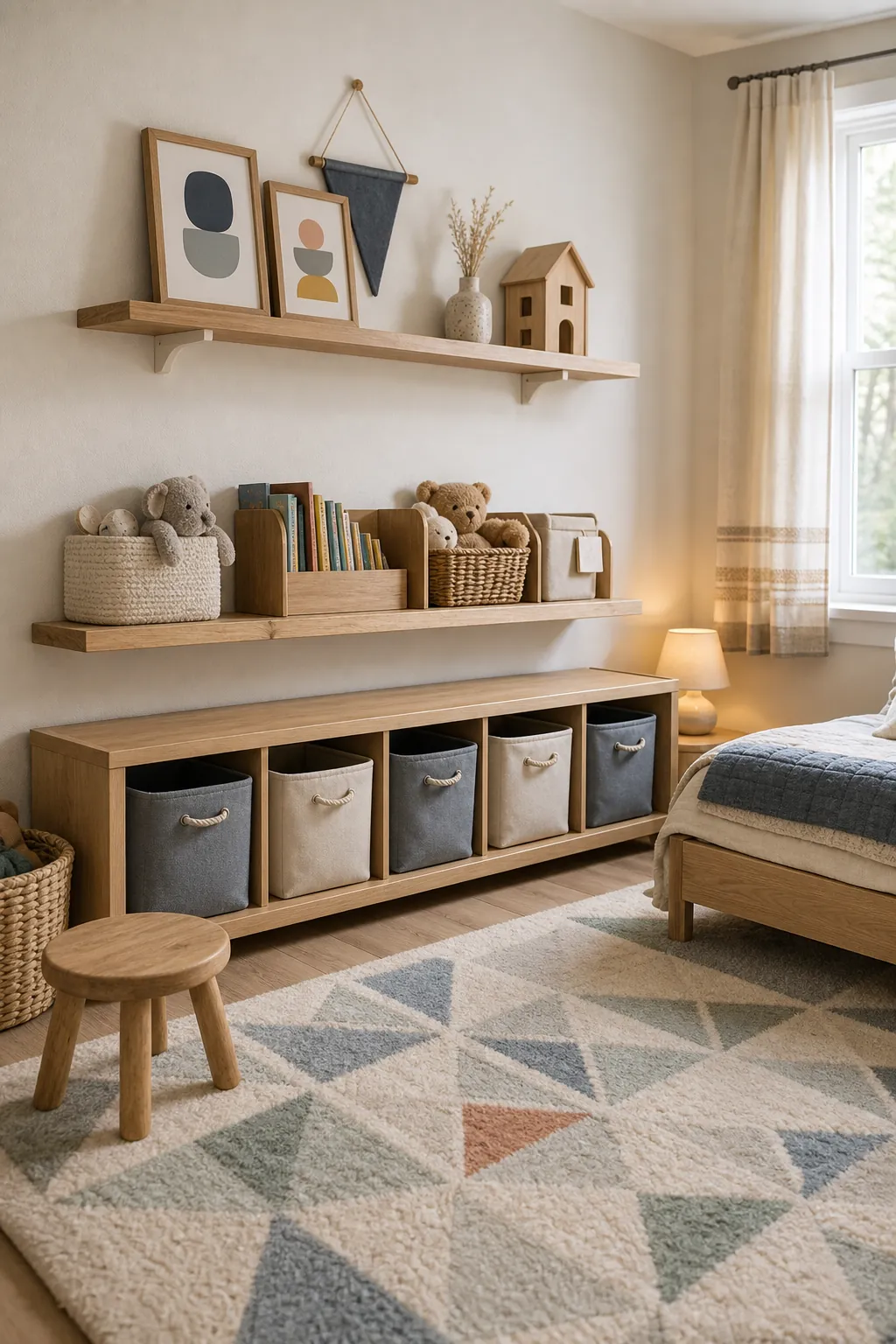
If the shelves are near a bed, reading chair, or play mat, keep them shallow and calm. Avoid stacking breakable, heavy, or climb-worthy objects. Anchor furniture where needed, follow the hardware instructions for shelf loads, and think about what a tired child might grab when they stand up. A beautiful shelf is not successful if it creates a new safety problem.
Make One Reading Corner Do More Than Look Cute
A reading corner is one of the easiest ways to connect art, shelves, and rugs because all three have a reason to be there. The soft rug makes the floor comfortable. The shelves keep a few books visible. The art gives the corner a mood. The trick is to make the corner usable, not just photogenic.
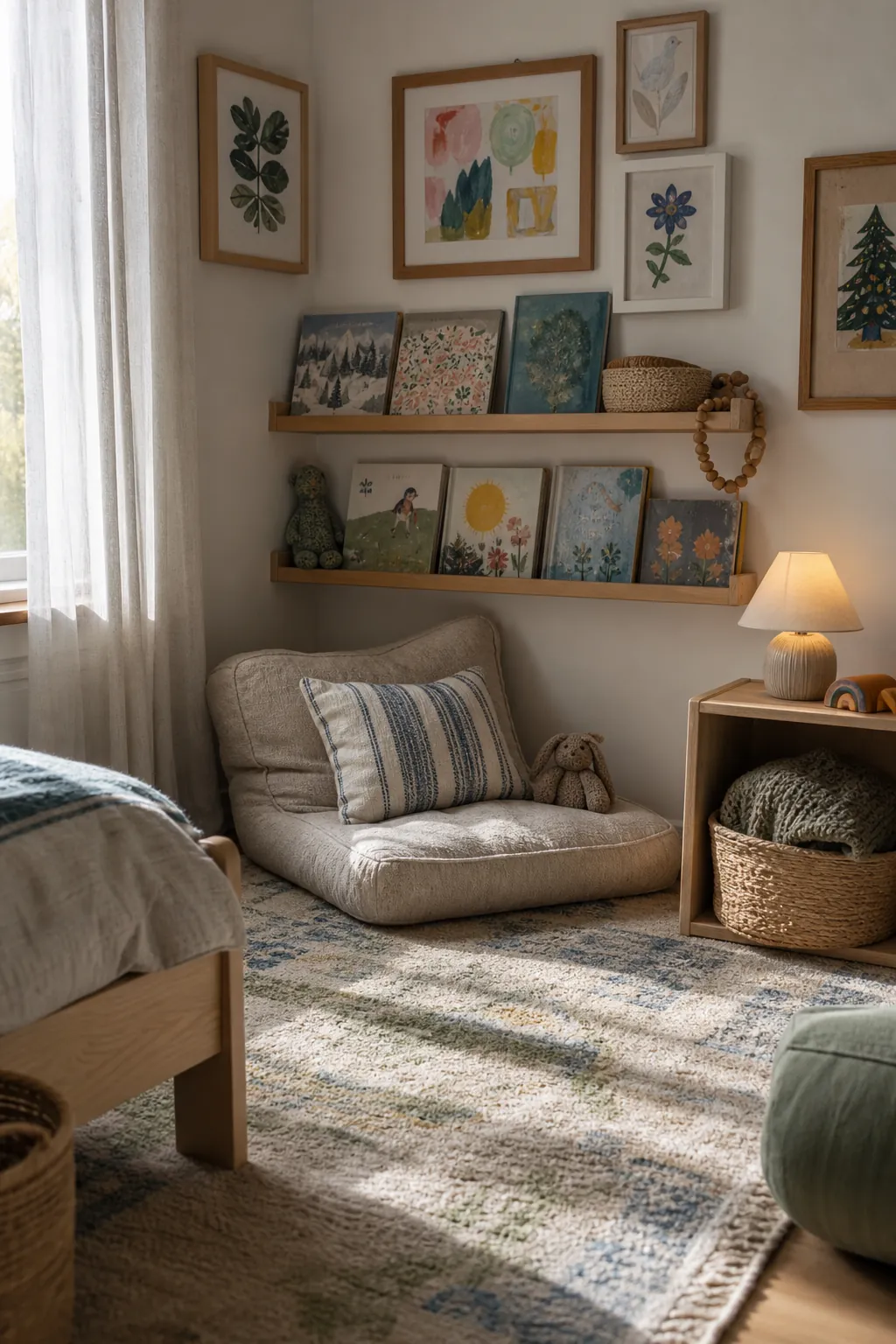
Give the corner a real seat: a floor cushion, small chair, pouf, or firm pillow stack. Add a basket for books that do not fit the ledge. Keep the art low enough to relate to the child, but high enough that it is not kicked or pulled down during play. If the room is shared, let each child own one shelf slot or one framed piece so the corner does not become one person’s territory.
Protect The Open Floor Zone
The most useful kids rooms have empty space on purpose. That sounds obvious until a room fills with bins, chairs, tiny tables, storage carts, baskets, and decorative objects. The rug should not be completely buried. It should still read as an open landing zone where a child can spread out.
Before adding another shelf or storage piece, stand in the doorway and ask what path is left. Can a child walk from the bed to the door without stepping over toys? Can two children sit on the rug together? Can a parent reach the closet, dresser, or crib without moving a pouf? Good room styling often means removing one small thing, not adding another.
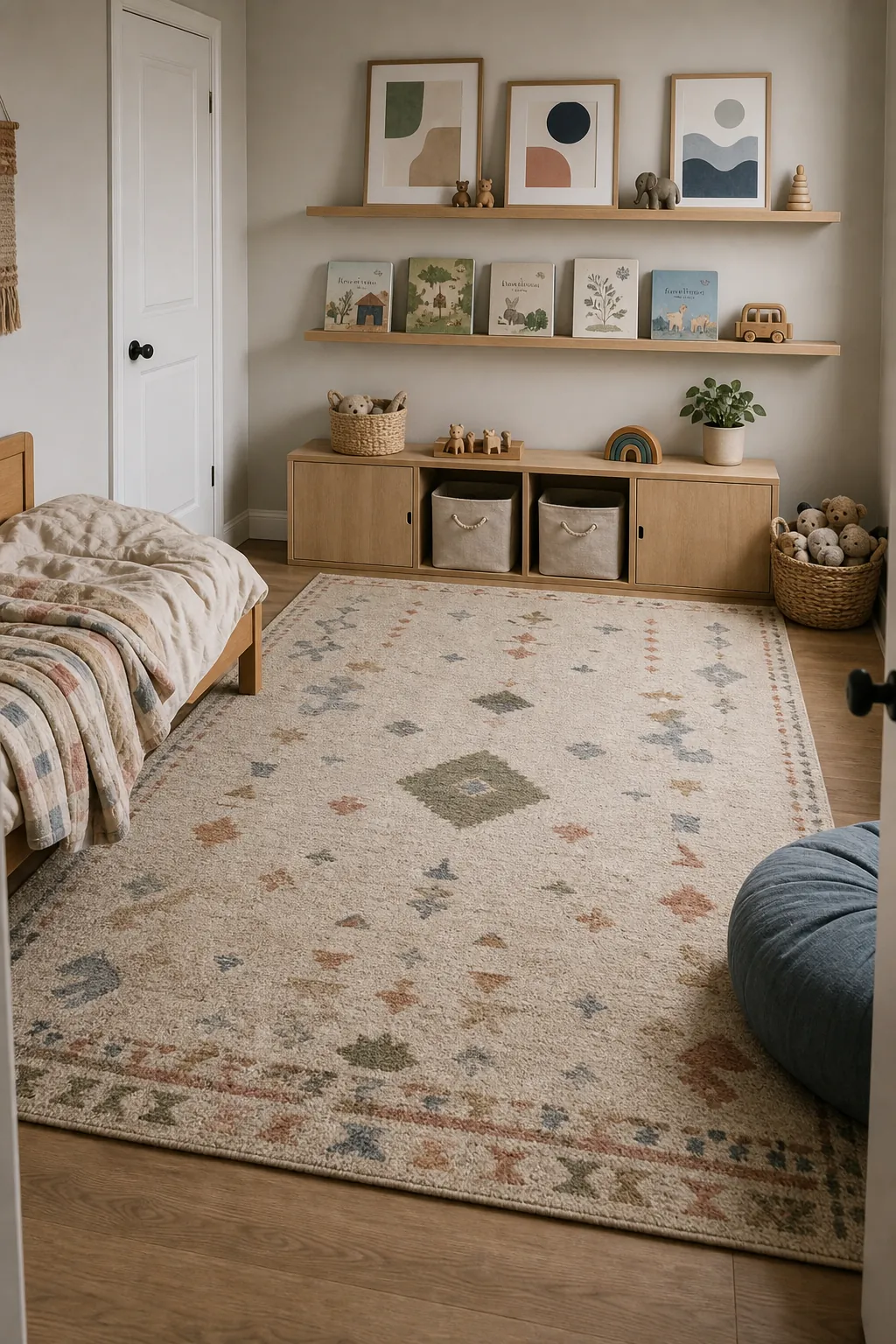
This is where closed storage matters. Open shelves are good for beauty and invitation. Closed drawers, bins, and baskets are good for reality. A room with both will usually stay calmer than a room that asks every toy to be part of the decor.
Choose A Palette That Lets The Room Grow
Kids love color, but color works better when it has boundaries. If the rug has five strong colors, choose wall art that repeats only two or three of them. If the art is bright, keep the rug quieter. If the shelves hold colorful books and toys, let the furniture and bins stay neutral. The goal is not a beige room. The goal is a room where the color has a rhythm.
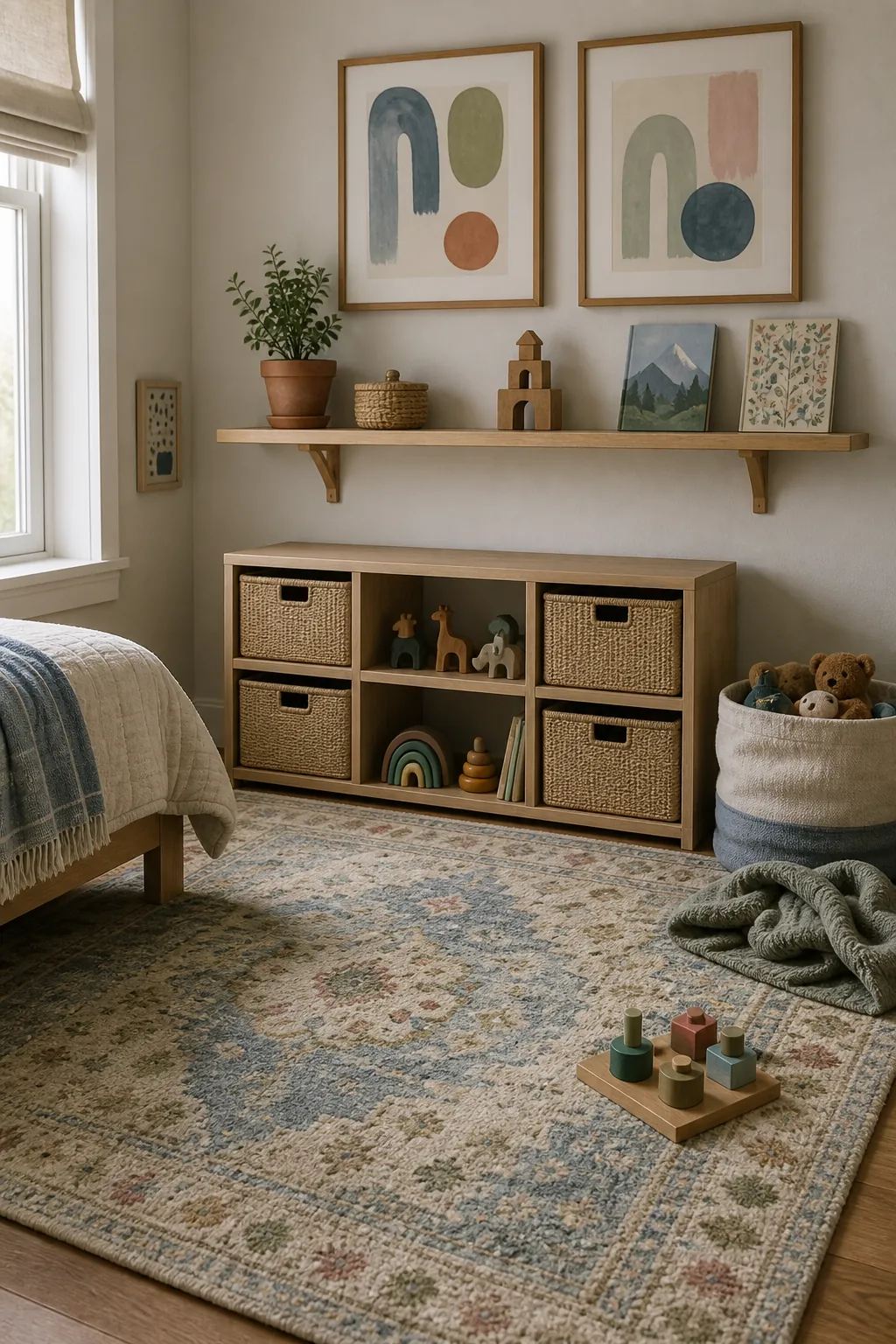
For a room that has to last, pull color from things that are easy to change: pillow covers, art, baskets, a small lamp, or a throw blanket. Let the larger pieces do quieter work. Pale wood, warm white, sage, blue-gray, oatmeal, clay, and muted rose are flexible because they can lean toddler, school-age, playful, or calm depending on what you pair with them.
Build In Rotation So The Room Does Not Collapse Into Clutter
One reason parents get frustrated with playroom decor and storage ideas is that the room looks clean only right after a reset. The fix is not more bins. The fix is a rotation system that makes fewer things visible at once.
Use shelves for the current favorites: three books, one art supply tray, one basket, one small display toy. Keep the rest in a closet, under-bed drawer, lidded bin, or higher cabinet. When the room starts to feel ignored, rotate instead of shopping. Children often rediscover what they already own when it returns with space around it.
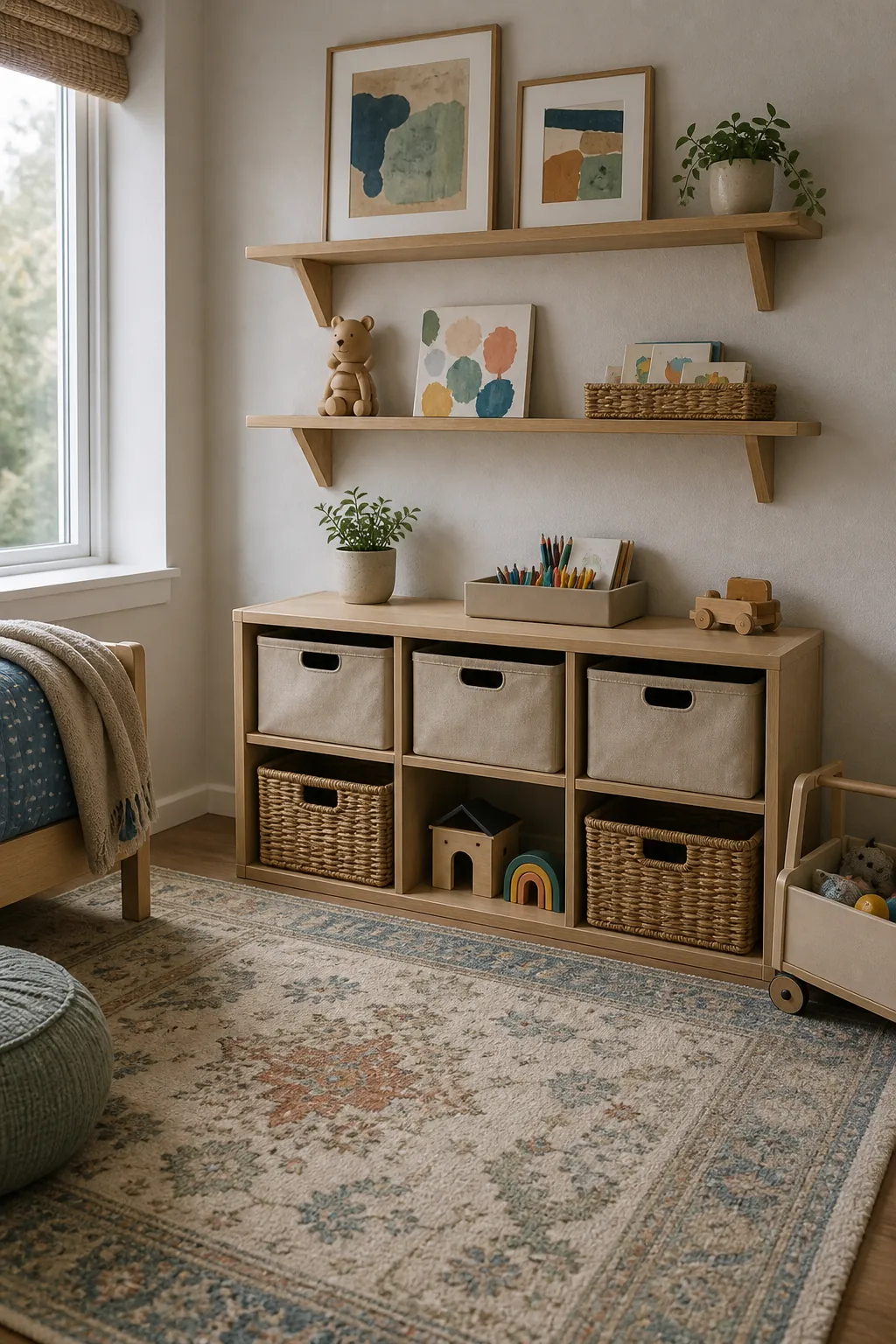
- Keep one shelf partly empty so new treasures have somewhere to land.
- Use baskets for categories children understand: blocks, plush toys, dress-up, books, art.
- Store messy supplies near a wipeable surface, not beside the bed pillow.
- Put cleanup containers where play actually happens, not across the room.
Make Nursery Decor Easy To Age Up
If you are decorating for a baby or toddler, resist the urge to make every choice baby-specific. Nursery decor ages better when the expensive or difficult pieces are simple: the rug, shelves, dresser, curtains, and frames. Then the sweet details can come from art, soft toys, mobiles, blankets, and baskets.
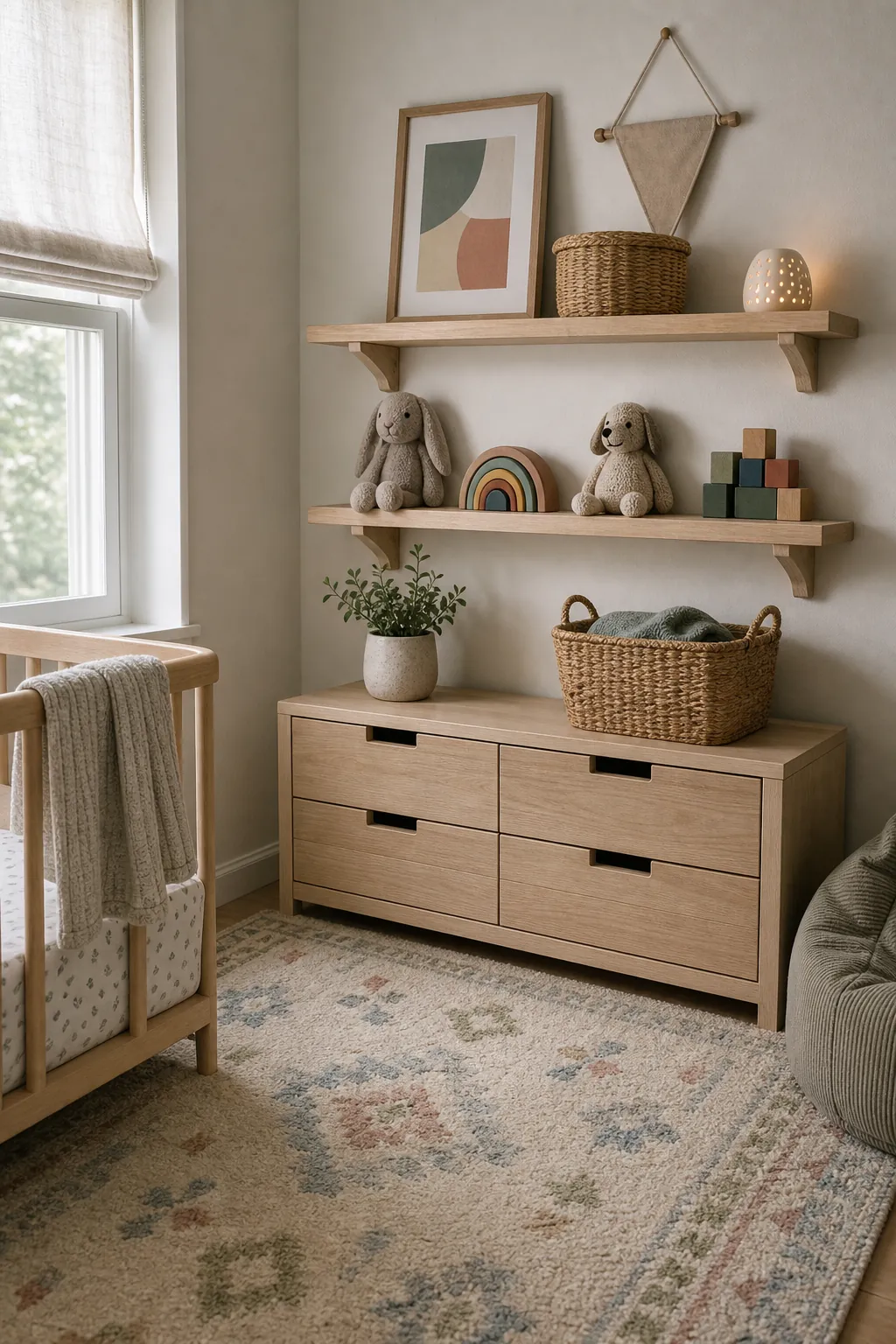
A shelf above a dresser can start with diapers, a night light, and one framed print. Later it can hold books, art supplies, or a rotating display. A soft rug can start as a crawling surface and later become the reading and building zone. The best kids room ideas leave room for the child to change without forcing the whole room to be rebuilt.
Do The Final Room Check From A Child’s Height
Before calling the room finished, crouch down. From a child’s height, you will notice different things: a shelf that feels too high, a rug corner that curls, a bin that is hard to pull, a picture that is hidden behind a chair, or a path that looks blocked. This check is more useful than another shopping search.
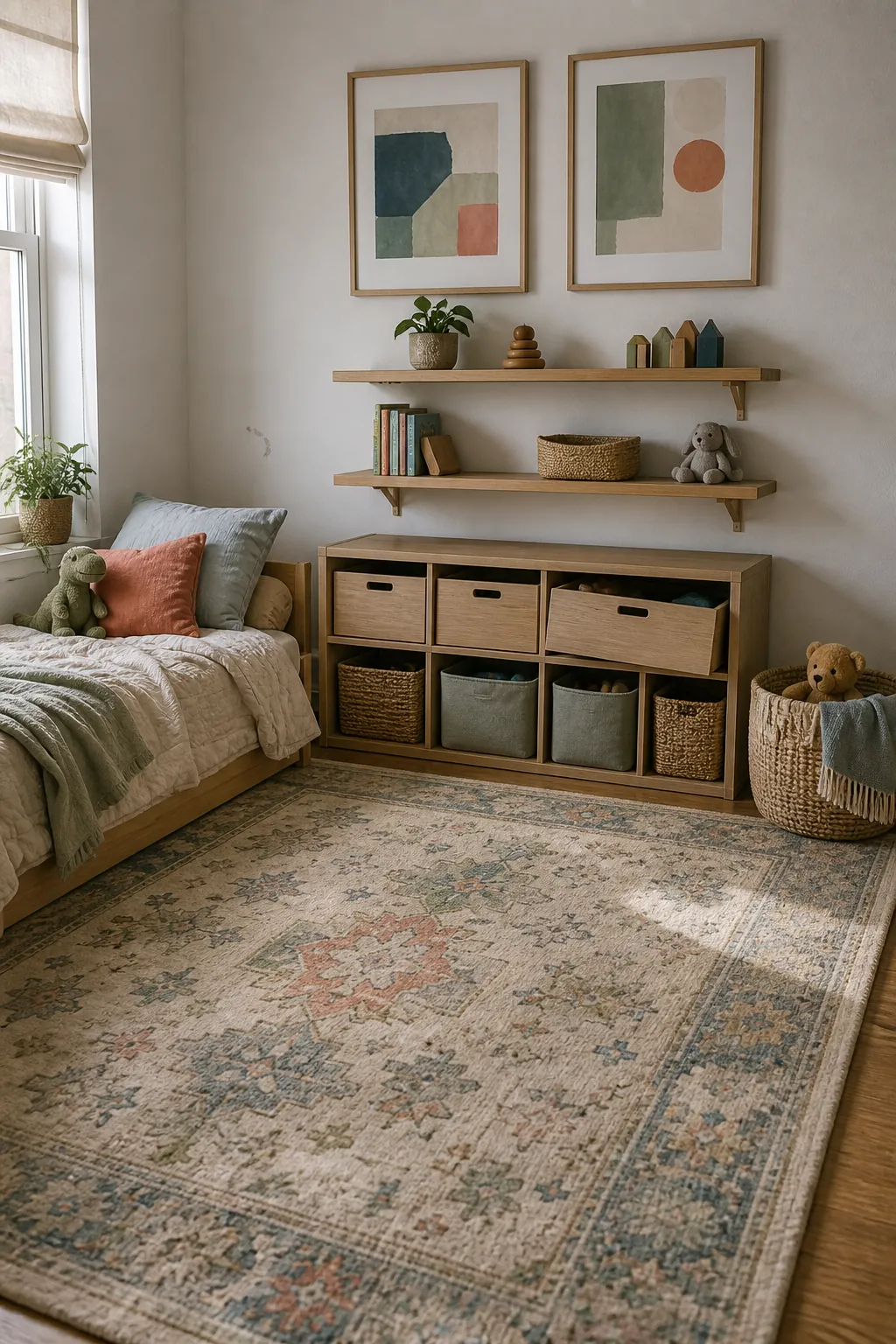
Then remove one thing from each visible surface. One fewer object on a shelf, one fewer pillow on the bed, one fewer basket on the floor. Kids room styling works best when the room can absorb real life without instantly looking broken. The art gives it personality, the shelves give it order, and the rug gives everyone a soft place to land.