
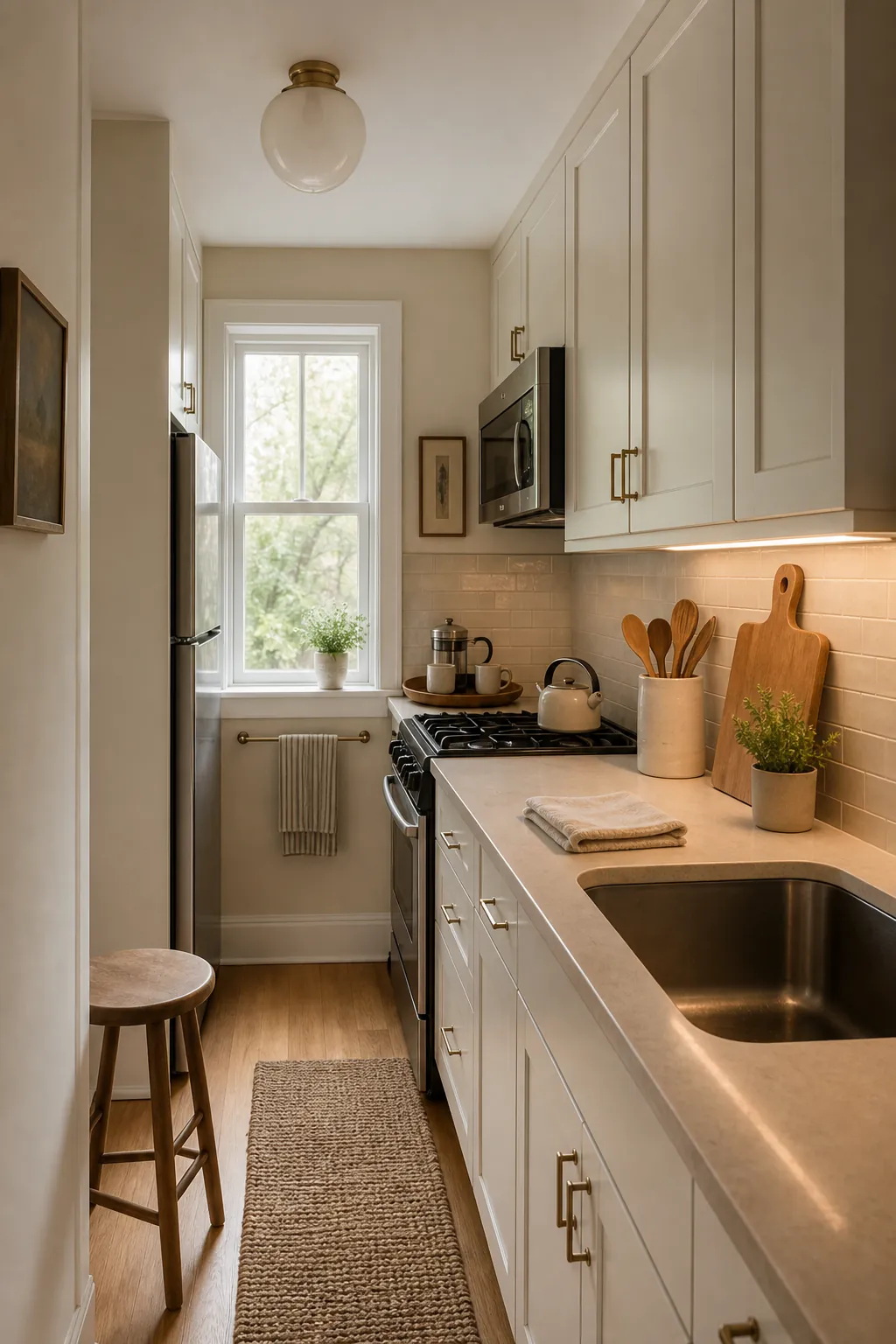
A small kitchen usually does not feel cold because it is too small. It feels cold because every surface is working too hard: the overhead light is harsh, the counters hold too many unrelated things, the finishes are all slick, and the warm details are scattered instead of intentional.
The fix is not to add more decor. In a compact kitchen, more decor often becomes more noise. The better move is to make the room feel warmer through a few high-impact choices that also make daily cooking easier: softer lighting, calmer counters, practical storage, tactile wood accents, and a tighter color story.
The goal is a warm kitchen that still has room to breathe. You want the counter to be usable, the eye to have quiet places to rest, and the small details to feel like part of a home rather than a collection of things you are trying to squeeze into one corner.
Start by removing visual noise, not personality
When people ask how to make a small kitchen feel less busy, the real frustration is usually not style. It is the feeling that the room is visually yelling even when it is clean. Open shelves hold too many shapes. The counter has appliances, mail, spice jars, dish soap, cutting boards, fruit, and a drying rack all competing for attention. One bright towel or one patterned curtain is charming; ten little accents make the whole kitchen feel restless.
Before buying anything, do a visual reset. Stand in the doorway and look at the kitchen as if it were a photo. Keep only the items that earn their place through daily use or genuine beauty. Then group those items by material or color. A wooden board, a ceramic crock, and a small pot of herbs can look intentional together. A random mix of plastic packaging, labels, gadgets, and mismatched containers reads as clutter even if every item is useful.
A less busy kitchen is not empty. It is edited. The difference matters. You can still have warmth, texture, plants, cookbooks, and pretty tools, but they need a clear job and a defined place.
Use warm lighting before you add more warm decor
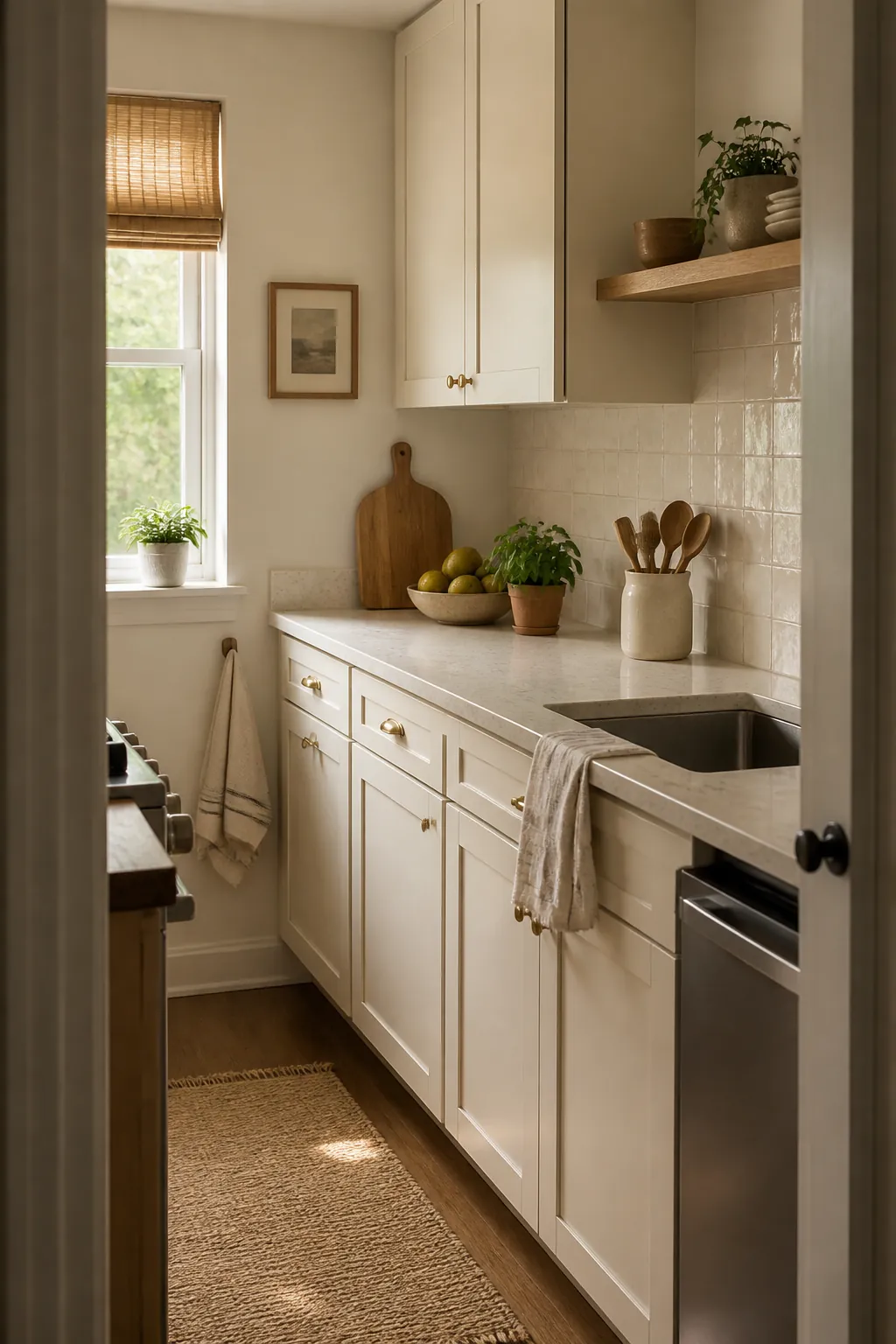
Lighting is the quickest way to change the emotional temperature of a small kitchen. Many compact kitchens rely on one ceiling fixture, and that single bright source creates glare, hard shadows, and a flat, sterile feeling. It also makes every object on the counter stand out at once, which is one reason the room can feel busy even after you tidy it.
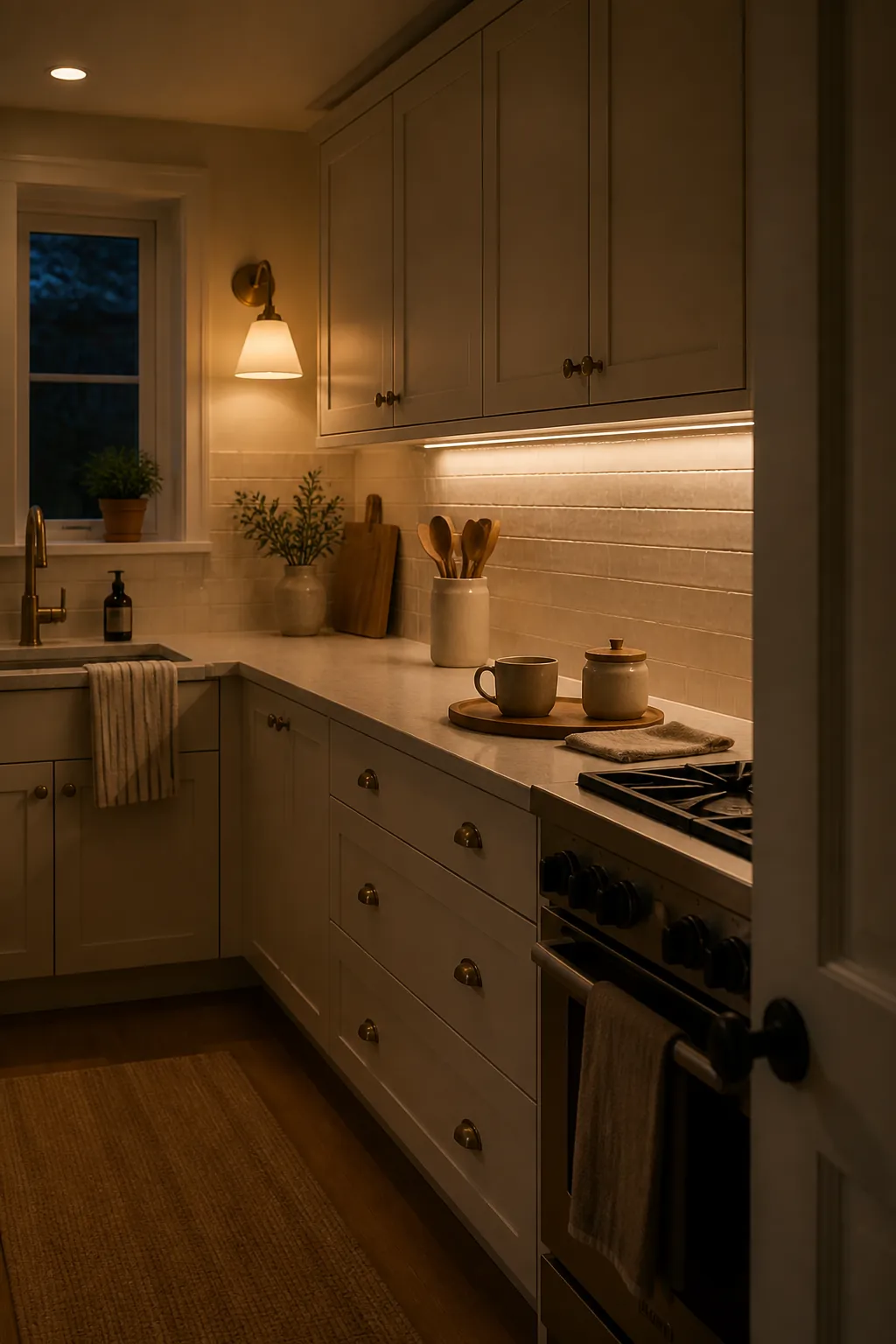
Layered kitchen lighting works better. Keep the overhead light for cleaning and safety, but add a softer layer where your eyes actually land: under-cabinet lighting above the prep zone, a small plug-in lamp on a safe side surface, a warm pendant over a tiny breakfast spot, or low-profile shelf lighting. Aim for warm white light that still lets you see food clearly. Too yellow can feel dingy, but too cool can make wood, stone, and neutral kitchen finishes look flat.
If the kitchen feels harsh at night, fix the light before you fix the color palette. Warm lighting makes cream paint, oak cutting boards, woven shades, brass hardware, and neutral ceramics look softer. Under cold light, the same pieces can look disconnected or oddly dull.
Keep the counter useful, then make it beautiful
Counter space is the real luxury in a compact kitchen. If the counter is full before you start cooking, every meal feels like a negotiation. You move the toaster to chop onions, stack dishes to open a drawer, and push a decorative tray aside just to make coffee. That daily friction makes the room feel smaller than it is.
Choose one clear prep zone and protect it. This does not need to be large. Even a small open stretch near the sink or stove can change the way the kitchen feels if it stays consistently clear. Daily-use items can stay out, but corral them. A coffee station on a tray looks calmer than five separate items spread across the counter. Oils and seasonings near the stove can work if they are limited, decanted, or grouped in one container. The same rule applies to dish soap, scrubbers, and hand towels near the sink.
Warmth should not steal your work surface. A wood tray, a ceramic utensil holder, a linen towel, and a small lamp can all add warmth, but if they make it harder to cook, they will start to feel like clutter within a week.
Add wood accents in controlled doses
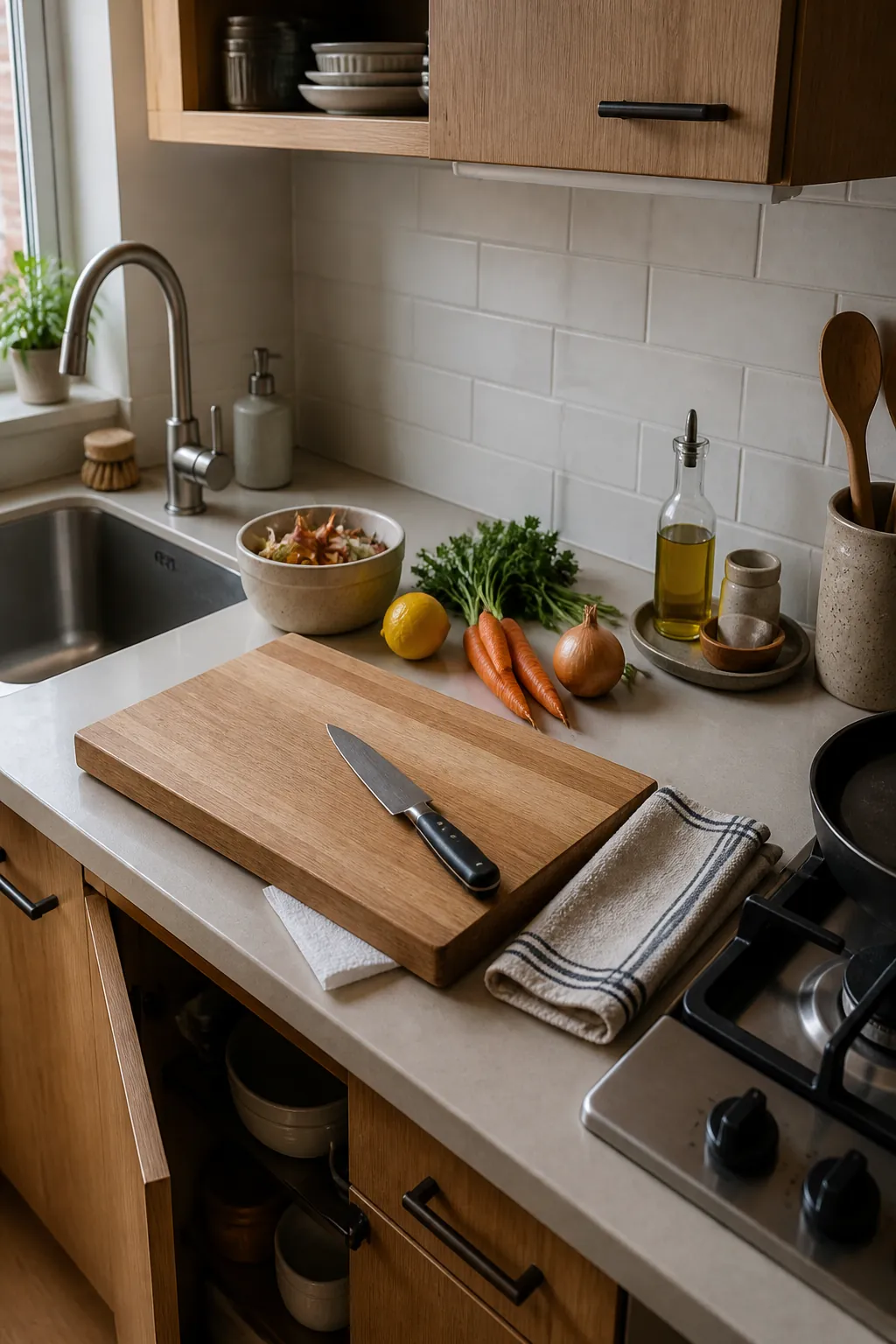
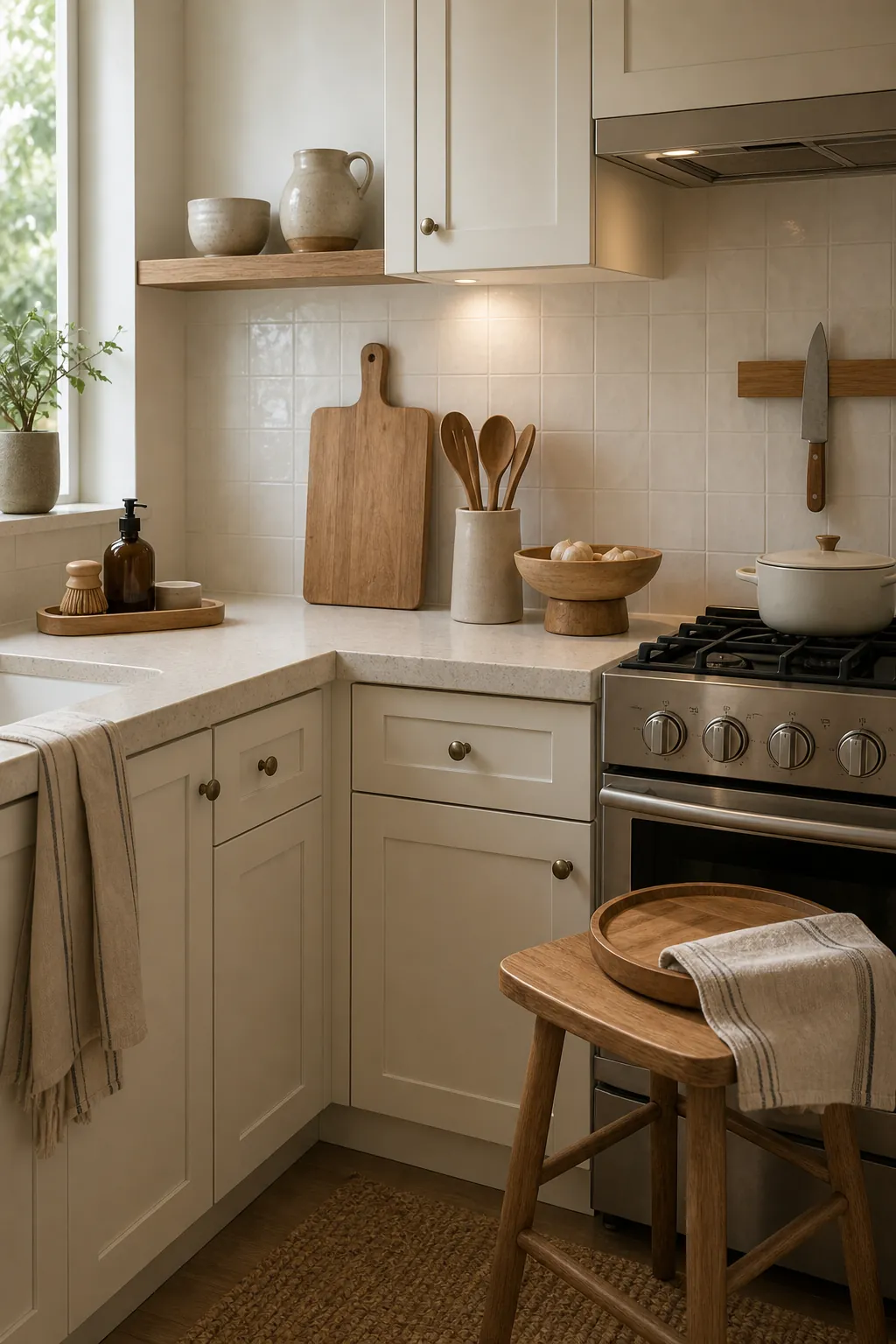
Wood accents are one of the easiest ways to make small kitchen decor feel warmer, but they work best when they are selective. Too much wood, especially in dark or busy grain, can make a compact kitchen feel heavy. The most successful warm kitchen ideas use wood as contrast, not coverage.
Start with small, functional pieces: a cutting board that can lean against the backsplash, a narrow oak shelf, a wooden dish brush, a stool, a knife rail, or a tray for coffee supplies. If the kitchen already has wood floors or wood cabinets, choose a related tone rather than introducing three new finishes. If the room is mostly white, gray, or stainless steel, a pale oak or honey wood accent can soften the edges without making the space feel darker.
The trick is repetition. One wood board can look accidental. Three restrained wood moments, spaced around the room, feel like a design decision. Pair them with quiet materials such as stoneware, matte metal, woven texture, linen, or warm neutral paint so the room gains depth without becoming visually loud.
Choose a quiet palette with one warm direction
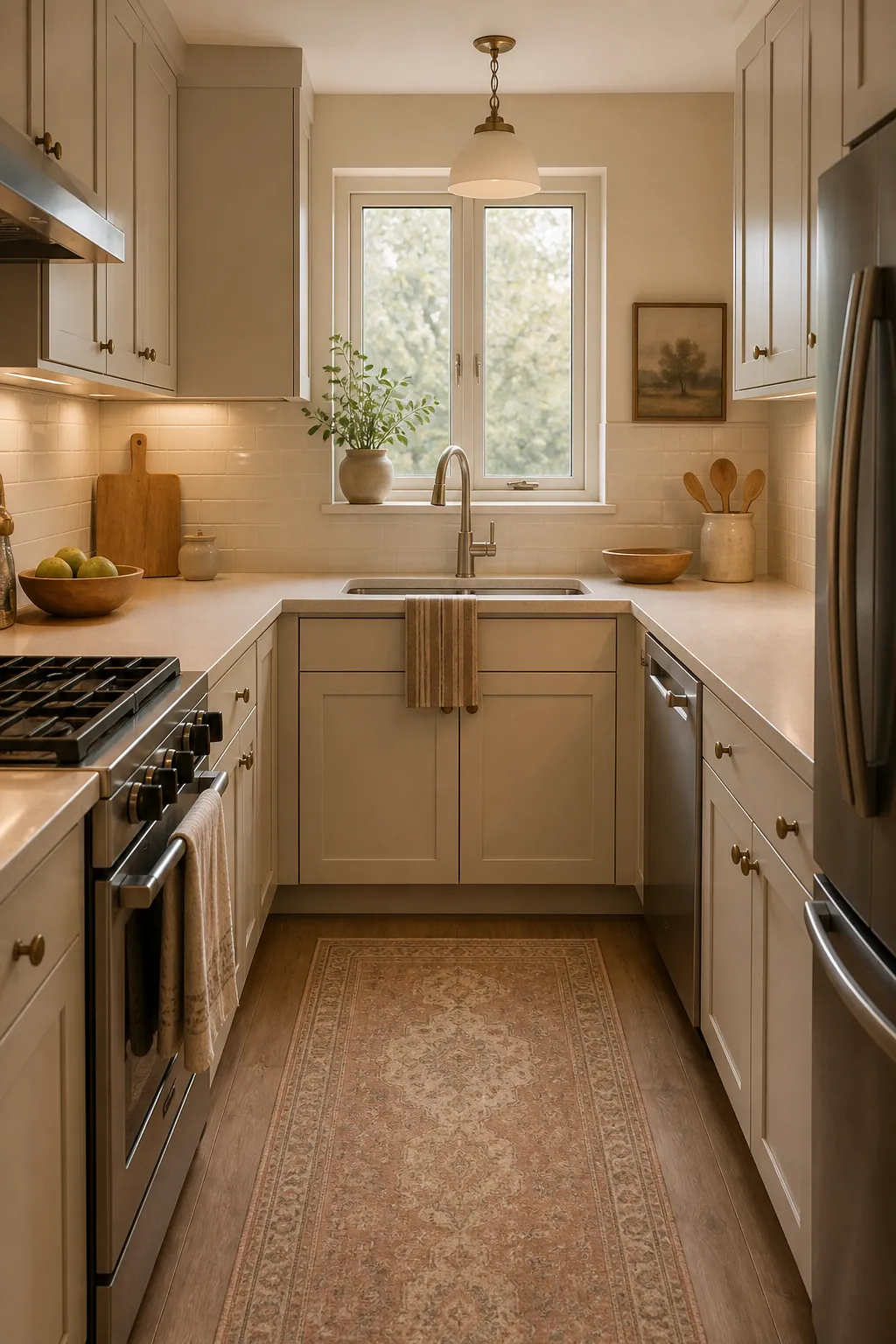
A less busy kitchen needs fewer competing signals. That does not mean everything has to be beige. It means the palette should have one warm direction. Warm white, soft mushroom, pale olive, clay, muted butter, oatmeal, light oak, and brushed brass can all work, but they need to speak to each other.
If you rent or cannot paint cabinets, start with reversible layers: a washable runner, a woven Roman shade, warm bulbs, simple hardware, wood cutting boards, neutral dish towels, and a small piece of art. If you can paint, avoid choosing a color in isolation. Test it next to the countertop, backsplash, floor, and cabinet finish. A warm white that looks beautiful online can turn yellow against a cool gray counter. A beige wall can look muddy beside a pink-toned tile. The best neutral kitchen is not generic; it is coordinated.
One palette makes small spaces feel calmer because the eye does not have to keep sorting new information. You can still use color, but let it come through one or two larger choices instead of many tiny pieces. A runner with warm muted tones will usually feel calmer than a dozen small colorful accessories scattered across the counter.
Hide the practical clutter without hiding the kitchen’s life
Small kitchen organization should not be built around an unrealistic fantasy where nothing is visible. Real kitchens need oil, salt, towels, utensils, coffee, fruit, dish soap, and a place for drying something. The problem is not visibility. The problem is when every practical item has a different container, label, color, height, and location.
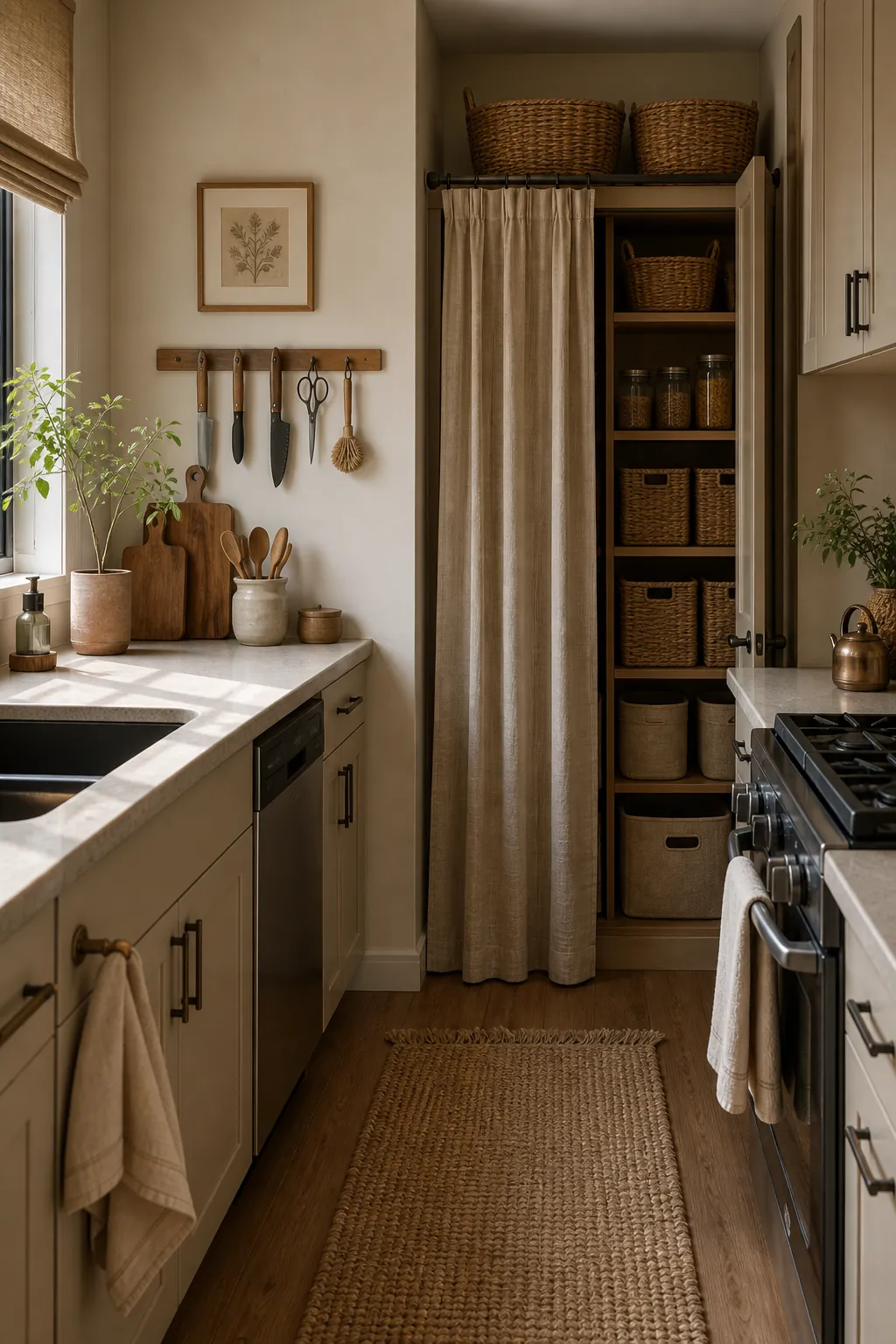
Use storage that creates visual blocks. Wicker baskets on top shelves can make odd pantry items look unified. A curtain can soften an open utility corner. Matching bins can turn exposed storage from chaotic to intentional. Drawer dividers, risers, hooks inside cabinet doors, and magnetic strips can move tools off the counter while keeping them easy to grab. For a compact kitchen, vertical storage is often more useful than another countertop organizer.
The best storage is the kind you will actually maintain on a tired weekday. If a system requires too many steps, it will fail. Keep daily cooking tools close, move weekly appliances lower or higher, and remove anything that only lives in the kitchen because it has nowhere else to go.
Build a five-minute reset into the design
A warm kitchen only stays calm if it has an easy reset. This is where many beautiful kitchen styling ideas fail. They look good for a photo but do not support the way people cook, unload groceries, make coffee, pack lunches, or wash dishes.
Create a simple end-of-day rhythm. Clear the protected prep zone. Put away anything that does not belong in the kitchen. Return daily items to their trays or containers. Fold or hang the towel. Empty or contain the drying rack if it dominates the counter. Turn on the softer light layer for the evening. These tiny habits matter because small kitchens show every loose item.
The room does not need to be perfect. It needs a default state that feels welcoming when you walk in. A compact kitchen can feel warm, organized, and lived-in at the same time when each visible item is either useful, beautiful, or deliberately placed.
The warmer, calmer small kitchen checklist
- Protect one prep zone so daily cooking feels easier before the room even looks prettier.
- Layer warm lighting with under-cabinet, shelf, pendant, or small lamp light instead of relying only on the ceiling fixture.
- Use wood accents selectively so the kitchen gains warmth without feeling dark or crowded.
- Group daily items on trays, in crocks, or in baskets to create calmer visual blocks.
- Choose one palette direction and repeat it through textiles, hardware, wood tones, and ceramics.
- Move rarely used appliances away from the counter so the room has breathing space.
- Keep decor functional when possible: a beautiful cutting board, a linen towel, a ceramic bowl, or a small herb pot does more work than random knick-knacks.
The real test is simple: can you make dinner without clearing a pile first, and does the kitchen still feel like home afterward? When the answer is yes, the room is warm enough, calm enough, and no busier than it needs to be.