
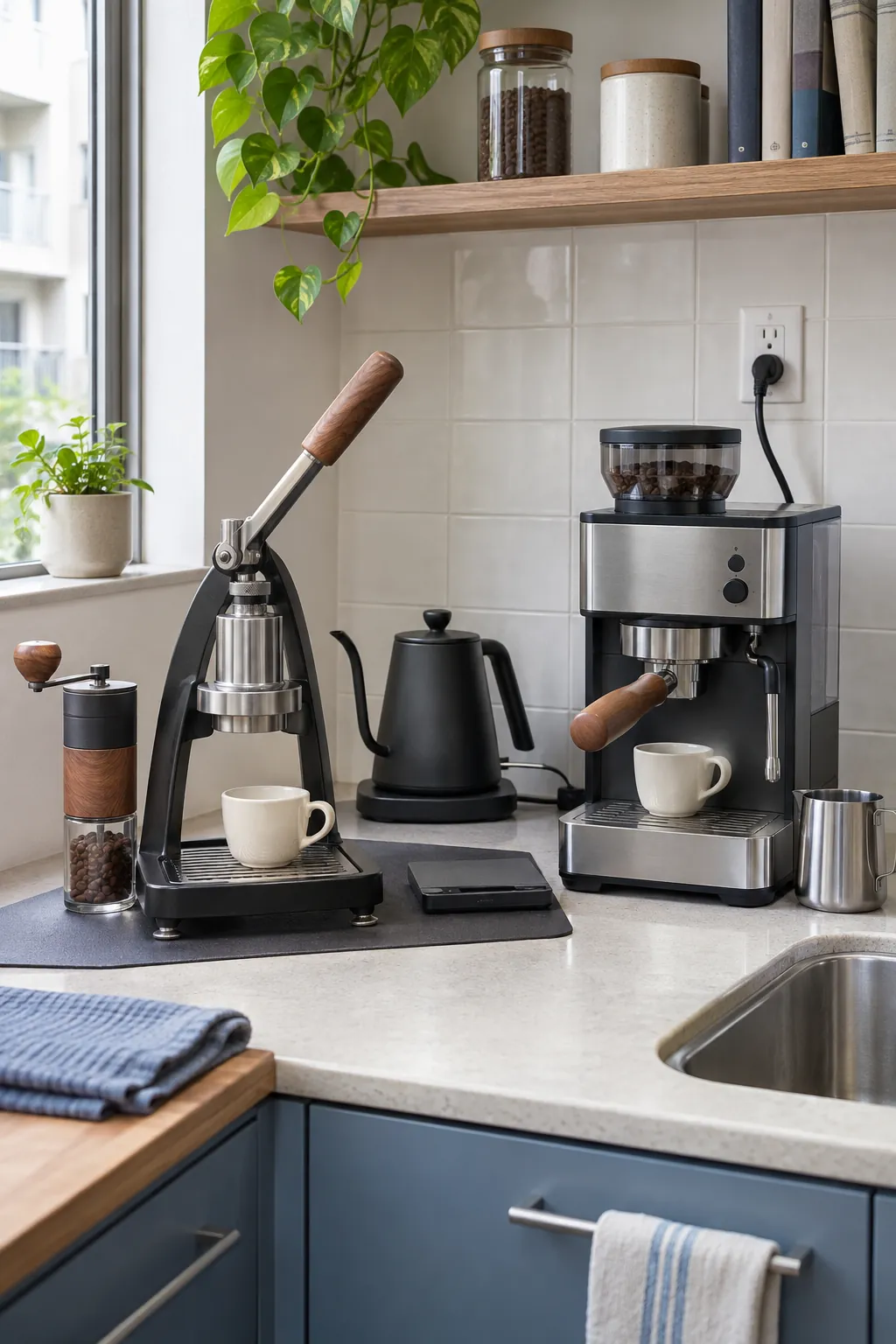
A manual espresso maker often looks like the obvious space saving choice for a small apartment. It can be quiet, portable, and simple to maintain. However, the full setup may also need a kettle, a capable grinder, a scale, and a stable place to press a lever.
A compact electric machine uses more permanent counter space, but it heats water, creates pressure, and may steam milk in one appliance. The better option depends on your complete routine, not only the width of the brewer. Compare how you make coffee, clean up, store tools, and serve more than one person.
The Short Answer
Choose a manual espresso maker if you drink mostly straight espresso, enjoy a hands on process, need quiet operation, and want equipment that can be stored or moved. Choose a compact electric machine if you value speed, repeatable temperature, easier back to back shots, and a built in way to steam milk. In either case, budget enough room and money for the grinder because grind quality affects the result more than many convenience features.
Compare the Whole Footprint
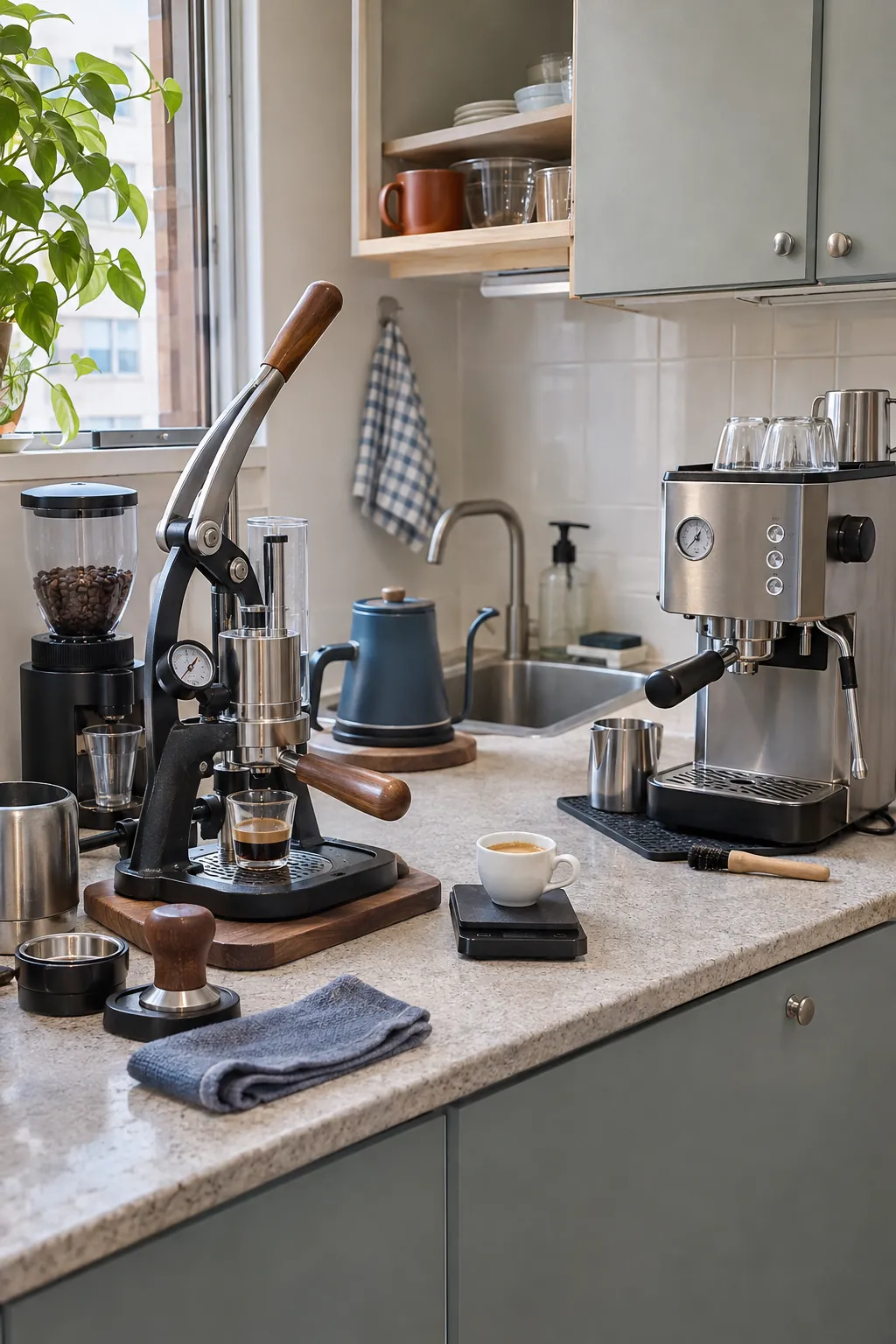
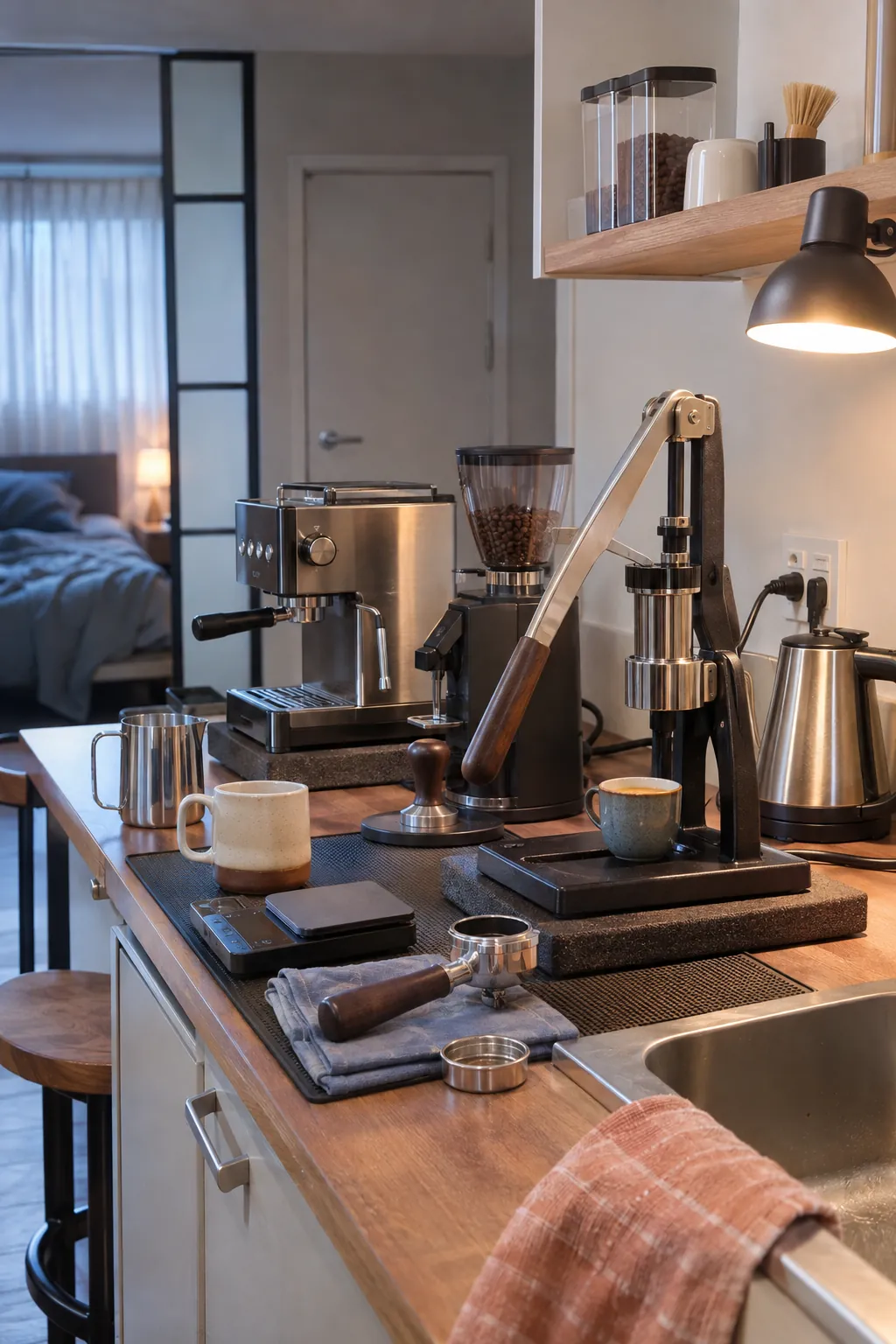
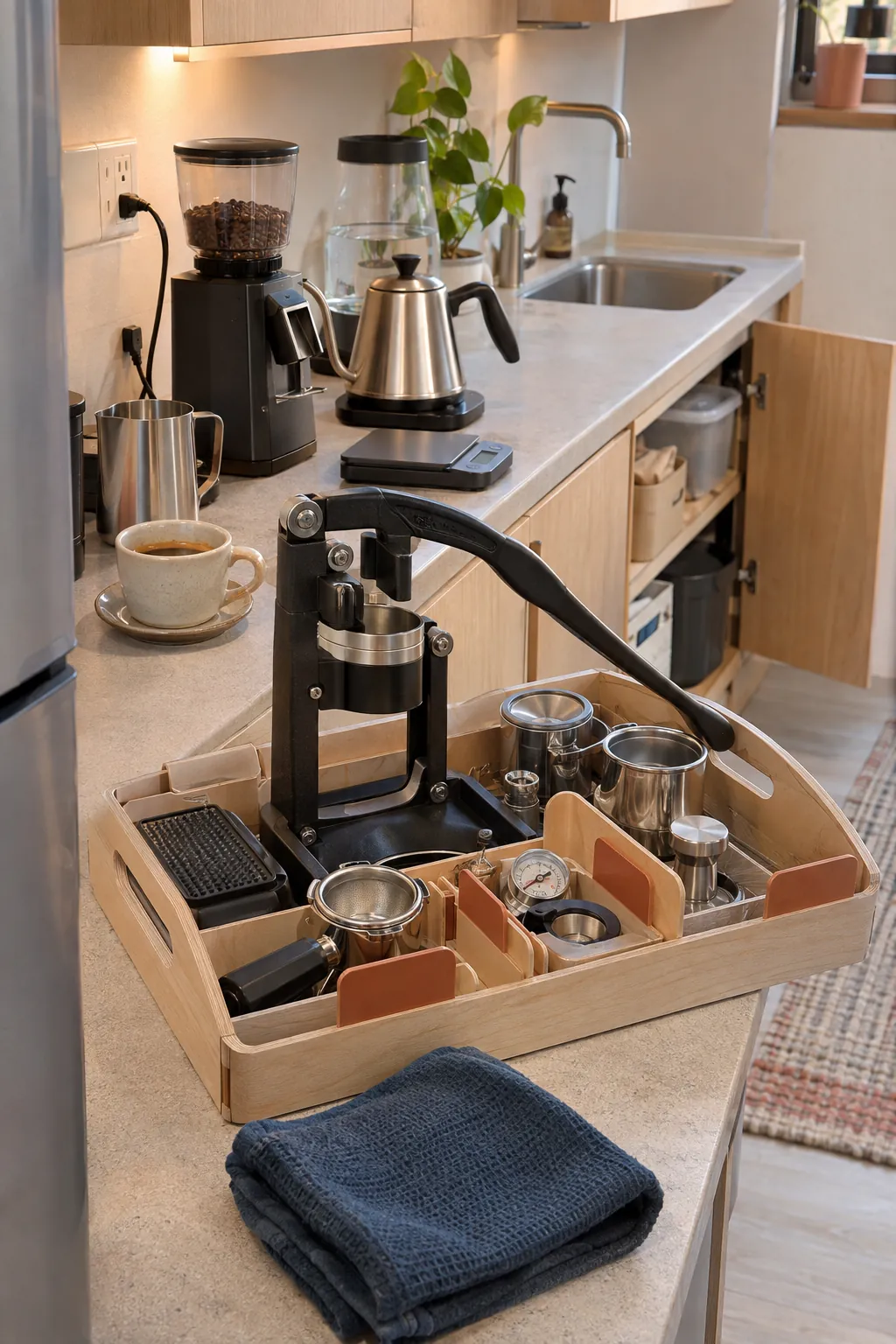
Measure the complete station before deciding that one brewer is smaller. A manual setup may include the brewer, kettle, grinder, scale, tamper, dosing cup, and a place for hot parts to cool. Some manual frames are narrow but tall, and a long lever needs open space above and in front.
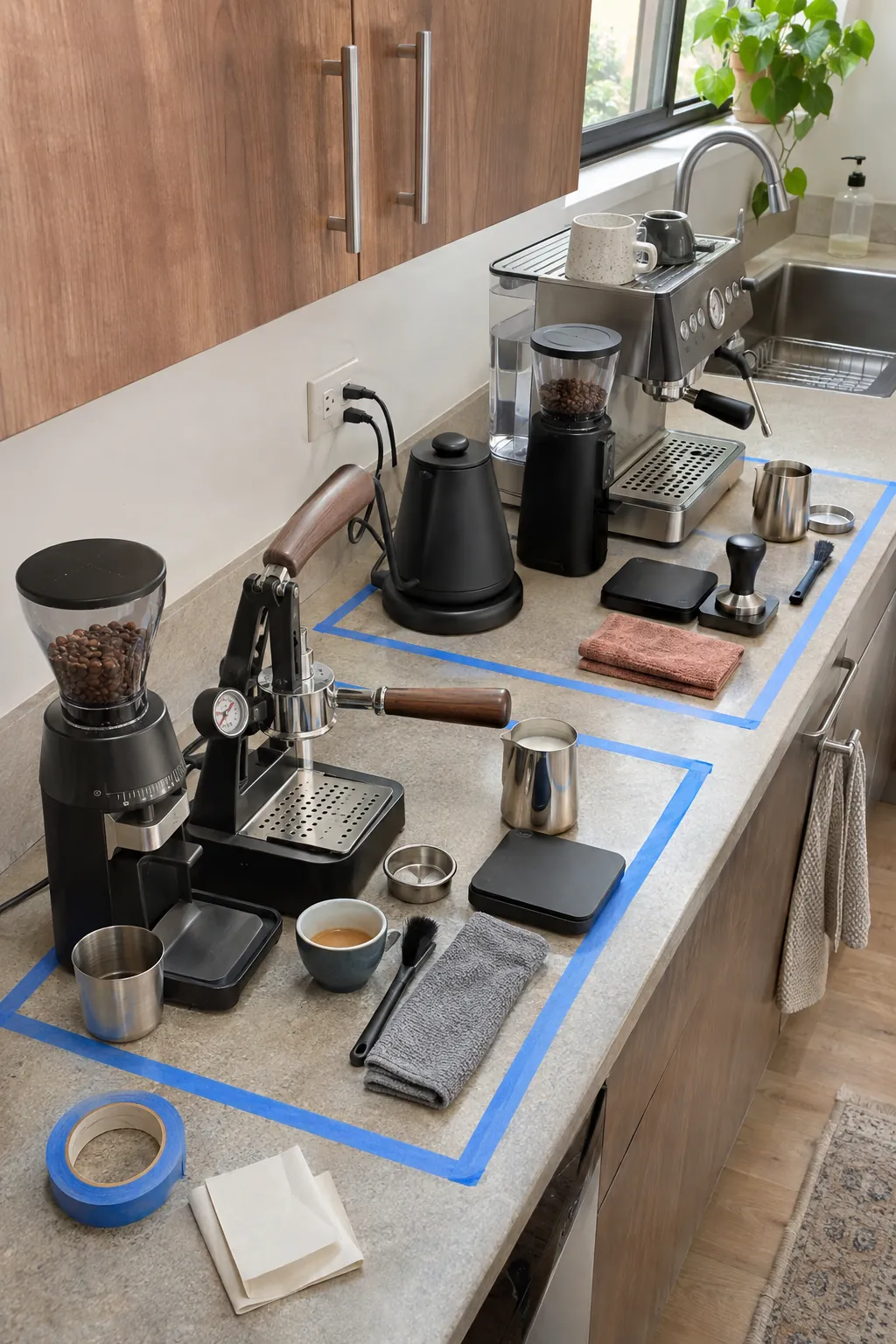
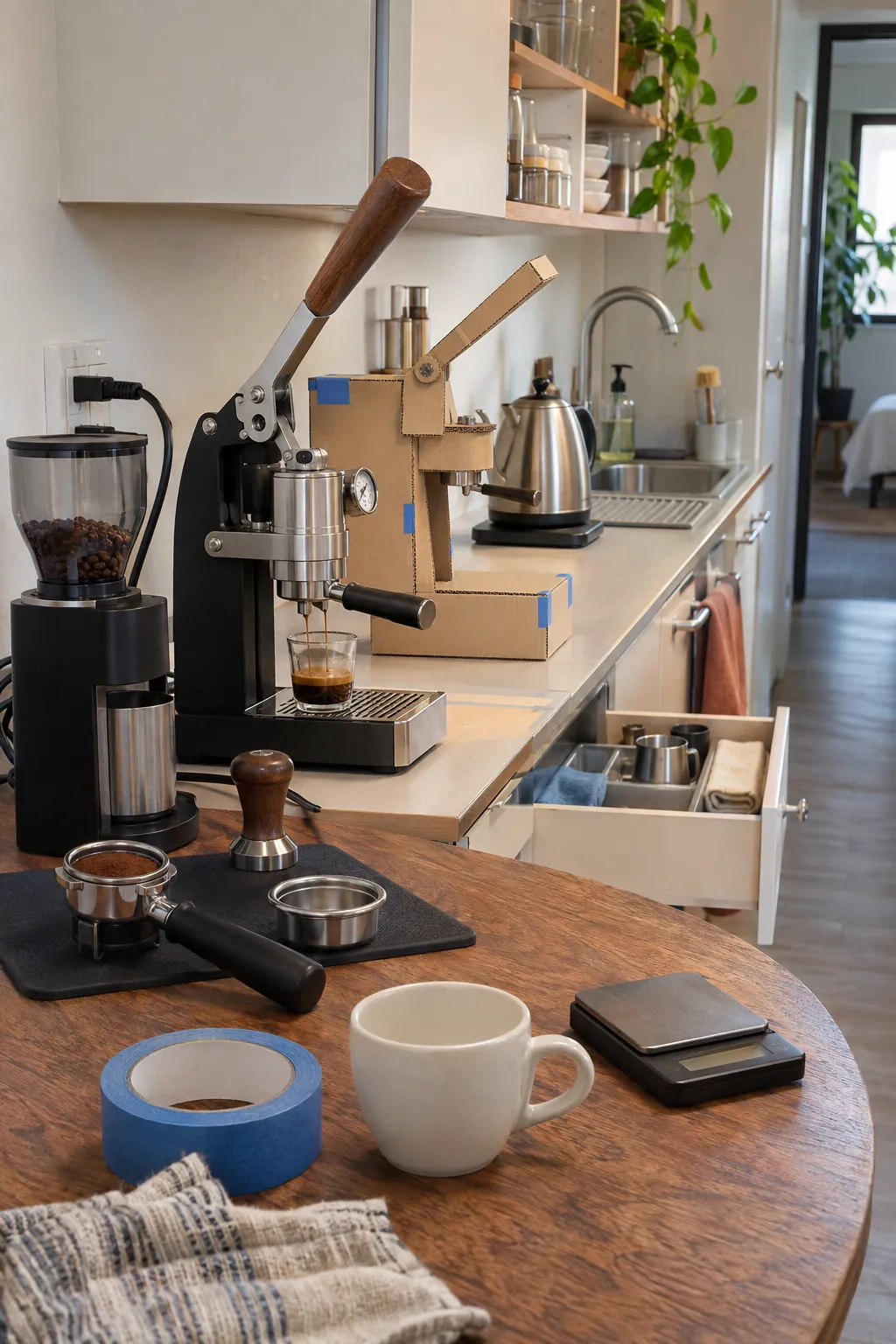
An electric machine usually stays on the counter with its grinder. It also needs side or top access for the water tank, room to remove the drip tray, and free space for the steam wand. Mark every operating position with painter tape, then check that the setup does not block a cabinet, sink, drawer, or preparation area.
Manual Espresso Changes the Workflow
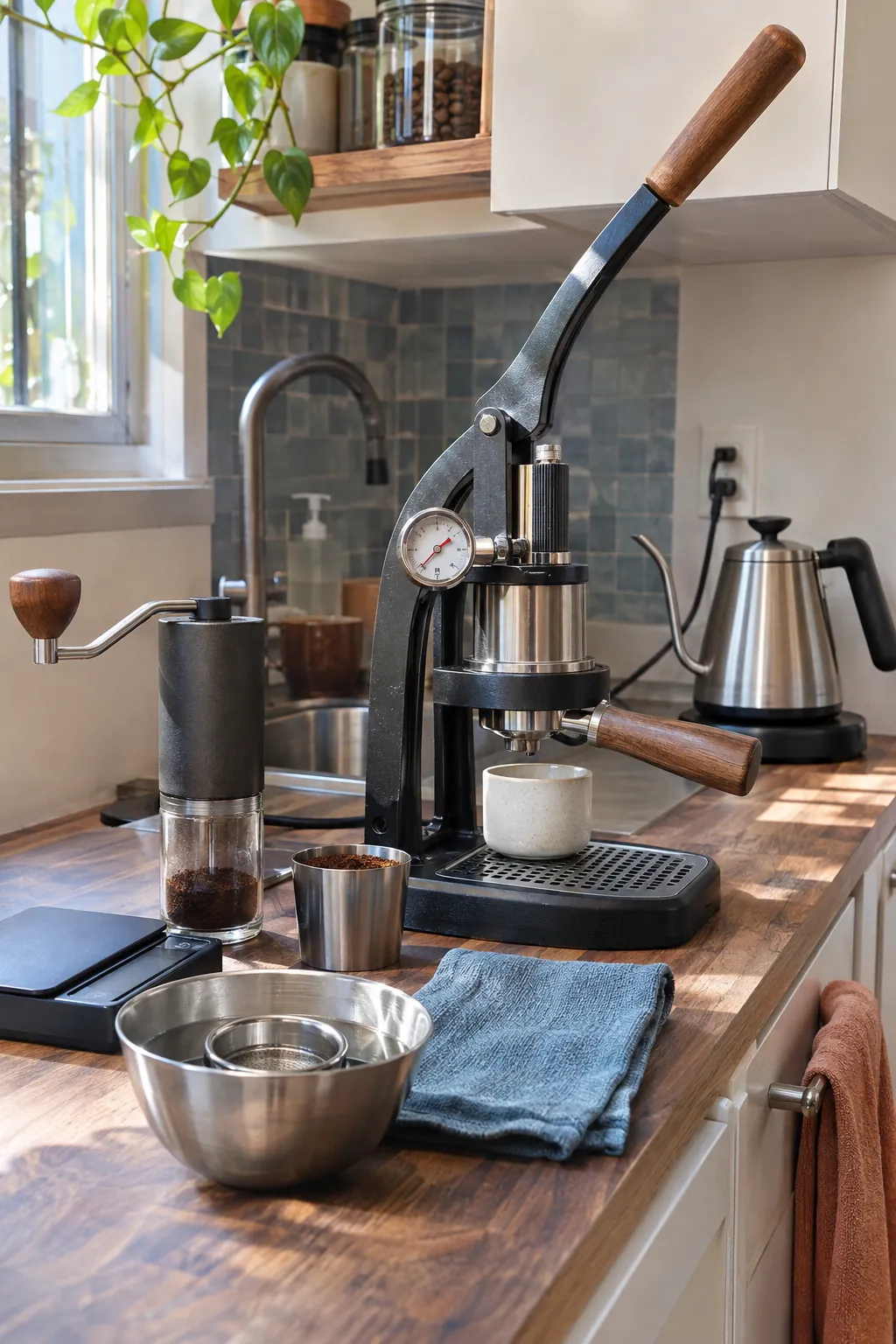
A manual brewer separates the jobs that an electric machine combines. You heat water, preheat the brewing parts when required, prepare the coffee, add water, and create pressure by hand. This gives you direct control over the pressure and flow, but it also adds steps that must be repeated for every shot.
The lever must sit on a stable surface at a comfortable height. A fold down table, light cart, or flexible shelf may move under pressure. Test the direction and force of the lever before choosing a storage spot, and keep hot water away from the counter edge.
Electric Machines Save Steps
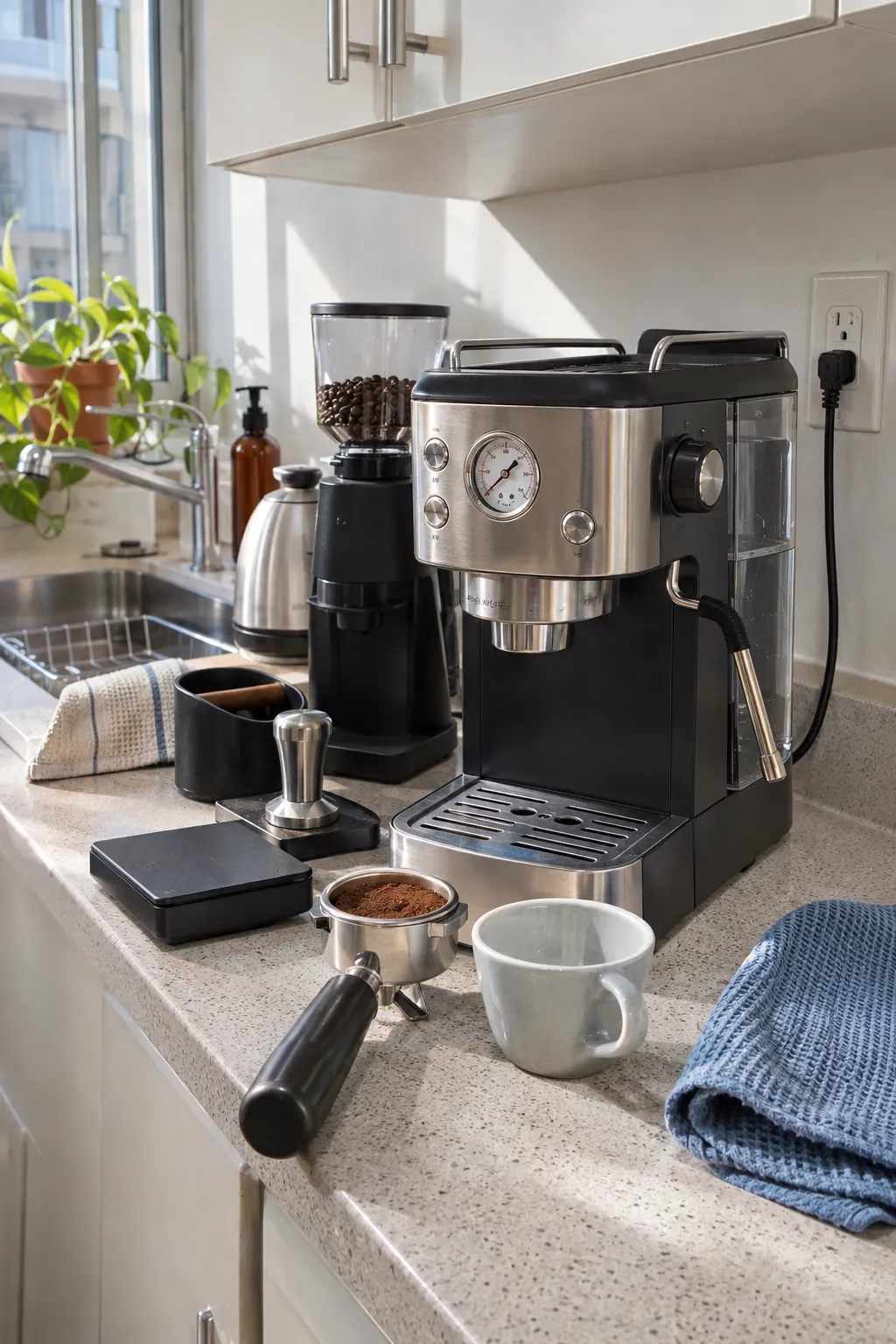
A compact electric machine heats its own water and creates pressure with a pump. After warmup, the process is easier to repeat for a second cup. A model with a useful steam wand also avoids a separate milk frother, which can make the total station smaller for latte and cappuccino drinkers.
The tradeoff is permanent space and electrical demand. Check the water tank path, cup clearance, portafilter swing, drip tray removal, and steam wand movement. Place the machine where its vibration and pump noise are less likely to disturb a sleeping or working housemate.
Think About Milk Drinks
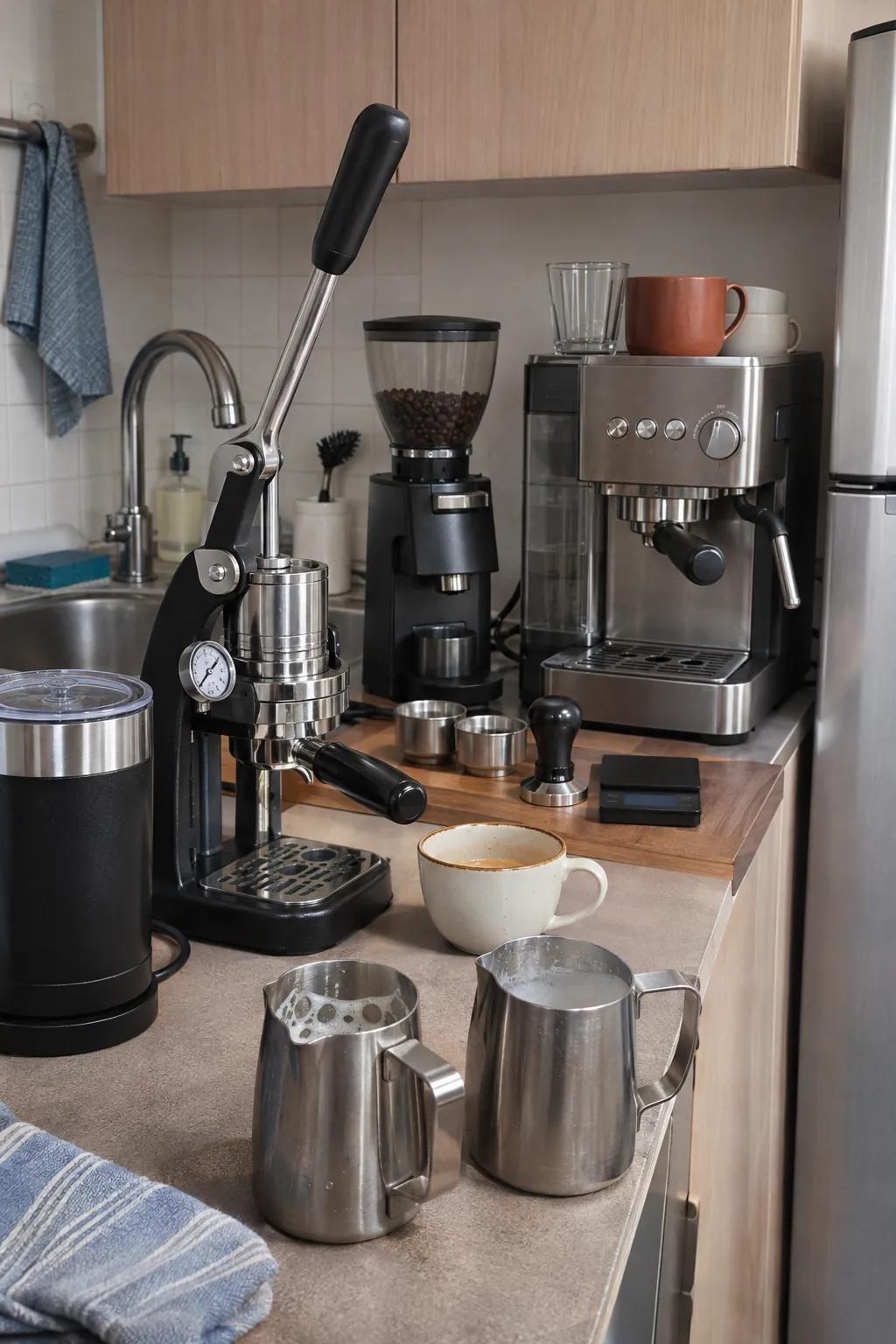
Manual espresso makers usually do not steam milk. You will need a separate electric frother, stovetop tool, or another method, plus a vessel to heat the milk. This can erase the storage advantage and create more parts to wash.
An electric machine with a steam wand makes espresso and textured milk in one station. It also produces heat and moisture, so leave the clearance required by the manual and wipe the wand immediately after use. If you drink only straight espresso or Americanos, a steam system may be unnecessary space and maintenance.
Compare Noise and Morning Speed
A manual brewer has no pump, so the press itself is nearly silent. The grinder and kettle still make sound, but you can choose quiet tools and control when each one runs. The manual process may take longer because you manage heating and pressure yourself.
An electric machine can shorten the active work after it is warm, especially for two or more drinks. Pump vibration, steaming, grinder noise, and cups on the drip tray can carry through a small apartment. Put a stable rubber mat under equipment only when it does not block ventilation or make the appliance unstable.
Cleaning and Maintenance Are Different
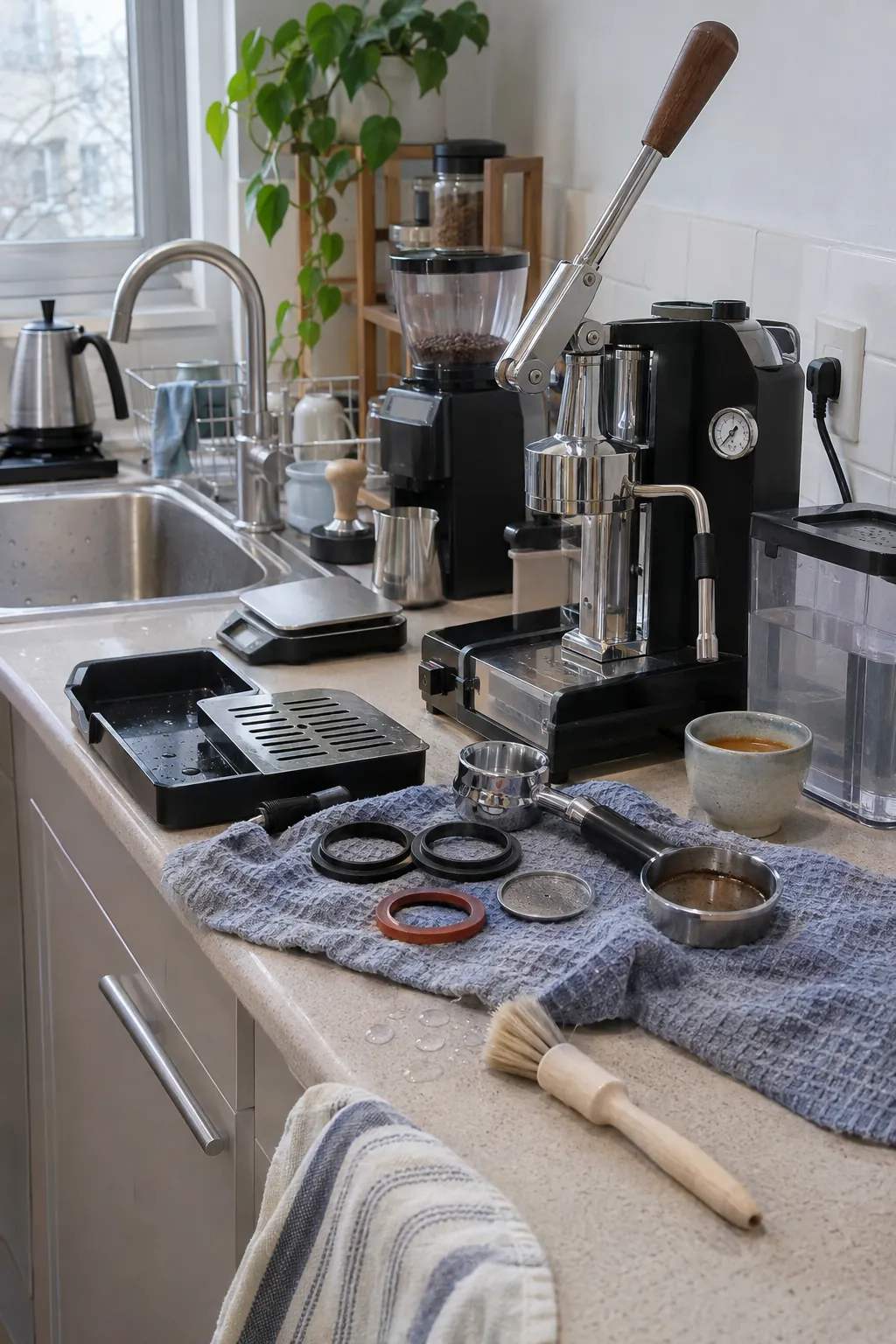
Manual brewers have fewer powered parts, but they still need regular cleaning. Rinse the basket and seals, dry the brewing chamber, and follow the maker schedule for seals and food safe lubricant. A simple mechanism can be easier to understand and repair, but hot parts may need careful handling after each shot.
Electric machines add a drip tray, water path, pump, heater, valves, and sometimes a steam system. They need descaling or other water care based on local water and the maker instructions. Easy front access, removable parts, and available replacement seals can matter more in a small apartment than extra programs.
Storage and Portability Favor Manual Gear
Some manual makers can be disassembled or moved to a cabinet after they cool and dry. This is useful when the counter must serve as a food preparation or work surface. Store every part together in a tray or bin so the setup remains easy to retrieve.
Check the real weight and shape before assuming the machine is portable. A sturdy lever frame may be heavy, tall, or awkward to lift, while a compact electric machine may be easier to leave in one safe place. Never store damp sealed parts where trapped moisture can create odor or residue.
Choose the Setup You Will Repeat
Choose manual when you enjoy the process, make one or two drinks, can manage a kettle safely, and want quiet mechanical equipment that can move. Choose electric when several drinks, milk steaming, faster repetition, and simpler heating matter more than permanent counter space. Price the brewer, grinder, kettle or milk tool, scale, cleaning supplies, and replacement parts as one system.
Before buying, rehearse the workflow with boxes cut to the published dimensions. Move from water to grinder to brewer to sink and note every crossing path. The best small apartment espresso setup is not the smallest object. It is the complete system that fits your room and still feels reasonable on a busy morning.
Final Recommendation
For straight espresso in a very small or shared apartment, a manual maker and compact grinder can be an excellent quiet setup if you accept the kettle and hands on steps. For regular milk drinks or several cups, a narrow electric machine usually gives a smoother routine. Measure the complete station, test the movement path, and choose the workflow that you will want to use and clean every day.