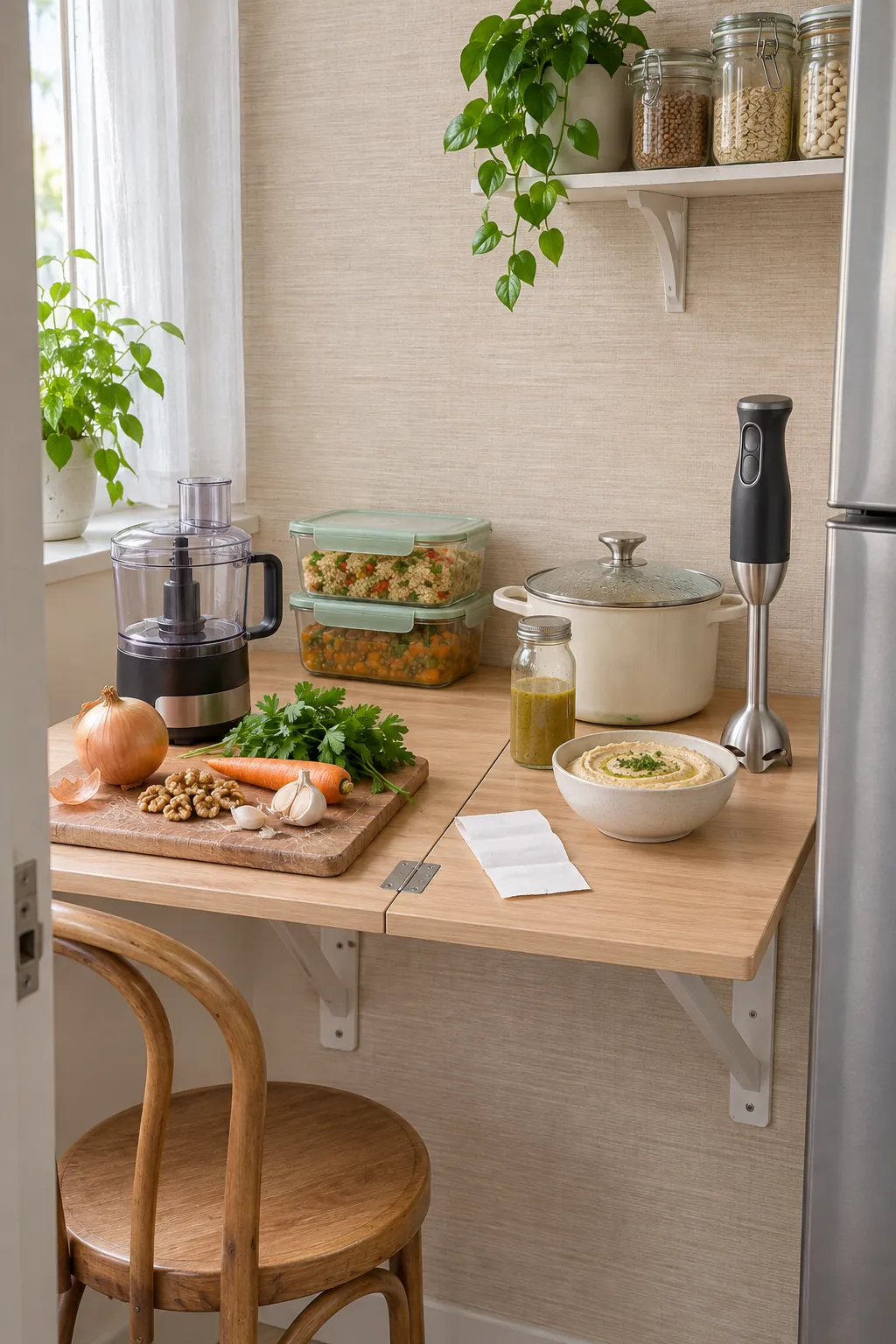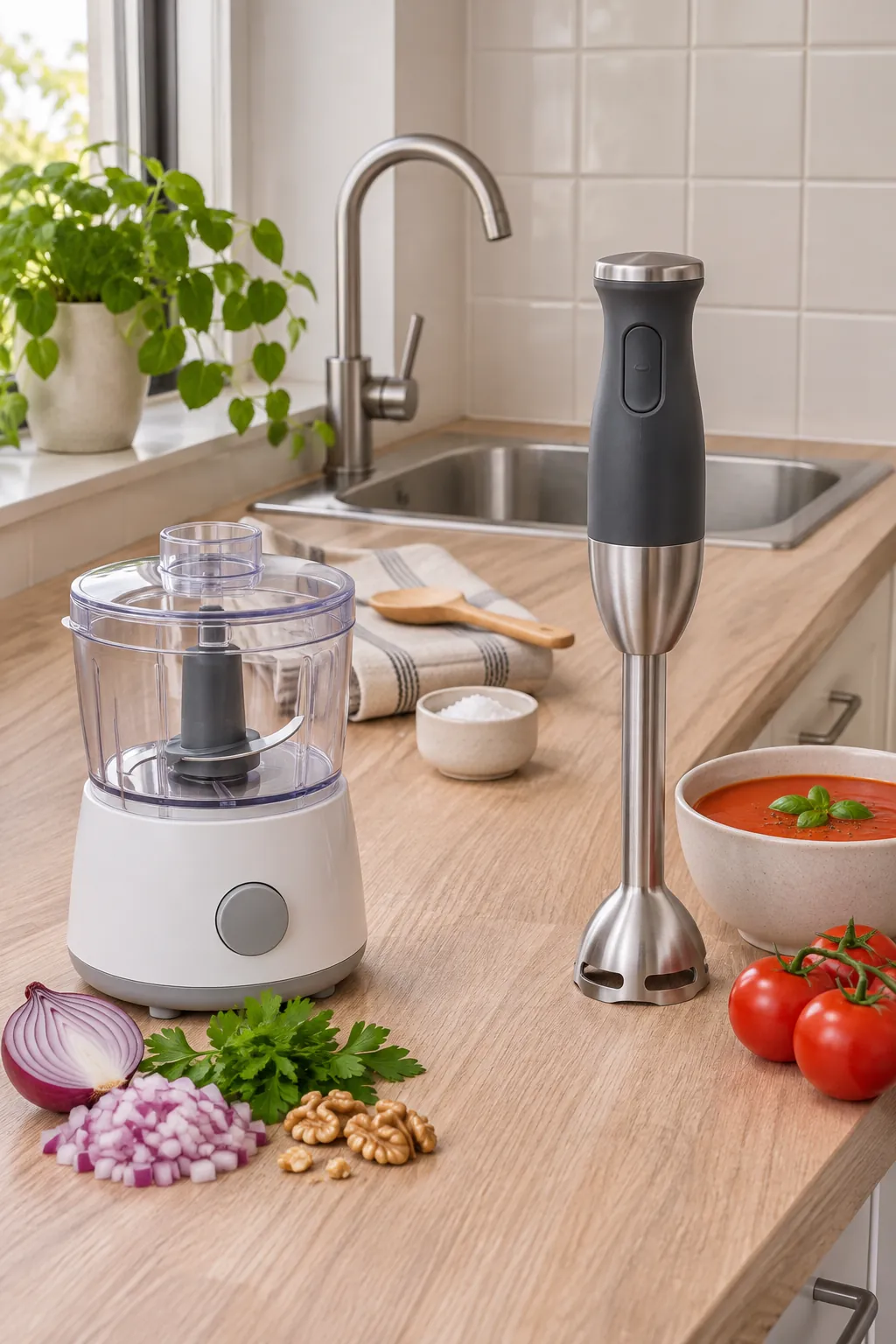
A compact appliance earns its place only when it handles the food you actually make and feels easy enough to reach for on a busy night. The important difference is not motor power. It is the motion each tool uses and the kind of container that motion needs.
The quick answer for a small kitchen
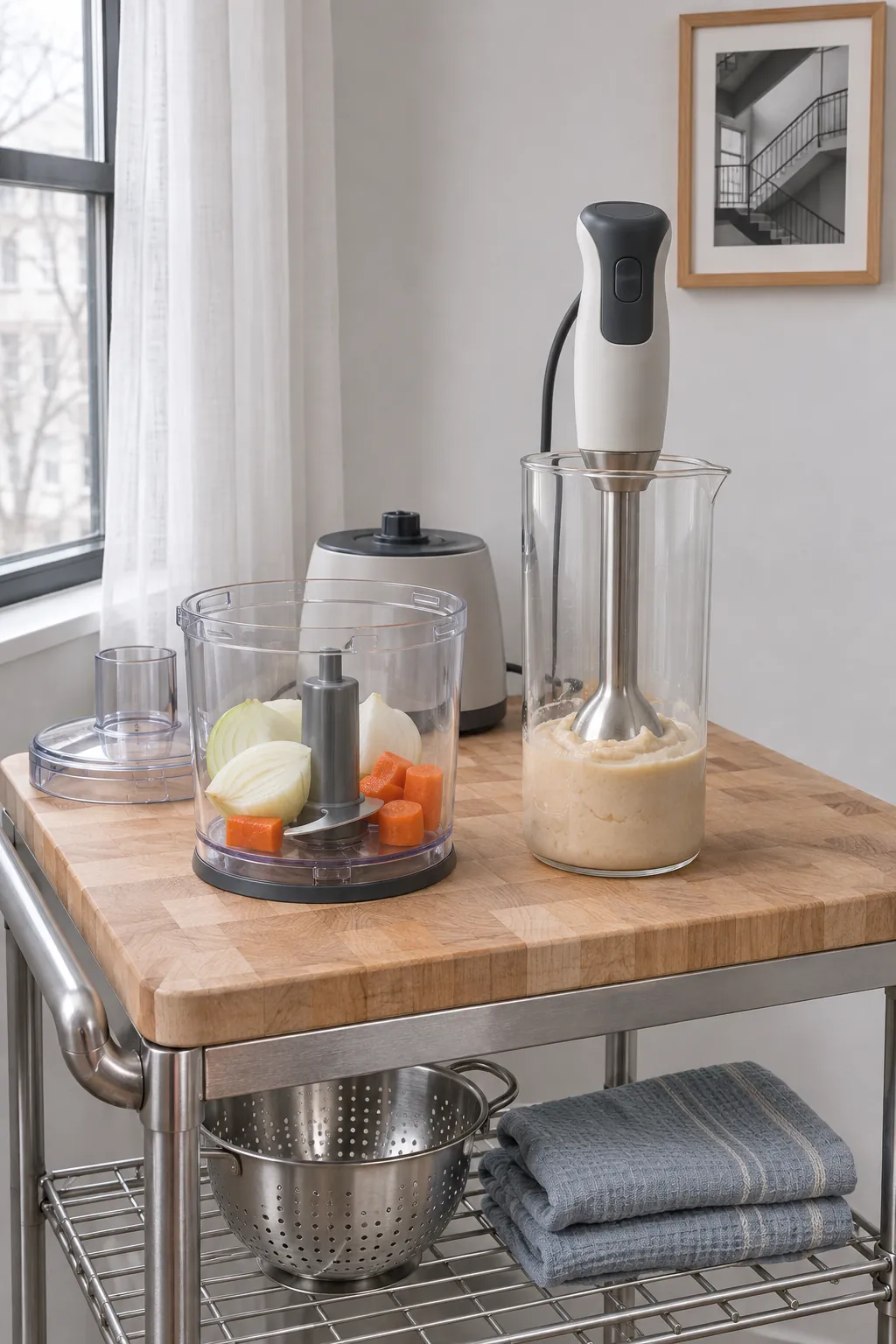
Choose a mini food processor when your regular jobs involve chopping onions, nuts, herbs, garlic, vegetables, or firm ingredients into small pieces. Its wide bowl and curved blade move food across the cutting edge, so a few short pulses can create a coarse or fine texture without adding much liquid.
Choose an immersion blender when you mostly make soup, smooth sauces, purees, dressings, or other wet mixtures. It works inside the pot, jug, or cup you already use, which saves counter space and removes a separate work bowl from cleanup. If your cooking includes both tasks, a stick blender kit with a chopper bowl can be useful, but a dedicated mini processor is usually the stronger choice for frequent firm chopping.
Match the tool to chopping or blending
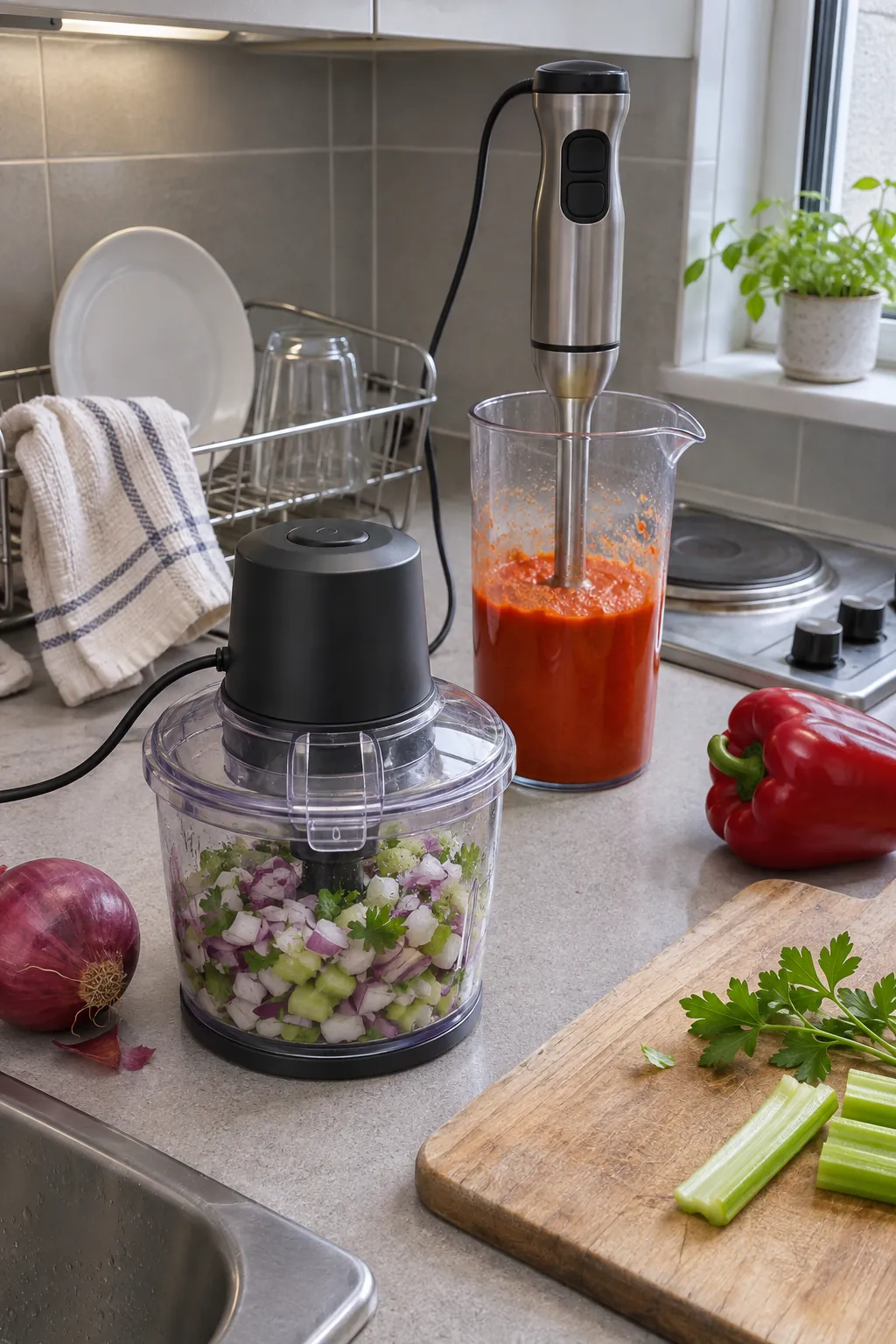
A compact food chopper cuts ingredients as they tumble around a bowl. This action suits salsa with visible pieces, chopped aromatics, breadcrumbs, nuts, pesto, and small batches of vegetable prep. Pulse control matters because continuous running can turn an even chop into paste around the lower blade while larger pieces remain above it.
An immersion blender pulls liquid and soft food through a guarded blade at the end of its shaft. It can smooth a pot of soup without a risky transfer of hot liquid, and a narrow cup helps it emulsify mayonnaise or dressing. It is less convincing for dry pieces because food needs enough moisture and depth to circulate around the blade guard.
Think about batch size and container shape
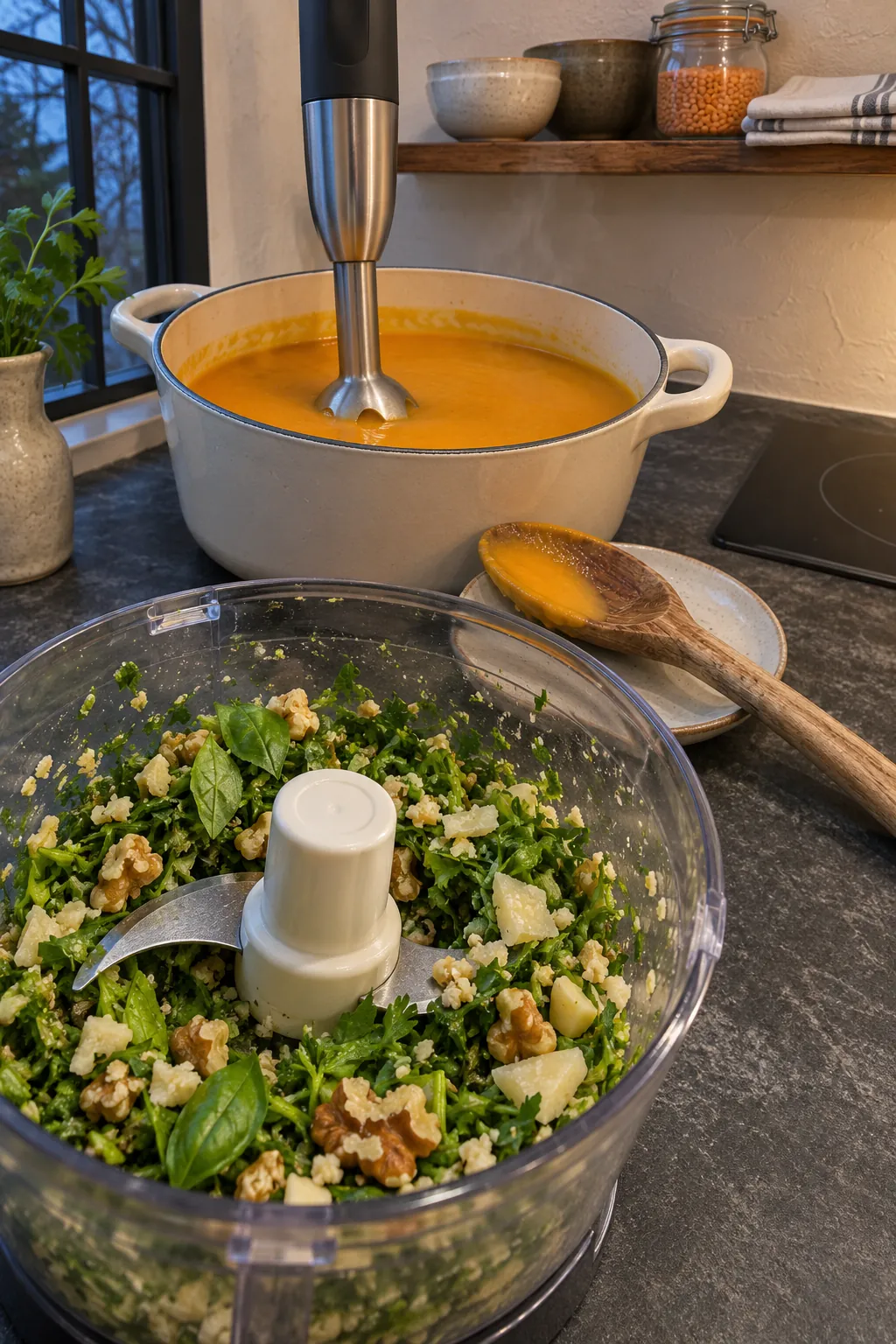
Food processor capacity looks generous on a product page, but the practical amount is smaller because ingredients need room to move. A mini bowl is excellent for one onion, a handful of nuts, or a modest sauce. Crowding it can leave uneven pieces, while using too little food can let ingredients sit below or outside the useful blade path.
An immersion blender has no fixed bowl capacity, but it still needs the right vessel. A deep, narrow cup keeps a small mixture close to the blade and reduces splashing. A wide pan with a shallow amount of food can be frustrating, while a tall pot of soup is an ideal match. Measure the storage space and also check whether your common pots and cups provide enough depth.
Compare texture control before power
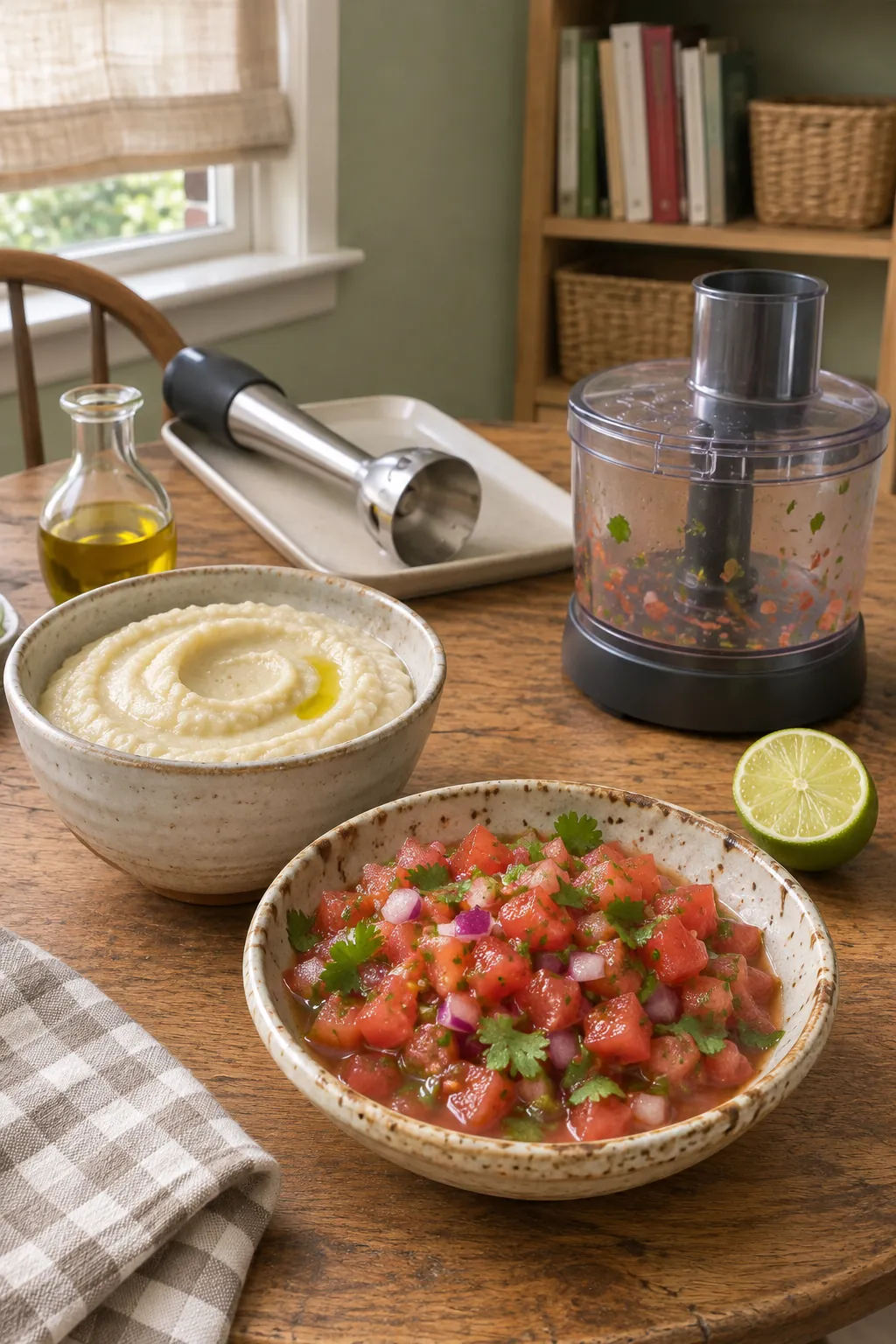
For a coarse chop, short pulses give a mini food processor a clear advantage. You can stop, scrape the bowl, and check the pieces before they become too fine. The result will not be identical cubes, but it can preserve the texture needed for relish, salsa, chopped vegetables, or a rustic pesto.
An immersion blender is designed to reduce texture rather than preserve separate pieces. Moving the shaft through a pot controls where blending happens, so you can leave some beans or vegetables intact in a soup. For very smooth food, the blade guard, motor, vessel shape, and blending time all matter more than a large watt number on its own.
Count cleanup and storage as part of the job
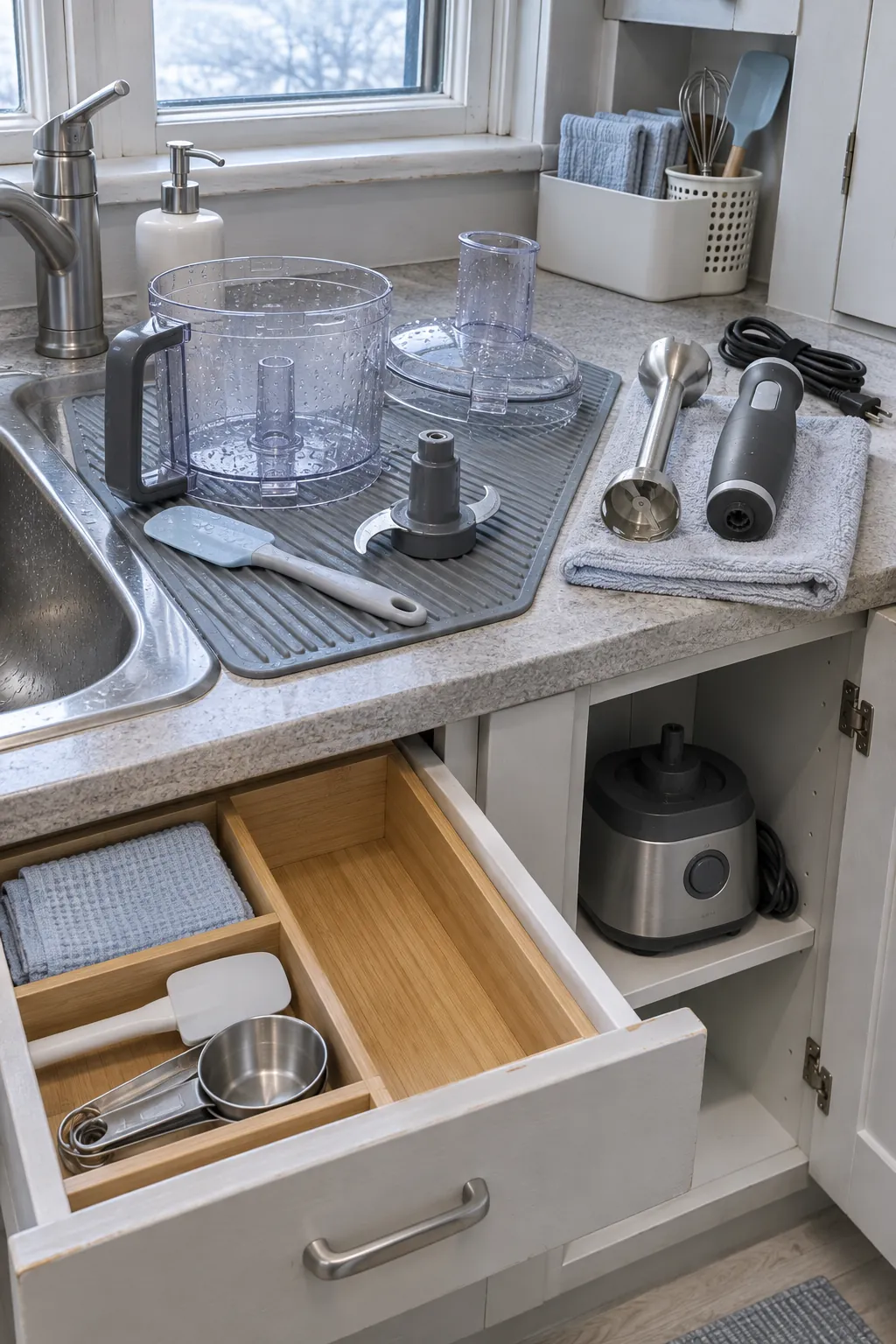
A tool that saves one minute of cutting but creates several awkward parts to wash may stay in the cabinet. A mini processor usually has a bowl, lid, blade, and motor base. The removable parts can be easy to rinse, yet sticky mixtures collect around the center post, lid channel, and sharp blade.
An immersion blender often needs only its detachable shaft washed after soup or sauce. It also fits in a shallow drawer or narrow cabinet more easily than a processor base and bowl. A kit with a whisk, cup, chopper bowl, and several lids can take nearly as much storage as a separate mini processor, so compare the complete set rather than the motor handle alone.
Choose the appliance you will use every week
Write down the five food prep jobs you did most often during the last month. If chopping appears more often than pureeing, a mini food processor is the better first purchase. If soup, sauces, dressings, and smooth mixtures dominate, an immersion blender will probably earn more frequent use and occupy less usable space.
Attachments can close part of the gap, but they do not make both designs identical. A chopper attachment is practical for occasional onion, herb, or sauce work, while repeated dense chopping can put more strain on its smaller drive parts. The best apartment cooking tool is the one whose main function matches your routine, whose parts fit one clear storage spot, and whose cleanup feels reasonable after an ordinary meal.