
Designing a front yard in a region with scorching heat and little rain doesn't mean you have to settle for a barren patch of dirt. Modern landscaping has moved away from the thirsty green lawns of the past toward designs that embrace the natural beauty of arid environments. By focusing on texture, shape, and smart materials, you can create a curb appeal that looks intentional and stays vibrant even during a heatwave.
Key Takeaways:
- Choose native plants that naturally thrive in low-water conditions.
- Use hardscape materials like concrete and gravel to create clean, modern lines.
- Install drip irrigation to save water and keep plants healthy.
- Replace high-maintenance grass with decorative stone or mulch.
- Add height and shade with heat-tolerant trees to cool your home.
Choosing Plants That Thrive in Arid Conditions

The foundation of a dry-climate yard is selecting plants that actually want to be there. Instead of fighting nature, look for species that have adapted to intense sun and minimal moisture. Mediterranean plants like lavender and rosemary are great choices because they offer fragrance and color while being very hardy. Desert natives, such as agave or yucca, are built to store water and require almost no attention once they are established. When you shop for plants, look for silver or gray foliage; these colors often indicate a plant has a waxy coating or small hairs that help it reflect sunlight and retain moisture.
Using Hardscape Materials to Define Modern Layouts
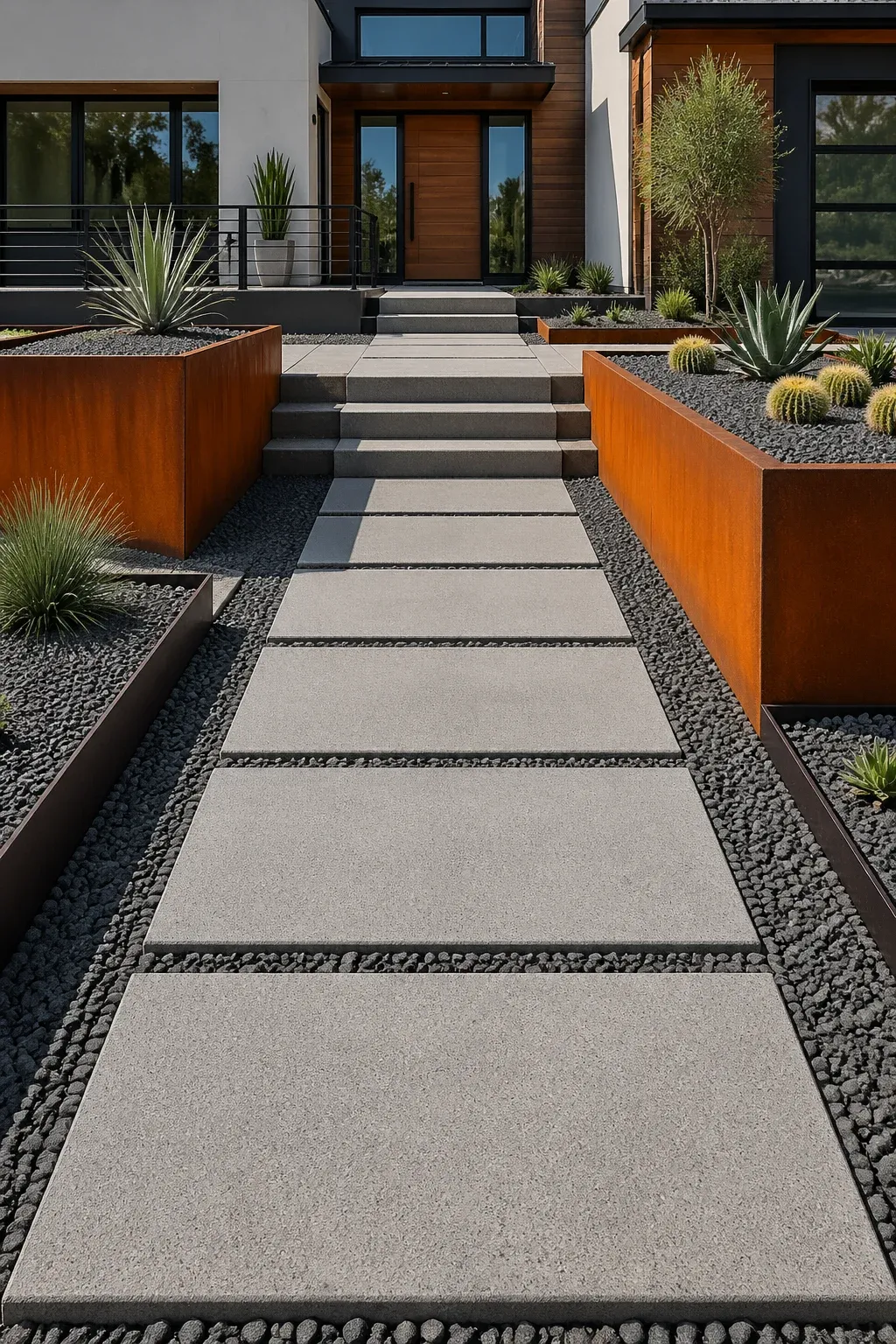
Hardscaping is the secret to a modern look. It provides the structure that keeps a dry garden from looking messy. Use oversized concrete pavers to create a clean walkway, or build low retaining walls out of steel or smooth stone to create different levels. These elements don't need water and they look good year-round. Metal edging is another helpful tool; it creates sharp borders between different types of gravel or planting beds, giving the yard that crisp, architectural feel that defines modern design. By using more hard surfaces, you also reduce the area that needs maintenance.
Efficient Watering Systems for Drought Resistance
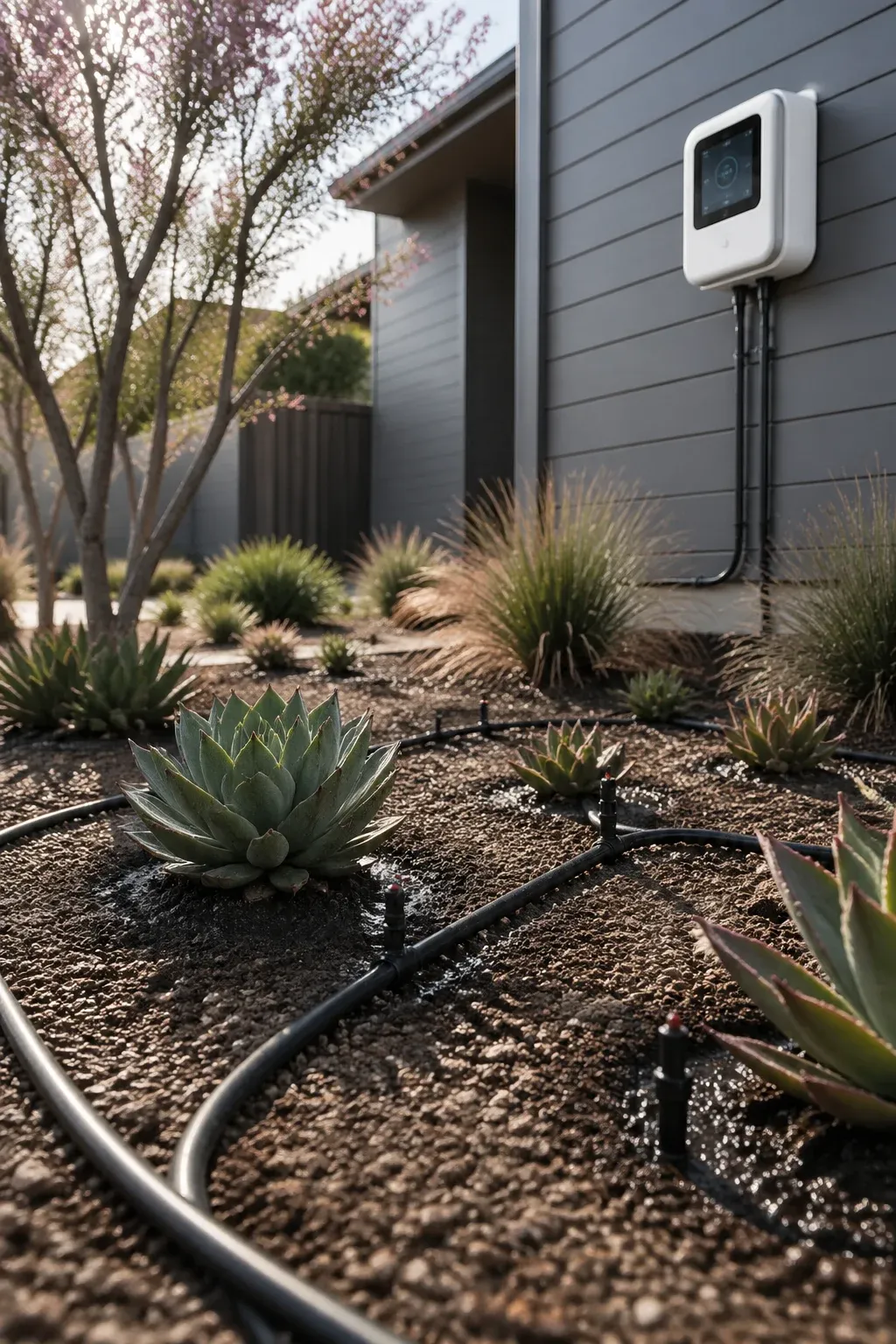
Even drought-tolerant plants need some help during their first year or during extreme dry spells. Conventional sprinklers are wasteful in hot climates because much of the water evaporates before it even hits the ground. Drip irrigation is a much better choice. These systems deliver water directly to the base of each plant, keeping the soil moist where it matters most. You can also use smart timers that adjust based on local weather reports. This ensures you aren't watering the garden right after a rare rainstorm, saving both money and a precious resource.
Replacing Traditional Lawns with Gravel and Stone
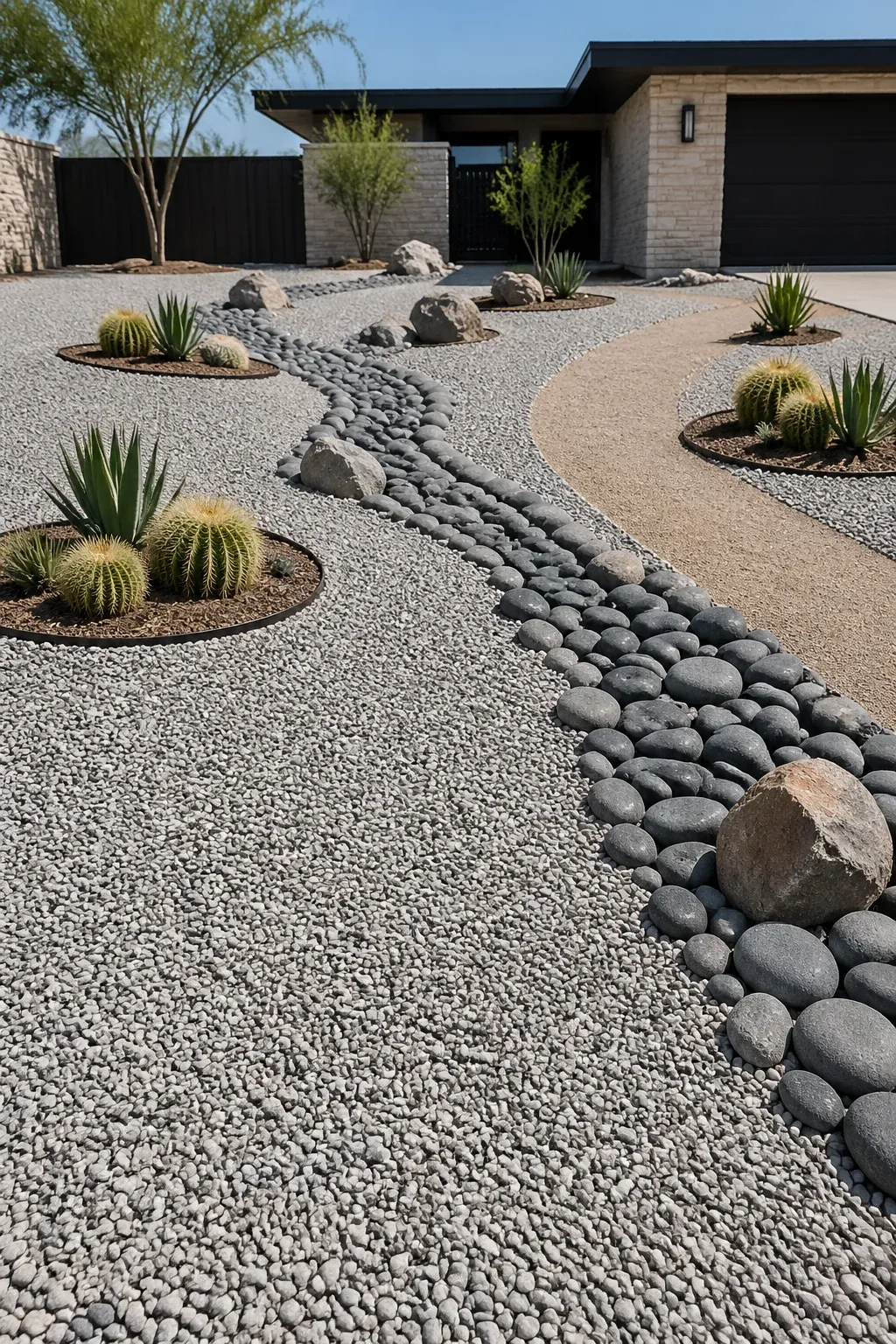
A green lawn is often the biggest water drain in a front yard. Replacing it with decorative stone or gravel is a practical move that fits the modern aesthetic. You don't have to use just one type of rock; mixing different sizes, like pea gravel for walking areas and larger river rocks for accent sections, adds visual depth. Decomposed granite is another popular option because it packs down firmly, making it easy to walk on while still allowing water to soak through to the soil below. This approach eliminates mowing and significantly lowers your water bill.
Creating Visual Interest with Structural Succulents and Grasses
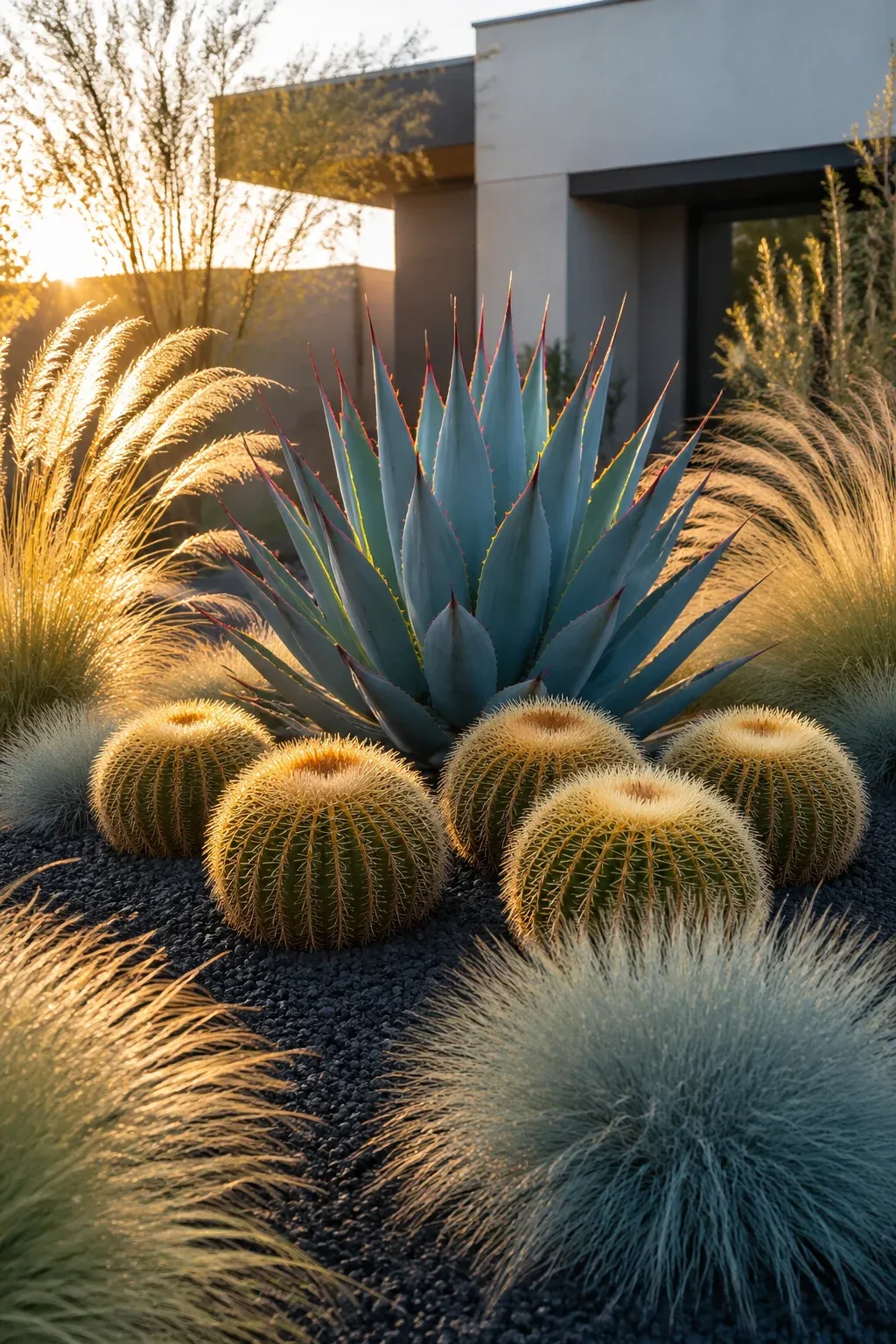
In a modern yard, plants are often used as living sculptures. Structural succulents like the Blue Glow Agave or the Barrel Cactus provide bold shapes that stand out against a simple gravel background. To soften these heavy shapes, mix in ornamental grasses like Blue Fescue or Mexican Feather Grass. These grasses add movement when the wind blows, which prevents the yard from feeling too static or stiff. Grouping plants with similar water needs together will make your maintenance routine easier and help the plants grow more successfully.
Adding Shade and Privacy with Heat-Tolerant Trees
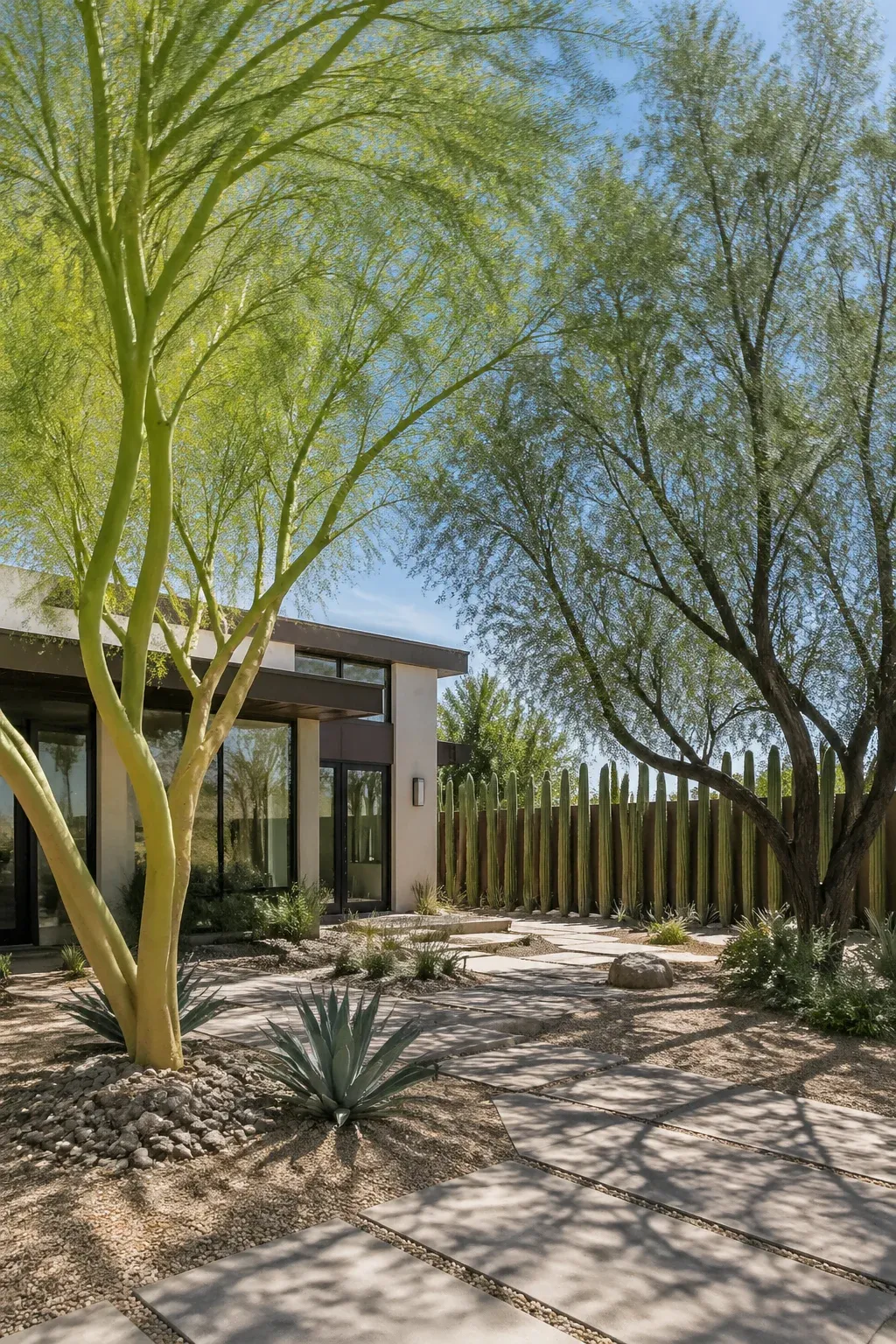
Trees are essential for cooling down a hot front yard. They provide shade for the house and protect smaller plants from the afternoon sun. Desert Willow or Palo Verde trees are excellent choices for dry climates because they have airy canopies that provide filtered light without blocking the view entirely. If you need privacy, consider planting clumping bamboo or tall cacti in a row. These act as a natural screen that doesn't require the constant hedging and watering that a traditional boxwood fence would need.
Transitioning to a modern, dry-climate landscape is a smart way to save time and resources while improving your home's appearance. By moving away from thirsty lawns and toward a design built on stone, structure, and hardy plants, you create a space that belongs in its environment. Start by mapping out your walkways and selecting a few anchor plants to give your front yard a fresh, sustainable look.