
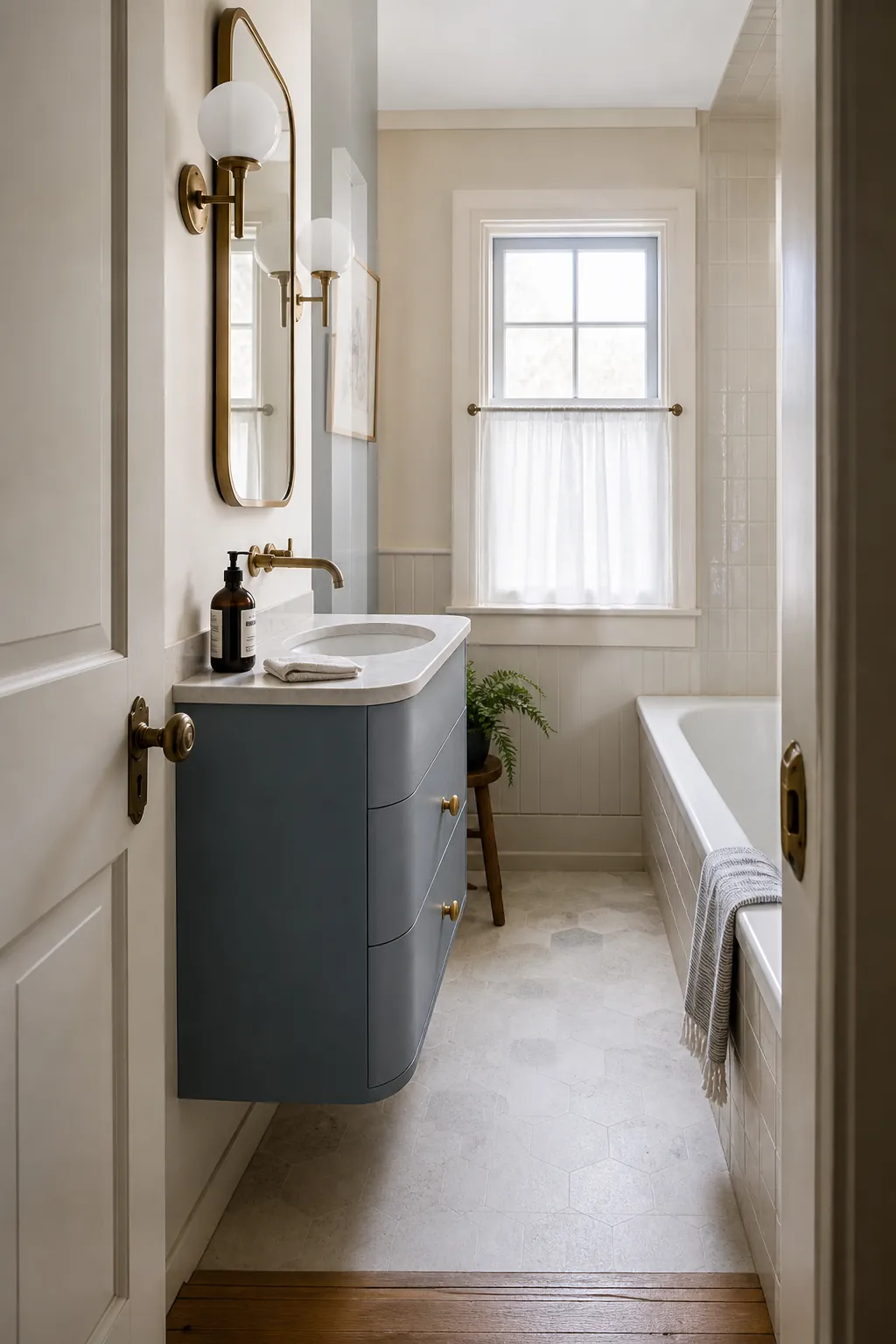
A narrow vanity should not feel like the compromise you made after the bathroom plan went wrong. In a slim room, shaving a few inches from the cabinet depth can change the entire experience: the door opens cleanly, two people can pass, and you stop catching a hip on the counter. The trick is preserving enough basin, storage, and visual presence that the vanity still looks intentional.
The prettiest small bathroom vanity is rarely the most decorated one. It has good proportions, one confident material choice, and clear space around it. Start with the circulation problem, then use shape, color, hardware, and lighting to give the compact footprint character.
Measure Depth Where the Room Actually Pinches
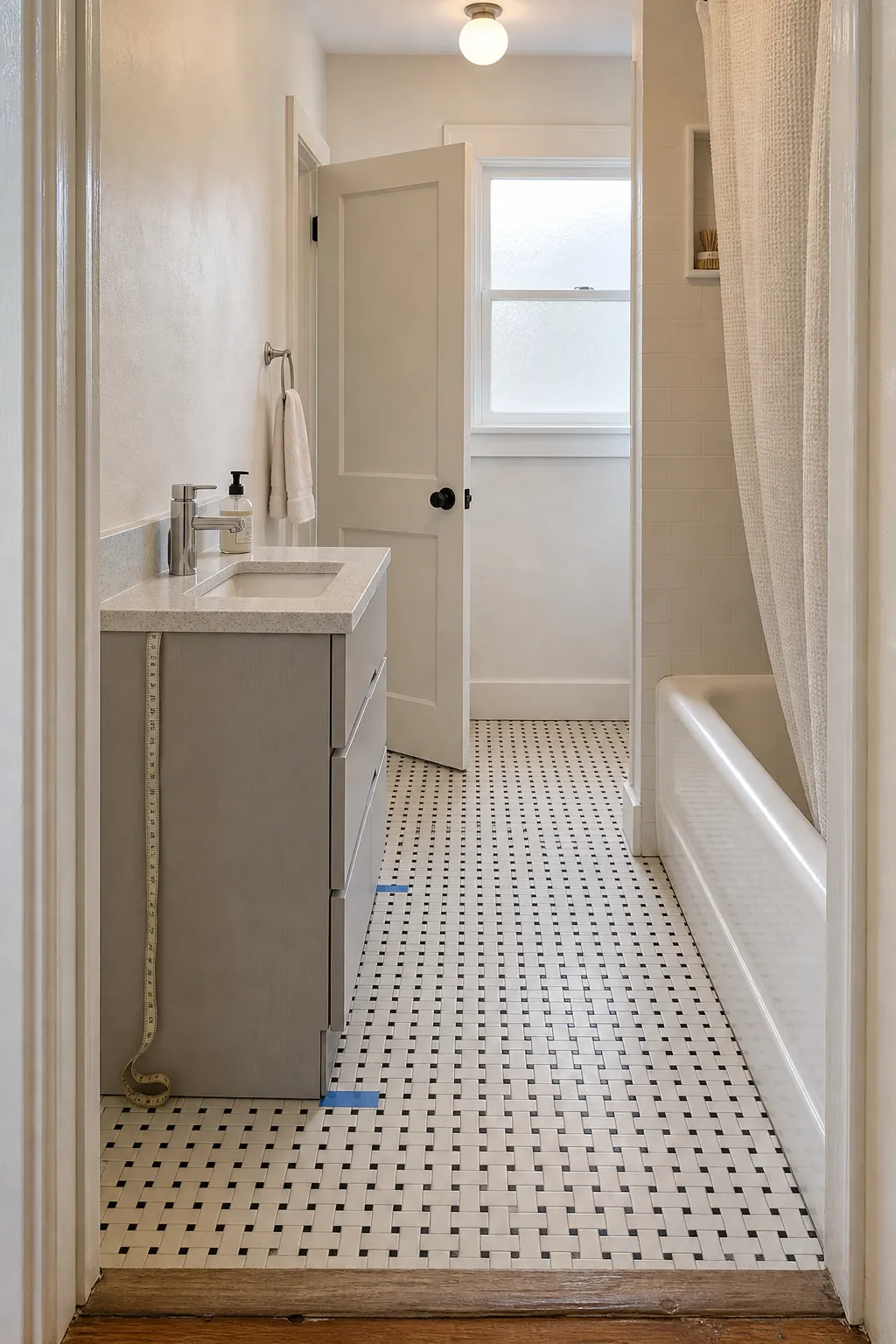
Vanity listings make width easy to compare, but a narrow bathroom is often constrained front to back. Measure from the vanity wall to the opposite tub, toilet, or wall, then subtract the proposed cabinet depth, counter overhang, handles, and any sink projection. Check the door swing and stand where someone would dry off after a shower. A cabinet that technically fits can still force an awkward sideways shuffle.
Standard-depth assumptions are not useful when a doorway or tub edge creates the pinch point. Tape the full outline on the floor and add the faucet reach above it. A 16- to 18-inch-deep vanity can feel dramatically lighter than a conventional unit, but only if the sink and plumbing are designed for that reduced depth.
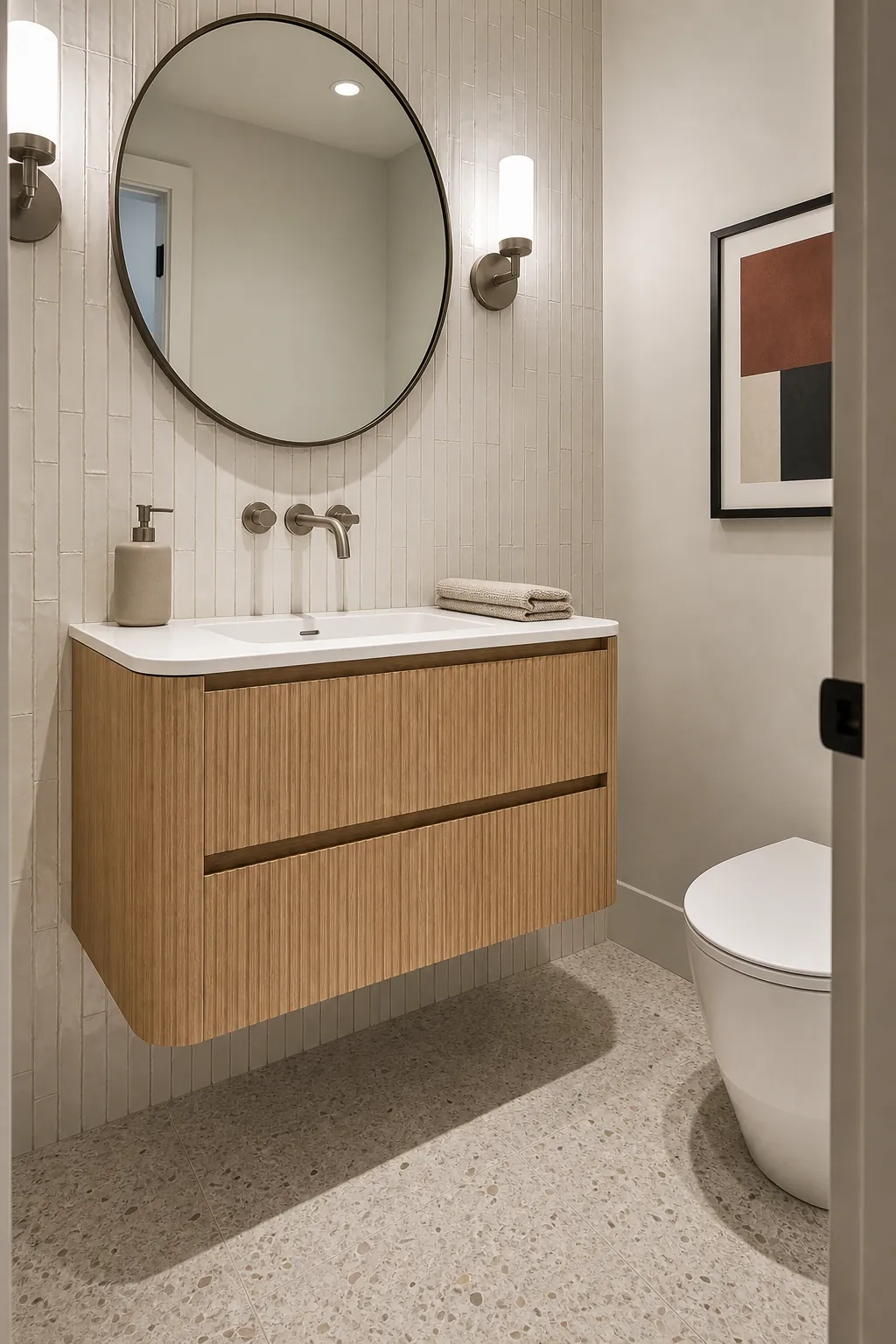
Float the Cabinet to Expose More Floor
A wall-mounted vanity creates a clean line beneath the cabinet, which lets the floor continue to the wall and makes a tight room feel less blocked. It also removes toe-kick corners that collect dust. Choose a model deep enough to hide the trap, and confirm the wall can carry the cabinet, stone, sink, and stored items.
Floating does not have to mean stark. A fluted wood front, softly rounded corner, or painted drawer face adds warmth without using floor area. Mount it at a comfortable height and resist filling the open space below with baskets; the visible floor is doing important visual work.
Let the Sink Do Some of the Sculptural Work
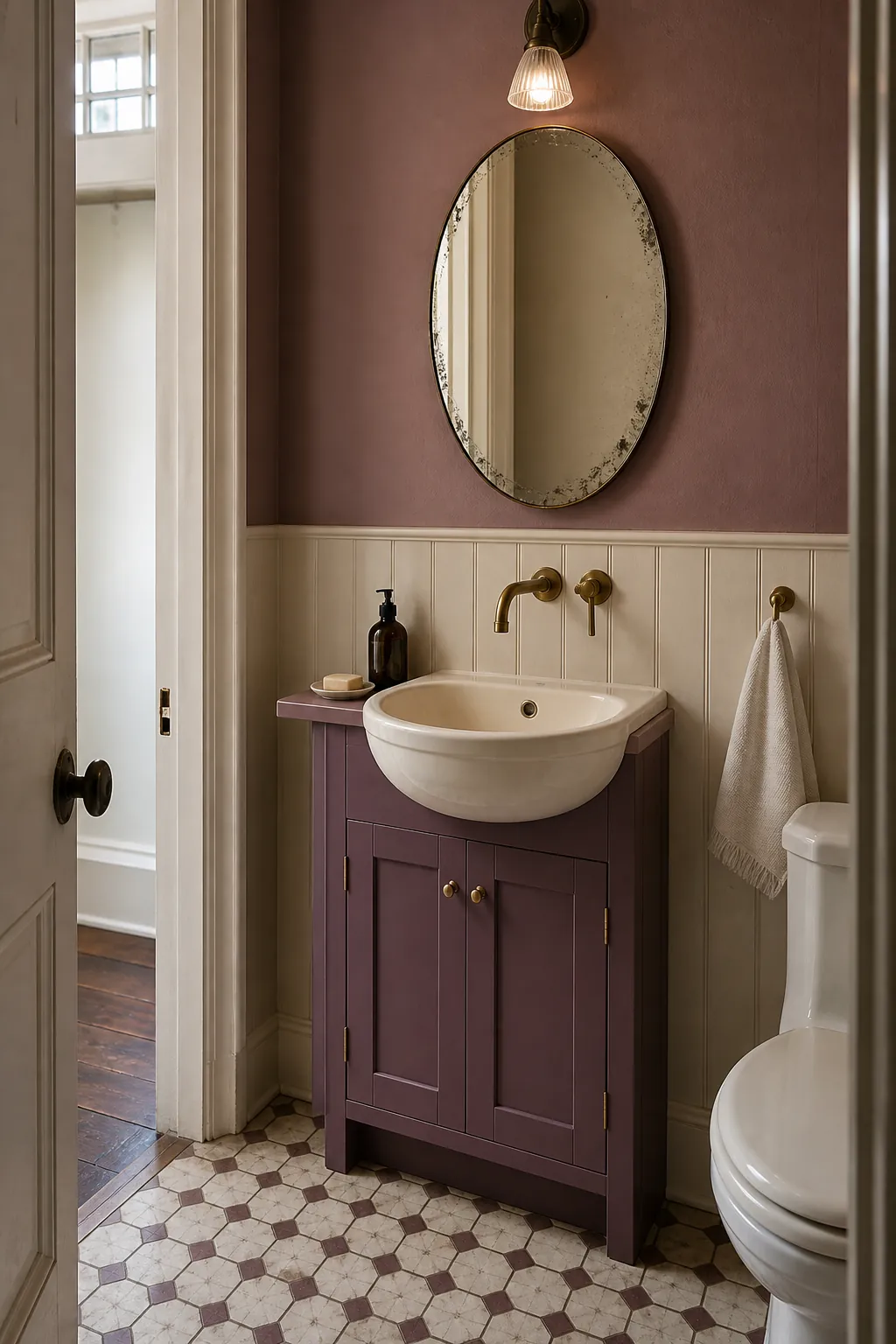
On a very shallow cabinet, the basin may project slightly beyond the front or sit above the counter. That can be a feature rather than a flaw. A compact oval vessel, slim trough, or semi-recessed basin gives the vanity a deliberate silhouette while protecting useful cabinet depth.
Match faucet height and reach to the bowl; a tall faucet aimed at a shallow basin can splash the mirror and counter. Keep at least one landing spot for soap or a toothbrush cup. A dramatic sink is most convincing when the surrounding bathroom counter decor stays restrained.
Use an Offset Basin to Save a Real Drawer
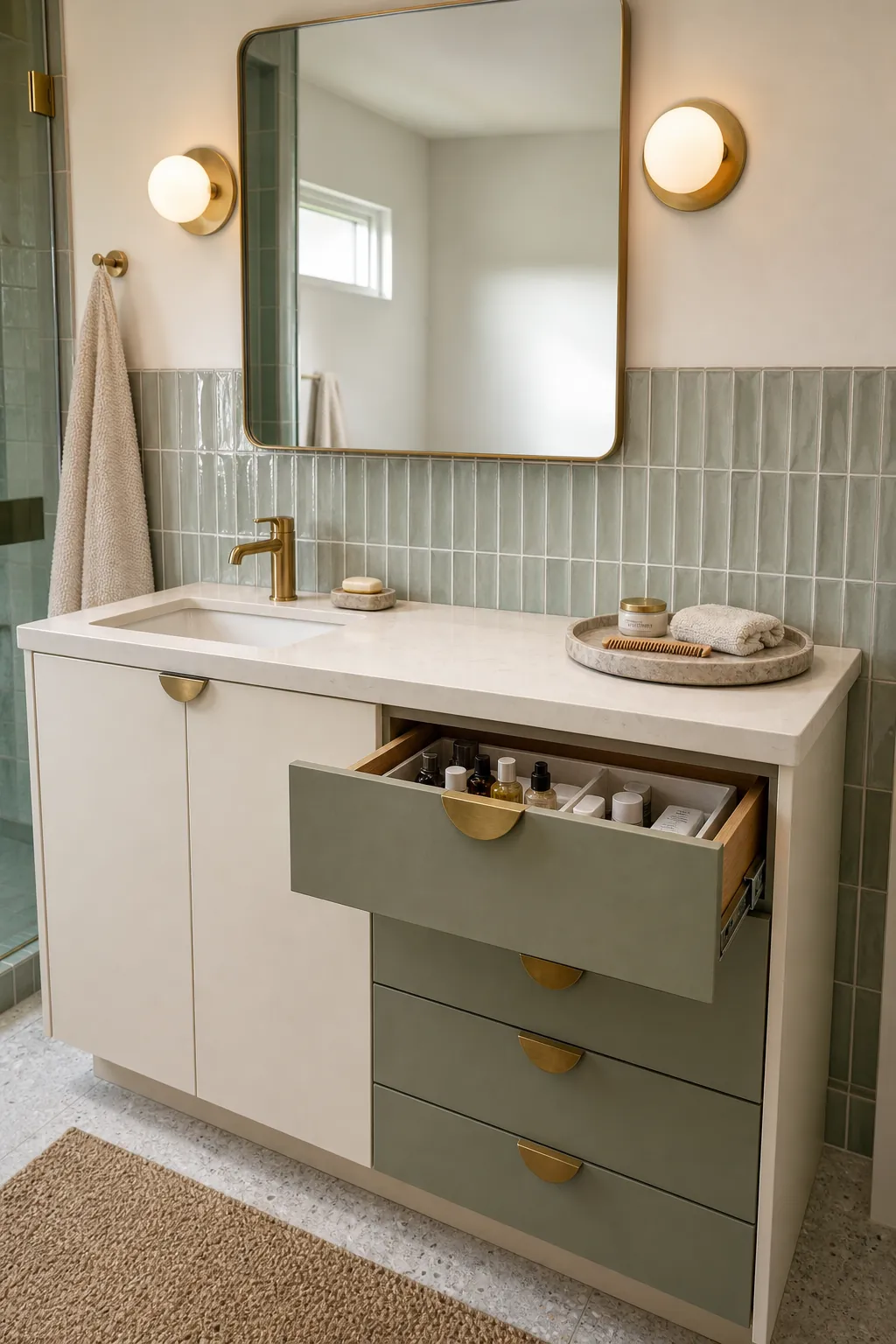
A centered sink divides a small vanity into two narrow counter strips and places plumbing in the middle of the cabinet. Shifting the bowl toward one end can create a genuinely useful landing area on top and a drawer bank below. This asymmetry often looks more custom than a centered layout.
Before committing, check whether the drain can align with the new basin position without sacrificing the drawers. Full-extension side drawers are ideal for skin care, grooming tools, and spare supplies. Repeat the offset with a wall sconce or mirror placement so the composition feels balanced rather than accidental.
Soften the Box With a Sink Skirt or Curved Front
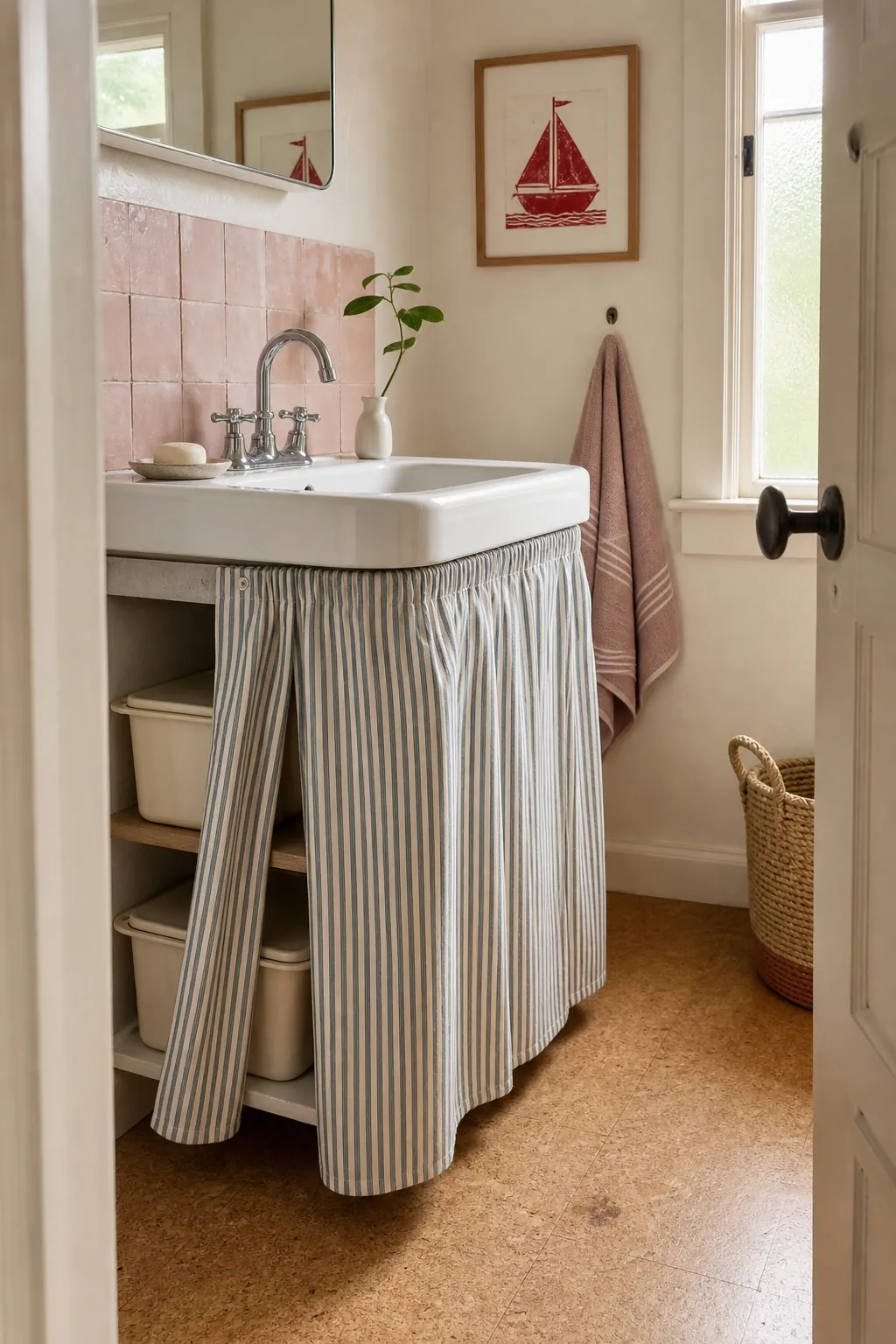
Hard cabinet corners can make a corridor bathroom feel even tighter. Rounded front edges reduce the visual bulk and are kinder to hips in a narrow passage. A tailored sink skirt is another way to soften the base, hide plumbing, and add pattern without requiring swinging doors.
Use washable, mildew-resistant fabric with enough fullness to hang well but not so much that it drags on the floor. Behind it, one shelf and a few labeled bins are more useful than an open pile. If fabric is not practical, radius cabinet corners or choose a bow-front basin for the same gentler effect.
Make One Finish the Focal Point
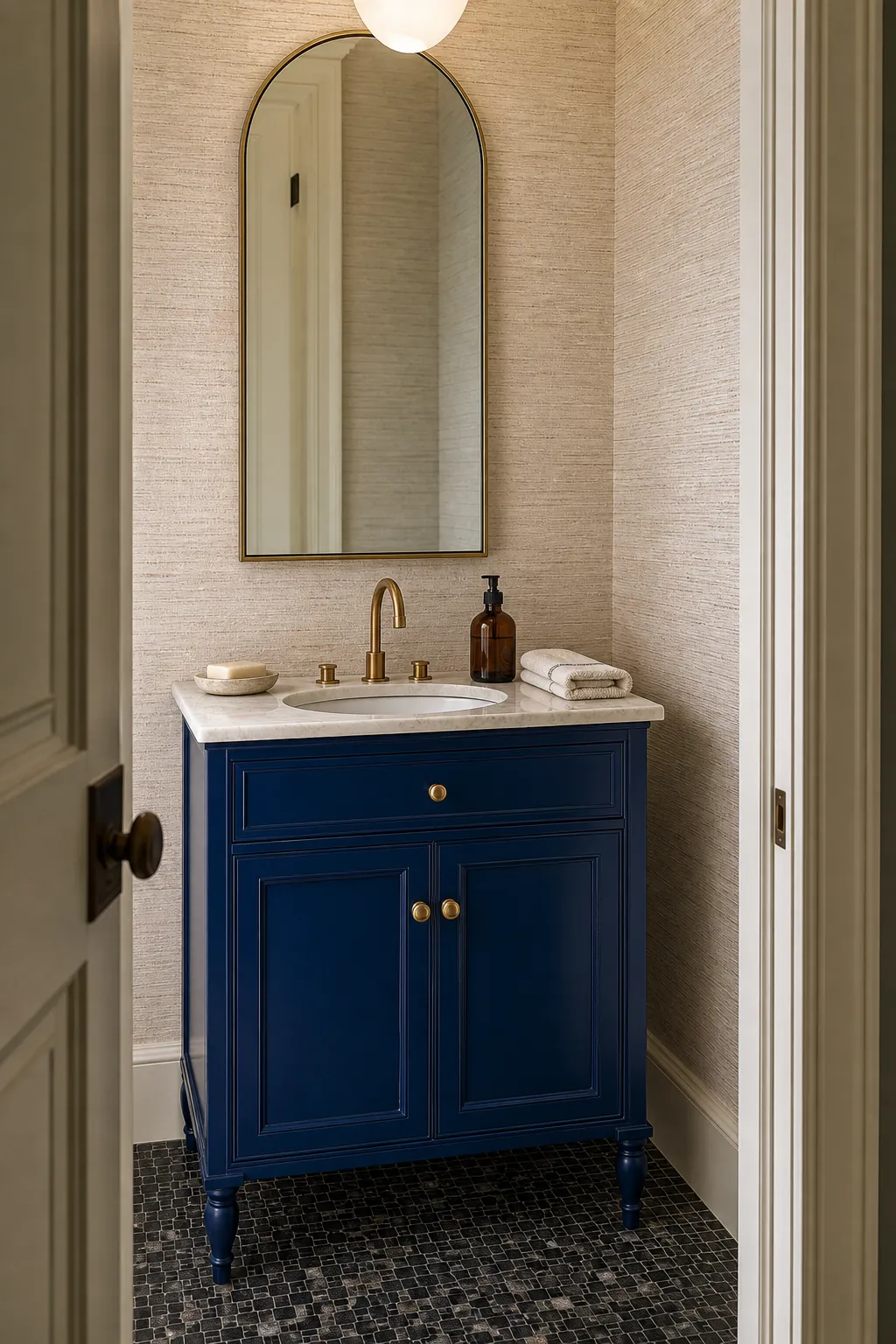
A small vanity can carry a stronger color or material than a large one because there is less of it. Deep blue lacquer, veined stone, warm oak, fluted paint, or a handmade tile backsplash can give a compact unit presence. Choose one hero and let the faucet, mirror, and accessories support it.
Pretty bathroom design does not require a crowded counter. Keep the soap vessel, tray, and towel in the same two or three tones, and move backups into bathroom storage elsewhere. A clean counter edge makes the vanity appear wider and more refined.
Test Beauty Against the Daily Routine
A narrow vanity feels successful when you can open the bathroom door, use the sink, reach a towel, and clean around the cabinet without choreography. Verify the sink projection, drawer path, faucet splash zone, plumbing service access, and the position of nearby trim before ordering.
Then edit the visual plan. One expressive sink, one rich cabinet finish, or one patterned skirt is enough to make the small bathroom vanity memorable. The remaining space should feel calm. When circulation works and every detail has room to be seen, a slim vanity does not read as less—it reads as exactly right for the room.