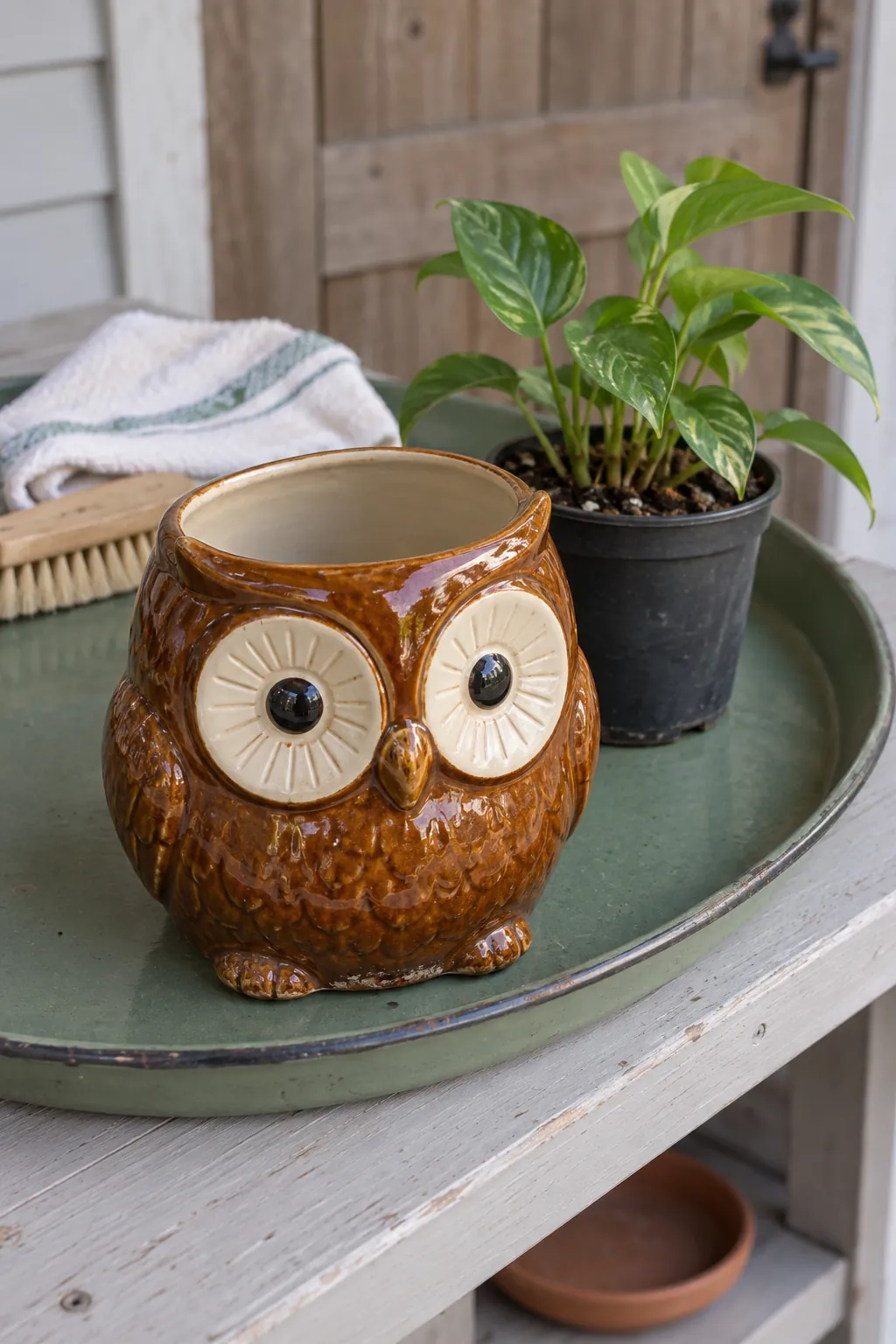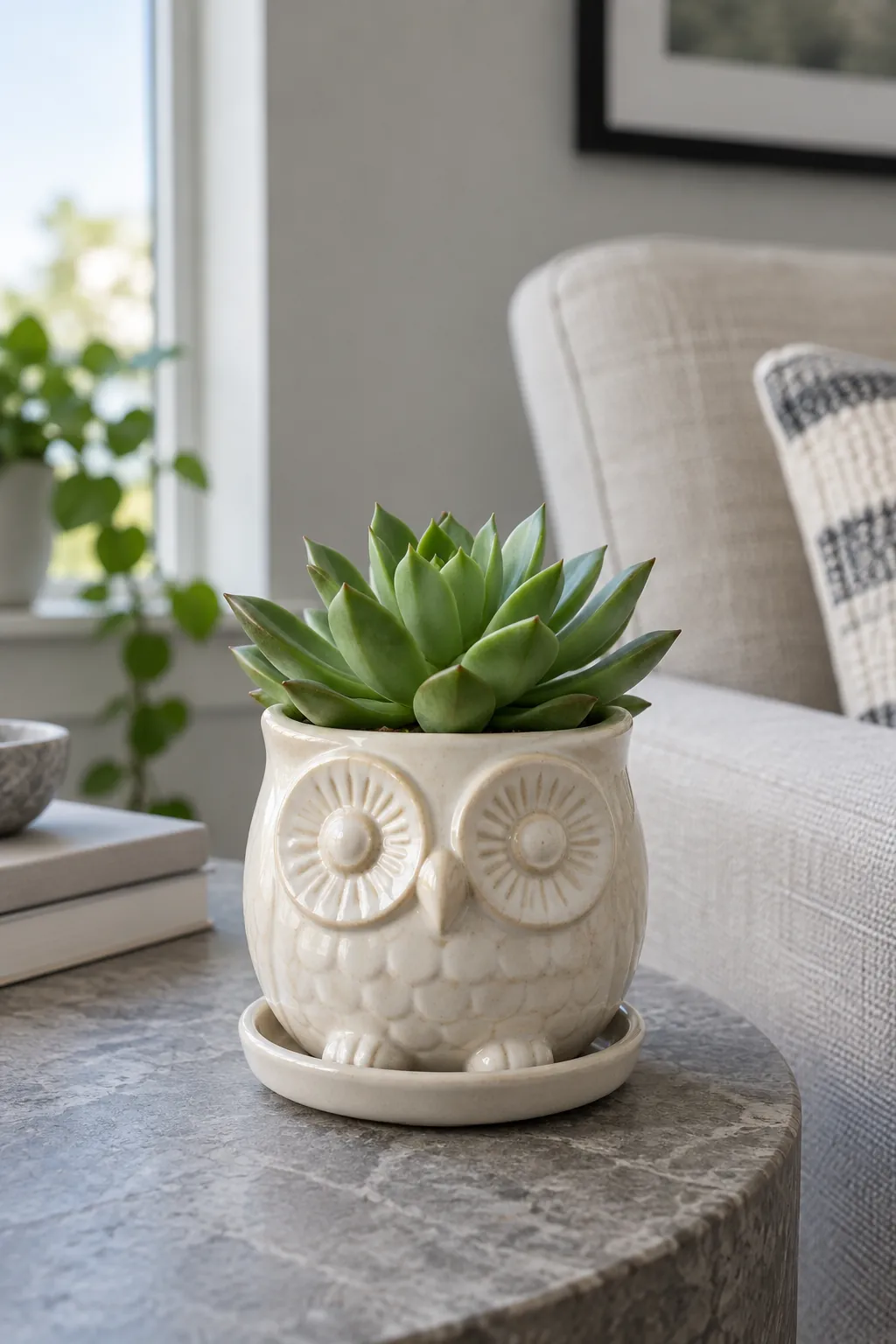
Big ceramic eyes are charming until the leaves cover them, the roots outgrow the opening, or watering leaves a ring on the shelf. A little planning keeps the character visible while giving the plant a workable home.
Start with a silhouette the plant will not hide
Tall arching leaves can cover the very feature that made you choose the pot: its eyes. For a small owl planter, look for a broad opening above the face and enough visible ceramic below the foliage. A compact rosette or upright plant usually leaves the owl expression easier to see than a dense curtain of trailing stems.
Keep scale in mind when comparing animal planters online. The exterior may include wings, feet, and a thick sculpted head, while the usable cavity is much smaller. Check internal dimensions against the plant’s existing container and make sure you can remove that container without catching it beneath a narrow rim.
Treat a decorative shell as a removable cover
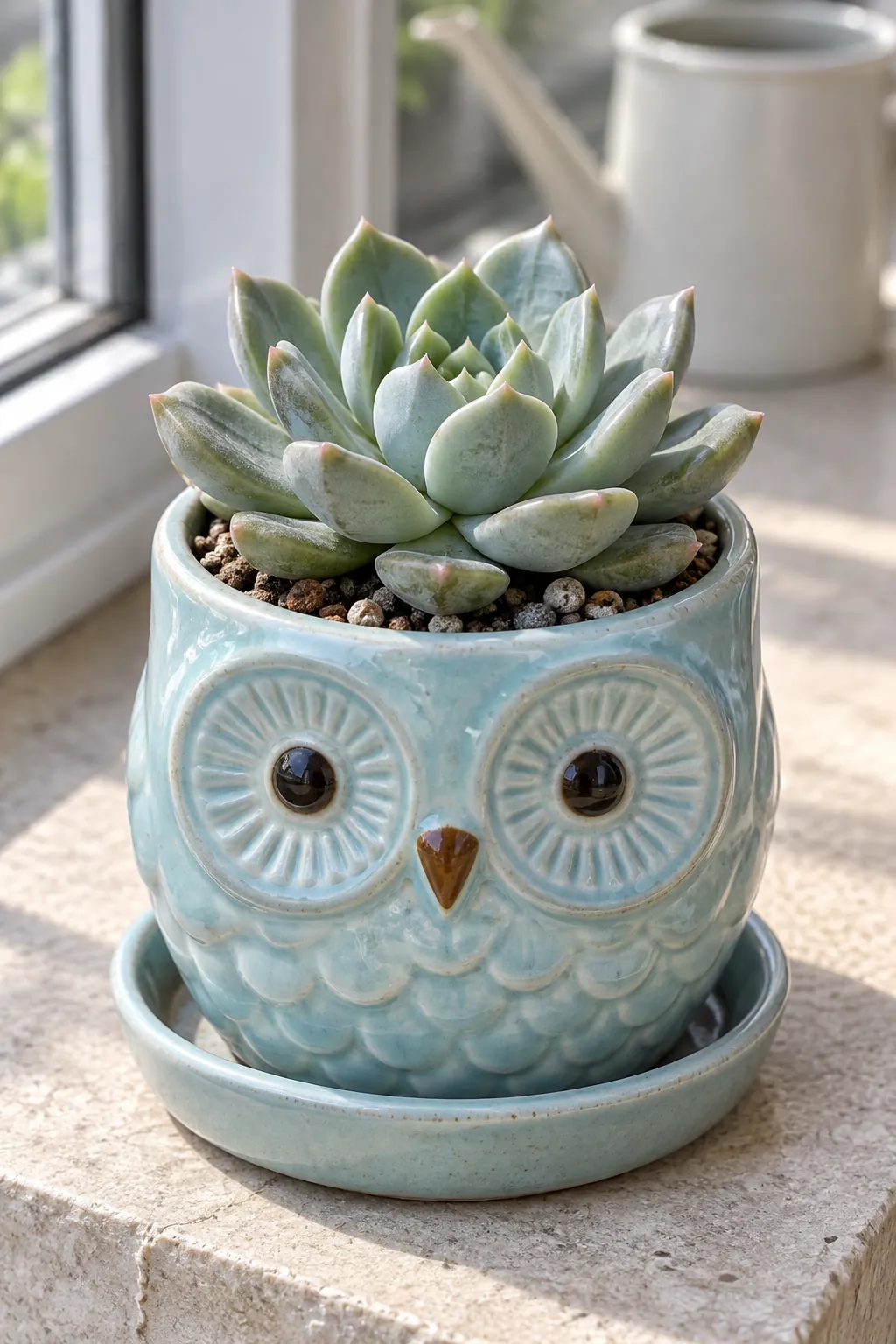
Some pottery planters are made for direct planting, while others are decorative covers without an outlet. With the second type, keep the roots in a separate pot with drainage holes and remove it for watering. Let the insert finish draining before returning it, then check that no water remains in the outer vessel.
Indexed Reddit discussions about decorative pots mention blocked outlets, overflowing attached saucers, and uncertainty about stagnant water beneath an insert. Those are useful reasons to inspect how a pot empties rather than assuming a visible hole solves everything. A saucer you can remove and clean is easier to check than a sealed cavity.
For direct planting, choose a pot with an unobstructed outlet and use a mix suited to the species. A layer of gravel does not create an exit for water. Test the empty pot over a sink before filling it, especially when its molded feet or raised base could trap runoff.
Use a succulent only where the light supports it
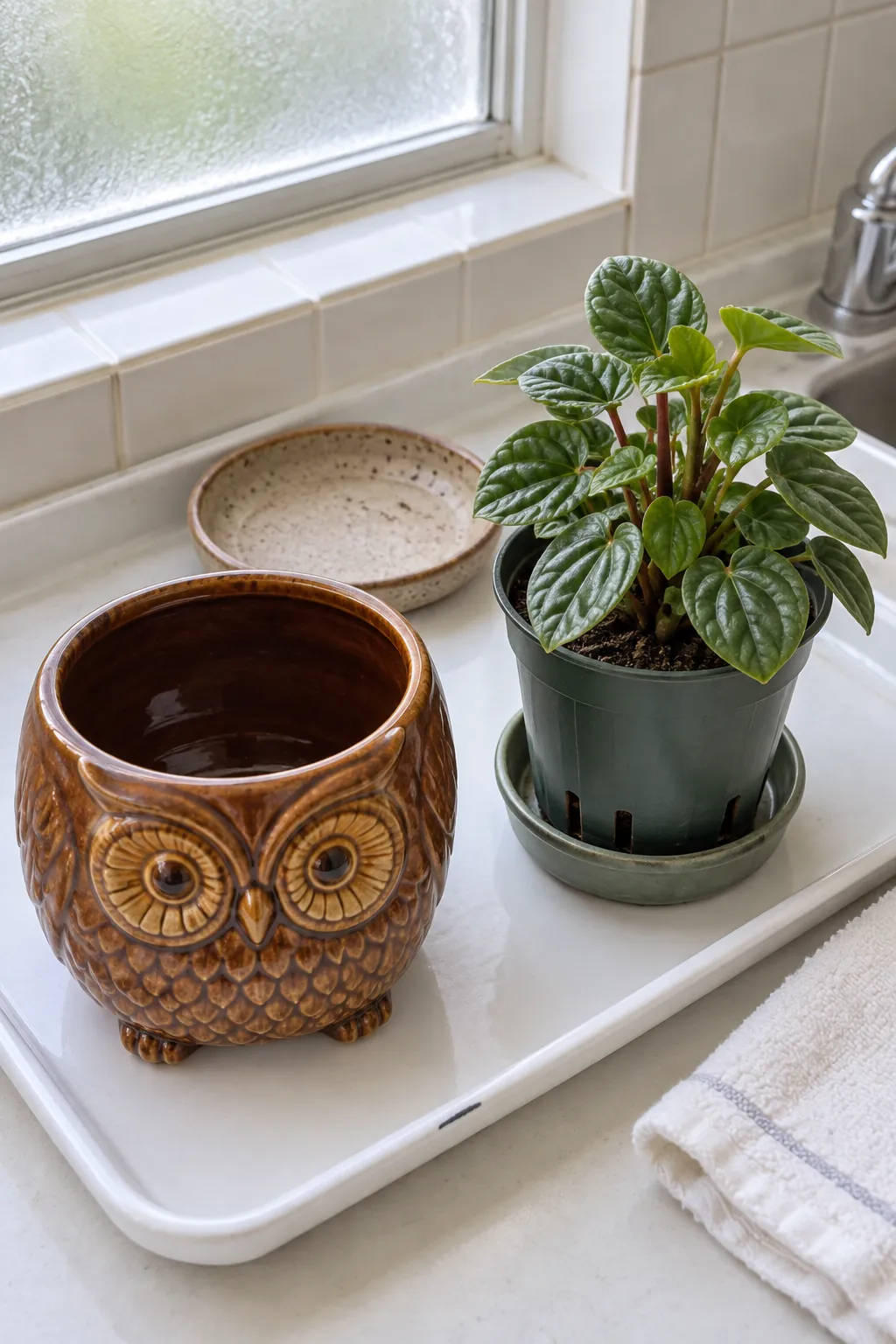
A small echeveria can make an owl look as though it has a leafy crown, but a dim bookcase will not provide the light most echeverias need. Place it where it receives suitable strong light, introduce increased sun gradually, and watch for stretching or loss of its compact shape. The decorative setting needs to serve the plant, even when another shelf would look better.
A haworthia or compact peperomia may suit a different light situation, but their watering needs are not interchangeable. Identify the species before choosing potting mix or deciding when to water. For a succulent, check that the mix has dried appropriately rather than giving it frequent little splashes.
One indexed Reddit post specifically paired owl pots with drainage and a bright window shelf. That combination illustrates the useful buying order: growing conditions first, container function second, decorative details third. Verify pet suitability by botanical name if an animal can reach the display.
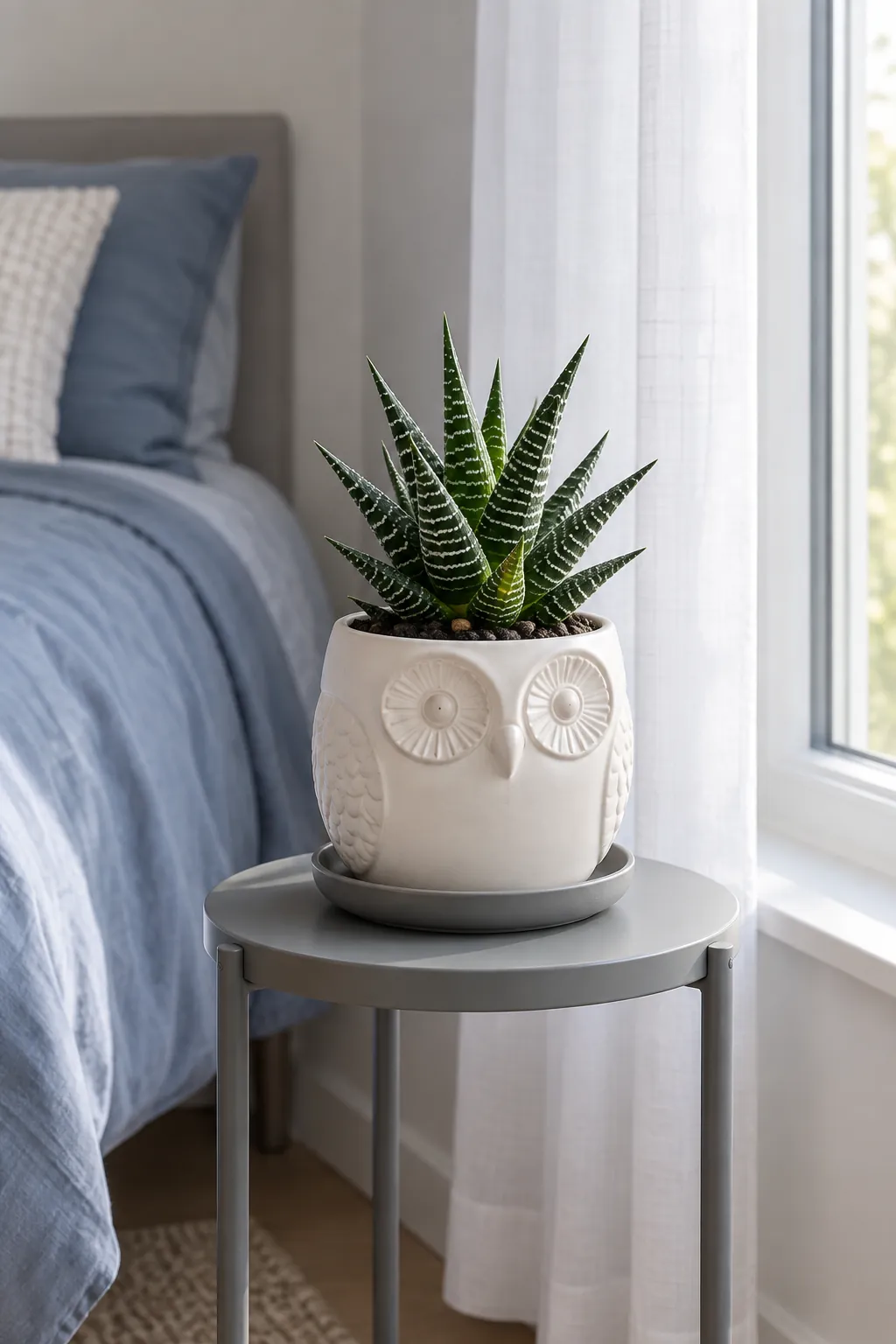
Build a quiet shelf around the owl
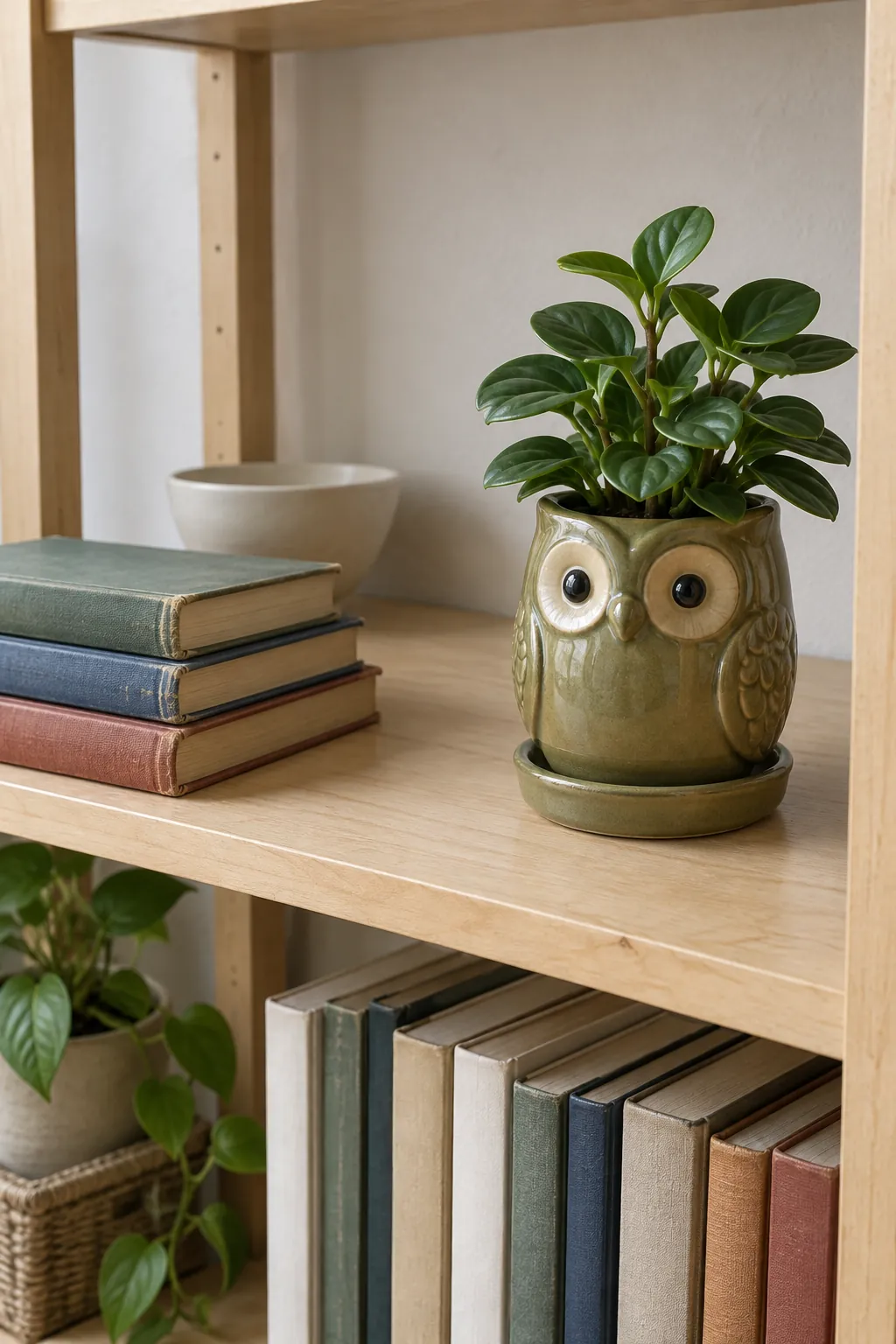
Owl decor already has a strong visual motif, so a single planter can carry a small arrangement. Place it beside a short stack of books or a simple bowl, with enough open surface to lift the pot out for care. Repeat one glaze color elsewhere if you want a connection without collecting matching objects.
A nearby cat planter or a row of wooden owls can work as a deliberate collection, but give the pieces different heights and keep the number manageable. Avoid filling every gap with ornaments. Unique flower pots are easier to appreciate when their silhouettes remain distinct and watering does not require dismantling the whole shelf.
Choose outdoor materials for the actual weather
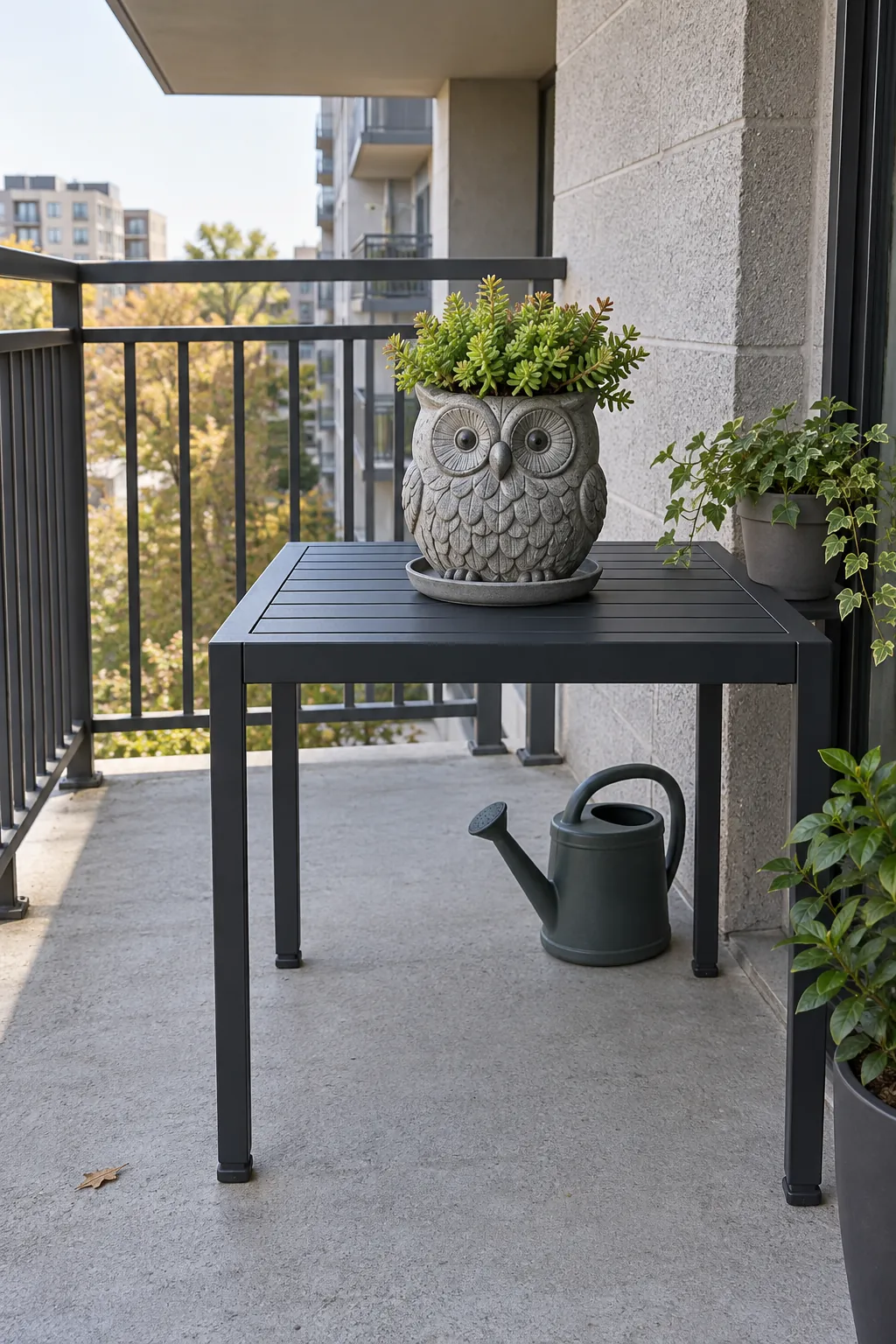
A pot marketed as owl yard art may not be intended to hold damp soil through winter. Ask whether the material is suitable for outdoor planting and whether the manufacturer rates it for freezing conditions. Water retained in vulnerable ceramic can contribute to cracking when temperatures fall.
On a balcony, place the planter on a stable surface protected from strong gusts and check where drainage water will go. Never let a small decorative pot balance on a narrow railing. Sheltering it from heavy rain can help you control moisture, but shelter does not replace the light required by the plant.
Wooden owl containers need their own moisture plan. A removable growing pot can separate damp mix from the decorative wood, although you still need to empty trapped water and check the wood’s condition. Bird cage planter ideas add another layer of structure, so consider access, weight, and drainage before suspending any container.
Give a thrifted owl a practical second life
A vintage owl vessel can become a charming cover pot without any irreversible changes. Check it for cracks, sharp chips, and unstable feet, then see whether a removable nursery pot fits inside. If the interior is too narrow, use the piece for dry decoration and choose a more suitable planting vessel.
For a painted project, begin with a plain pot that already drains and add owl eyes, a small beak, and feather marks to the exterior. Keep coatings away from drainage openings and follow the product’s curing directions before exposing the surface to moisture. Air dry clay decorations should stay out of regular contact with wet soil.
Clean the saucer, inspect the base, and lift the insert periodically instead of leaving the arrangement untouched for months. A successful thrifted planter is one whose care remains straightforward after the novelty wears off.