
The area around your front door is the first thing people notice, yet foundation plantings are often an afterthought. Many homeowners fall into the trap of planting a messy row of shrubs that eventually grows to block the windows. Transitioning to a modern aesthetic means moving away from those overgrown bushes and focusing on a deliberate, clean look that highlights your home’s architecture.
In this guide, we will look at how to use structural plants, simple color palettes, and hardscape elements to create an inviting entrance. You will learn how to select plants that maintain their shape and how to arrange them so they look good in every season without requiring hours of weekly yard work.
Choosing Plants with Strong Architectural Shapes
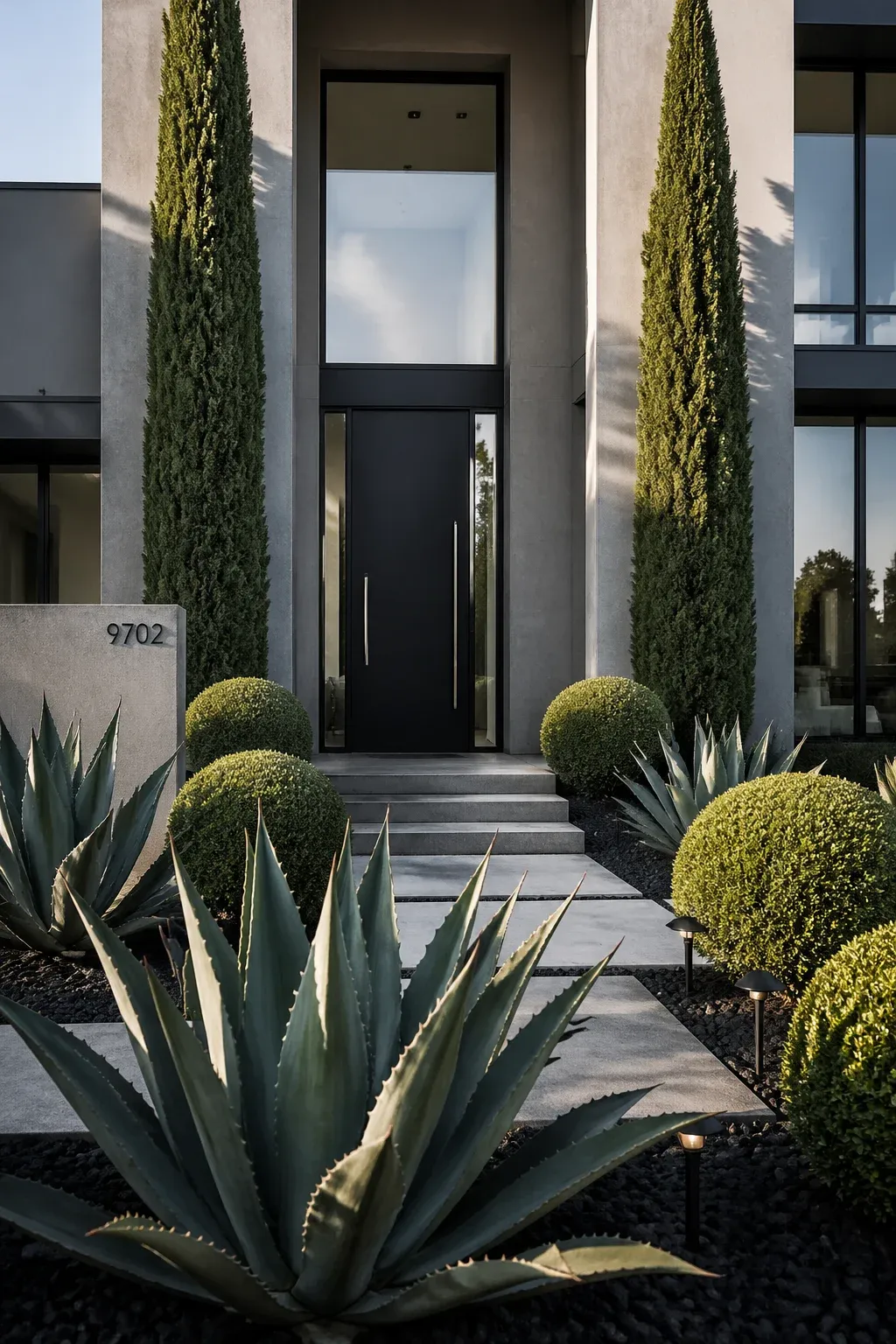
Modern design relies on form. Instead of choosing plants that look like soft clouds, look for those with defined silhouettes. Columnar evergreens provide vertical height without taking up too much horizontal space, making them great for framing a doorway. For a lower layer, consider globe-shaped shrubs or spiky varieties like agave or yucca if your climate allows.
These shapes act as living sculptures. When you pick a plant with a strong natural form, you don't have to worry about constant shearing to make it look tidy. Boxwoods are a classic choice for this, but you can also look at upright grasses or even certain types of clumping bamboo that stay within a specific footprint. The goal is to create a clear contrast between the plant and the straight lines of your house.
Using Repetition and Layering for Visual Flow
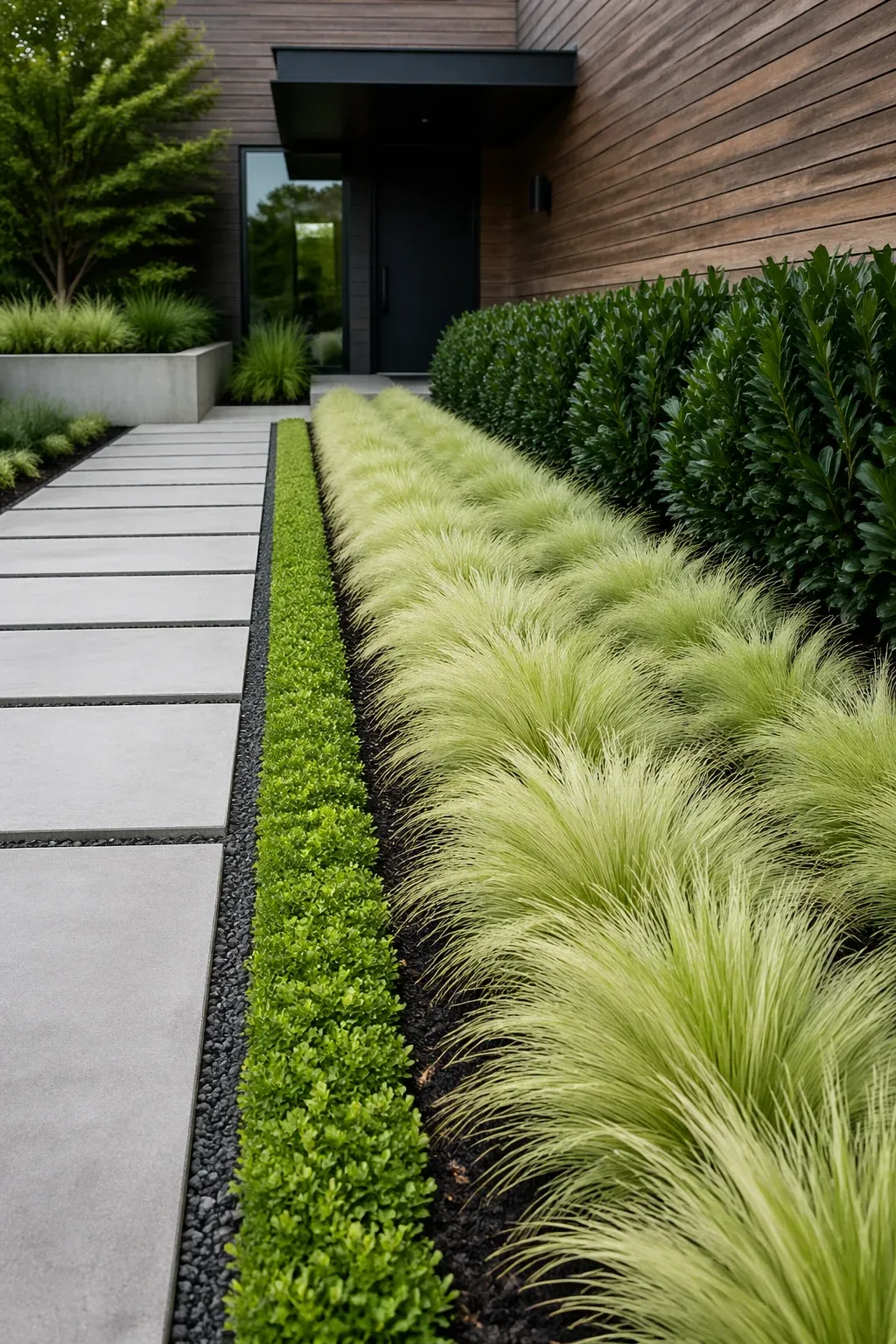
A common mistake is buying one of everything at the garden center. This creates a cluttered look that feels frantic. Modern landscapes feel calm because they use repetition. Try planting the same species in a row or a grid. This leads the eye toward the front door in a predictable, pleasing way.
Layering is also important, but it should be done with restraint. Place taller structural plants in the back, mid-sized textures in the middle, and low groundcovers at the edge. Keep the layers distinct. If you have a row of dark green shrubs, pair them with a single type of light-colored ornamental grass in front. This creates depth without the mess of a traditional cottage garden.
Incorporating Natural Stone and Hardscape Elements
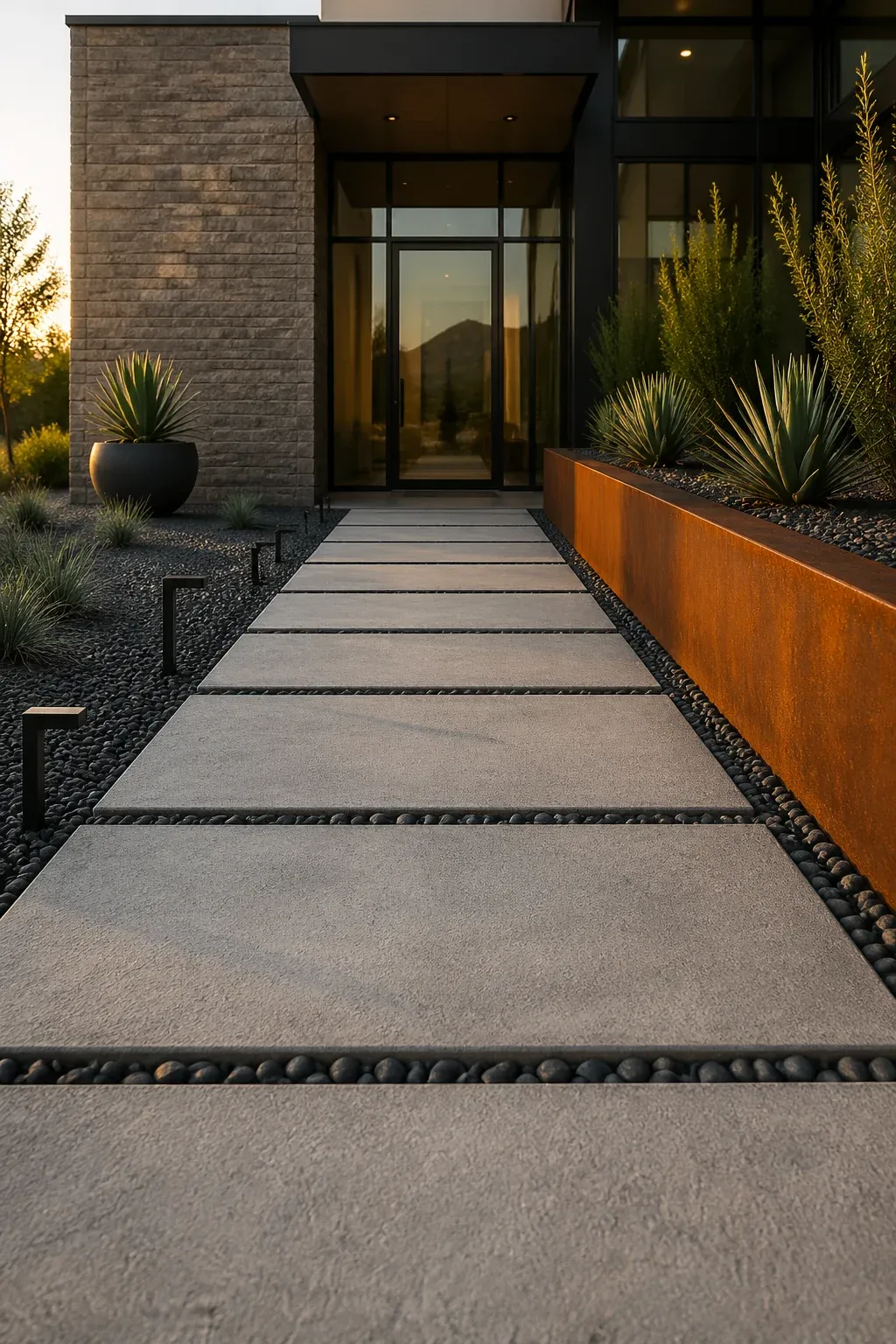
Hardscaping is the backbone of a modern front entry. Large-scale pavers, concrete stepping stones, or dark basalt gravel can define the space better than mulch alone. Using stone helps keep the lines of your garden beds crisp and prevents soil from washing onto your walkway.
Consider using oversized rectangular pavers with small gaps filled with pebbles or groundcover. This look is very clean and reduces the amount of plant material you actually need to maintain. Stone also provides a neutral backdrop that makes the green of your plants pop. If you have a slope, use simple steel or concrete retaining walls rather than rounded timber to keep the vibe contemporary.
Maintenance Basics for Keeping Clean Lines
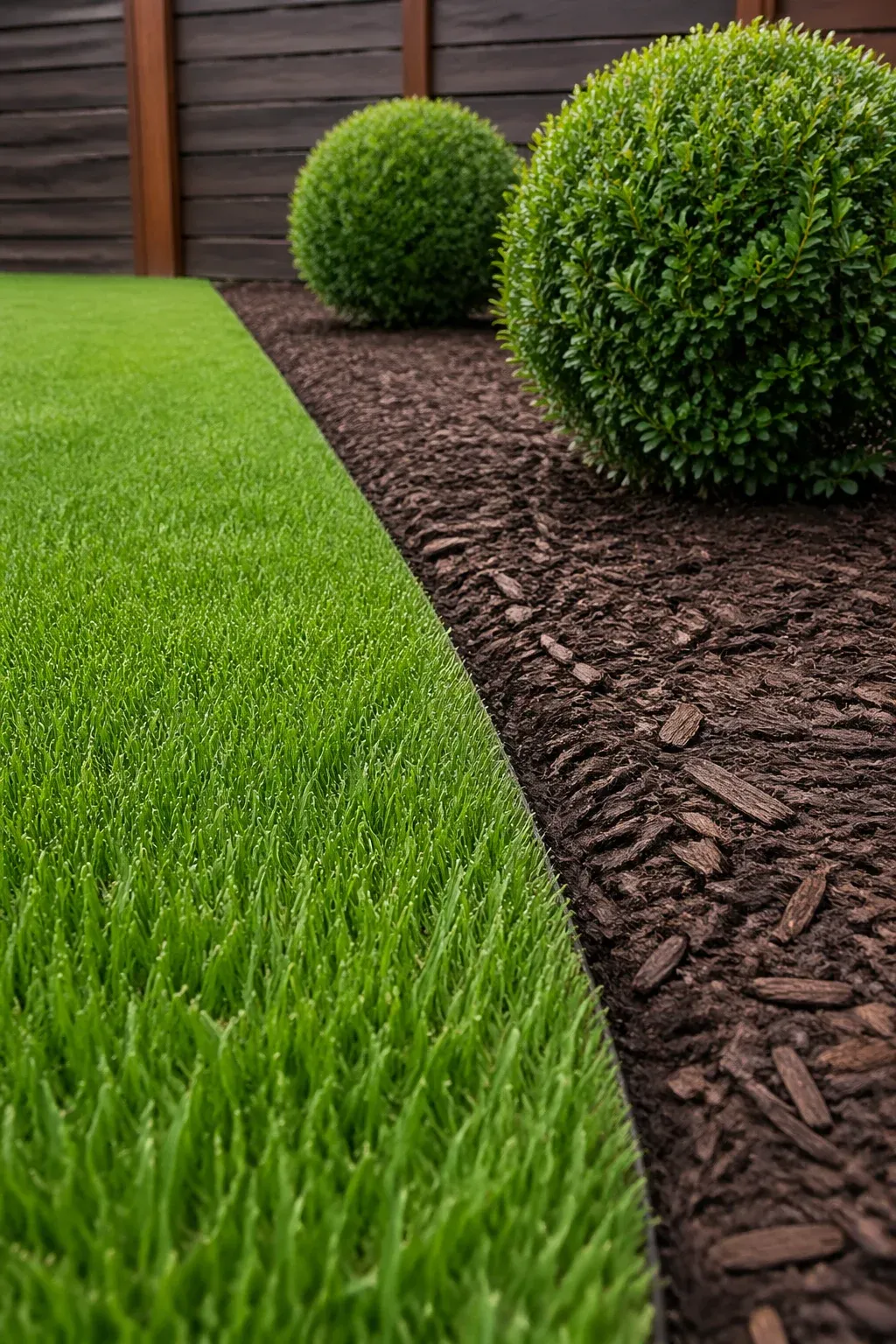
A modern garden looks its best when it is tidy. This doesn't mean you need to spend all day gardening, but you do need to stay on top of edging. A sharp edge between the lawn and the planting bed is the fastest way to make a landscape look professional.
Pruning should be focused on maintaining the plant's natural shape rather than forcing it into a box. Remove dead wood and any stray branches that break the silhouette. Mulching with dark wood chips or stones will help suppress weeds, but you should still pull any that appear immediately. Because modern designs use fewer plants, the ones you do have need to look healthy and well-groomed.
Selecting a Minimalist Color Palette
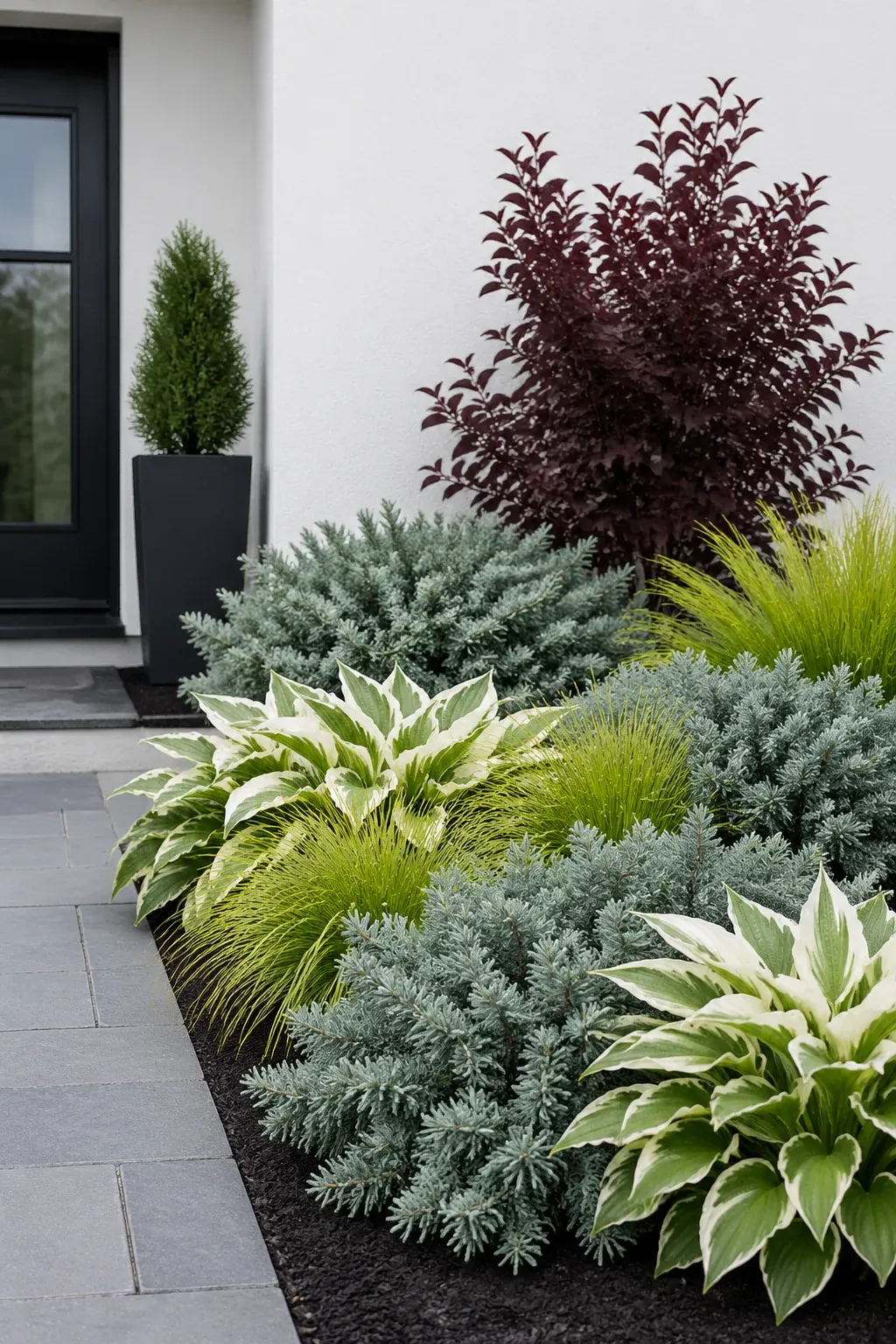
In modern landscaping, less is more when it comes to color. A palette of mostly green, silver, and white creates a sophisticated look. While bright flowers are nice, they often look messy when they fade. If you want color, choose one or two shades and stick to them.
Focus on foliage color rather than blooms. Blue-toned evergreens, chartreuse grasses, and dark burgundy shrubs can provide plenty of interest without the high maintenance of seasonal flowers. This approach ensures your front entry looks intentional and cohesive rather than like a random collection of colors.
Managing Year-Round Interest with Evergreens and Grasses
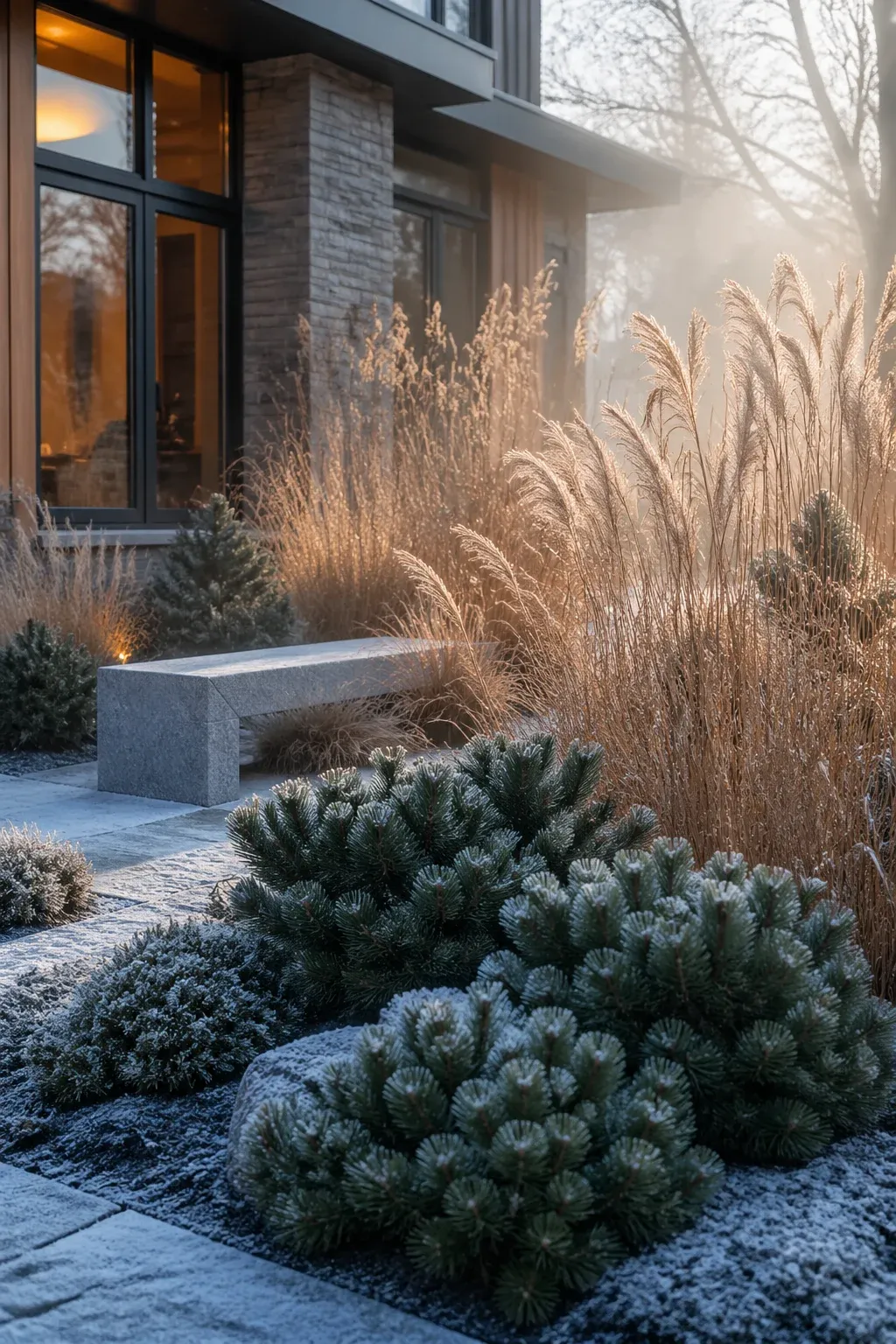
Your front entry shouldn't disappear in the winter. Evergreens are essential for providing structure when everything else goes dormant. Choose varieties that hold their color well in the cold. Dwarf conifers and broadleaf evergreens like holly or pieris work well for this.
Ornamental grasses are the secret weapon for winter interest. Many varieties, like switchgrass or fountain grass, turn a beautiful tan or gold in the fall and hold their shape through the snow. They add movement and sound to the garden in the breeze, which provides a nice contrast to the static nature of the stone and evergreens. Cut them back once in early spring, and they are ready to go for another year.
Creating a modern foundation planting is about choosing quality over quantity. By focusing on strong shapes, a limited color palette, and clean hardscape lines, you can build a front entry that looks great year-round with minimal effort. Start by clearing out any overgrown or unhealthy shrubs and pick one or two structural plants to anchor your new design. Your home will have a fresh, updated look that welcomes you every time you pull into the driveway.