
A modern indoor plant wall works best when it is designed like a small growing system, not just a pretty patch of greenery. The cleanest plant wall ideas indoor modern homes can live with every day usually solve four things before the first plant goes up: light, watering, wall protection, and access for pruning.
That is the difference between a plant feature wall that keeps its shape and one that slowly turns into a damp, uneven chore. Use the ideas below as design directions, then adjust the scale to your room, budget, and tolerance for weekly maintenance.
Start With A Modular Living Wall Panel
If you want the dense look of a true living wall, choose a modular panel system before choosing plants. A good setup gives every pot, pocket, or cell a clear watering path, a drainage plan, and room to remove individual plants. That matters because one struggling fern should not force you to dismantle the whole wall.
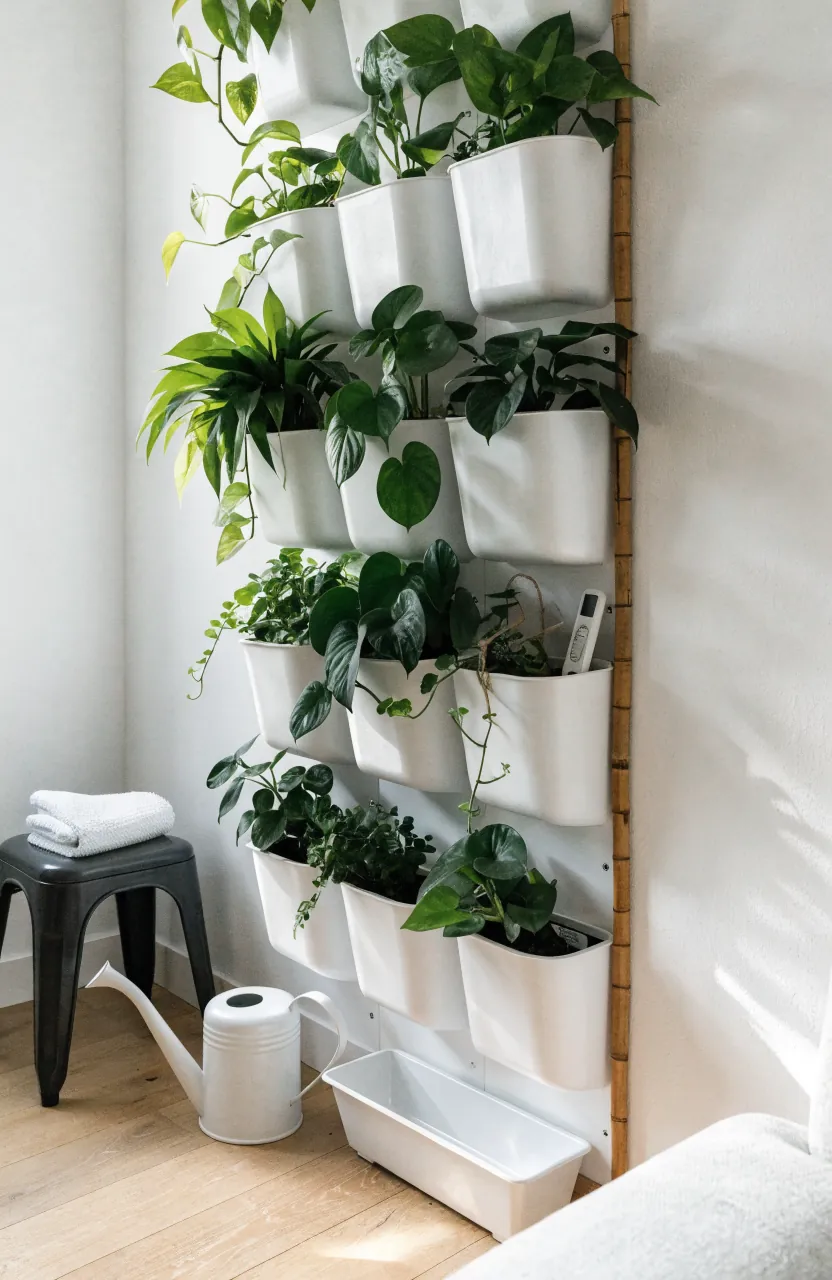
Keep the plant list tight. Pothos, heartleaf philodendron, bird’s nest fern, peperomia, and smaller trailing vines are easier to combine than plants with wildly different light or moisture needs. Leave small gaps at planting time so the wall can fill in instead of crowding itself within a few months.
Use Bamboo Slats For A Warmer Plant Accent Wall
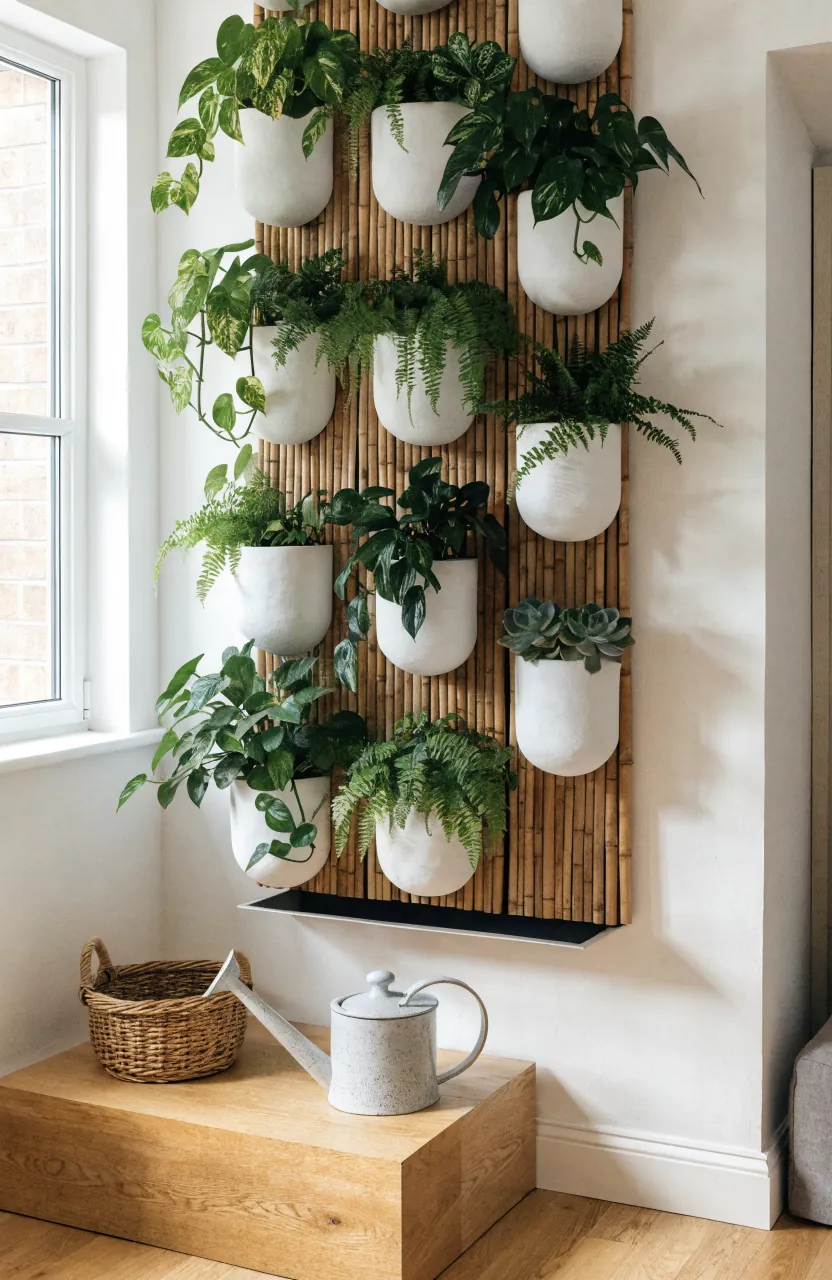
A full living wall is not the only modern option. A bamboo slat backing with mounted planters gives you a cleaner plant accent wall that reads architectural, warm, and intentional. It also keeps soil and watering points visible, which makes maintenance less mysterious.
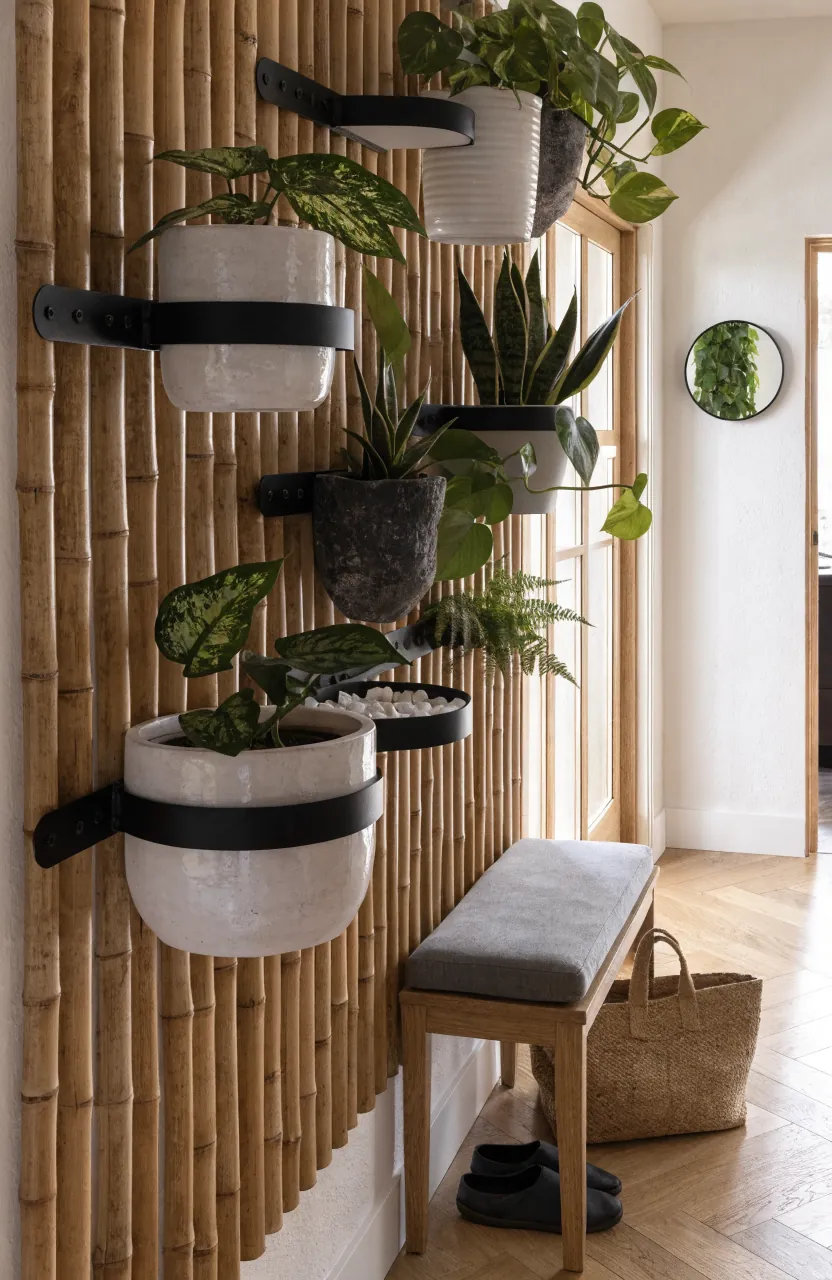
This style works especially well near an entryway, dining nook, or living room transition wall. Use a few repeated planter shapes, then vary leaf size and direction. The wall feels modern because the structure is simple, while the plants bring softness and movement.
Try Floating Shelves When You Need Flexibility
For renters or cautious beginners, floating shelves are often the smartest DIY plant wall indoor approach. You can remove each pot to water it, let it drain in the sink, rotate it toward the light, and replace a plant without disturbing the rest of the display.
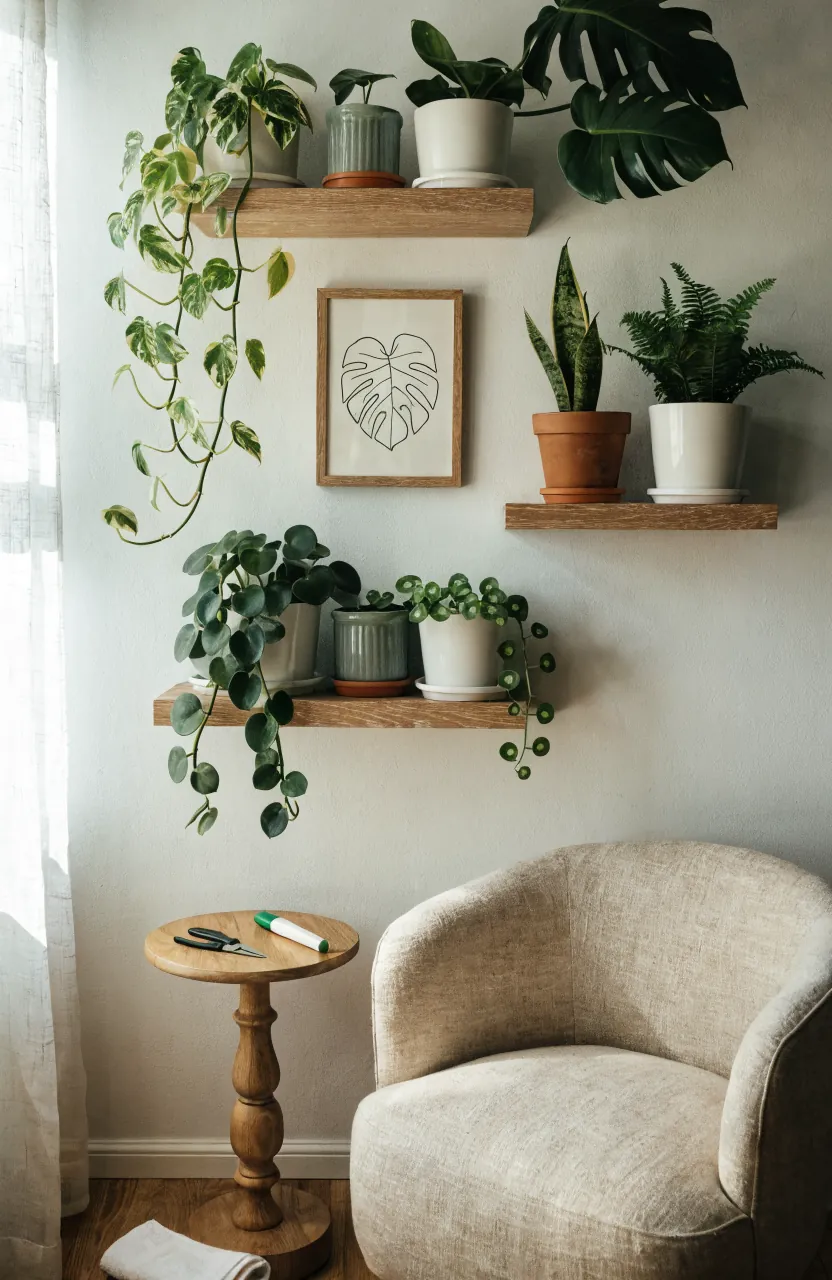
Place the highest-water plants on lower shelves where spills are easier to catch. Put drought-tolerant choices higher up. If the wall is far from a bright window, plan for a discreet grow light from the beginning instead of waiting for leggy stems and yellow leaves to tell you the room is too dim.
Make The Watering System Visible And Reachable
The most beautiful living wall design fails when watering is hard to understand. Before installing pockets or rails, ask where the water enters, where excess water goes, how you will check damp soil, and how you will clean a drip tray. A modern wall should look calm from across the room, but the working parts should still be reachable.
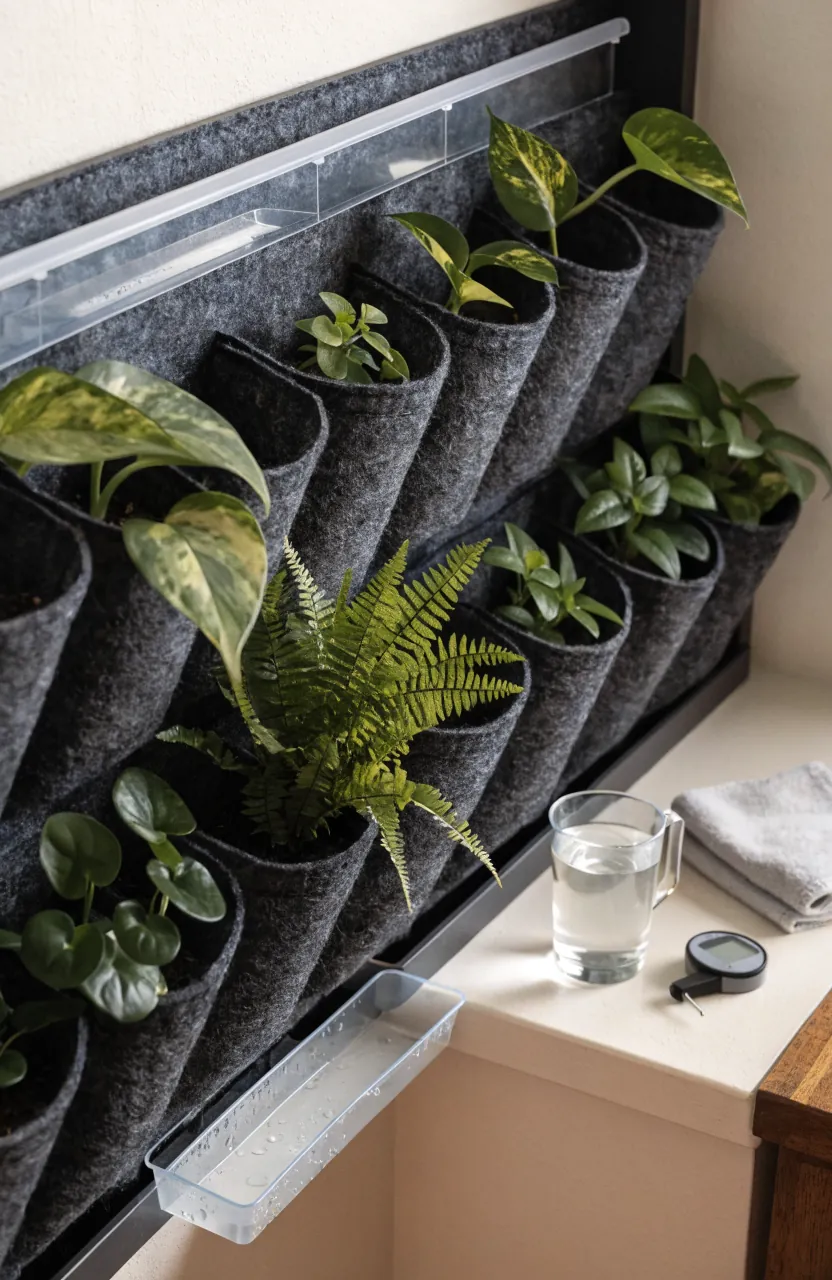
For small walls, hand watering removable pots is often simpler than a hidden irrigation setup. For larger walls, a contained reservoir, waterproof backing, and accessible tray are worth the extra planning. Water should never be able to disappear behind drywall.
Choose Air Plants Or Preserved Moss For Low-Soil Walls
If you love wall garden ideas indoor but do not want soil pockets on the wall, use air plants, mounted bromeliads, or preserved moss panels. These options are not the same as a lush living wall, but they can give a clean botanical effect with less water weight and less risk to the wall surface.
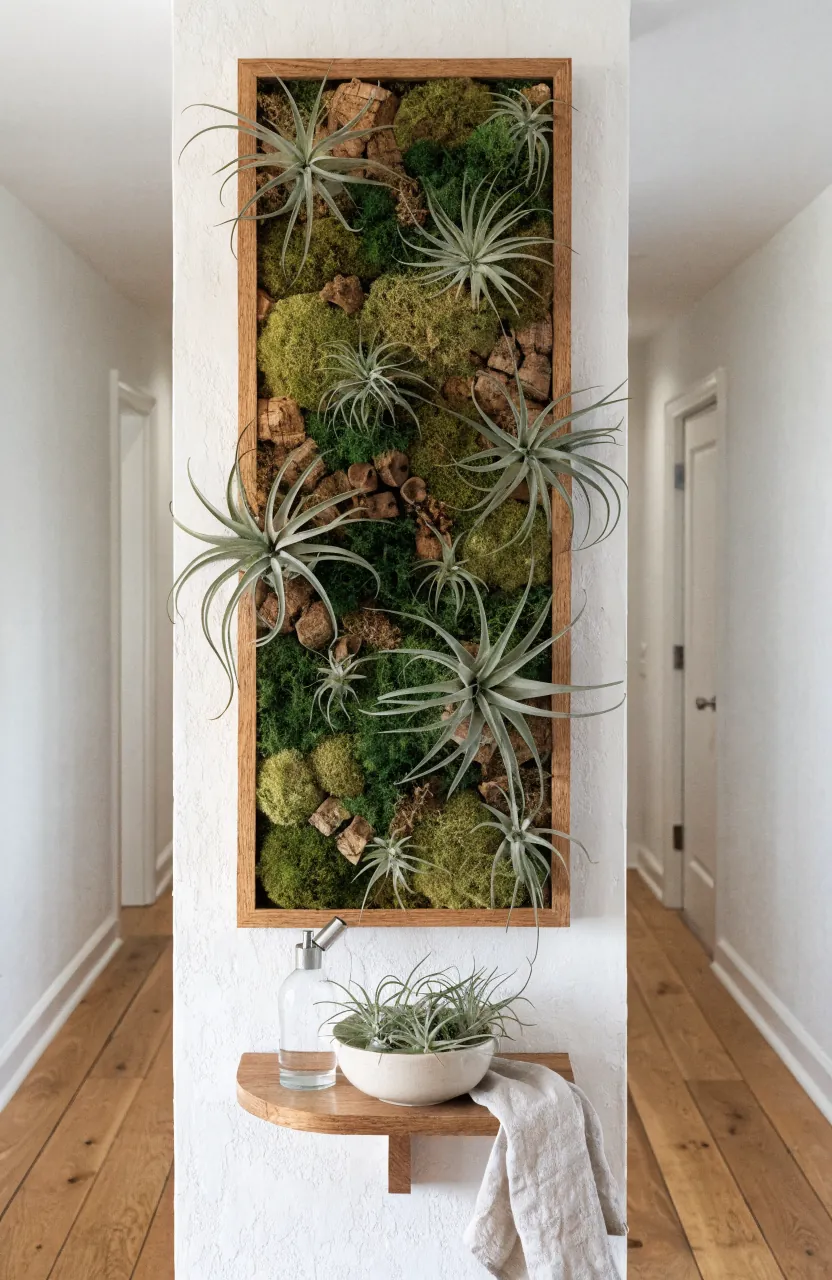
Air plants still need care: soaking or misting, airflow, and enough light to dry properly. Preserved moss is decorative rather than actively growing, so keep it away from heavy misting and direct sun. The advantage is visual softness without turning the wall into a wet growing bed.
Add A Slim Grow Light For Low-Light Rooms
Modern homes often have the perfect blank wall in the wrong light. If your plant wall sits across the room from a window, build a slim grow light into the design instead of hoping shade-tolerant plants will carry the whole display. A simple vertical rail, picture-light style fixture, or under-shelf bar can keep a DIY living wall indoor setup from stretching toward the nearest window.
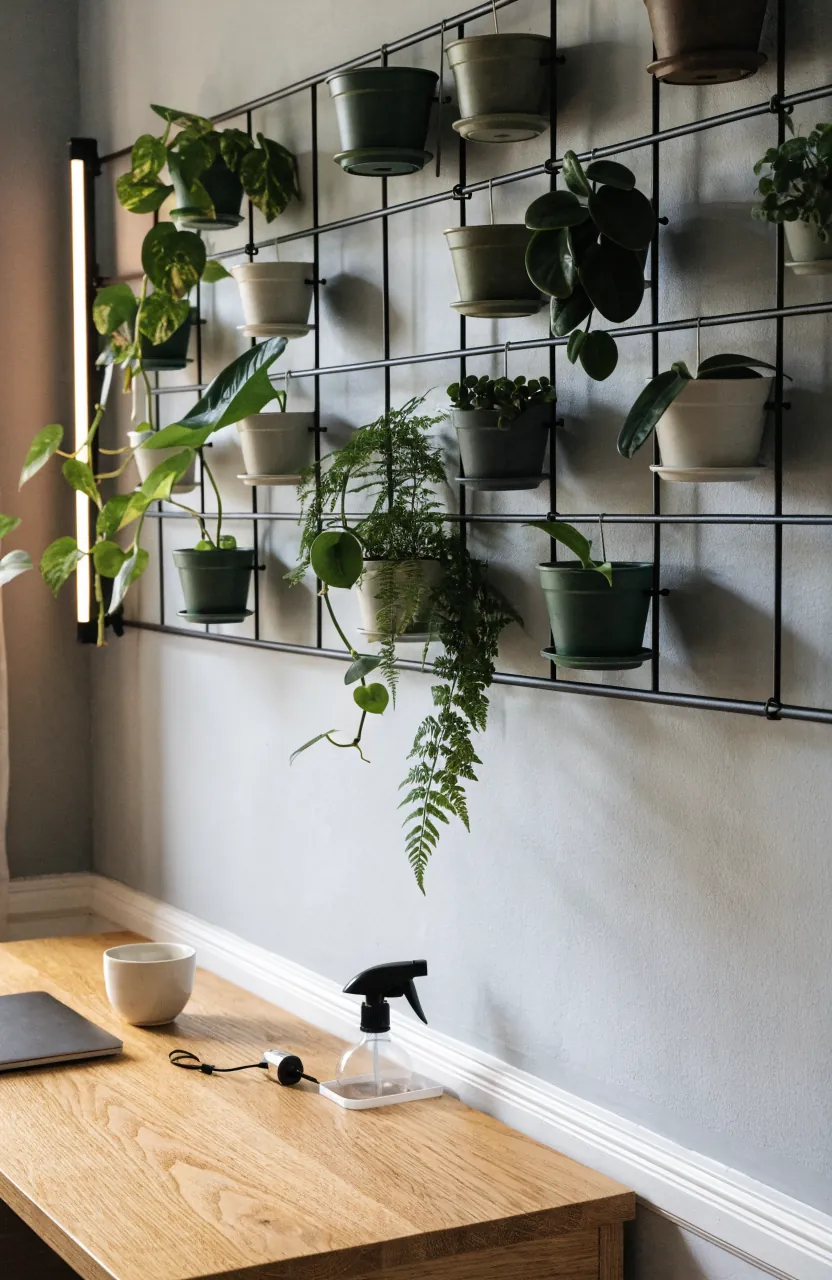
Keep the light close enough to matter, but make it look intentional. Match the fixture finish to your shelf brackets or planter rails, use a timer, and choose plants with similar light needs. The result feels cleaner than a last-minute clamp lamp and gives the wall a better chance of staying even.
Build A Maintenance Routine Into The Design
The best plant wall design is the one you can maintain when the room is busy, the seasons change, and a few plants start growing faster than the rest. Keep a small moisture meter, microfiber cloth, pruning snips, and spare nursery pots nearby. Check for pests while you water, wipe dusty leaves, and trim vines before they block light from slower plants.
- For bright rooms: use trailing pothos, philodendron, hoya, and compact ferns.
- For lower-light rooms: keep the wall smaller and add a slim grow light.
- For renters: favor shelves, rails, or removable nursery pots over permanent pocket walls.
- For a polished look: repeat one planter color and let leaf shapes create the variety.
Modern plant walls are not about covering every inch with greenery. They look better, last longer, and feel more expensive when the structure is simple, the plants have similar needs, and the maintenance path is honest from the start.