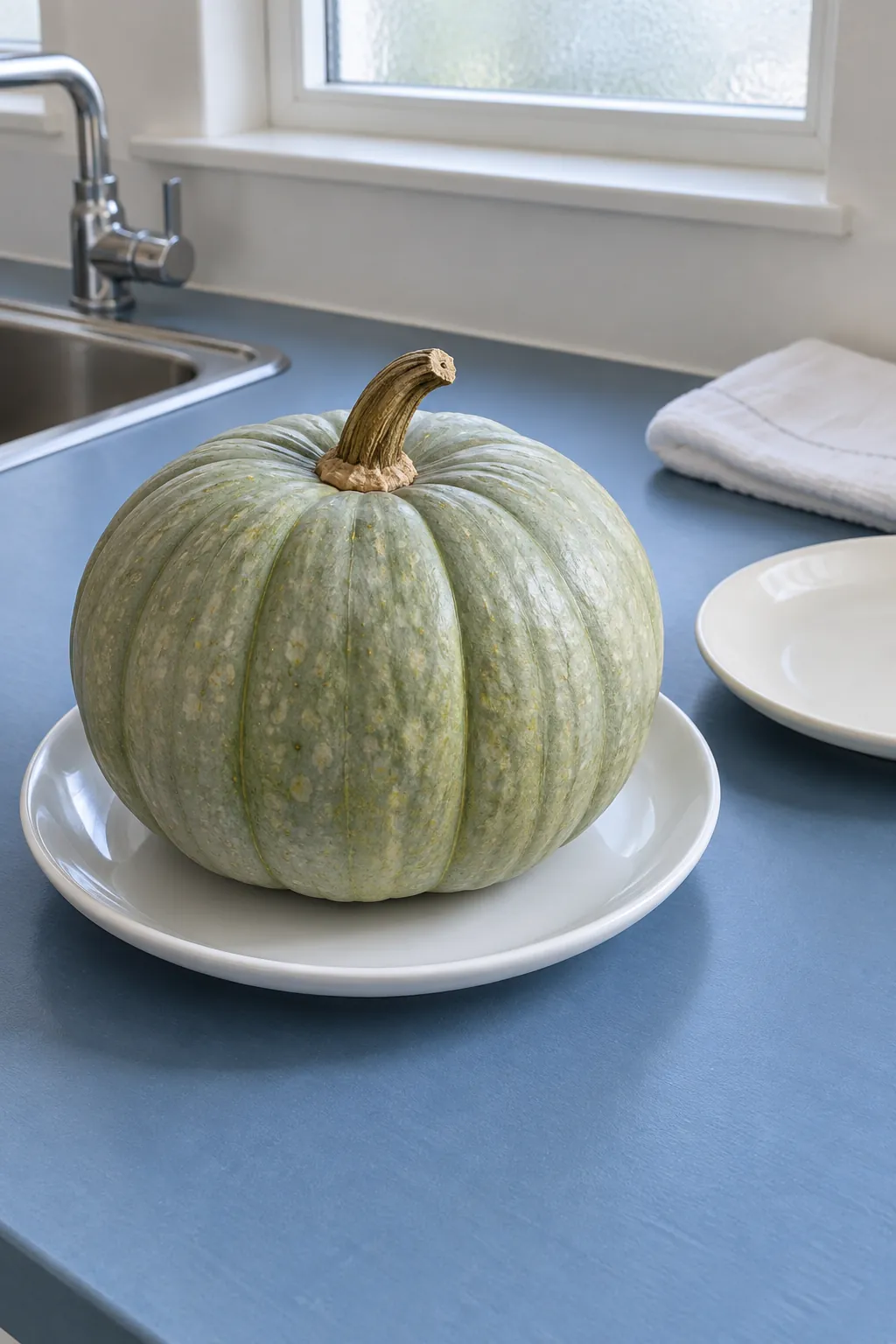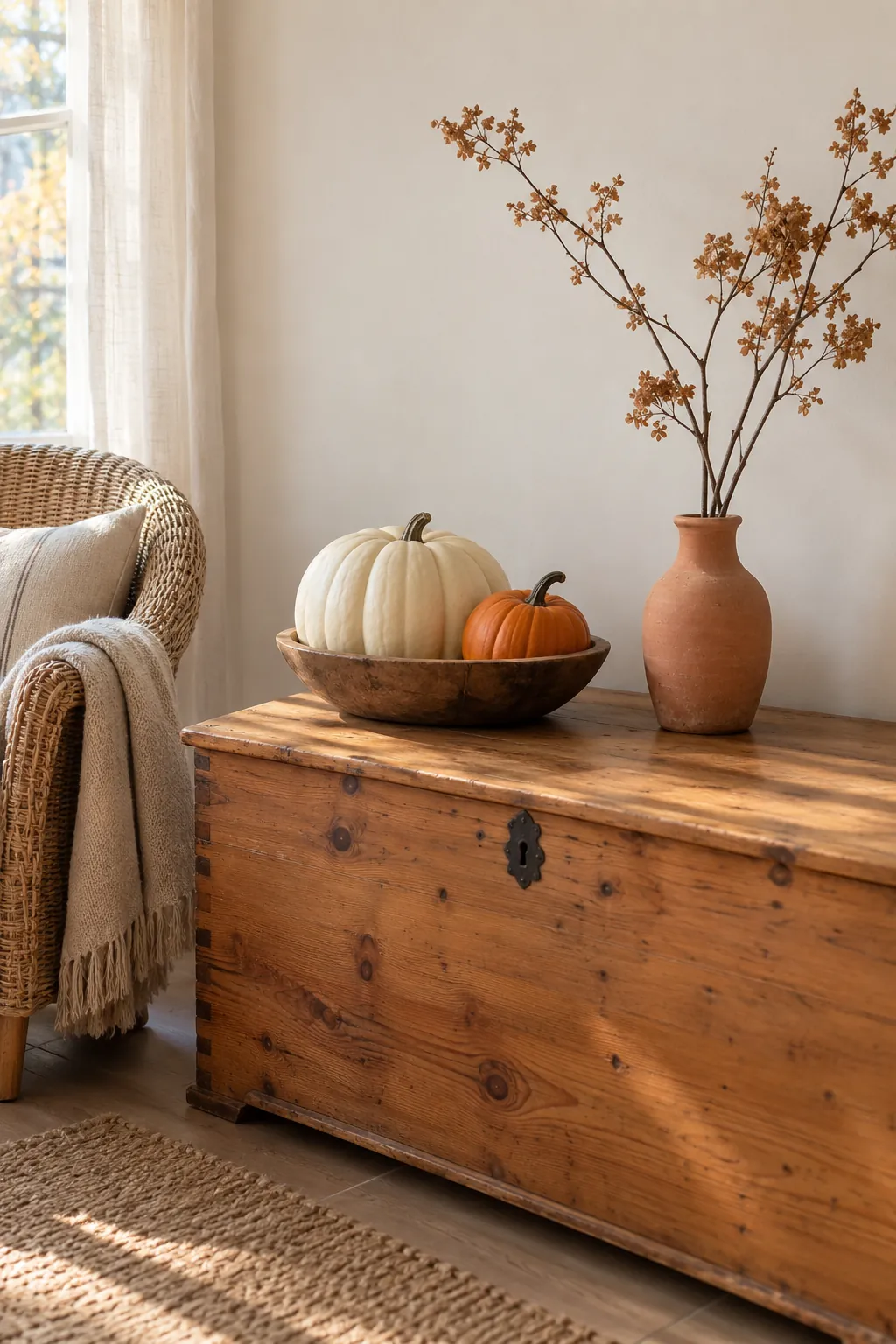
A pumpkin looks charming until you need the table underneath it, or discover a damp patch where it has been sitting. The most useful display leaves room for ordinary life and lets you check the fruit without dismantling a tower. Start with one place you already notice each day, then let the pumpkins do most of the decorating.
Choose the pumpkins before choosing the props
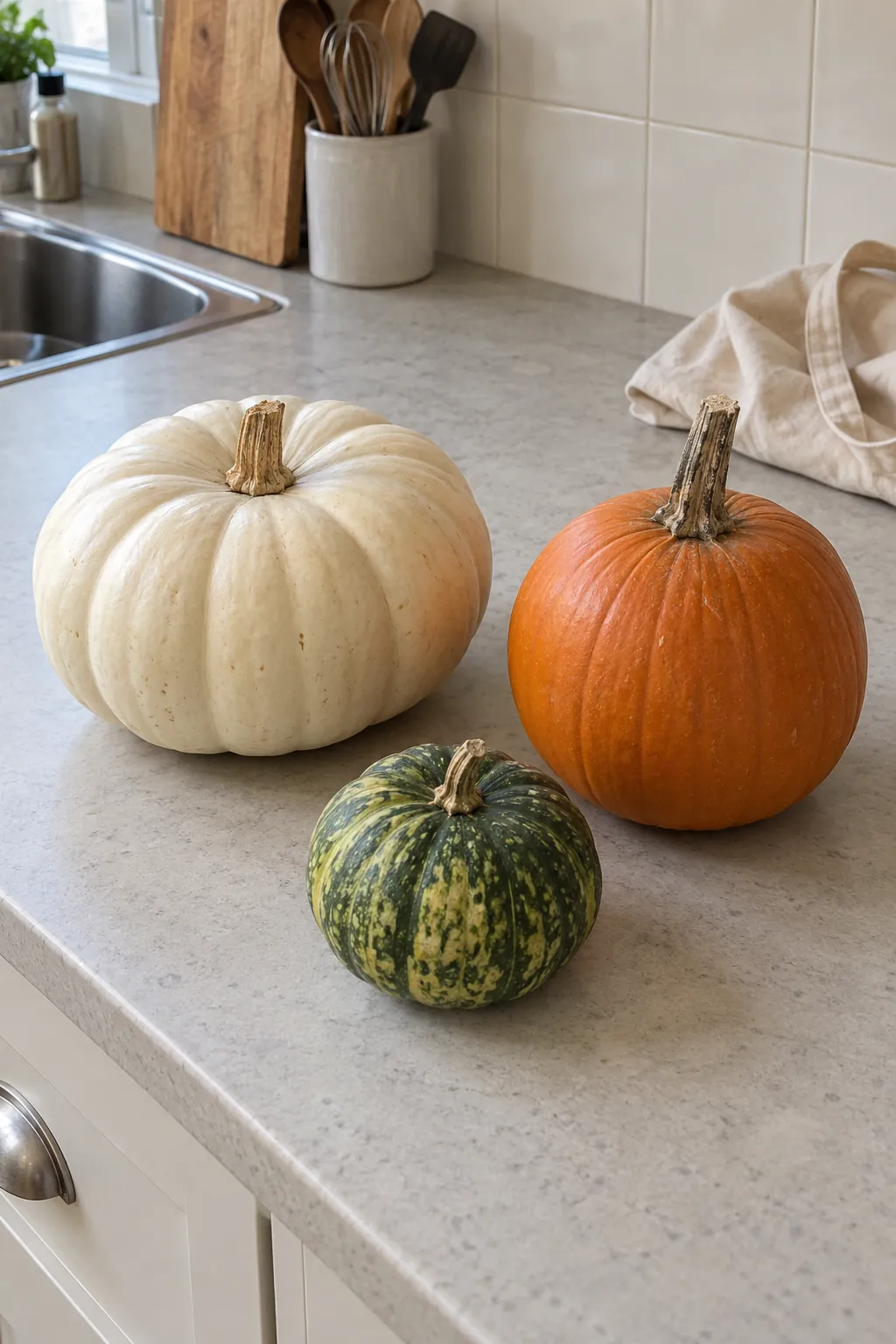
Look for firm pumpkins with intact skin and stems, and leave bruised or soft examples behind. Pick one larger shape and a couple of smaller companions rather than buying a matching set by habit. A squat cream pumpkin beside a taller orange one gives a natural fall home more character than a pile of identical pieces.
Let the room guide the color choice. Pale pumpkins can soften a dark cabinet, while orange stands out against stone, green plants, and brown wood. If your living room already has strong colors, keep the supporting tray or bowl quiet so the pumpkin decor does not introduce another competing pattern.
Give the entryway a display with a boundary
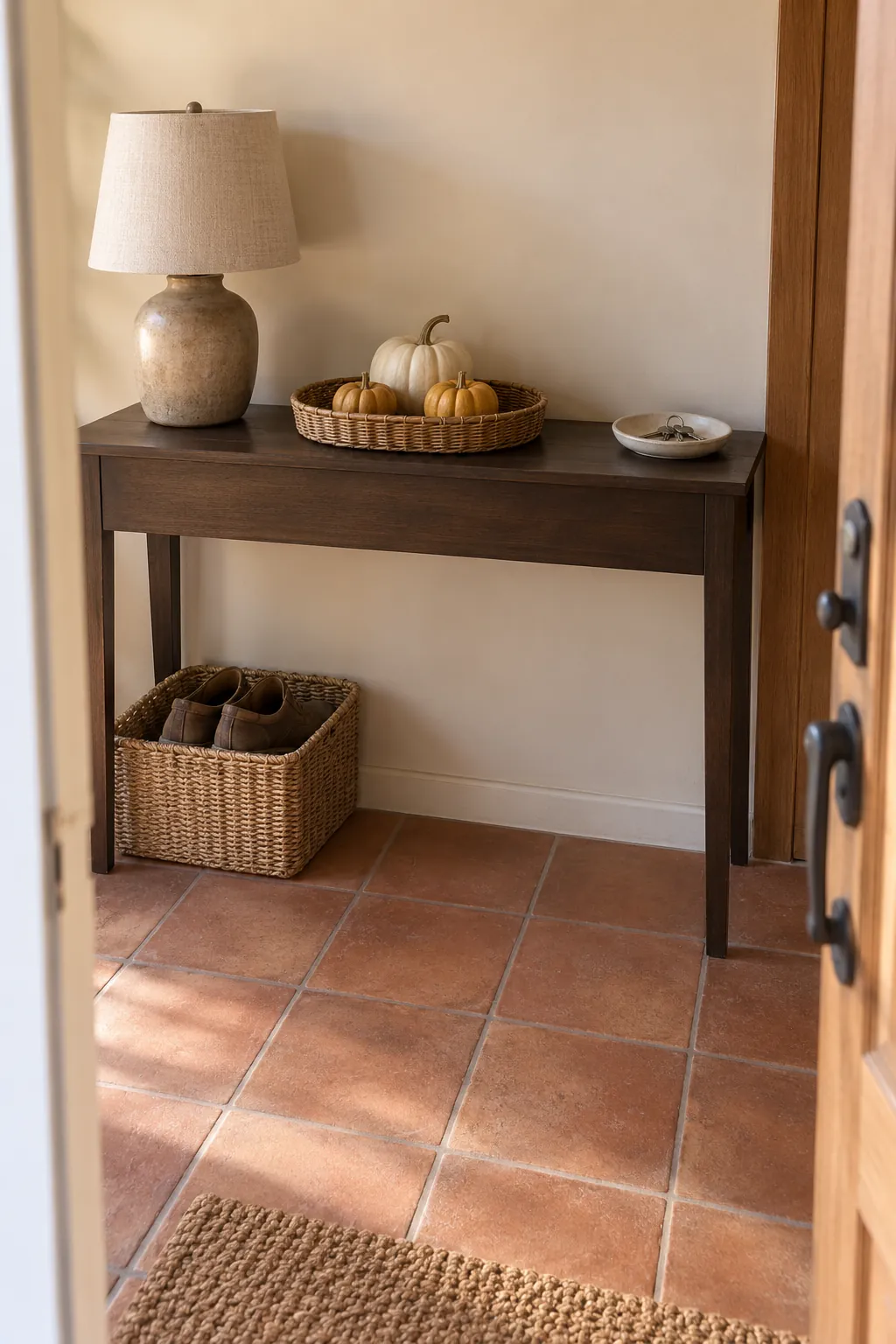
A shallow tray turns a few small pumpkins into one object you can lift when the console needs cleaning. Place the tallest pumpkin toward the back and keep its neighbors low enough that your key bowl remains easy to see. Leave a separate landing space for mail and bags, because seasonal home decor should not take over the place where you arrive.
Use an existing basket beneath the console for shoes or a folded throw rather than stuffing it with more decorations. The different heights make the entryway feel finished without adding another surface arrangement. Check that the tray sits fully on the furniture and cannot be nudged off by a bag strap.
If the console is narrow, one pumpkin beside a useful lamp can be enough. Stand at the doorway and judge the shape from that distance before adding smaller pieces. A display that reads clearly as you enter usually needs less detail than one photographed from a few inches away.
Keep the dining table low and movable
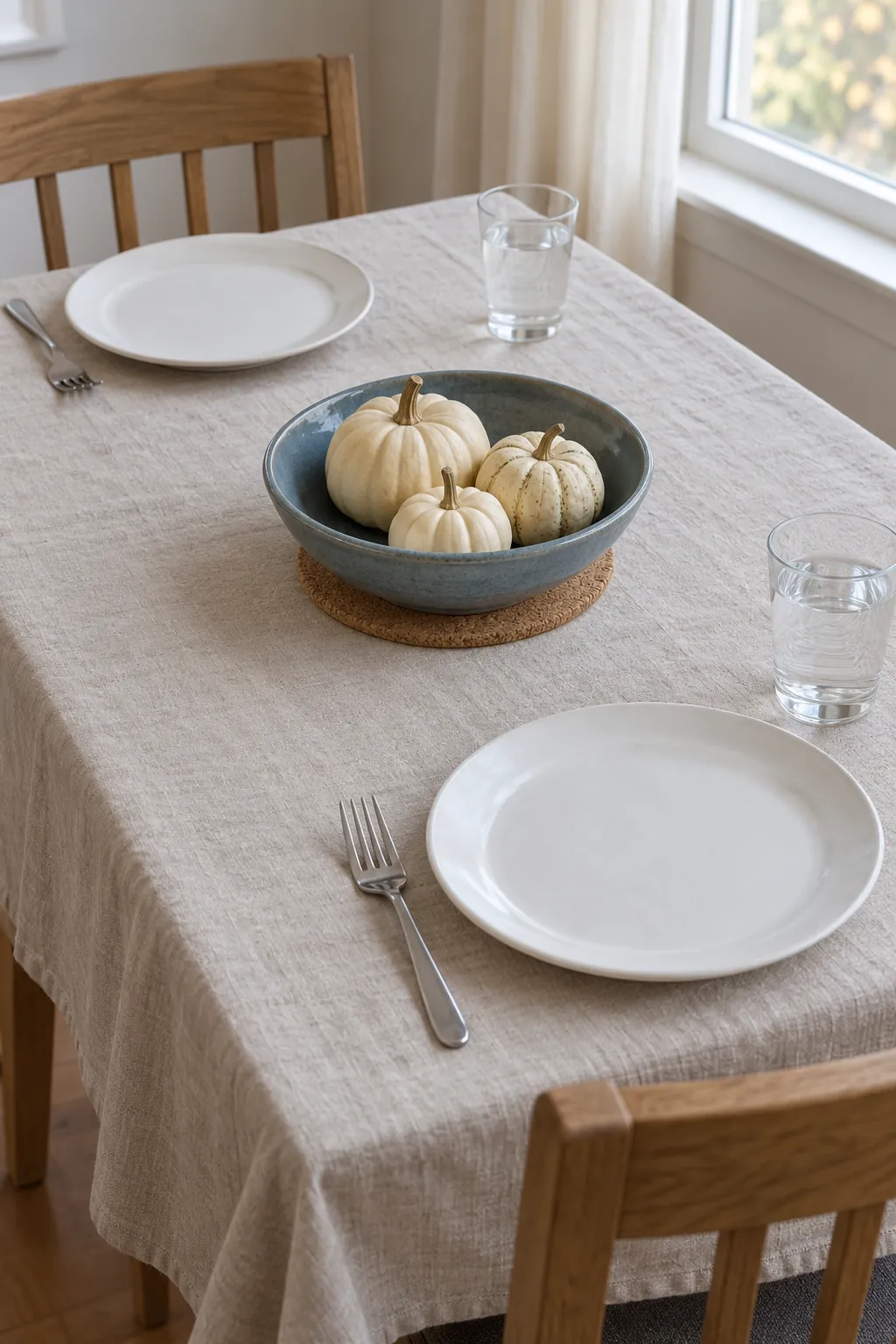
Set a small group of pumpkins in a wide ceramic bowl or on a washable platter near the middle of the table. Keep everything below the sightline of seated guests, and leave the chair places clear. For a long table, repeat a little empty space around the arrangement rather than stretching a runner full of objects from end to end.
A folded linen cloth adds softness, but it should not be the only protection between fresh produce and a vulnerable finish. Put the bowl on a suitable coaster or trivet and inspect underneath it regularly. Before a meal, lift the centerpiece away in one movement so serving dishes have somewhere to land.
Let a porch grouping sit beside the route
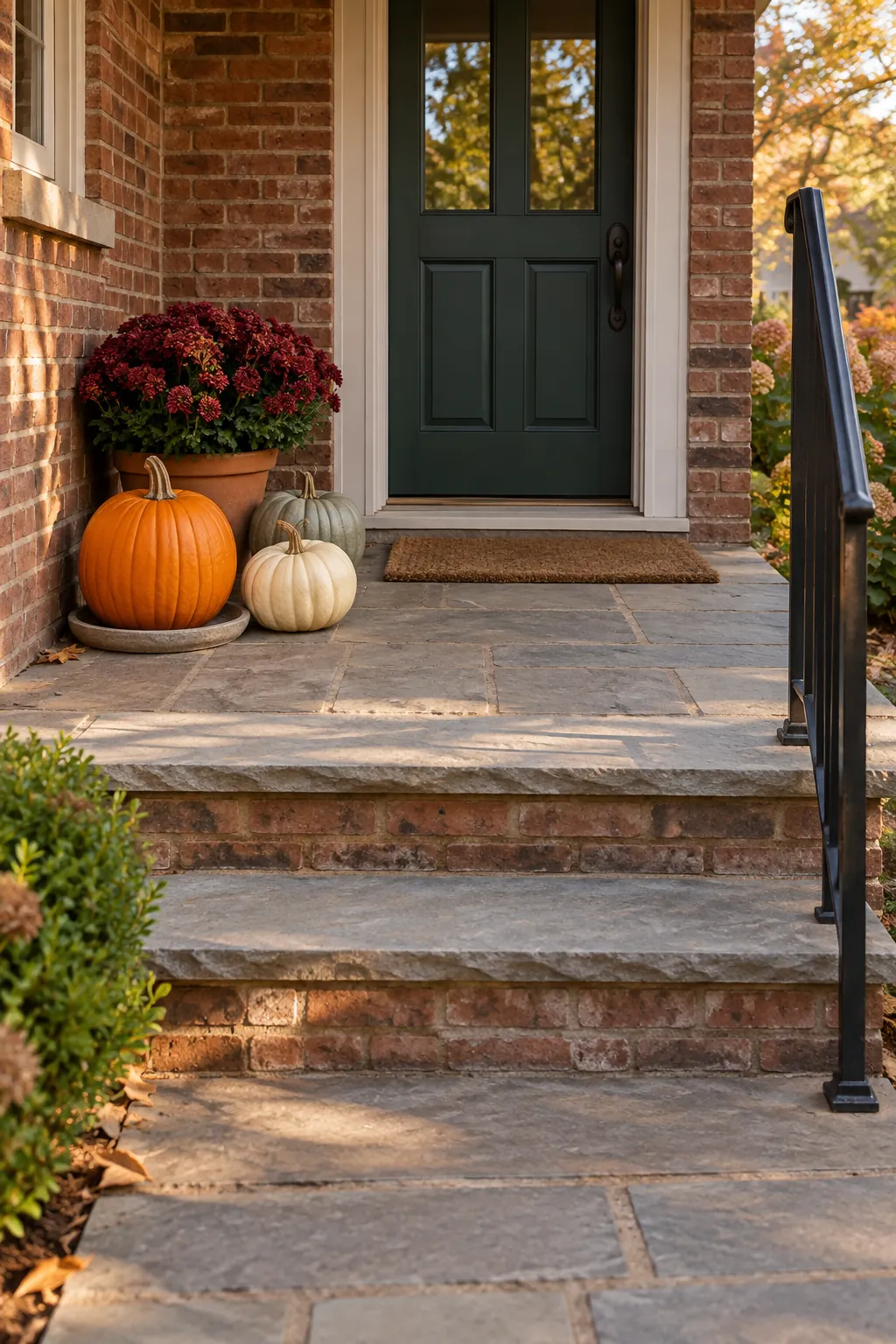
Use the corner beside the door, not the middle of the step, for a fall porch display. Set larger pumpkins on stable, level surfaces and bring in smaller ones at ground level where they cannot roll into the walkway. A pot of mums or an existing evergreen can provide height without balancing heavy fruit in a stack.
Choose a sheltered position when possible and check after rain for trapped moisture beneath the pumpkins. A washable saucer or stable raised support can separate them from a vulnerable surface, provided it does not make the arrangement wobble. Keep the door swing, handrail, and delivery landing space clear.
Pair real shapes with materials you already own
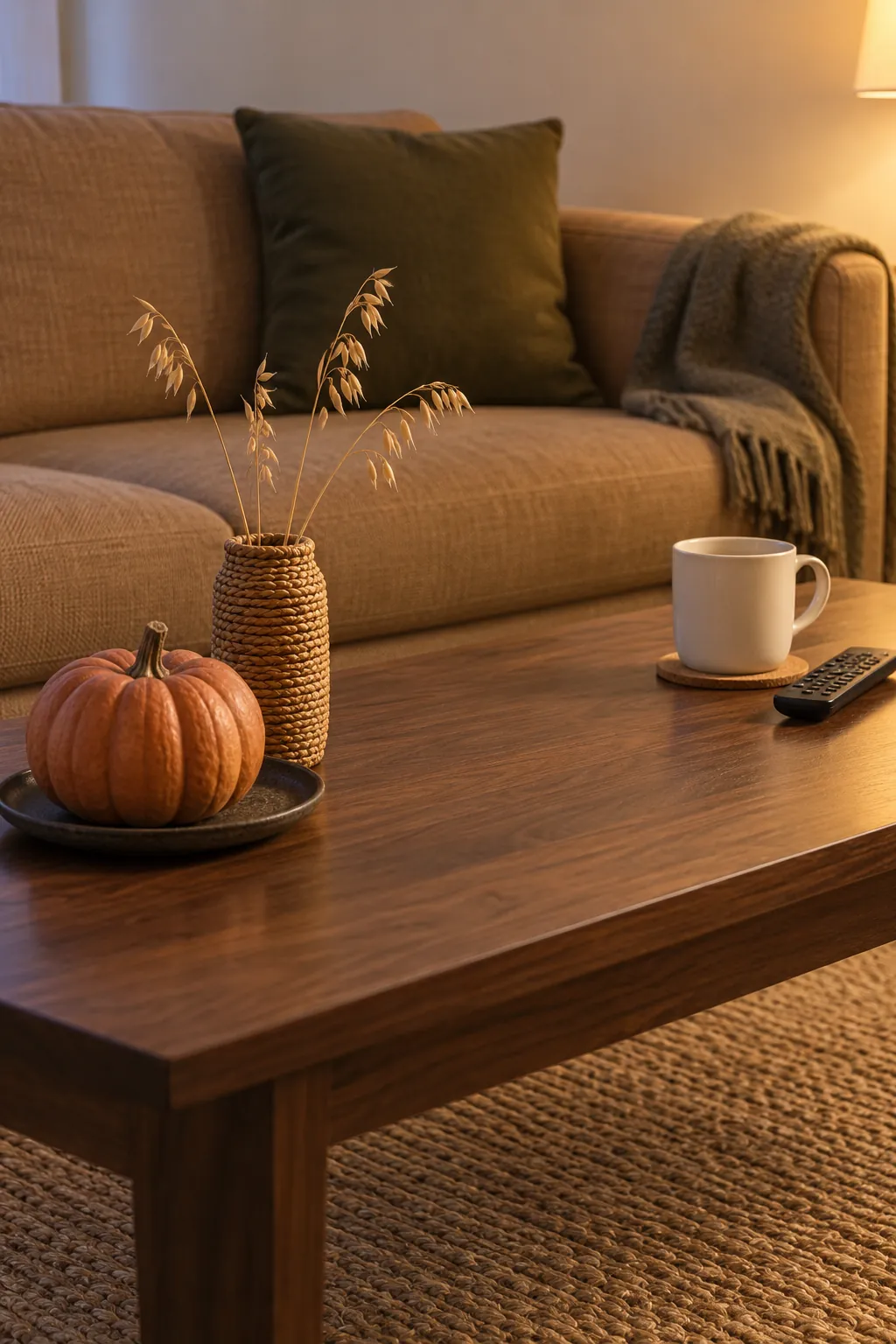
Natural fall decor does not require every object to come from outdoors. A real pumpkin beside a woven basket, a wooden bowl, or a matte ceramic vase can provide enough seasonal character. Choose one main texture around it so the arrangement looks deliberate instead of becoming a collection of every autumn material you can find.
For coffee table decor, use a small pumpkin and keep the total footprint modest. Leave a flat place for a mug and a clear line to the remote. Dry leaves may be pretty for a short display, but loose pieces that crumble into the sofa can quickly become more work than they are worth.
Reusable ceramic pumpkins are a practical alternative near warm windows or in rooms where fresh fruit gets overlooked. Mixing one with a real pumpkin keeps the display from looking too uniform, while reducing how much produce you need to monitor. Keep any dried stems well away from flames and use battery lights when the arrangement is crowded.
Build in a quick check before the display settles
Move each real pumpkin occasionally and look at its underside, the supporting dish, and the furniture beneath it. Soft spots, leaking liquid, or visible mold mean it is time to remove the pumpkin rather than hide the damage behind another piece. Heat and weather vary, so do not count on a fixed number of weeks from a display you saw online.
Keep the arrangement simple enough that this check takes a moment. Washable dishes are easier to manage than a pumpkin buried in cloth or packed into a basket with no view of its base. If you want to eat a culinary pumpkin later, keep it free of paint and decorative treatments and handle it according to ordinary food safety guidance.
Once the season ends, remove unsuitable fruit through your local waste or compost guidance and clean the support before storing it. Save only the few reusable pieces you liked enough to use again. The useful test is whether you can pick up your keys, serve dinner, and sit down with a drink without negotiating with the decorations.