
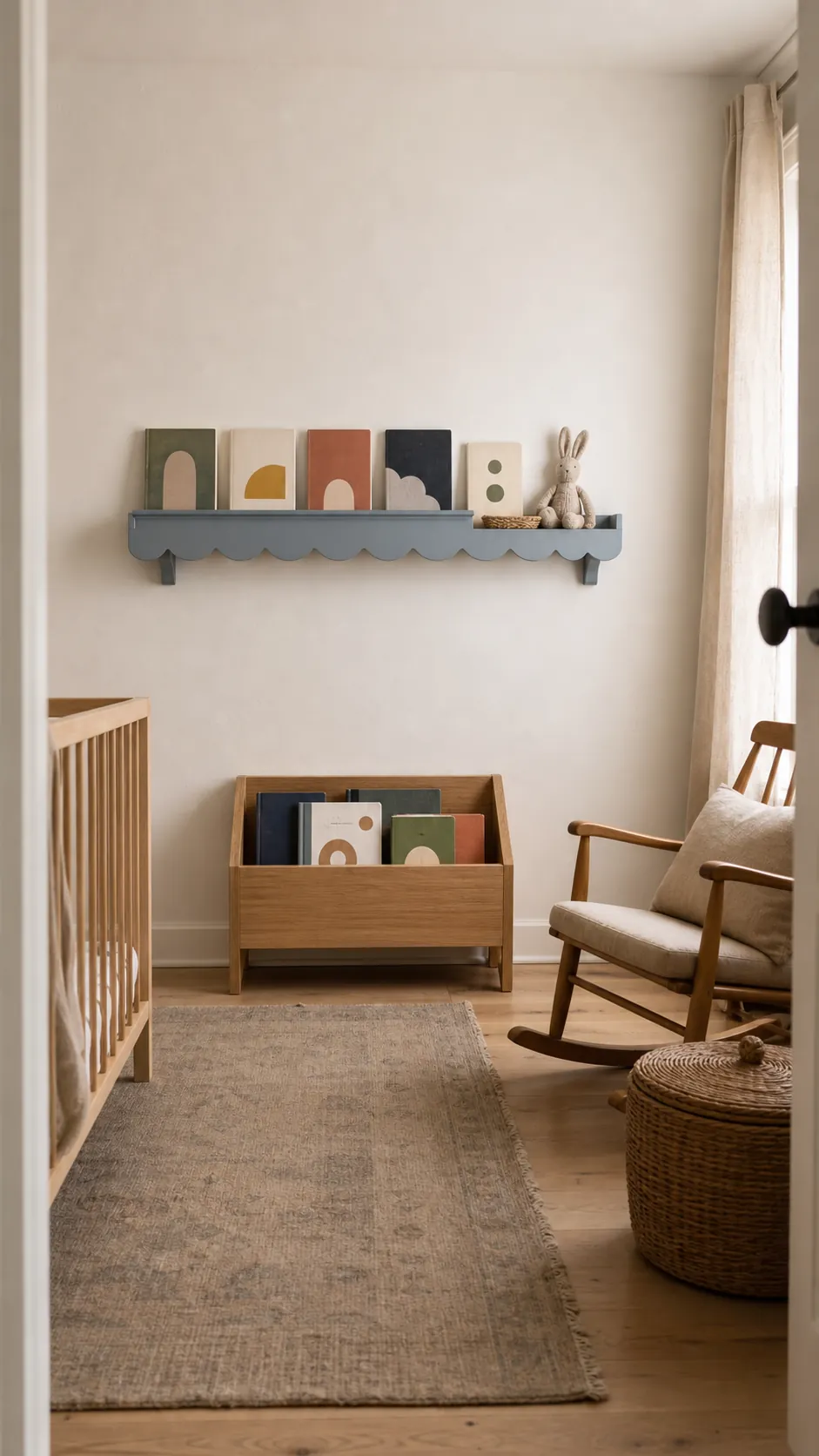
A scalloped shelf earns its place in a nursery when the curved edge does more than look cute. It can make books easier to choose, turn awkward wall space into useful storage, and carry a room from babyhood into the school years. The trick is deciding who needs to reach it, what it must hold, and where falling objects cannot create a hazard.
Parents often love face-out book ledges because covers become wall decor, while also worrying that books will tumble or a toddler will climb. Both concerns are reasonable. Choose a shelf rated for the intended load, use fixings suited to the wall, follow the maker’s installation directions, and reassess the setup as a child becomes mobile. Avoid mounting shelves or hard decor over a crib, bed, or active changing surface.
Make a Low Face-Out Library
A low scalloped book ledge lets a toddler identify favorite stories by their covers rather than by tiny spines. One or two rows can hold a rotating selection while the rest of the books live in closed storage. Keep the lowest display genuinely reachable, avoid overpacking it, and choose a front lip deep enough for the books you own.
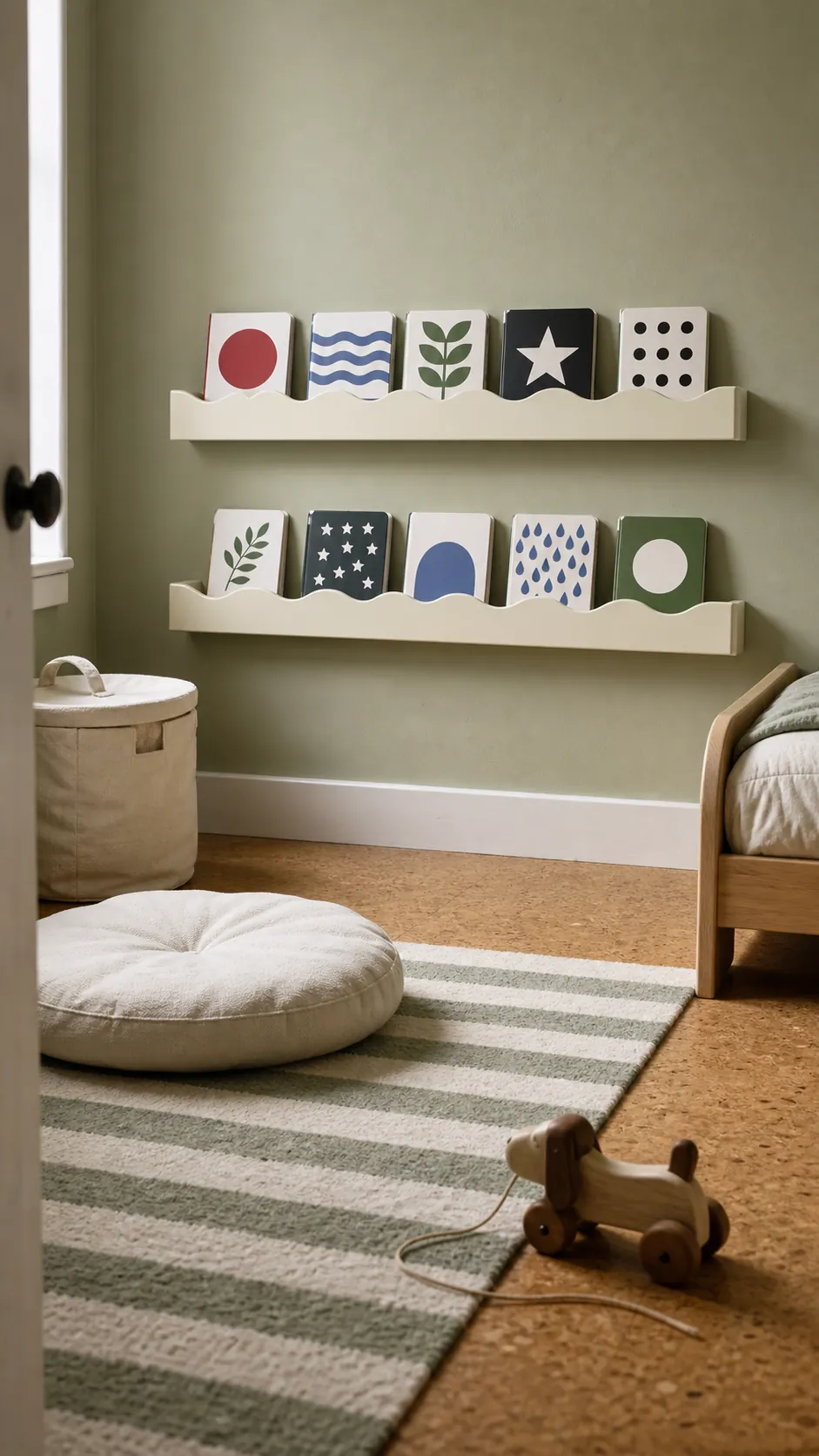
Leave floor space for sitting and returning books. A washable cushion, a small basket, and six to ten visible covers are often enough. The scallop already supplies rhythm, so the books can provide most of the color. Rotate titles every week or two rather than stacking a full library on a narrow rail.
Give a Reading Nook Its Own Pair of Shelves
In a recessed corner, a pair of compact scalloped shelves can define a reading zone without taking up scarce floor area. Position them beside the seat rather than directly above it. A wall light, floor cushion, and book basket complete the nook, but cords and fixtures should remain secured and appropriate for the child’s age.
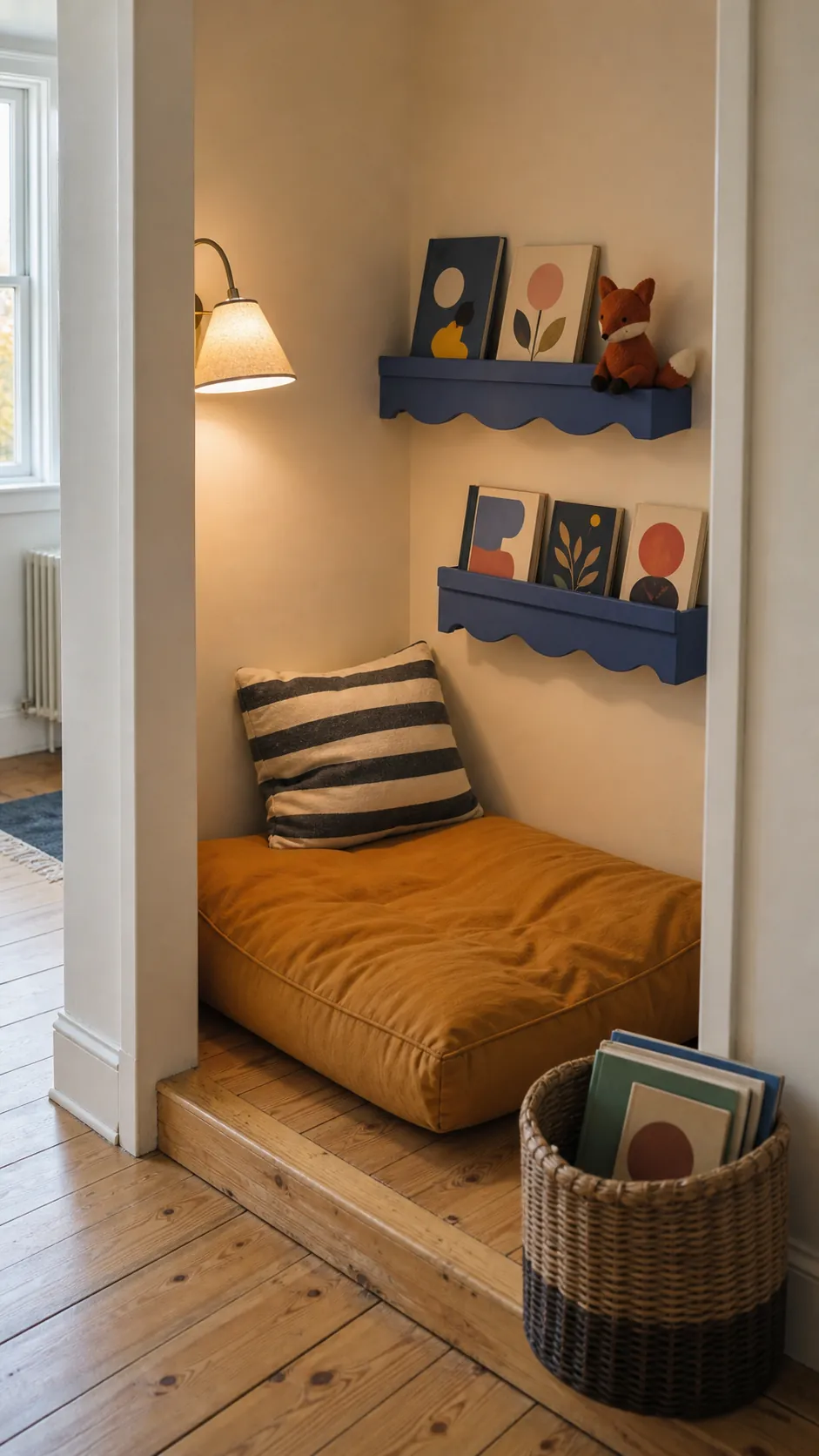
Matching the shelf paint to a nearby trim color makes the nook feel built in. If the corner is narrow, stagger the shelves instead of stacking them in a tall ladder. That keeps the display visually relaxed and discourages the shelf fronts from reading as climbing steps.
Use One Shelf as a Gentle Display Zone
Not every nursery shelf needs to be child-accessible. One scalloped shelf on a quiet wall can hold lightweight keepsakes for adults to enjoy: a fabric-bound memory box, a soft toy, or one small unglazed vase with dried stems. Place it away from the crib and changing area, keep the load light, and secure every component properly.
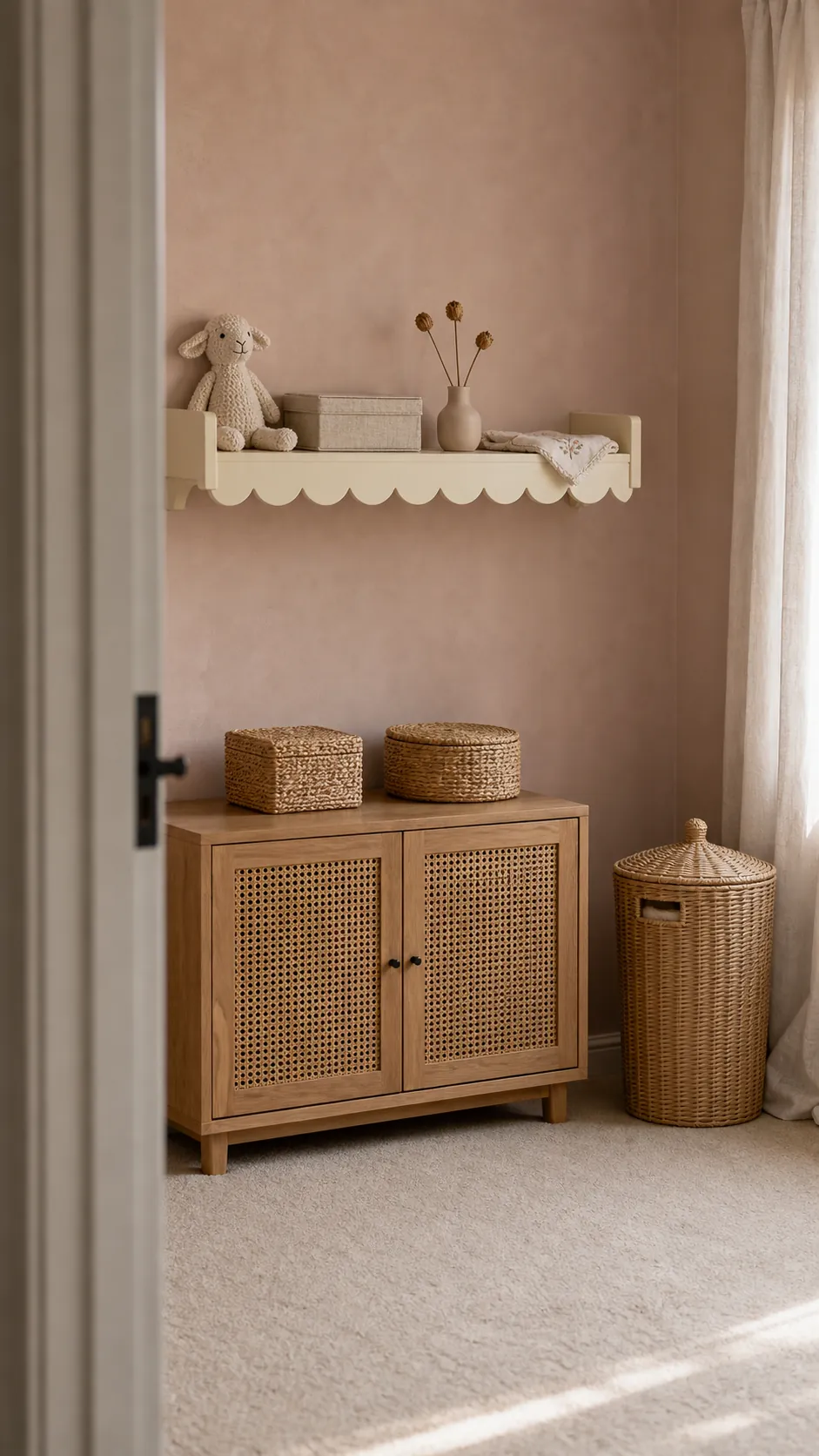
The display looks calmer when objects vary in shape but share a limited palette. Leave about a third of the shelf open so the curved apron stays visible. Cute decor becomes clutter quickly when every gift is displayed at once; store extras and change the arrangement seasonally.
Turn a Scalloped Shelf Into a Creative Station
Above a child-size desk, a deeper scalloped shelf can organize paper, crayons, and finished projects. Use stable containers with no sharp edges, place frequently used supplies within comfortable reach, and reserve higher areas for adult-managed materials. A short rail with hooks beneath the shelf can hold an apron or headphones if the product is designed for that load.
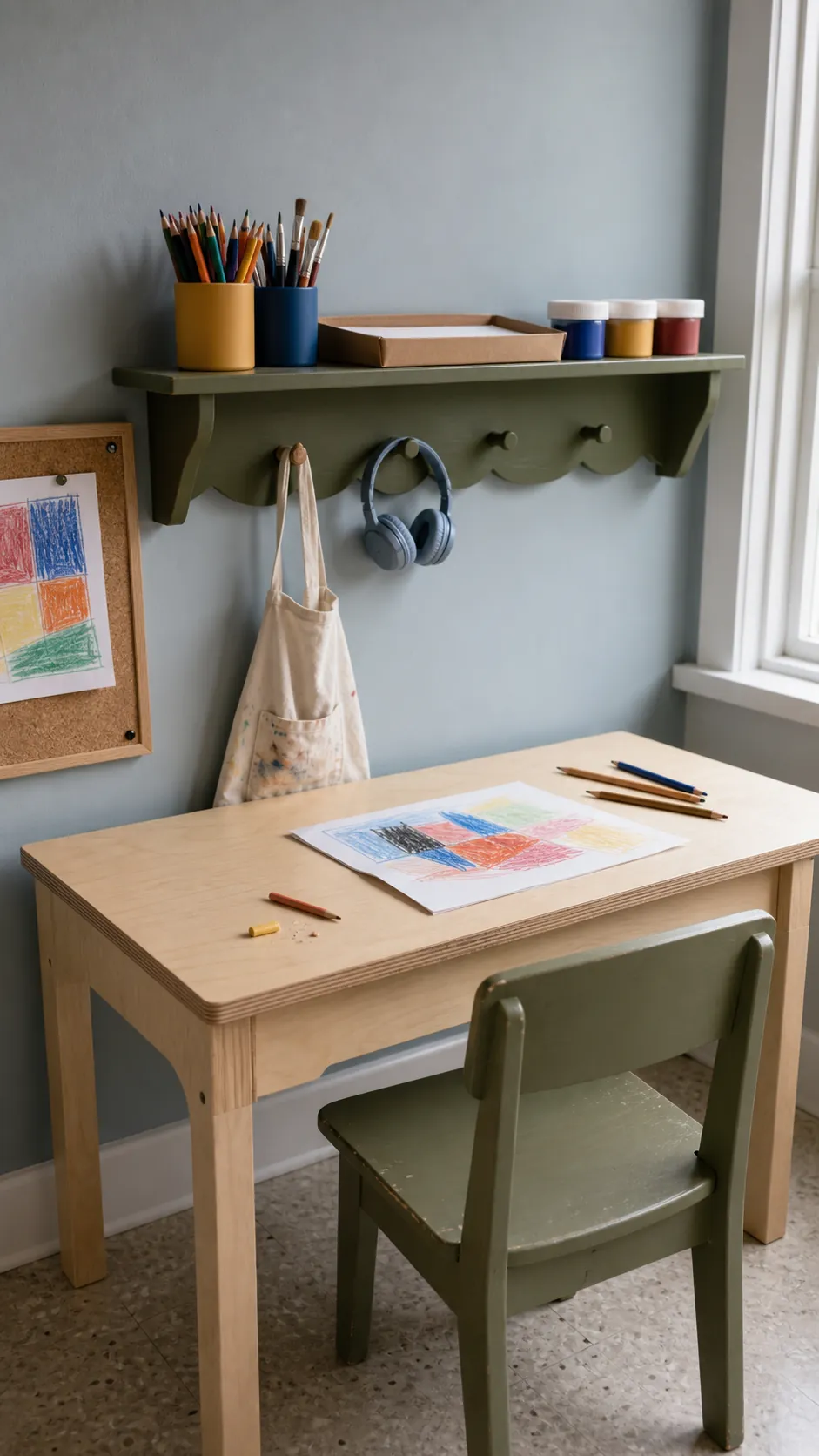
Let the supplies create the color story. Kraft paper, wood pencils, washable paint pots, and two bright storage cups feel playful without a themed mural. Pin current artwork to a separate low display wire or board, so the shelf remains functional rather than becoming a pile of loose paper.
Bridge Two Beds With Symmetrical Storage
In a shared room, give each child an identical scalloped shelf beside—never over—their bed. The repetition brings order, while different book covers and small objects preserve individuality. Match shelf height only if it remains safe and useful for both children; otherwise, prioritize function over perfect symmetry.
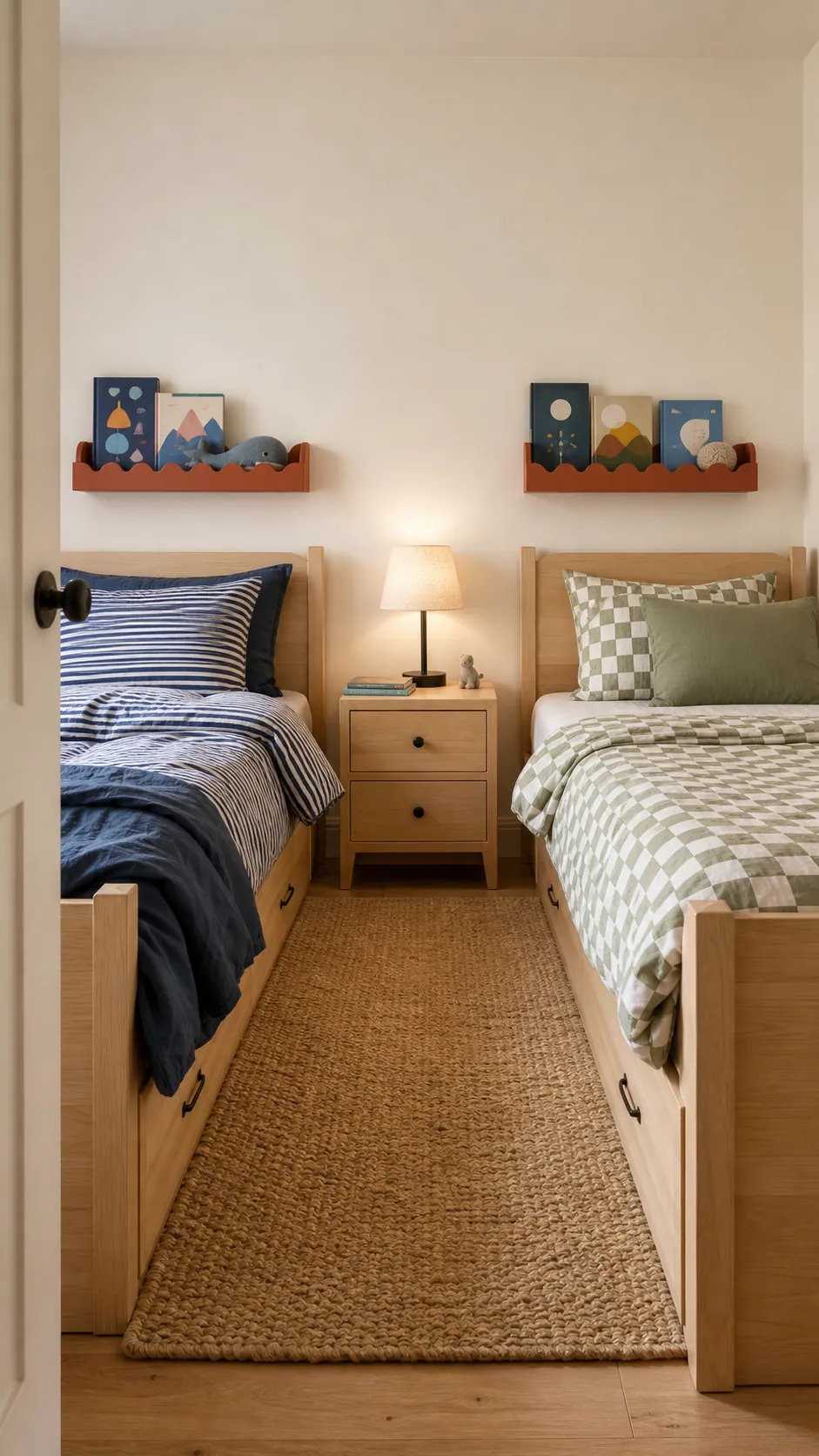
Assign one basket or drawer elsewhere for overflow. The wall shelves should hold only bedtime essentials such as a few books and a lightweight soft object. When every belonging gets equal display space, a shared room becomes visually noisy and harder to reset.
Choose a Shelf That Can Grow Past the Nursery
A scalloped edge can survive beyond baby decor when the shelf itself has solid proportions and a restrained finish. Dusty blue, clay, olive, cream, or natural wood works with nursery textiles now and school-age collections later. The same shelf can move from displaying board books to holding chapter books, a clock, or a small project tray.
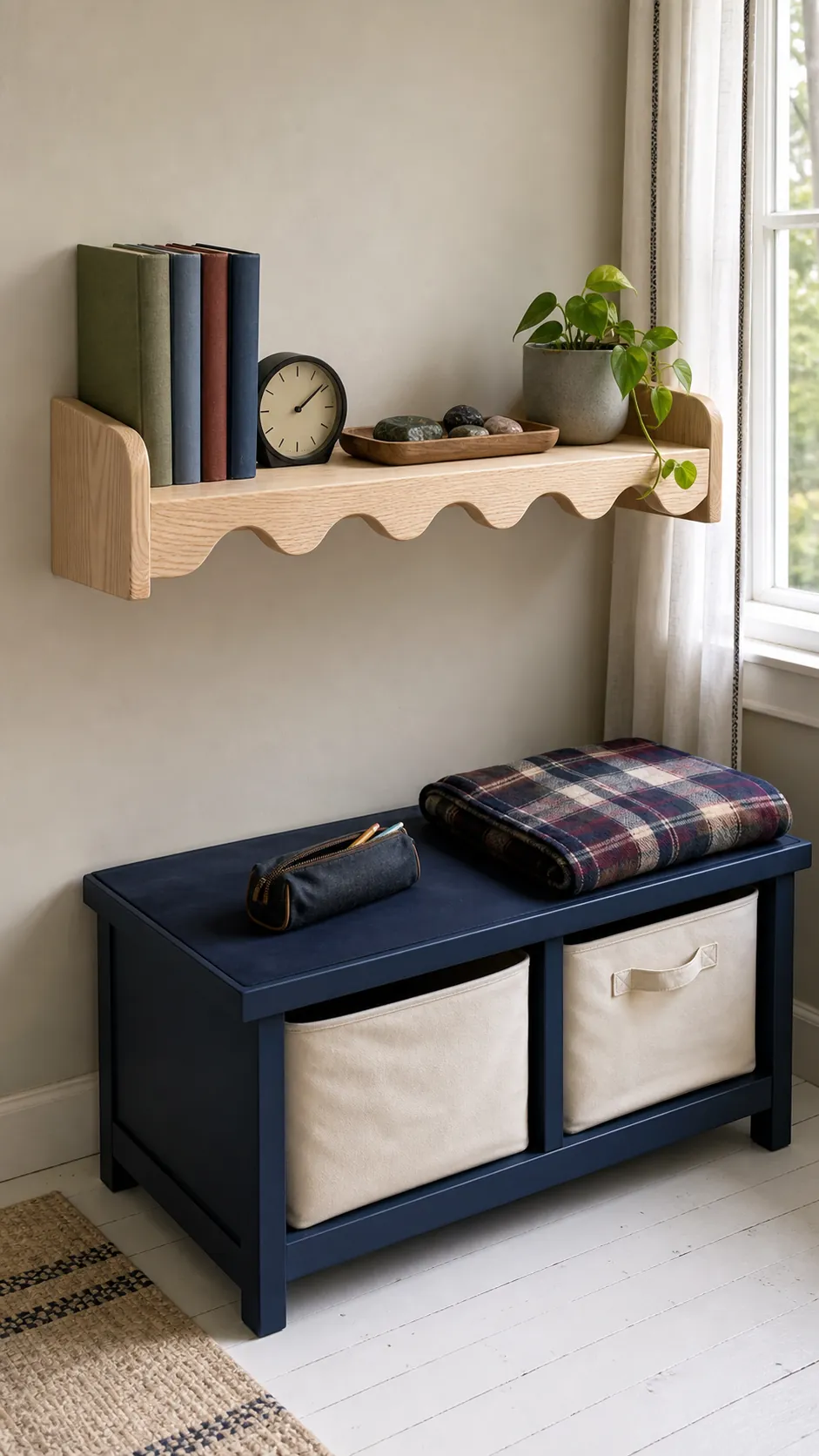
Before buying, measure the actual books and containers you hope to store, check the manufacturer’s load rating, and identify the wall construction. A beautiful shelf that is too shallow, too high, or poorly fixed will never become useful.
The best arrangement is the one that still works after the photograph: books can be reached and returned, cleaning is simple, the room has open floor space, and hard objects stay out of sleep and changing zones. Use the scallop as the finishing detail; let safety and daily routines decide everything else.