
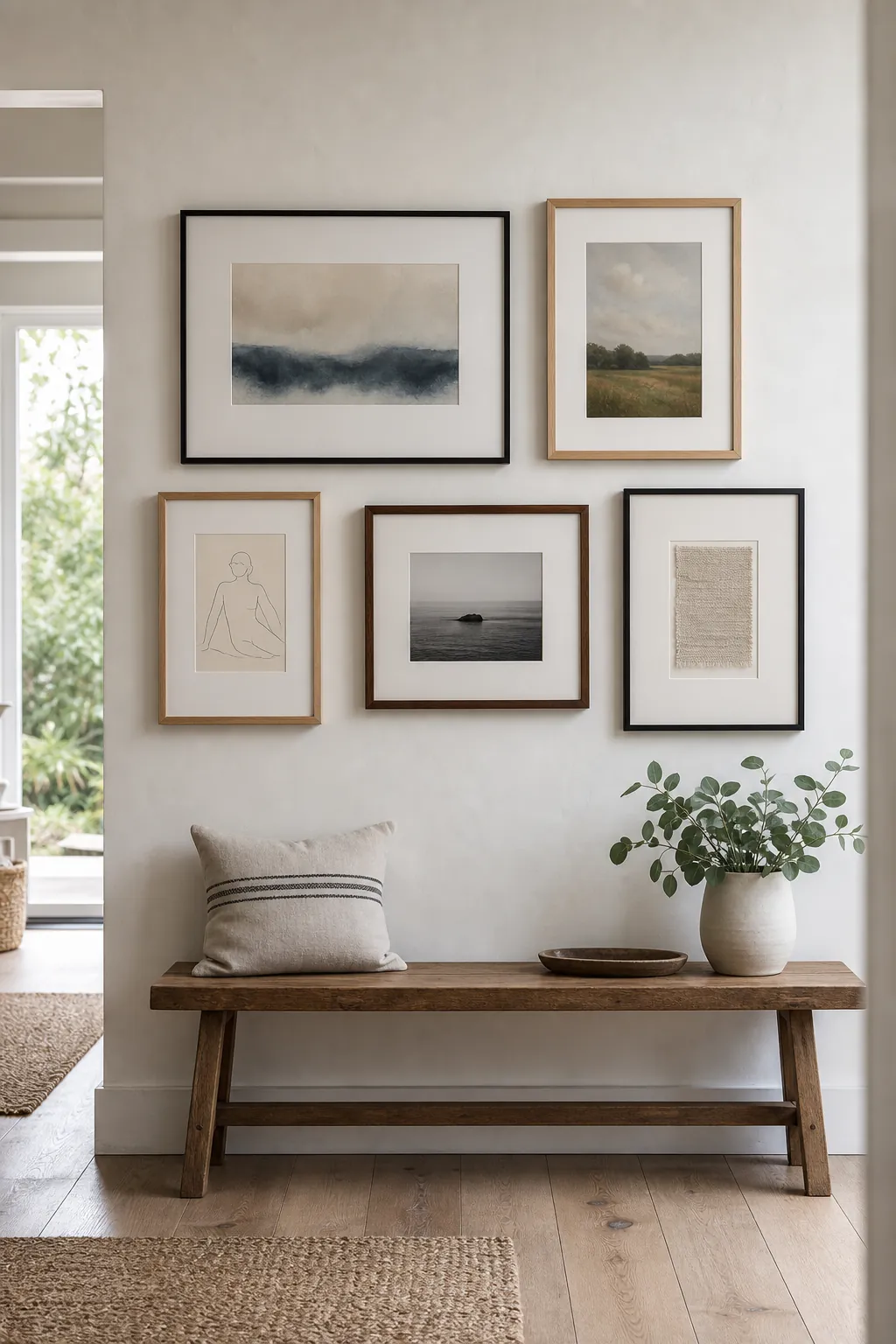
A simple gallery wall is not a wall with no personality. It is a wall where every frame has a reason to be there. If you hate clutter, the goal is to avoid the busy, scattered feeling that happens when too many small pieces compete for attention.
The best clutter-free frame wall uses fewer pieces, stronger spacing, quiet color, and more blank wall than you think you need. That is what makes the art feel chosen instead of piled on.
Use Fewer Larger Frames
If gallery walls make you nervous, start by lowering the frame count. Four or five larger pieces can feel calmer than twelve small ones. The wall still has rhythm, but the eye does not have to sort through too many details.
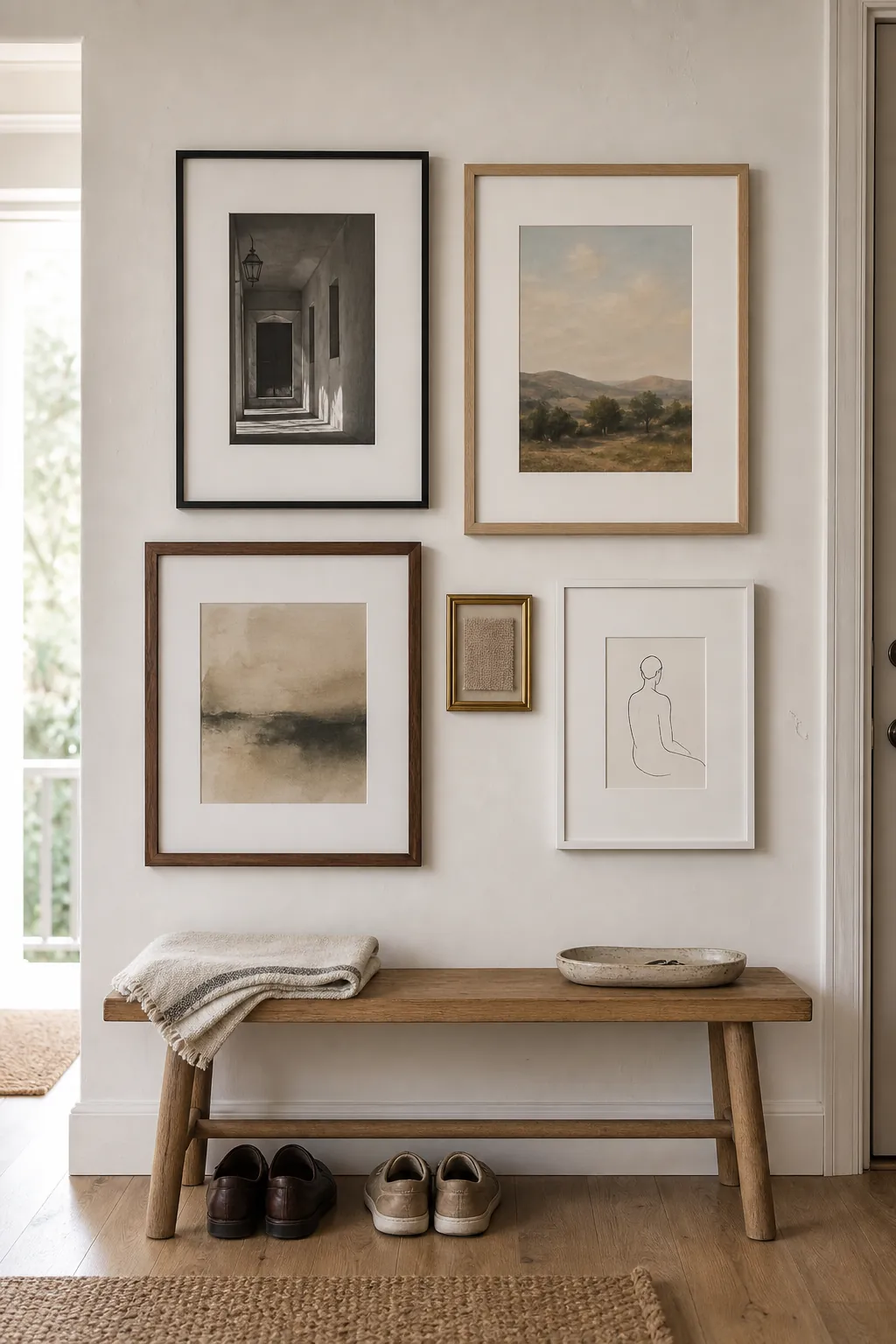
A good rule: if the wall looks busy before you add decor below it, the frame wall is already doing too much. Choose the strongest pieces first, then stop before the wall feels full.
This works especially well in entryways, over benches, and above compact sofas. The furniture gives the frame wall a boundary, and the larger pieces keep the composition readable.
Let Mats And Spacing Do The Organizing
For minimal wall decor, mats are your quietest tool. Wide mats make small art feel calmer, and consistent mat widths create structure even when the art is different.
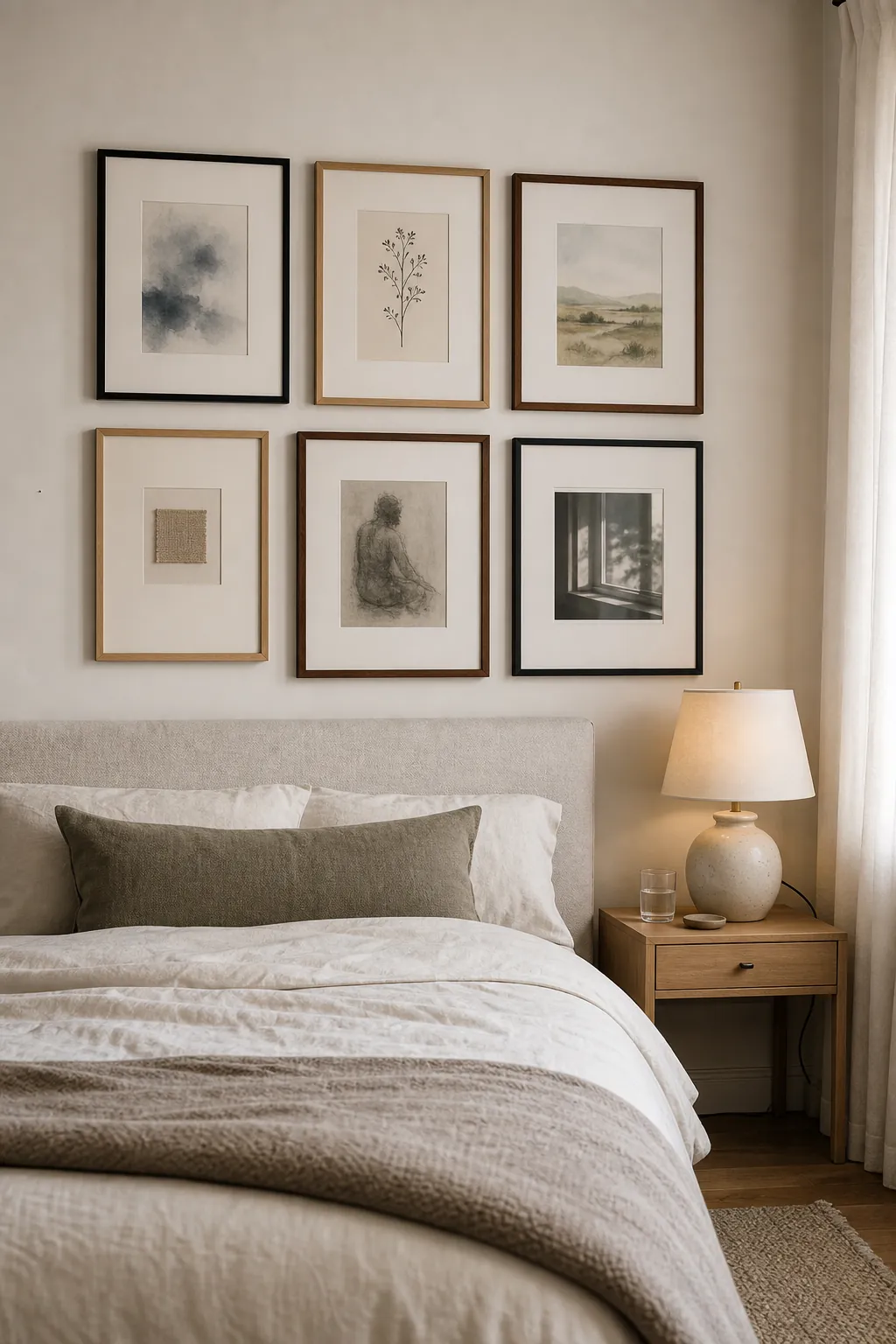
Keep gaps steady. You do not need a rigid grid, but you do need the wall to feel measured. Equal spacing tells the eye that the mix is intentional, which is the heart of balanced decor.
- Use wider mats for small prints and photos.
- Repeat one or two frame finishes instead of using every frame you own.
- Leave wall around the group so the arrangement can breathe.
Limit The Color Story
A clutter-free gallery wall can include different art styles if the colors stay quiet. Pick a small color story and repeat it: black, white, and sage; oak, cream, and charcoal; walnut, blue-gray, and linen.
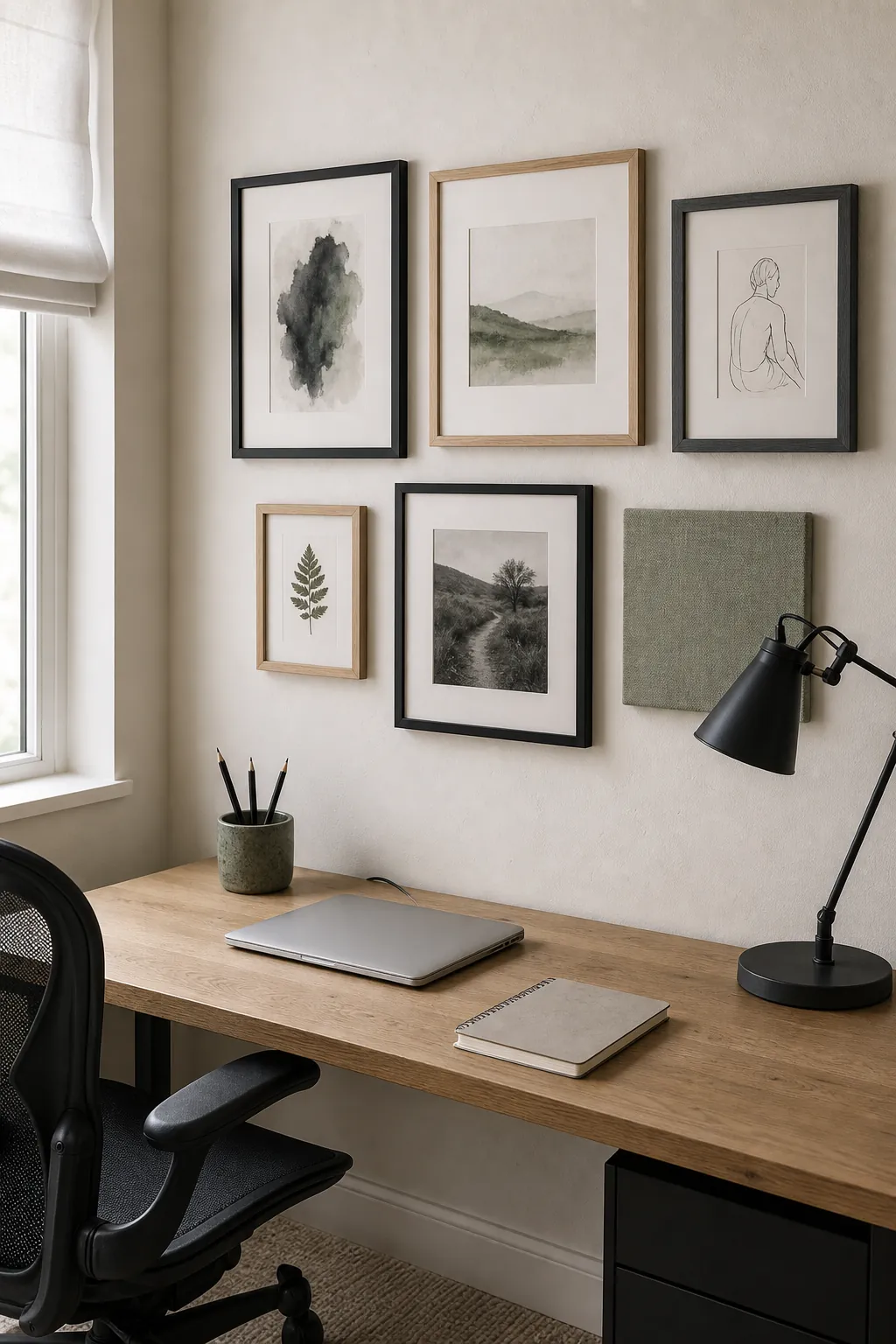
The point is not to make the wall bland. The point is to reduce the number of decisions the eye has to process. A tight palette lets the wall art vary without making the room feel noisy.
This matters in a home office, bedroom, or hallway where visual noise can feel tiring. If the room already works hard, the gallery wall should not shout over it.
Align One Edge In A Narrow Space
Hallways can become cluttered fast because there is not much room to step back. Instead of scattering frames along the corridor, align one edge. A shared bottom line or side line can make a simple frame wall feel calm from every angle.
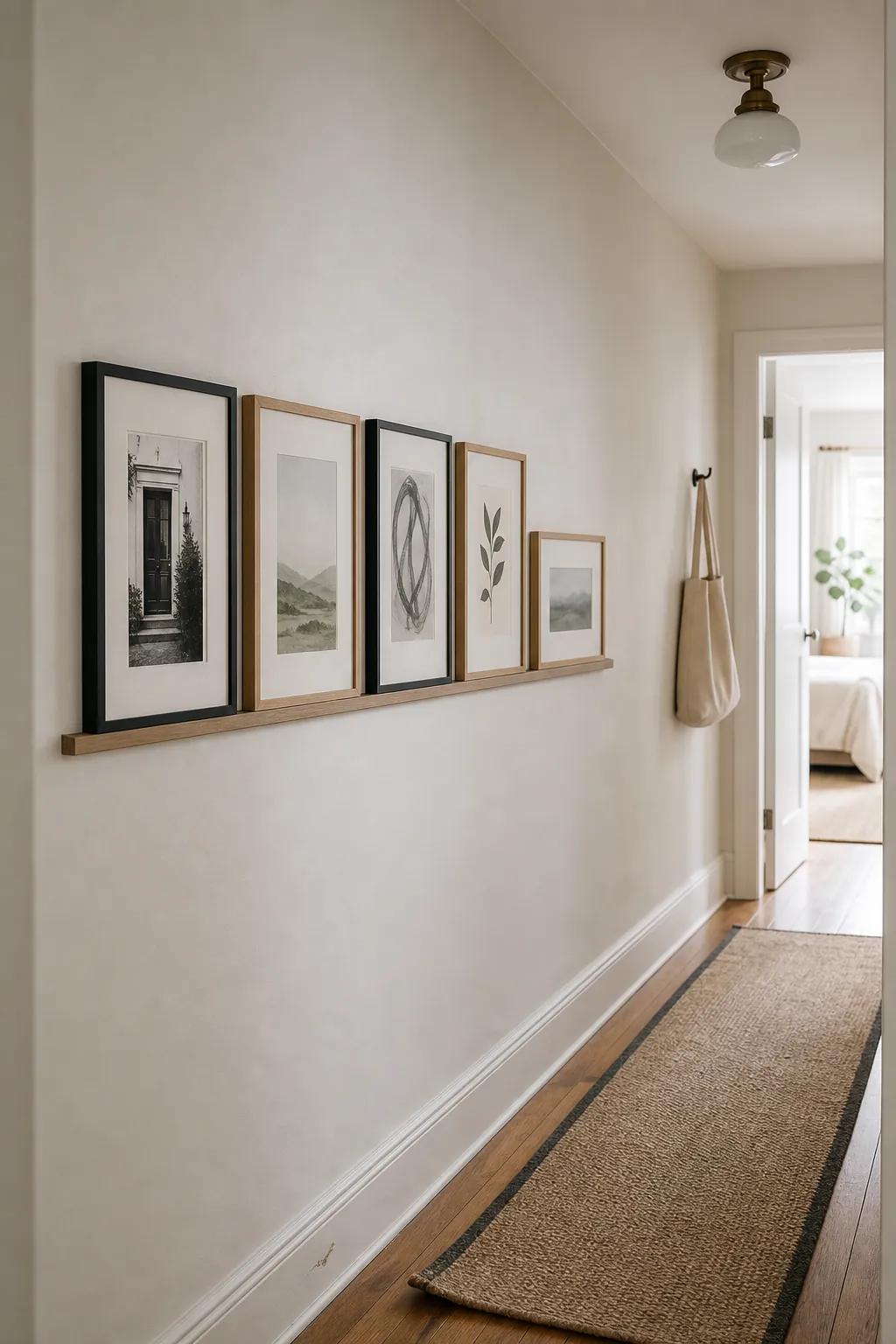
Keep the wall on one side of the hallway, use fewer frames, and leave open space above or below the group. That blank space is not wasted. It is what keeps hallway decor from feeling like visual traffic.
Use Scale Instead Of Quantity
If a wall feels empty, the answer is not always more frames. Sometimes the answer is larger art. Two oversized pieces and one small companion can feel more polished than a busy collection of tiny frames.
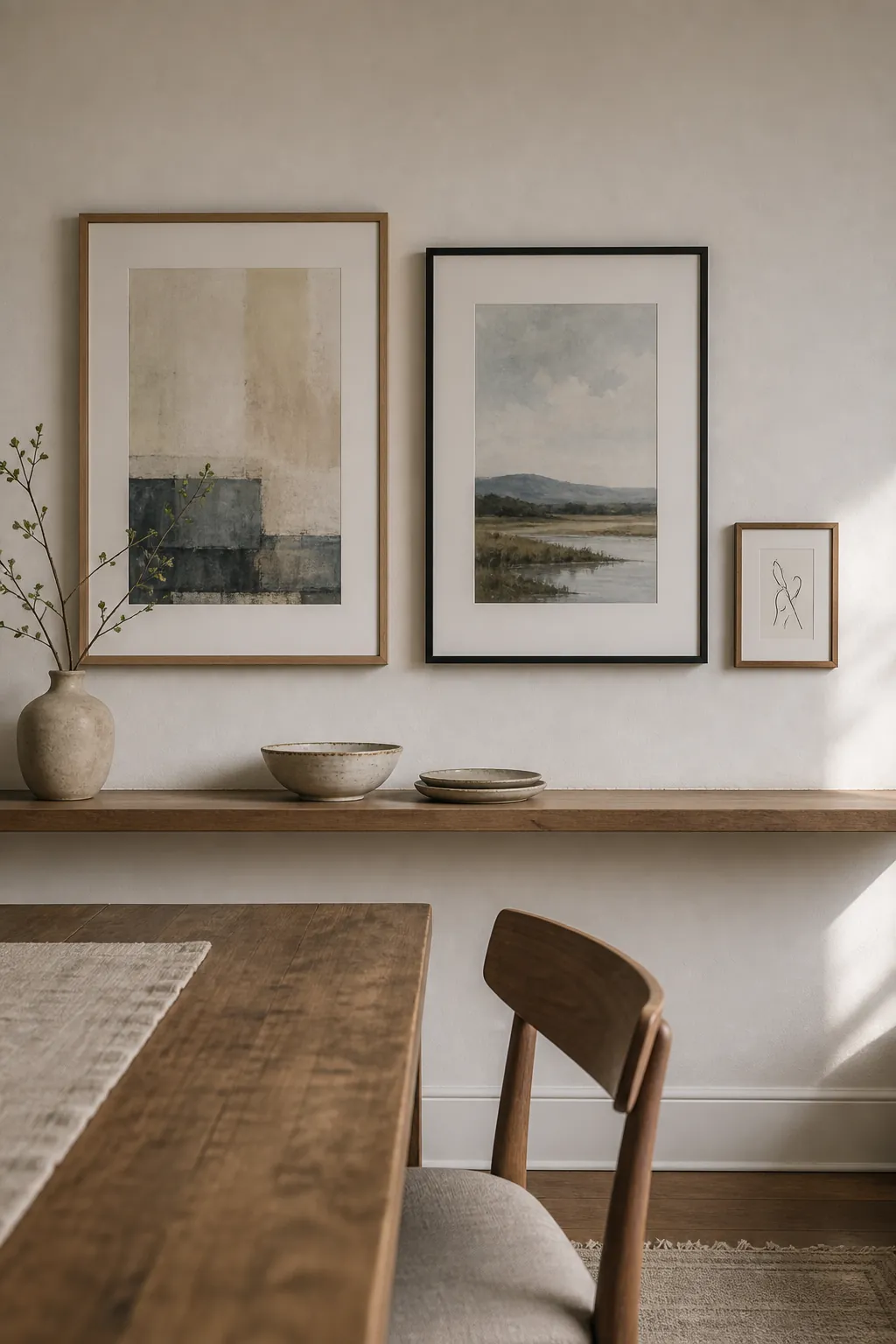
This is a useful move for dining rooms, sofas, and sideboards. Let scale fill the wall, not clutter. A few pieces with enough presence can make the whole room feel more settled.
Edit The Room Around The Wall
Sometimes the gallery wall is not the problem. The room around it is. Too many pillows, lamps, shelves, plants, trays, or small objects can make even a simple gallery wall feel busy.
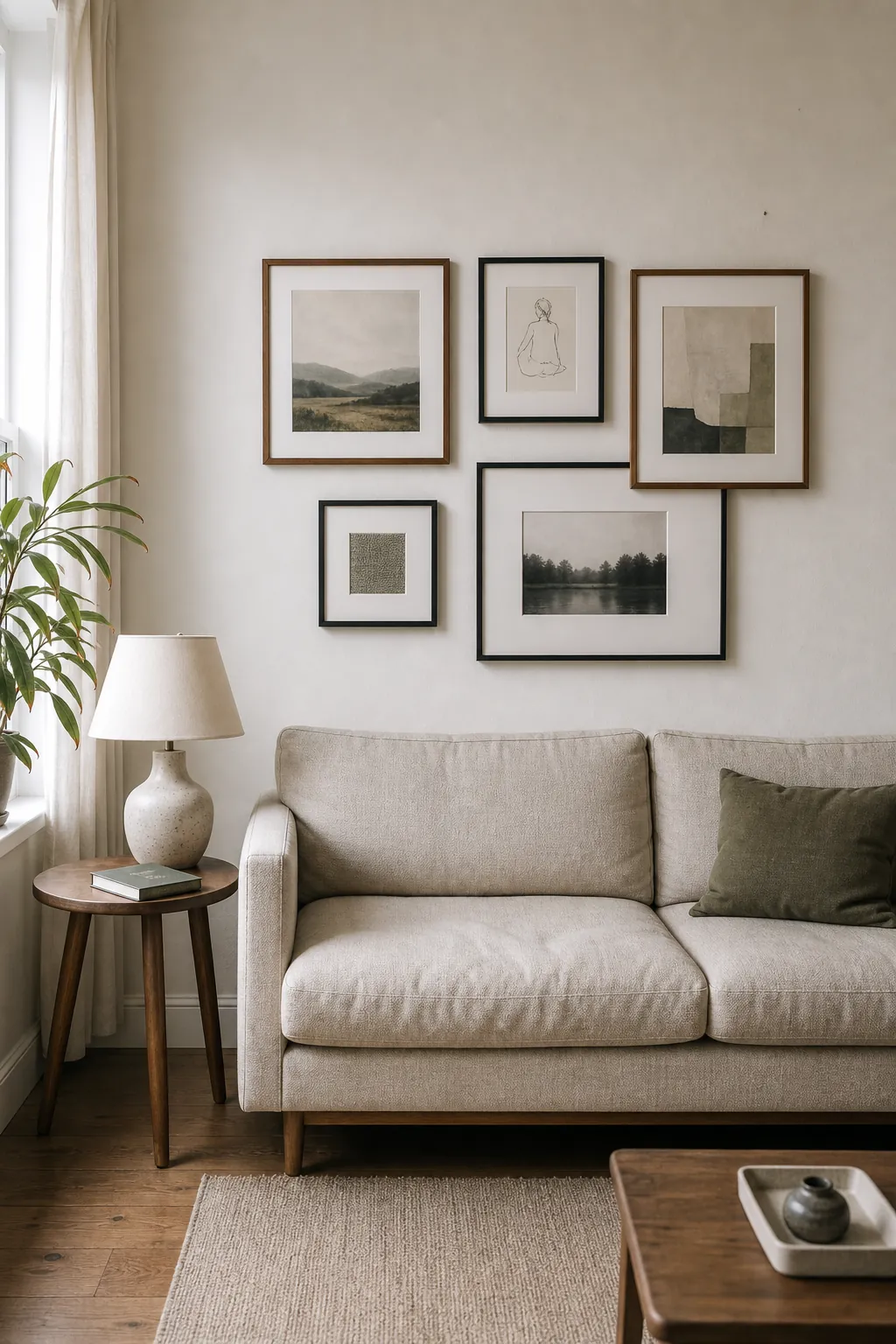
After hanging the frames, remove one nearby accessory and step back. If the wall suddenly feels better, the extra decor was competing with it. Clutter free decor is often less about strict minimalism and more about giving the main idea enough space.
The calm test is simple: from across the room, do you see one clean wall composition first, or do you see a lot of separate things? If you see separate things, reduce the count, widen the spacing, limit the colors, or remove nearby accessories. A simple gallery wall should make the room feel finished, not fuller.