Saving counter space is not only about buying the smaller box. A slim toaster can finish two slices quickly and then return to a shelf. A compact toaster oven needs more room and more warm up time, but it can handle foods that will never fit in a slot. The better choice starts with your real breakfast and reheating habits.
Choose for the Food You Make Every Week
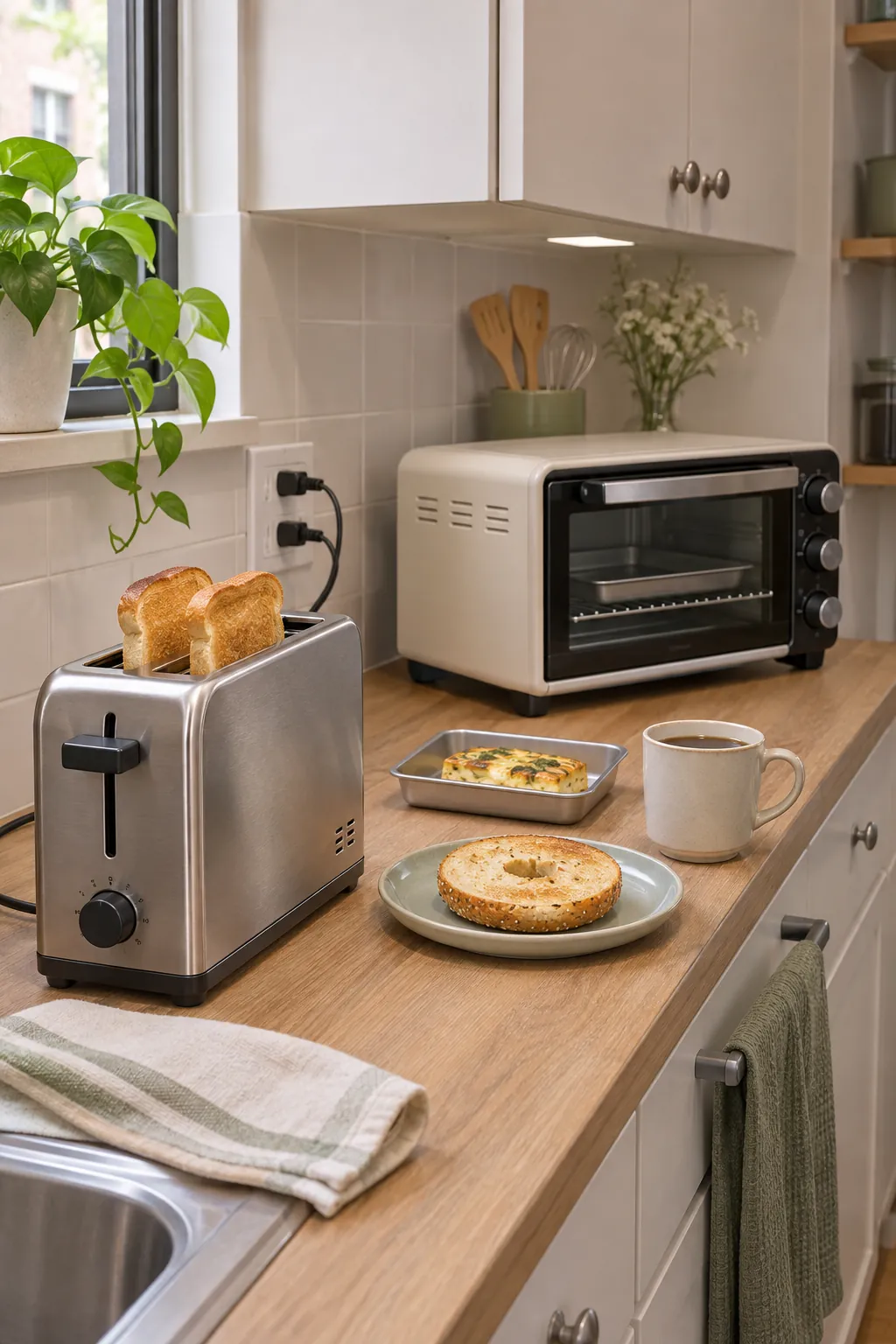
A two slice toaster is the focused choice when most use is sliced bread, bagels, English muffins, or frozen waffles. Its heating elements sit close to the food, so it usually works quickly and needs little attention. Simple controls also make repeated morning results easier to learn.
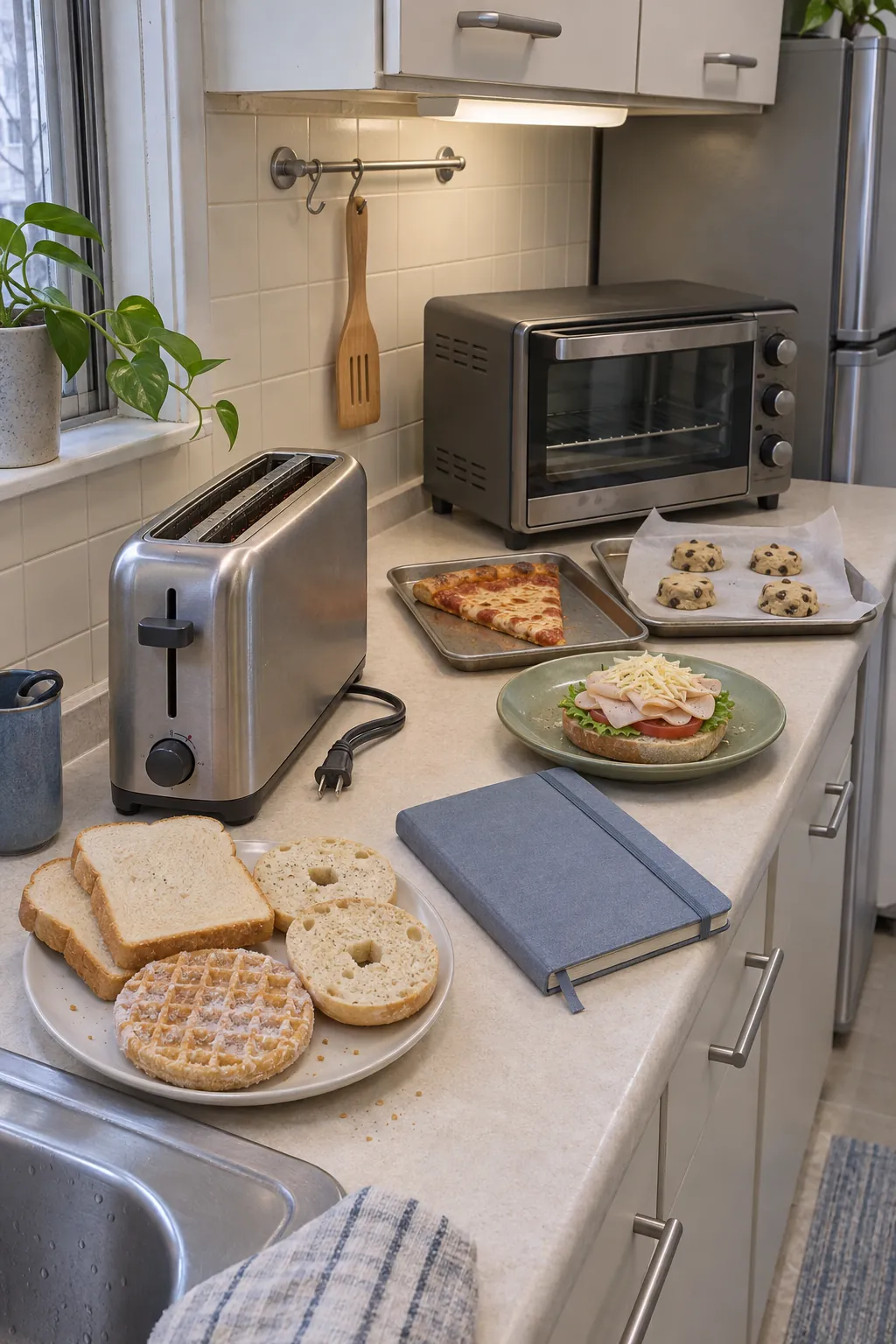
A toaster oven makes sense when you also reheat pizza, bake a small tray of cookies, warm an open sandwich, or cook a modest portion for one or two people. Those jobs can replace some use of a full oven. If you only toast bread, however, the extra chamber may become unused counter storage.
Measure Working Clearance, Not Only the Body
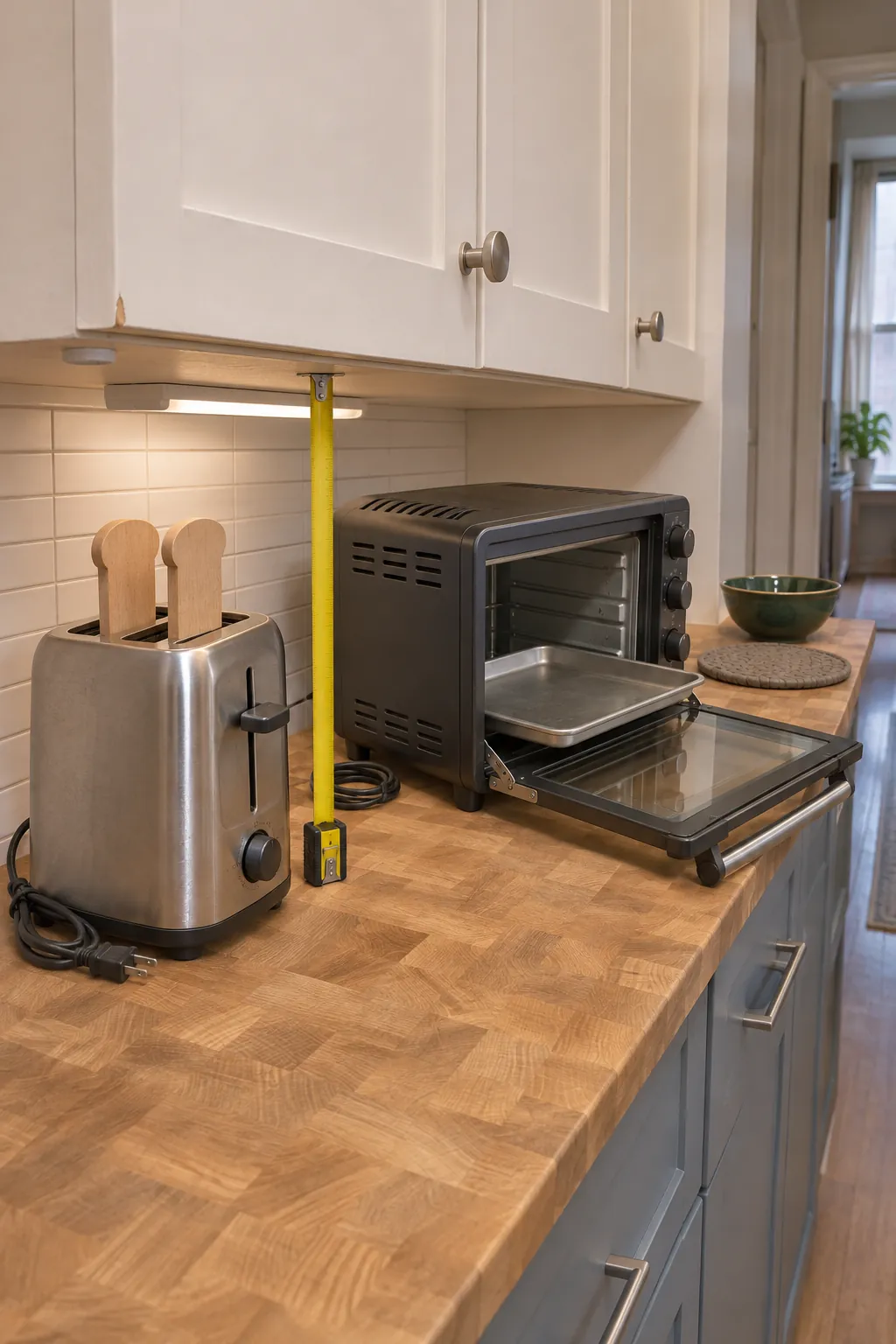
Record width, depth, and height, then add room for cords, controls, and hot air. A pop up toaster needs clear space above the slots and enough room to remove bread safely. It should not operate beneath low cabinets if heat can collect there.
A toaster oven needs open space at the sides, rear, and top according to its manual. Its door also swings into the work area. Measure with the door fully open and include the tray handle, nearby wall, cabinet face, and safe landing space for hot cookware.
Match Slots or Interior Space to Your Bread
For a toaster, measure the bread you actually buy. Slot length matters for artisan slices, while slot width matters for bagels and thick sandwich bread. Centering guides can hold thin slices away from one hot side, and a high lift lever helps retrieve short pieces without reaching into the slots.
For a toaster oven, check the usable rack area and distance between the rack and upper elements. A product photo can make the chamber look larger than it is. Confirm whether your plate, small baking dish, pizza slice, or preferred pan fits with room for air to circulate.
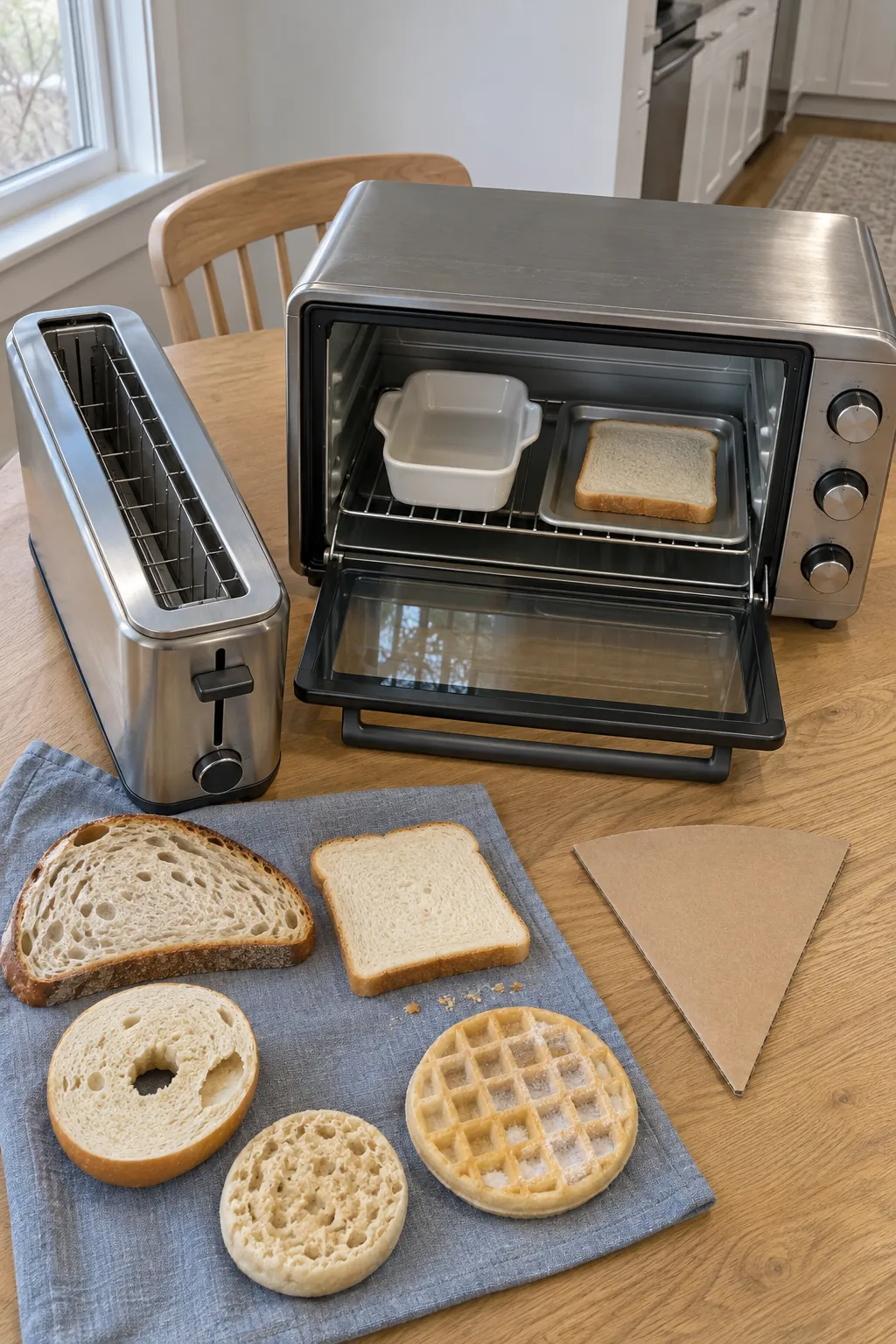
Compare Speed and Browning Control
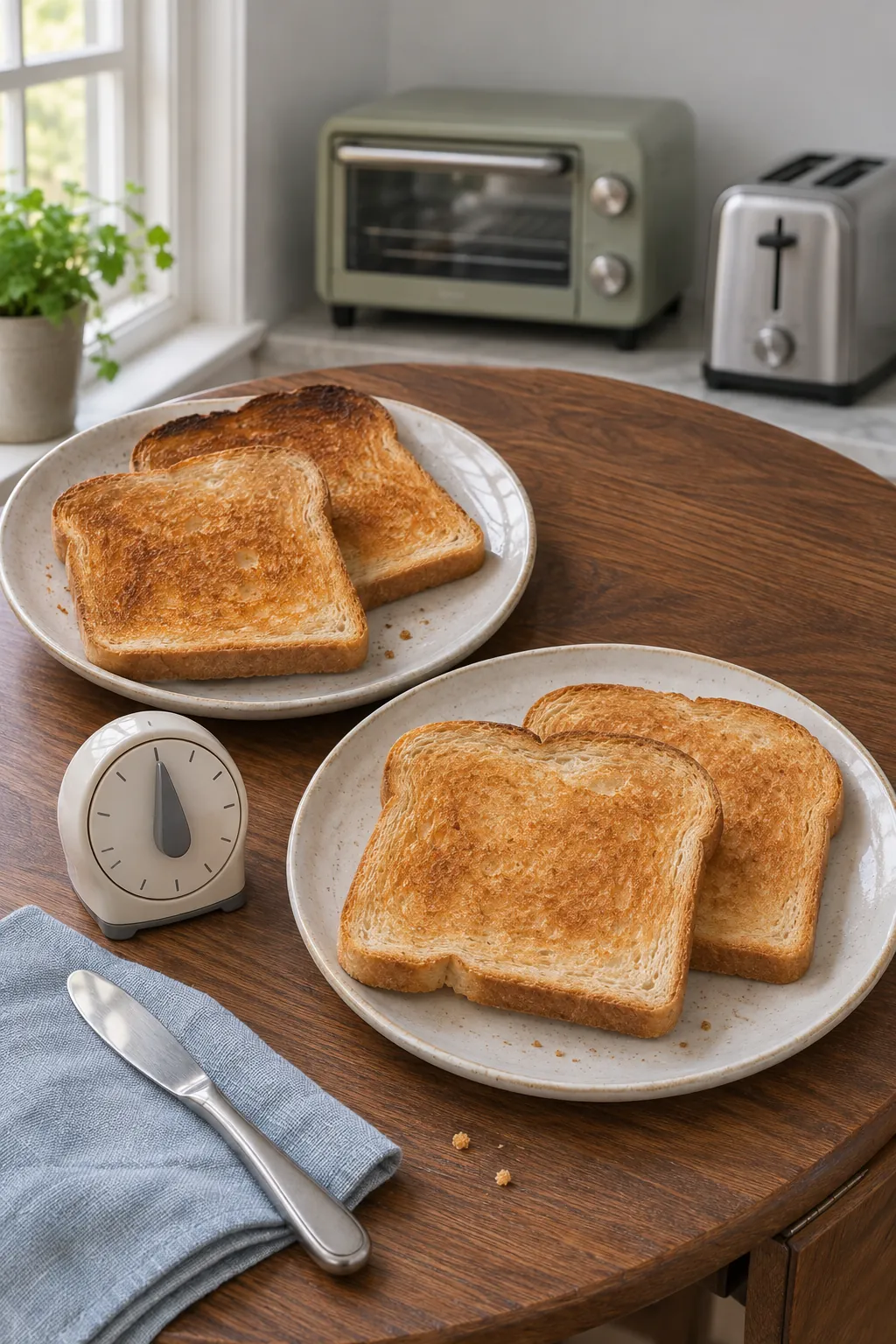
A pop up toaster heats a small space with elements close to both sides of the bread. That design is efficient for quick toast, though results can change between the first and later batches as the machine warms. Look for consistent centering and a useful range on the browning dial.
A toaster oven may require preheating and a manual turn for even color. Rack position and element distance affect the top and bottom differently. A reliable timer, clear end signal, and controls that show the active mode are more useful than many presets with unclear behavior.
Decide Whether Extra Cooking Modes Replace Anything
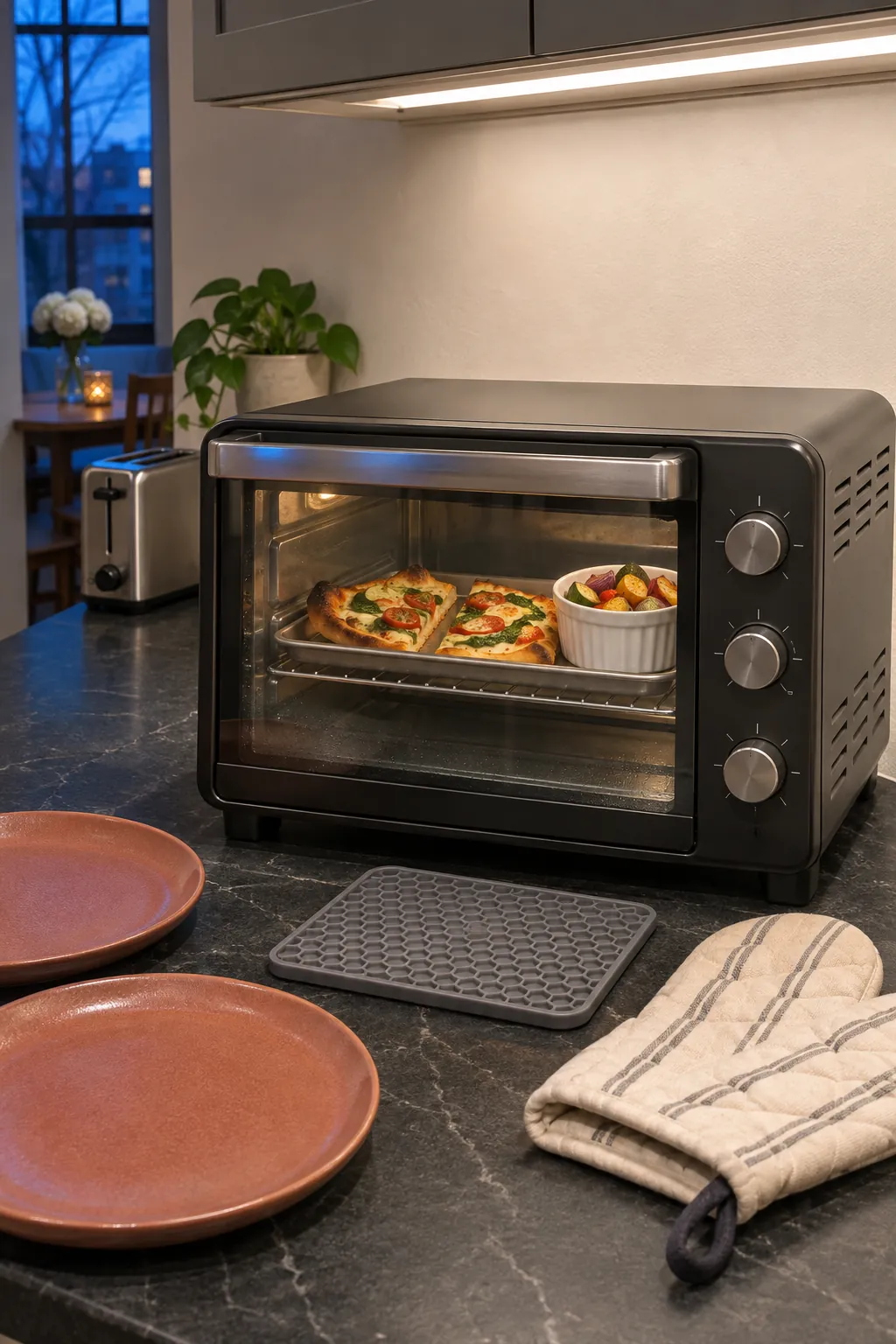
Toast, bake, broil, and convection labels sound valuable, but each mode should replace a task you already do. A compact oven can reheat food with a crisp surface and cook small portions without warming a full size oven. It still cannot replace a stovetop, and its small chamber can brown food quickly near the elements.
Check the included pan and rack for useful dimensions, stable support, and easy replacement. A removable crumb tray should slide out without opening half the kitchen. If the accessories need a separate cabinet, include that storage cost in the comparison.
Count Cleanup and Storage Friction
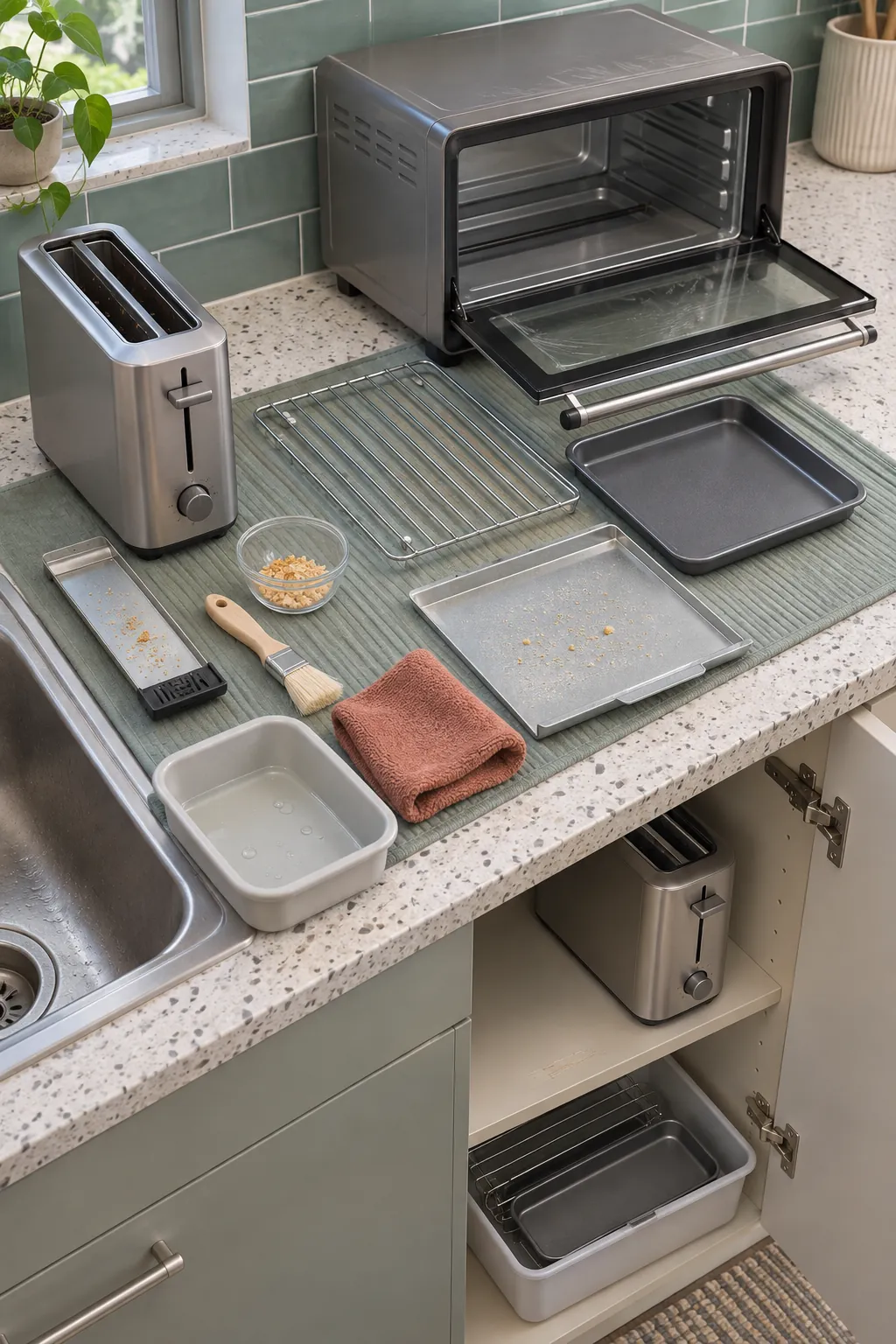
Both appliances collect crumbs. A toaster needs an accessible crumb tray and occasional gentle cleaning around the slots after it is cool and unplugged. Never shake it while crumbs can fall onto internal components or damage the elements.
A toaster oven adds a rack, pan, crumb tray, door glass, and interior walls that catch grease. Removable parts simplify washing, but the heating elements still require careful access. Cleaning after oily foods matters because residue can smoke during the next high heat cycle.
Choose the slim two slice toaster when fast daily bread, low counter use, and simple cleanup are the priority. Choose the compact toaster oven when its larger food range will replace regular use of another oven. The winning appliance is the one that fits your bread, your cabinet clearance, and the meals you will actually make.