
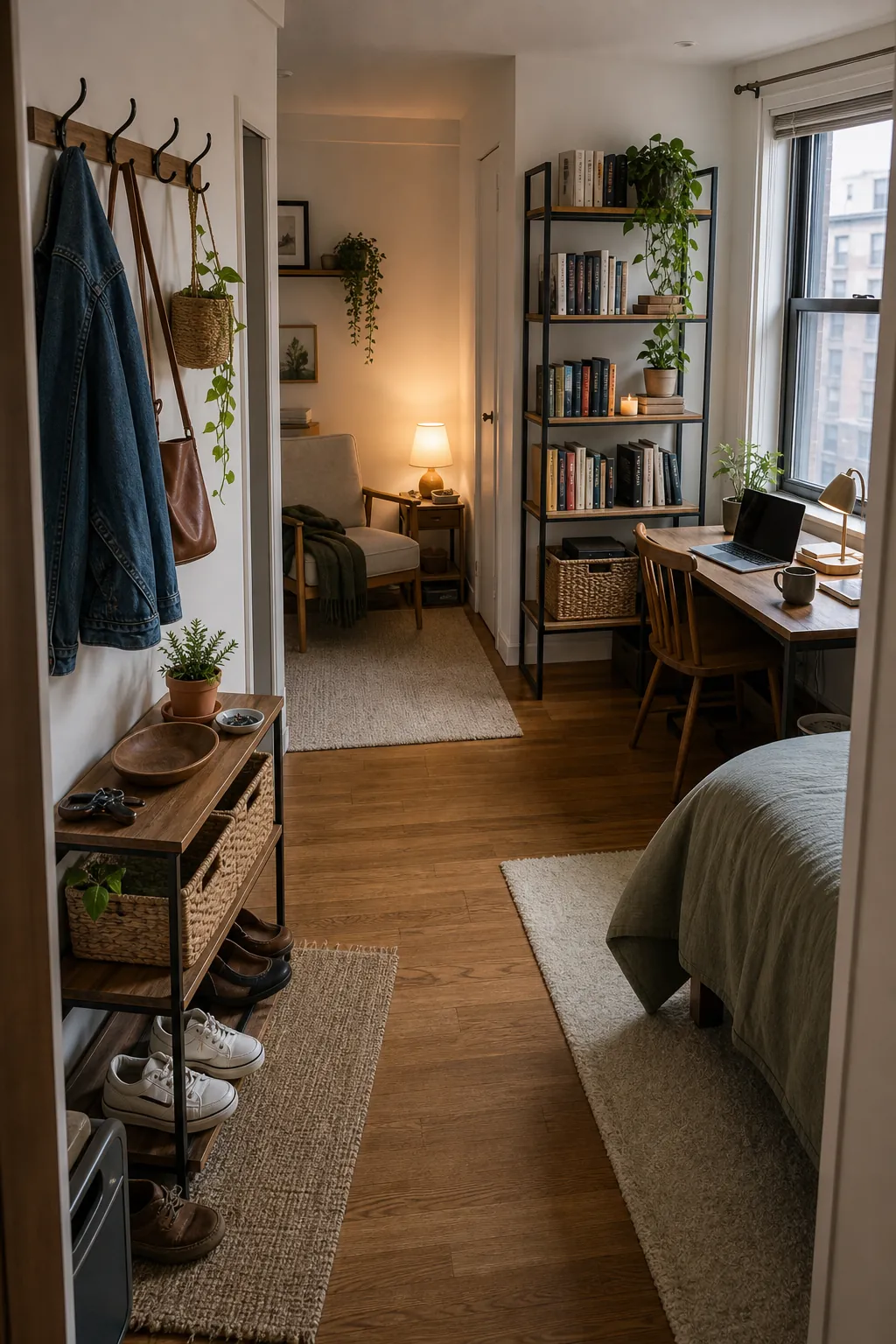
The most useful small apartment corners usually do not start with a pretty purchase. They start with one honest question: what annoying thing could this corner stop from happening every day?
That is the pattern behind so many real renter and small-space questions. People are not simply trying to decorate an empty angle. They are trying to get boxes off the floor, make a desk feel less cramped, add light where there is no outlet, work around no-drill rules, or stop one awkward spot from making the whole room feel unfinished.
So these small apartment corner ideas are not about filling every blank space. They are about choosing corner furniture, corner storage, and small space storage that earn their floor footprint. A functional corner should make the room calmer, not busier.
Give the Corner One Job First
Before buying a shelf, chair, cart, desk, or plant stand, decide what job the corner should perform. A small apartment corner fails when it tries to be storage, display, seating, lighting, and decor all at once. That is how a helpful nook becomes another clutter pile.
- Store: choose this if bags, cables, books, linens, hobby supplies, or paperwork keep landing on the floor.
- Work: choose this if you need a laptop zone, writing surface, vanity, sewing station, or charging corner.
- Rest: choose this if the apartment lacks one quiet seat that is not the bed or sofa.
- Light: choose this if the corner feels gloomy, visually heavy, or cut off from the rest of the room.
- Display: choose this only when you already have enough closed storage elsewhere.
Then measure the width, depth, baseboard gap, outlet location, door swing, and the walking path beside it. If the corner sits on a route to the kitchen, closet, bathroom, or balcony, keep the solution shallow. The best functional corners protect circulation first.
Turn an Entry Corner Into a Landing Zone
If your apartment has no real foyer, a corner near the door can become the place where daily clutter stops. The goal is not a full mudroom. It is a narrow landing zone that catches the items you touch every day: keys, sunglasses, tote bags, umbrellas, dog leashes, mail, and shoes.
Use a slim console, a shallow shoe cabinet, or a tall narrow shelf with baskets. Add one tray on top and one hook rail if your lease allows it. If drilling is not allowed, use a freestanding coat tree, over-door hooks, or a leaning rack. Closed or semi-closed baskets matter here because entry clutter is visually loud.
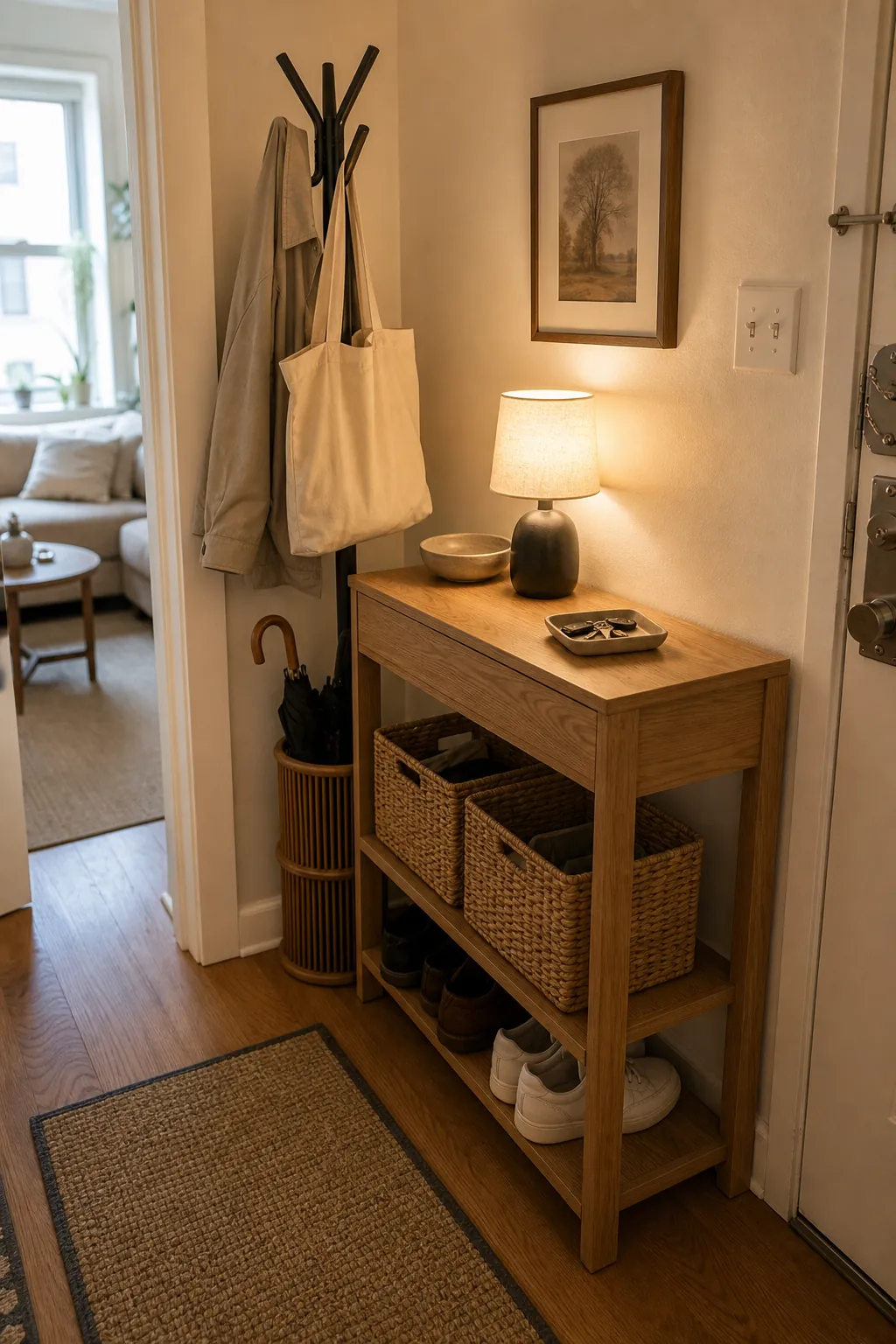
Keep the top surface half empty. One small lamp, one tray, and one bowl are enough. When the corner is too styled, you will stop using it. When it is too open, everything looks messy. The sweet spot is a shallow piece that gives each daily object a home without asking the walkway to become storage.
Build a Corner Desk That Does Not Take Over
A corner desk is one of the most useful small home ideas, but only if it respects the room around it. In a studio or bedroom, the desk should feel like a defined work zone during the day and visually quiet after work. That means choosing a surface that is wide enough for real use, but not so deep that it traps the chair in the corner.
For laptop work, a 30- to 36-inch-wide writing desk can be enough. For a monitor, printer, or creative supplies, look for a corner desk with vertical shelves or a narrow side drawer. The storage should climb upward or tuck underneath, not spread sideways into the room.
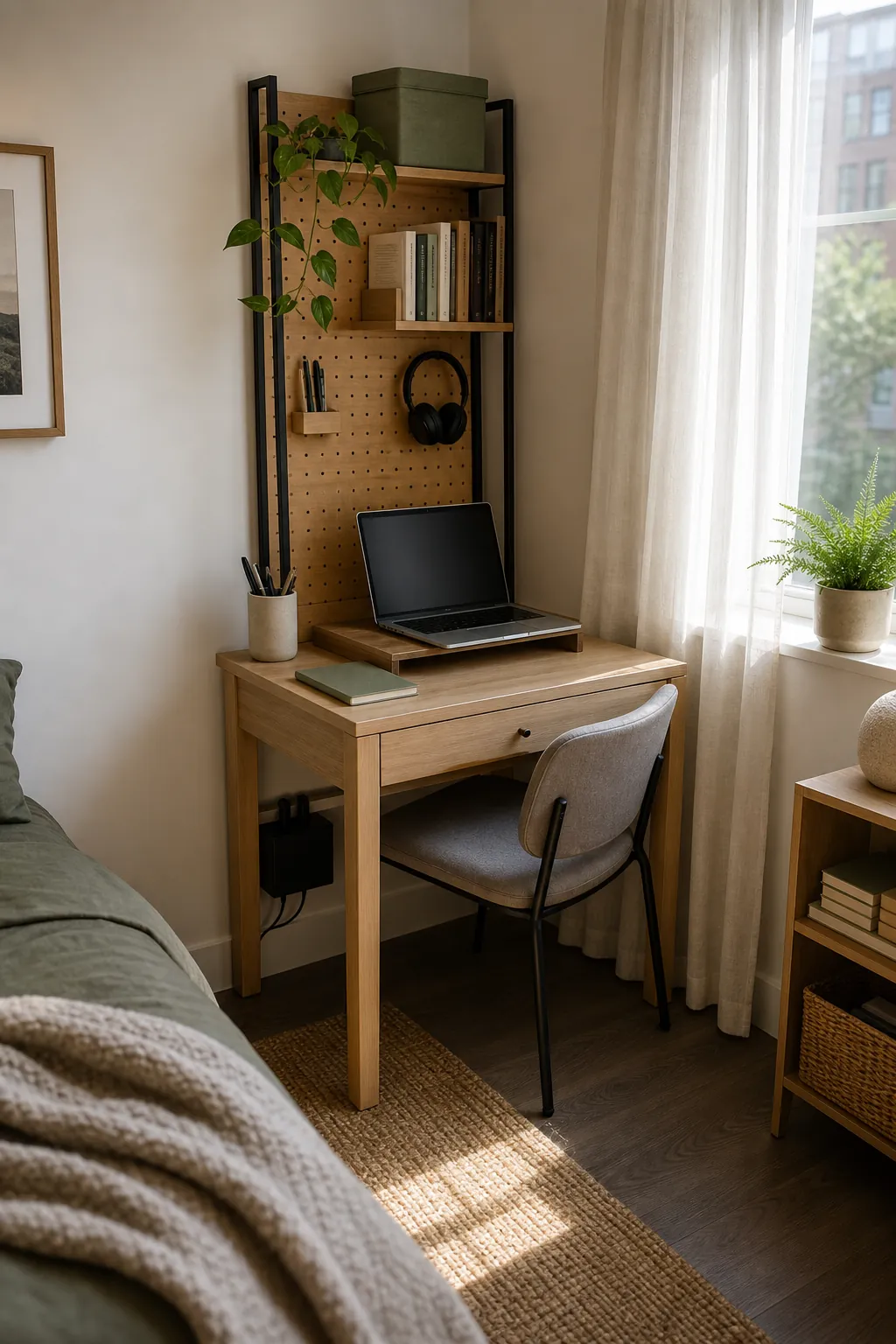
If the wall is brick, concrete, or rental-sensitive, skip heavy floating shelves unless you know the wall can hold them. Use a desk hutch, clamp-on shelf, pegboard on a stand, monitor riser, or rolling file cabinet instead. These are less romantic than built-ins, but they solve the real desk problem: getting pens, chargers, notebooks, and mail off the work surface.
Use Tall Corner Storage for Things You Actually Reach
Corner shelves can be beautiful, but open shelving in a small room has a tax: everything on it becomes part of the apartment decor. If the corner holds daily-use clutter, mix open shelves with bins, boxes, doors, or drawers. If it holds books, ceramics, plants, or folded textiles, open shelves can work well.
The most practical corner storage usually uses height. A ladder shelf, tower bookcase, triangular shelving unit, or tall cabinet can hold more than a low table while taking up roughly the same floor space. Go vertical when the floor is scarce, but keep the heaviest visual weight low.
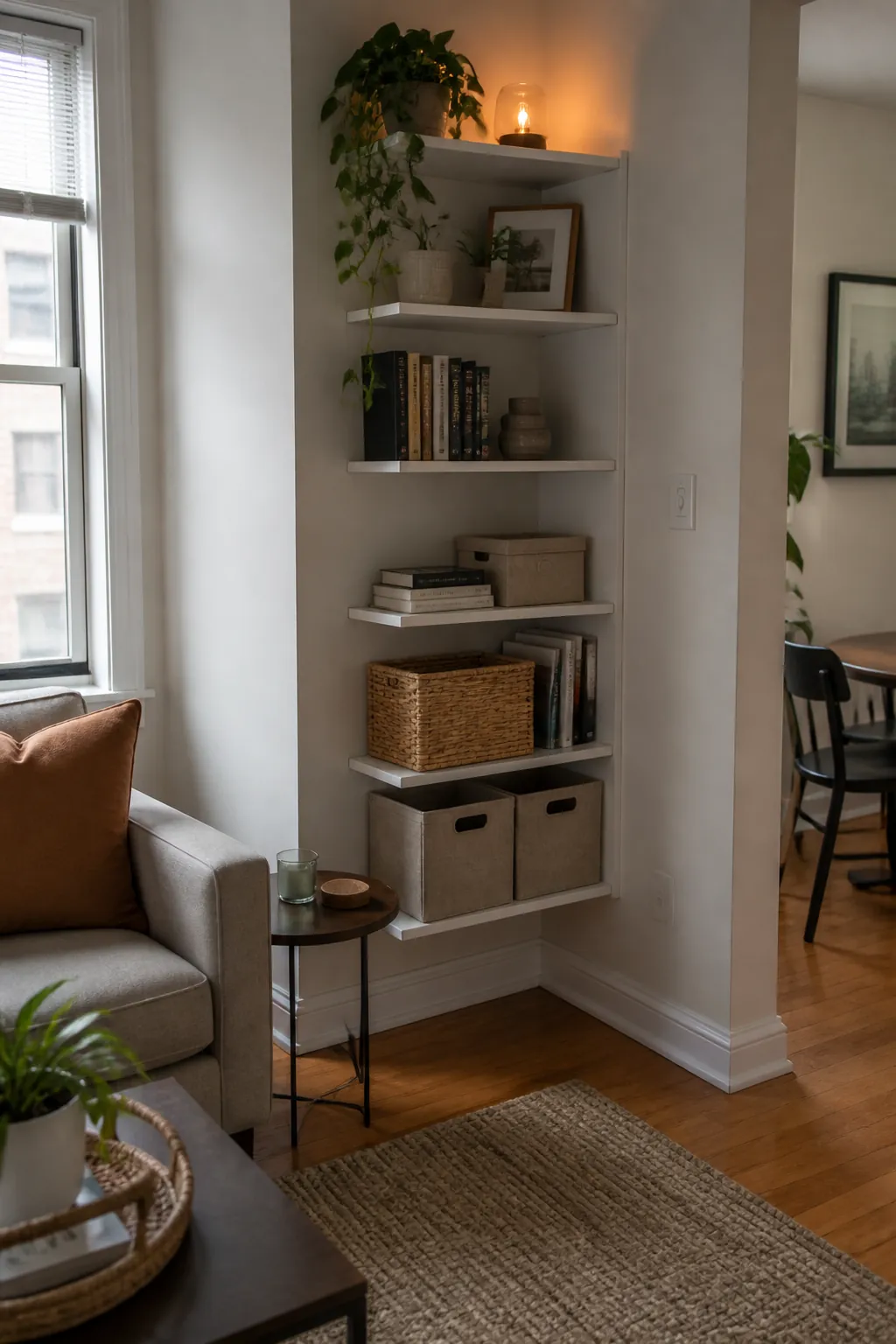
One useful rule: store the ugly, small, or mismatched things in the bottom third; place books and baskets in the middle; keep the top third lighter with plants, art, or one larger object. This keeps the shelving from looking like a storage emergency. In small space corners, visual calm is part of the function.
Make a Reading Nook Earn Its Space
A reading nook sounds simple: chair, lamp, book. In a small apartment, it needs to do more. The seat should be comfortable enough to use, the lighting should be warm enough for evening, and the nearby storage should prevent books, blankets, and chargers from drifting across the room.
If the corner is truly tight, choose a compact slipper chair, armless chair, storage ottoman, or floor cushion with a backrest. A side table with a shelf is more useful than a decorative pedestal. A wall sconce is ideal if allowed, but a slim floor lamp or rechargeable lamp works better for most rentals. The nook only works if the light and the landing surface are already there.

This is also a good place to use softness. A small rug, one cushion, one throw, and a plant can make the nook feel intentional without adding much mass. If the corner is beside a window, keep the chair low enough that it does not block natural light from the rest of the room.
Create a Kitchen or Dining Command Corner
In many apartments, the kitchen corner is not big enough for a desk and not open enough for a dining table. That does not make it useless. It can become a compact command center for coffee, tea, dry goods, cookbooks, serving pieces, or household paperwork.
Look for a narrow bar cart, rolling pantry, corner cabinet, wall grid, or small sideboard. If there is no outlet, do not force an appliance station there. Use it for mugs, napkins, grocery lists, spices, lunch containers, or the items that currently crowd your counter. The best kitchen corner storage gives the counter back to cooking.
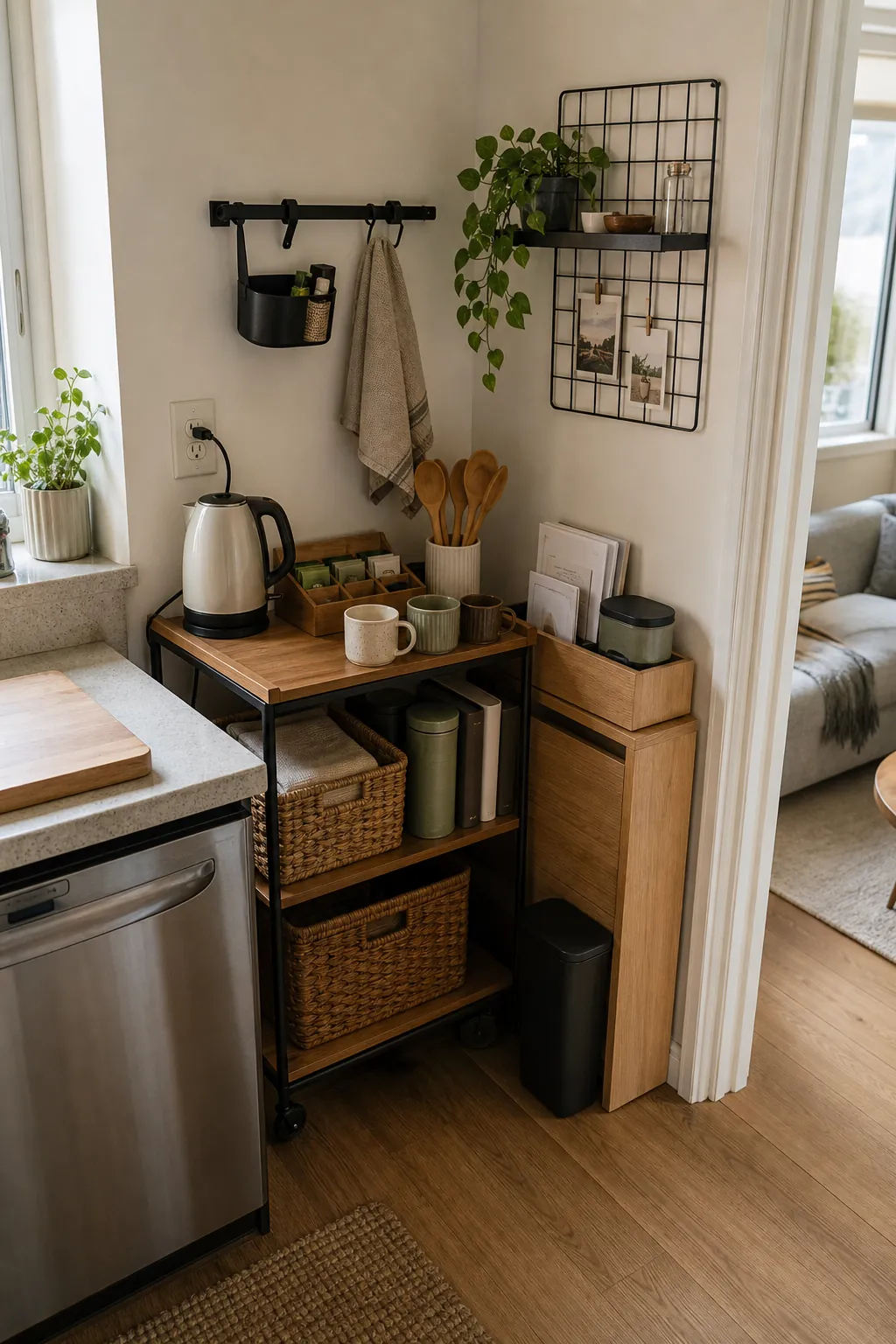
Use the wall lightly: one calendar, one magnetic board, one rail, or one small shelf. More than that starts to look busy from the living area. If the kitchen opens into the main room, repeat one material from the apartment decor, such as wood, black metal, rattan, or white ceramic, so the corner belongs to the whole space.
Let a Bedroom Corner Hide the Unattractive Stuff
Bedroom corners often collect the things nobody wants to display: laundry baskets, extra bags, yoga mats, seasonal shoes, hair tools, and half-worn clothes. This is where closed storage usually beats decorative styling. The goal is to make the room feel restful, not to turn every inch into a showcase.
A tall hamper cabinet, slim wardrobe, narrow dresser, lidded basket stack, or shallow bag shelf can work. If the corner is beside a closet or wardrobe, choose storage that follows the same depth line so it looks built in. When one piece aligns with the existing furniture, the whole bedroom reads as calmer.
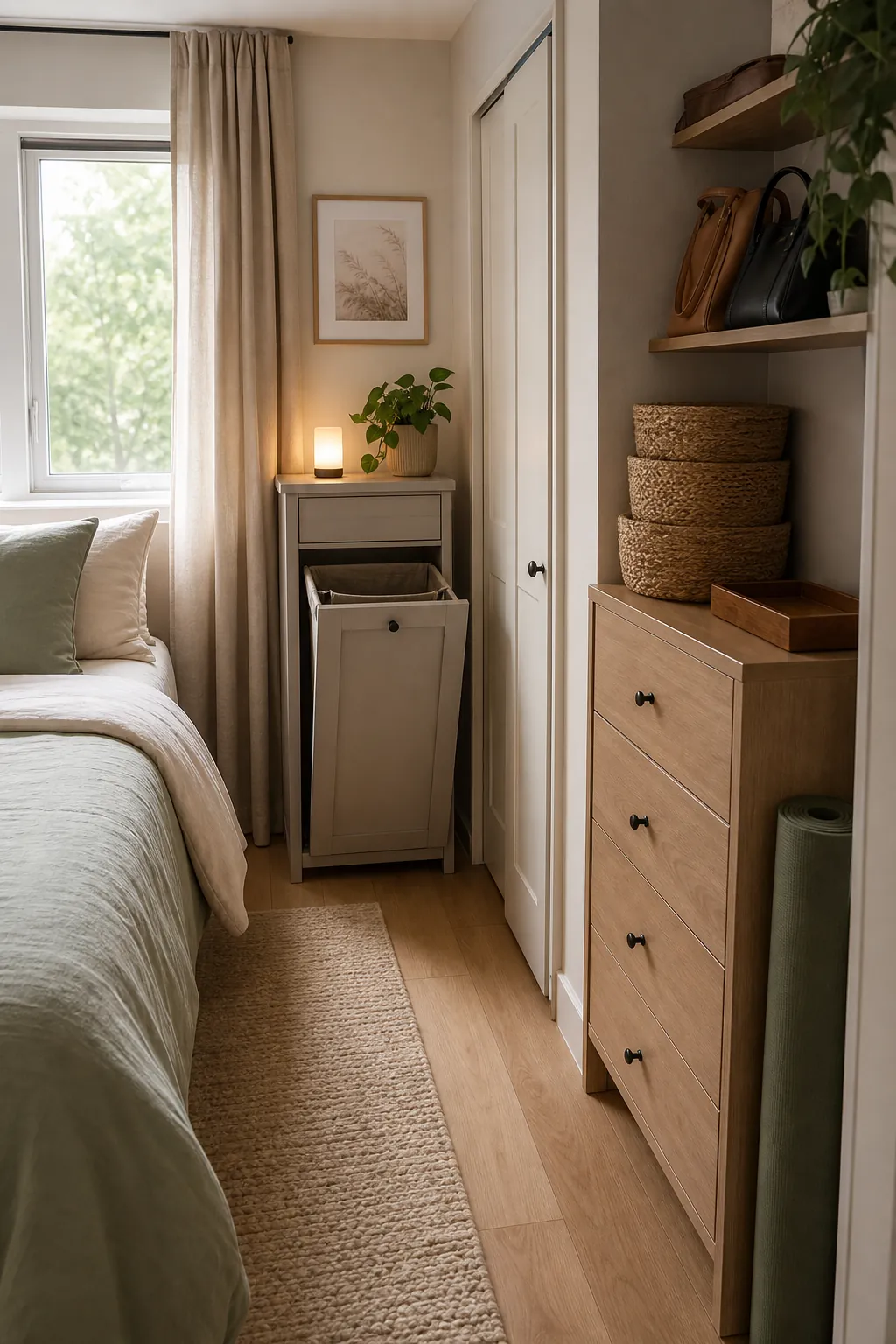
Use a small lamp only if the corner is gloomy and has a surface to hold it. If there is no outlet, a rechargeable touch lamp is often more useful than a fake outlet workaround. Avoid stacking clear bins in the bedroom unless they are inside a closet; visible plastic storage can make a small room feel temporary even when everything is technically organized.
Use Plants, Mirrors, and Light When Storage Would Feel Heavy
Sometimes the correct answer is not more storage. If the room already has enough cabinets, drawers, and shelves, a corner can solve a different problem: sharpness. A tall plant, warm lamp, mirror, or sculptural stool can soften an awkward angle without stealing much usable space.
This works especially well in living room corners where furniture already handles the practical jobs. A plant stand, arc lamp, leaning mirror, or narrow round table can make the corner feel finished while keeping the floor open. Use this approach when the corner looks empty but the apartment does not actually need more stuff.
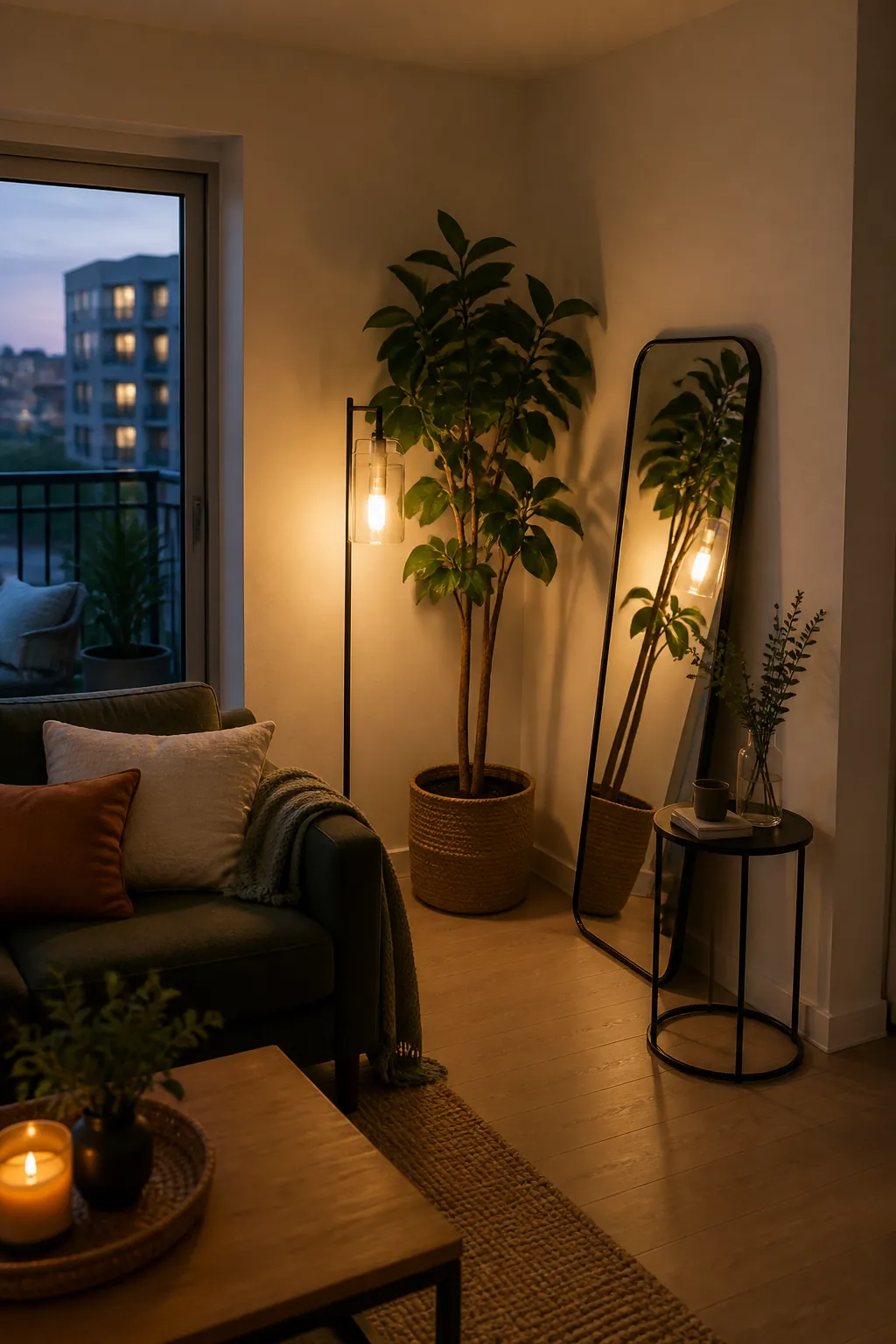
Keep the grouping simple. One tall object, one low object, and one light source are usually enough. If you add shelves, baskets, art, candles, books, and a stool to the same corner, it stops feeling intentional. In a small apartment, breathing room is a design choice.
What to Avoid in Functional Corners
- Buying before measuring: a corner piece that is two inches too deep can block a door, drawer, closet, or walkway.
- Using open shelves for messy categories: cords, toiletries, paperwork, and hobby supplies usually need bins or drawers.
- Ignoring the outlet: a desk, lamp, coffee station, or charging shelf is frustrating if power is across the room.
- Overfilling a blocked corner: if a bed, sofa, or desk creates a skinny corridor, rearranging the furniture may solve more than adding decor.
- Letting decor replace function: a plant is lovely, but it will not fix shoe overflow, desk clutter, or missing pantry space.
A Quick Corner Decision Guide
If you are stuck, use this order. First, solve a daily friction. Second, choose the shallowest furniture that can do that job. Third, add closed storage if the contents are visually messy. Fourth, add light if the corner still feels dull. Fifth, add decor only after the function is working.
That sequence keeps small apartment corners from becoming random filler. A corner desk can become a real work zone. Corner shelves can become calm vertical storage. A bedroom corner can hide the things that make the room feel restless. A living room corner can hold light, greenery, or a reading nook without crowding the room.
The point is not to use every inch. The point is to make the inches you do use pay you back every day.