
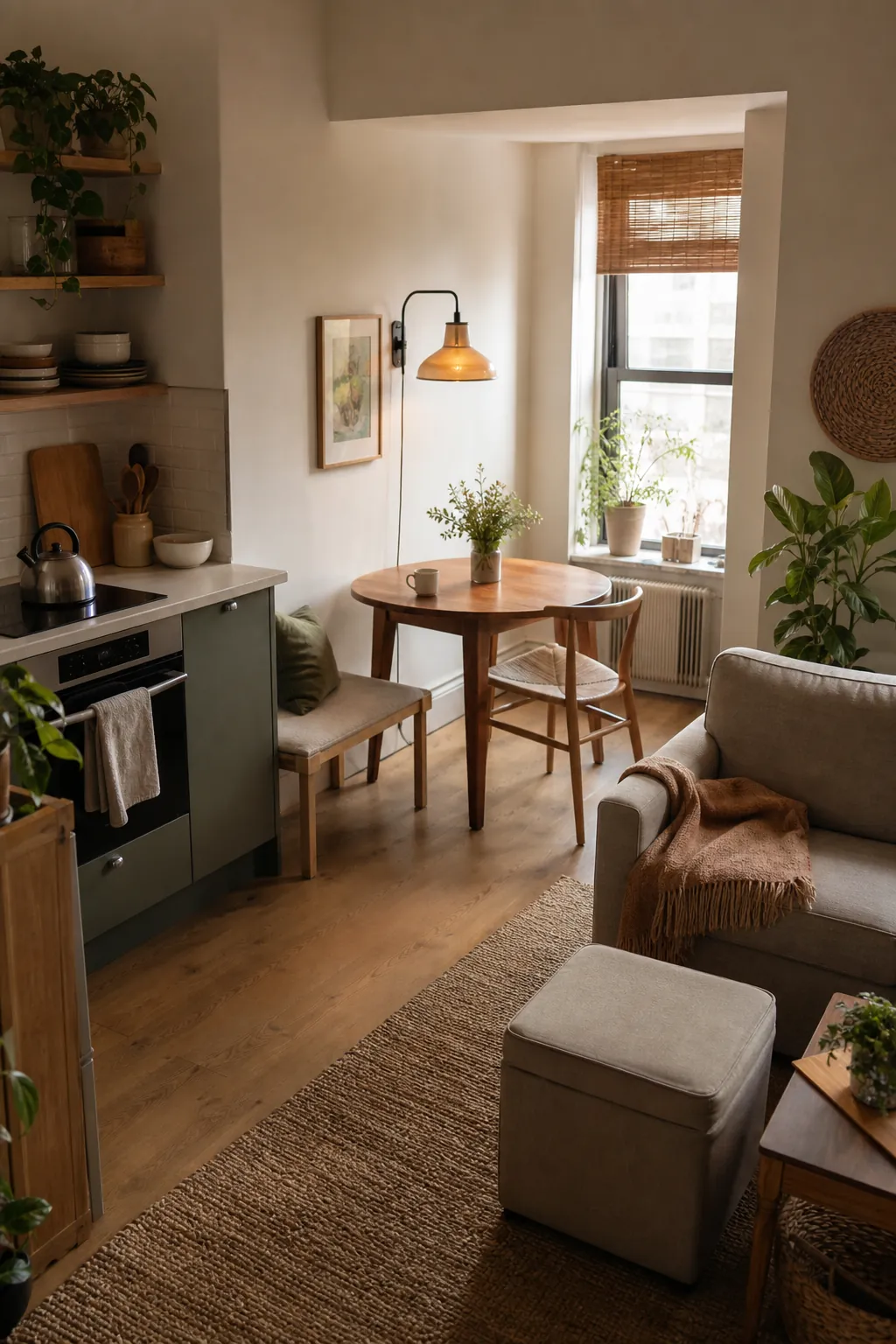
A small apartment with no dining room is not automatically a problem. The problem starts when you try to force a full dining set into a layout that already has too many jobs: cooking, lounging, working, walking through, storing things, and occasionally hosting people.
The best small apartment dining setup usually comes from one honest question: where would you actually eat on a regular Tuesday night? If the answer is the sofa, the kitchen counter, or a quick breakfast spot by the window, your dining area should support that real habit first. Guests can be handled with folding chairs, a leaf table, or a flexible surface. Daily life deserves the prime floor space.
Start With The Meal, Not The Table
Most small apartment dining mistakes come from buying for the life you imagine instead of the life you run every day. A four-person table sounds practical, but in a studio or one-bedroom apartment it can become a mail pile, a work surface, a plant stand, or an obstacle between the kitchen and the sofa.
Before choosing furniture, decide what your apartment eating area needs to do most often:
- Solo meals: a wall shelf, lift-top coffee table, or tiny bistro table may be enough.
- Two-person dinners: a drop-leaf, gateleg, or small round table is usually more comfortable than a permanent four-chair setup.
- Family meals: a bench against a wall or banquette can save more circulation space than four loose chairs.
- Frequent guests: keep the daily setup compact, then expand with folding chairs, nesting stools, or an extendable table.
- Work-from-home overlap: choose a table that can reset quickly, or your dining nook will disappear under screens and cords.
The goal is not to imitate a formal dining room in miniature. The goal is to create a small dining area that earns its footprint every day.
Measure The Chair, Not Just The Table
A table can technically fit and still be miserable to use. The missing piece is chair movement. People need room to pull out a chair, sit down, stand up, and pass behind each other. In a tight apartment, 24 inches behind a chair often feels cramped; 30 to 36 inches is the safer target when the table sits in a traffic path.
This is why a 36-inch-wide table can fail in a narrow nook. The tabletop is only part of the footprint. Chair backs, angled legs, arms, rugs, wall trim, radiators, and door swings all steal space. If a chair scrapes the wall every time someone sits down, the table is too big for that location even if the measurements looked fine on paper.
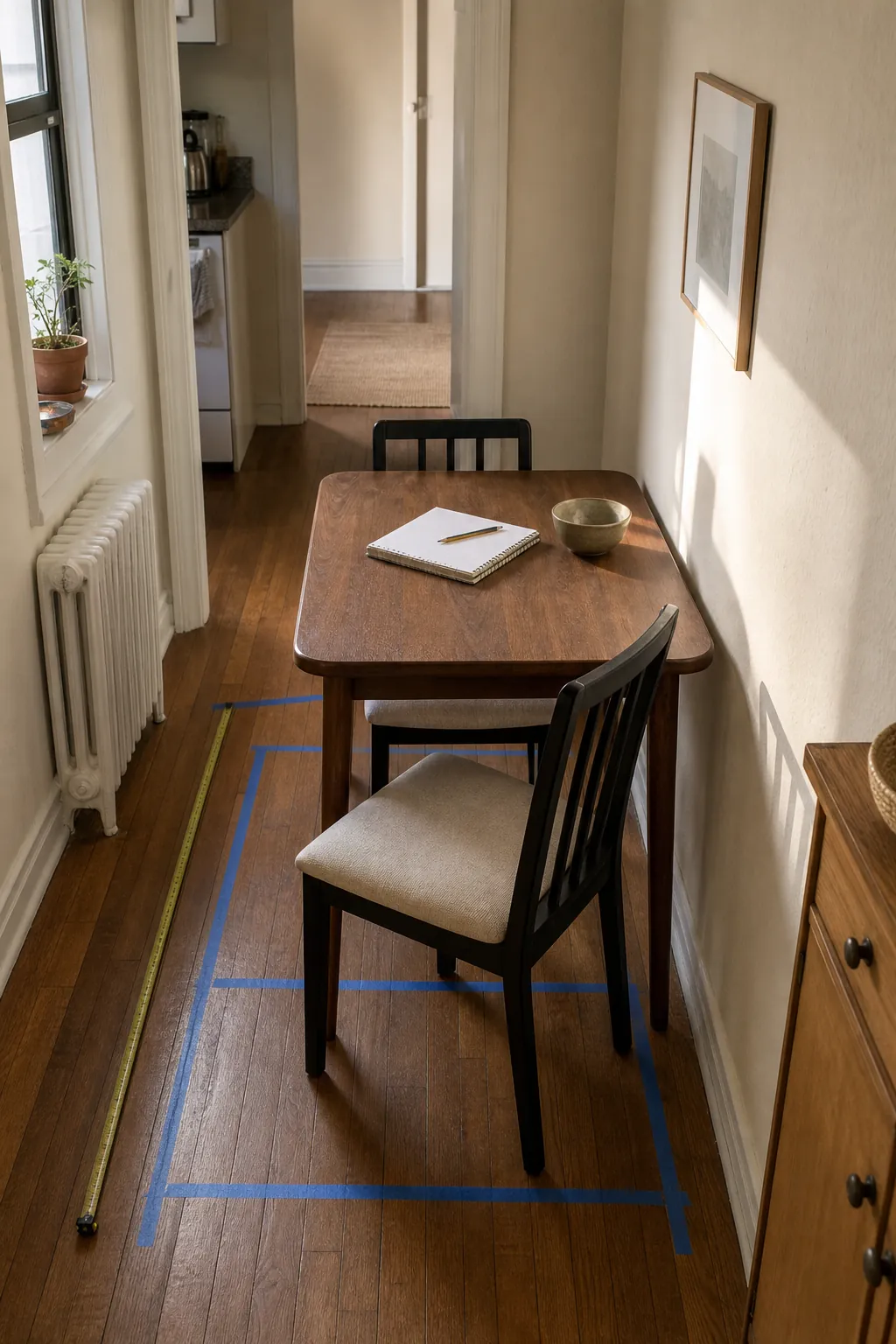
Use painter’s tape before you buy anything. Tape the tabletop on the floor, then tape the pulled-out chair positions. Walk from the entry to the kitchen, from the kitchen to the sofa, and from the sofa to the bathroom. If the table interrupts those routes, shrink it, move it to a wall, or choose a folding option.
| Apartment layout problem | Better dining move |
|---|---|
| Table blocks the main walkway | Use a wall-side table, drop-leaf, or lift-top coffee table |
| Chairs hit the wall | Swap two chairs for a bench or choose armless chairs that tuck fully under |
| Dining area becomes storage | Downsize the table and add a nearby closed cabinet or wall rail |
| Kitchen has no room for a table | Create a living room dining zone with a rug, pendant, or compact console table |
| Guests come only sometimes | Design for daily users and store folding chairs for hosting |
Six Dining Setups That Work Without A Dining Room
There is no single perfect solution for small space dining. The right setup depends on where your apartment has unused edges: a window wall, the back of a sofa, a kitchen corner, a hallway-adjacent wall, or the open side of a living room.
1. A Wall-Mounted Drop-Leaf Table
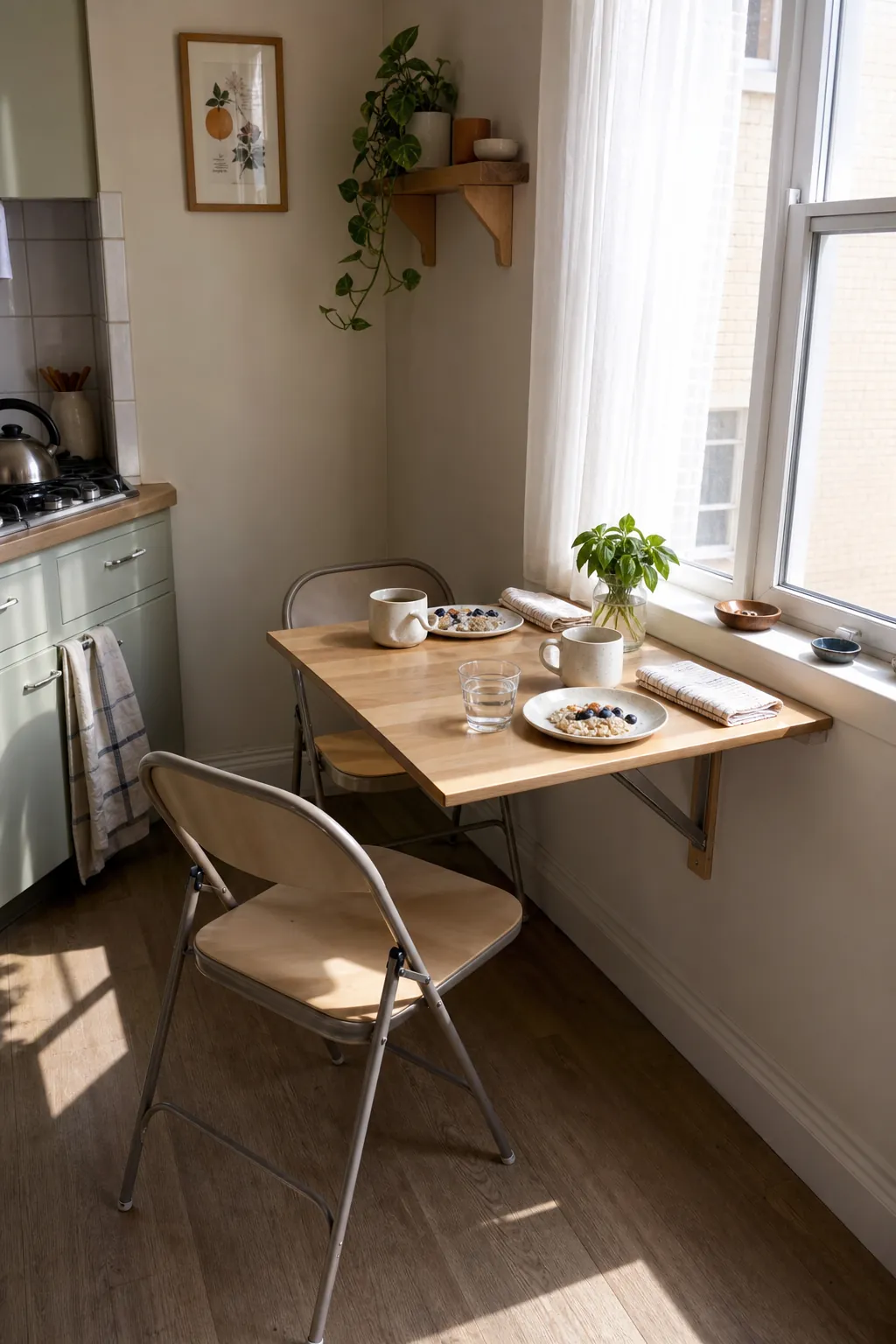
A wall-mounted drop-leaf table is one of the cleanest kitchen table ideas for a tiny kitchen because it disappears when you need prep space. Mount it under a window, beside a refrigerator wall, or along a blank stretch of kitchen wall. Add two light chairs that can stack, fold, or hang on hooks.
This works best when your meals are casual and you do not need a table open all day. It also keeps the apartment from feeling like the table is permanently waiting for an event that rarely happens.
2. A Gateleg Or Drop-Leaf Table Used Like An Island
If you need both dining and counter space, a gateleg table can act like a small island between meals. Keep one leaf down for daily use, open both leaves for guests, and choose folding chairs that live in a closet. In a studio apartment, this can be the difference between a cramped permanent dining set and a flexible central workhorse.
The key is discipline: a flexible table only stays useful if it can close. Keep baskets, mail, laptops, and chargers somewhere else so the table does not become the apartment’s dumping ground.
3. A Banquette Or Bench In A Corner
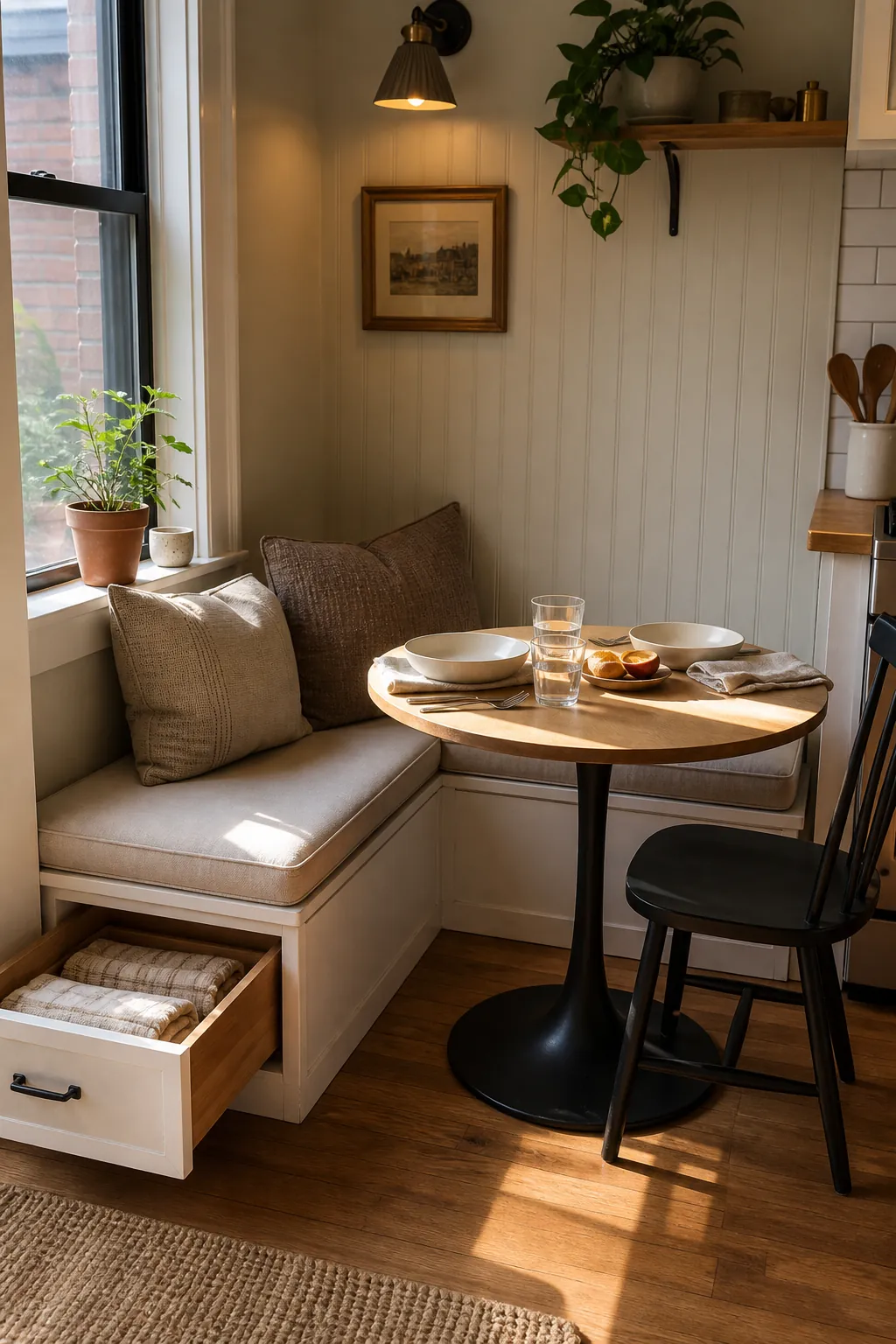
A dining nook can work beautifully when at least one side is built from bench seating. A bench can sit tight to the wall, which removes the chair-pull problem on that side. Add drawers or lift-up storage under the seat, and the nook can hold linens, small appliances, games, or seasonal pieces.
Use a pedestal table if possible. Four corner legs can trap knees and make it awkward to slide along the bench. A round or oval pedestal table gives the nook more forgiveness, especially when people need to shift in and out.
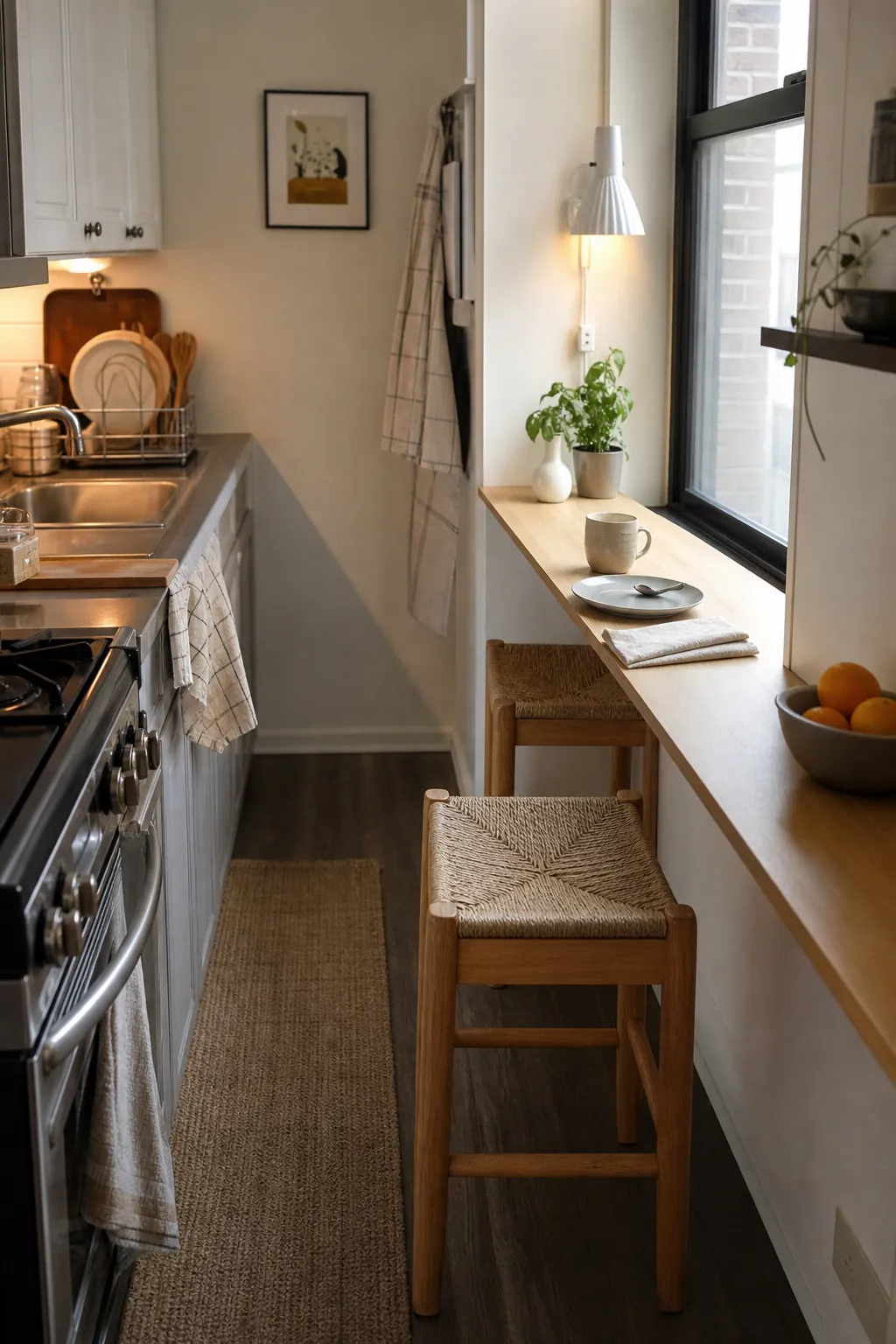
4. A Counter-Height Eating Ledge
If the kitchen has a blank wall or low window, a shallow ledge can become a compact breakfast bar. This is a good choice for renters because it can often be made with a narrow table, console, or freestanding counter-height piece instead of built-ins.
Choose stools that tuck all the way under the ledge. In a small kitchen, stool depth matters as much as tabletop depth. Backless stools are not always luxurious, but they keep the pathway open and make the kitchen feel less crowded.
5. A Lift-Top Coffee Table For Sofa Meals
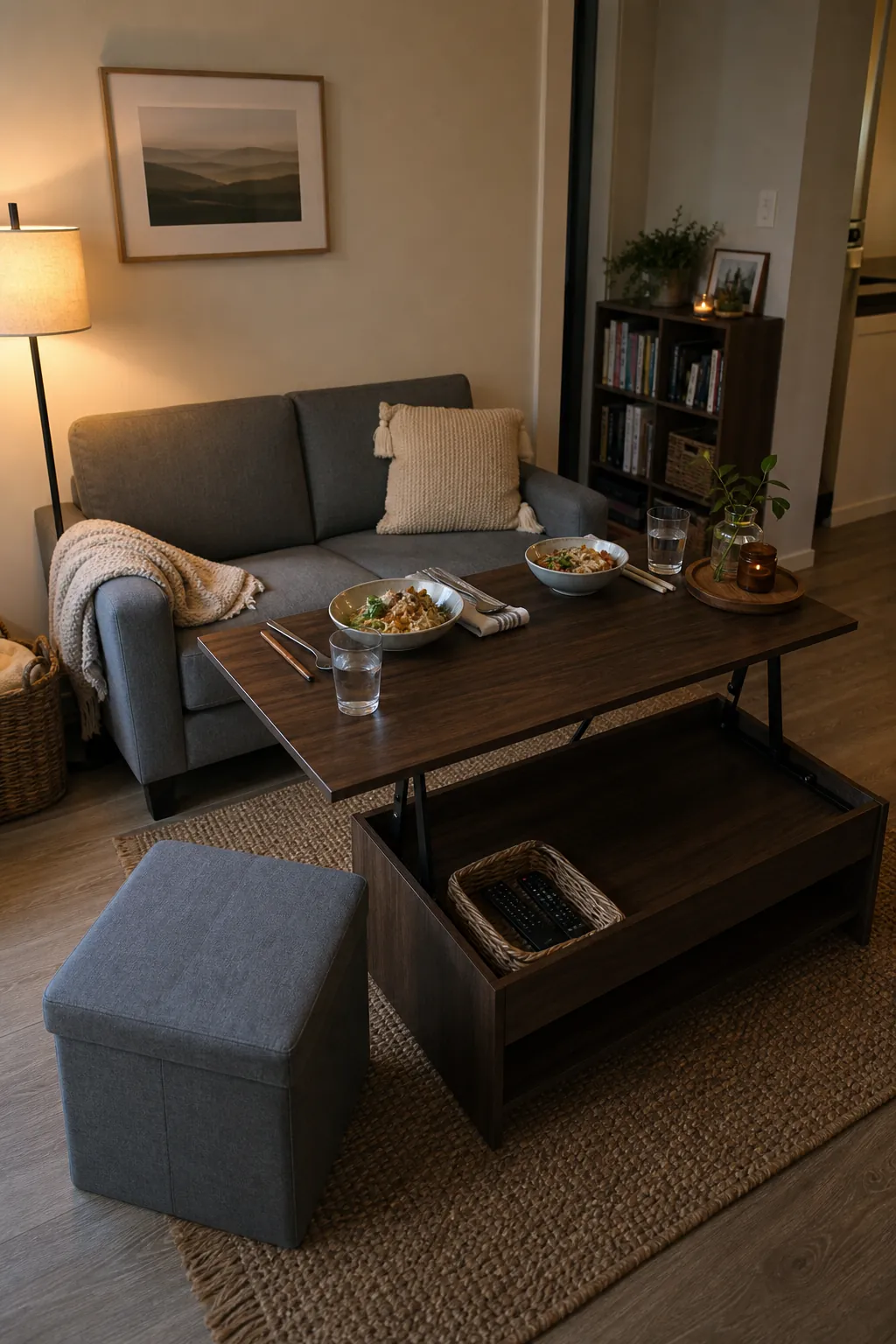
Some apartments are not asking for a dining table at all. If you already eat in the living room, a lift-top coffee table may be the most honest solution. It gives you a table-height surface for dinner, a work tray, or a laptop, then drops back down when the living room needs to feel open.
This is especially practical for renters, solo dwellers, and couples who rarely host formal meals. Add washable placemats, a tray, and a nearby storage ottoman, and the living room can handle casual dining without looking improvised.
6. A Console Table Behind The Sofa
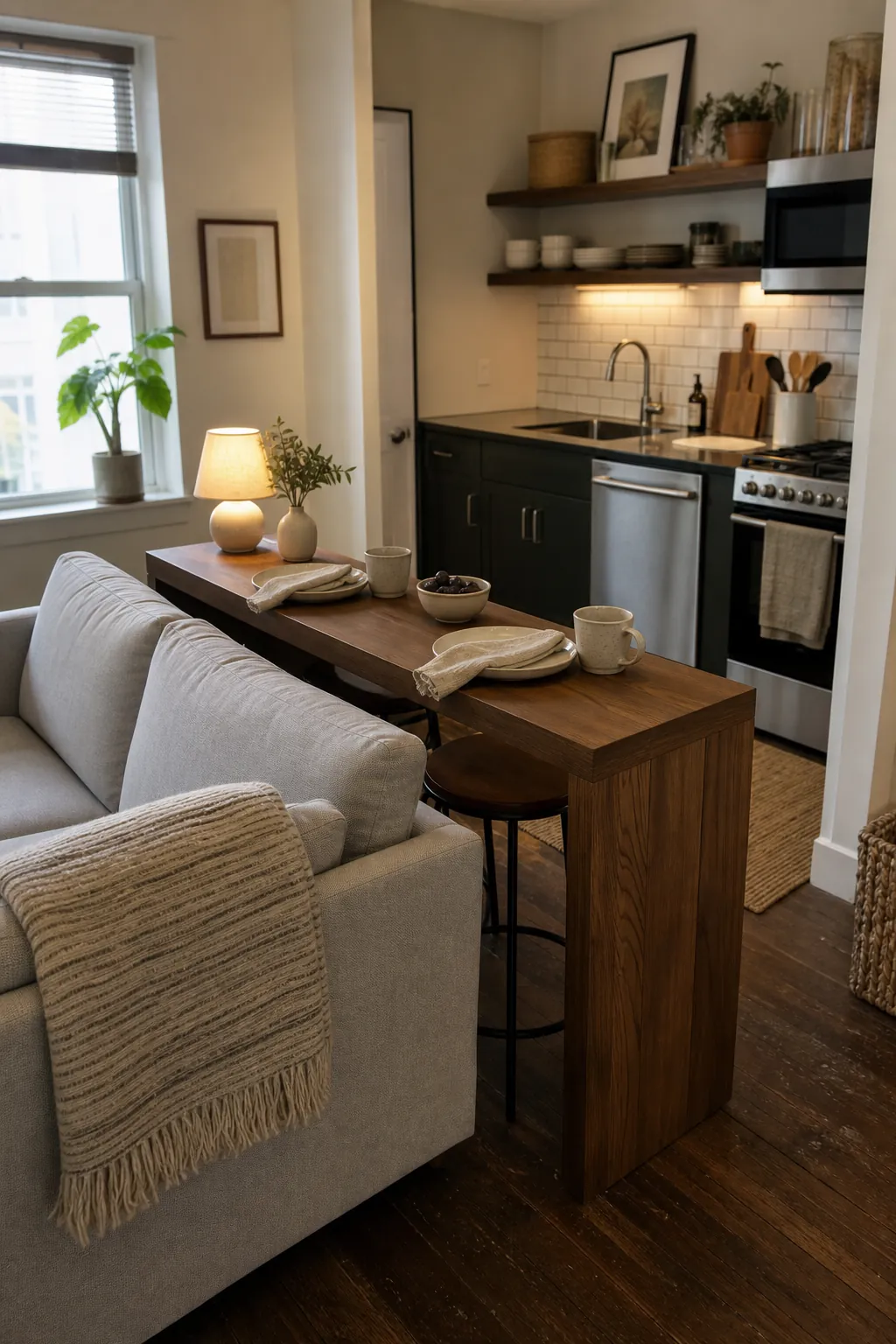
In a studio apartment, the back of the sofa is often wasted real estate. A slim console-height table behind it can become a breakfast spot, a work perch, a serving surface, or a place for two people to eat while facing the room instead of the wall.
Keep the console shallow, usually around the depth of a laptop or dinner plate. Pair it with stools that slide underneath. This creates a compact dining zone without cutting the living area in half.
Make The Dining Area Feel Intentional
A tiny table can look temporary if nothing around it says, “this is the eating area.” You do not need walls to create that signal. You need a few boundaries that are easy to read.
- Lighting: a small pendant, plug-in sconce, or cordless lamp makes the table feel separate from kitchen task lighting.
- Wall treatment: a painted rectangle, peel-and-stick wallpaper, framed art, or a narrow shelf can define a breakfast nook.
- Rug: use one only if chairs can move without catching on the edge. If the rug must be tiny, skip it.
- Storage: add a closed basket, slim cabinet, or wall rail nearby so the table does not become the storage system.
- Reset habit: keep only one beautiful everyday item on the table, such as a bowl, lamp, or vase. Anything more invites clutter.
These details matter because a small dining area has to compete visually with bigger apartment zones. A sofa automatically looks like a living room. A bed automatically looks like a sleeping zone. A two-person table needs a little more help.
What To Avoid In A No-Dining-Room Apartment
Some ideas look efficient in a product photo and fail in a real apartment. Watch for these traps before you spend money:
- A table sized for imaginary guests: if four extra people come twice a year, they should not control your daily layout.
- Chairs with arms or flared backs: they look comfortable but often refuse to tuck in.
- A rug that is too small: chair legs catch on the edge and make every meal annoying.
- A banquette with the wrong table base: bulky table legs make sliding in and out harder.
- A dining zone in the main walkway: if you have to squeeze past it ten times a day, you will start hating it.
- No nearby storage: clutter will land on the table if there is nowhere easier to put it.
A Simple Decision Rule
If you are stuck between several small apartment ideas, use this rule: choose the dining setup that can be reset in 60 seconds.
A drop-leaf table that folds down quickly will get used. A bench with hidden storage will stay useful. A lift-top coffee table that handles real dinners will beat a formal table you walk around all day. A tiny breakfast nook that feels good for coffee and dinner for two is better than a “proper” dining set that turns the apartment into an obstacle course.
No dining room does not mean no place to eat. It means your dining area has to be more honest, more compact, and more responsive to the way you actually live.