

If you rent a small apartment, the hardest part is rarely finding inspiration. The hard part is knowing which ideas will still look good after you read the lease, protect the deposit, and accept that you cannot paint, tile, drill, rewire, or replace anything permanent.
The best small apartment ideas for renters do not pretend the rules are not there. They work around them. They use furniture, textiles, lighting, removable surfaces, and smart apartment storage to change how the space feels without making a change your landlord has to undo.
The goal is not to make a rental look like a gut renovation. The goal is better: a home that feels layered, useful, warm, and personal while every choice is still reversible.
Start With The Lease, Not The Mood Board
A lot of renters discover the expensive lesson late: renter friendly decor is only renter friendly if it works on your actual walls, paint, lease, and climate. Adhesive strips can be perfect in one apartment and disastrous in another. Peel-and-stick wallpaper can remove cleanly from smooth, cured paint, then pull paint from a textured or poorly prepped wall.
Before buying anything sticky, heavy, or wall-mounted, check three things. First, read the lease for words like adhesive, nails, drilling, alterations, and repairs. Second, test a small hidden area before committing to peel and stick decor. Third, ask maintenance what they prefer for hanging light art. Some buildings would rather patch a tiny nail hole than repair a torn patch of drywall paper.
That one step changes the whole plan. Instead of thinking, “How do I fake a renovation?” think, “How do I create the feeling of renovation with items I can remove in an afternoon?”

Use Layers To Replace Permanent Finishes
Paint, flooring, built-ins, and new lighting are the usual renovation shortcuts. Renters need a different set of levers: rugs, curtains, lamps, slipcovers, art, mirrors, freestanding shelves, and movable storage. These are not consolation prizes. In a small room, they often make a bigger visual difference than a single painted wall.
Start with the largest soft surfaces. A real area rug can cover old flooring, soften echoes, and define a living zone in a studio. Curtains hung high and wide can make a narrow window feel intentional even when the blinds are basic. A washable slipcover can turn an inherited sofa into something that belongs with the rest of the room.
Then add contrast in smaller doses. A dark side table, woven basket, linen shade, brass floor lamp, or wood tray gives the eye a place to land. Small space decor works best when every visible object either improves function, adds texture, or repeats a color already in the room.
Treat Peel-And-Stick As A Detail, Not A Whole Strategy
Temporary decor is useful, but it is not magic. Peel-and-stick wallpaper, backsplash tiles, and floor decals are most successful when you use them in controlled areas where removal risk is lower and the visual payoff is high.
Instead of covering every wall, try one of these lower-risk uses: line the back of a bookcase, cover a removable panel behind a desk, add peel-and-stick tile behind a freestanding kitchen cart, or use a small backsplash section where moisture and heat are manageable. If the apartment has textured walls, chalky paint, fresh paint, humidity problems, or unknown paint history, apply the peel-and-stick material to foam board, hardboard, or a framed panel instead of directly to the wall.
This gives you the visual lift of no renovation decor without gambling your security deposit on a full wall of adhesive.
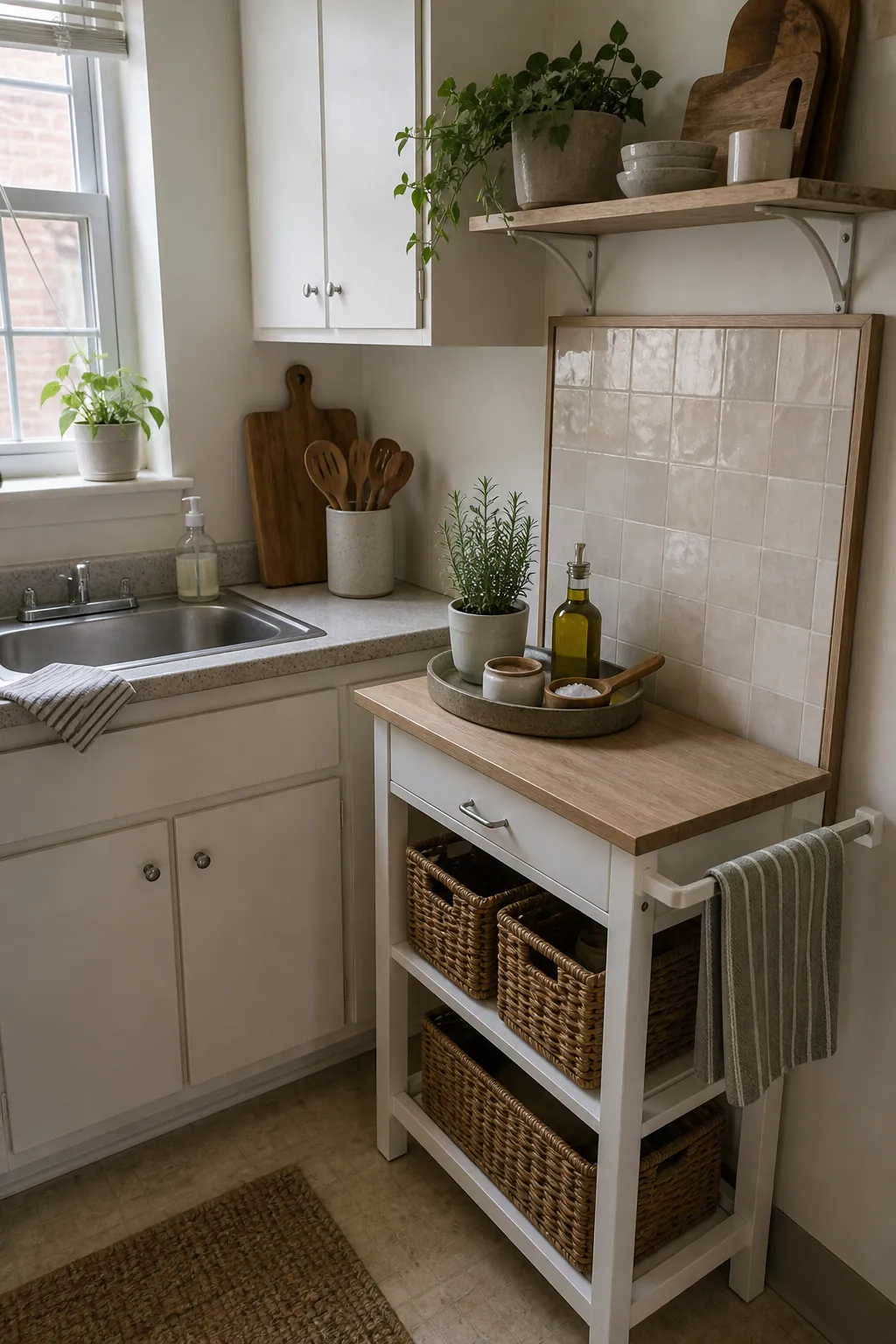
Make Walls Useful Without Making Them Fragile
Blank walls make a small apartment feel unfinished, but wall damage is one of the biggest renter anxieties. The solution is to stop treating the wall as the only display surface.
Lean oversized art on a console. Use a picture ledge if small holes are allowed. Put framed prints on a bookshelf. Hang lightweight items from a tension rod in an alcove. Use over-the-door racks where they make sense. If adhesive wall hooks are allowed, use them for light items only, follow the weight rating, clean the surface first, and remove them slowly according to the product directions.
For heavy mirrors, large art, hanging plants, or anything above a bed or sofa, be more conservative. If you would be nervous standing under it, do not rely on a mystery adhesive to hold it. Ask the landlord or maintenance team what fastening method is allowed, then patch neatly when you move out.

Choose Storage That Looks Like Furniture
Small rentals become cluttered fast because there is usually not enough built-in storage. That does not mean every solution should look like a plastic bin. The best renter friendly storage hides daily mess while still earning its floor space.
- Use closed storage at eye level. Cabinets, lidded baskets, and storage benches calm the room more than open shelves full of mixed objects.
- Use open storage where repetition looks good. Matching dishes, books, folded throws, and woven bins can stay visible without feeling chaotic.
- Use vertical storage where floor space is scarce. A tall bookcase, ladder shelf, or narrow pantry cabinet can replace several low pieces.
- Use mobile storage for awkward rooms. Rolling carts work well in kitchens, bathrooms, laundry corners, and beside desks.
The trick is to make storage part of the design plan from the beginning. A bench near the entry is not just storage. It is a drop zone, a shoe solution, and a visual pause between the front door and the living area.
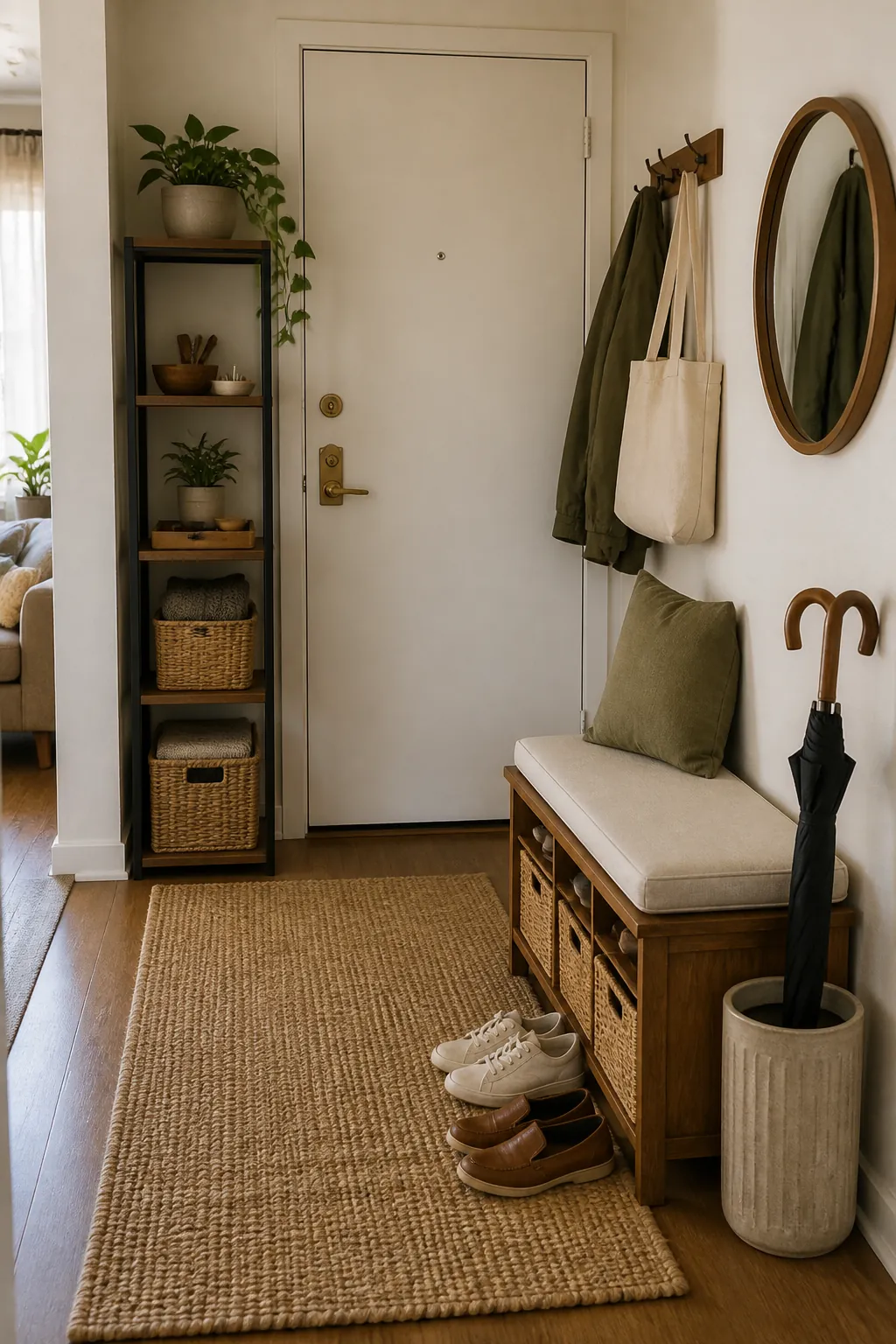
Create Zones Instead Of Adding Walls
When you cannot renovate, dividing a studio or open living room comes down to signals. You need each area to read differently without blocking light or circulation.
Use a rug to mark the seating area, a slim bookcase to create a soft boundary, and a lamp to give each zone its own glow. A desk can face the wall with art above it, while the sofa faces inward with a coffee table and floor lamp. The apartment stays open, but the room stops feeling like everything is floating.
This is where small apartment ideas need restraint. Too many dividers make a small home feel chopped up. One low shelf, one rug change, or one curtain panel is usually enough.

Upgrade Lighting Without Touching Wiring
Bad rental lighting makes everything else look cheaper. If your apartment has one harsh ceiling fixture, do not decorate around that problem. Solve it with layers.
Add a floor lamp near the sofa, a small table lamp on a shelf, an under-cabinet rechargeable light in the kitchen, and a plug-in sconce where you need a reading light. Warm bulbs can soften gray walls, beige carpet, and builder-grade finishes. A good shade also matters. Fabric, paper, rattan, and frosted glass diffuse light better than bare bulbs.
Pair lighting with textiles. Curtains, rugs, and fabric shades absorb the hard edges of a rental. If you cannot change the architecture, change the way light lands on it.
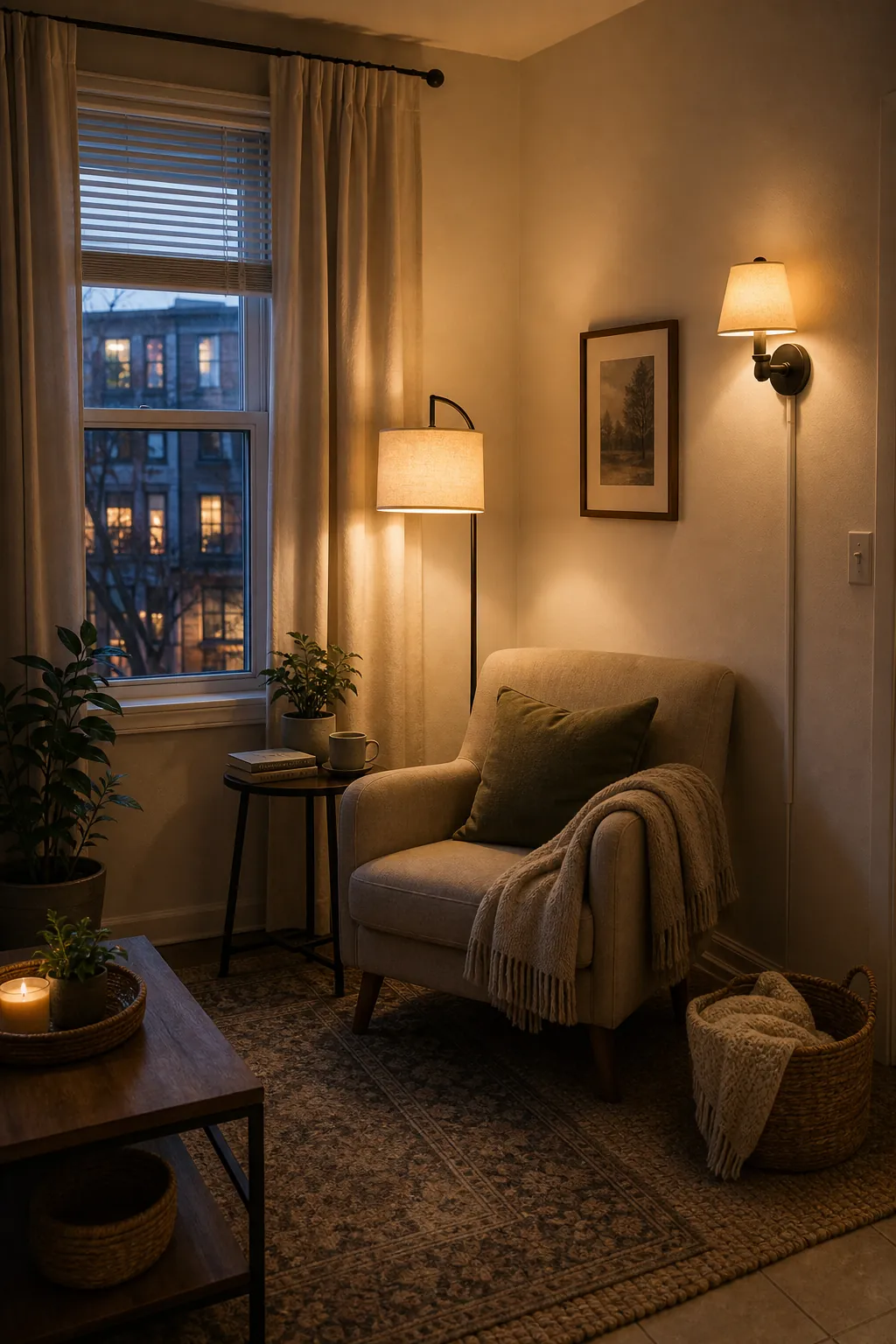
Make The Kitchen Feel Built-In With Freestanding Pieces
Rental kitchens often have the least flexibility and the most visual noise. You may be stuck with cabinet color, countertops, flooring, and appliance placement. Focus on the pieces you can control.
A narrow rolling island can add prep space and hidden storage. A magnetic rail on the fridge can hold small tools if it does not scratch. A freestanding pantry cabinet can replace missing cupboards. A tray beside the stove can group oil, salt, pepper, and utensils so the counter looks styled instead of crowded.
Keep the palette tighter here than anywhere else. In a small kitchen, five different storage finishes can look messy even when everything is organized. Choose one metal, one wood tone, and one basket or bin style. That simple limit makes rental apartment decor feel intentional.
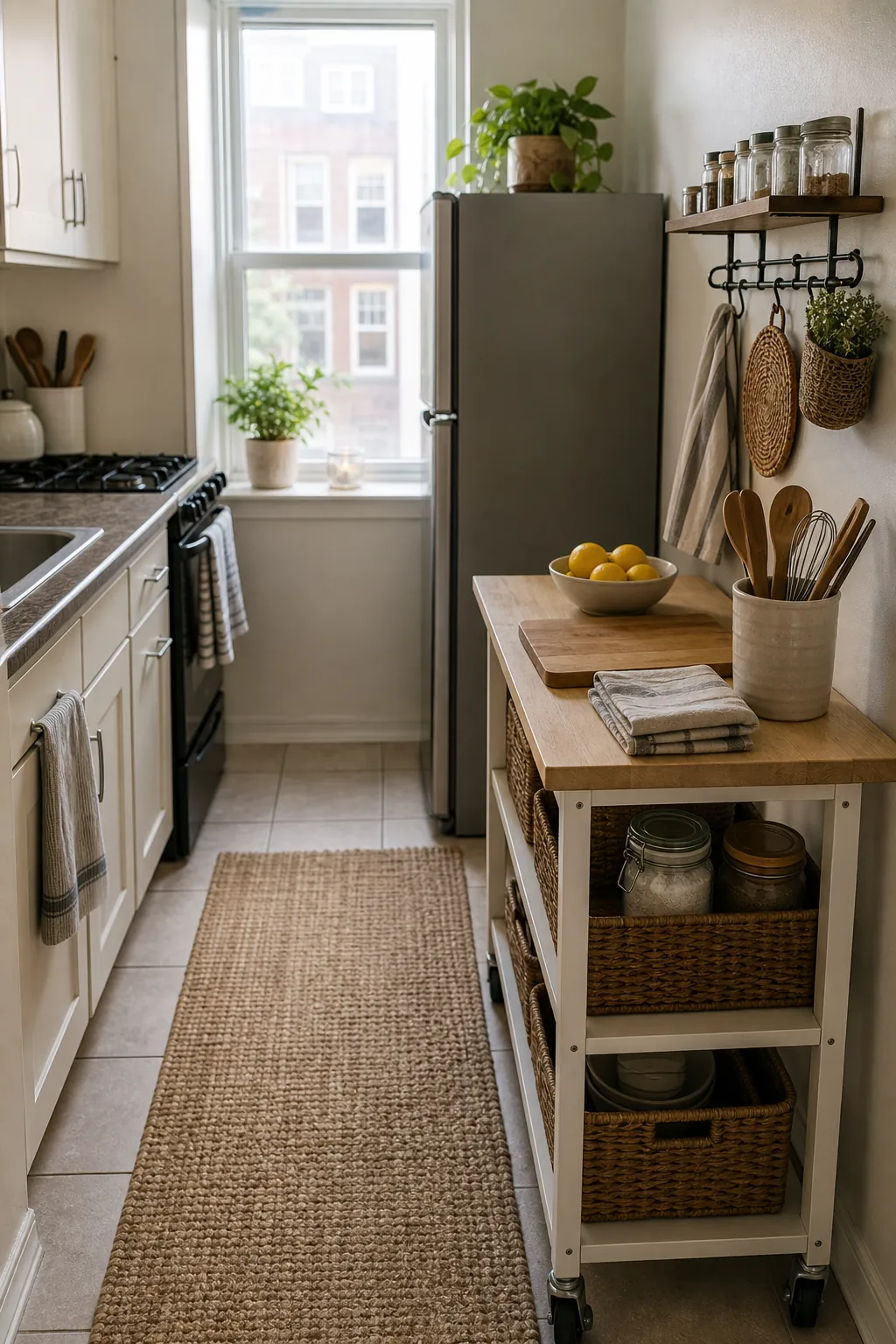
Refresh The Bathroom With Removable Order
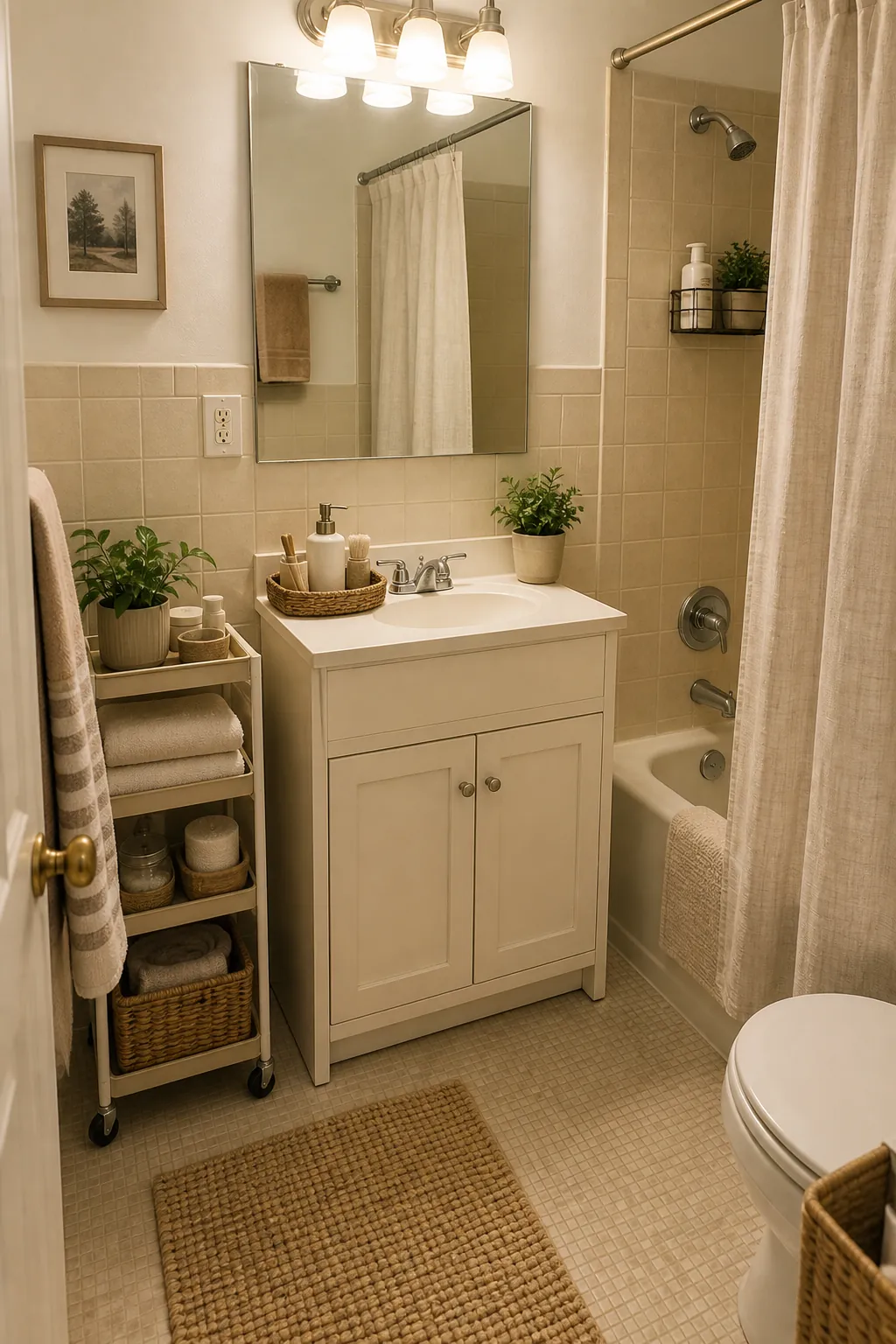
A rental bathroom can feel old even when it is clean. Since you probably cannot replace tile, vanity, mirror, or fixtures, focus on order and softness.
Use a real bath mat, matching towels, a shower curtain with good weight, and countertop trays that hide the small daily items. Add an over-toilet shelf only if it looks stable and leaves enough visual breathing room. If storage is tight, a narrow rolling cart or wall-leaning ladder shelf can hold towels without drilling.
For ugly tile or dated color, repeat the color once instead of fighting it everywhere. A soft green towel can make green tile look chosen. A warm wood stool can make beige tile feel calmer. Small spaces often look better when you cooperate with one fixed finish instead of trying to cover every inch.
A Renter-Safe Decision Table
| Problem | Safer renter-friendly move | Use caution with |
|---|---|---|
| Blank walls | Leaning art, picture ledges, framed prints on shelves | Heavy adhesive hooks or large mirrors |
| Ugly floor | Large rug with a good rug pad | Peel-and-stick floor tiles on unknown flooring |
| No storage | Closed cabinets, benches, tall shelves, rolling carts | Too many open bins in mixed colors |
| Harsh lighting | Floor lamps, table lamps, plug-in sconces, warm bulbs | Anything hardwired without permission |
| Boring kitchen | Freestanding cart, tray styling, removable panel backsplash | Adhesive tile near heat or fragile paint |
The Move-Out Test
Before buying a renter-friendly product, imagine move-out day. Can you remove it without special tools? Can you carry it into the next home? Can you patch or clean the evidence quickly? Would you still want it if the next apartment had different walls?
That test keeps you from spending money on temporary fixes that only work once. It also pushes you toward pieces with a longer life: lamps, rugs, shelves, storage benches, curtains, art, mirrors, and flexible furniture.
The most livable renter spaces are not bare. They are edited. They use temporary decor where temporary makes sense, freestanding pieces where structure is missing, and storage that makes daily life easier. You may not be able to renovate the apartment, but you can still change the way it works, the way it photographs, and the way it feels when you come home.