
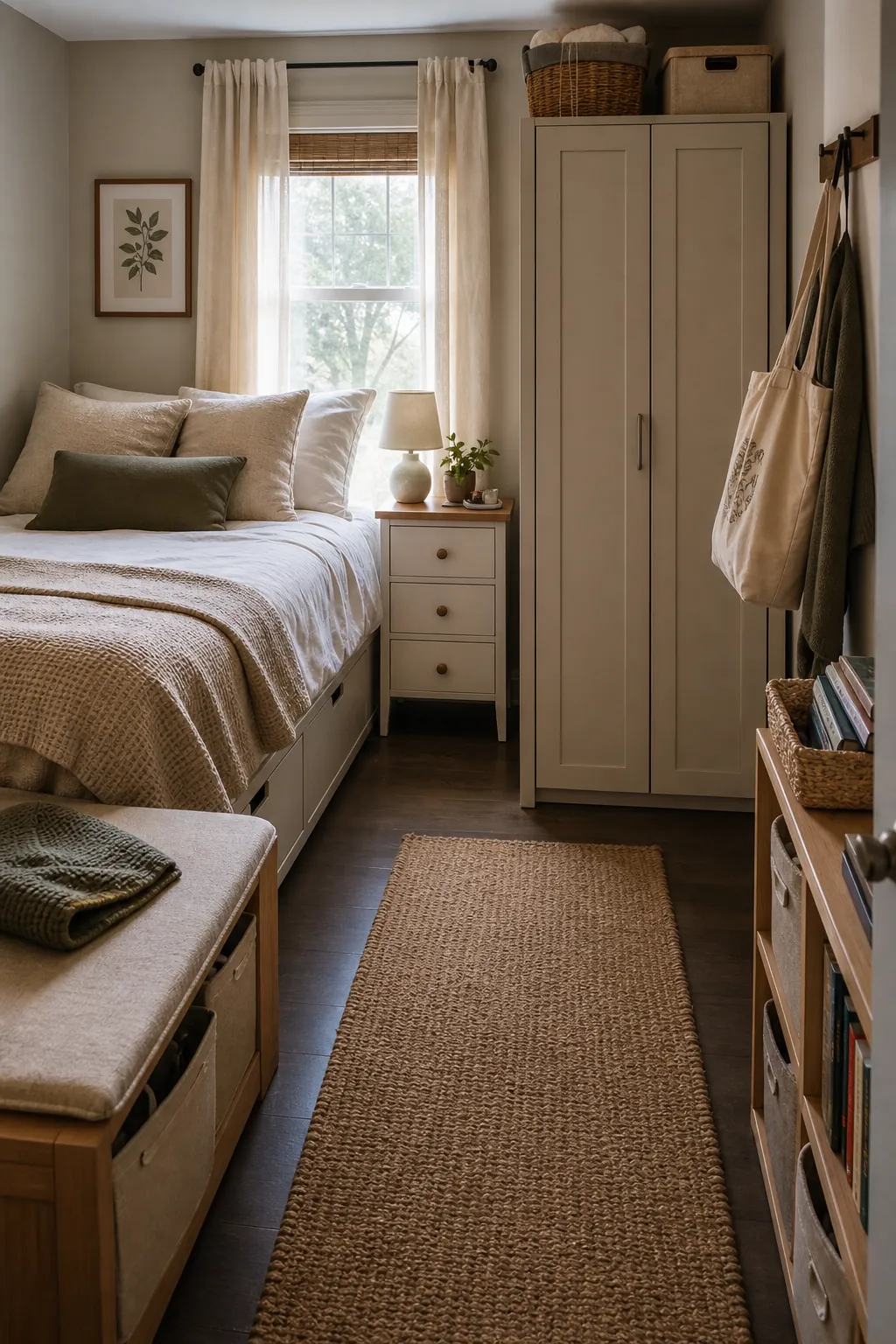
A small bedroom does not become stressful only because it is small. It becomes stressful when every useful thing is visible, half-used storage pieces compete for floor space, and nothing has a reliable place to land. That is why the best small bedroom ideas when you have too much stuff are not about buying more bins at random. They are about making the room easier to reset.
The goal is simple: keep the items you actually use, reduce what the room has to visually carry, and give every category a home that fits the way you live. If the floor, bed, desk, and chair are always becoming temporary storage, the room is telling you the current system is too weak for your real habits.
Start by deciding what the room is allowed to hold
Before adding storage furniture, decide what belongs in the bedroom. Clothes, bedding, daily toiletries, a few books, and sleep-related items make sense. Bulk hobby supplies, sentimental boxes, old paperwork, extra decor, and backup products may not deserve prime bedroom space. A compact bedroom needs limits before it needs containers.
Try a quick category test. Pull out one category at a time, such as sweaters, shoes, skincare, craft supplies, books, or charging cords. Keep what you use now, not what belonged to an older version of your life. If the category still feels too big, set a container limit: one drawer for workout clothes, one lidded bin for seasonal bedding, one shelf for unread books.
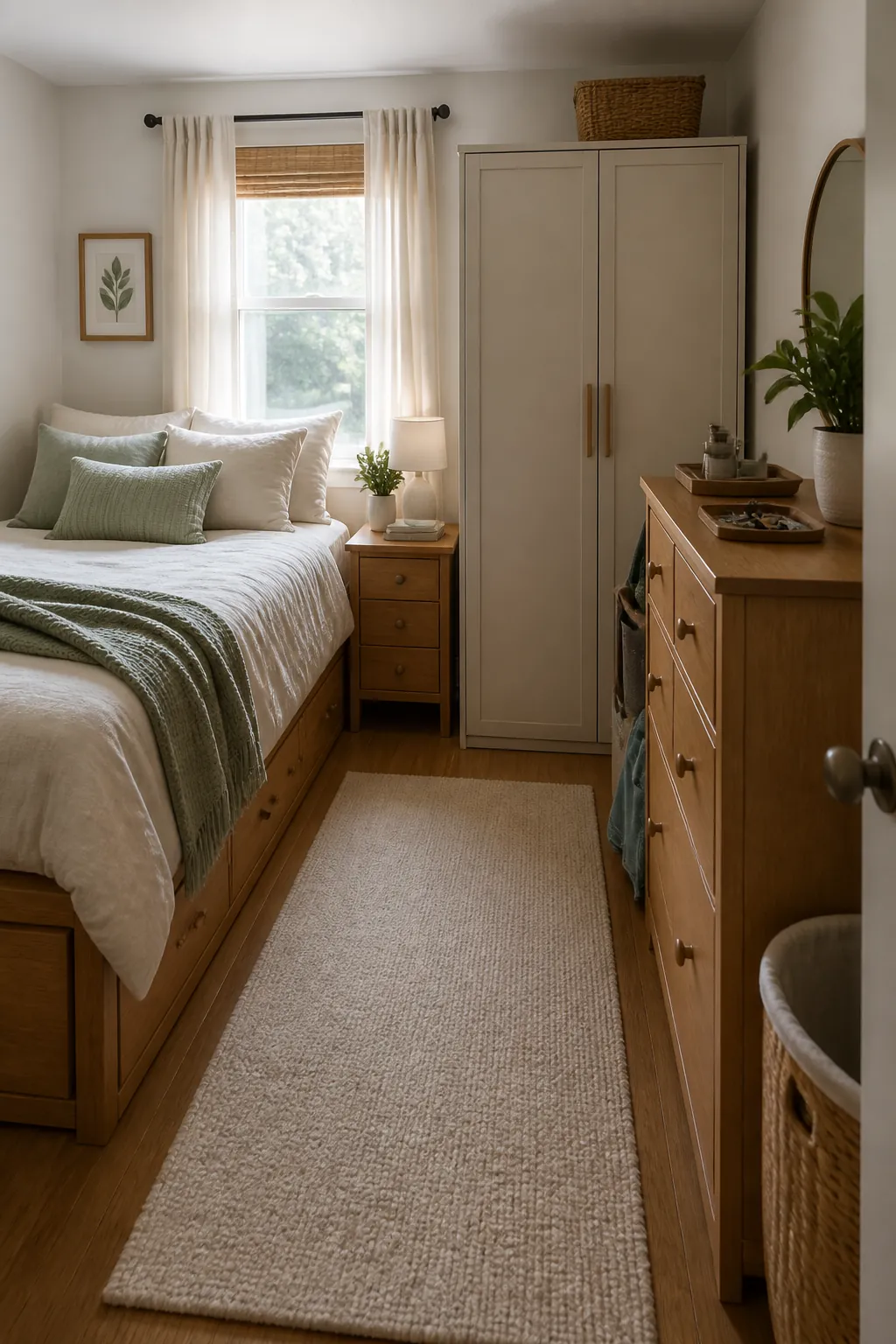
This is not about becoming minimalist overnight. It is about making the room honest. If you need ten categories in one small bedroom, each one needs a defined boundary. Once a boundary is full, the choice is clear: edit the category, move overflow elsewhere, or replace a weak storage piece with one that works harder.
Use closed storage to reduce visual noise
Open shelves can look beautiful in a spacious room, but in a crowded bedroom they often turn every lotion bottle, folded hoodie, and basket handle into visual clutter. If your room looks messy even after cleaning, the issue may be that too much is on display.
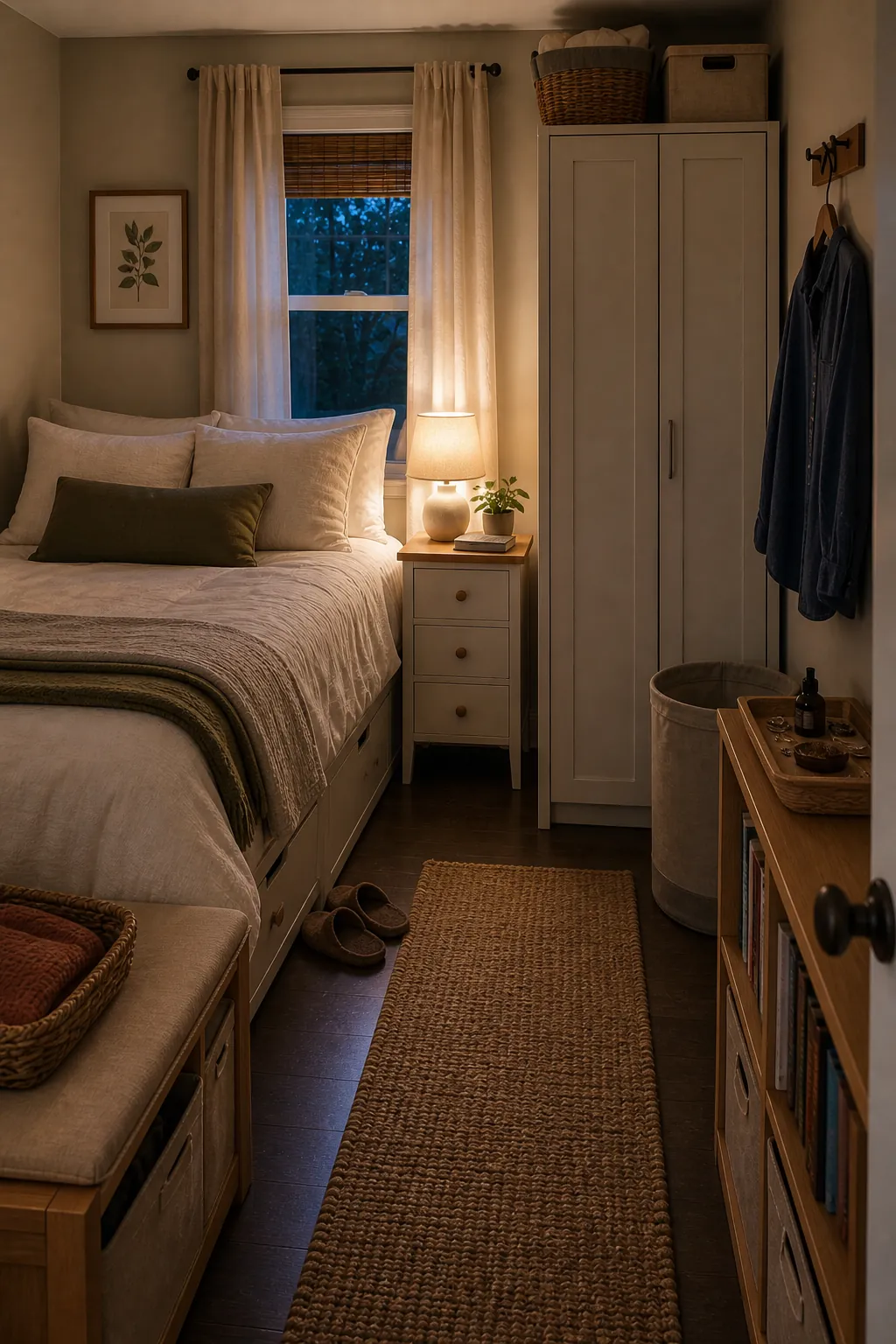
Swap several small open pieces for one taller closed piece where possible. A narrow wardrobe, lidded dresser, cabinet, or storage bench can calm the room more than three carts and a cube shelf. Closed storage is not hiding failure; it is giving the eye a place to rest.
- Use drawers for small loose items that usually scatter across surfaces.
- Choose doors or opaque bins for supplies that are practical but not pretty.
- Keep only one or two styled open shelves for items you genuinely enjoy seeing.
- Repeat bin colors so storage looks intentional instead of patched together.
Build upward instead of spreading outward
When floor space is tight, every short storage piece has to earn its footprint. Tall storage often works better because it uses the height you already have. A bookcase with doors on the lower half, a wardrobe with double hanging, wall shelves above a dresser, or a cabinet over the desk can give you more storage without taking more walking space.
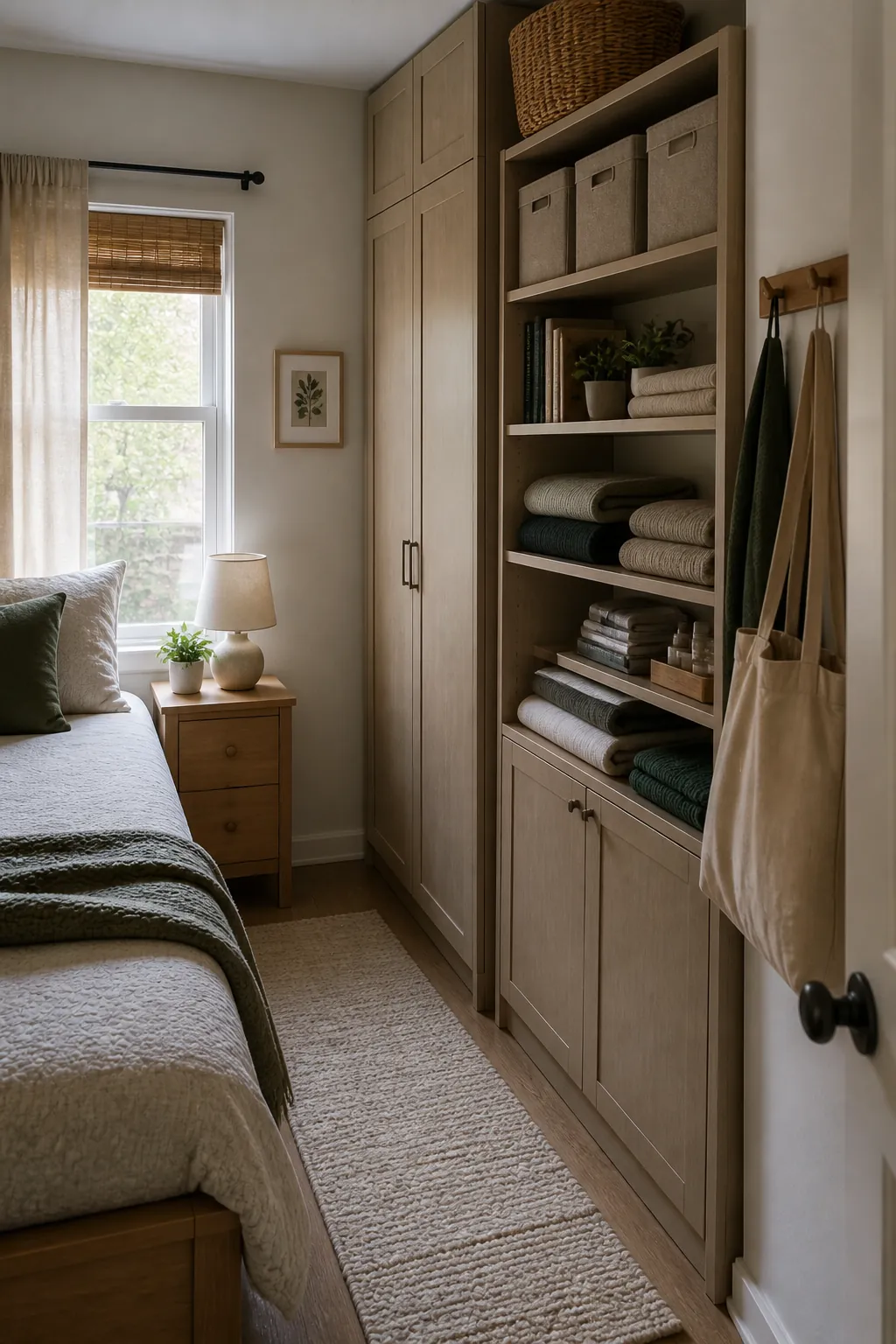
Use the highest zones for things you do not reach for every day: off-season clothes, extra blankets, sentimental keepsakes, luggage inserts, or spare linens. Keep daily items between shoulder and knee height so the system does not become annoying after two days. The best small space storage is reachable for daily life and slightly inconvenient for rarely used things.
If you add wall-mounted storage, keep it shallow. Deep shelves over a bed or desk can feel heavy in a small room. Shallow shelves, picture ledges, peg rails, and narrow cabinets hold enough without making the walls close in.
Make under bed storage work like a second closet
Under bed storage is one of the most useful small bedroom storage zones, but it only works when it has a clear purpose. Random bags under the bed become forgotten clutter. Labeled drawers, zip fabric cases, or low rolling bins can act like a second closet for categories you do not need every morning.
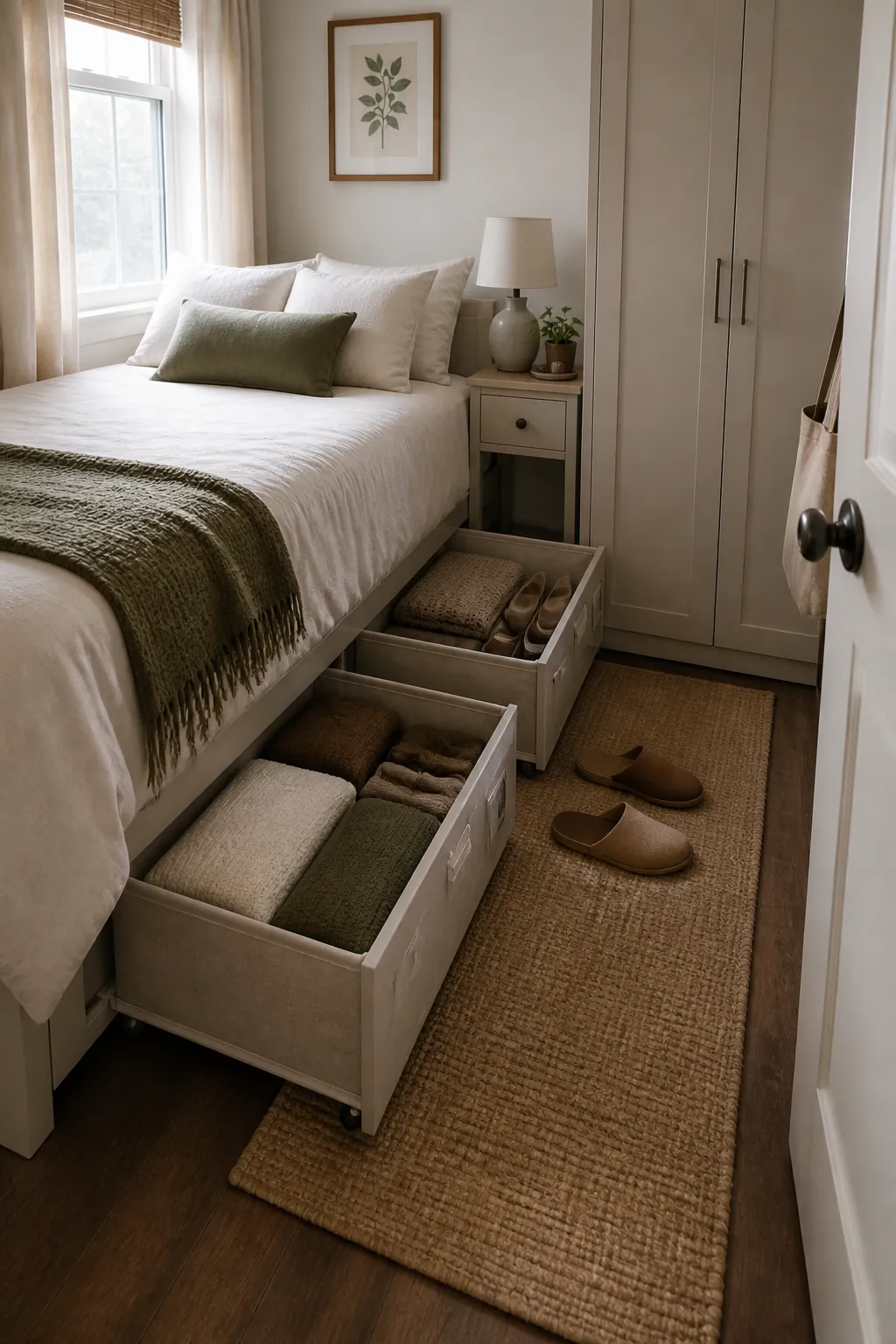
Good under bed categories include seasonal sweaters, guest bedding, extra towels, occasion shoes, wrapping paper, or backup toiletries. Bad under bed categories include anything you use daily, anything damp, and anything you forget exists unless it is visible.
If dust is a concern, choose enclosed containers and leave one side easy to pull out for cleaning. If you have a very low bed, bed risers can help, but use them only if the height still feels comfortable and stable. The goal is not to cram more into the room; it is to move low-use items out of the daily mess zone.
Fix closet overflow before buying another rack
Closet overflow is one of the fastest ways to make a small bedroom feel chaotic. Shoes line the wall, laundry sits on the chair, bags hang from every knob, and the bedroom starts functioning like a storage unit. The fix is not always a bigger closet. Often it is a more disciplined closet.
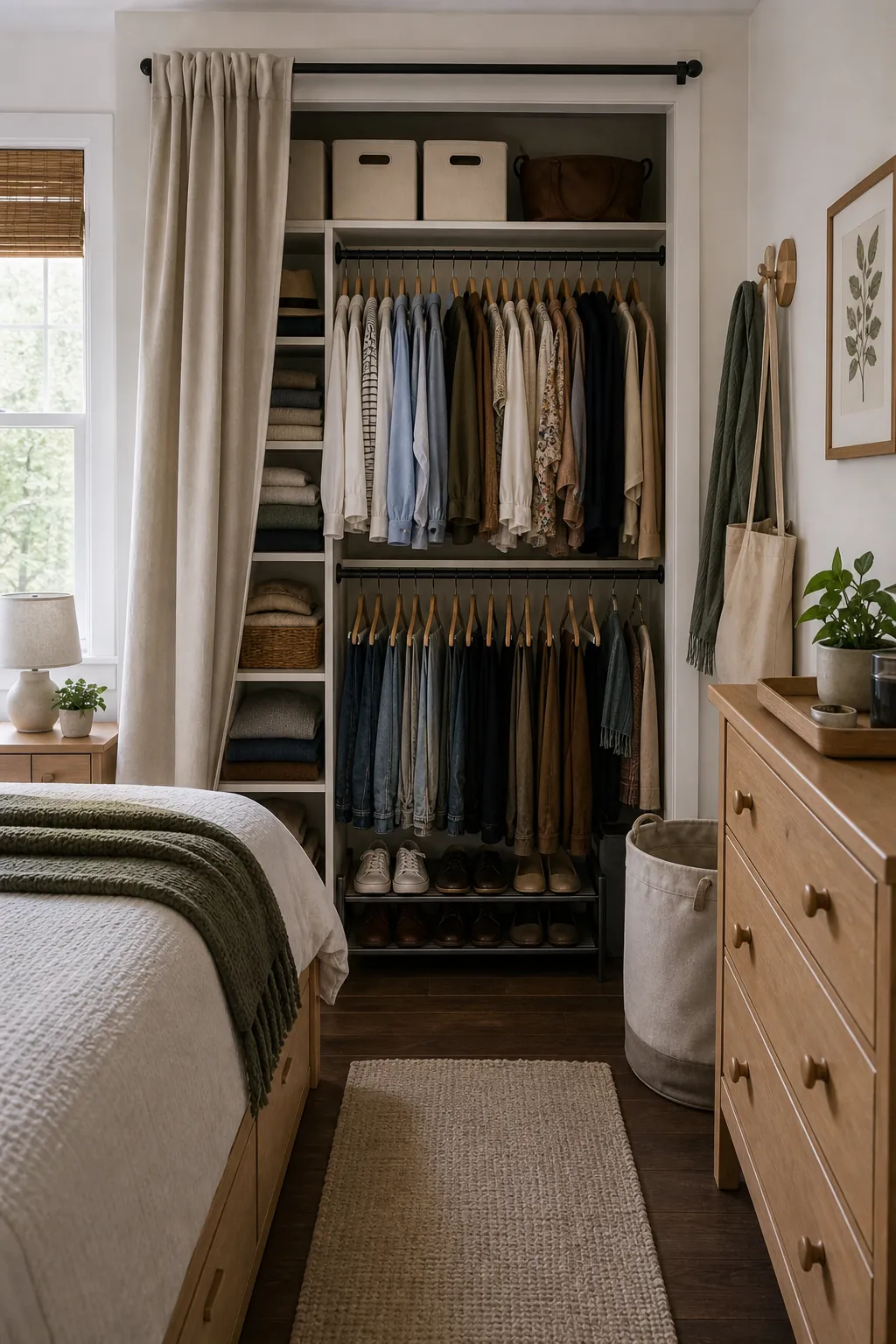
Start with clothing because it usually takes the most space. Turn hangers backward, then flip each hanger only after wearing the item. After a few months, you will see what is only pretending to be part of your wardrobe. Box sentimental clothing separately. Store off-season clothes high or under the bed. Donate duplicates that no longer fit your real week.
- Add a second hanging rod for short items like shirts, skirts, and folded pants.
- Use slim hangers so the rail does not waste inches.
- Move shoes into the closet with stackable shelves or hanging organizers.
- Use shelf dividers so folded piles do not collapse into each other.
- Cover an exposed closet with a simple curtain if doors are not possible.
A curtain is not a substitute for organizing, but it can make a clutter free bedroom feel calmer while you keep improving the system. In a tiny room, reducing visual exposure matters.
Create a drop zone so surfaces stay usable
Most bedroom clutter is not dramatic. It is the daily pile: mail, lip balm, receipts, earbuds, hair clips, laundry, charging cables, and half-worn clothes. If these items do not have a fast landing place, they will take the desk, bed, and floor.
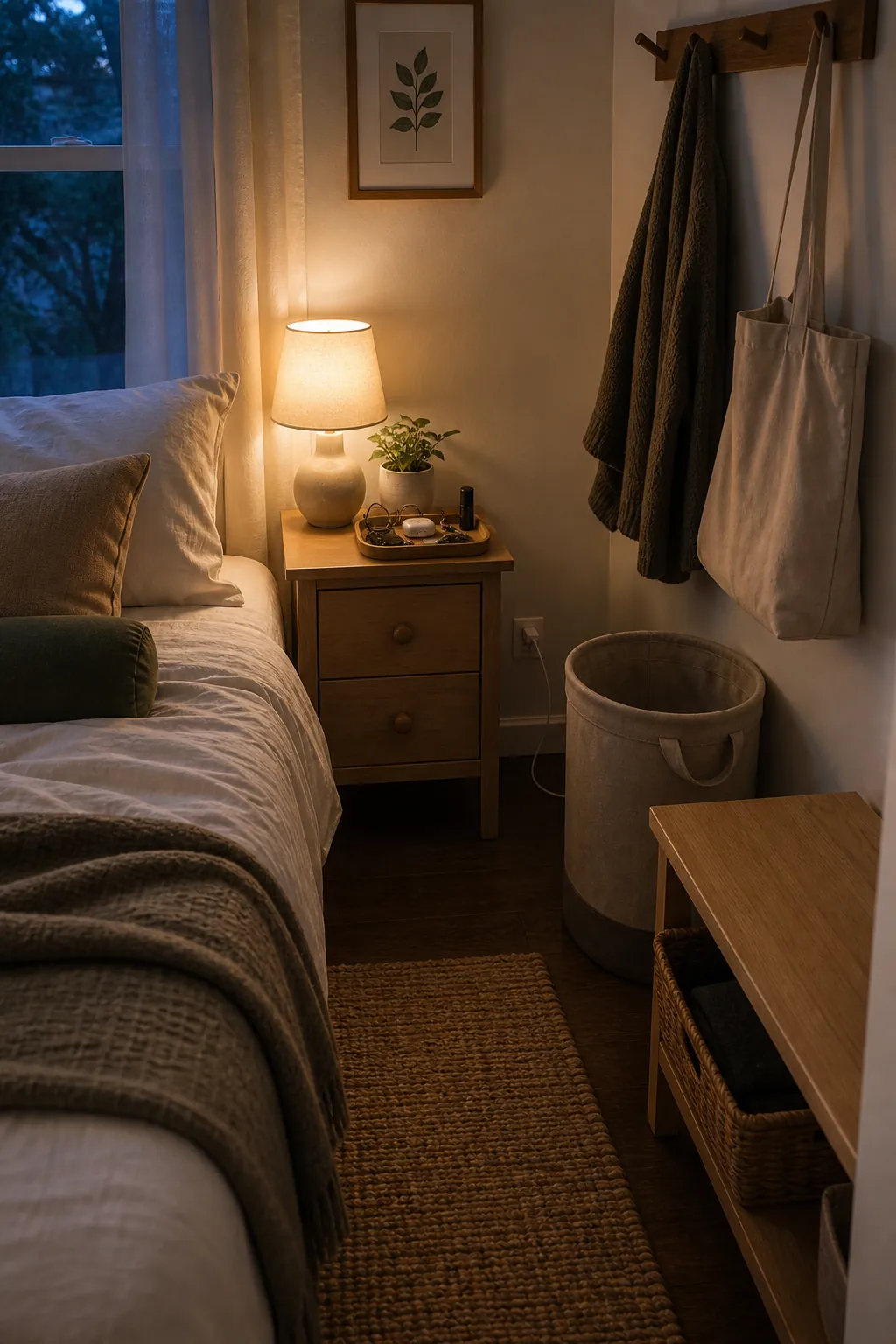
Give each repeat mess a simple home. Put a tray where you empty your pockets. Add hooks for tomorrow’s outfit or a robe. Use a slim hamper where clothes actually land, not where you wish they landed. Keep a small basket for items that belong in another room, then empty it once a day.
Do not make the reset harder than the mess. If putting something away requires opening three lids, moving a stack, and reaching behind a chair, the floor will win. The storage path has to be shorter than the clutter path.
Choose storage furniture that does two jobs
In a compact bedroom, storage furniture should solve more than one problem. A bed with drawers can replace a dresser. A nightstand with drawers beats a tiny table. A storage bench can hold extra bedding and give you a place to sit. A tall dresser can store clothes while giving you a clean top surface for a lamp and tray.
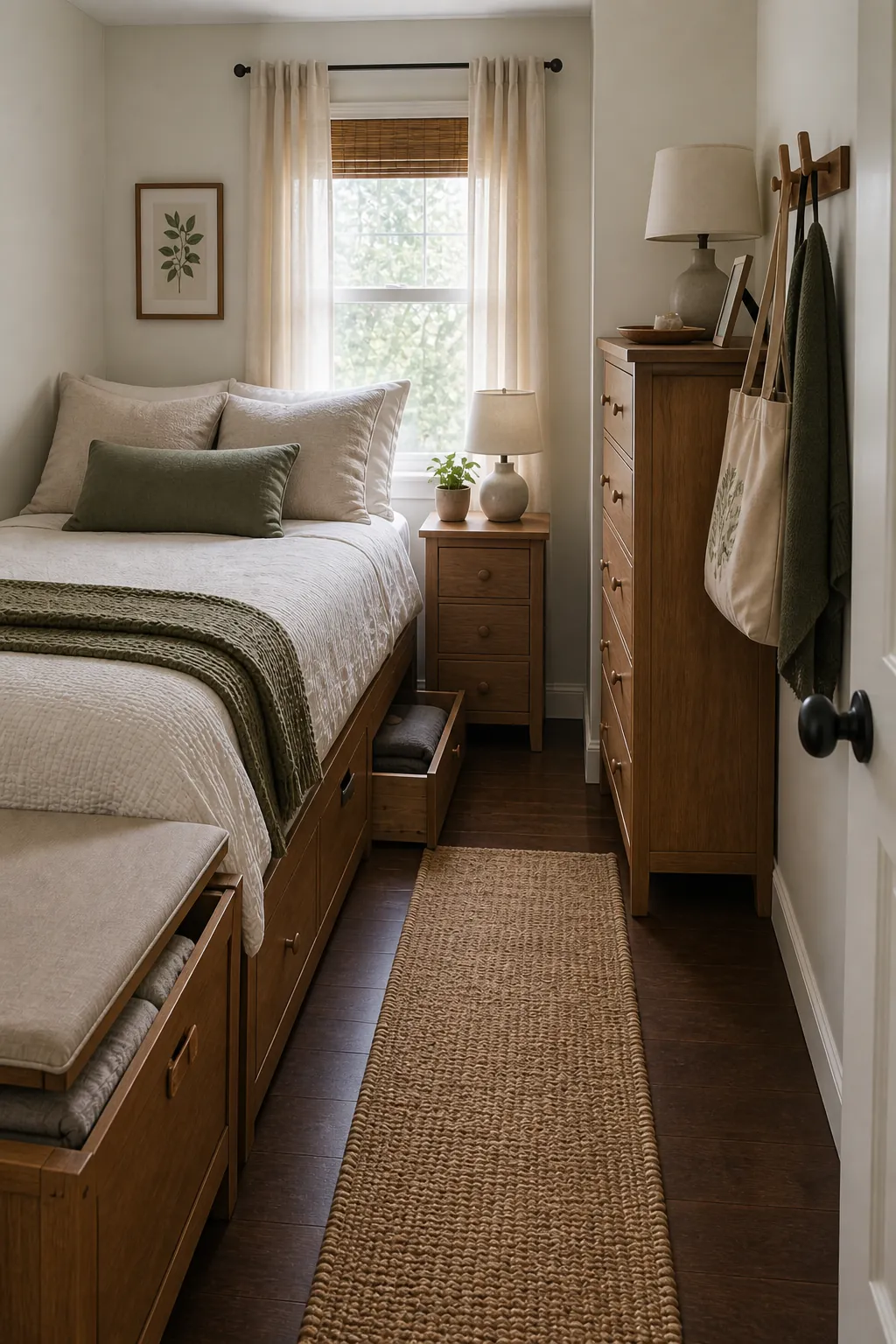
The mistake is buying small pieces because the room is small. Too many tiny pieces can make the room feel busier and store less. One strong piece that reaches higher, closes fully, and fits the category can be better than several lightweight organizers.
Measure before buying. Check drawer depth, door swing, bed clearance, and walking paths. Leave enough open floor for movement because a room packed edge to edge will feel stressful even if everything technically fits.
Edit what stays visible
A bedroom can hold a lot and still feel calm if the visible layer is controlled. Choose a few things to display on purpose: a lamp, a plant, a small stack of books, framed art, or a tray with daily items. Everything else should have a quieter home.
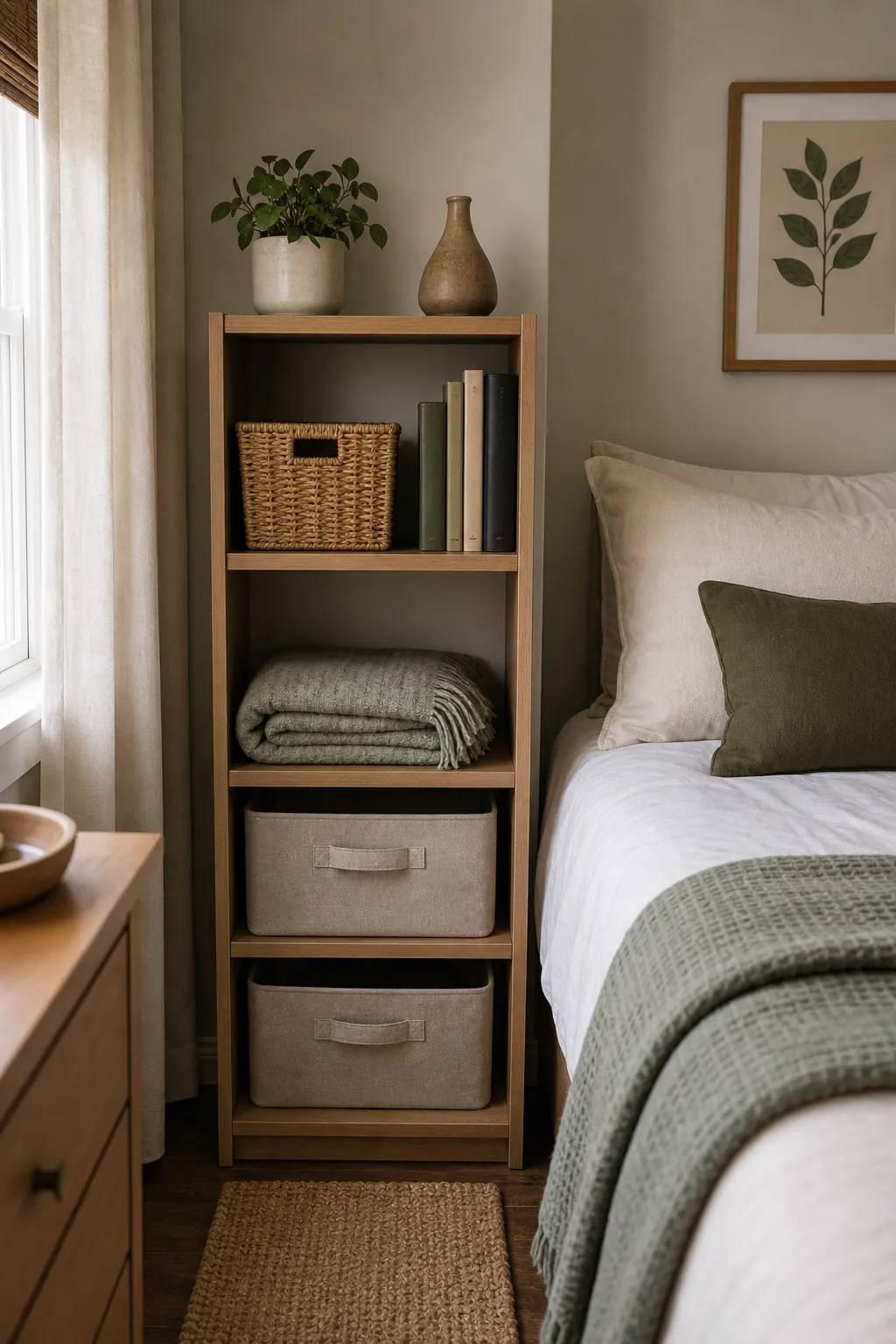
If you love collections, group them tightly instead of spreading them across every surface. One intentional shelf of favorite items looks better than small pieces scattered on the dresser, windowsill, desk, and floor. If you need open storage because out of sight becomes out of mind, use clear categories and fewer visual materials: matching clear bins, labeled baskets, or one open cart for the items you touch daily.
Think of the room in layers. The hidden layer holds overflow and backup items. The working layer holds daily necessities. The visible layer holds only what makes the room feel like a place to sleep, not a place to manage inventory.
Use a nightly reset that takes less than ten minutes
The best bedroom organization system is the one you can maintain when you are tired. A reset should be short enough that you do it before the room collapses again. Set a timer for ten minutes and clear only the areas that affect tomorrow: bed, floor path, desk or dresser top, laundry, and trash.
- Put clothes in the hamper, closet, or one rewear hook.
- Return small items to trays, drawers, or labeled bins.
- Move dishes, cups, and trash out of the room.
- Clear the sleep surface completely.
- Leave tomorrow’s most-used items visible and nothing else.
This reset is not a deep clean. It is a maintenance habit that protects the room from becoming overwhelming. If the reset repeatedly takes longer than ten minutes, that is useful information: a category is too large, a container is too full, or a storage spot is in the wrong place.
The room should feel lighter without pretending you own nothing
Too much stuff in a small bedroom is not solved by one perfect organizer. It is solved by a sequence: edit the categories, hide the visual noise, use vertical and under bed storage, fix closet overflow, choose stronger furniture, and make the daily reset easy. The real win is not a magazine-perfect room. It is a bedroom that can recover quickly after real life happens.
Start with the floor, the bed, and the closet. Once those three zones work, the whole room feels more breathable. You can still keep personality, hobbies, books, and favorite things. They just need boundaries strong enough for the size of the space.