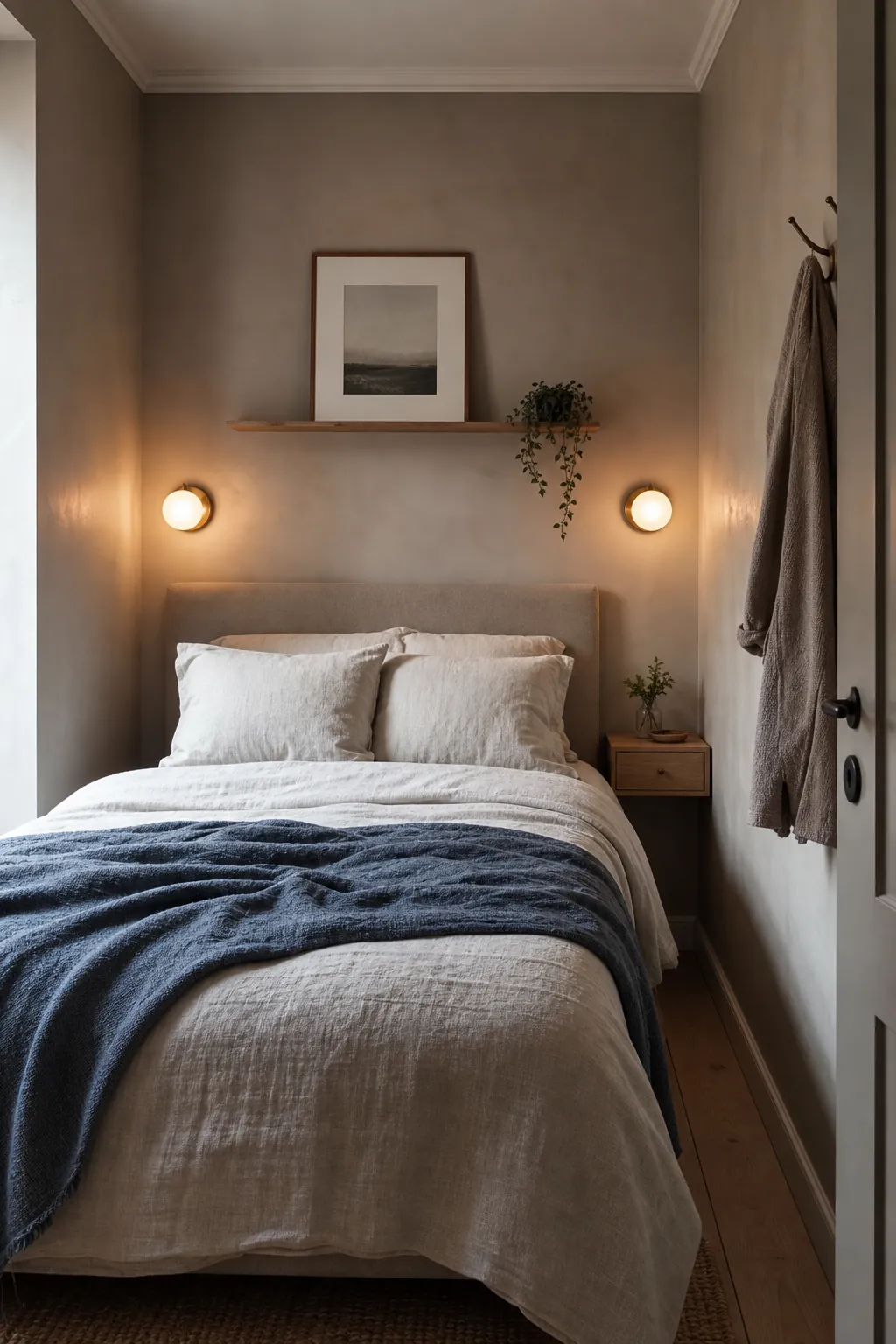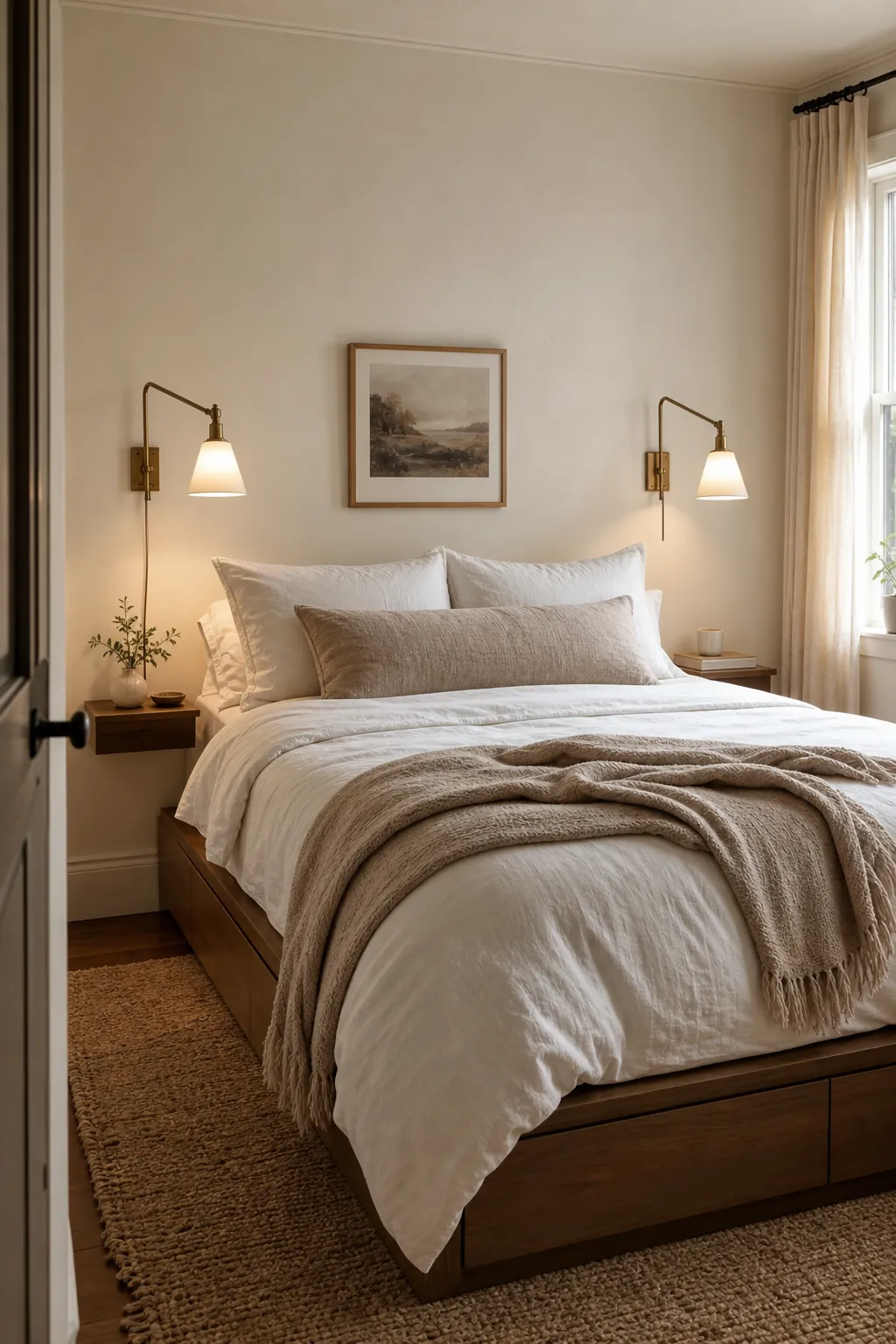
A small bedroom gets harder to style when the only open surface is already doing three jobs. The nightstand holds a book, a phone, maybe a glass of water, and then a table lamp arrives and takes the best spot. Wall Mounted Lighting fixes that problem because it moves the light source up where it belongs and gives the bedside area back to the room.
The trick is not simply buying pretty Bedroom Sconces. In a Compact Bedroom, the height, shade, switch, beam direction, and bedside surface all matter. A light mounted too high feels like hotel corridor lighting. A bulb aimed straight at the pillow creates glare. A huge arm makes the wall look busy. Done well, wall lights make the bed area feel calmer, more finished, and easier to use every night.
Start With The Bed Wall, Not The Lamp Style
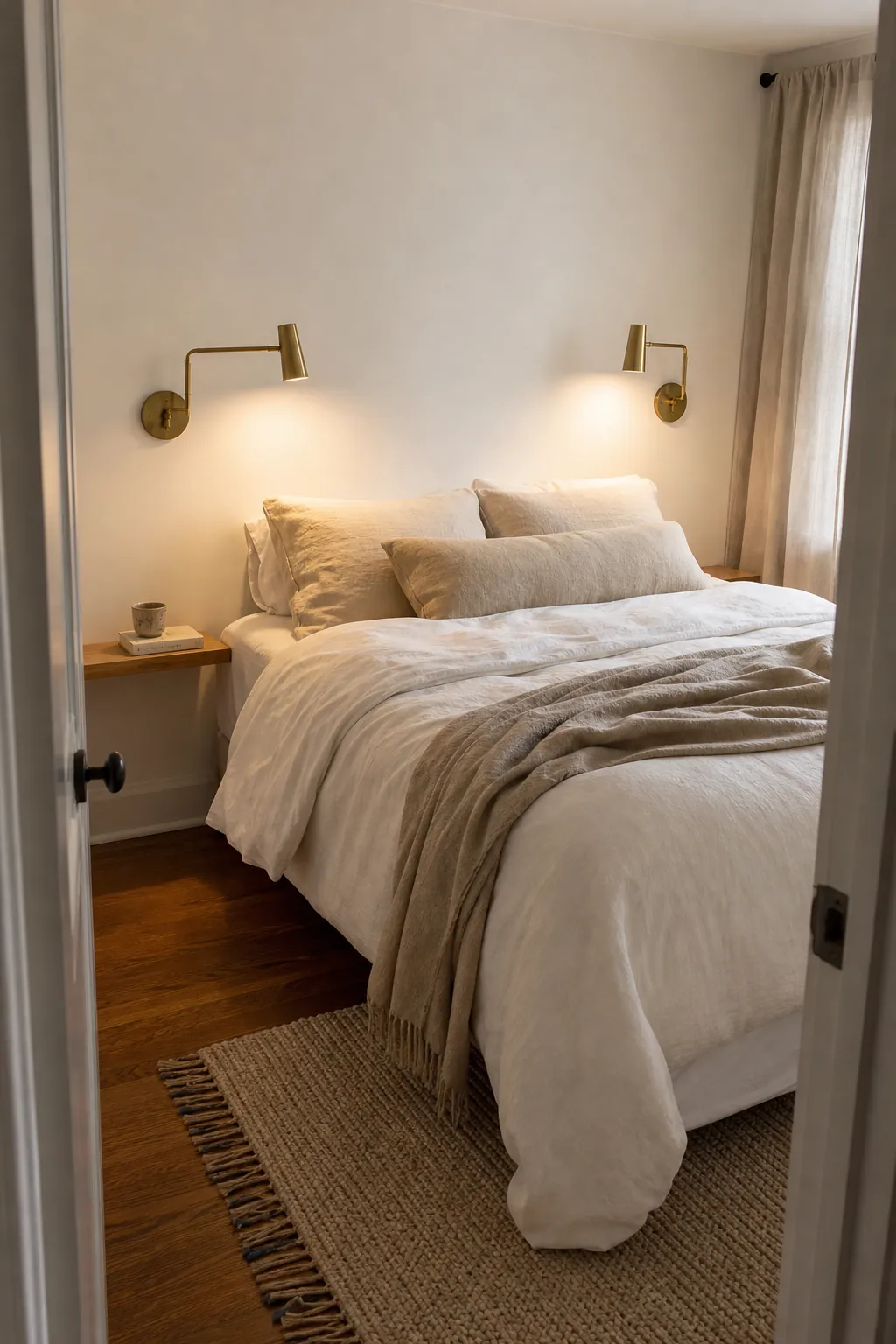
Before choosing a finish or shade, look at the wall behind the bed. Most Small Bedroom Lighting mistakes happen because the fixture is chosen like decor and installed like an afterthought. The bed wall needs a simple lighting plan: where your head rests, where your hand can reach, where the beam lands, and what furniture still needs to fit.
A good starting point is to mount each sconce slightly outside the pillow edge, usually close to shoulder width when you are sitting up in bed. The light should land on the page, shelf, or pillow zone, not in your eyes. If the bed is pushed into a corner, one well-placed adjustable sconce can work better than a forced pair.
- For reading: choose an adjustable arm or directional shade.
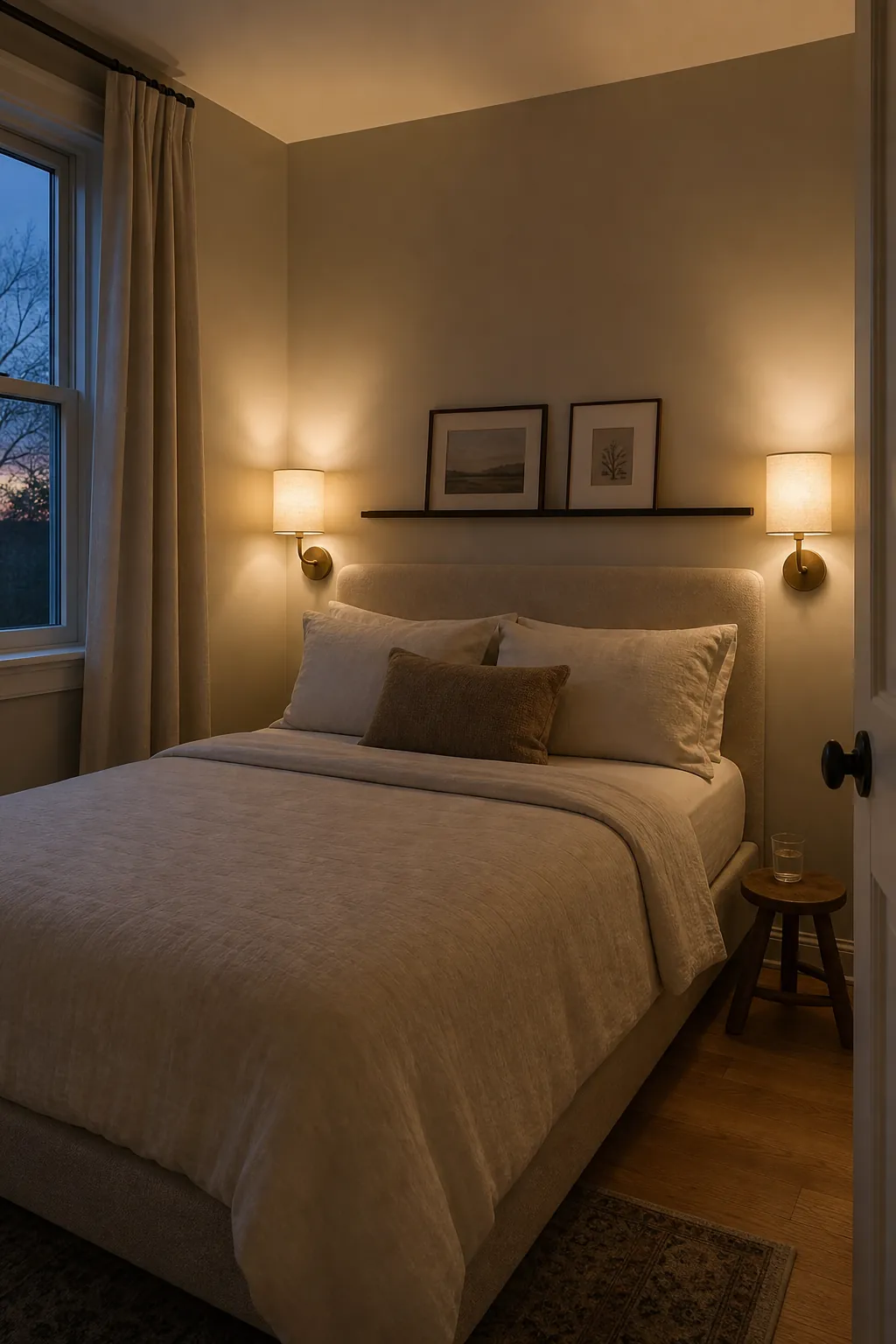
- For atmosphere: choose a fabric, opal glass, or shaded fixture that spreads Soft Lighting.
- For symmetry: keep the two lights aligned with the headboard, not with the room corners.
Use Wall Lights To Replace A Nightstand Lamp
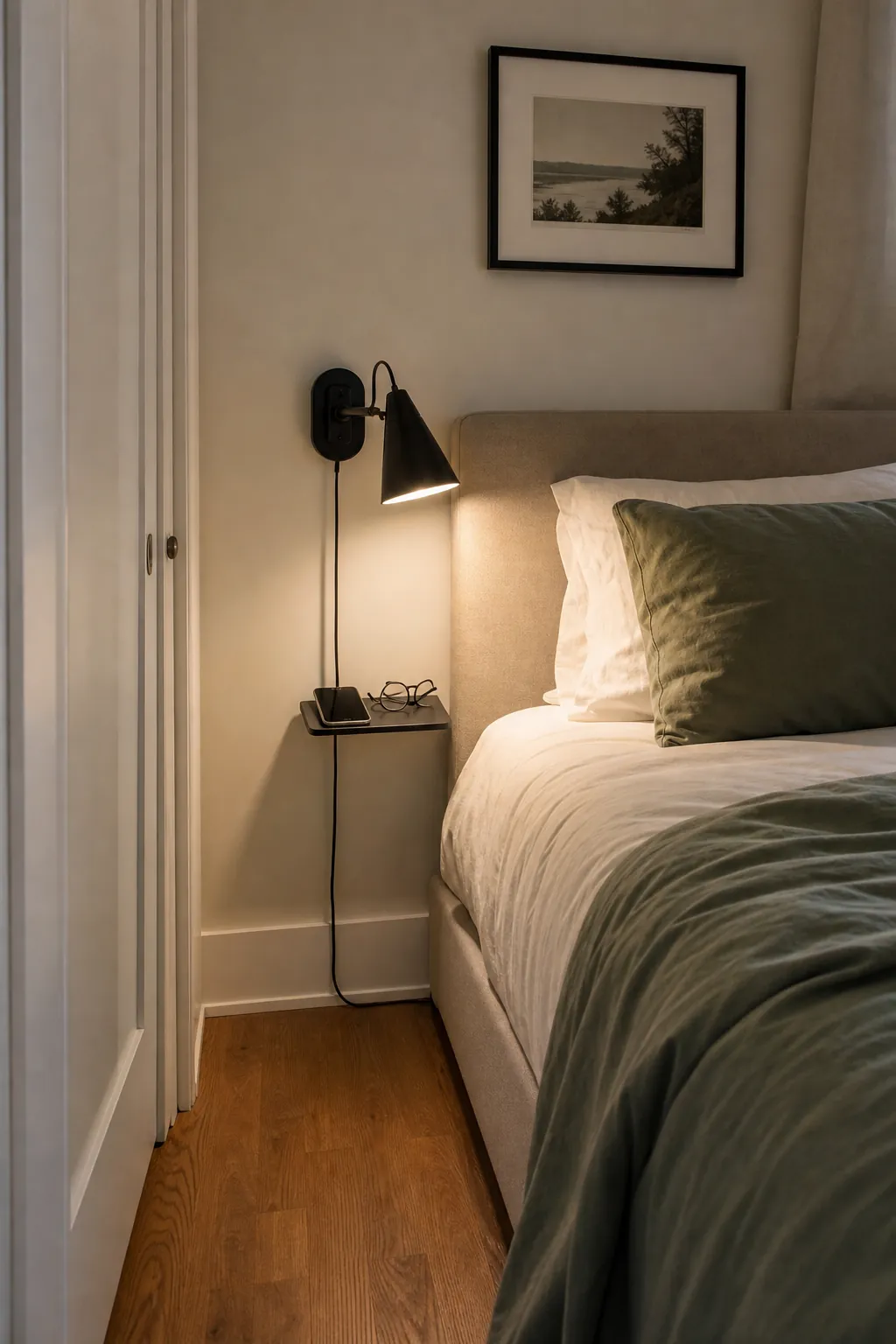
If your room barely has space for a nightstand, the lamp is usually the easiest thing to remove. This is where No Nightstand Ideas become practical instead of just decorative. A wall sconce plus a narrow ledge can handle the real bedside needs: phone, glasses, water, and one book.
Keep the shelf shallow. In a small bedroom, a six-inch ledge often feels cleaner than a tiny table squeezed against the mattress. The wall light should sit above or beside that ledge, so the whole bedside zone reads as one intentional setup. When the lamp leaves the tabletop, the room immediately looks less crowded.
Pick Plug-In, Battery, Or Hardwired Based On The Room
Hardwired sconces look clean, but they are not the only polished option. Renters, short-term homeowners, and anyone avoiding electrical work can still use wall lights. The key is choosing the option that matches the room’s limits instead of pretending every bedroom can be opened up for wiring.
Plug-in sconces are best when there is an outlet near the bed and the cord can be managed neatly. Battery or rechargeable lights are useful where wiring is impossible, but they work best as mood or occasional Bedside Lighting rather than the only serious reading light. Hardwired fixtures are ideal when you are renovating or already moving outlets.
The fixture should look permanent even if the installation is flexible. Choose a clean backplate, hide or straighten cords, and avoid anything that looks like a temporary closet light unless the room is intentionally casual.

Choose Soft Lighting When The Room Feels Tight
Small bedrooms can feel smaller when the light is sharp. Exposed bulbs, clear glass, and cool white LEDs create hard shadows on bedding and walls. That contrast makes clutter stand out and can make a narrow room feel restless at night.
For a calmer look, use warm bulbs, dimmers, and shades that diffuse the glow. Fabric shades, opal glass globes, and shaded swing arms all work when they control glare. The goal is a gentle wall wash with enough light for real use, not a bright spotlight over the pillow.
This is also where Bedroom Styling matters. Keep the wall around the light simple: one artwork, a ledge, or a slim headboard is enough. Too many objects around a small sconce make the bed wall look crowded even if the floor is clear.
Use Adjustable Sconces Where Reading Matters
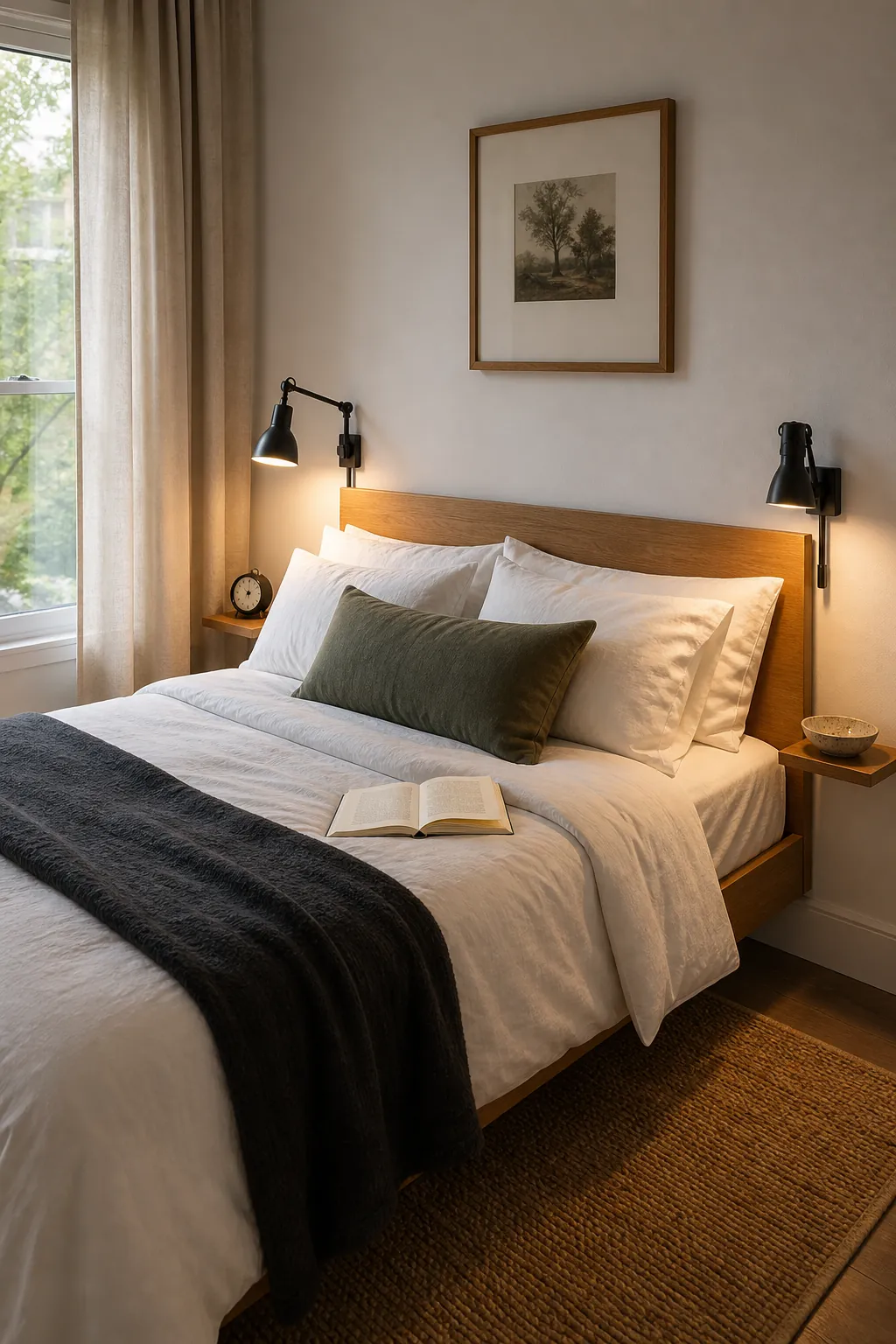
If you read in bed, a fixed decorative sconce may not be enough. Adjustable sconces are better because they can move the beam down to the page, then tuck back against the wall during the day. In a compact room, that flexibility is valuable because the same fixture can provide task light and still keep the bed wall tidy.
Look for a shade that hides the bulb from the side view. A beautiful arm with a bare glare point will be annoying every night. The switch matters too. A switch on the fixture or a reachable cord switch is often more practical than a wall switch across the room.
The best reading sconce is the one you can reach without getting out of bed and aim without disturbing the other side of the room. That small usability detail is what separates pretty Small Bedroom Ideas from rooms that actually work.
Keep The Styling Quiet Around The Fixtures
Wall lights already add shape to the bed wall. If the room is small, give them breathing room. A slim headboard, quiet bedding, and one narrow shelf often look better than a busy gallery wall behind sconces. Small Space Decor works best when every layer has a reason.
Match the fixture scale to the bed and wall. Tiny lights can look lost above a queen bed, while oversized arms can make a narrow room feel visually crowded. Finishes should connect to something else in the room: brass with warm wood, black with a curtain rod, nickel with cool white bedding, or white with painted walls.
The final test is simple: turn off the overhead light and sit in bed. If the room feels calmer, the switch is reachable, and the bedside surface is still useful, the wall lighting is doing its job. In a small bedroom, the right sconce is not just a style choice; it is a space-saving tool.