
Seasonal clothes can make a small closet feel impossible. One cold week adds coats, boots, scarves, sweaters, and thick socks. One warm week brings linen, dresses, shorts, sandals, and lighter layers. If every season lives in the same tiny closet at full strength, even good closet organization starts to look messy.
The goal is not to build a complicated closet system. The goal is to make your small closet serve the season you are actually dressing for. Seasonal clothes storage works best when the closet holds your current wardrobe, while off-season clothing moves into clean, labeled, protected storage that you can find later.

Choose A Rotation Date Instead Of Waiting For Chaos
A seasonal closet swap gets harder when you wait until both wardrobes are mixed together. Pick a rotation date when the weather has mostly shifted, not when every coat and sundress is already fighting for space. Twice a year is enough for many homes, but a four-season climate may need a small mid-season adjustment.
Before anything goes into storage bins, pull out the clothes that clearly do not belong to the next six to twelve weeks. Heavy sweaters, beachwear, snow pants, sandals, wool coats, and special seasonal accessories should not take prime closet space when you are not using them.
This is also the best time to edit. If you avoided a sweater all winter because it itched, do not store it for another year. If a summer dress never fit right, do not let it become future clutter. Wardrobe rotation should reduce decisions, not preserve every old decision.
Keep Current Clothes In The Most Reachable Zone
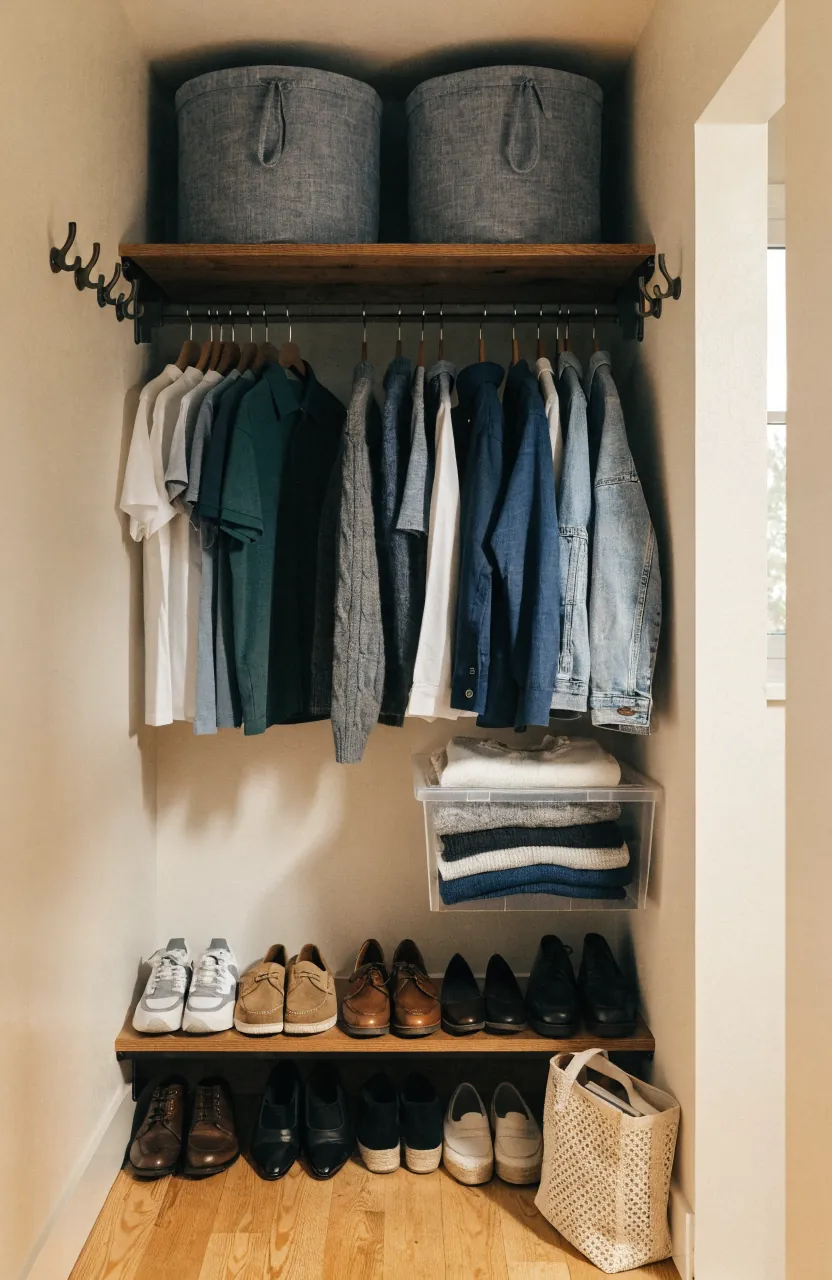
Small closet ideas work when the best space goes to the clothes you use now. Put current-season tops, bottoms, layers, and shoes where you can reach them without moving a bin first. Off-season items should not sit in front of daily clothes just because they fit there.
Use the center rail for the clothes you wear most. Use side corners, high shelves, under-bed bins, or another storage zone for seasonal backup. If your closet has shelves, keep the front of each shelf for current clothes and push the rare-use items into labeled containers.
A small closet does not need to show your whole wardrobe at once. It needs to show the version of your wardrobe that matches the weather, your routine, and the next few weeks of real life.

Use Under-Bed Storage For Bulky Off-Season Items
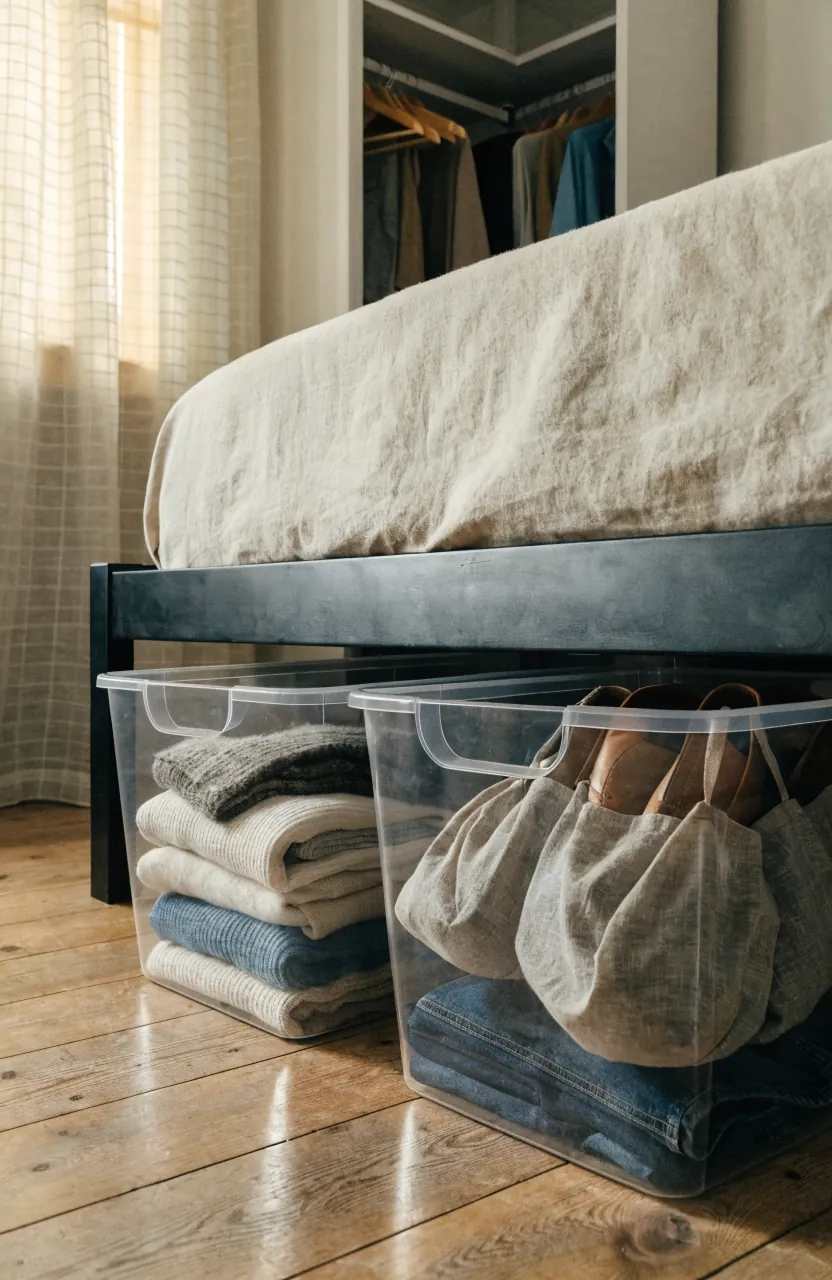
Under-bed storage can be one of the most useful seasonal clothes storage zones in a small room. It is close enough to access during a weather surprise, but far enough away that bulky off-season clothing is not crowding the closet rail.
Choose low, flat storage bins that pull out easily. Clear bins help you see what is inside. Fabric zip bags feel softer and can work well for guest rooms or tight bed frames. Rolling bins are useful if the bed is heavy or the storage is deep. The best container is the one you can actually open without emptying half the room.
Group under-bed bins by season or category: winter sweaters, summer linen, cold-weather accessories, or vacation clothes. Keep shoes in a separate bin from clean clothing when possible. If everything is mixed together, the bin becomes a second messy closet.
Protect Clothes Before You Pack Them
Seasonal storage is not just about saving space. It is also about keeping clothes wearable. Wash or dry-clean items before packing them away, especially anything with body oils, perfume, food marks, deodorant residue, or outdoor dirt. Stains can darken in storage, and pests are more attracted to worn fabric.
For sweaters and soft knits, fold instead of hanging. For coats, use breathable garment bags if they need to keep their shape. For damp climates, avoid sealing slightly moist clothes into airtight bags. A dry closet, a climate-stable shelf, or a clean under-bed bin is safer than a humid basement corner.
Vacuum bags can help with bulky puffer jackets, spare bedding, or synthetic items, but use them carefully with wool, structured coats, leather, or delicate fabrics. Compression saves space, but it can also crush shape. Use vacuum bags for volume, not for everything.

Label By Outfit Reality, Not Vague Seasons
Labels make seasonal clothes storage easier only when they are specific. “Winter” is less helpful than “winter work sweaters,” “snow gear,” or “holiday outfits.” “Summer” is less useful than “linen tops,” “warm-weather dresses,” or “beach trip clothes.”
If you use storage bins on a high closet shelf, make the labels visible from the floor. If you use clear bins, place the most recognizable item near the front. If you store clothes in suitcases, add a luggage tag or a small note inside the top pocket so you do not forget what is there.
This matters in a small space because every unnecessary search creates clutter. The fewer bins you open, the less likely your wardrobe rotation will turn into a full-room mess.

Store Accessories With The Season They Serve
Seasonal accessories are often what make a small closet feel crowded. Scarves, gloves, hats, swimsuits, belts, sandals, boots, and specialty socks are small enough to scatter, but together they steal a surprising amount of space.
Store accessories with the clothes they support. Winter gloves can go with coats or sweaters. Beach coverups can go with swimsuits. Boots can live in a separate shoe bin near cold-weather clothes. Use smaller pouches inside larger bins so the little pieces do not sink to the bottom.
For current-season accessories, use one visible tray, one drawer divider, one door pocket, or one small basket. When the season changes, empty that container and refill it with the next season’s daily pieces.
Keep A Small Transition Zone
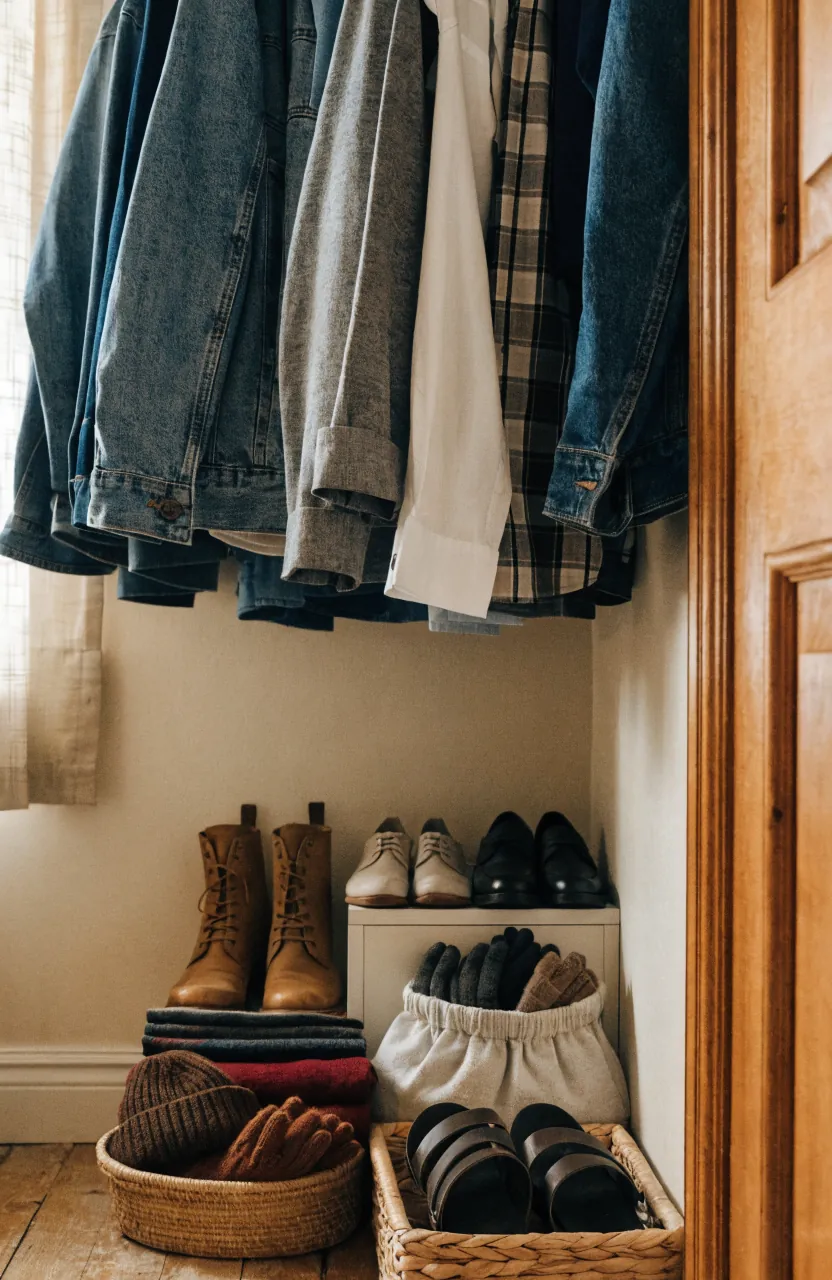
Weather rarely changes cleanly. You may still need one warm sweater during spring, or one lightweight dress during fall. Instead of keeping the entire off-season wardrobe in the closet, create a small transition zone for the few pieces that bridge seasons.
This can be one short rail section, one shelf bin, or one drawer. The limit matters. If the transition zone grows, it becomes the whole closet again. Keep only the items you can realistically wear in the next two weeks.
- One light jacket or cardigan for temperature swings.
- One pair of shoes that handles mixed weather.
- One small accessory set for unexpected cold or heat.
- One empty spot for laundry returning to the closet.
Make The Next Swap Easier Before You Finish
The best seasonal closet systems make the next rotation easier. Before you close a bin, check that every item is clean, dry, folded, and grouped with similar pieces. Put the heaviest items on the bottom. Leave a small amount of breathing room so fabric is not crushed for months.
Then write down what is inside. A simple note in your phone is enough: “Under-bed bin: winter sweaters, thermal tops, wool socks.” Some people prefer a quick photo of each bin before it closes. That small habit prevents duplicate buying and makes home organization feel less like guesswork.
A small closet can handle seasonal clothes when it stops trying to hold every season at once. Keep the current wardrobe easy to reach, move the off-season wardrobe into clean labeled storage, and let the closet breathe between rotations.