
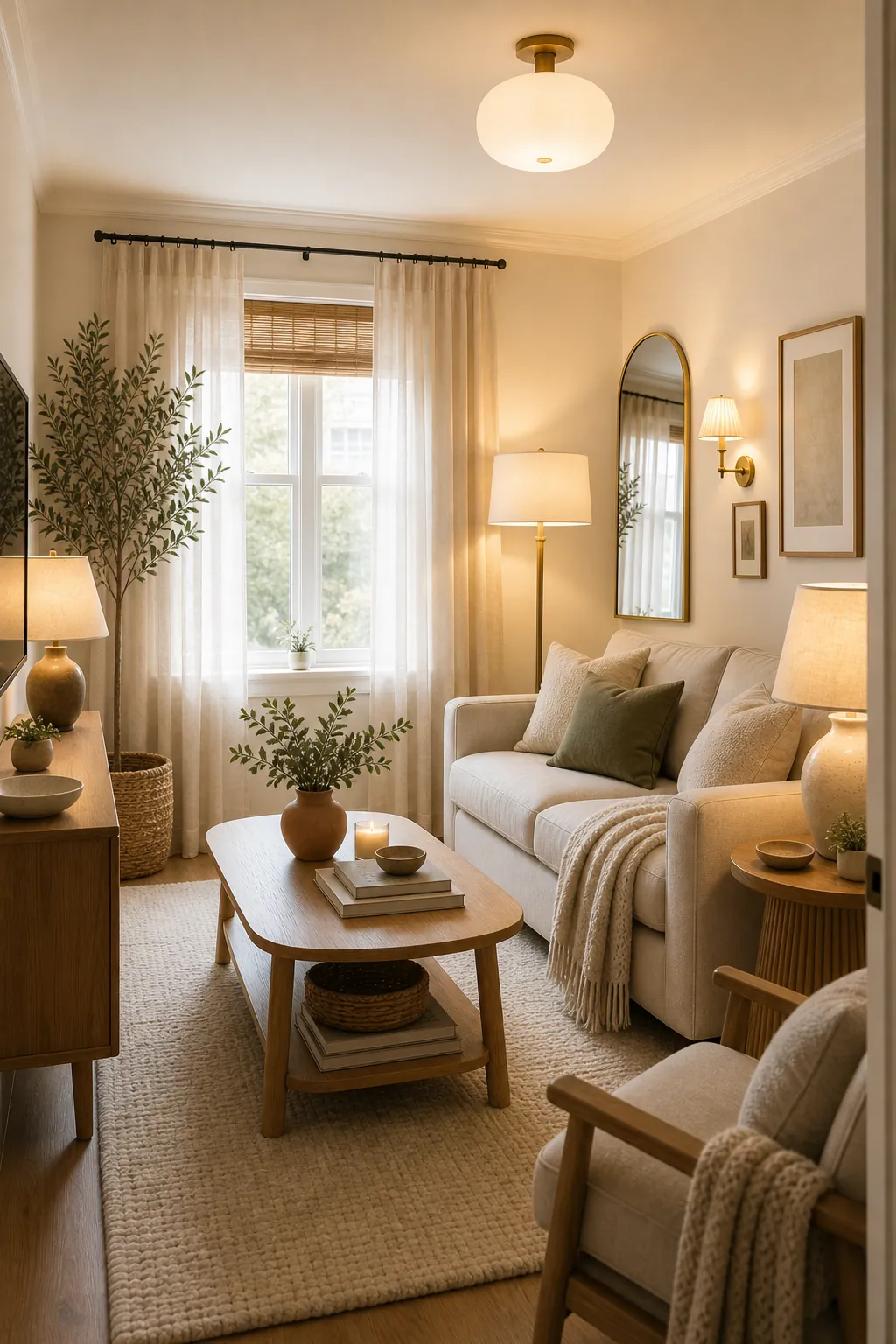
Small home lighting changes more than brightness. It changes how large a room feels, where the eye travels, and whether corners feel useful or forgotten. A small room can have light walls and still feel boxed in if all the light comes from one ceiling fixture.
The best lighting ideas for small homes are usually about placement, height, and reflection. You do not need a complicated plan. You need light at more than one level, fewer dark corners, window light that can spread, and a few reflective surfaces that help the room breathe.
Layer Light At Different Heights
A single overhead light flattens a room. It lights the floor and the tops of furniture but leaves corners and faces in shadow. Layered interior lighting works better because it gives the room depth: ceiling light for general brightness, table lamps for comfort, wall lights for height, and floor lamps for corners.
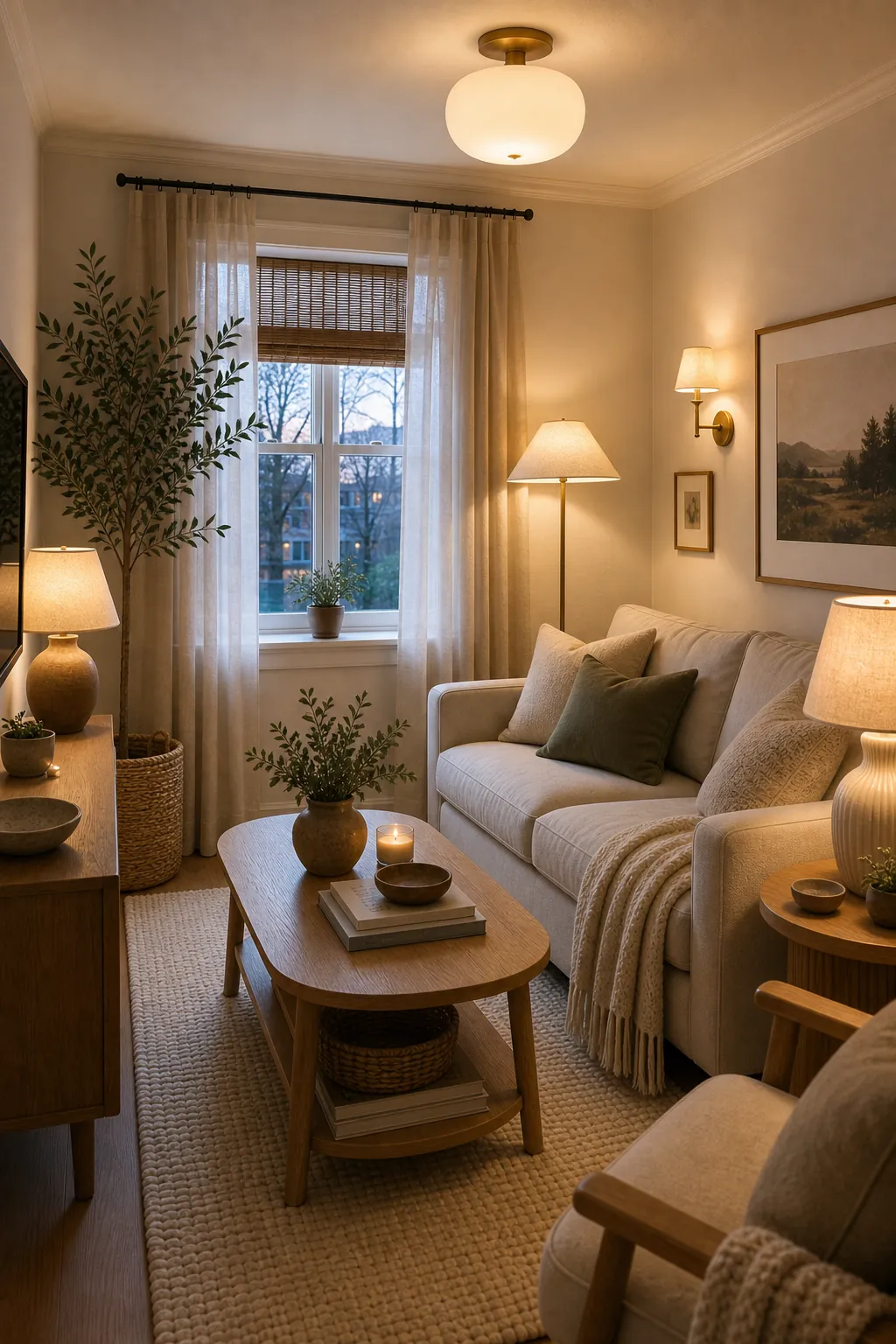
In a small living room, aim for at least three light sources. One can be overhead, but the other two should sit lower or higher on the wall. That variation helps the eye move around the space instead of stopping at one bright spot in the center of the ceiling.
Brighten Corners With A Slim Floor Lamp
Dark corners make a room feel smaller because they visually end the space. A slim floor lamp is one of the simplest apartment lighting upgrades because it adds height without needing a side table. Place it behind a chair, beside a sofa, or near a window where it can soften the edge of the room.
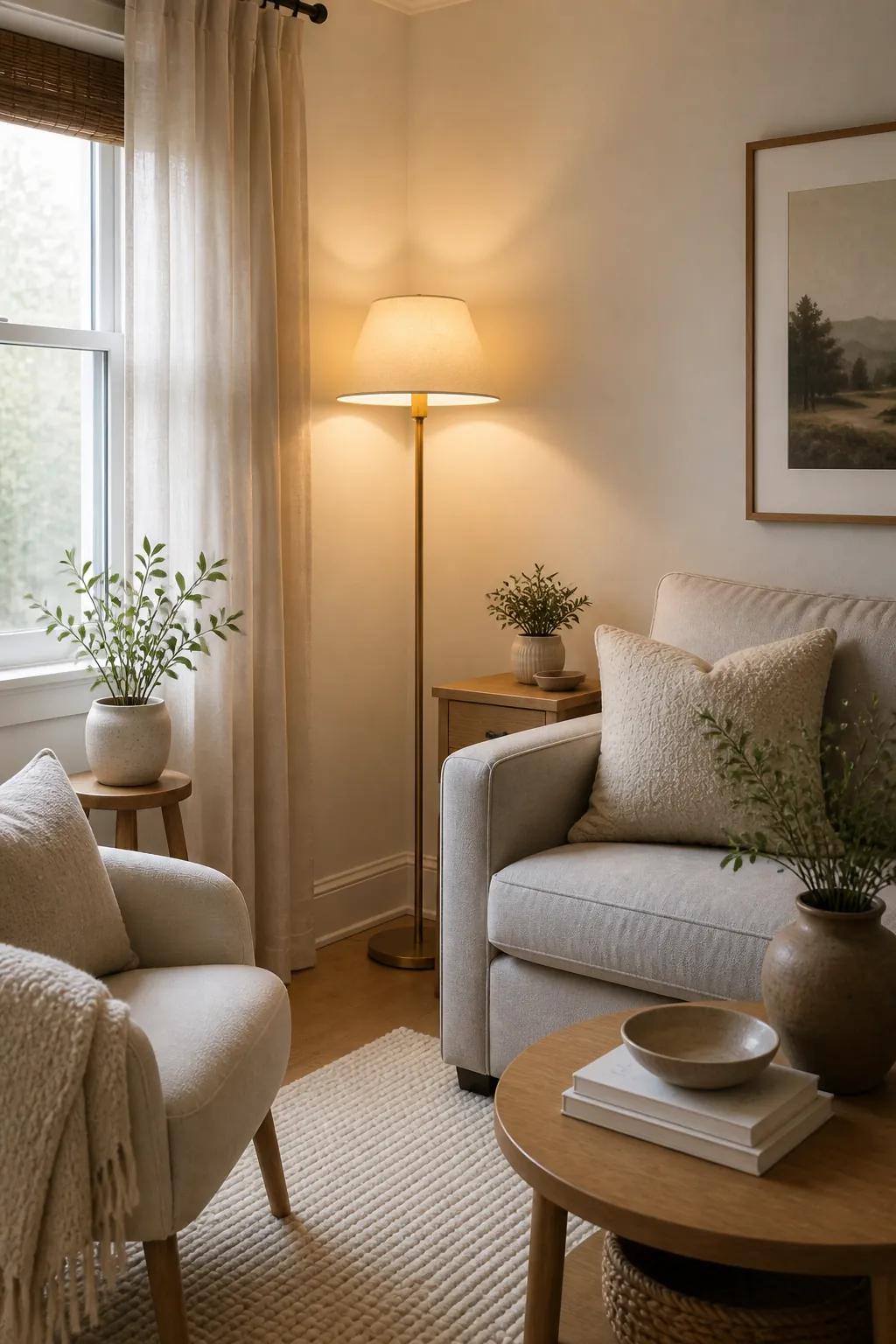
Choose a shade that throws some light upward and outward, not only downward. A lamp that glows on the wall behind it can make the corner feel deeper. Keep the base narrow so the lamp does not steal walking space.
Use Wall Lights To Free Up Surfaces
Wall lights are useful in small space lighting because they add vertical light without taking floor or table space. A pair of sconces above a sofa can make the wall feel taller. A plug-in wall light beside a chair can replace a bulky table lamp. A picture light can make art feel intentional while lifting brightness up the wall.
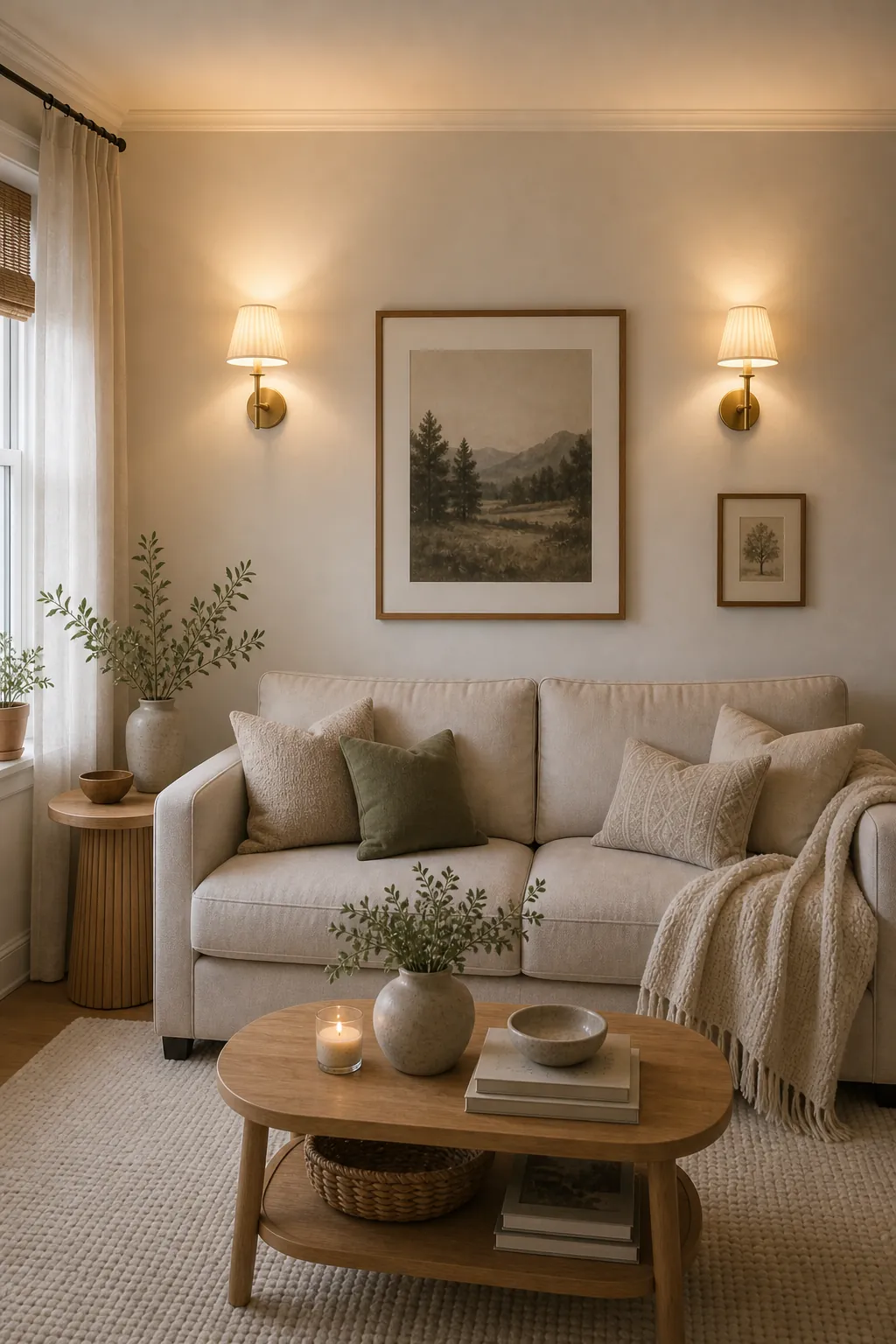
For renters, plug-in sconces are often easier than hardwired fixtures. Run the cord neatly along a corner or behind furniture. The goal is not to make the light disappear. The goal is to move light higher and keep small surfaces from filling up with lamps.
Place Mirrors Where They Reflect Light, Not Clutter
Mirrors can make a room feel larger, but only when they reflect something helpful. A mirror that reflects a dark hallway or a crowded shelf may double the clutter. A mirror that reflects a window, lamp, plant, or open floor area can make the room feel brighter and deeper.
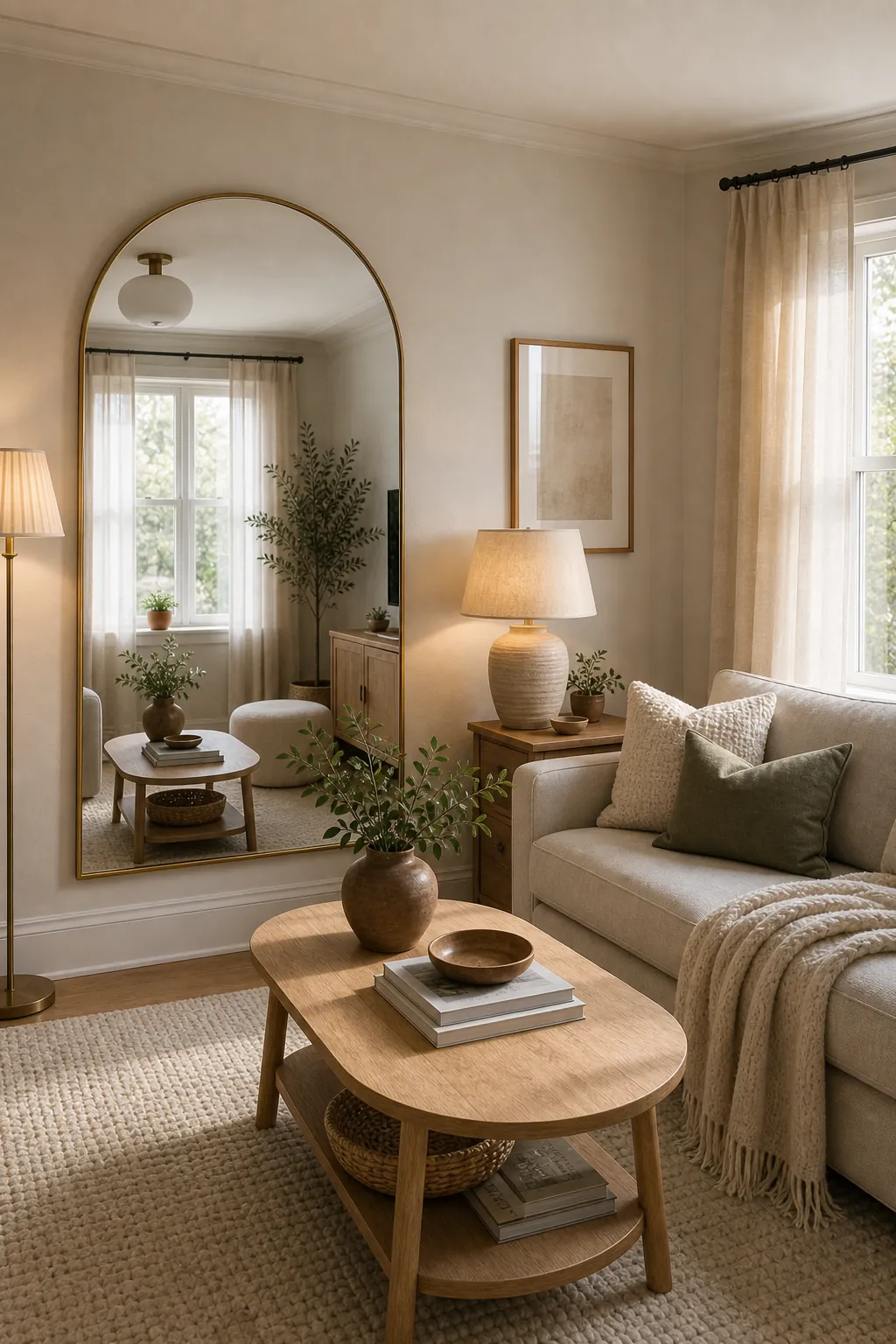
Before hanging a mirror, stand where the mirror will go and check the reflection from normal seating height. If it catches window light or a lamp glow, it will help. If it catches a messy counter, a television edge, or a narrow dark doorway, choose another wall.
Let Window Light Spread Farther
Natural light is often blocked by window treatments that are too low, too narrow, or too heavy. In a small room, mount curtains higher and wider than the window frame so the fabric can stack beside the glass instead of over it. Sheer or light-filtering curtains keep the room soft without cutting off daylight.
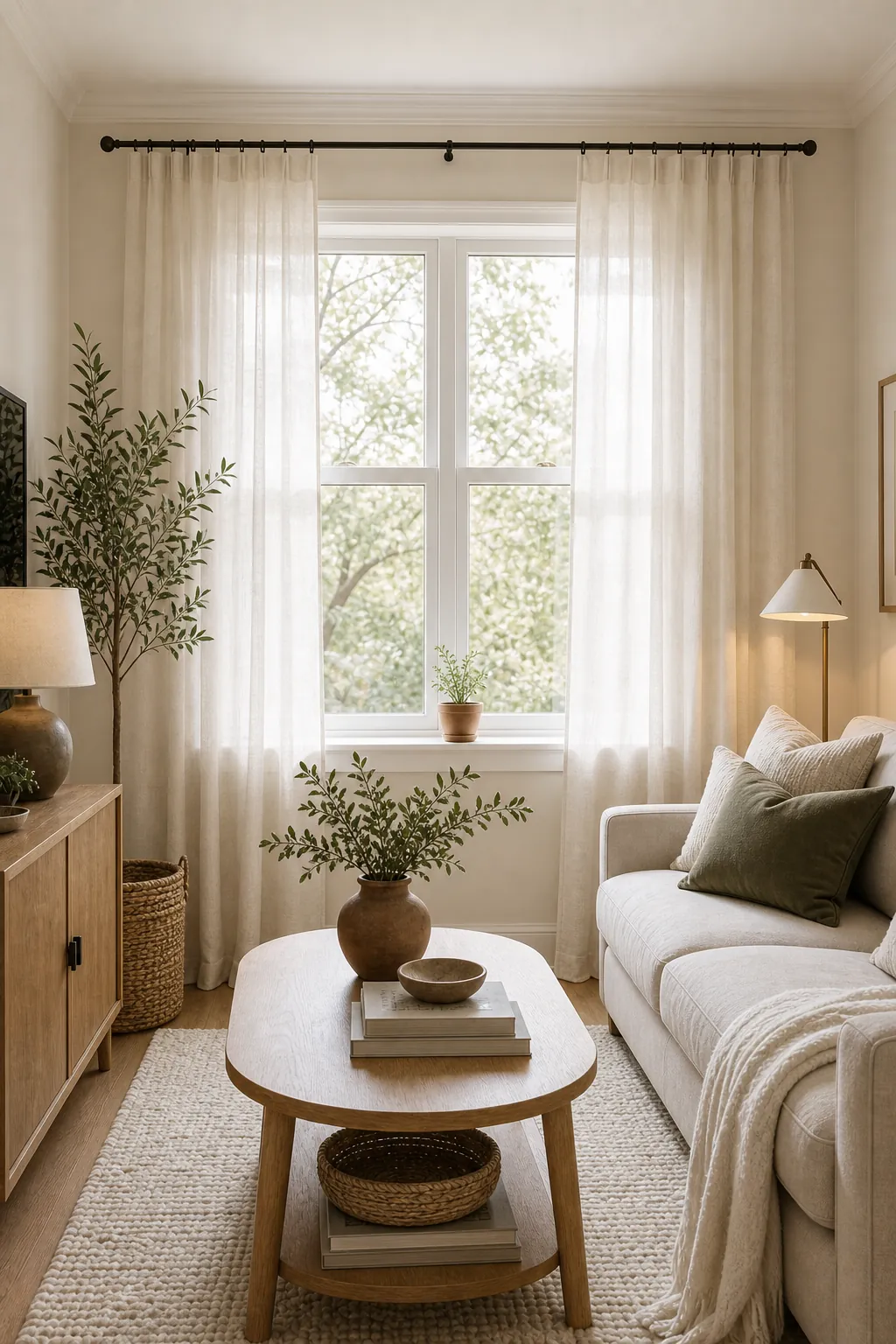
Keep the window area visually light. A clear sill, pale curtain fabric, and a mirror or lamp nearby can help daylight reach deeper into the room. If privacy is needed, use a woven shade or sheer curtain that filters light rather than blocking it completely.
Add Task Lighting To Small Zones
Small homes often contain several zones in one room: reading, working, eating, relaxing, and storage. Task lighting makes each zone feel intentional. A reading lamp, shelf light, under-cabinet strip, or small wall lamp can brighten a useful corner without lighting the entire room at full strength.
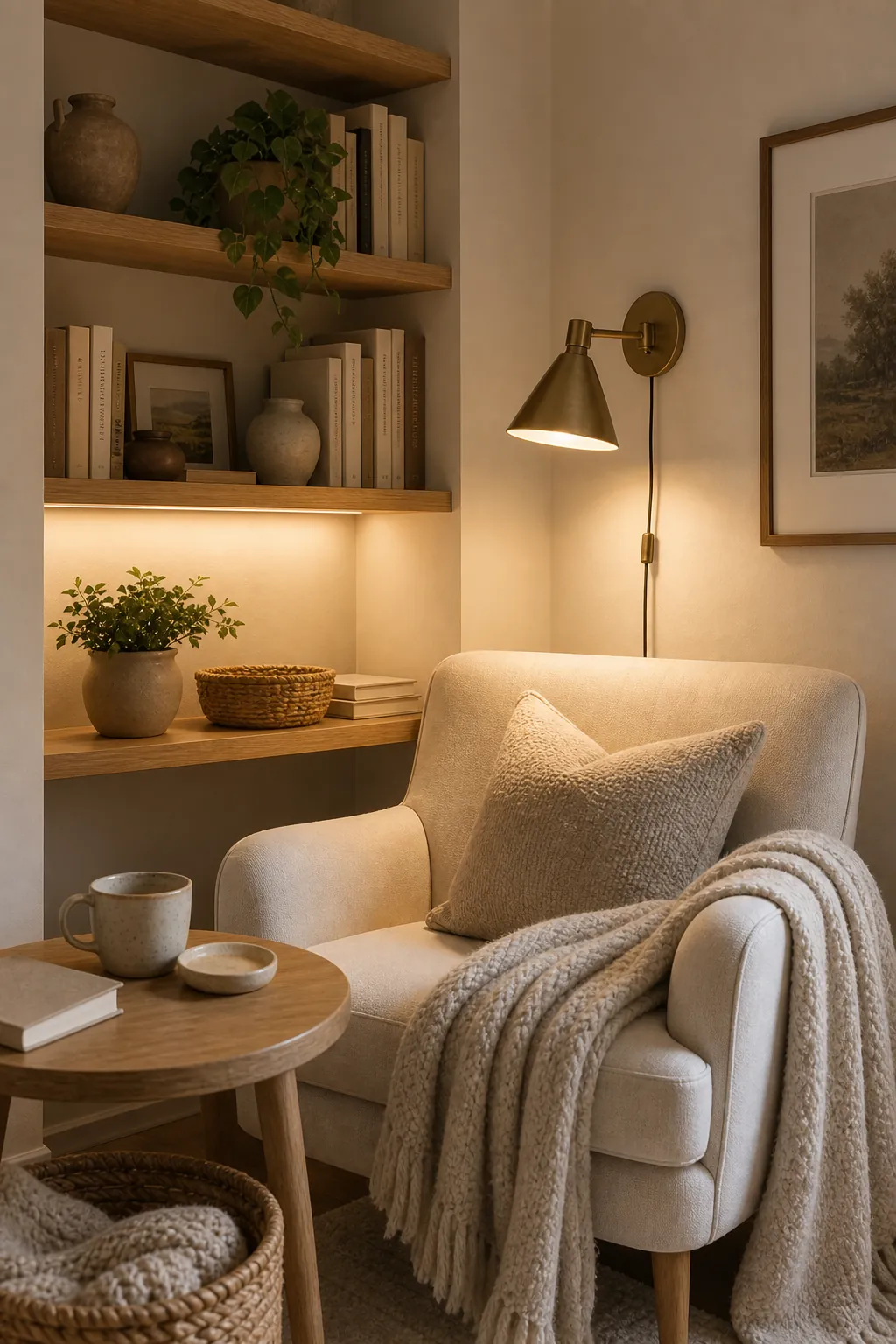
This is especially helpful in studio apartments and small living rooms where every piece of furniture needs a purpose. If a chair has its own lamp, it becomes a reading nook. If a shelf has a soft light, it becomes a feature instead of a dark storage spot.
Choose Bulbs That Brighten Without Turning Harsh
Bulb temperature matters. Very cool bulbs can make a small room feel clinical, while very warm bulbs can turn cream walls orange. For most small home lighting, soft warm white bulbs work well in living spaces. Use matching bulb temperatures within the same room so one lamp does not look yellow while another looks blue.
Dimmers are useful because a small room needs different brightness at different times. Brighter light helps cleaning, working, and reading. Softer light helps the room feel relaxed at night. If hardwired dimmers are not an option, use smart bulbs or lamps with built-in dimming.
Quick Lighting Checklist For A Room That Feels Larger
- Use at least three light sources, not one overhead fixture.
- Put one light in a dark corner to extend the room visually.
- Use wall lights where floor or table space is limited.
- Hang mirrors where they reflect daylight, lamps, or open space.
- Mount curtains high and wide so window light is not blocked.
- Add task lighting to reading, work, shelf, and entry zones.
Lighting cannot change the square footage, but it can change where the room seems to end. Bright corners, layered lamps, wall lights, mirrors, and clear windows help a small home feel larger because the eye can travel farther. Start with the darkest corner, then build the rest of the lighting plan from there.