
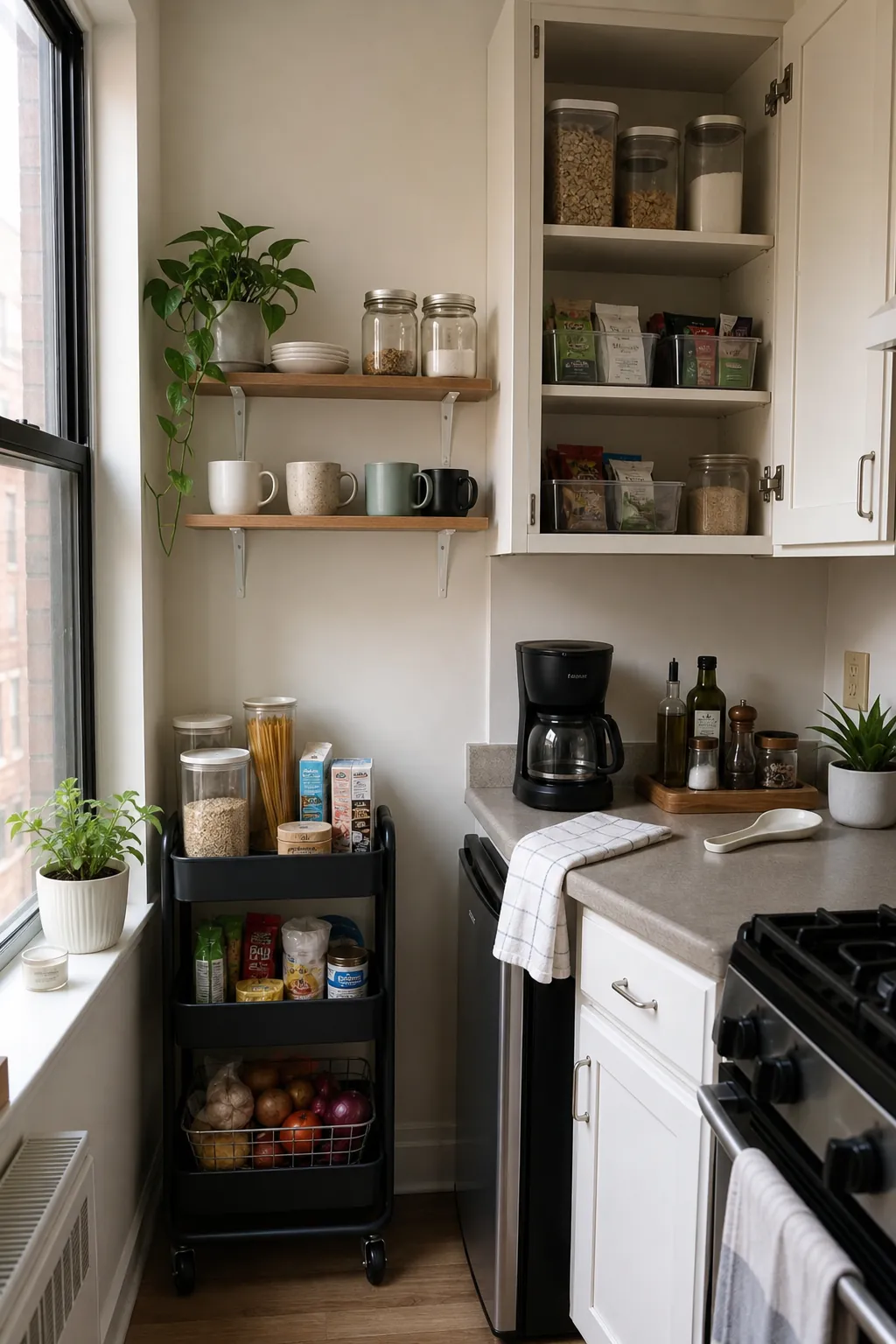
A small rental kitchen without a pantry does not need one giant miracle product. It needs a smarter map. Most no-pantry kitchens fail for the same reason: food, tools, appliances, dishes, and cleaning supplies all compete for the same two cabinets and the same tiny counter. Once everything is treated as “kitchen stuff,” the room turns into a daily excavation project.
The fix is to stop trying to imitate a built-in pantry and build a few small, renter-safe zones instead. The goal is not to store more in the kitchen; it is to make the items you use every day easier to reach, easier to see, and easier to put back. These small kitchen ideas work especially well for renters because they rely on movable furniture, shelf risers, tension pieces, carts, hooks, baskets, and better editing rather than remodeling.
Start by dividing the kitchen into daily, weekly, and backup storage
The fastest way to make a compact kitchen feel worse is to keep every bag of flour, every extra pasta box, every mug, and every small appliance in the same prime cabinet space. A renter kitchen with no pantry works better when you sort by use, not by category.
- Daily items: coffee, breakfast food, cooking oil, salt, pepper, the pans you actually use, two or three plates per person, and the snacks you reach for often.
- Weekly items: extra cans, baking ingredients, backup grains, less-used spices, lunch containers, and serving pieces.
- Backup items: bulk paper goods, unopened pantry duplicates, seasonal tools, party dishes, and appliances that are useful but not part of normal cooking.
Daily items deserve the best cabinet, shelf, cart, or drawer. Weekly items can move to a higher shelf, a rolling cart, a sideboard, or a nearby closet. Backup items should leave the kitchen if the kitchen is too small to hold them gracefully. This one decision protects counter space better than any organizer.
Turn one cabinet into a mini pantry instead of spreading food everywhere
If you only have two or three cabinets, it is tempting to tuck food wherever it fits. That creates the classic no pantry problem: oatmeal behind mixing bowls, pasta above coffee mugs, cans on the counter because there is nowhere obvious to put them. Choose one cabinet, one shelf unit, or one cart to act as the food zone.
For a cabinet mini pantry, use shelf risers so short jars and cans do not waste vertical space. Add clear bins for categories like breakfast, pasta night, baking, snacks, tea, and quick lunches. If the cabinet is deep, use bins like drawers so the back items can slide forward. If the cabinet is shallow, use turntables for oils and condiments.
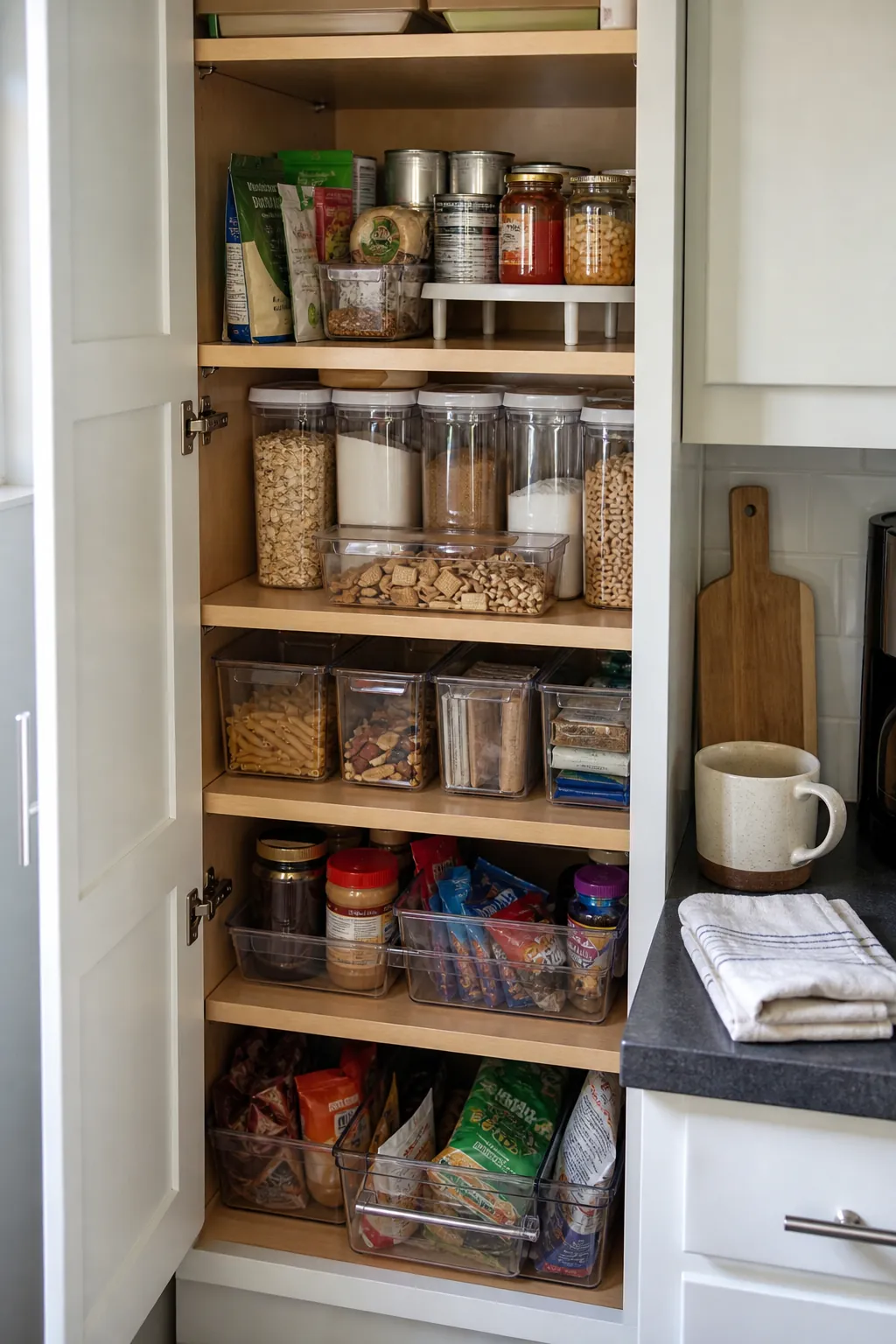
Do not decant everything just because it looks nice online. Decant only the staples you constantly open: rice, oats, cereal, coffee, sugar, flour, pet treats, or snacks. Keep awkward or occasional items in their packaging and group them in bins. A useful mini pantry should save decisions, not create a labeling project you have to maintain forever.
Use wall shelves where they help the work zone, not just where they fit
Wall shelves are one of the most searched renter kitchen ideas, but they can become visual clutter if they hold random overflow. The best shelves support a specific job. A shelf above a coffee station can hold mugs, beans, filters, and tea. A slim shelf near the stove can hold salt, pepper, olive oil, and the five spices you actually cook with. A shelf above a prep table can hold bowls, measuring cups, and cutting boards.
Renters should choose the least permanent option that can safely hold the weight. Freestanding ladder shelves, narrow bookcases, baker’s racks, over-the-sink shelves, magnetic fridge shelves, and tension shelving can add vertical storage without asking the wall to do too much. If your lease allows small holes, install real shelves into studs and keep heavy items low. If it does not, use freestanding vertical storage instead of gambling with adhesive strips.
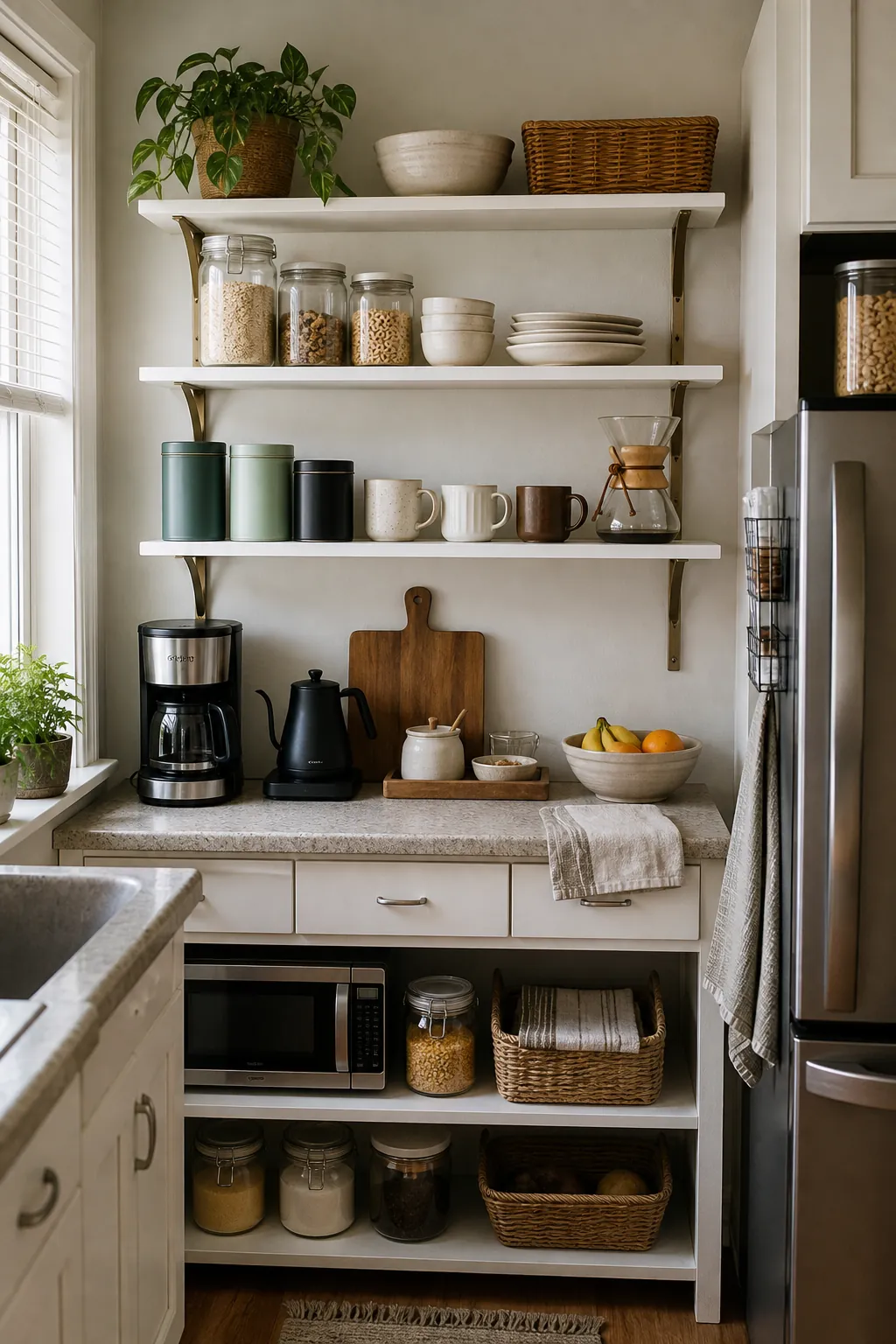
For rental kitchen decor that still feels calm, limit open shelves to the good-looking daily items: matching mugs, wood boards, clear jars, a small plant, a tidy spice row, or white bowls. Hide the loud packaging in bins or cabinets. Open storage works when it displays routine, not chaos.
Add a rolling cart only if it has a real job
A rolling cart is one of the most useful pantry alternatives because it can become whatever your rental kitchen is missing: snack pantry, coffee bar, baking station, produce station, lunch-packing cart, or appliance garage. The mistake is buying a cart and letting it become a second junk drawer on wheels.
Pick one job before you buy or style the cart. A no-pantry snack cart might hold cereal, granola bars, crackers, nut butter, tea, lunch bags, and small bins for kid snacks. A baking cart can hold flour, sugar, measuring cups, vanilla, chocolate chips, parchment, and mixing bowls. A coffee cart can hold the machine, mugs, beans, filters, spoons, syrups, and a small trash cup for packets.
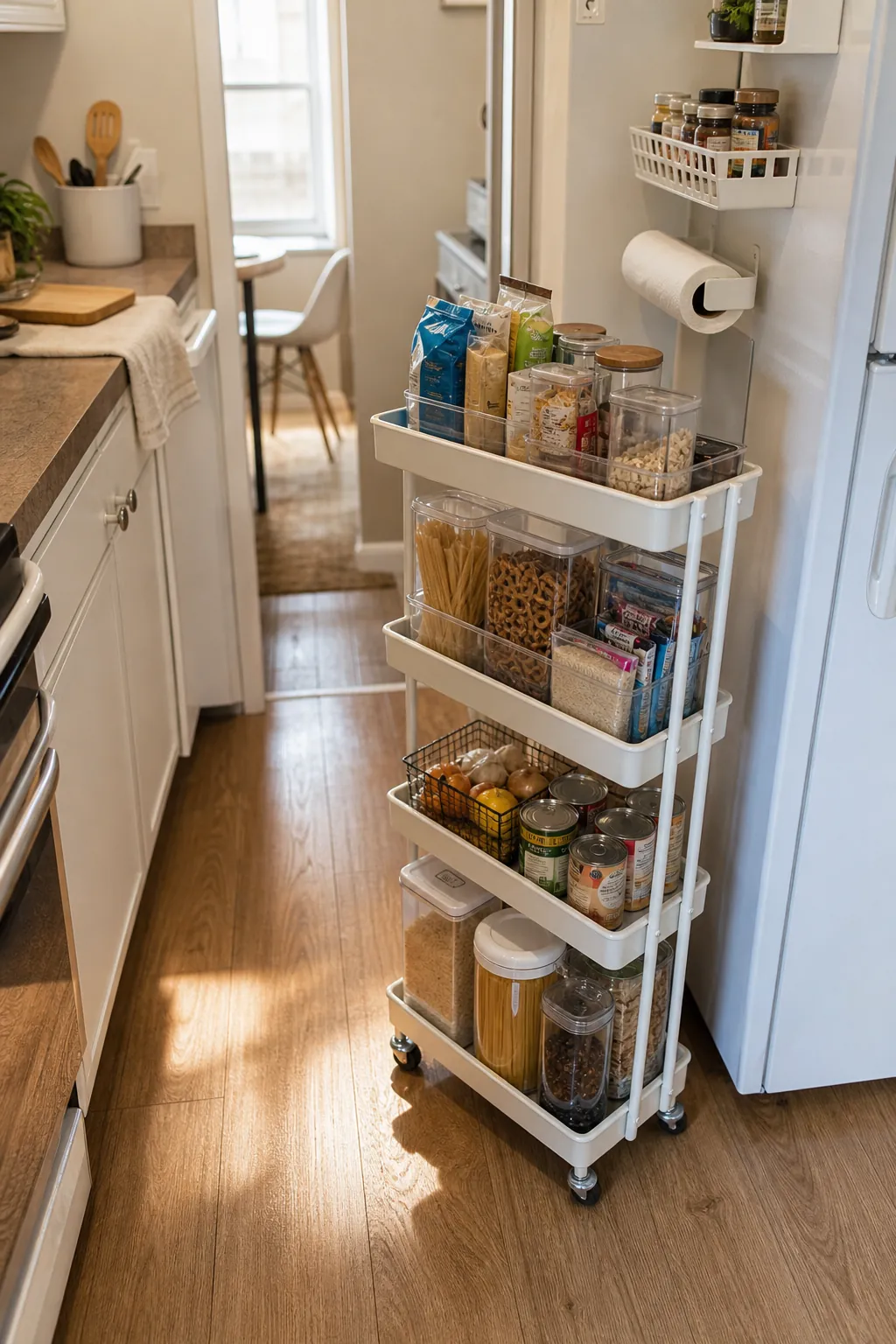
Measure before buying. Leave enough clearance so the cart can roll out without blocking the fridge, oven, or walkway. Choose a cart with raised edges if you store jars, wire baskets if you store produce, and a solid top if it will hold a coffee maker or toaster. The cart should remove pressure from the cabinets, not become another surface to clean.
Make awkward spaces earn their keep
Small kitchens often have strange storage pockets: the top of the fridge, a narrow wall beside the doorway, the side of a cabinet, the back of a door, the gap beside the fridge, or a nearby coat closet. These are perfect for compact kitchen storage, as long as you match the space to the right category.
- Use the top of the fridge for lightweight backup paper goods, extra cereal, or bins with rarely used pantry overflow.
- Use the side of the fridge for magnetic spice racks, paper towel holders, foil boxes, or a small command center.
- Use the back of a door for a slim rack with snacks, spices, wraps, tea, or lunch supplies.
- Use a nearby closet for bulk dry goods, extra appliances, serving dishes, and unopened duplicates.
- Use a narrow gap for a slim rolling tower only if it glides cleanly and does not scrape the floor or block an appliance.
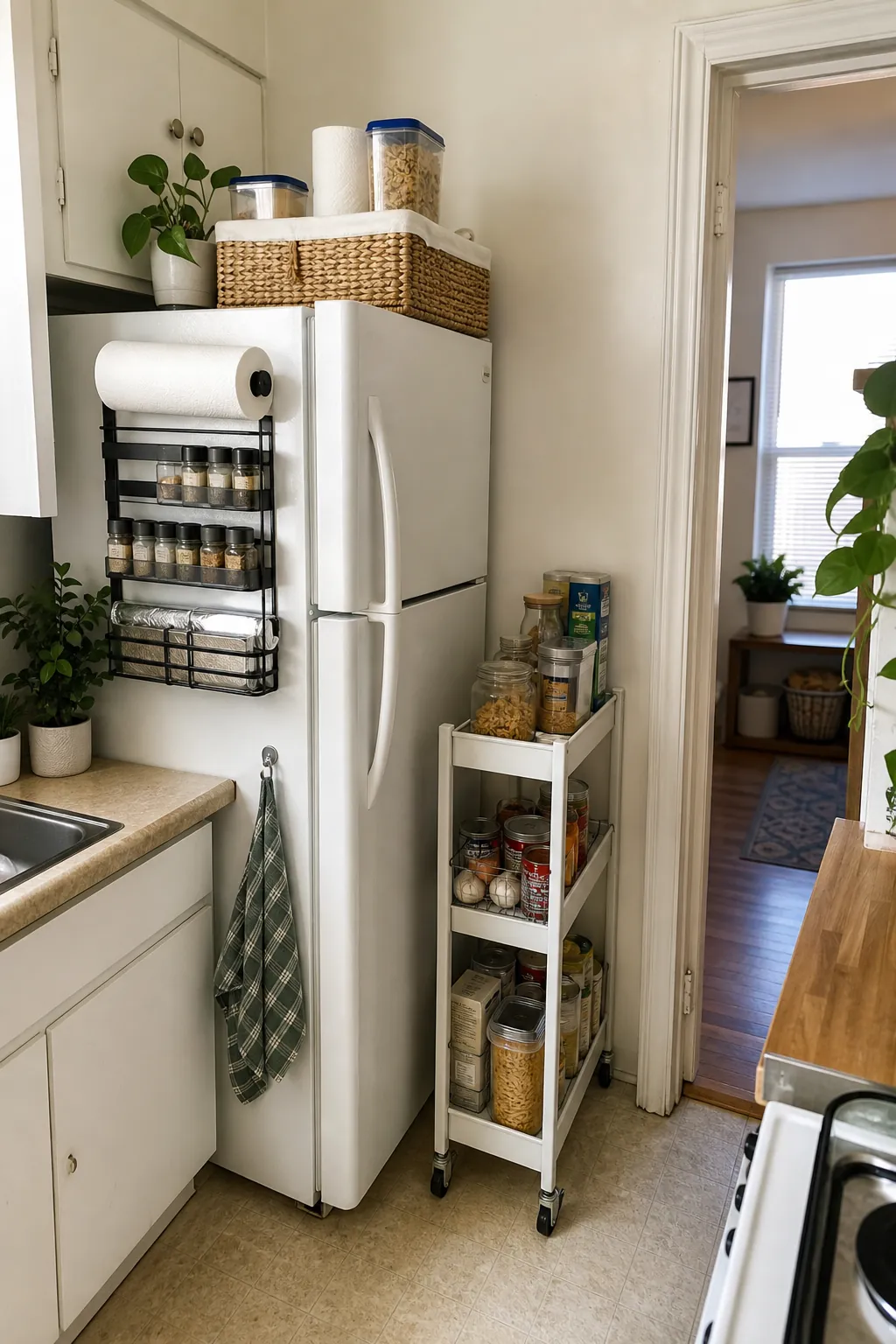
The rule is simple: awkward spaces should hold lightweight, contained, low-risk items. Avoid storing glass jars above head height, heavy appliances on flimsy shelves, or food in a place that gets hot. Renter-friendly does not mean careless; it means reversible, stable, and easy to move out.
Protect counter space like it is storage, because it is
When there is no pantry, counters become the default landing zone. That is why a no-pantry kitchen can feel messy even after you have organized the cabinets. The counter is not just a surface; it is your prep area, cooling area, dish area, grocery drop zone, and sometimes your only worktop.
Keep only the appliances used daily on the counter. For most renters, that is coffee maker plus maybe toaster, kettle, or microwave. Move the blender, air fryer, mixer, rice cooker, or slow cooker to a cart, closet shelf, or low cabinet if they are not daily tools. Use a tray for the items that must stay out, such as olive oil, salt, pepper, and a spoon rest. A tray makes the group look intentional and easy to lift when wiping down.
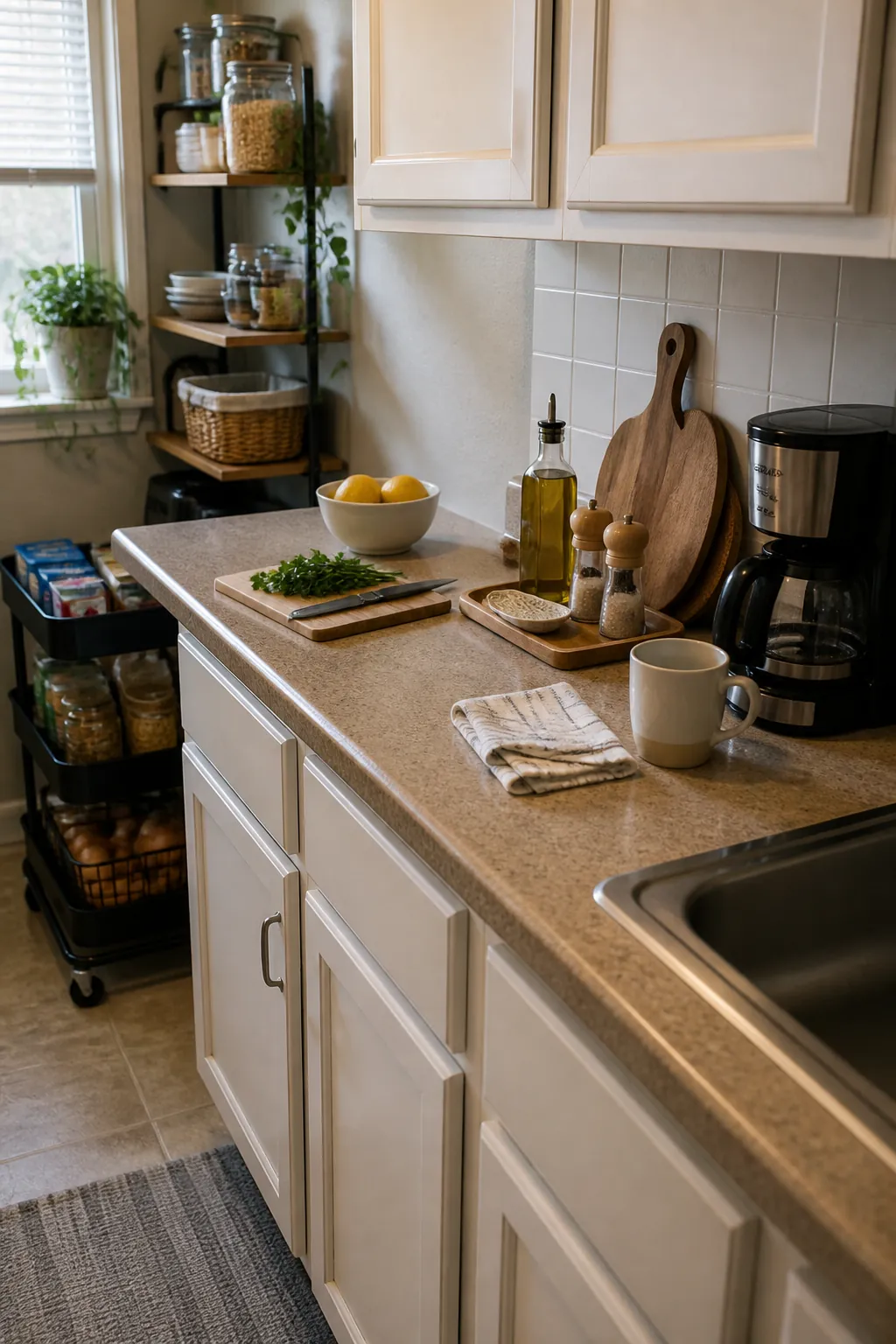
If dishes are the clutter problem, switch to a foldable drying rack, over-the-sink rack, or dish mat that can be put away. If mail and keys are the problem, move them out of the kitchen completely. The less your counter stores, the bigger your kitchen feels.
Edit the pantry before buying more organizers
Storage products cannot fix an inventory problem. Before buying shelves, bins, hooks, or a rolling cart, pull out the food and check what you actually have. Most no-pantry kitchens are holding a few useful staples, a few duplicates, and several half-used ingredients from recipes you no longer cook.
Keep one open and one backup of true staples. Finish or donate safe unopened food you do not realistically use. Stop buying bulk unless the backup has a real home outside the kitchen. Create one “use soon” bin for the half bags and odd ingredients that need to become meals. The cheapest small kitchen storage idea is owning fewer things that have no plan.
A simple no-pantry layout that works for many renters
If you are starting from scratch, try this layout before buying anything large:
- Put daily cooking food in one cabinet with bins and shelf risers.
- Put spices, oils, and prep tools near the stove or prep counter.
- Use one rolling cart for either snacks, coffee, baking, or lunch supplies.
- Move bulk pantry overflow to a nearby closet, sideboard, or lidded bin.
- Use one vertical solution: wall shelves, a freestanding rack, door rack, or magnetic fridge storage.
- Keep counters limited to daily appliances and one small tray.
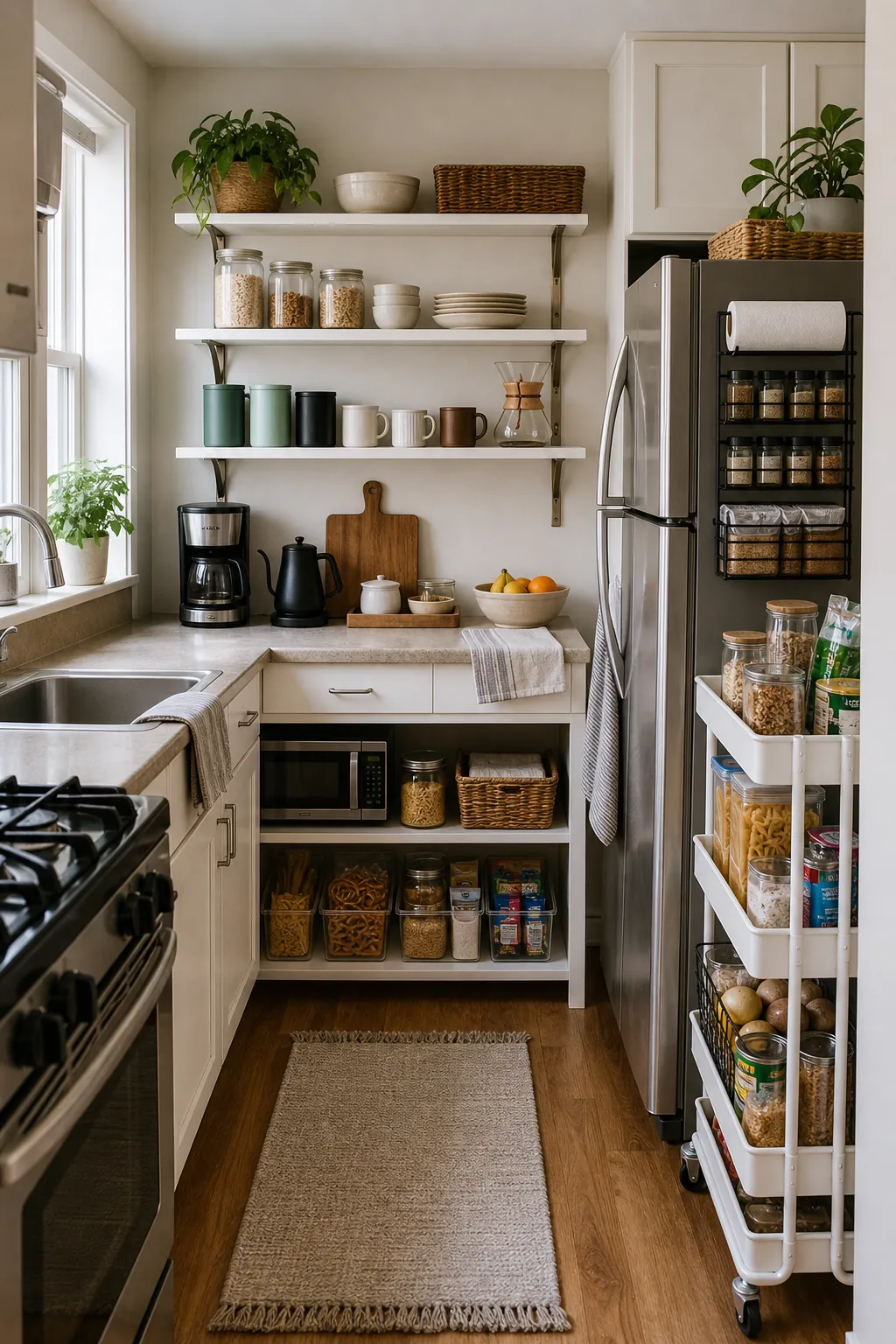
The best renter kitchen ideas are not the ones that squeeze every inch full. They are the ones that make tomorrow morning easier. When the coffee has a home, the snacks have a home, the backup food has a home, and the counter is clear enough to chop an onion, a tiny kitchen starts acting bigger than it is.