
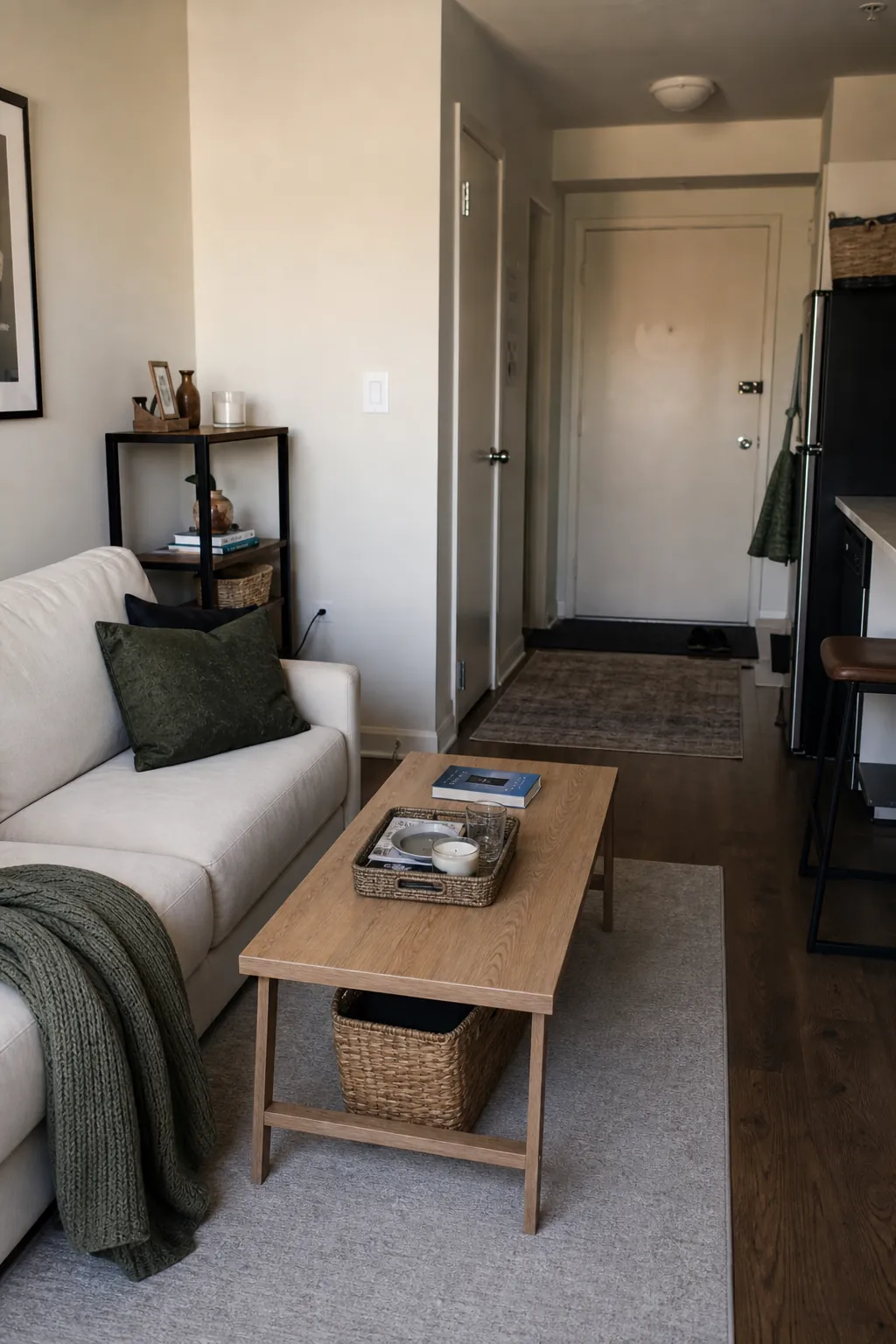
A small home can be technically clean and still look busy. The counters are wiped, the floor is swept, the dishes are done, yet the room still feels like it is asking for another reset. That is visual clutter: the extra labels, cords, shoes, paper piles, duplicate bottles, exposed storage, and half-finished tasks that keep catching your eye.
The fix is not a bigger cleaning day. In a tight apartment or tiny home, small space cleaning works best when it reduces what your eyes have to process. That means clearing sight lines, giving temporary mess a short-term home, and making your daily reset easier than ignoring the clutter.
Clean the Visual Field Before the Whole Room
When a room feels chaotic, start with the places your eye lands first: the coffee table, kitchen counter edge, entry bench, nightstand, bathroom sink, and the floor path between rooms. These surfaces create the first impression of the home. If they are covered, the room looks messy even when the deeper cleaning is already done.
Set a five-minute timer and remove anything that does not belong in the visual field. Do not sort every drawer yet. Do not reorganize the whole closet. Put dishes in the sink, laundry in a basket, shoes in one place, mail in one tray, and trash in the bin. This gives you a fast home reset without turning a simple cleaning routine into a full decluttering project.
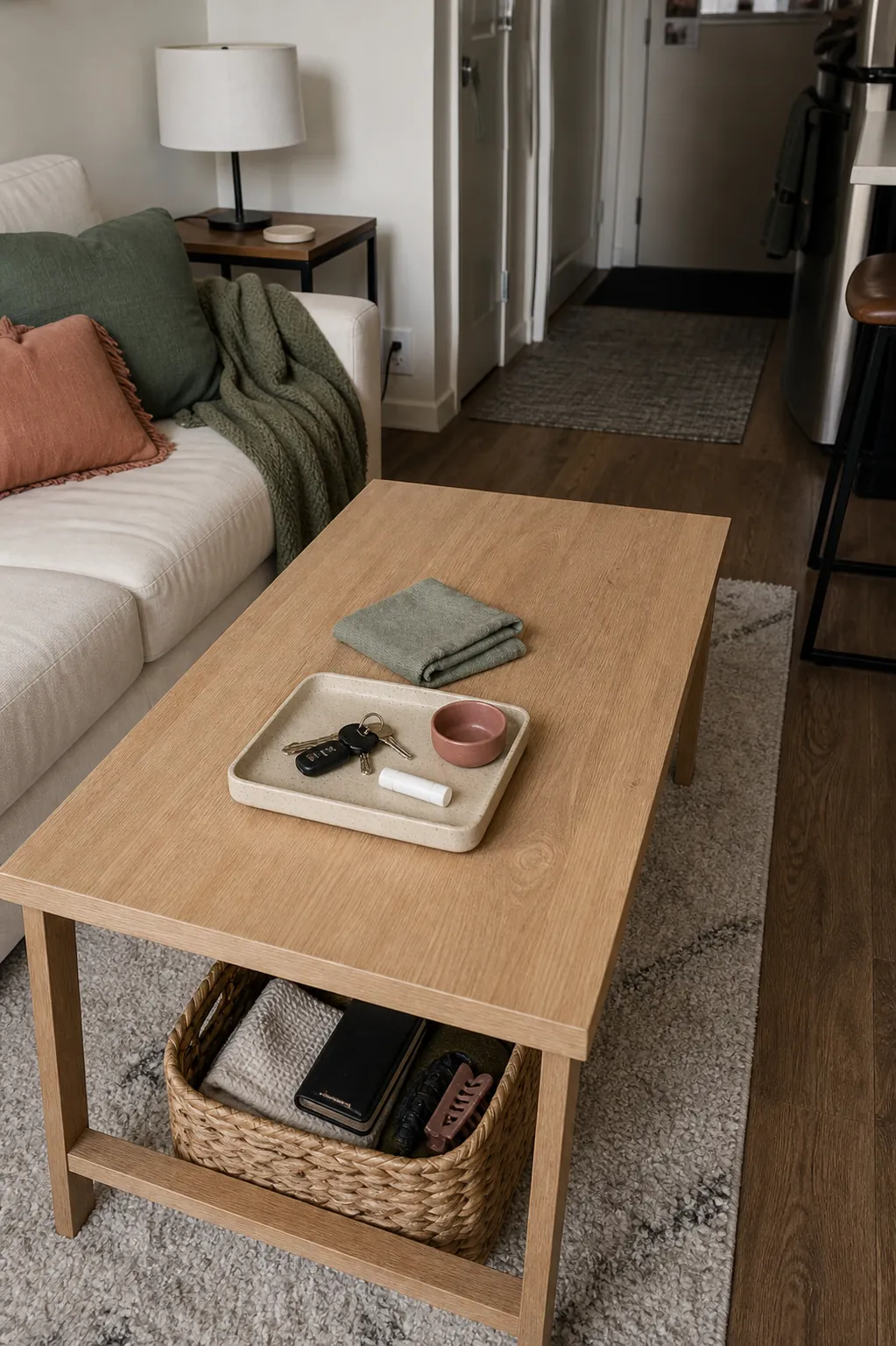
A useful rule is to leave one intentional object group per surface. A lamp and book can stay on a side table. A tray with keys and lip balm can stay near the door. A soap bottle and hand towel can stay by the sink. Everything else needs a drawer, basket, cabinet, or outbox.
Make Drop Zones Look Deliberate
Small homes collect visual clutter because normal life has no landing strip. Keys, bags, receipts, reusable totes, packages, and jackets end up wherever there is open space. The answer is not to pretend these items will disappear. The answer is to give them a controlled spot that looks planned.
Use a narrow tray, wall hook, lidded basket, or small shelf near the entry. Keep the drop zone small on purpose. If the container can hold two weeks of mail, it will. If it holds one day of mail, it forces a quick decision. This is clutter control that works with your habits instead of depending on willpower.
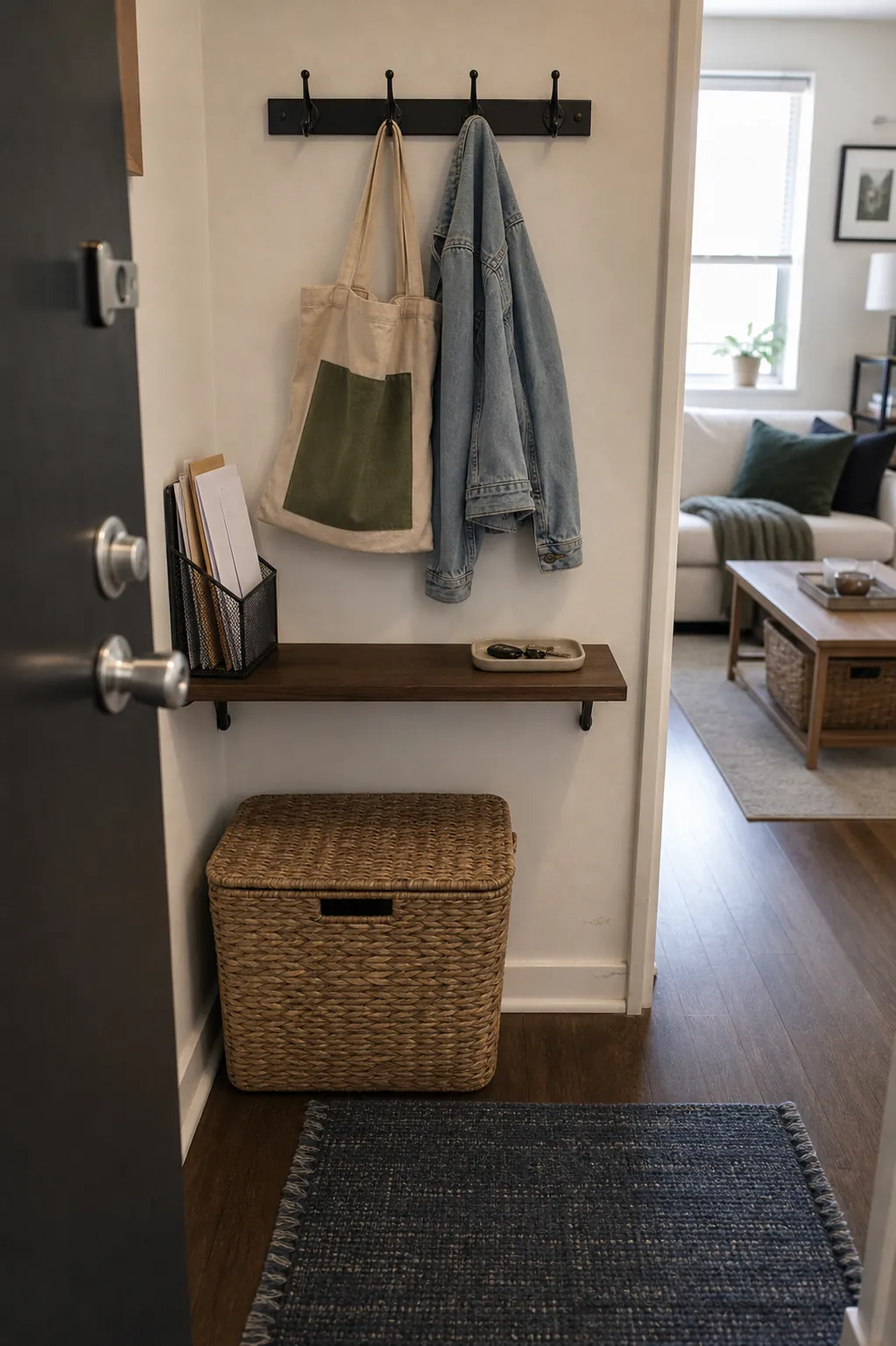
- Keys and wallet: one tray or wall pocket.
- Shoes: one low bin, rack, or under-bench space.
- Mail: one vertical sorter or shallow basket.
- Bags: one hook, not the back of every chair.
Reduce Label Noise and Open-Shelf Chaos
Open shelves can be practical in a tiny kitchen, bathroom, or living room, but they also expose every label and mismatched package. Even when everything is clean, too many colors and shapes read as mess. This is why decanting, baskets, and matching bins can help, but only after you remove what you do not use.
First, take out expired items, duplicates, empty packaging, and aspirational supplies you never reach for. Then group the keepers by job: cleaning products, paper goods, small tools, pantry staples, bathroom backstock, or pet supplies. Use containers to calm the view, not to hide decisions you still need to make.
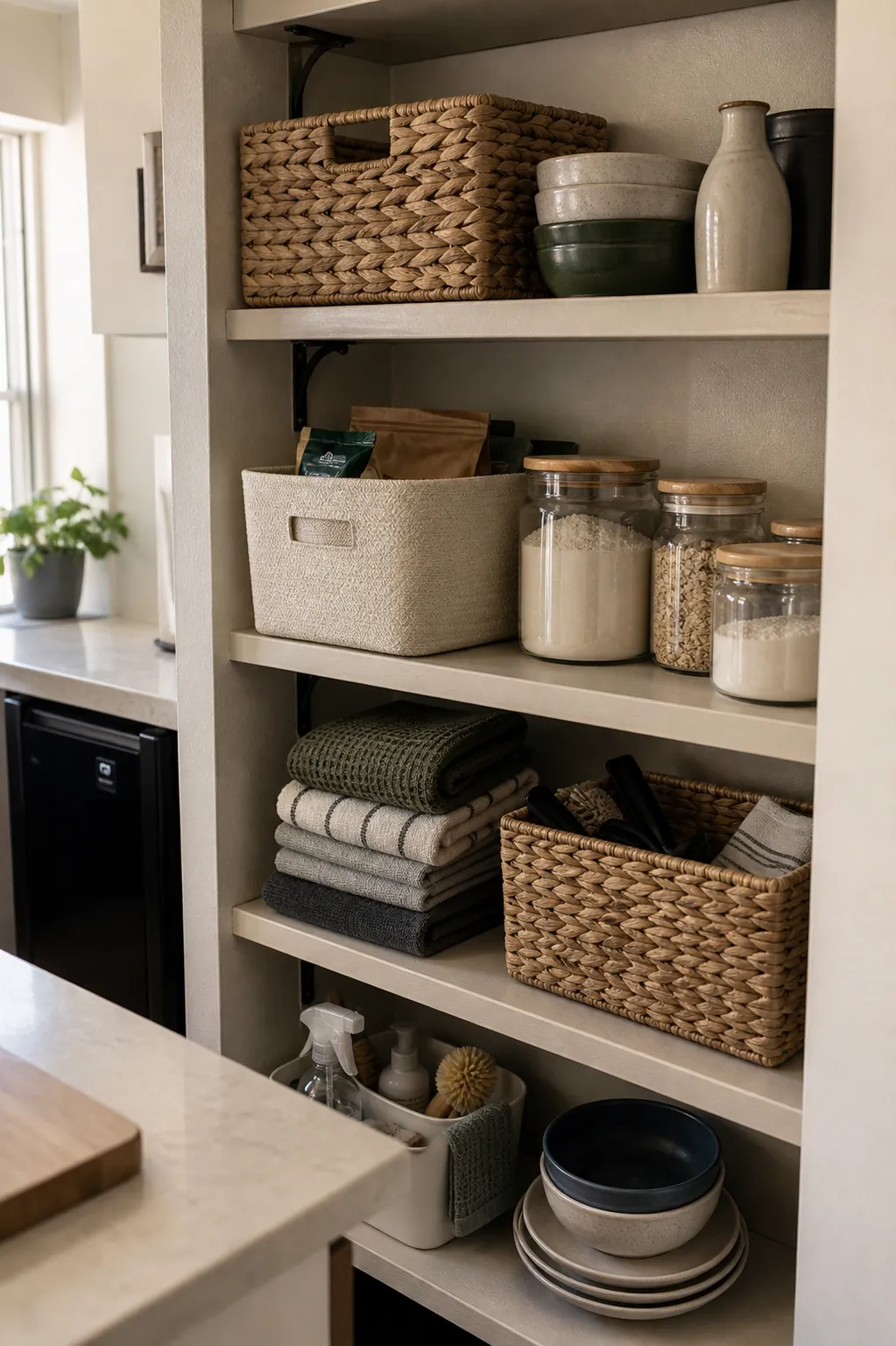
For small home organization, the goal is not a perfect matching system. The goal is that someone can glance at the shelf and understand it quickly. If your storage needs labels to explain itself, the categories may still be too complicated.
Clear the Floor Line First
The floor line matters more in a small room because there is less empty space to balance the busy parts. Shoes under chairs, cords along the wall, a laundry basket in a walkway, and bags leaning against furniture make the room feel smaller. Before dusting shelves or scrubbing corners, clear the main walking path.
Pick up anything that interrupts the line from the entry to the sofa, from the bed to the closet, or from the kitchen sink to the stove. Put cables into a sleeve or basket. Move cleaning tools behind a door. Slide a basket under a bench. A clear floor path makes a tiny room feel more finished immediately.
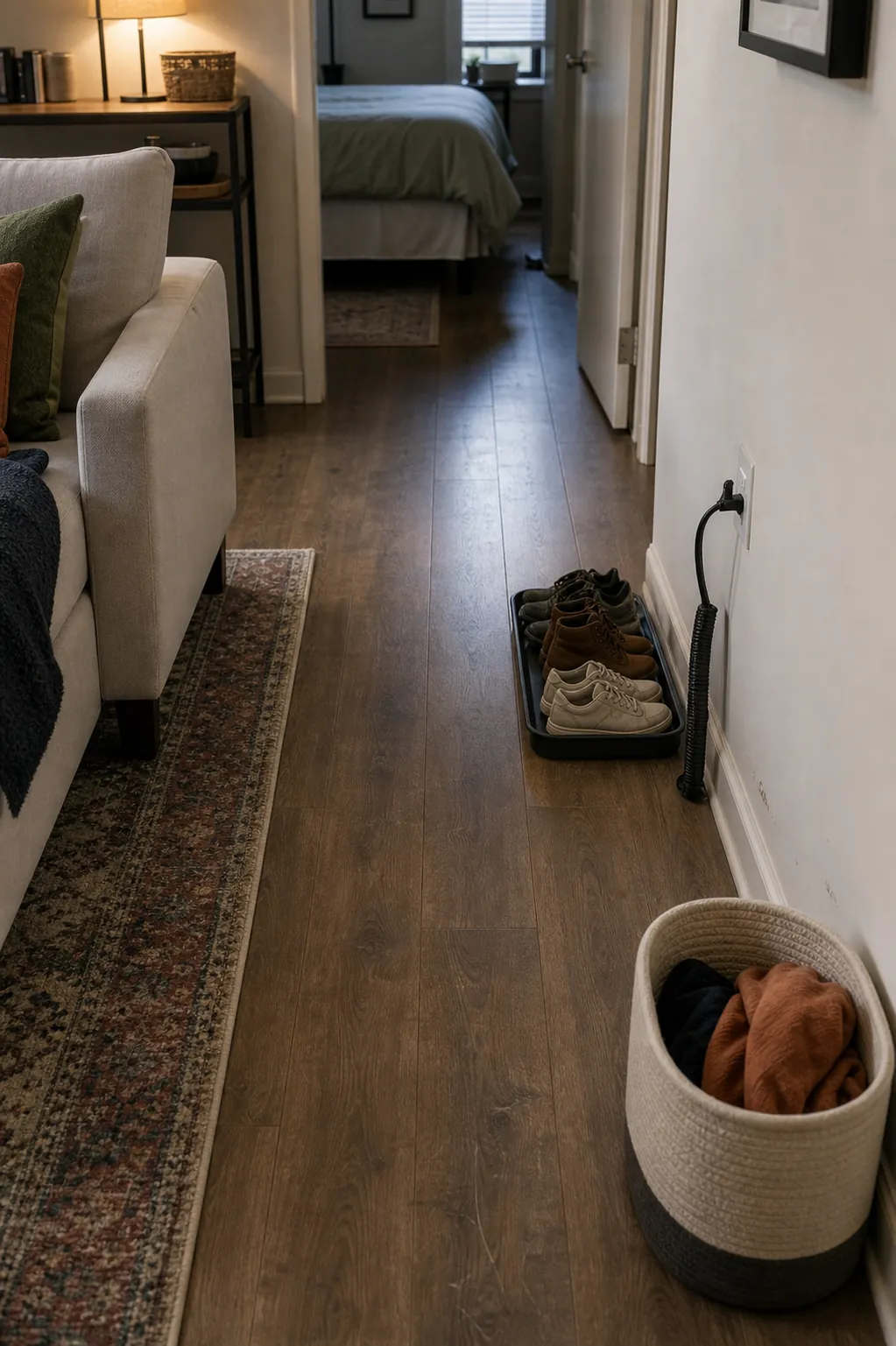
This is also where cleaning and decluttering overlap. Vacuuming around five piles takes longer than vacuuming one open path. If you want a tidy home that is easier to maintain, protect the floor line from becoming storage.
Keep a Tiny Cleaning Station Where Mess Starts
Visual clutter gets worse when small messes sit out because cleaning supplies are too far away. In a compact home, you do not need a giant supply closet. You need one small kit where the mess actually happens.
For the kitchen, that might be a microfiber cloth, dish soap, sponge, and counter spray under the sink. For the bathroom, it might be a small caddy with a cloth, toilet brush, glass cleaner, and a gentle all-purpose cleaner. For the living area, it might be a handheld vacuum and lint roller tucked into a cabinet.
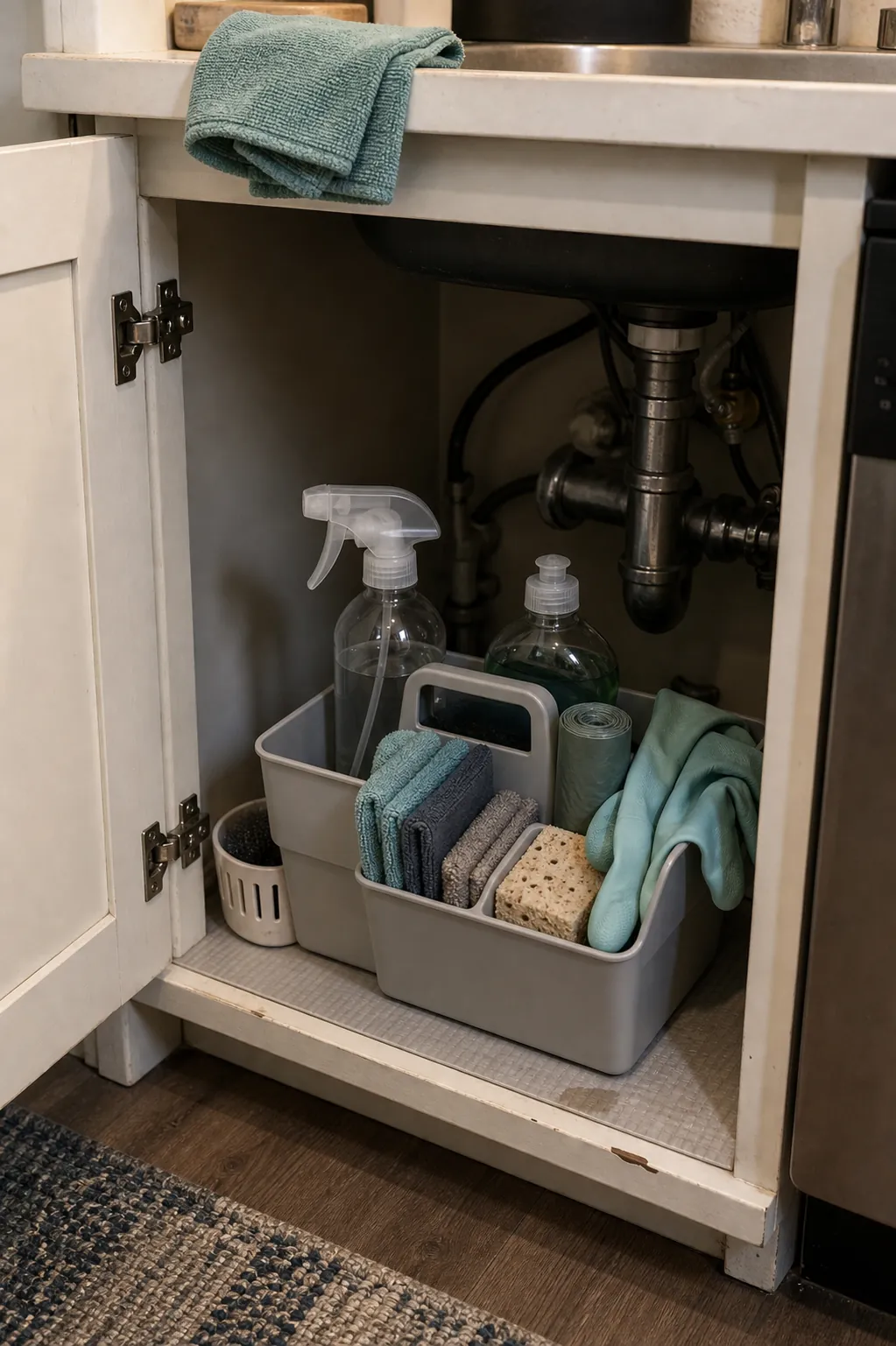
The station should be easy to grab and easy to put back. If it takes more than a few seconds to access, the mess will stay visible until later. Small space cleaning succeeds when the next right action is obvious.
Use a Closing Reset Instead of Constant Tidying
Trying to keep a small home perfect all day is exhausting. A better cleaning schedule is a short closing reset at the same time every evening. This tells the room when the day is done and keeps visual clutter from rolling into tomorrow.
Choose three anchors: surfaces, floor, and trash. Clear the main surface you see in the morning. Pick up the floor path. Take out visible trash or recycling. If you have two more minutes, reset pillows, fold one blanket, and move dishes to the sink or dishwasher.
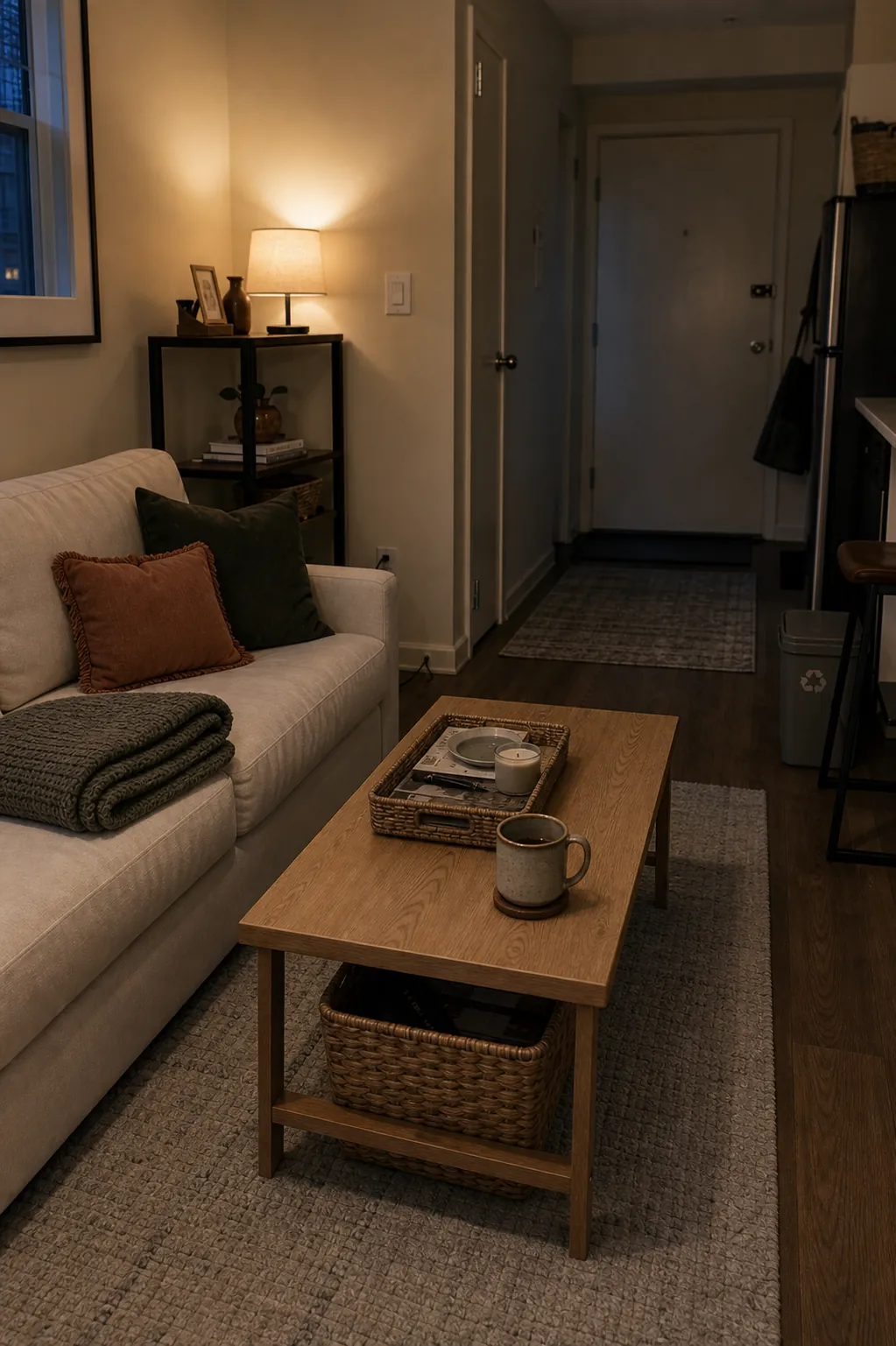
Keep the reset boring and repeatable. A tiny home does not need a complicated system. It needs a few reliable decisions that happen before clutter becomes scenery.
Stop Using Storage as a Delay Tactic
Buying storage ideas before reducing the pile often creates prettier clutter. Bins, carts, and baskets help only when they support a decision you have already made: this belongs here, this many can fit, and the rest leaves the home.
- If a basket is always overflowing, the category is too big.
- If a shelf looks busy after you organize it, there are too many visible shapes or colors.
- If a drawer will not close, do not buy dividers yet. Remove the duplicates first.
- If a surface collects the same items every day, create a drop zone nearby.
The most useful decluttering question for a small home is simple: would I still keep this if I had to look at it every day? If the answer is no, hiding it is not the same as solving it.
Build a Weekly Rhythm That Protects the Room
Once the daily reset is working, add a weekly rhythm so clutter does not quietly rebuild. Pick one small zone per day instead of saving the whole home for the weekend. Monday can be mail and paper. Tuesday can be bathroom surfaces. Wednesday can be kitchen counters. Thursday can be laundry and floors. Friday can be entryway bags, shoes, and returns.
This rhythm keeps apartment organization manageable because each task has a boundary. You are not cleaning your entire life. You are protecting one visible zone before it spreads.
A clutter-free small home is not empty. It still has books, blankets, cooking tools, charging cords, shoes, and daily mess. The difference is that each thing has a limit, a landing place, and a reset point. That is what makes the space feel clean faster and stay calm longer.