
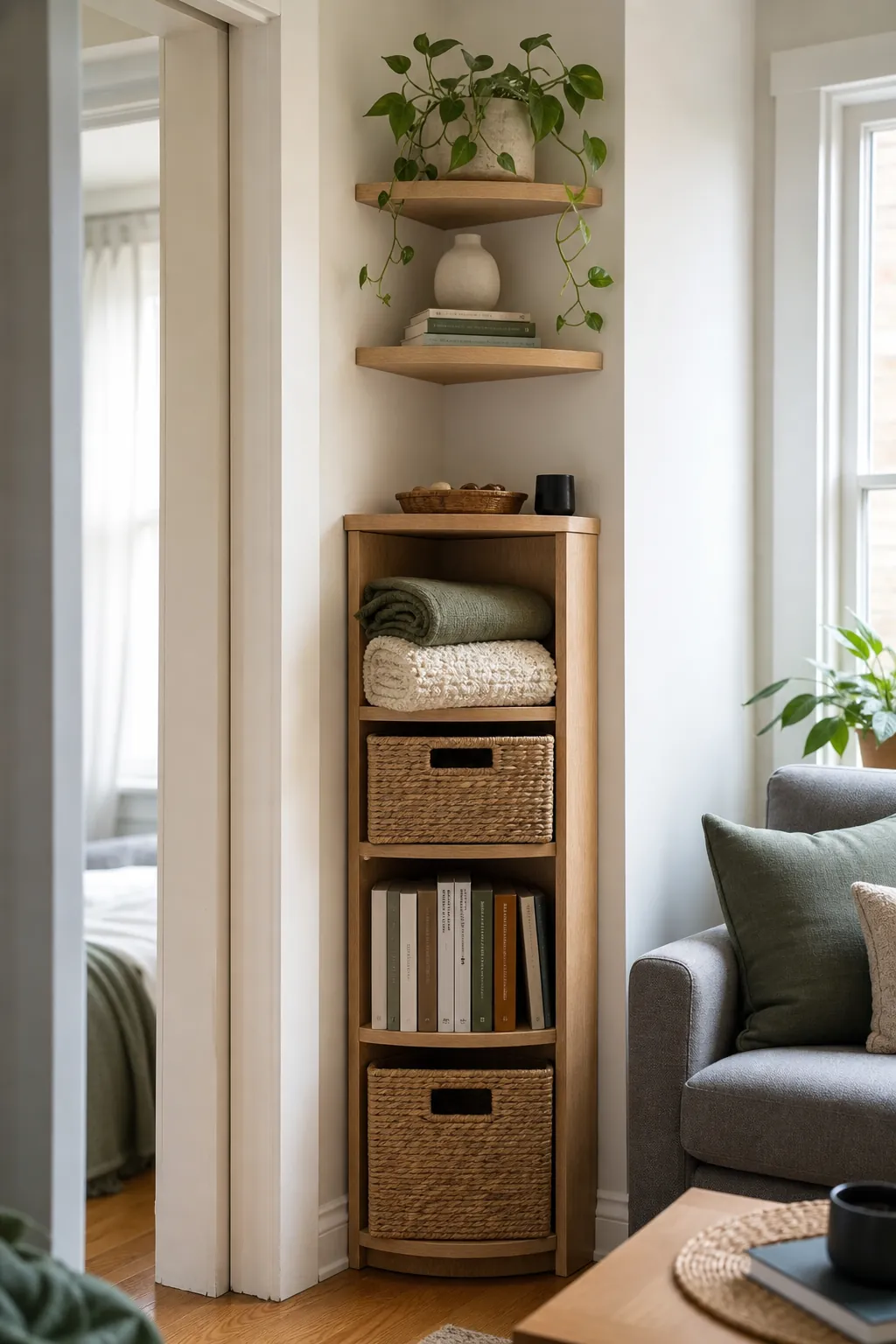
Awkward corners are not automatically wasted space. They usually fail because the solution is chosen too fast: a bookcase is too shallow for the back corner, a cabinet blocks the walkway, or a pretty shelf turns into a pile of things that never had a real home. The better move is to treat the corner like a tiny storage zone with limits, access, and a job.
These small space storage ideas for awkward corners are built around the problems people run into in real apartments and small homes: narrow gaps beside wardrobes, deep corners that are hard to reach, entry corners with door swings, and shelves that look good for one week before clutter takes over. The goal is not to fill every inch. The goal is to make the corner useful without making the room feel smaller.
Start With The Corner’s Actual Shape
Before buying corner shelves, a corner cabinet, or a tall storage tower, measure the corner like a problem you are solving, not like a blank wall. Measure both wall runs from the inside corner outward. Then measure the depth you can use before you hit a walkway, bed, desk chair, door swing, radiator, baseboard, outlet, or closet door.
This matters most in corners that look generous at first glance but become awkward when you account for access. A deep, narrow strip beside a wardrobe can hold a shelf at the front, but the back portion may become hard-to-reach storage where items disappear. A corner near an entry door might fit a bench until the door opens. A boxed-out column can make standard furniture leave a useless pocket behind it.
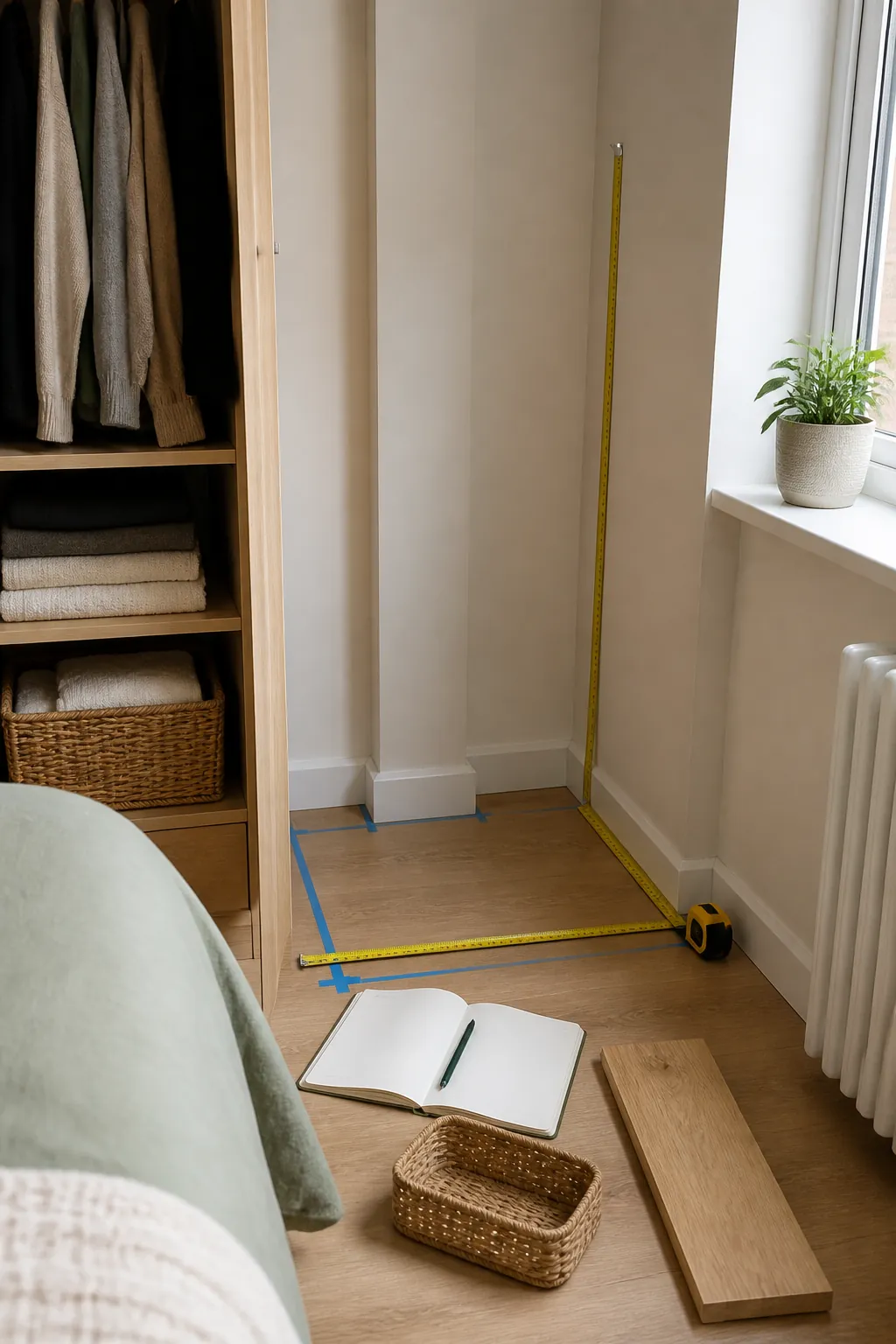
A simple rule helps: if you cannot reach the back of the storage in one motion, it needs to pull out, rotate, slide, or stay open. If none of those options make sense, use the front portion only and leave the hidden back for items you rarely need. A storage idea is only good if you can maintain it on a normal day.
Use Vertical Storage Before You Add Bulk
In a small room, the safest corner storage usually goes upward. A vertical stack of corner shelves, a slim tower, or a wall-mounted rail creates useful storage without stealing the floor. It also keeps more floor visible, which helps a compact room feel lighter.
The mistake is installing shelves everywhere. One focused vertical stack often looks calmer than shelves scattered across every spare wall. Keep the shelves shallow enough that they do not bump shoulders or block curtains. In most living rooms, bedrooms, and home office corners, 8 to 12 inches of shelf depth is enough for baskets, books, small decor, charging items, and folded accessories.
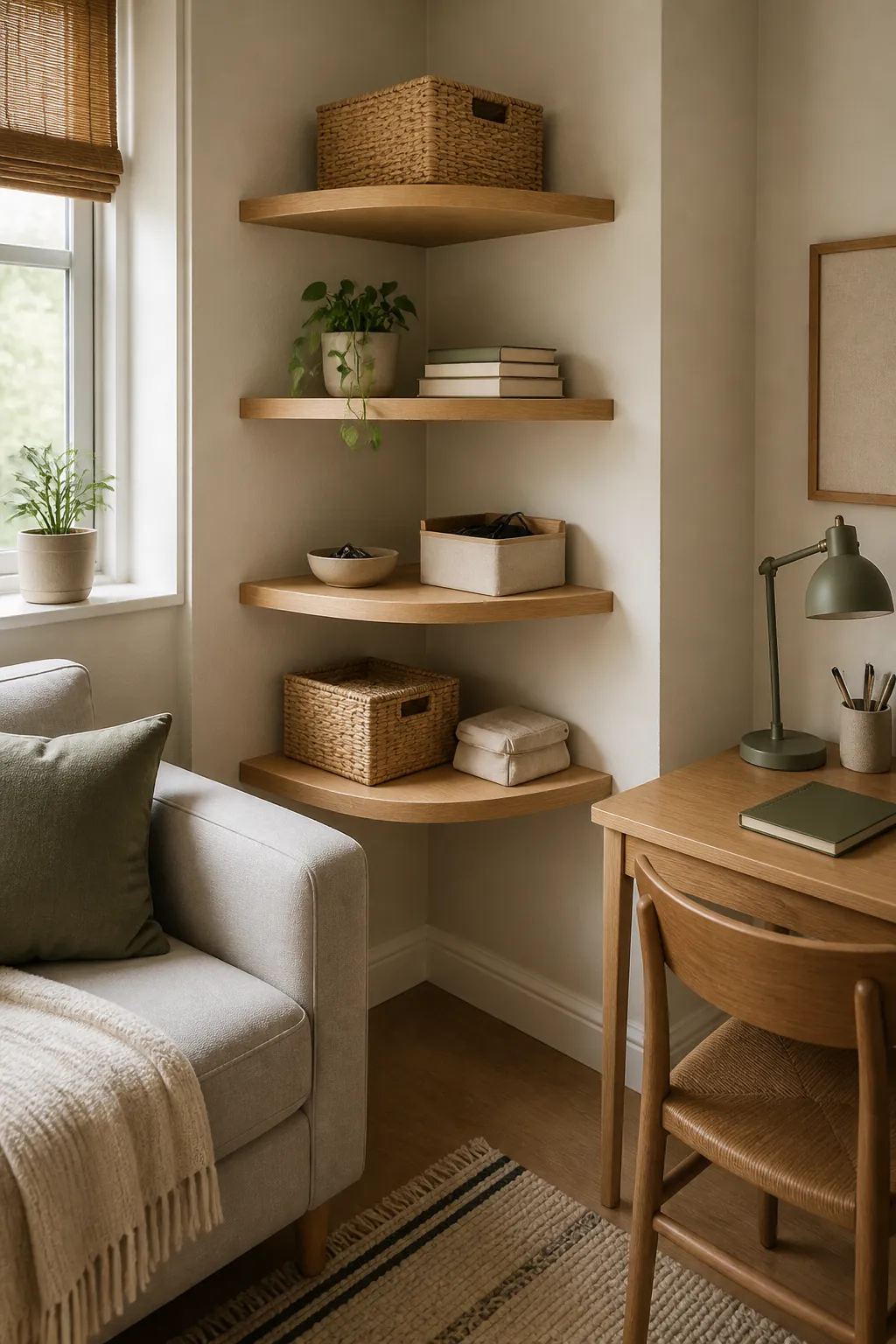
- Use the lowest shelf for daily items such as keys, glasses, chargers, remotes, or a current book.
- Use middle shelves for bins and baskets so small loose items do not visually multiply.
- Use upper shelves for light, occasional items such as extra throws, seasonal accessories, or decorative pieces.
For a cleaner look, repeat one material. Light oak shelves with woven baskets will usually feel calmer than a mix of black metal, glossy plastic, bright bins, and random boxes. Corner decor should support the storage, not compete with it.
Choose Pull-Out Storage For Deep Corner Cabinets
Corner cabinets can hold a surprising amount, but they often become the place where pans, cleaning products, and pantry extras go to be forgotten. The problem is not volume. It is access. A deep cabinet without a pull-out system asks you to kneel, reach sideways, and unload the front before touching the back.
If the awkward corner is inside a kitchen, laundry nook, bathroom vanity, or utility cabinet, look for storage that moves toward you. A lazy Susan, blind-corner pull-out, sliding basket, or simple shelf riser can turn dead depth into usable depth. The best choice depends on what you store: round rotating trays suit bottles and jars, while rectangular pull-outs are better for towels, pans, small appliances, or cleaning caddies.

For renters or anyone avoiding permanent hardware, use freestanding layers inside the cabinet: stackable shelves, open bins with handles, or shallow crates that can slide forward. Keep the heavy items low and the most-used items at the front. Do not store daily essentials in the deepest part of a corner cabinet unless the cabinet has a mechanism that brings them out.
Turn Entry Corners Into A Drop Zone
Small entryways create clutter because they are asked to absorb real life: shoes, keys, bags, mail, umbrellas, leashes, jackets, and things that need to leave the house tomorrow. If the awkward corner by the door has no clear job, those items travel to the kitchen counter, sofa, desk, or bedroom floor.
A good corner drop zone does not need to be large. It needs to be easier than dumping things elsewhere. Combine a shallow shelf, a key bowl, two hooks, one shoe basket, and one closed bin. Keep the arrangement inside the corner footprint and check the door swing before mounting anything. If the door opens toward the corner, choose wall storage that sits above the handle zone or stays almost flush to the wall.
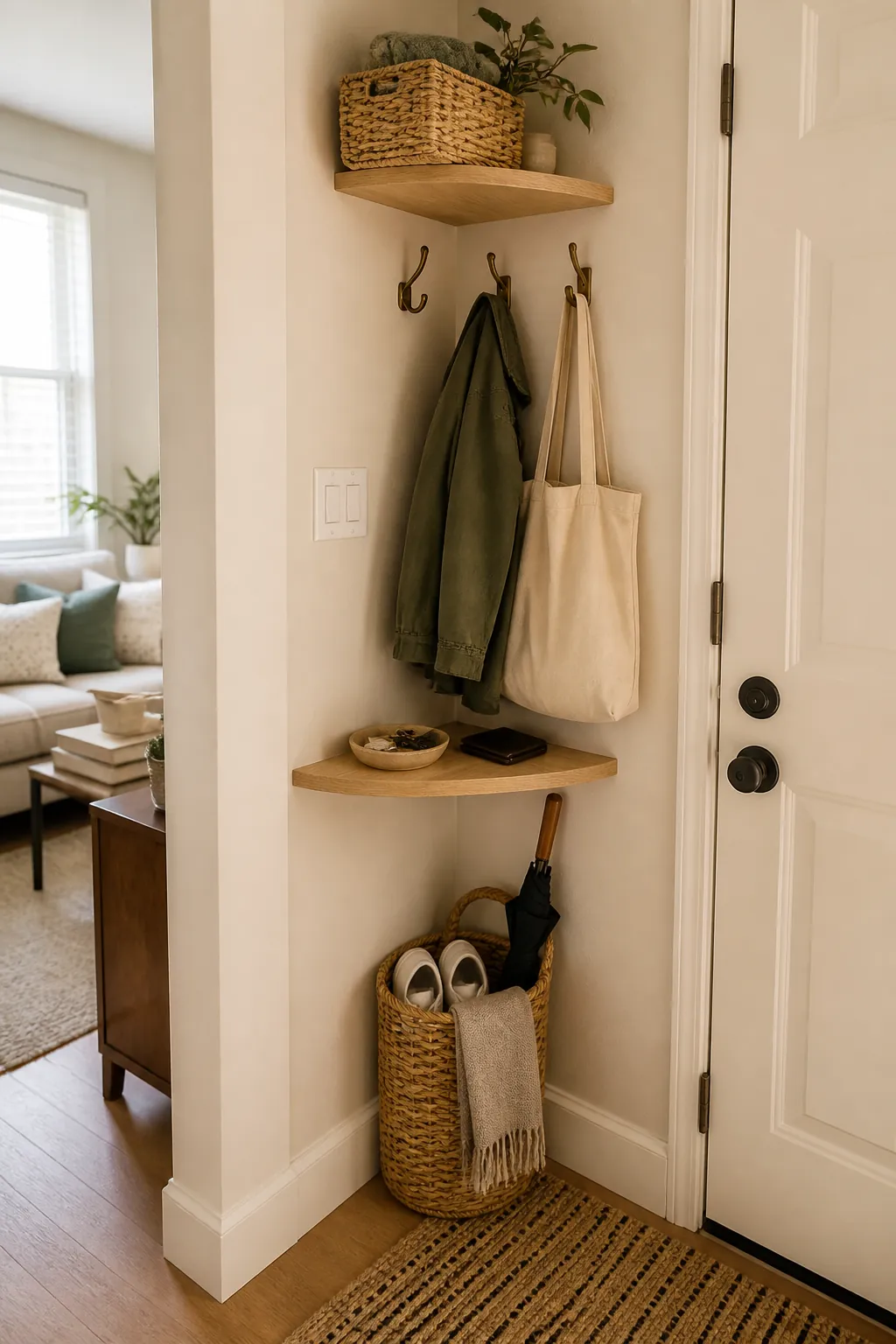
The small-space trick is to give the corner one routine. For example: keys in the bowl, everyday shoes in the basket, one bag on the hook, returns in the bin. That is more useful than a beautiful corner cabinet that takes two hands to open when you are carrying groceries.
Replace Bulky Nightstands With Corner Shelves
Bedrooms often have the most frustrating awkward corners because the bed, wardrobe, closet doors, and window placement leave odd slivers of space. A full nightstand may block a drawer or walkway, but an empty corner still needs to hold glasses, a lamp, books, medicine, chargers, or bedtime clutter.
Floating corner shelves can work as a compact nightstand replacement when they are installed at the right height. Put the daily shelf at mattress level. Add one higher shelf for a basket or folded item. If wall anchors are a concern, use a narrow freestanding corner shelf that is stable, bottom-weighted, and shallow enough that it does not crowd the bed.
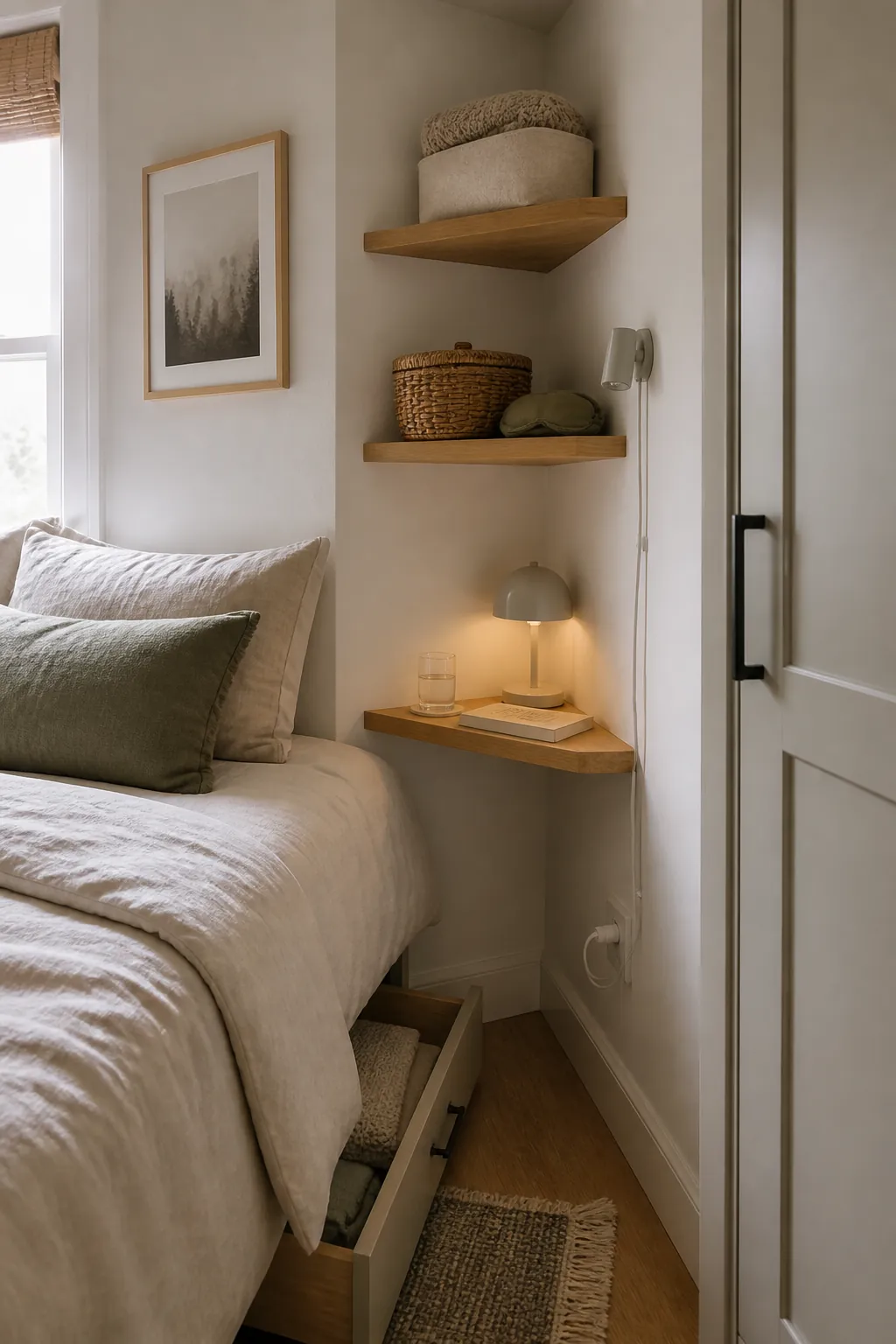
Keep bedroom corner storage quiet. Closed baskets hide visual noise. A plug-in sconce saves shelf space. A small tray stops glasses and chargers from spreading. The corner should support sleep, not become a second dresser.
Prevent Corner Shelves From Becoming A Clutter Magnet
Open corner shelves are useful, but they can become a display of unfinished tasks: cables, receipts, extra candles, random tools, mail, and things you meant to put away later. This is why the storage plan needs a limit before the shelf goes up.
Use the two-thirds rule: fill about two-thirds of each shelf and leave the rest open. Empty space makes the corner look intentional. It also gives you room to place something down temporarily without the whole shelf collapsing into clutter. Pair open shelves with at least one closed basket or box so unattractive but necessary items have a place to disappear.
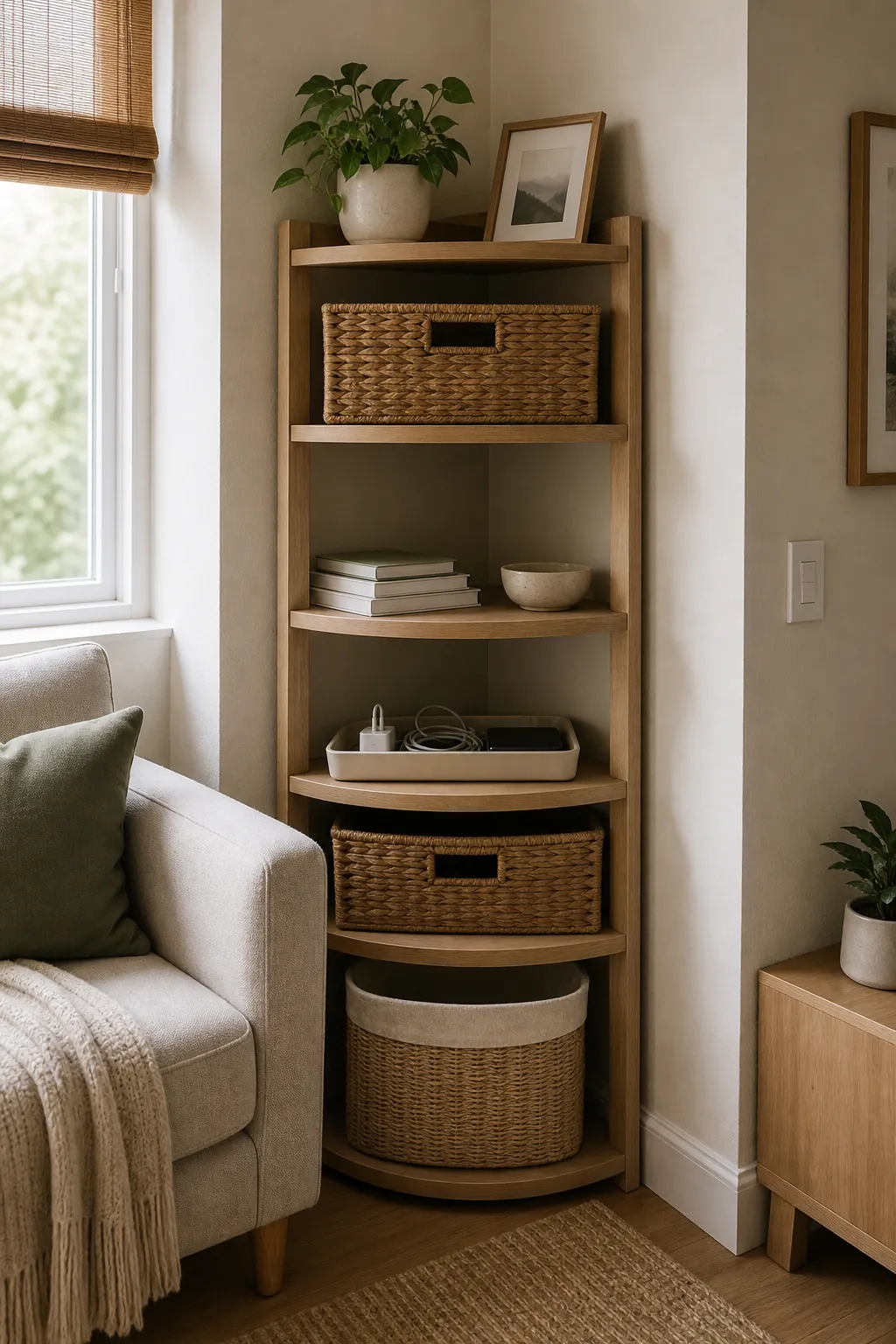
- One shelf can be display. The rest should earn their space with real storage.
- One basket can be temporary. Empty it during a weekly reset before it becomes a junk bin.
- One category per container keeps small home storage from turning into mystery storage.
Match The Storage Type To The Corner Problem
The best awkward corner storage is not always the biggest option. Use the corner’s flaw to choose the solution.
- Narrow but tall corner: use vertical storage, stacked corner shelves, or a slim tower with baskets.
- Deep and hard to reach: use pull-out storage, rolling bins, sliding crates, or a rotating tray.
- Corner beside a door: use hooks, a shallow shelf, and one basket that respects the door swing.
- Corner beside a bed: use floating shelves, a plug-in sconce, and one closed bin instead of a bulky nightstand.
- Corner that looks messy quickly: use fewer open shelves, more closed storage, and a fixed weekly reset basket.
- Corner with odd angles or columns: use custom-cut shelves, modular cubes, or a curtain-covered utility zone if it must be functional more than decorative.
If you are stuck between two options, choose the one that keeps access easiest. In small homes, storage you can reach beats storage that technically holds more. A corner shelf that holds five useful things and stays neat is better than a deep corner cabinet that hides twenty things you never touch.
Awkward corners become useful when they are given a clear job: a drop zone, a nightstand, a vertical shelf stack, a pull-out cabinet, a charging station, or a quiet basket system. Once the job is clear, the corner stops feeling like leftover space and starts working like part of the room.