
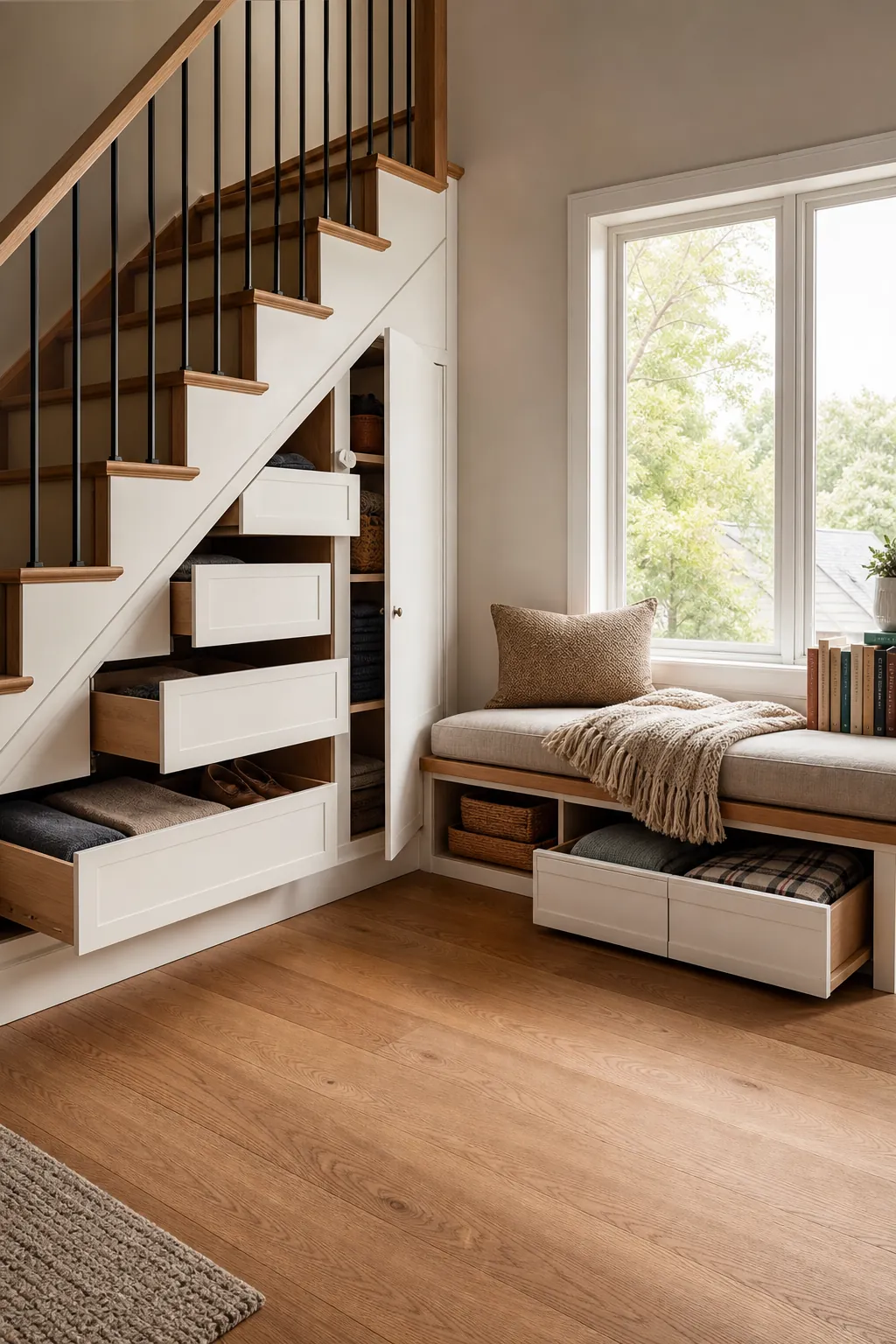
The best small space storage ideas do not always start with buying another cabinet. They start with the two places most homes already have but rarely use well: the space under the stairs and the low wall under a window. Both areas can hold a surprising amount, but only if the storage is easy to reach, low enough to keep the room open, and specific enough that it does not become a new clutter pile.
The simple rule is this: deep spaces need pullouts, visible spaces need calm fronts, and seating zones need storage that opens without a fight. Use the ideas below to match the design to what you actually need to store, from shoes and backpacks to blankets, board games, pantry overflow, and seasonal bins.
Plan by Access Before You Plan by Style
Before choosing built in storage, sort the items by how often you touch them. Daily-use items need front access: drawers, doors, hooks, cubbies, or baskets that slide straight out. Occasional items can live farther back, but only if they are labeled and stored in clear containers. Rare seasonal pieces can go in the lowest or deepest zone, where you will not mind moving one bin to reach another.
This matters most under stairs because the footprint is often triangular. The tall end feels generous, but the low end can turn into a dead corner fast. Under windows, the problem is different. The space is shallow and visible, so storage has to preserve light, walkway clearance, and any heating or venting that sits below the window.
Measure width, depth, sill height, trim, outlets, vents, and door swing before you buy anything. If you are cutting into walls, enclosing an under-stair cavity, moving ductwork, or changing stair structure, check local code and use a qualified pro. Accessible under-stair storage often needs the underside of the stairs properly finished for fire safety.
Use Pullout Drawers for the Deep Under Stairs Zone
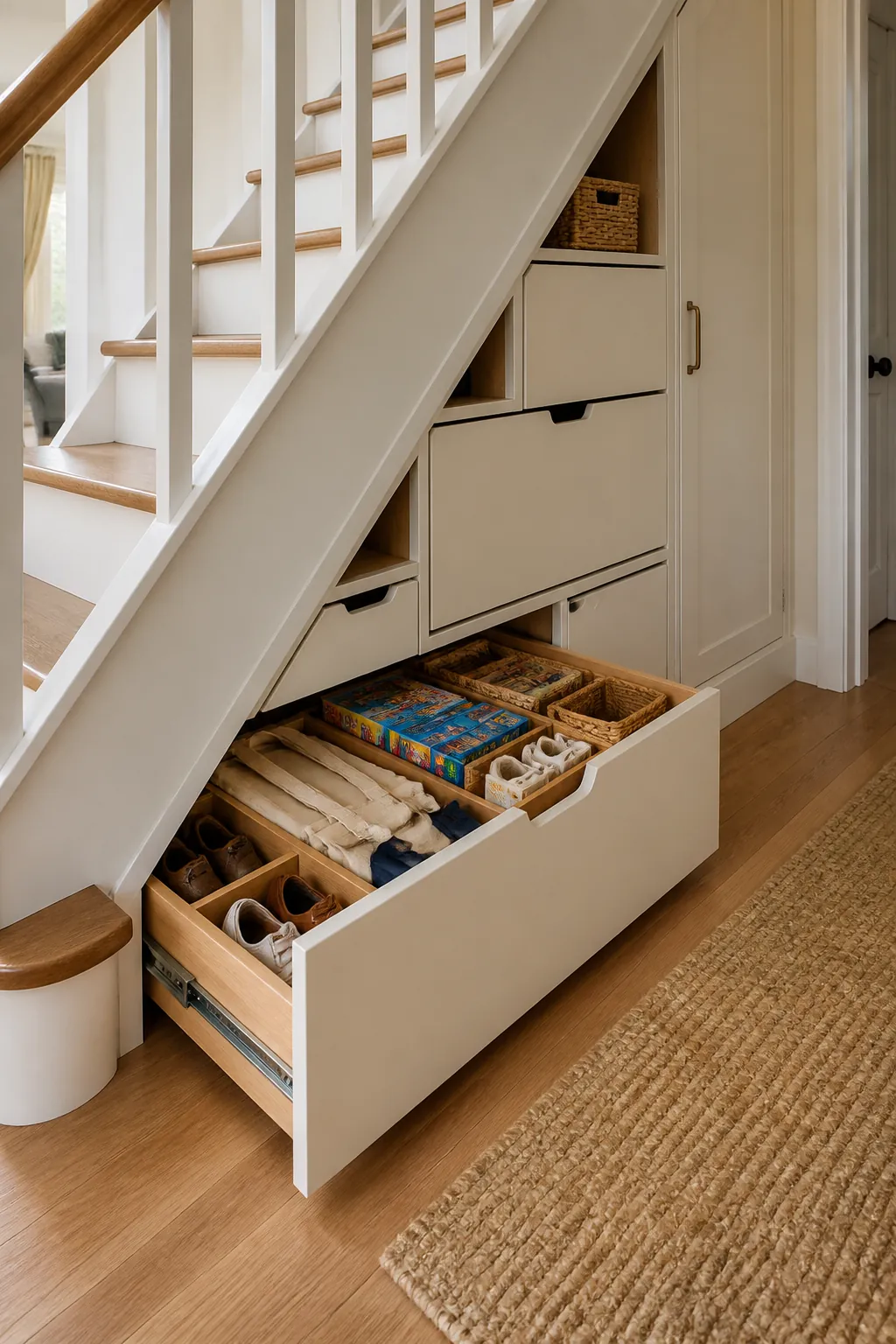
If the under stairs storage area is deep, shelves alone usually disappoint. They look tidy for a week, then the back row becomes impossible to reach. Pullout drawers, rolling bins, or slide-out towers solve the real problem: access. They bring the back of the closet to you instead of forcing you to crawl into a wedge-shaped cavity.
Use full-height pullouts at the tall end for vacuum attachments, pet supplies, wrapping paper, or pantry overflow. Use shorter drawers near the low end for shoes, sports gear, toys, tool kits, and folded linens. If custom cabinetry is not in the budget, try lidded bins on low casters or sturdy plastic drawers sized to the opening.
- Best for: small home storage that needs to be reachable.
- Avoid: fixed shelves that are more than one bin deep.
- Smart detail: label the drawer fronts by category, not by person.
Turn the Stair Side Into a Mini Mudroom
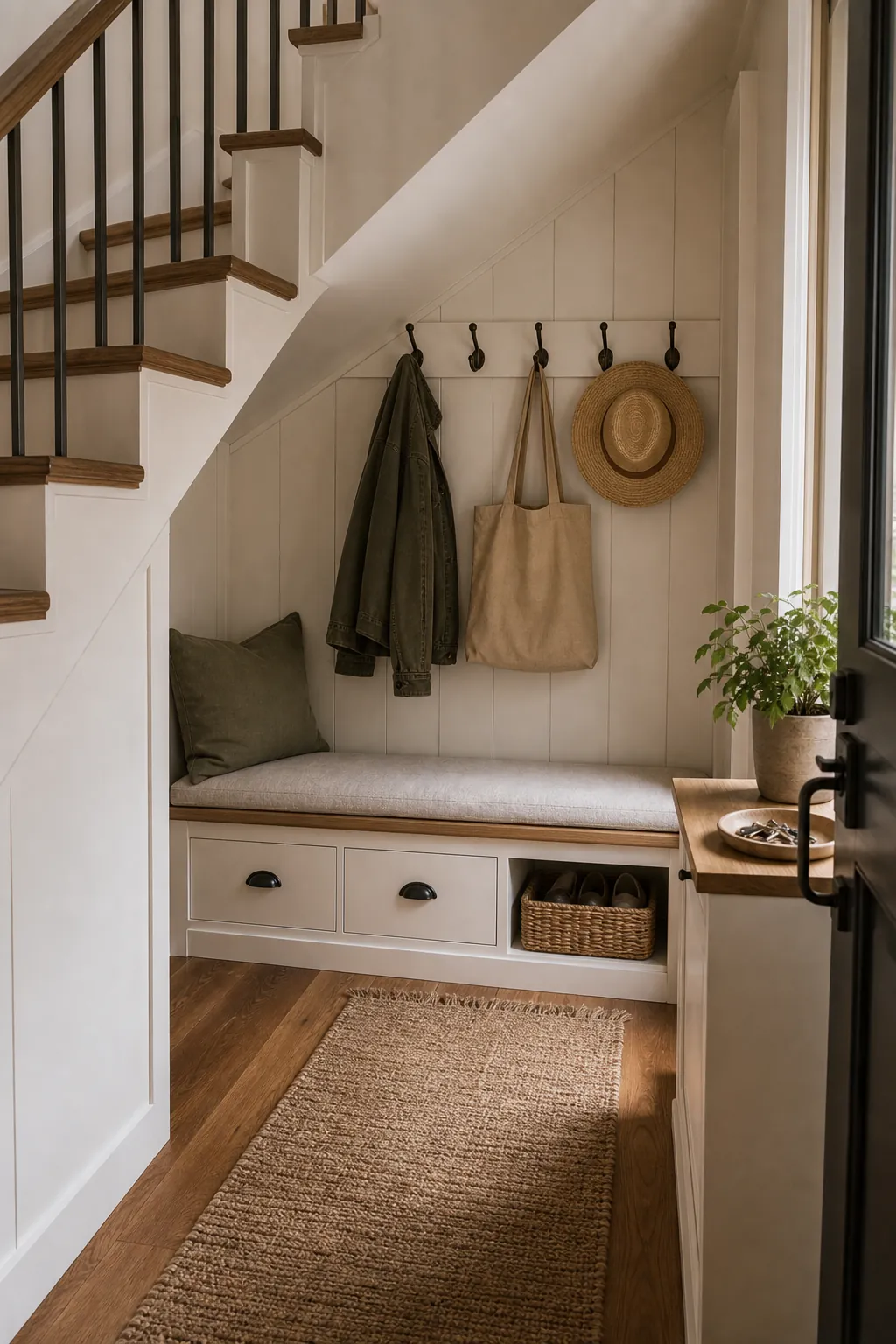
When the stairs sit near the entry, the best storage idea is often a narrow mudroom built into the side wall. A bench gives you a place to put on shoes, drawers hide the shoes you wear most, and a row of hooks keeps bags, coats, umbrellas, and dog leashes off the floor. This works especially well in small homes that do not have a formal foyer.
The key is keeping the depth disciplined. A bench that projects too far into the walkway makes the entry feel smaller, even if it adds storage. Use a slim bench, shallow drawers, and hooks mounted above shoulder height. Closed drawers make the area look cleaner, while one open cubby near the floor can hold a basket for quick drop items.
Think of this as home organization for the first five minutes after you walk in. If the storage catches shoes, keys, jackets, and school bags before they spread through the house, it earns its space every day.
Make Hidden Storage Work for Bulky Seasonal Items
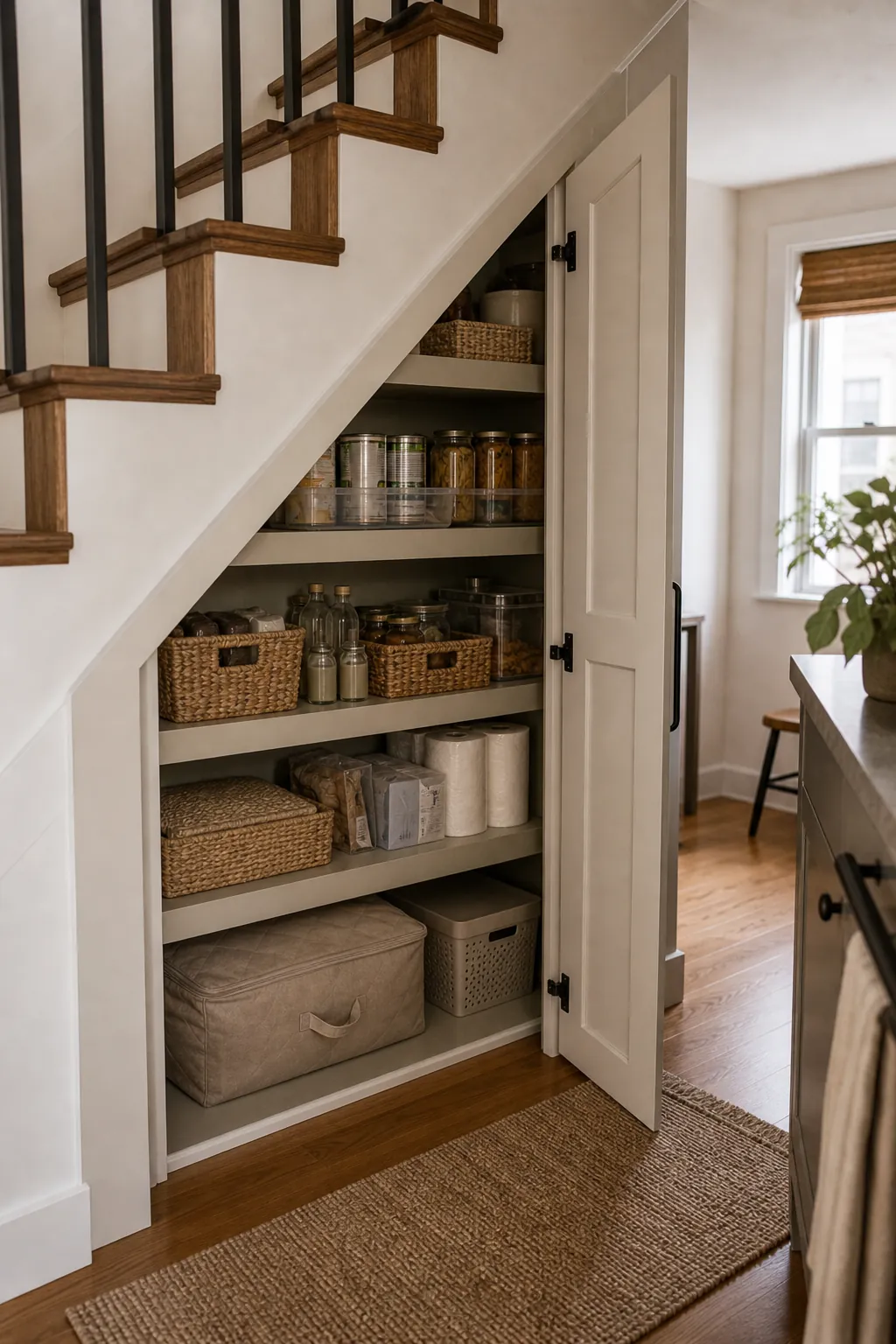
Hidden storage is useful when it has a job. Under stairs storage can hold holiday decorations, camping gear, bulk paper goods, board games, luggage, emergency supplies, and pantry backstock. What it should not hold is a mystery stack of things you might need someday. Deep hidden zones are too valuable to become a forgotten archive.
For a finished look, use flat cabinet doors that align with the stair wall or a simple painted door that blends with the trim. Inside, choose clear-front bins, shallow shelves, and one vertical slot for awkward pieces like folding chairs or a compact ironing board. Keep heavy items low, and leave any utility access, sump access, electrical panels, or mechanical equipment clear.
The win is not just hiding clutter. The win is knowing exactly what is behind the door. A beautiful hidden cabinet that requires unpacking half the closet to find one item is still a bad storage system.
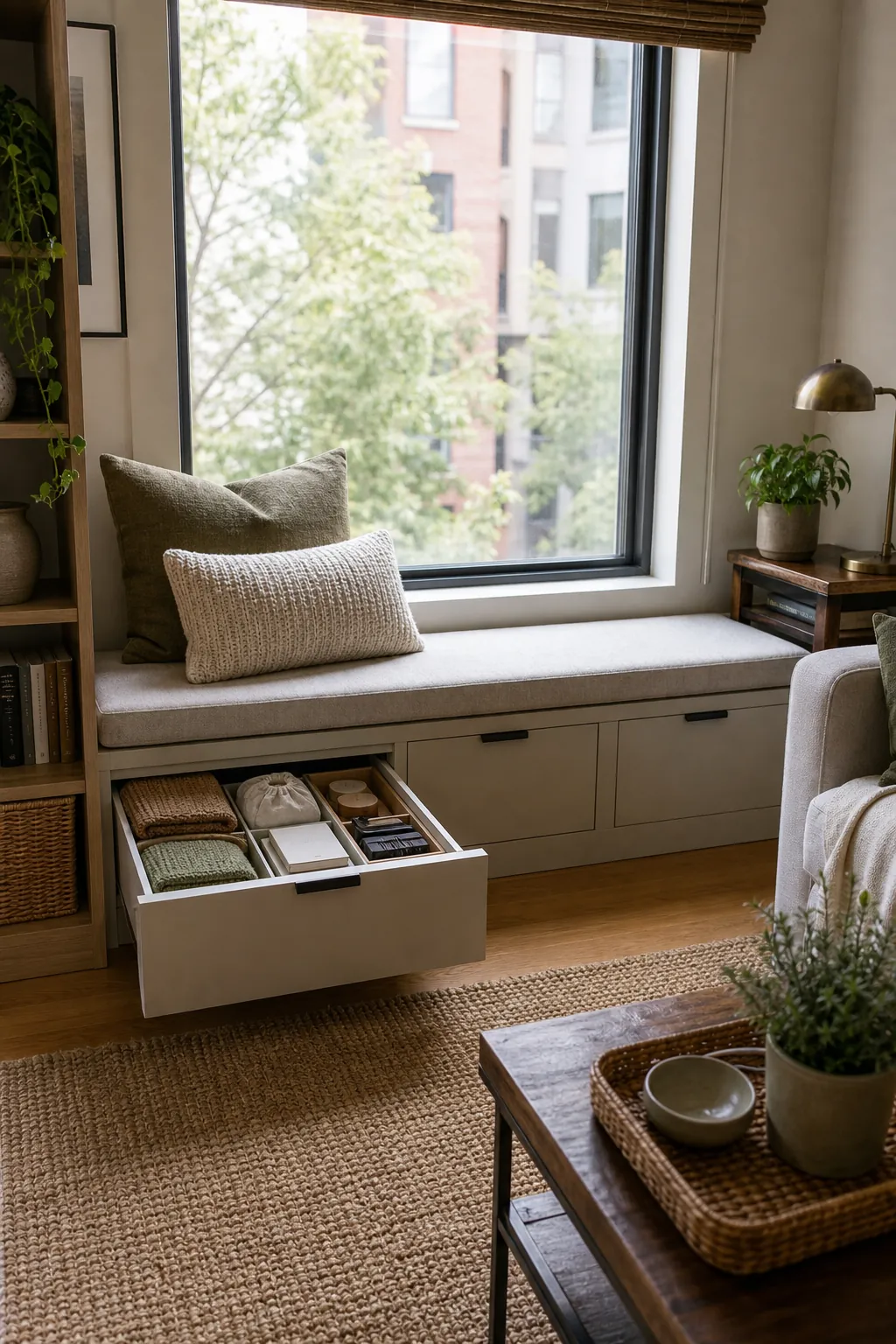
Choose Under Window Drawers for Everyday Clutter
Under window storage is perfect for everyday items that need to disappear without moving far away: throws, reading glasses, chargers, kids’ toys, puzzles, pet supplies, craft materials, and extra linens. Drawers are usually easier than lift-up bench seats because you can open them without removing cushions, pillows, or a tray from the top.
Keep the unit lower than the sill so the window still feels generous. If the room is narrow, choose push-latch drawers or small finger pulls instead of handles that catch clothing. In a living room, drawer fronts in the wall color create a built in storage look. In a bedroom, a wood top can make the piece feel like furniture instead of cabinetry.
- Use drawers when the contents are touched often.
- Use baskets when the space is temporary or rental friendly.
- Use doors when the unit is deeper and needs dividers inside.
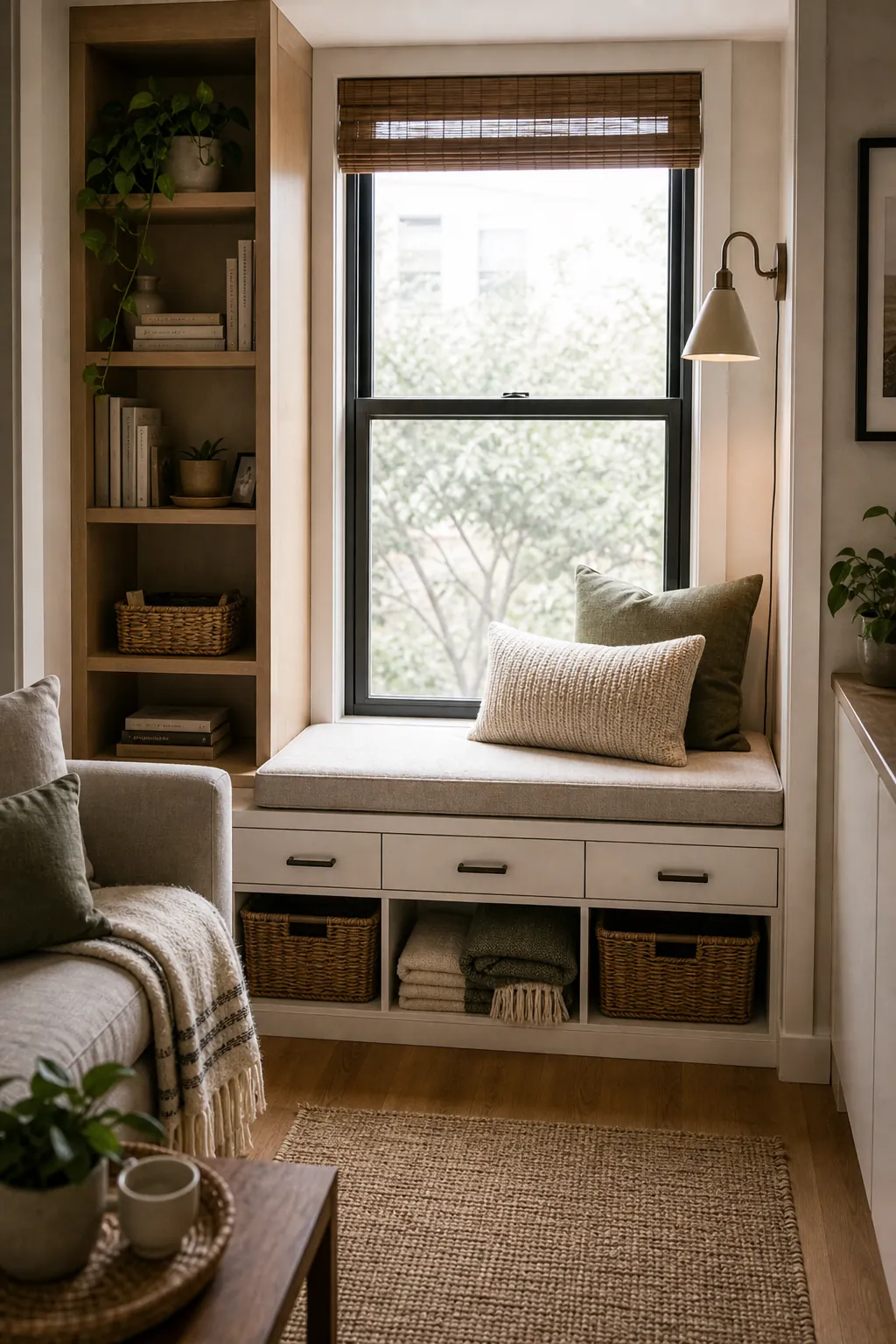
Build a Window Bench That Still Lets the Room Breathe
A bench under a window can add seating, hidden storage, and a reading nook in one move. It works in a living room, bedroom, kitchen corner, hallway, or small home office. The mistake is building it too tall, too deep, or too visually heavy. A window bench should make the room feel calmer, not block the window or crowd the walking path.
If there is a floor vent, radiator, or baseboard heater below the window, plan around airflow first. Use a shallower bench, vented fronts, open toe space, or a design that stops short of the heat source. Do not trap warm air behind a solid cabinet. If the window is low, skip a thick cushion and use a thin pad or a low cabinet top so the glass still feels open.
A good under window bench feels like architecture, not a box pushed against the wall. Add dividers inside so blankets do not swallow smaller items, and keep the cushion simple enough that the top can still be used daily.
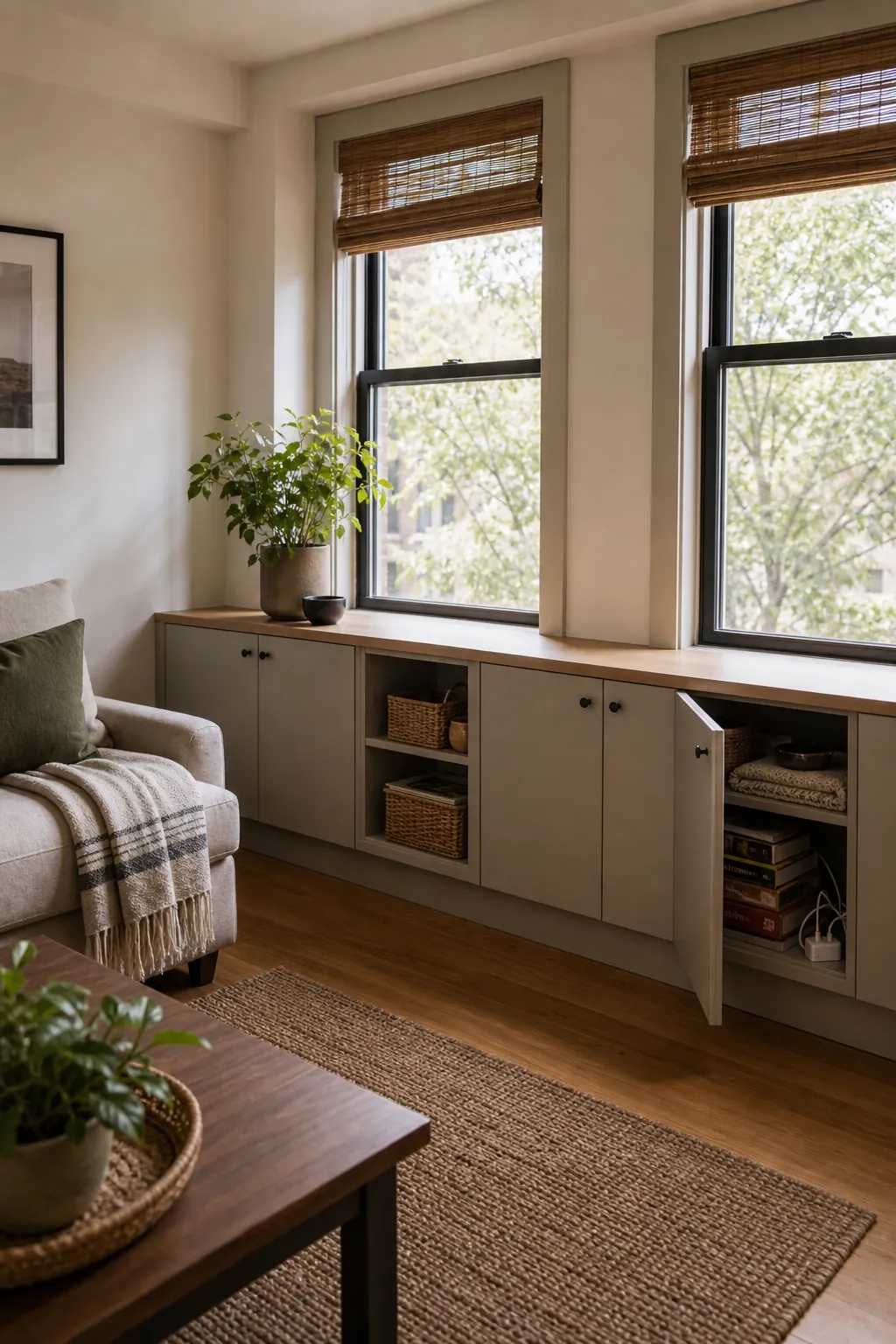
Use Low Cabinets to Connect Awkward Spaces
Sometimes the smartest small space storage is not a full bench. A long, low cabinet under a window can connect an odd wall, hide visual clutter, and give the room a calmer line. It can store books, games, craft bins, office supplies, table linens, or media accessories without making the wall feel crowded.
This is especially helpful when a window sits between two short walls, beside a stair opening, or near a room transition. A low built in can bridge the awkward space while leaving the window clear. Open shelves look lighter and work for books or baskets. Closed doors look cleaner and work for mixed clutter. A mix of both is usually best.
Finish the cabinet with the same discipline you would use in a small kitchen: fewer materials, simple lines, and one clear purpose for each compartment. The goal is not to fill every inch. It is to make the unused inches useful without making the room feel smaller.
Under stairs storage and under window storage both work when they respect the shape of the house. Pullouts make deep stair spaces practical. Benches and low cabinets make window walls useful. Hidden doors keep visual noise down. The right choice is the one that solves the daily clutter you actually have, not the one that only looks clever in a photo.