
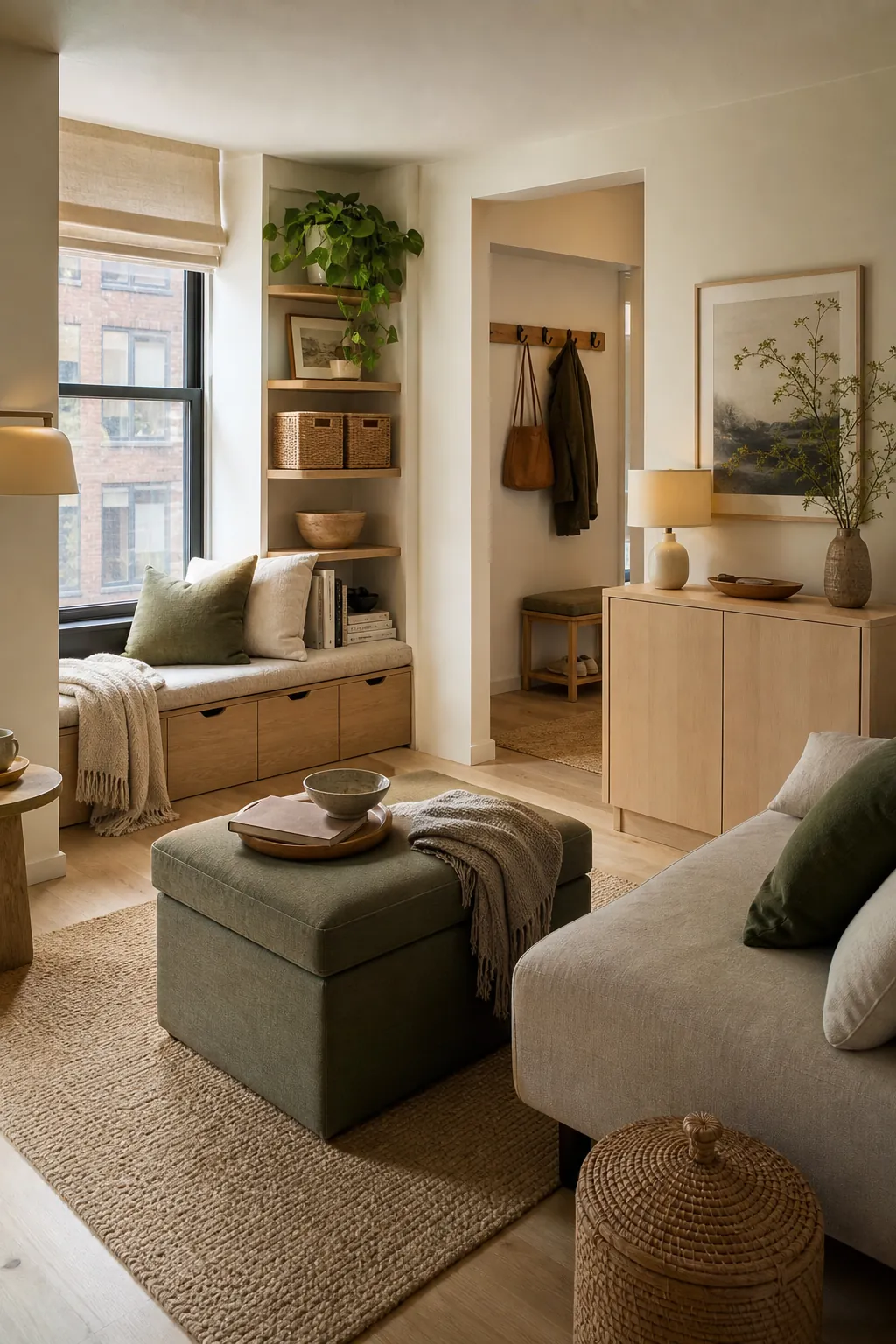
Small rooms do not usually look messy because there is no storage at all. They look messy because the storage keeps announcing itself. Open cubbies, half-full baskets, rolling carts, and stacked bins may technically hold things, but they can still make a home feel like a supply closet. The better goal is simple: make the storage behave like part of the room, not a rescue mission for the room.
These small space storage ideas focus on hidden storage, decorative storage, and storage furniture that looks intentional. The test is not whether an idea can hold more stuff. The test is whether it helps you keep a clutter free home without making every corner feel packed.
Start With The Stuff You Touch Every Day
Before buying another bin, look at the items that repeatedly land on chairs, counters, the bed, or the floor. Shoes by the door, mail on the table, blankets on the sofa, chargers near the bed, hair tools on the dresser, remote controls between cushions – these are not failures of discipline. They are clues. Your first storage upgrade should follow your real habits, not the fantasy version of how you wish you lived.
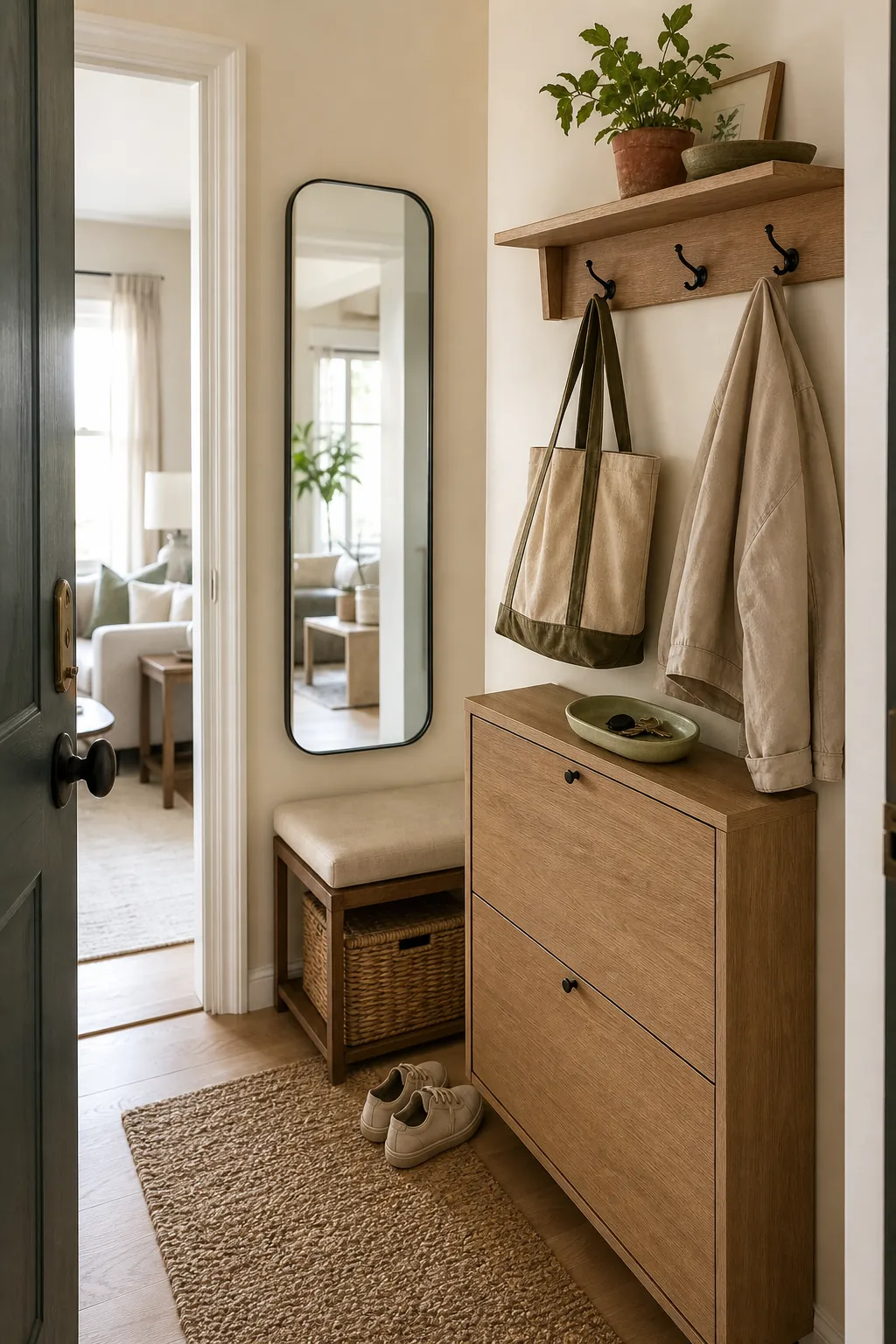
For a small home storage plan that actually lasts, give daily items a home within one step of where they are used. A lidded basket beside the sofa can hold throws and controllers. A narrow cabinet near the entry can hide shoes, bags, pet leashes, and returns. A pretty tray with one small box can handle keys and sunglasses without turning the surface into a dumping zone.
Choose Furniture That Looks Like Furniture First
The most successful storage furniture does not look like storage furniture from across the room. It reads as a bench, ottoman, sideboard, nightstand, stool, coffee table, or headboard first. The storage is a bonus you discover only when you lift the lid, open the drawer, or slide the panel.
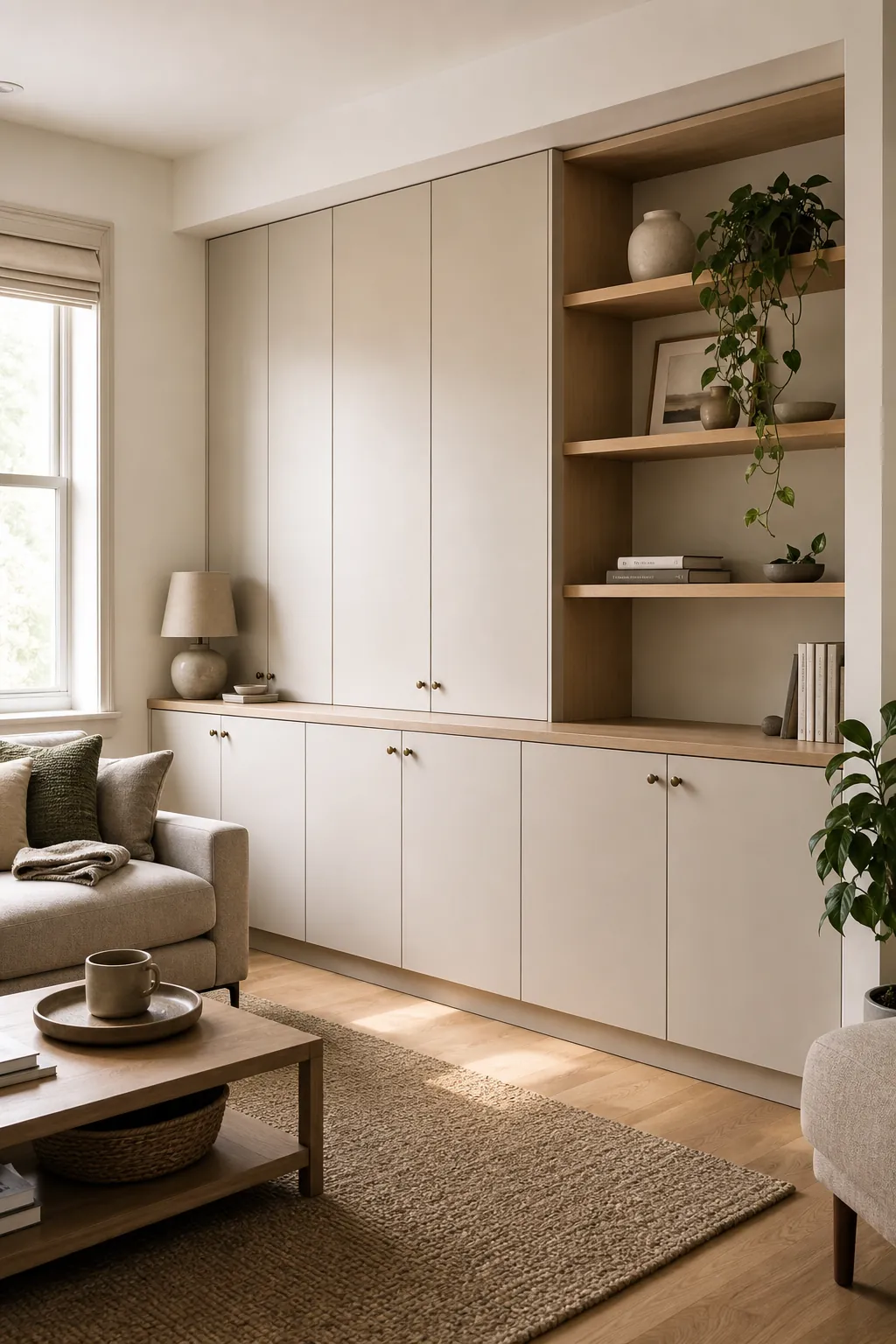
In a compact living room, a soft storage ottoman can replace three separate pieces: footrest, extra seat, and blanket bin. In a bedroom, a nightstand with drawers is usually calmer than a tiny table with visible baskets below it. In a studio apartment, a low sideboard with closed doors can do more for the room than a tall open shelving unit because it gives the eye a long, quiet line.
- Best for living rooms: storage ottomans, lift-top coffee tables, sideboards, and skirted benches.
- Best for bedrooms: drawer nightstands, under-bed drawers, upholstered storage benches, and bed frames with hidden compartments.
- Best for multipurpose rooms: closed media cabinets, compact desks with drawers, and nesting tables with concealed shelves.

Use Closed Storage For Visually Loud Items
Some belongings look busy no matter how neatly they are arranged. Board games, binders, cables, cleaning products, pantry overflow, craft supplies, workout gear, and backup toiletries all create visual noise. If those items sit in open shelving, the room can look crowded even after you organize everything perfectly.
This is where closed storage earns its space. A cabinet with doors, a console with drawers, a woven lidded trunk, or a bench with a lift-up seat can hide the practical parts of life while still supporting the interior styling of the room. Open shelves are for beautiful or uniform things. Closed storage is for the mixed, useful, awkward things that make a home function.
If you already own an open cube unit, make it calmer by using identical boxes across most of the cubes and leaving only a few open spaces for books, ceramics, or plants. If glass doors show too much, use reeded film, linen panels, or matching interior baskets to soften what is inside. The goal is not to erase personality. It is to stop every object from competing for attention.
Make Open Storage Look Deliberate
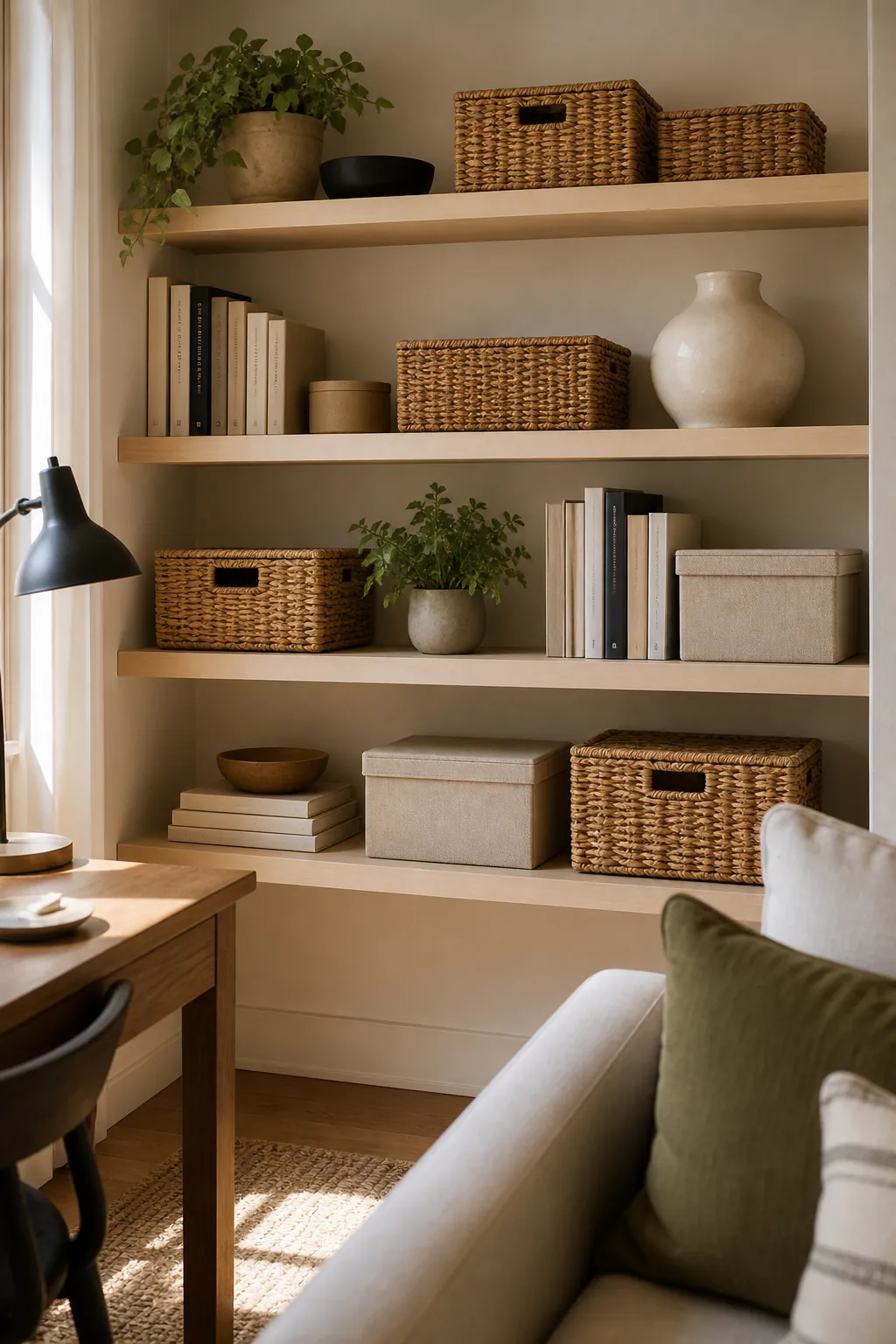
Open storage can work beautifully in a small space, but it needs editing. The mistake is treating every shelf as pure capacity. When every inch is packed, the wall becomes another clutter surface. For decorative storage, use open shelves like a room display with hidden function tucked into the background.
A good shelf mix is one-third closed containers, one-third useful items, and one-third breathing room. Choose two or three repeated materials, such as rattan, linen, pale wood, black metal, or ceramic, then keep the palette consistent. Books can be grouped by size instead of color. Baskets should match or at least feel related. Small everyday items should go into boxes, not spread across the shelf.
- Use trays to gather small things so candles, remotes, and coasters read as one styled moment.
- Turn supplies sideways or into boxes when labels and packaging make the shelf look busy.
- Leave negative space because empty shelf space is what makes pretty storage look designed.
Steal Storage From Awkward Edges
Small rooms often have unusable edges: the space under a window, the gap beside a sofa, the strip behind a door, the area under a bed, the wall above a desk, or a shallow alcove that is too tight for standard furniture. These spots are perfect for hidden storage because they already feel secondary. When you use them well, the center of the room can stay open.
A window bench with drawers can hold seasonal decor, linens, or hobby supplies while creating a seat. A narrow wall cabinet can hide paperwork without taking over the room. Under-bed boxes work best when they are easy to pull out and used for categories you do not need daily. A slim rolling cart can be useful in a kitchen or bath, but only if it tucks fully out of the main sightline.
The important part is restraint. Do not fill every awkward gap just because it exists. Choose the edges that solve a real problem and leave a few empty lines so the room still feels livable.

Make A Pretty Drop Zone Instead Of Fighting One
Every home has a place where things naturally land. In a small apartment, that place is often painfully visible: the kitchen counter, the dining table, the sofa arm, or the first surface inside the door. The answer is not to pretend you will stop dropping things there. The answer is to design the drop zone so it looks intentional.
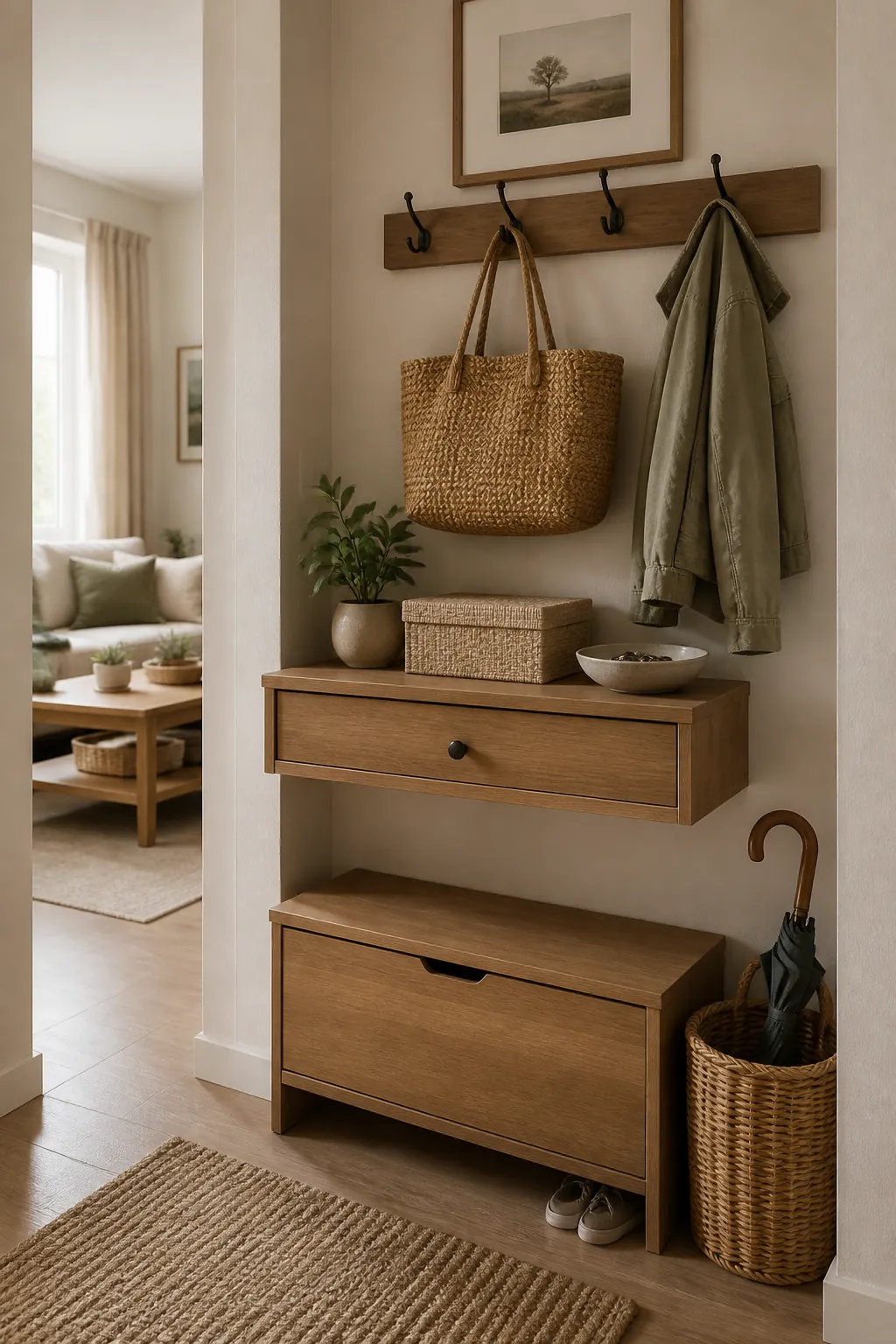
For a clutter free home, a drop zone needs three parts: a flat landing surface, a concealed pocket, and a vertical hook or rail. A small console with one drawer, a wall shelf with a lidded box, or a bench with a basket underneath can handle the messiest daily items. Add hooks for bags or jackets, but keep the number low. Too many hooks become open storage for every coat you own.
This is also where pretty storage matters most. A beautiful box for mail feels easier to maintain than a plastic sorter. A woven basket for shoes looks calmer than an exposed rack. A ceramic bowl for keys can double as decor. When the storage looks good empty and full, you are more likely to keep using it.
Keep Storage From Becoming A Place Things Disappear
Hidden storage is only helpful if you can still find what you own. The risk of very clever storage is that it becomes a secret archive of things you never use. The fix is to make each closed area responsible for one clear category. One drawer for chargers. One basket for workout gear. One bench for extra blankets. One under-bed box for off-season bedding.
For home organization that stays beautiful, label the inside if you need to, but keep the outside clean. Use dividers inside drawers. Put smaller containers inside larger cabinets. Store heavy items low and light items high. Keep daily items at hand level and occasional items in the harder-to-reach spots.
A simple seasonal reset helps too. Twice a year, open every hidden compartment and ask: Do I use this? Would I buy it again? Is this storage making the room better, or just hiding decisions? The best small space storage does not help you keep everything. It helps you keep the right things without letting them take over the room.
That is the difference between a room full of containers and a room that feels calm. Small space storage should support the way you live, disappear into the furniture and styling, and leave enough visual quiet for the home to feel like a home.