
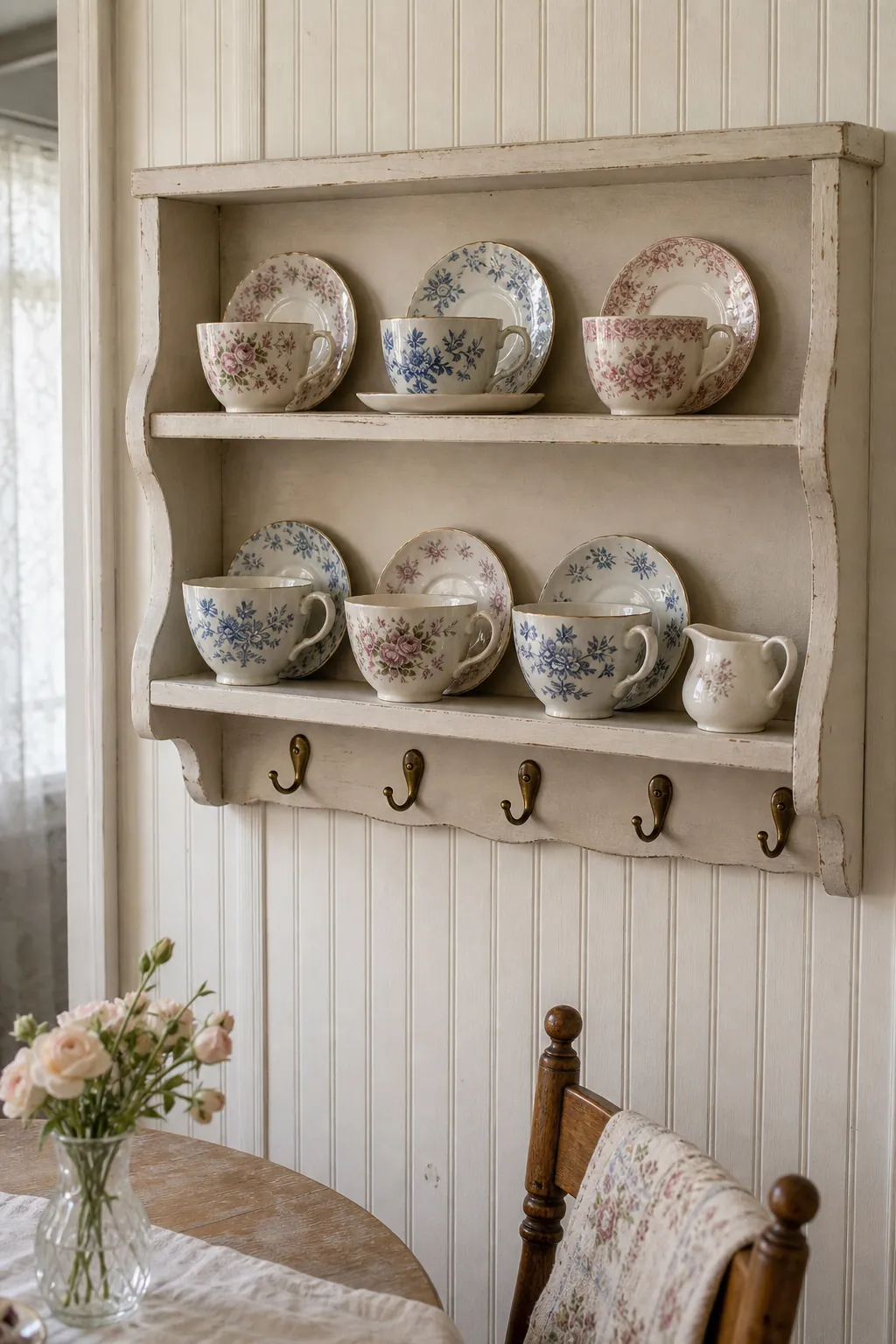
A tea cup wall shelf solves a collector problem that ordinary cabinets rarely fix: vintage teacups are small, patterned, and sentimental, but they need to be seen from the front. Stack them too tightly and the collection disappears into clutter. Hide them in a deep cabinet and only the front row gets noticed.
The right wall shelf turns a teacup display into part of the room. It gives saucers a place to lean, cups a safe landing spot, and the whole collection enough space to feel intentional. The best setup depends on how many cups you own, whether saucers matter, and how much wall depth your home can handle.
Use these tea cup wall shelf ideas if you are styling vintage teacups, inherited china, or a growing collector display. The goal is not to show every piece at once. The goal is to make the collection feel loved, visible, and secure.
Choose the Wall Before You Choose the Shelf
A pretty shelf in the wrong place becomes a daily frustration. Before buying or hanging anything, look for a wall that is easy to see but not easy to bump. Breakfast nooks, dining corners, pantry walls, and quiet kitchen side walls usually work better than busy walkways.
Collectors should also think about light. Direct sun can fade some older patterns and make a display glare. Soft side light is better. It catches the shape of handles, saucers, and gold rims without making the shelf feel like a shop case.
Use Picture Ledges When Saucers Matter
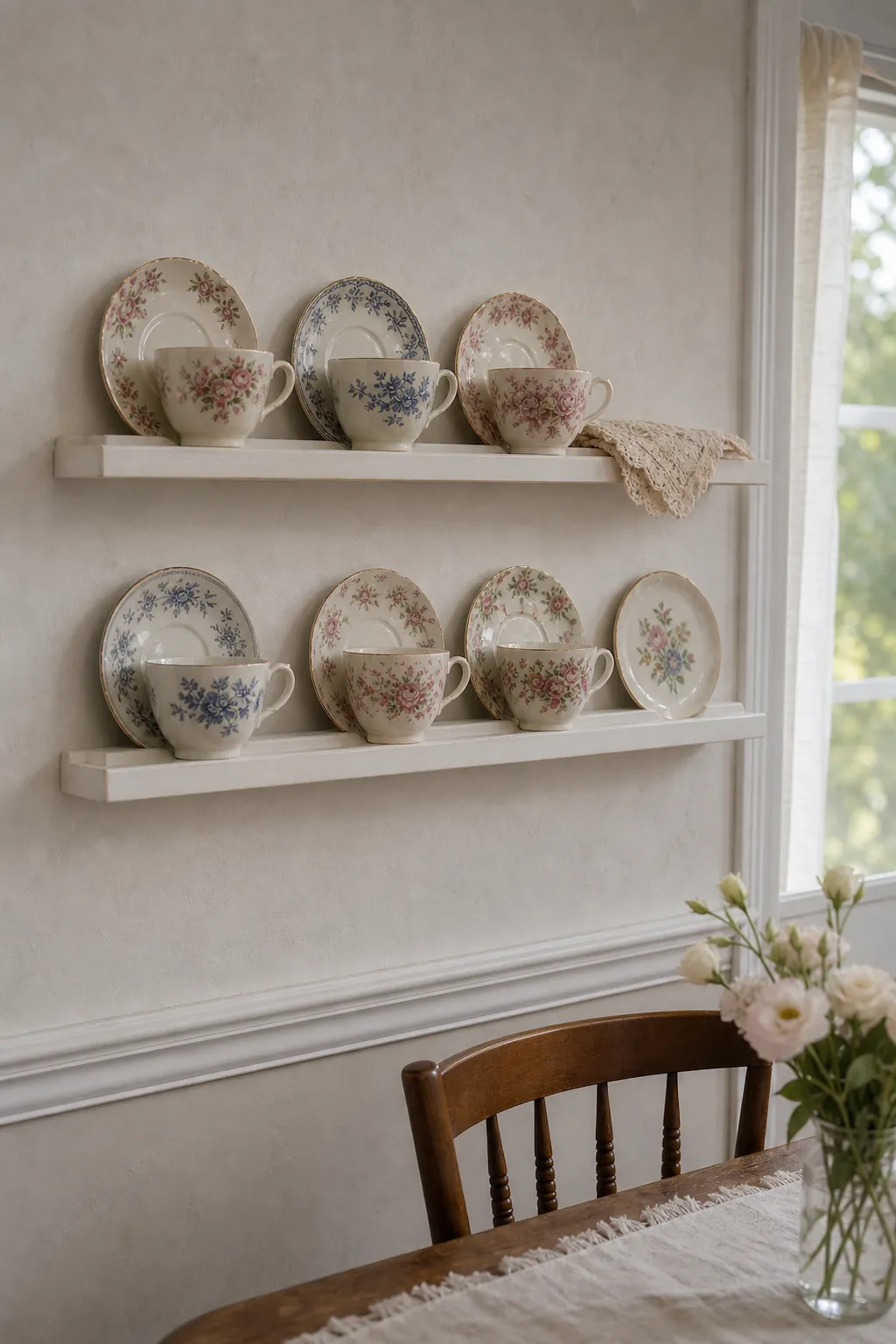
Picture ledges are excellent for a teacup display because they are shallow, simple, and made for objects that lean. If your saucers are as beautiful as your cups, this style lets both show at once. Place the saucer behind the cup, slightly off center, and keep the cup forward enough that the handle reads clearly.
The key is restraint. A ledge crowded with cups and plates can look unstable even if it is secure. Leave a little space between each cup. If the shelf has a front lip or groove, use it. If it does not, add a discreet plate stand or choose a deeper ledge.
- Best for collectors who want saucers visible.
- Works well above a small dining table, buffet, or breakfast bench.
- Looks lighter than a deep cabinet or heavy wall unit.
- Needs careful spacing so handles do not visually collide.
Try a Cubby Shelf for Many Mismatched Cups
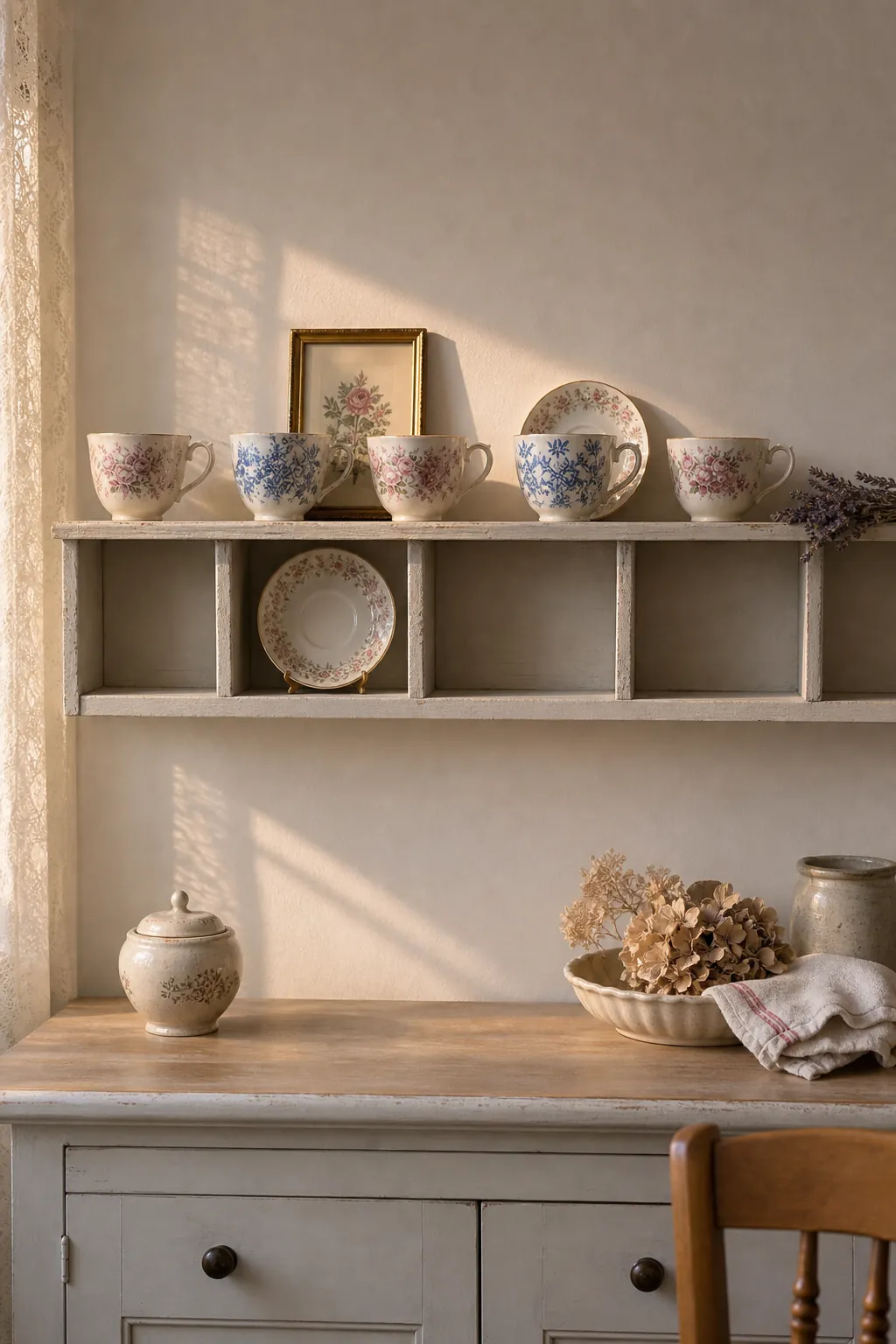
A cubby shelf gives each cup its own little frame. This is useful when your vintage teacups are mismatched and busy. The grid creates order, so the collection can be colorful without feeling chaotic.
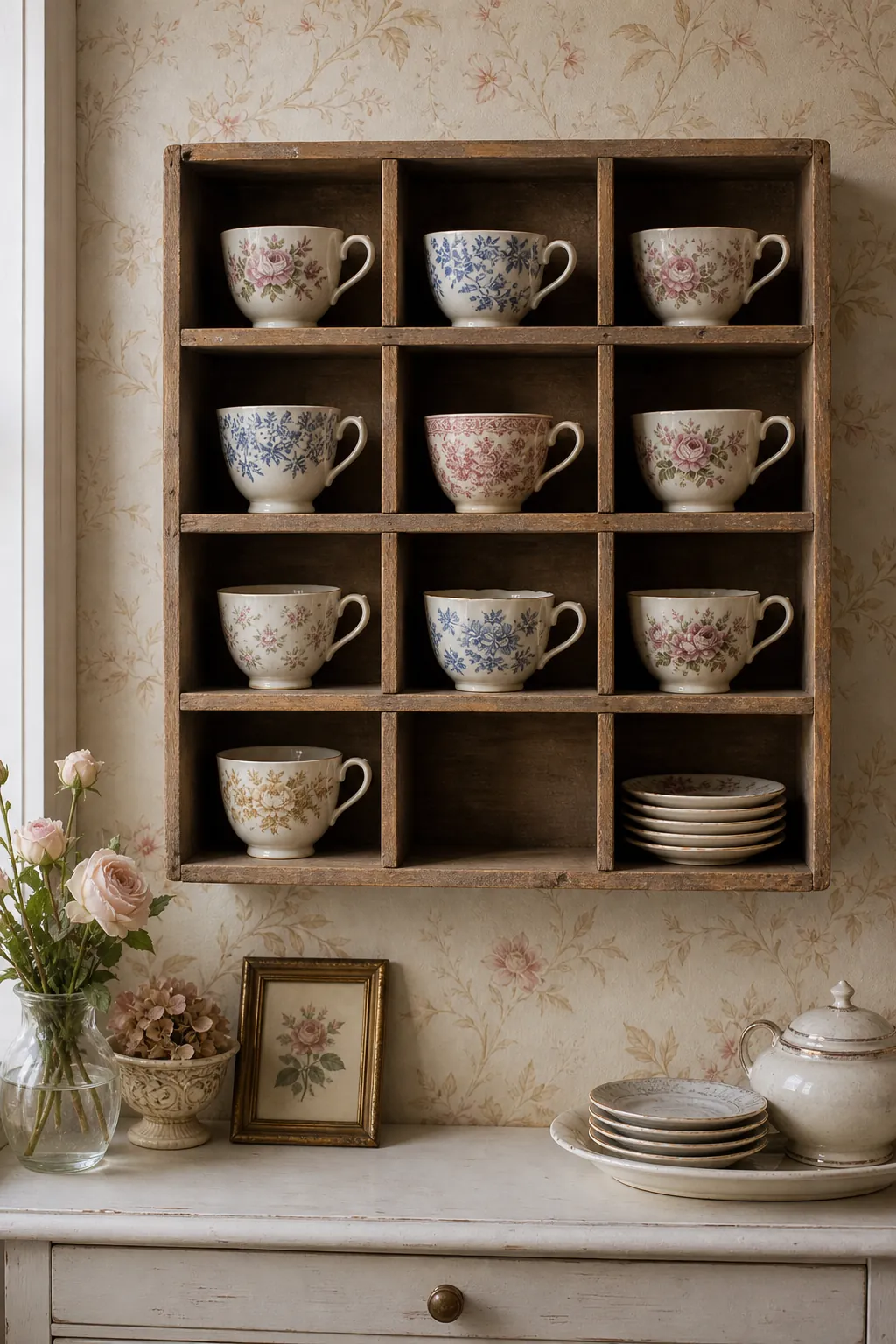
Do not fill every opening just because it exists. One empty cubby can make the entire collector display feel more expensive and less packed. Use lower cubbies for saucer stacks, small creamers, or pieces that are less fragile. Place your most detailed cups where the eye naturally lands first.
Add a Hook Rail for Cups You Want to Hang
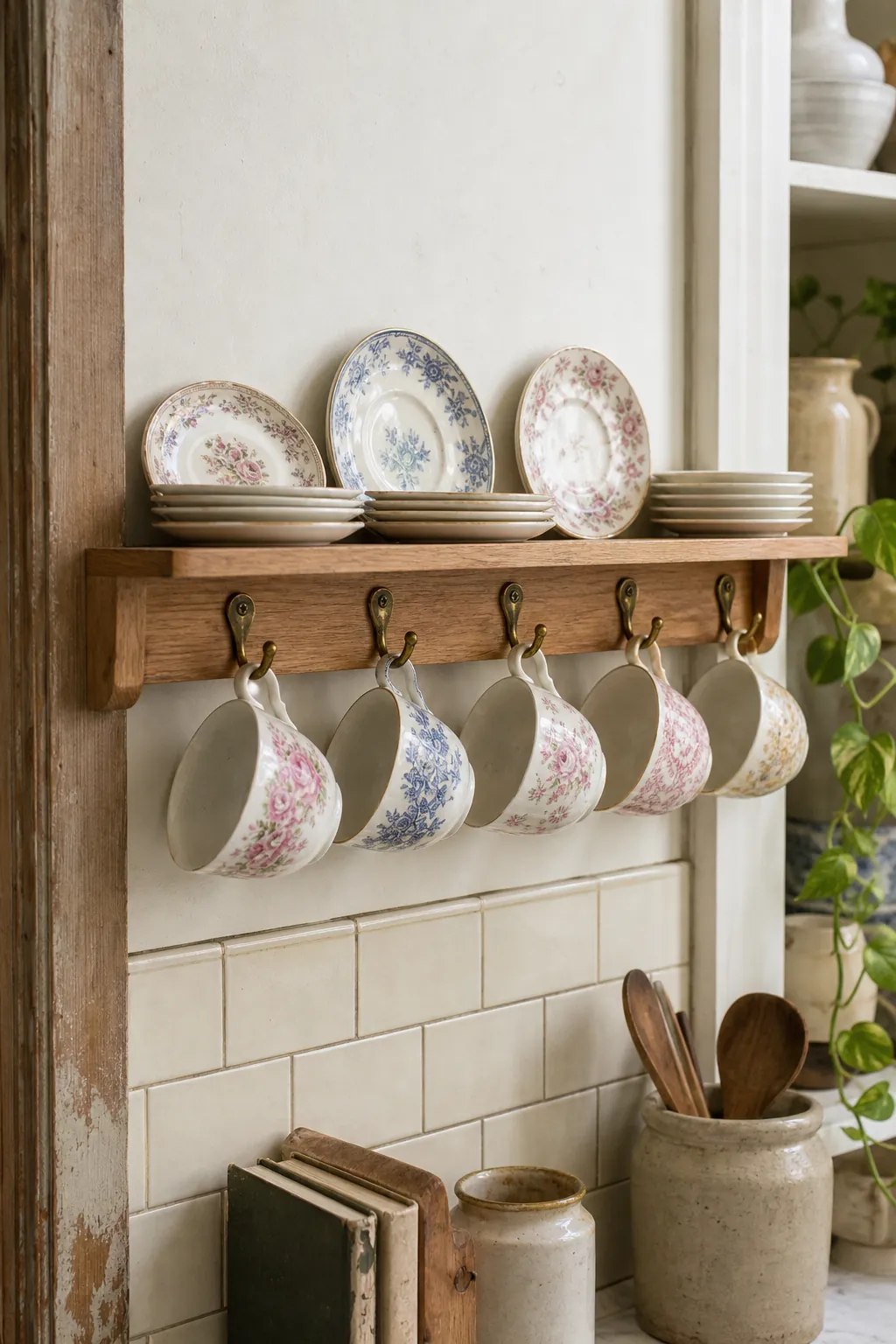
A shelf with hooks underneath is one of the most space-efficient wall shelves for tea cup decor. The saucers and small plates sit on the ledge above, while cups hang by their handles below. It saves shelf depth and gives the display an old kitchen feeling.
This idea only works when the hooks are properly spaced and the cups hang freely. Each cup should have enough room that it does not tap the next cup when the wall vibrates. Use sturdy hooks installed into the shelf structure, not decorative hooks that are too thin or loosely attached.
Use Corner Shelves for Small Kitchen Collections
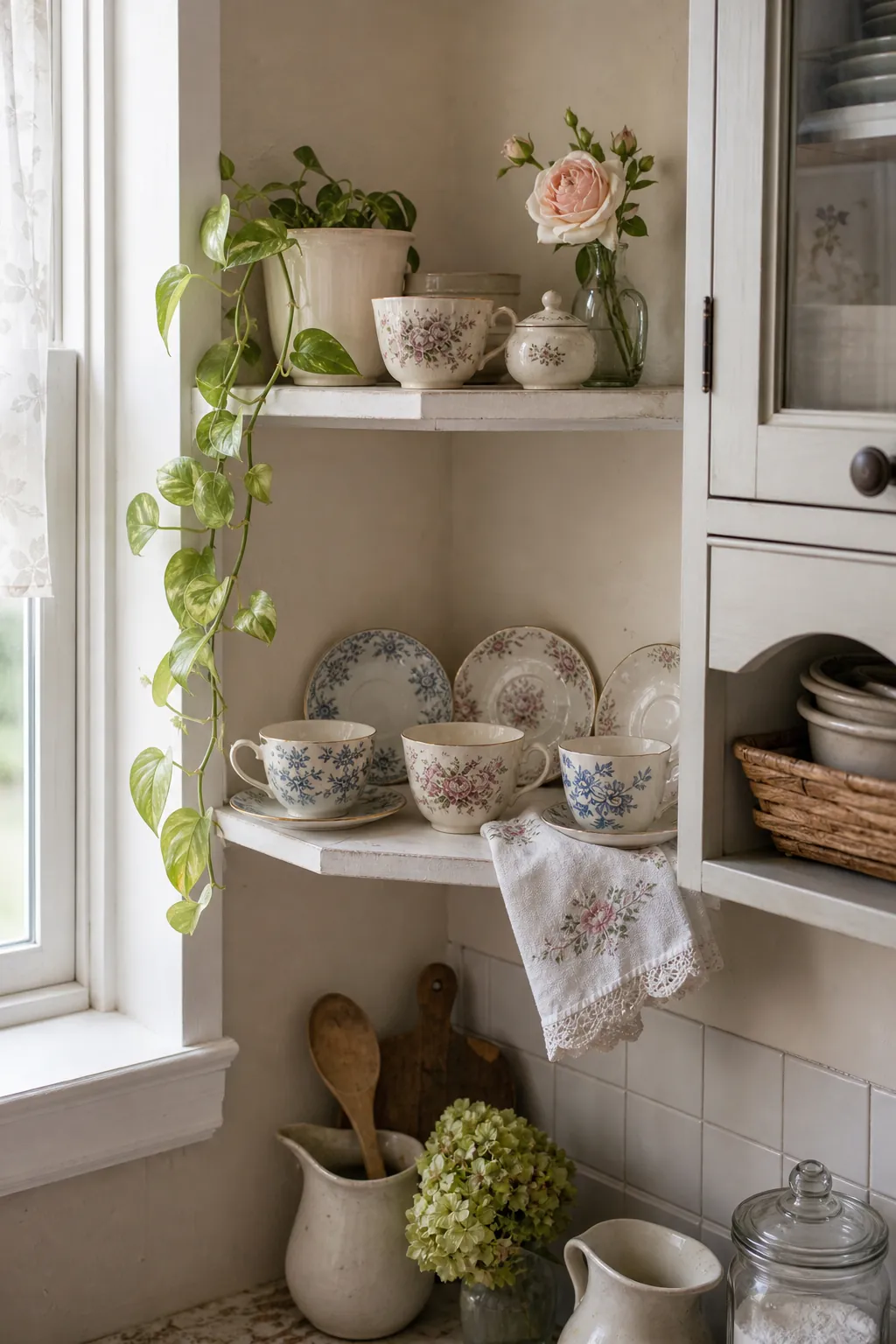
A corner shelf can turn an awkward kitchen spot into a small collector display. It works especially well when you only want to show a few vintage teacups near everyday dishes. The corner gives the arrangement a built-in boundary, which helps the display feel tidy.
Keep the lower shelf practical and the upper shelf lighter. Place cups at reachable height if you use them, and reserve higher space for saucers, a sugar bowl, or a small plant. This keeps the shelf from becoming a dust-only display.
Consider a Narrow Shelf With a Front Rail
If the only available wall is a hallway or pass-through, use a narrow shelf with a low front rail. The rail gives the cups a visual stop and makes the display look safer. It is especially helpful in older homes where walls may not be perfectly straight.
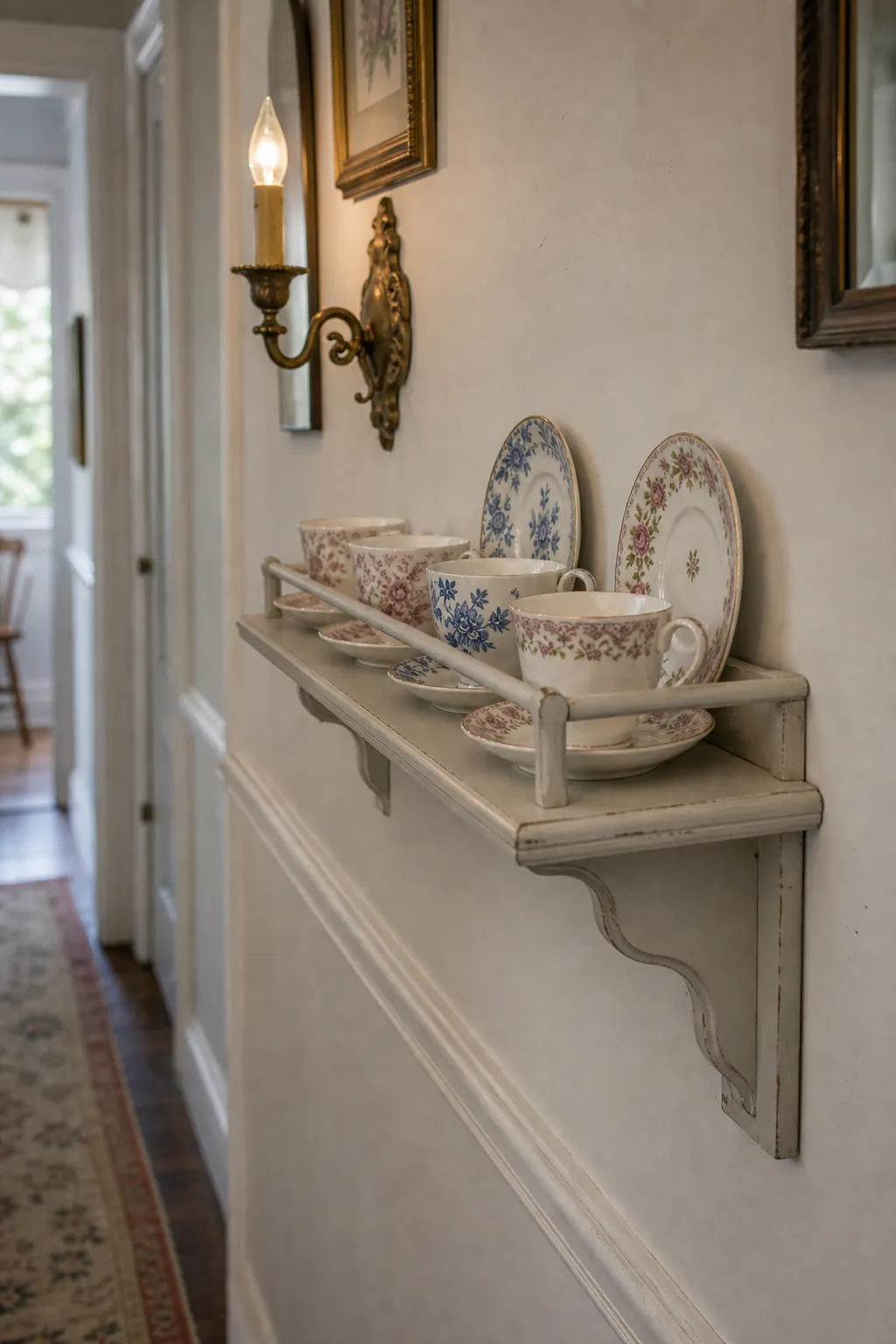
Be honest about clearance. A teacup wall shelf should not make people turn sideways to walk by. If the hallway is tight, display fewer pieces and choose a shelf that is only deep enough for the saucers and cup feet.
Rotate the Collection Instead of Showing Everything
Many collectors own more cups than one shelf can hold gracefully. That is not a problem. Rotate the display. A small edited shelf can feel more personal than a large crowded one because each piece has room to be noticed.
Choose a seasonal color story: spring florals, blue and white pieces, cream and gold, or soft cottage decor tones. Store the rest safely and switch the display when the room starts to feel stale.
Safety Details That Make a Teacup Display Better
Because vintage teacups are fragile, the practical details matter. A collector display should look delicate, but it should not actually be delicate. Use proper wall anchors or studs, especially if the shelf is wood, holds plates, or sits above furniture people use every day.
- Check that saucers cannot slide forward easily.
- Use plate grooves, ledges, or stands when saucers lean upright.
- Keep cup handles from touching each other.
- Do not place the shelf where a door can swing into it.
- Dust with one hand supporting the cup or saucer, not by dragging a cloth across the shelf.
Make the Shelf Feel Collected, Not Crowded
The most beautiful tea cup wall shelf usually has fewer pieces than expected. It shows the pattern, the handle shape, the saucer, and the age of each cup. It gives the collection rhythm instead of turning it into inventory.
Start with the shelf style that fits your wall: ledges for saucers, cubbies for many cups, hooks for vertical storage, corner shelves for kitchens, or a rail shelf for narrow spaces. Then edit. A collector display is strongest when every cup has enough room to feel chosen.