
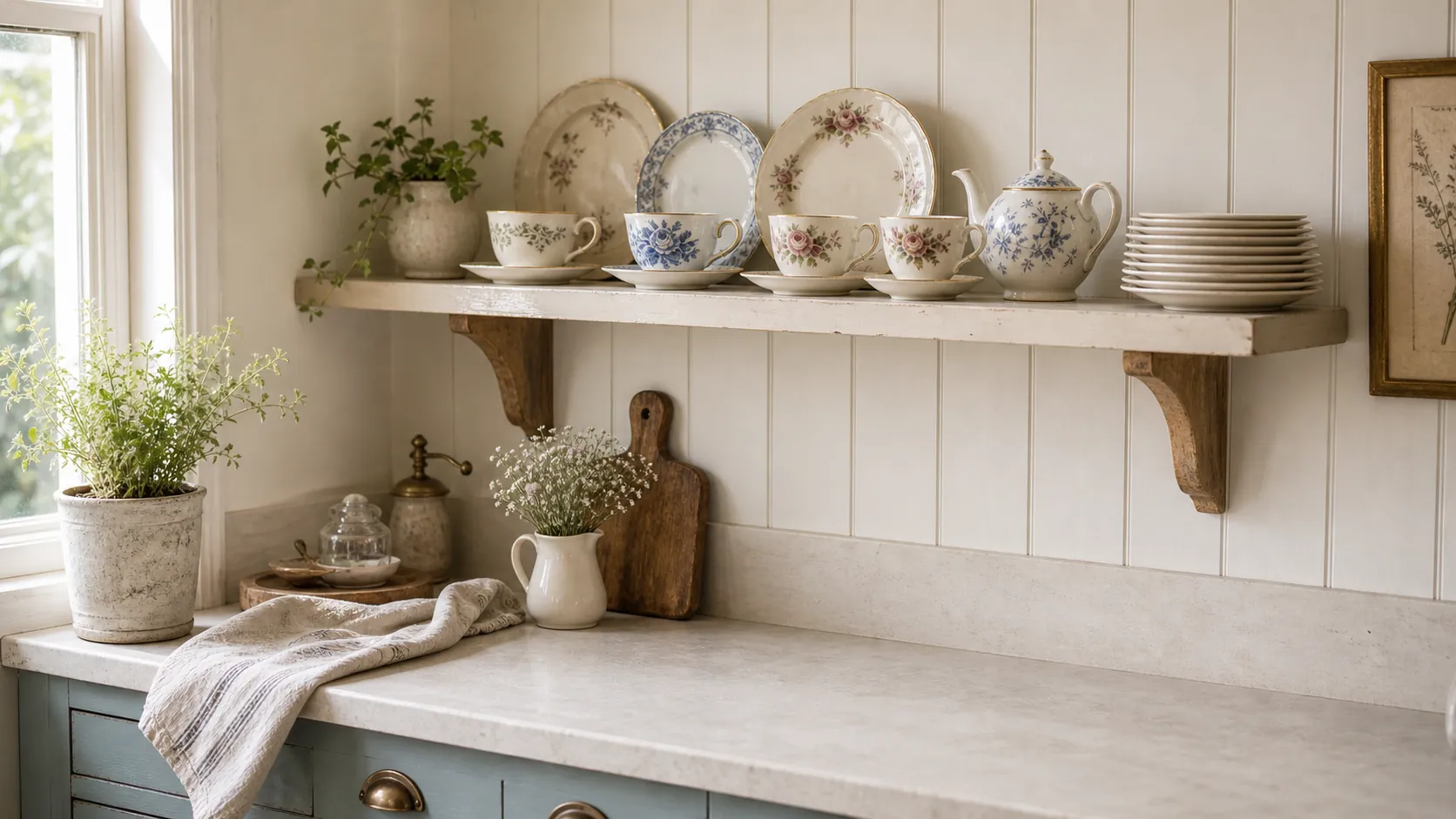
A teacup shelf can be the detail that makes a cottage kitchen feel personal. It adds pattern, softness, a little shine, and the kind of collected charm that plain cabinets rarely give. But open shelving in a kitchen also has a practical side: dust, grease, crowded counters, and shelves that look pretty for a week before they become annoying to use.
The strongest teacup shelf ideas solve both problems. They make vintage teacups visible, but they also respect the way a kitchen works. Place shelves away from the messiest cooking zones, give saucers a proper support, mix display with storage, and keep the shelf styling simple enough that the room still feels easy to live in.
Put a small teacup shelf near natural light
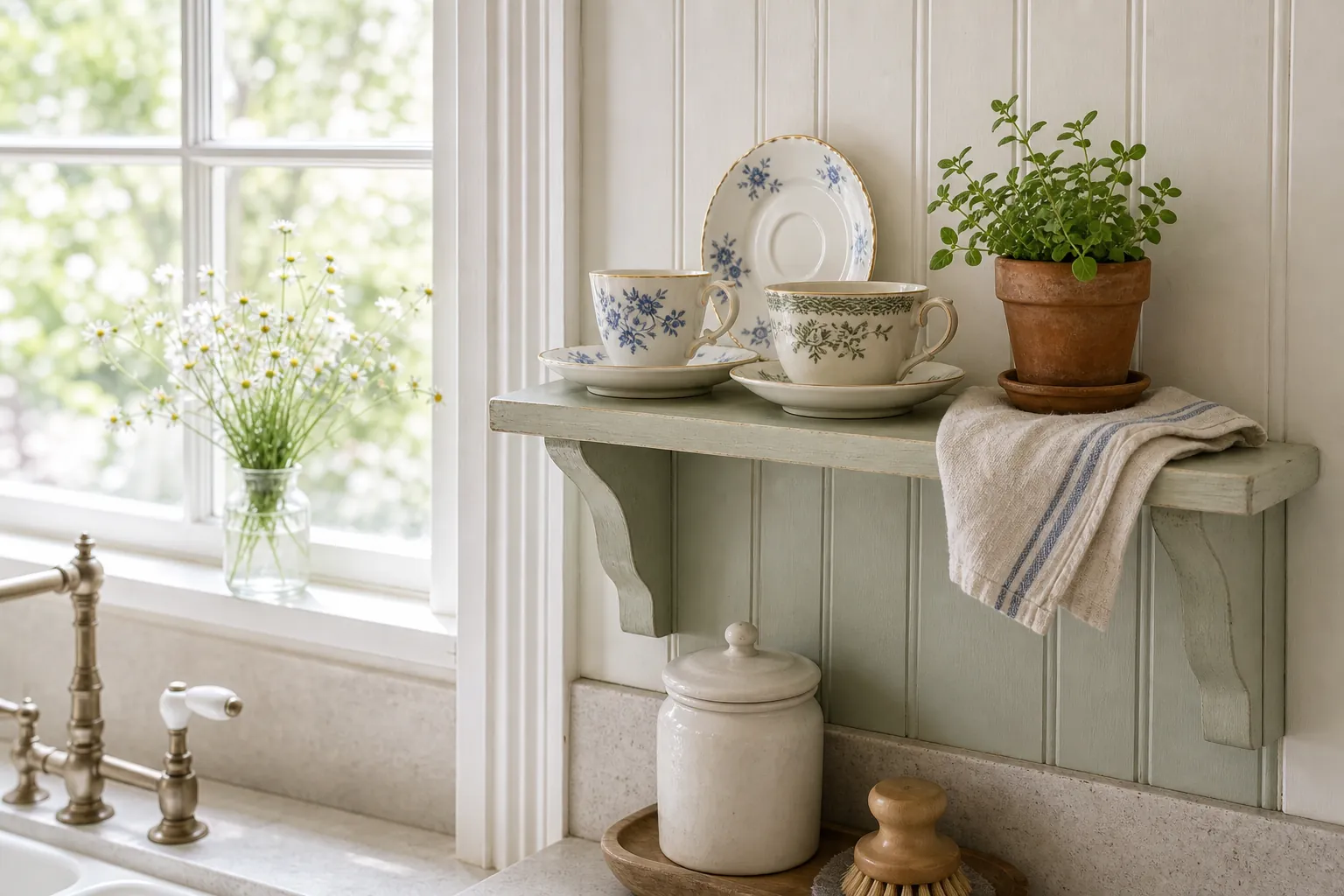
Vintage teacups look best where the glaze and little floral details can catch daylight. A shelf near a window, beside the sink, or on a quiet breakfast nook wall can make a cottage kitchen feel brighter without adding a lot of decor.
The key is to keep the shelf small. A narrow ledge with two teacups, one saucer, and a tiny herb pot often feels more cottage-inspired than a long shelf packed with every cup you own. If the window area is already useful for washing dishes or prepping food, keep the display to one side so it does not interrupt the work zone.
This is a good place for pretty kitchen decor that changes with the seasons: a spring teacup, a little rosemary pot, a folded tea towel, or a tiny pitcher. Keep the window sill itself mostly clear so the whole corner stays fresh instead of fussy.
Use a plate groove shelf for cups with saucers
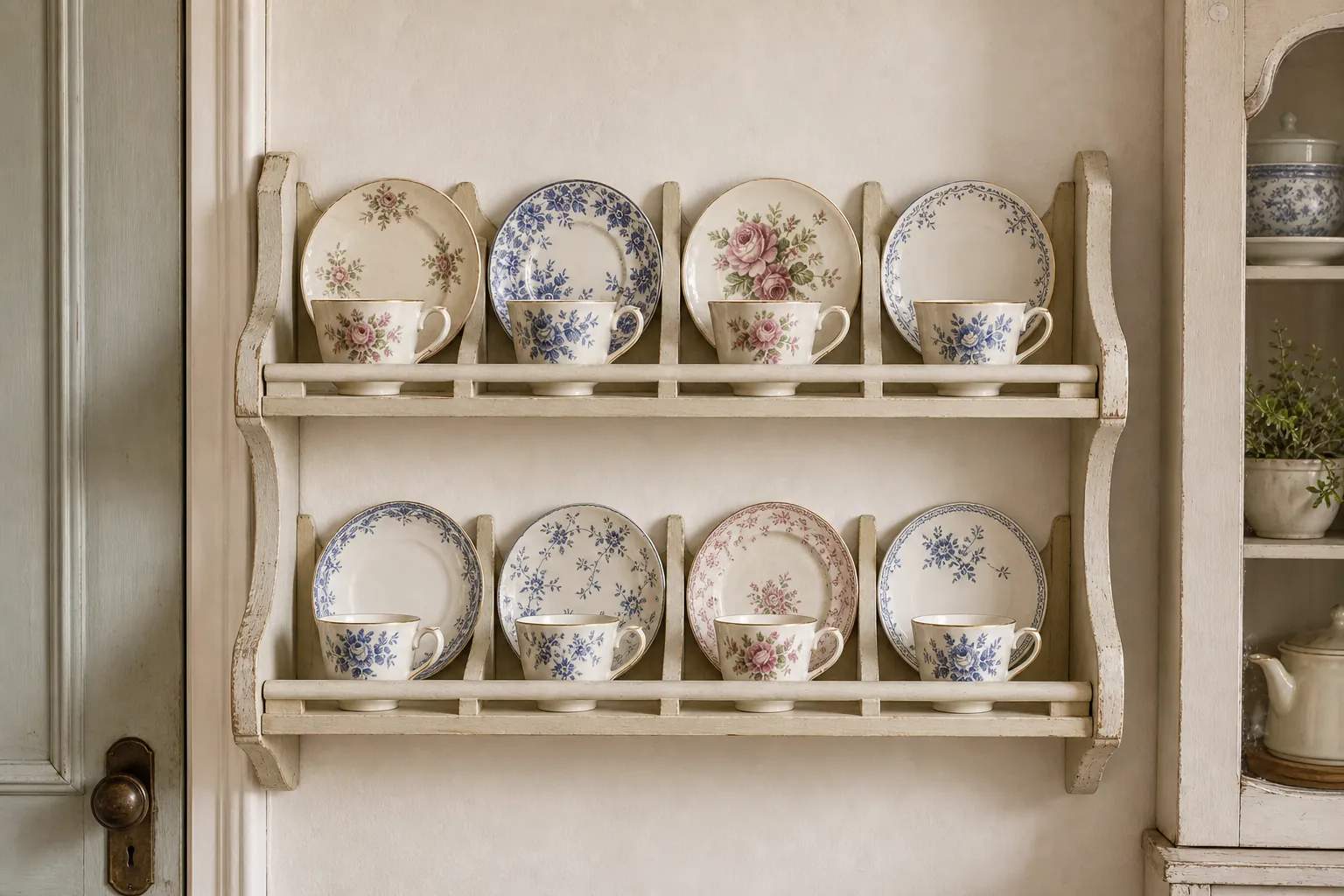
If your vintage teacups have saucers, a plate groove shelf is one of the cleanest display ideas. The saucer stands upright at the back, the cup sits in front, and each pair gets a clear place. It looks intentional because the shelf is designed for the shape of the collection.
This matters in a cottage kitchen because teacups are small and detailed. Without structure, the shelf can quickly look like a row of random pieces. A groove, lip, or shallow rail gives the display rhythm. It also helps prevent saucers from sliding forward or disappearing behind the cups.
For the most relaxed shelf styling, leave a small gap between each set. Repeating one color, such as blue and white, cream, or soft pink florals, will make the shelf feel calm even when the cups are not a perfect match.
Turn the shelf into a useful tea station
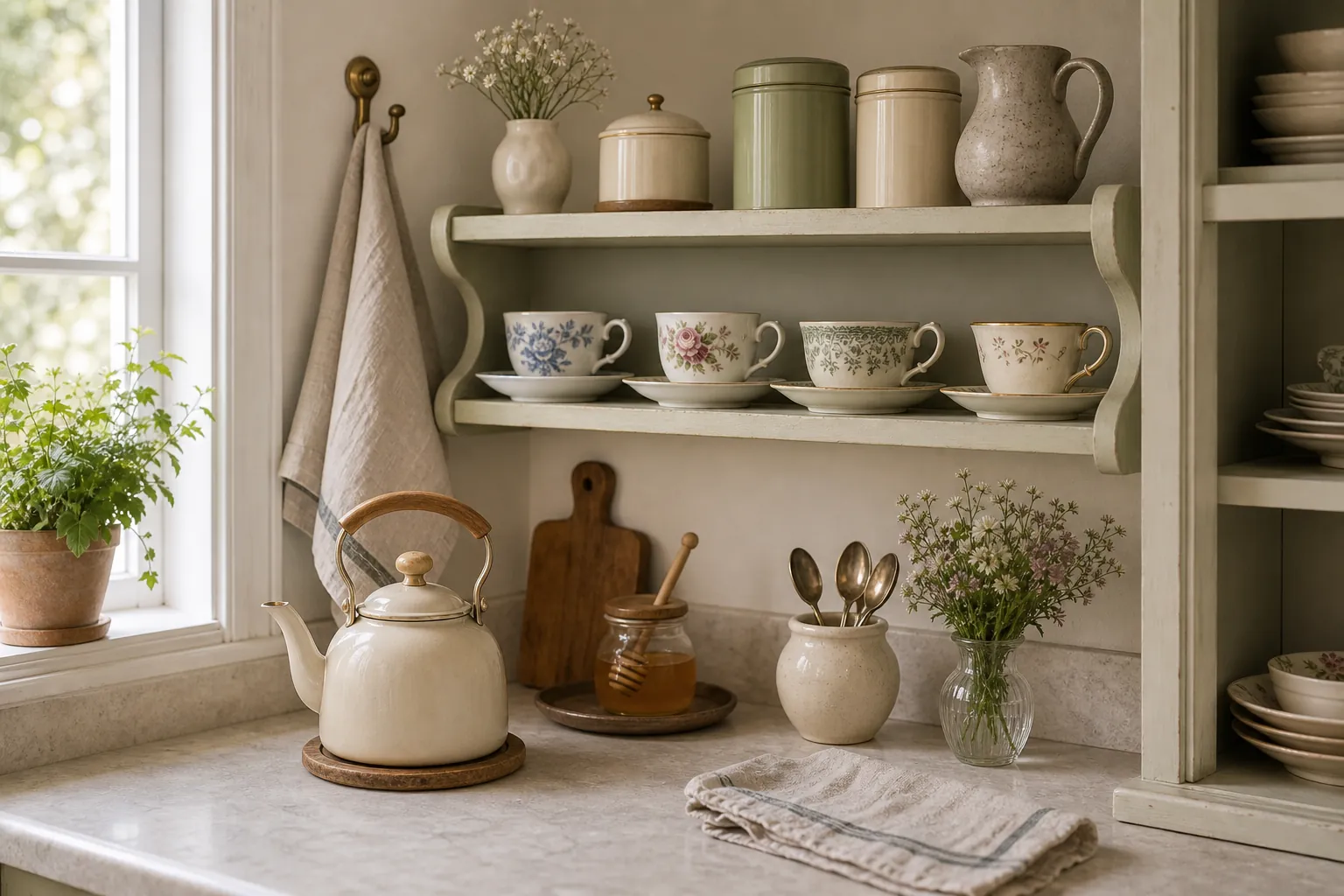
A teacup shelf does not have to be purely decorative. In a cottage inspired kitchen, the prettiest displays often work because they are close to a real habit. If you make tea every day, place the shelf above a kettle, honey pot, tea tins, or a small spoon cup.
Keep daily cups on the lower shelf where they are easy to reach. Put the more delicate vintage teacups higher, or reserve them for the back of the shelf where they can be seen but not bumped. This gives the tea station a layered look without making every piece compete for attention.
The practical details matter. Avoid placing open shelving right beside a greasy cooking range if you do not want to clean teacups constantly. A tea corner, pantry wall, breakfast area, or hutch zone usually works better for delicate china.
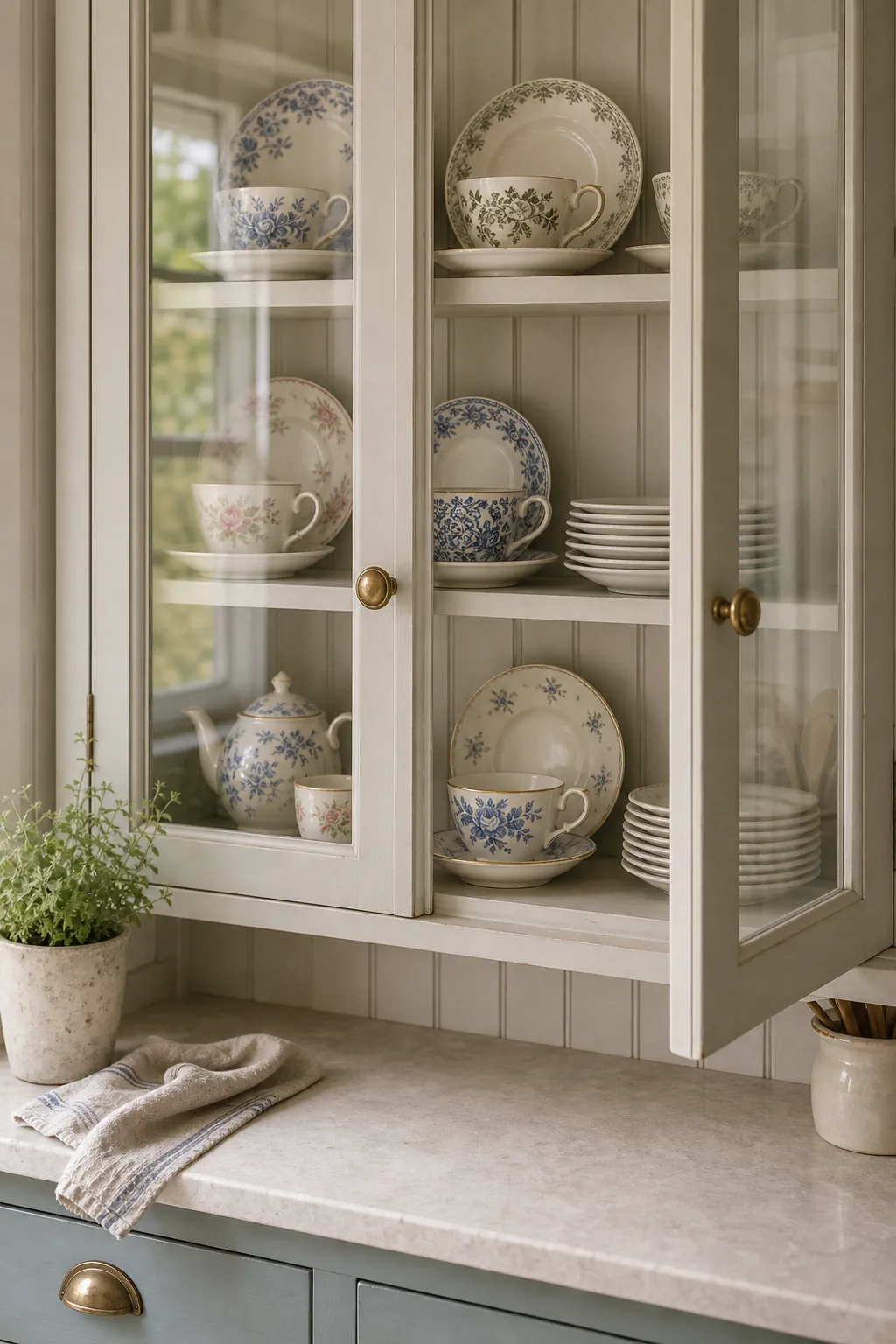
Try glass-front cabinets when open shelving feels too exposed
Some kitchens are not good candidates for lots of open shelving. If you cook often, have pets, live with dust, or simply do not want to style shelves every week, glass-front cabinets can give you the teacup display without as much upkeep.
A painted cabinet with glass doors still feels cottage, especially with beadboard backing or simple brass knobs. The glass keeps vintage teacups visible while making the whole arrangement feel more contained. It is a strong option for heirloom cups, full tea sets, or pieces that you want to admire more than handle.
Style the inside like you would an open shelf: largest pieces at the back, cups and saucers paired, enough space between groups, and a limited color story. Glass does not hide clutter; it only frames it.
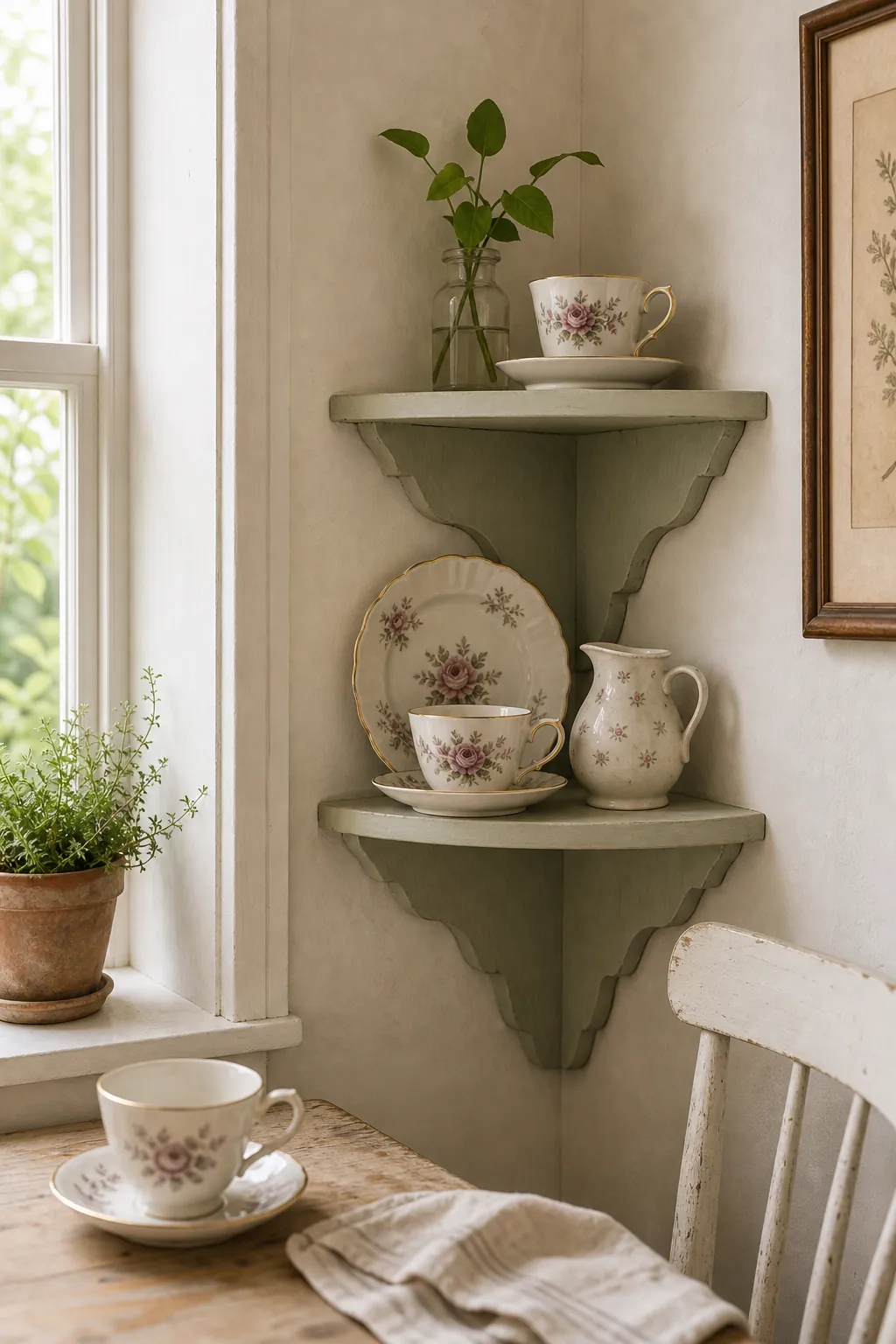
Use a corner shelf when wall space is tight
Small cottage kitchens often have awkward corners that are too shallow for cabinets but perfect for a little teacup shelf. A triangular corner shelf can hold a few favorite cups, a tiny pitcher, or a floral plate without taking up a main prep wall.
This idea works best when you accept the scale. Do not try to force a whole collection into a corner. Let the corner shelf be a small moment, not the main storage plan. Two shelves with two or three pieces each will look sweeter than five shelves crammed with china.
For a vintage kitchen look, choose painted wood, simple brackets, or a slightly aged finish. Keep nearby decor quiet so the corner feels like a tucked-away discovery rather than another busy spot.
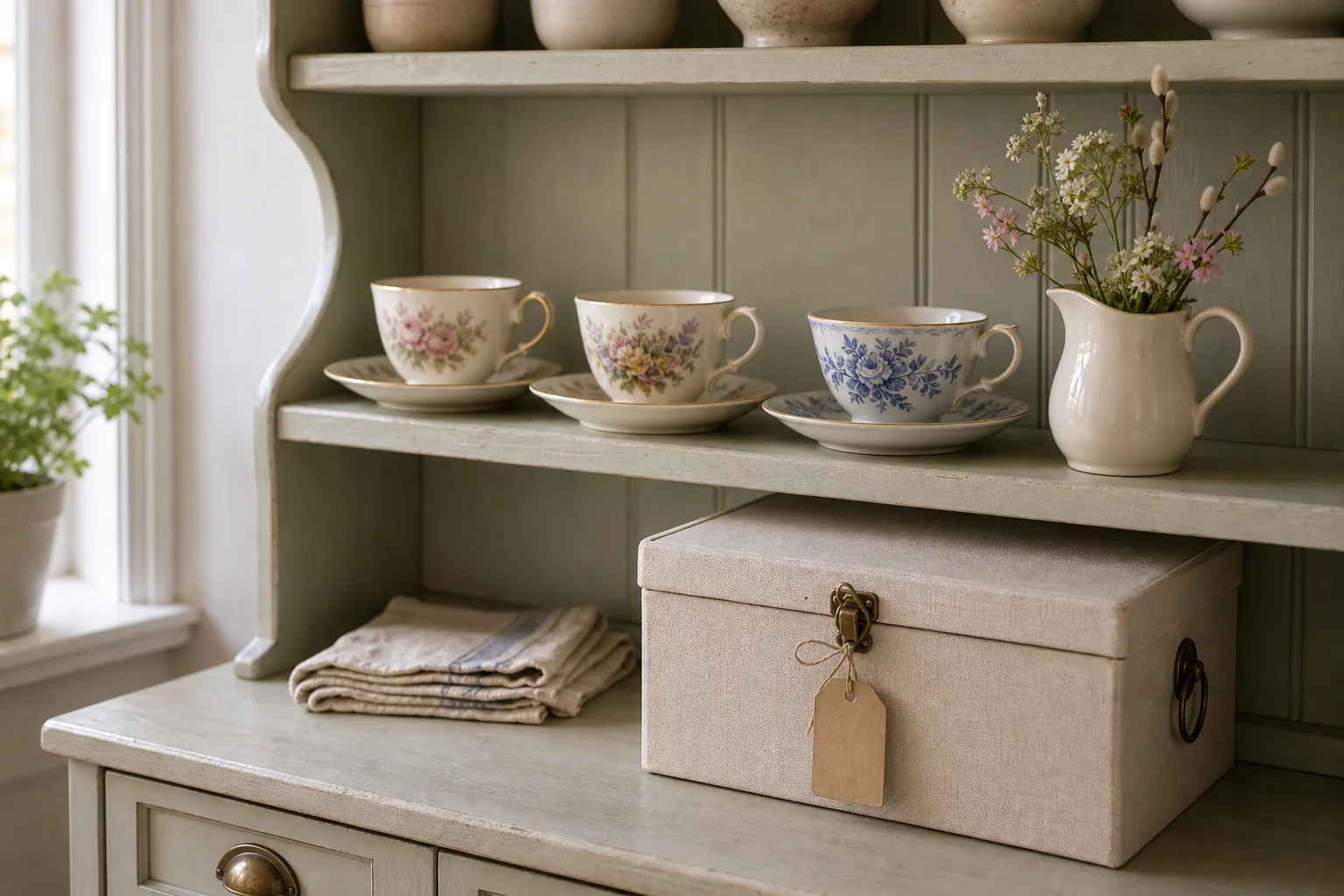
Rotate teacups by season instead of filling every shelf
One of the easiest ways to keep a teacup shelf looking fresh is to display fewer pieces and rotate them. Cottage decor already leans collected, layered, and nostalgic. If everything is out at once, the kitchen can start to feel heavy.
Try a spring shelf with floral teacups and fresh stems, a summer shelf with blue and white pieces, an autumn shelf with cream china and warm wood, or a winter shelf with simple white cups and brass accents. The shelf changes, but the kitchen does not get crowded.
Store the extra cups in a hutch drawer, closed cabinet, or linen-lined box. This keeps delicate pieces safer and makes each rotation feel intentional. A cottage kitchen should feel personal, but it should still give you room to cook.
What makes a teacup shelf feel cottage, not cluttered?
The best teacup shelf has a simple job. It highlights the prettiest pieces, supports the way the kitchen is used, and leaves enough empty space for the room to breathe. Choose the shelf location first, then the shelf type, then the teacups.
If the shelf is near natural light, away from heavy cooking splatter, easy to dust, and edited to a few favorite pieces, it will give your cottage kitchen charm without turning into another maintenance problem.