
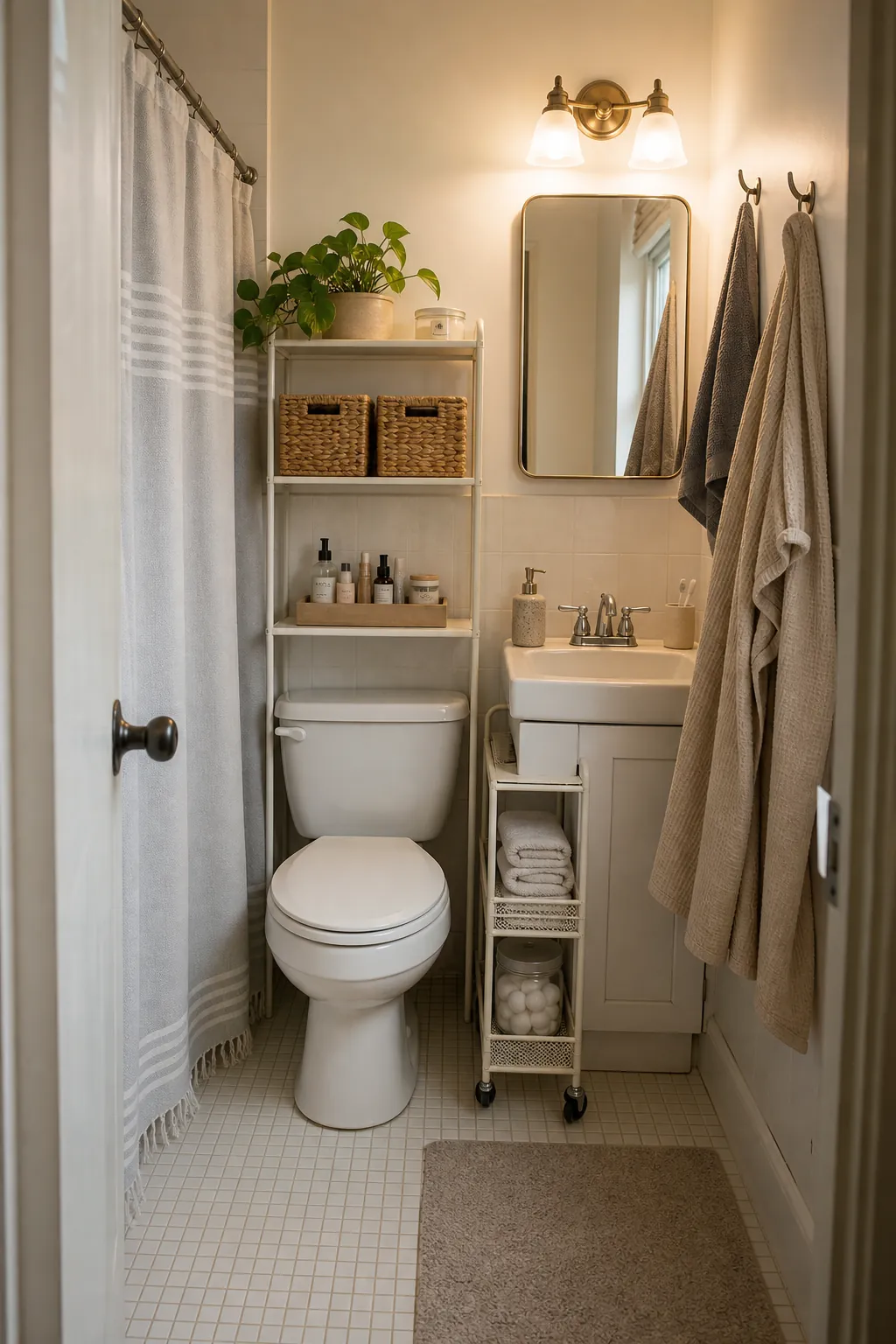
A tiny rental bathroom does not need more random containers. It needs a stricter storage plan. The mistake most renters make is trying to fit every product, towel, tool, backup bottle, and decor piece into a room that was never built for that much inventory.
The better question is simple: what deserves to live inside the bathroom every day, and what can live one step outside it? Once you answer that, renter bathroom ideas get much easier. You can use no drill storage, wall hooks, over toilet storage, slim carts, bathroom shelves, and baskets without making the room feel like a supply closet.
These tiny bathroom ideas are written for renters who need more storage but cannot drill into tile, replace the vanity, move plumbing, or leave damage behind. They focus on practical bathroom organization first, then renter friendly decor that makes the storage look intentional.
Start With What Actually Earns Bathroom Space
Before buying a shelf, pull everything out and sort it into three groups: daily, weekly, and backup. Daily items are toothbrushes, face wash, deodorant, current skincare, hand soap, one towel in use, and the shower products you reach for right now. Weekly items might be masks, razors, cleaning spray, or extra washcloths. Backup items are unopened bottles, bulk toilet paper, spare candles, duplicate lotions, and medicine you do not need at the sink.
A tiny bathroom should only hold the daily group in prime space. Weekly items can sit higher, lower, or behind a door. Backups usually belong in a nearby closet, hallway bin, bedroom dresser, or rolling cart outside the bathroom. This is not about being minimalist. It is about stopping small bathroom storage from turning into visible clutter.
Use Wall Hooks Before You Add Another Shelf
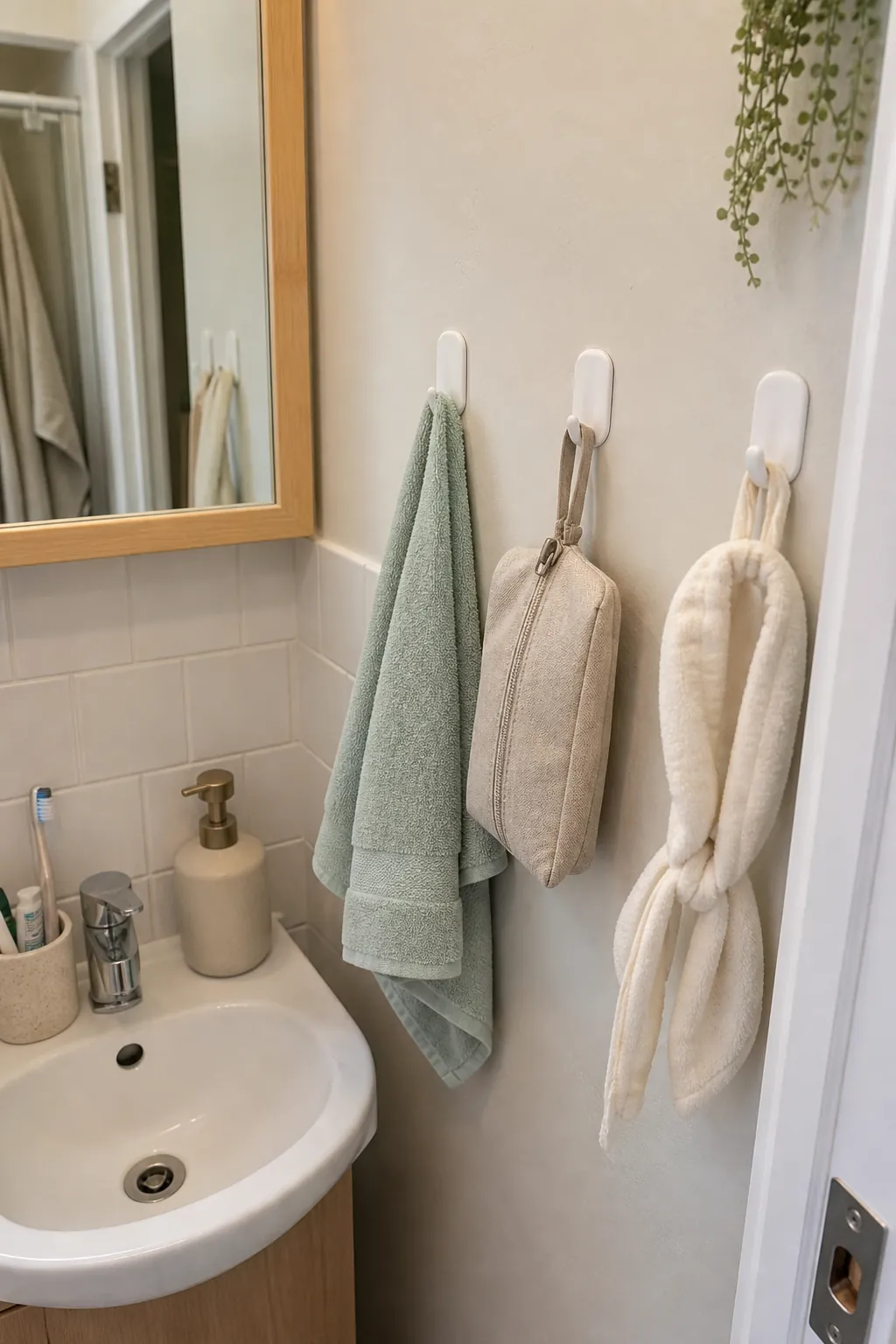
Wall hooks are one of the highest-impact renter bathroom ideas because they solve the messy middle of bathroom life: the towel that is not dry yet, the robe with nowhere to go, the hair wrap that keeps landing on the sink, and the small toiletry bag that needs a home.
Use adhesive hooks on smooth painted walls, tile, the side of a vanity, or the inside of the bathroom door. Keep them for lightweight, frequent-use items. A hook beside the sink can hold a small hand towel. Two hooks behind the door can hold bath towels if the door has enough clearance. A small hook near the outlet can hold a heat-safe pouch for a hair tool once it has cooled.
The trick is placement. Put hooks where things naturally land, not where the wall looks empty. Good bathroom organization follows the path your hand already takes. If a towel always ends up over the shower rod, that is where the storage problem is asking to be solved.
Make Over Toilet Storage Look Intentional
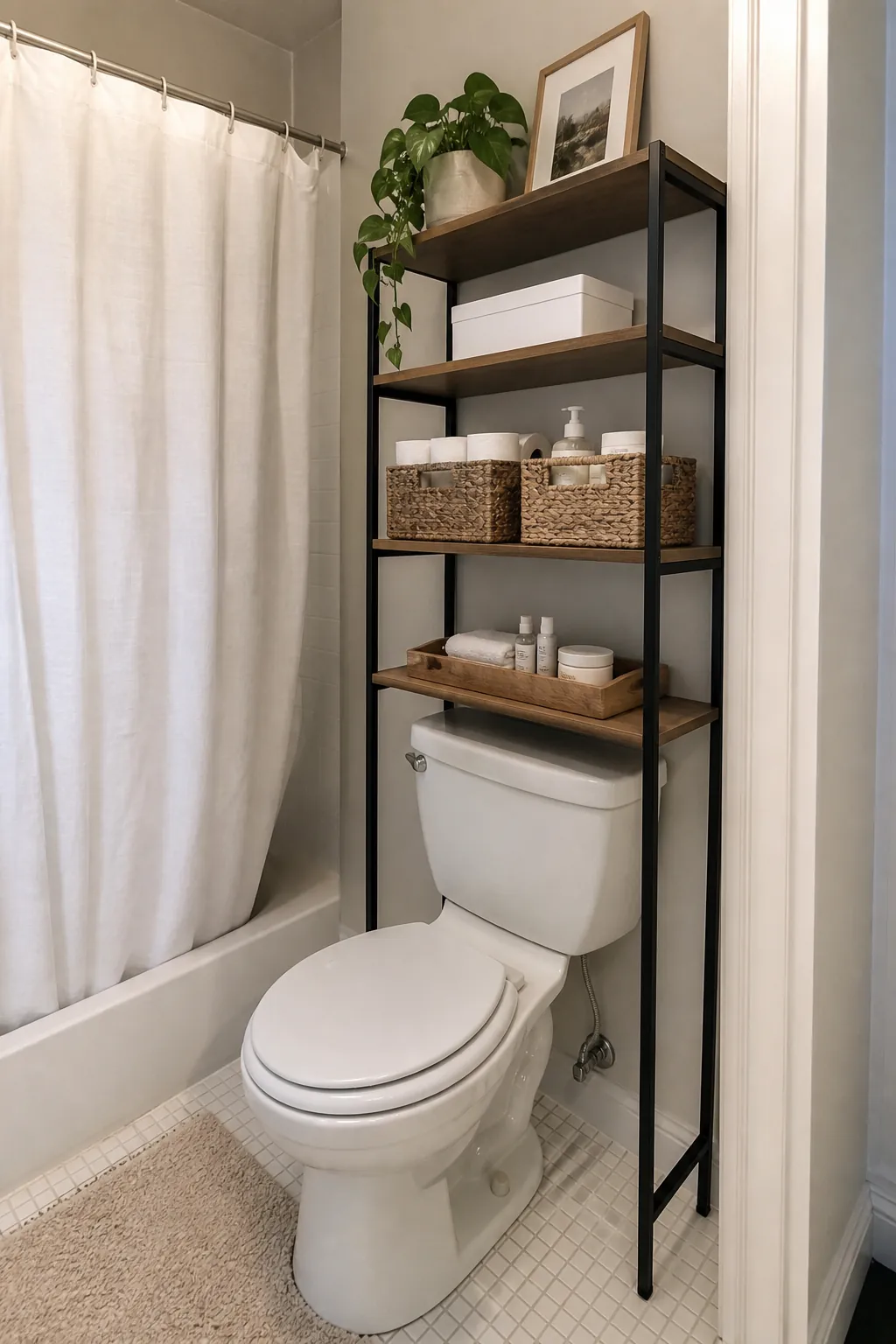
Over toilet storage can save a rental bathroom, but it can also make the room feel crowded fast. The difference is scale, stability, and what you store there. Before buying anything, measure the toilet tank height, width, depth, flush handle side, water supply line, and any pipe behind the toilet. Many renters discover too late that a bottom support bar hits the plumbing or blocks tank access.
If you choose a freestanding unit, look for slim legs, a back that clears the valve, and shelves deep enough for baskets but not so deep that they lean over your head. If your landlord allows one tiny anchor hole, a small anti-tip strap is often worth asking about. If not, choose a stable piece, shim it so it leans slightly toward the wall, and do not load the top shelf with heavy items.
The best over toilet storage hides visual noise. Use two matching baskets for toilet paper and backups, one closed box for less attractive items, and one open tray for daily products. Leave some air on the shelf. The empty space is what makes the storage feel designed instead of desperate.
Choose a Slim Cart Only If It Has One Clear Job
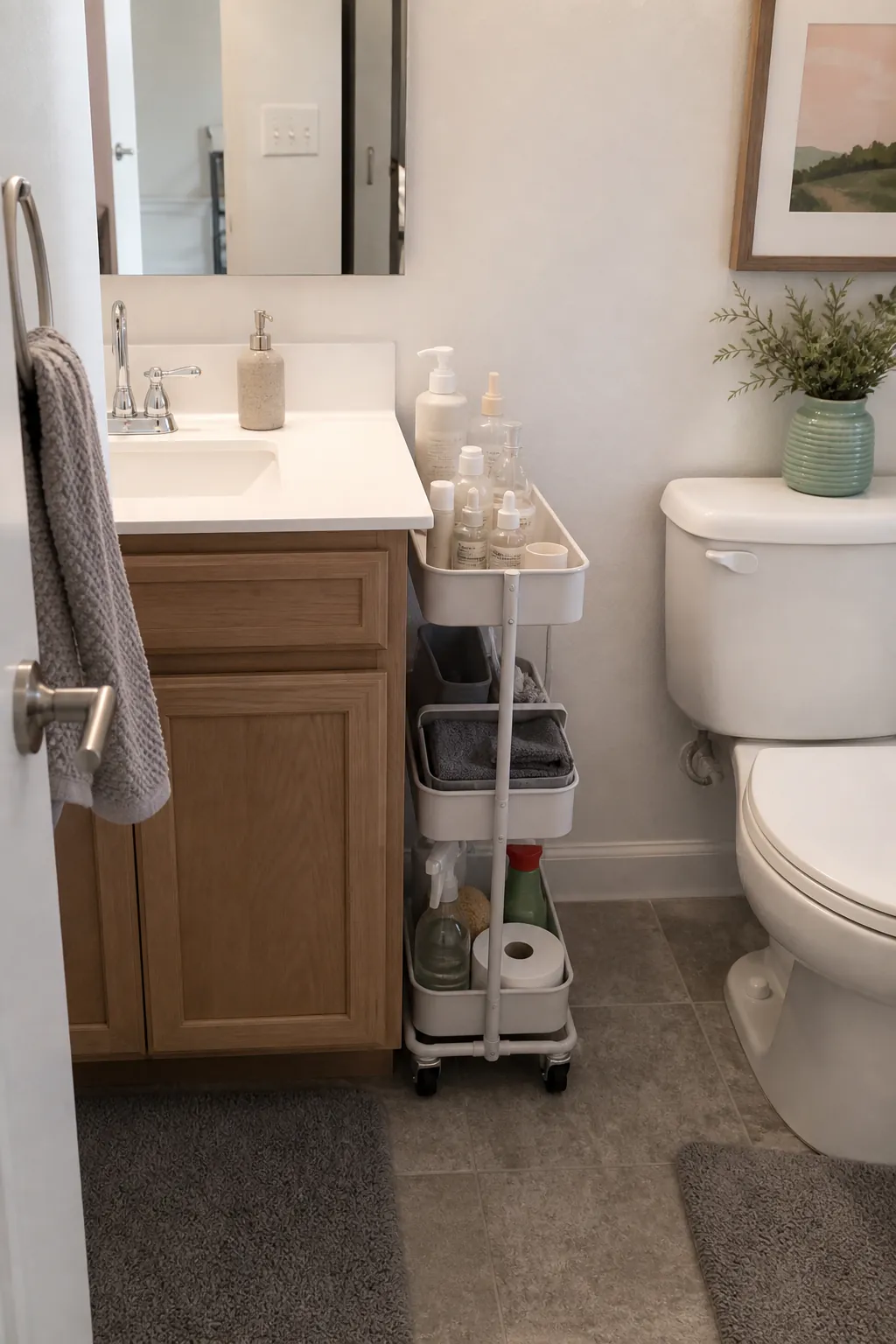
A narrow rolling cart is useful when your bathroom has a gap beside the sink, next to the toilet, or just outside the door. It becomes a problem when it turns into a second vanity with every product visible. Give the cart one job: skincare station, hair tools, cleaning supplies, or backup toiletries. Do not let it become all four.
For a tiny bathroom, the top tier should hold the items you use every day. The middle tier can hold grouped products in small bins. The bottom tier should hold heavier items so the cart feels stable. If the cart has to roll out for shower access or cleaning, keep the sides clean and avoid hanging items that swing into the walkway.
A slim cart works best when it reduces counter clutter, not when it adds another display surface. If it blocks the door, knees, toilet paper holder, or vanity drawers, it belongs outside the bathroom instead.
Use Adhesive Shelves for Light Daily Items Only
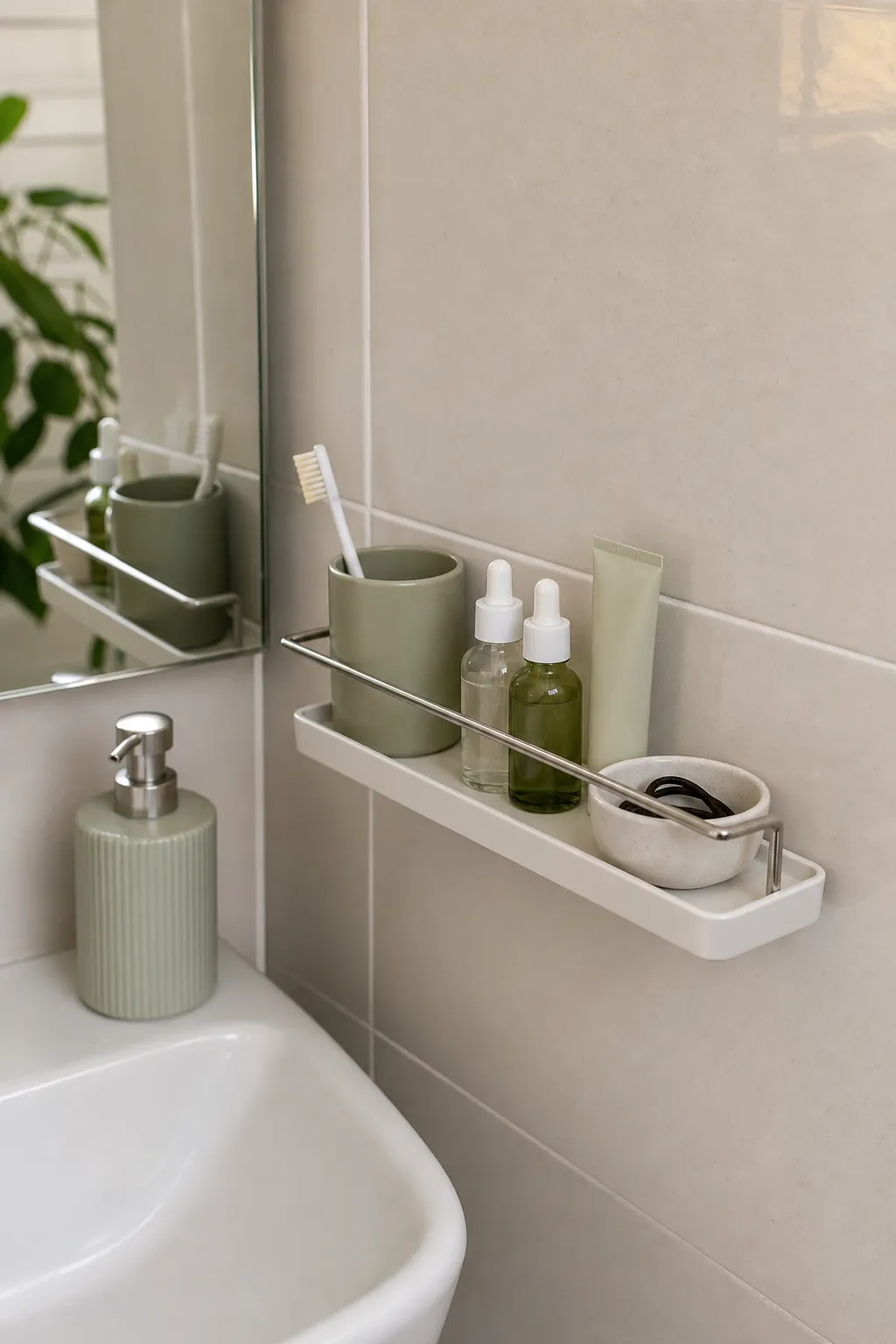
Adhesive bathroom shelves and stick-on racks are tempting because they promise instant storage without drilling. They can be useful, but they are not magic. Treat them as light-duty storage for skincare bottles, toothbrush cups, a small perfume tray, or a narrow spice-rack-style shelf. Do not trust them with glass jars, heavy shampoo bottles, full-size appliances, or anything that would break tile if it fell.
Surface matters. Adhesive performs better on smooth tile, glass, or sealed surfaces than on textured paint, damp plaster, or peeling walls. Clean the area, let it dry completely, follow the cure time, and test the shelf with something soft before loading it with real products.
For rental bathroom decor, the prettiest adhesive storage is usually small and specific. One neat rack for daily skincare looks better than three floating shelves trying to replace a cabinet.
Fix the Shower Zone Separately
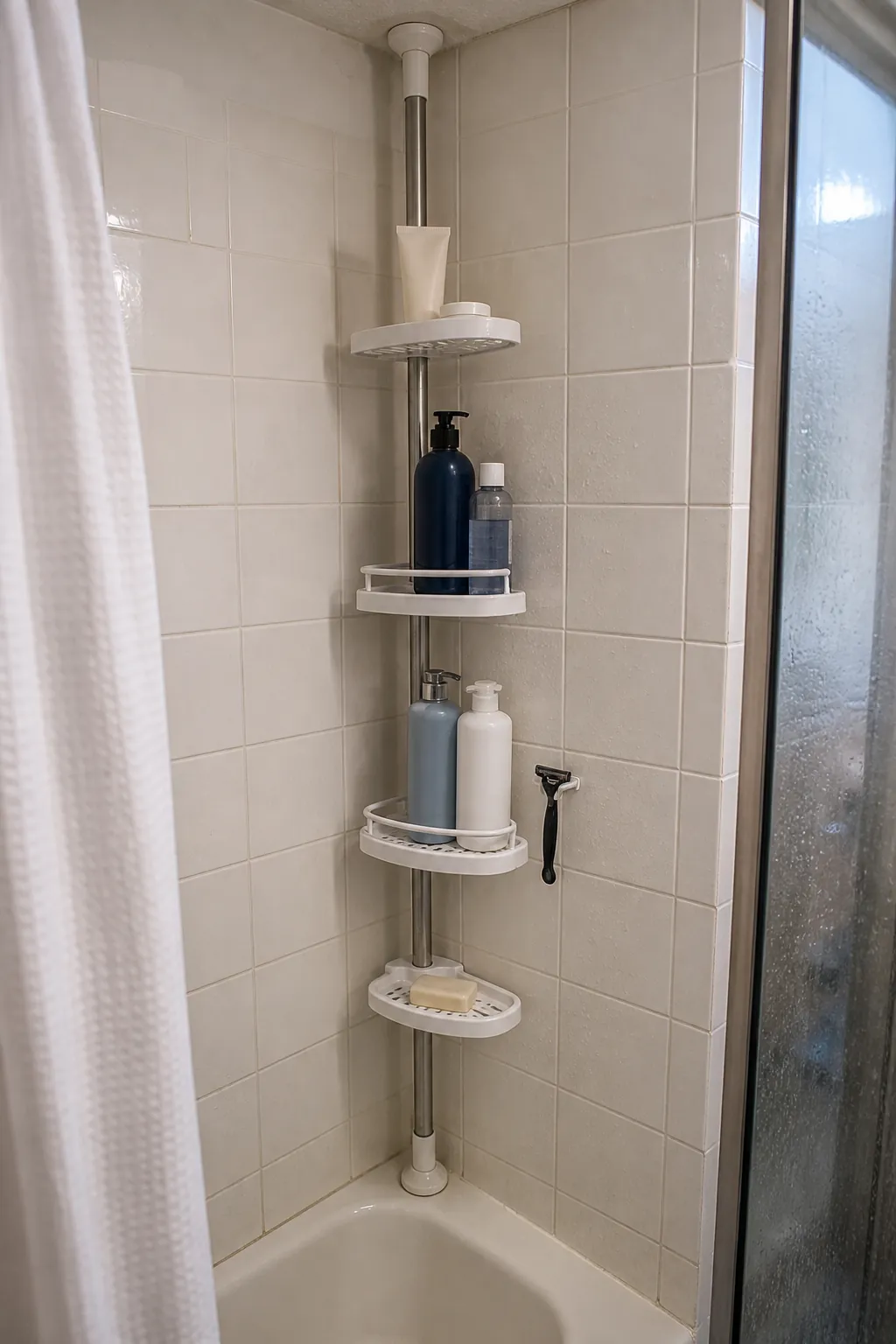
The shower needs its own storage plan because moisture changes the rules. A shelf that works beside the sink may fail inside the shower. For renters, the best options are usually tension corner caddies, over-showerhead caddies, suction shelves on smooth tile or glass, and a small waterproof basket for products that leave the shower after use.
Keep shower storage narrow and vertical. Put shampoo and conditioner at shoulder height, body wash below, razors in a holder with drainage, and backup bottles somewhere else. If you share the bathroom, assign each person one zone or one basket. That single boundary prevents the shower from becoming a bottle museum.
Drainage is more important than style in the shower. Choose open wire, perforated plastic, or slatted shelves. If water sits in the organizer, the bathroom will feel dirty even when it is technically organized.
Turn the Door Into Backup Storage
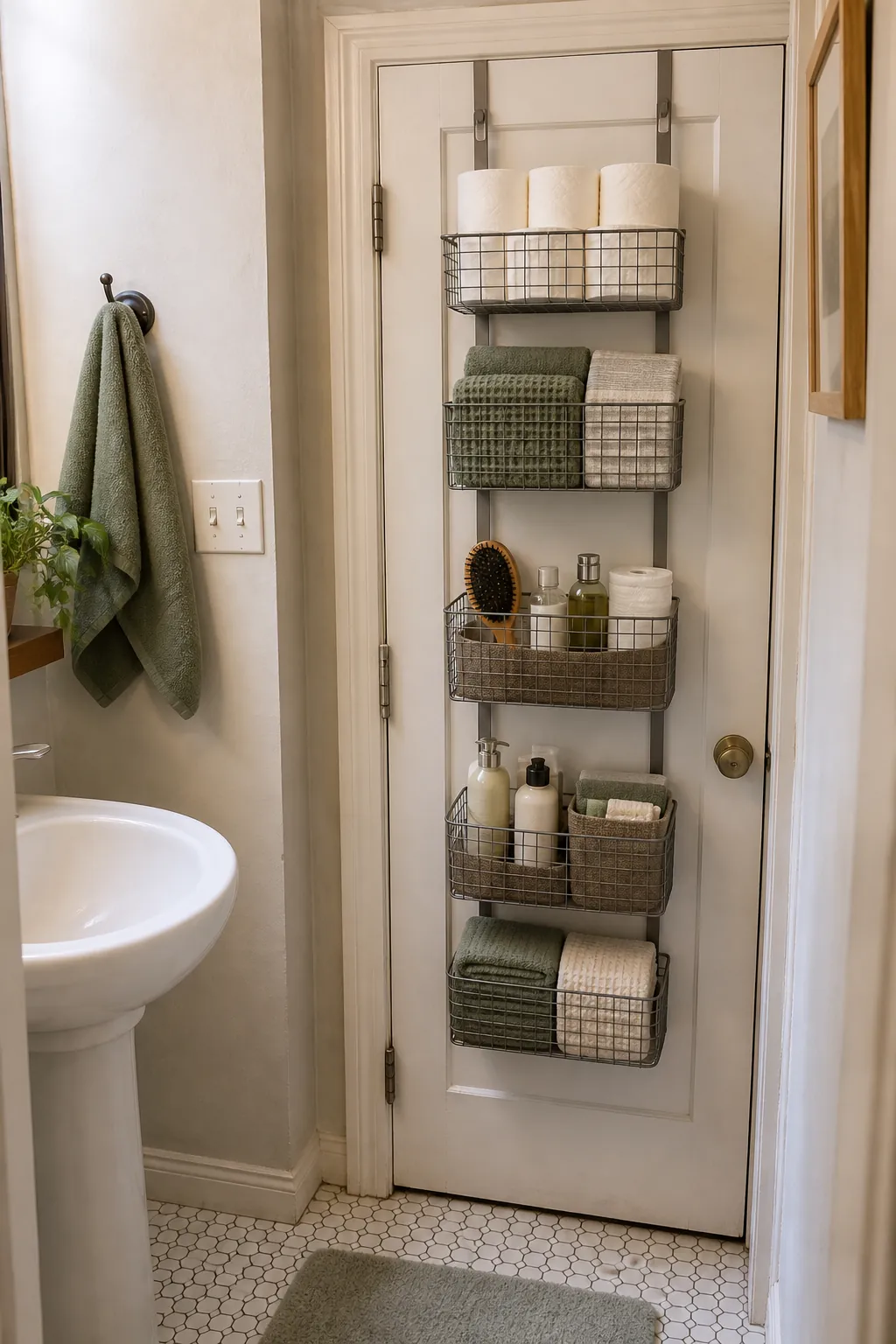
If your bathroom door has enough swing clearance, the back of the door is prime rental storage. An over-door organizer can hold toilet paper, extra hand towels, hair products, cleaning cloths, and travel-size backups without touching the wall. This is especially useful when the bathroom has no linen closet and no medicine cabinet.
Choose an organizer that lies flat and does not bang every time the door moves. Fabric pockets are soft and quiet, but they can sag if overloaded. Wire baskets look cleaner and hold shape better, but they need enough clearance behind the door. Measure the space between the open door and the wall before buying.
The door is best for backups, not daily sink items. If you reach for something twice a day, do not hide it in a low pocket behind the door. Use the door for overflow so the vanity and counter can stay calm.
Use Baskets to Hide the Small Stuff
Open storage is unavoidable in many tiny bathrooms, so the goal is not to hide everything. The goal is to hide the small, mismatched, half-used items that make the space feel messy. Baskets, lidded bins, clear canisters, and small trays give those items a boundary.
Use one basket for toilet paper, one for extra towels, one for hair products, and one small tray for daily skincare. Keep categories simple. If a basket is labeled too narrowly, you will stop using it. If it is too broad, it becomes a junk drawer without a drawer.
For a calmer look, repeat one material two or three times: woven baskets, white plastic bins, clear acrylic, bamboo trays, or soft fabric boxes. Repeating the container style is the fastest renter friendly decor move because it makes cheap storage look deliberate.
Work Around a Pedestal Sink or Awkward Plumbing
Many rental bathrooms lose storage because the sink is a pedestal, the pipes are exposed, or the vanity drawers are too shallow for real products. Do not fight the plumbing. Work around it with a shallow under-sink shelf, a two-tier basket, a narrow side cabinet, or a lidded bin that can slide out for cleaning.
Measure the pipe depth and the open floor area before buying under-sink storage. Leave space for the trap, shutoff valves, and cleaning access. If the sink has no cabinet, choose storage that looks finished from the front because it will always be visible.
Awkward plumbing is not wasted space, but it is not heavy-storage space either. Use it for toilet paper, extra soap, washcloths, a small cleaning kit, or a lidded basket. Keep bulk items elsewhere so the sink area stays easy to clean.
Make Storage Feel Like Decor, Not a Compromise
Once the storage plan works, add a few renter friendly decor choices that make the room feel finished. Matching towels, one framed print hung with removable strips, a washable bath mat, a better shower curtain, and one small plant can change the mood without changing the lease.
Keep the color story tight. In a tiny bathroom, too many colors can make every bottle and basket feel louder. Pick one base color, one soft accent, and one natural texture. For example: white storage, sage towels, and woven baskets. Or black hooks, cream towels, and clear canisters. This is how small bathroom storage becomes part of the design instead of something you apologize for.
The final test is simple: can you clean the sink, toilet, and floor without moving ten things first? If yes, the storage is working. If not, remove one category from the bathroom. The best tiny bathroom ideas do not add more places to stash clutter. They make the room easier to use tomorrow morning.
Renter-Friendly Buying Checklist
- Measure pipes, valves, tank height, door swing, drawer clearance, and walkway width before buying storage.
- Use adhesive shelves only for light items, and follow the surface prep and cure time.
- Keep heavy products on freestanding shelves, carts, or floor-level bins.
- Leave toilet tanks, shutoff valves, outlets, vents, and cleaning access reachable.
- Choose closed or matching containers when the storage is visible.
- Move backup products outside the bathroom if they make daily storage feel crowded.
A rental bathroom may limit what you can install, but it does not limit how smart the room can feel. Start with fewer daily items, give every category one home, and use no drill storage only where it actually solves a habit. That is how a tiny bathroom gets more storage without feeling smaller.