
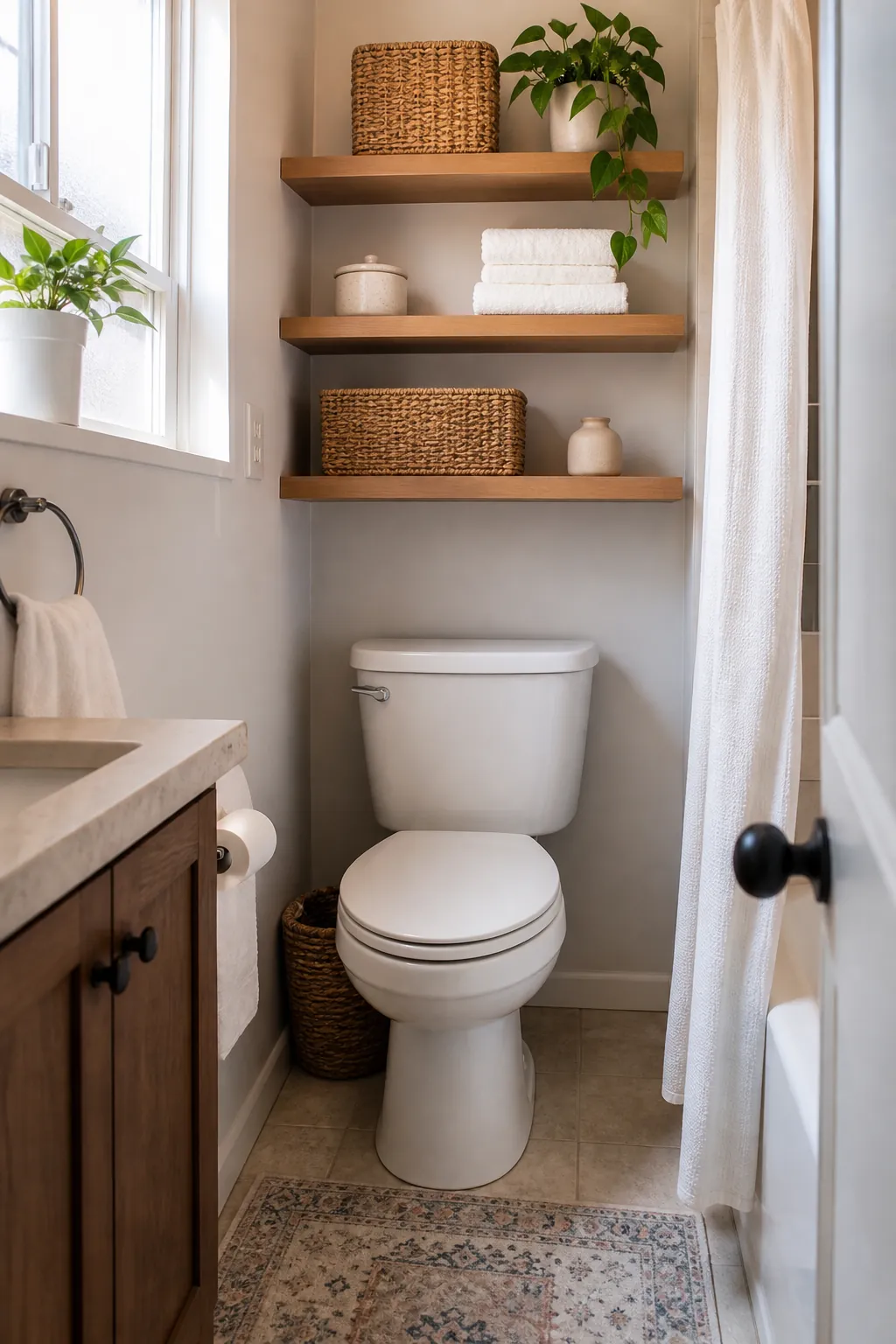
The space above the toilet looks like free storage, but in a tiny bathroom it can also make the room feel busier, narrower, and harder to clean. The best over toilet storage does not start with buying the tallest rack you can find. It starts with choosing what deserves to live there, hiding the visual clutter, and leaving enough air around the toilet so the room still feels calm.
If your bathroom has no linen closet, a pedestal sink, awkward pipes, or a rental wall you cannot drill into, this is usually the one vertical zone you can still use. The goal is simple: turn the wall above the tank into useful storage without making the bathroom look like a supply closet.
Start by measuring the toilet zone, not shopping for a shelf
Most over toilet storage mistakes happen before anything is installed. A piece looks slim online, then it arrives and hits the water line, blocks the flush handle, grazes the mirror, or makes knees feel boxed in. Before choosing bathroom shelves, measure the actual zone around the toilet.
- Wall width above the tank: leave a little breathing room on both sides instead of filling every inch.
- Tank width and lid clearance: you still need to lift the tank lid for maintenance.
- Depth from wall to the front of the tank: deep shelves can make a tiny bathroom feel cramped fast.
- Flush handle position: do not let baskets or side legs make the handle awkward.
- Pipes, valves, outlets, mirrors, and medicine cabinets: these decide whether a freestanding unit, floating shelves, or a cabinet is realistic.
For small bathroom storage, depth matters more than height. A shallow shelf that holds extra toilet paper, hand towels, and a small basket is usually more useful than a bulky cabinet that technically fits but makes the room feel tighter every day.
Use slim shelves when the room already feels narrow
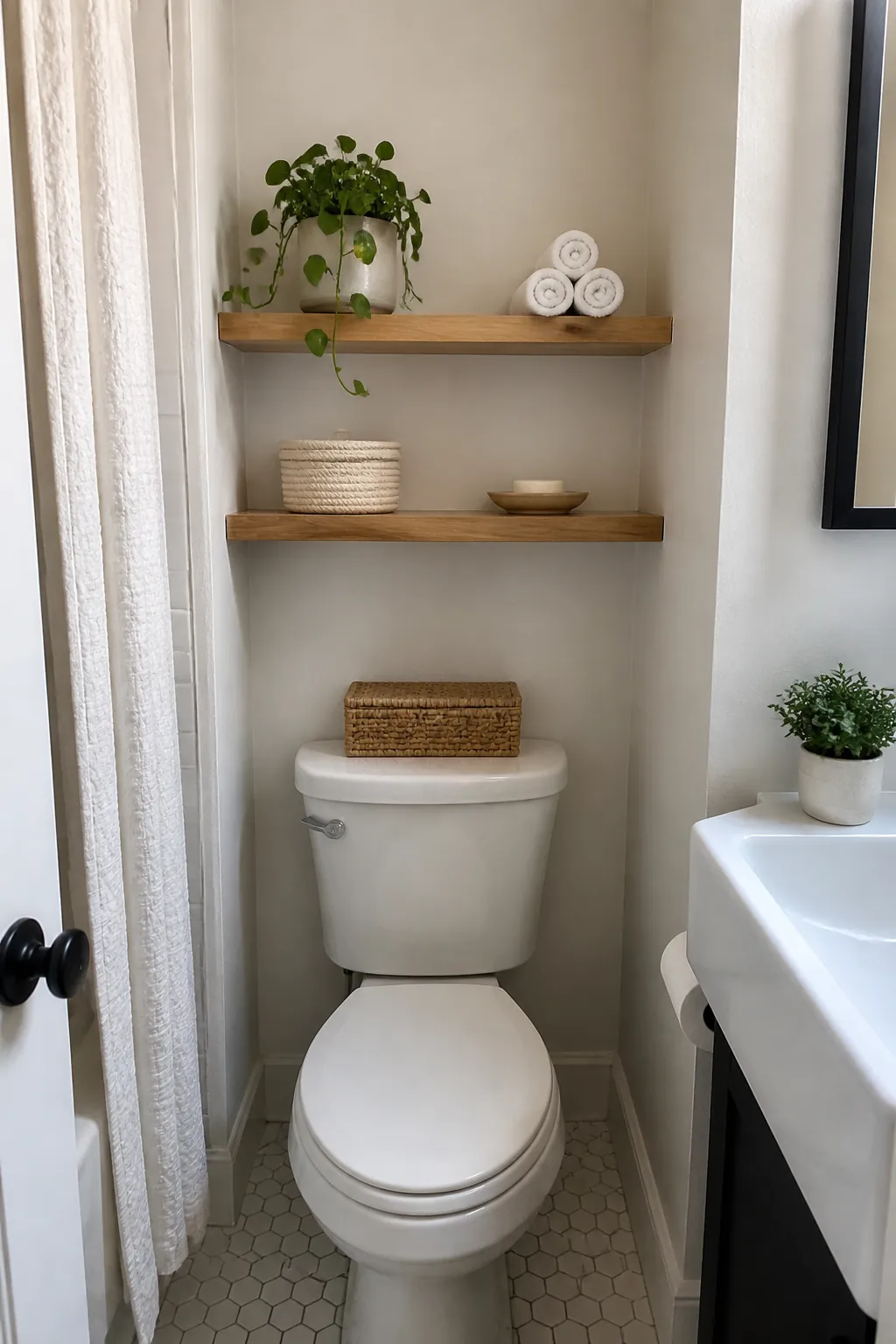
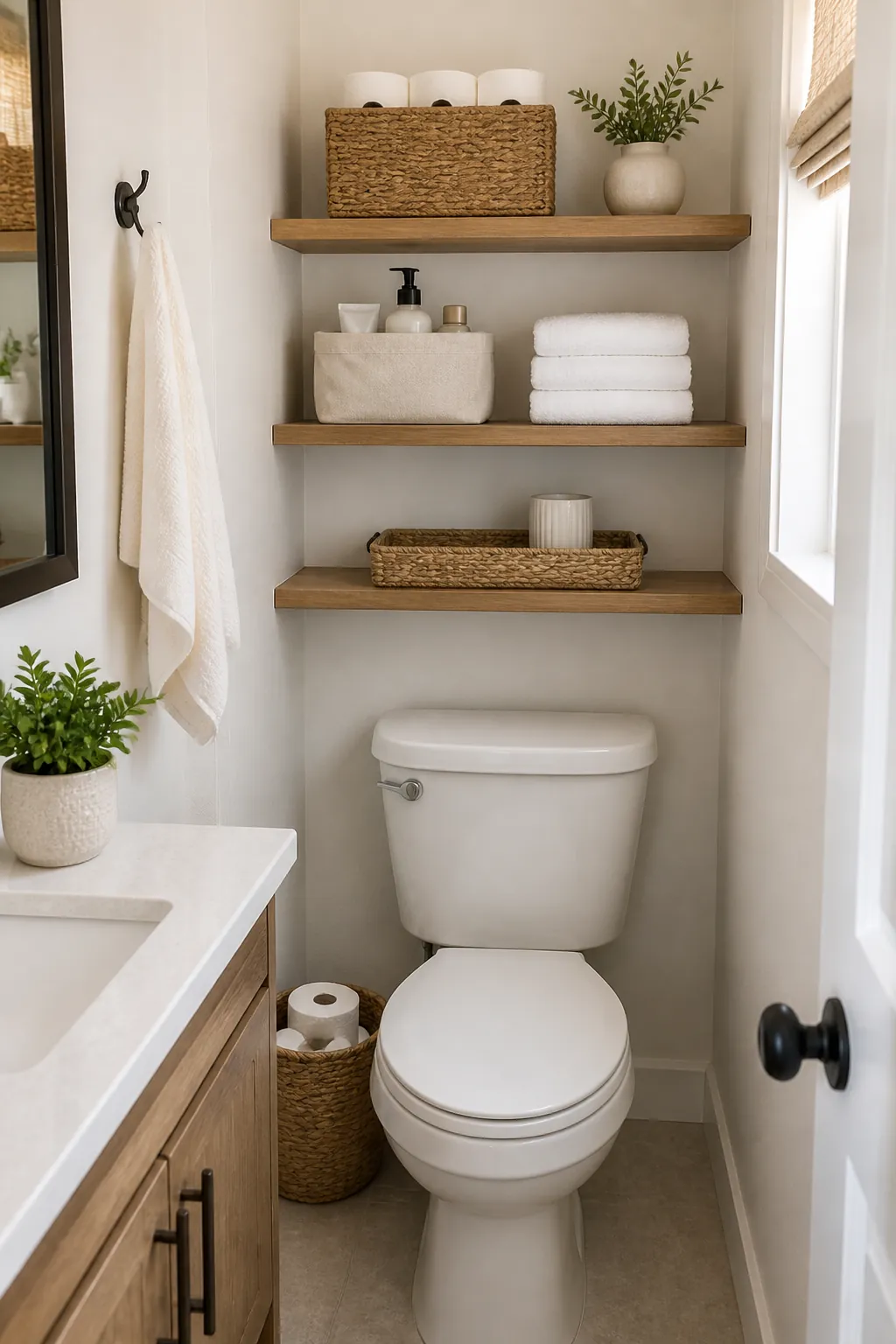
Floating shelves are the cleanest tiny bathroom idea when you have a sturdy wall and can drill safely. They keep the floor clear, avoid the wobbly look of many over toilet racks, and let you set the exact height around the tank, mirror, and towel bar.
Keep them shallow. In most tight bathrooms, six to eight inches of depth is enough for rolled hand towels, a lidded basket, spare soap, or a small plant. Anything deeper starts to project into the room visually, especially if the toilet is close to the sink or tub.
Two shelves usually look better than three or four. Place the lowest shelf high enough that it does not crowd the tank, then give the second shelf space above it. Matching the shelf width to the tank or vanity width makes the storage look planned instead of squeezed in.
Choose closed over toilet storage when clutter is the real problem
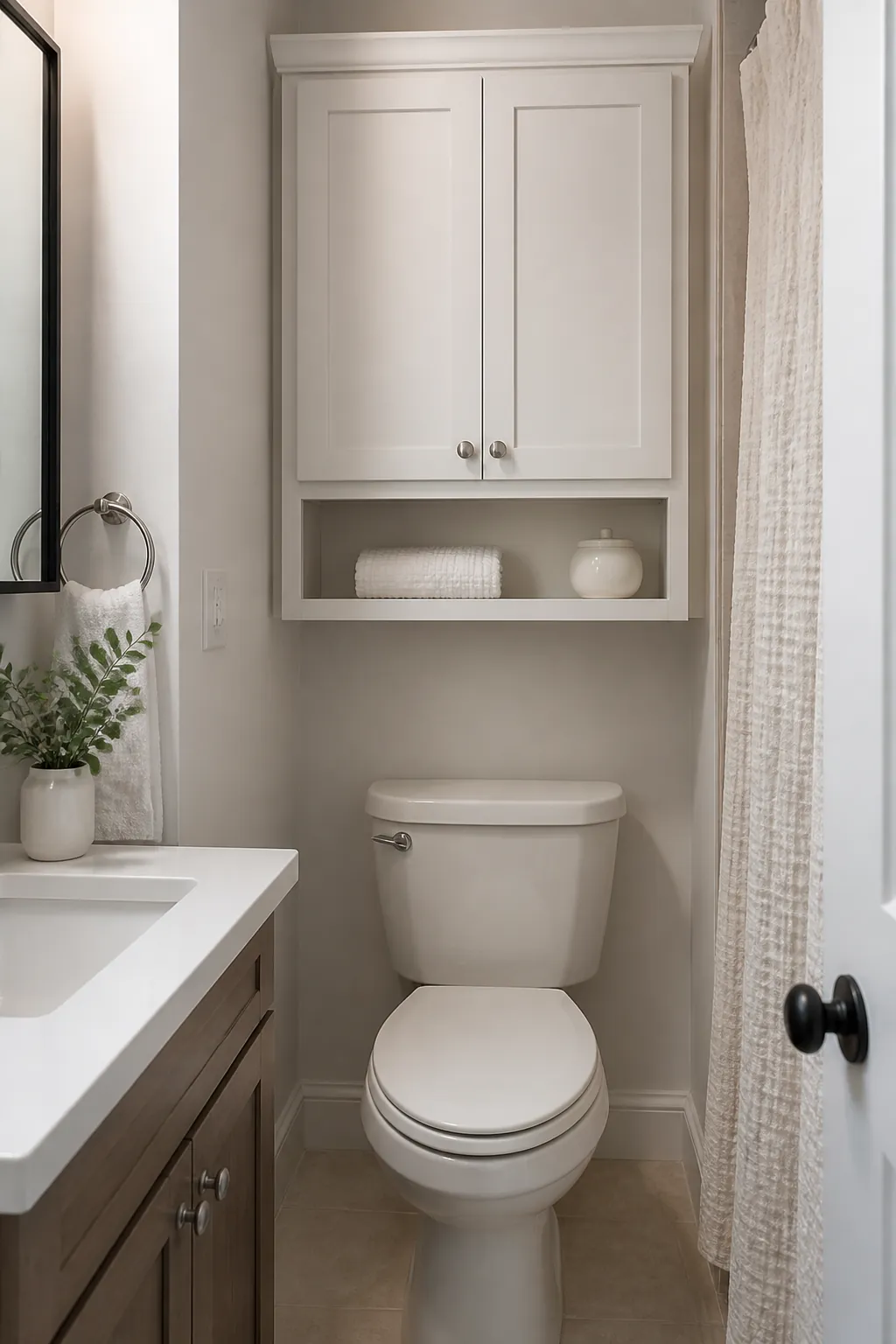
Open shelving works only if you can keep it edited. If the bathroom already looks busy because toiletries, cleaning sprays, hair tools, and extra rolls are visible, a closed cabinet is often the better choice. It gives the same vertical storage while hiding the everyday mess.
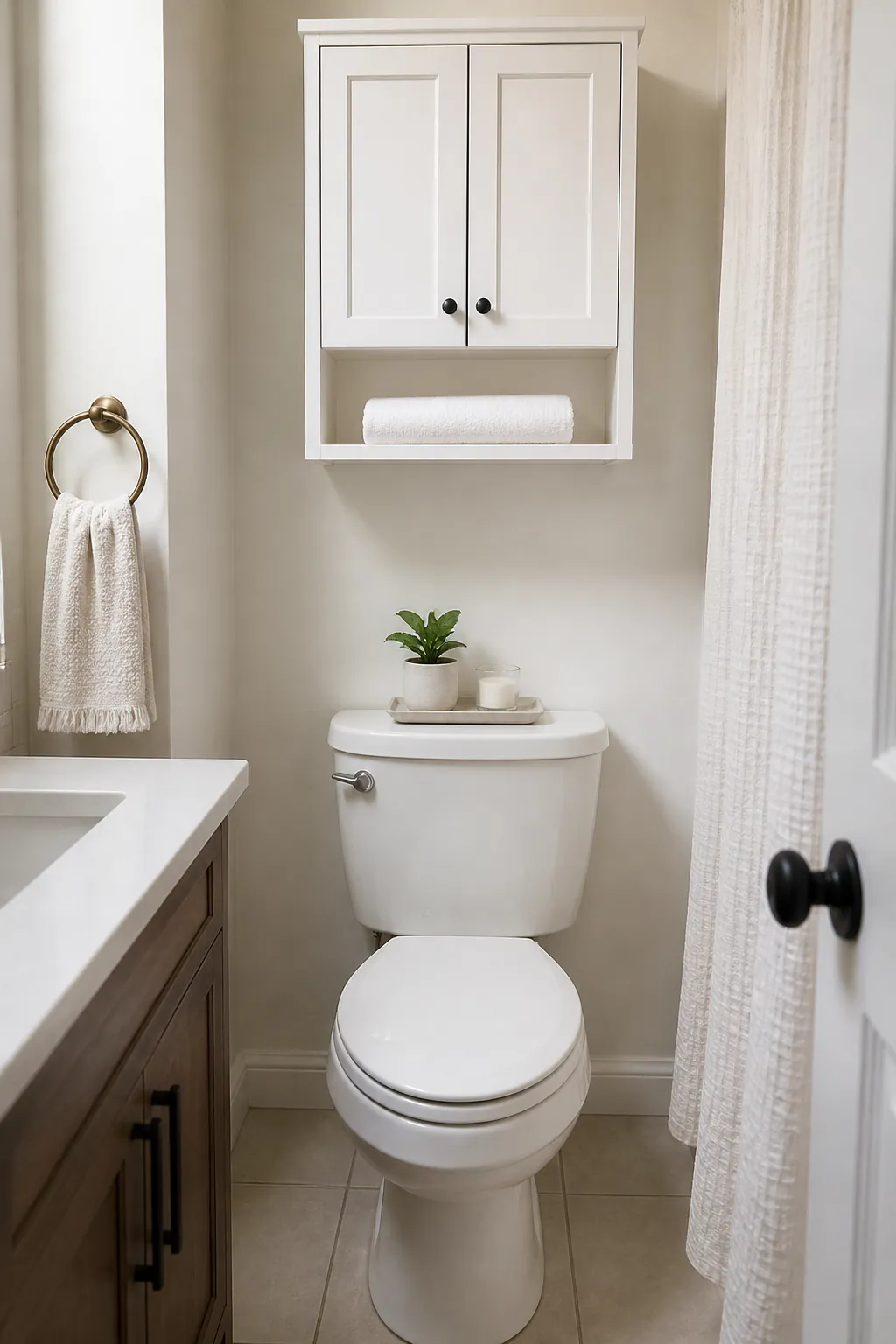
Look for an over toilet cabinet with simple doors, a shallow profile, and enough clearance above the tank. The best versions do not feel like furniture shoved over a toilet. They read more like a small wall cabinet that happens to use an empty vertical zone.
Closed storage is especially helpful in guest bathrooms because guests do not need to see backup supplies. Put practical items inside: extra toilet paper, spare hand towels, tissues, first-aid basics, and unopened toiletries. Keep daily items at eye level and backup items higher.
Make renter-friendly storage feel intentional
Renters often have the hardest version of this problem: concrete walls, tile they cannot drill, old pipes behind the toilet, or a landlord who does not want permanent changes. That does not mean the only option is a flimsy plastic rack. It means the storage needs to be freestanding, tension-mounted, adhesive, suction-based, or moved to nearby zones.
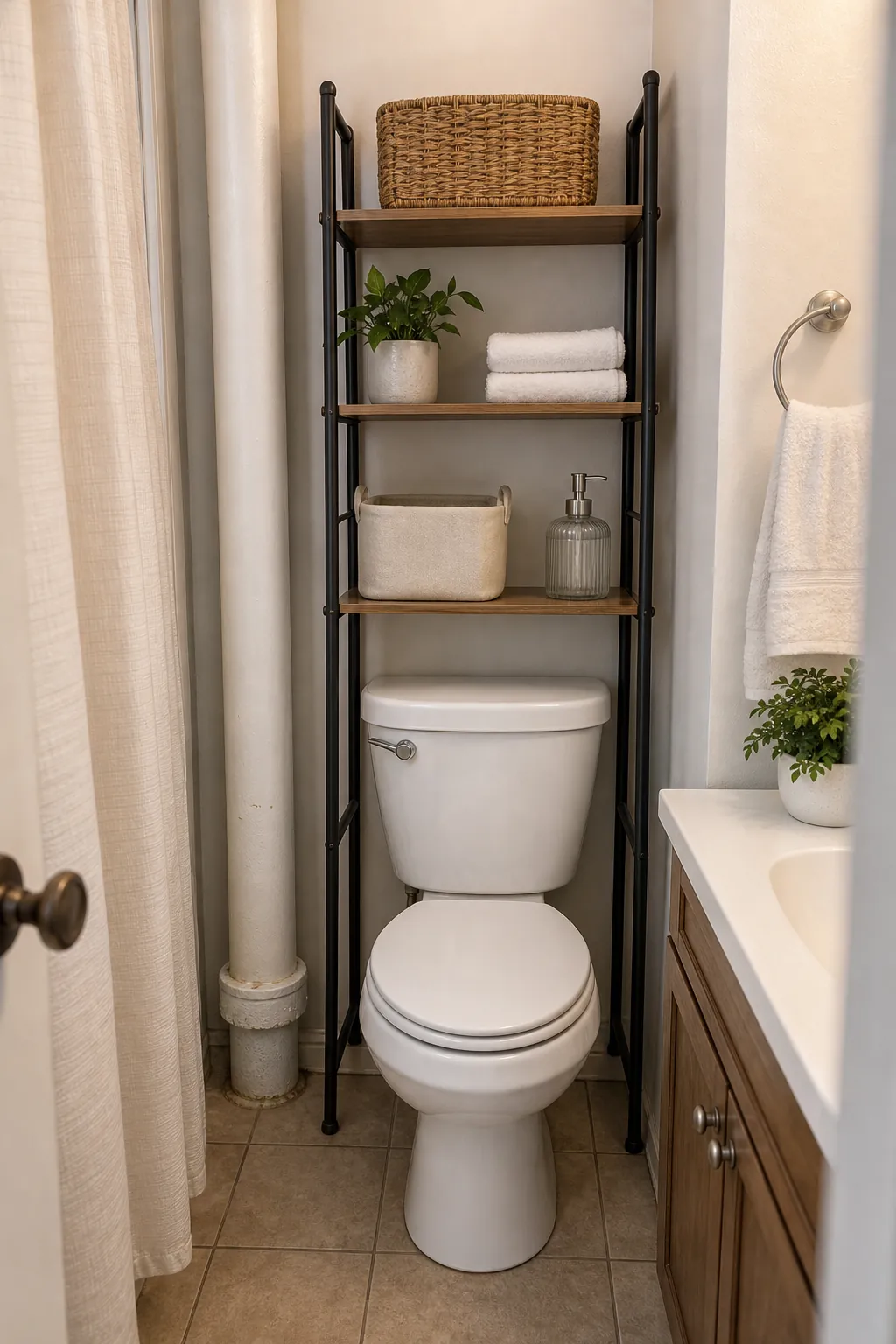
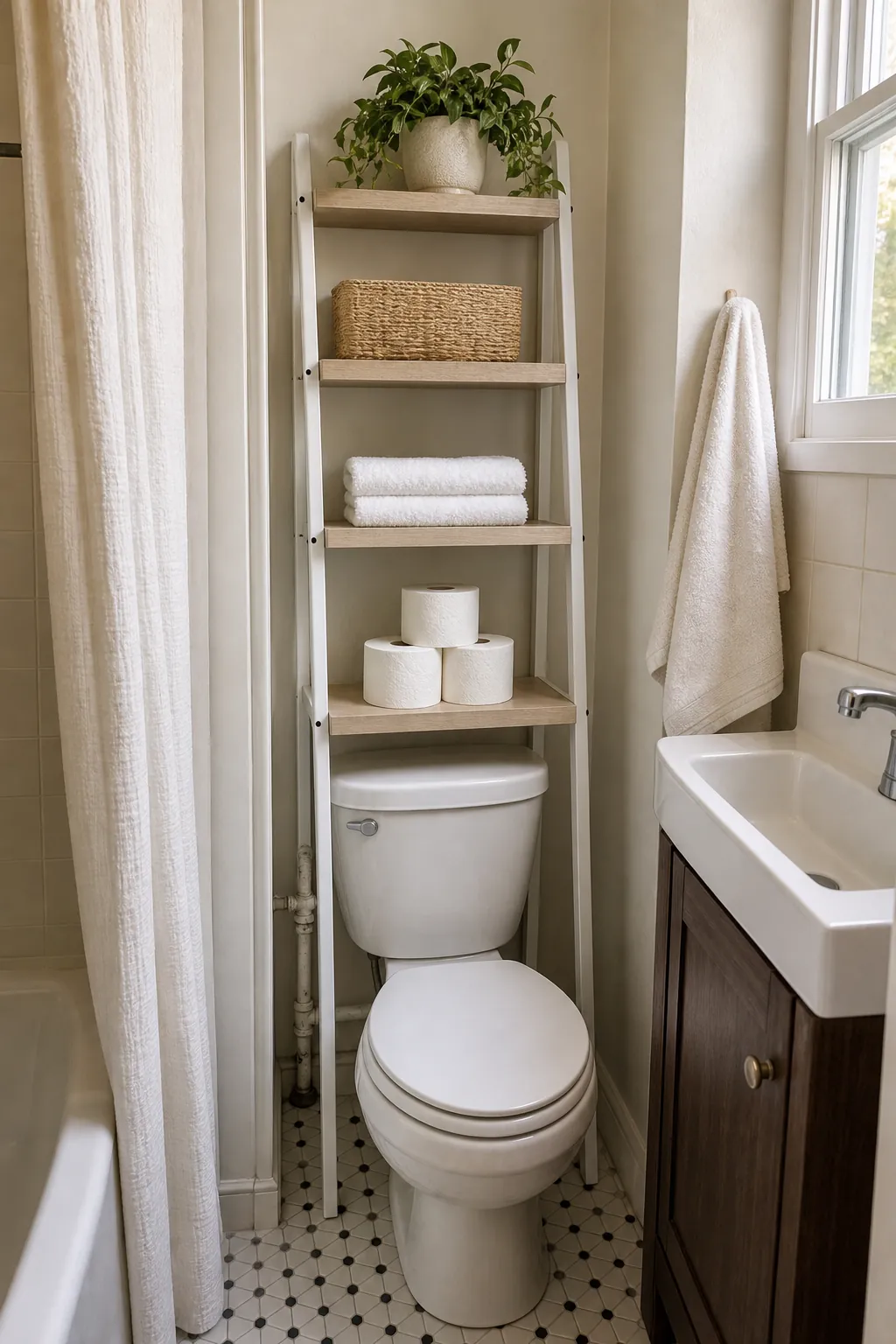
A freestanding over toilet shelf can work if it has a stable base, adjustable feet, and enough clearance around pipes. Choose a finish that matches the bathroom hardware or towels so it looks deliberate. If the wall behind the toilet is uneven, use clear bumpers where the unit touches the wall and keep heavy items low.
For lighter storage, adhesive hooks and wall-mounted baskets can hold washcloths, a small caddy, or hair accessories, but treat them as light-duty helpers. Do not trust adhesive strips with heavy glass jars, full bottles, or anything that could fall into the toilet. In humid bathrooms, weight limits become optimistic.
Use baskets and trays so open shelves stay calm
Open bathroom wall storage needs boundaries. Without them, every shelf becomes a place for random bottles, half-used products, and things you meant to put away. Baskets and trays make tiny bathroom storage easier because they turn many small items into one clean visual shape.
Use one basket for backup toilet paper, one for washcloths, and one tray for the few items you actually want visible. Natural baskets, white bins, clear lidded boxes, and slim wire caddies can all work. The important rule is to give every shelf a job.
- Top shelf: backup supplies you do not touch every day.
- Middle shelf: clean hand towels, washcloths, or a lidded basket.
- Tank tray: one candle, one small vase, or one attractive container, not a full product lineup.
This is where bathroom decor and bathroom organization overlap. The room does not need more decorative objects. It needs practical storage that looks quiet.
Pick a shape that works around pipes, mirrors, and awkward walls
Not every bathroom can handle a standard over toilet unit. Old apartments often have pipes behind the toilet. Some bathrooms have a mirror that reaches too low, a medicine cabinet that swings into the wall space, or a toilet tucked so close to the vanity that side legs will not fit.
When the standard shape fails, change the shape. A ladder shelf can lean visually lighter than a boxy cabinet. Offset shelves can avoid a pipe. A narrow cabinet between the vanity and toilet might store more than the wall above the tank. A slim over-door rack can move towels out of the toilet zone completely.
The smartest small space storage is not always directly over the toilet. If the wall is wrong, use the toilet wall for one shallow shelf and move bulkier items to the back of the door, under the sink, a corner caddy, or a narrow rolling cart outside the bathroom.
Keep the top of the toilet almost empty
The tank lid is tempting because it is flat, visible, and easy to reach. But in a tiny bathroom, the top of the toilet quickly becomes visual noise. Keep it simple: one shallow tray, one small plant, or one lidded container is enough.
A calm tank top also makes cleaning easier. Avoid loose fabric, fuzzy covers, stacks of books, and crowded decor near the toilet. If something is hard to wipe around, falls often, or makes the bathroom feel less fresh, it probably belongs somewhere else.
This is the easiest upgrade if you already own over toilet storage. Remove half of what is visible, group the rest into baskets, and leave one quiet decorative moment. In a tiny bathroom, empty space is part of the design.
What to store over the toilet
The over toilet zone should hold things that are light, useful, and not ruined by humidity. It is not the best place for every bathroom item.
- Good choices: extra toilet paper, hand towels, washcloths, tissues, unopened soap, cotton rounds, small first-aid basics, and guest supplies.
- Use caution: glass jars, heavy bottles, tall vases, large plants, and anything that could fall into the toilet.
- Move elsewhere: hair tools you cannot use in that bathroom, bulk cleaning products, medication that should stay dry, and products you no longer reach for.
This one decision makes bathroom organization easier: store items where you use them. If makeup, hair products, or skincare are not actually used in the tiny bathroom, they do not need to take the most visible storage spot.
Over toilet storage mistakes to avoid
- Buying too deep: deep shelves make the room feel smaller and can be uncomfortable when sitting.
- Ignoring the tank lid: you need access for maintenance, even if you rarely think about it.
- Using every shelf for decor: in a tiny bathroom, decor should support storage, not replace it.
- Leaving everything visible: mix open display with closed bins or doors.
- Forgetting humidity: choose wipeable bins, sealed containers, and finishes that can handle moisture.
- Trusting weak mounting: shelves above a toilet need secure anchors, especially with tile or plaster walls.
A simple plan for choosing the right setup
If you are not sure which tiny bathroom idea fits your space, use this order.
- Remove what does not belong in the bathroom. Do this before buying storage.
- Measure the toilet wall, depth, tank clearance, and obstacles. Include pipes, mirrors, and flush handles.
- Choose closed storage if clutter is the issue. Choose slim open shelves if the room needs to feel lighter.
- Use baskets for anything small. Loose products make even nice bathroom shelves look messy.
- Keep the visible styling restrained. One tray, one plant, one framed piece, or one candle is enough.
Over toilet storage works best when it looks like part of the bathroom, not an emergency fix. Keep it shallow, secure, easy to clean, and edited. Then even the smallest bathroom can hold the essentials without feeling crowded.