
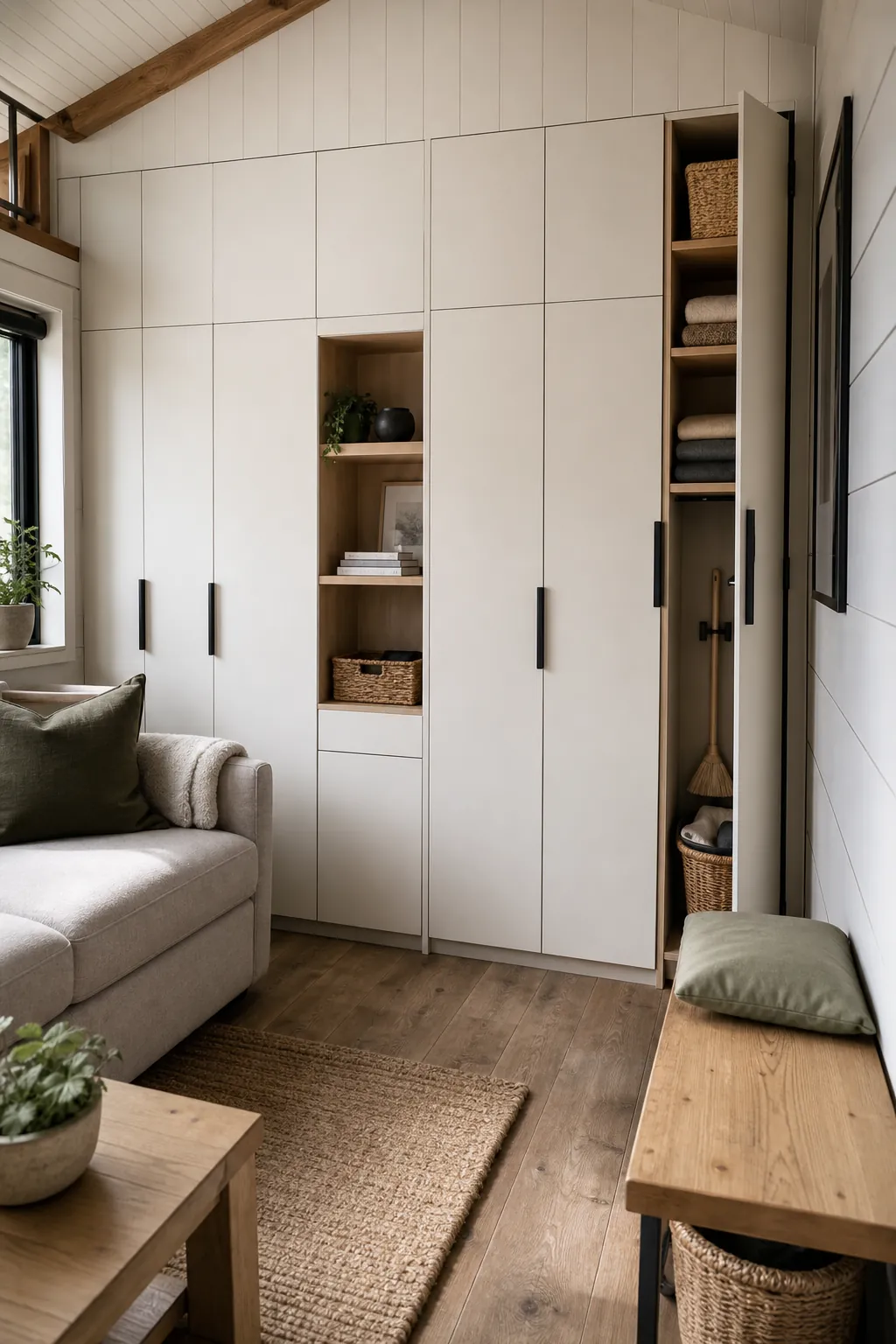
Hidden storage walls are one of the best tiny house ideas when you want the home to feel calm instead of constantly arranged around visible bins, hooks, baskets, and loose furniture. In a small space, storage is not just about how much you can fit. It is about what the room feels like when daily life is put away.
The most useful hidden storage walls do not behave like novelty secret rooms. They look like clean paneling, a simple cabinet run, a built-in bench wall, or a quiet entry wall. Behind those flat surfaces, they hold the awkward things that make a tiny house look messy: cleaning tools, coats, shoes, pantry overflow, hobby gear, bedding, folding chairs, laundry supplies, and seasonal items.
Choose the Wall by Routine, Not Empty Space
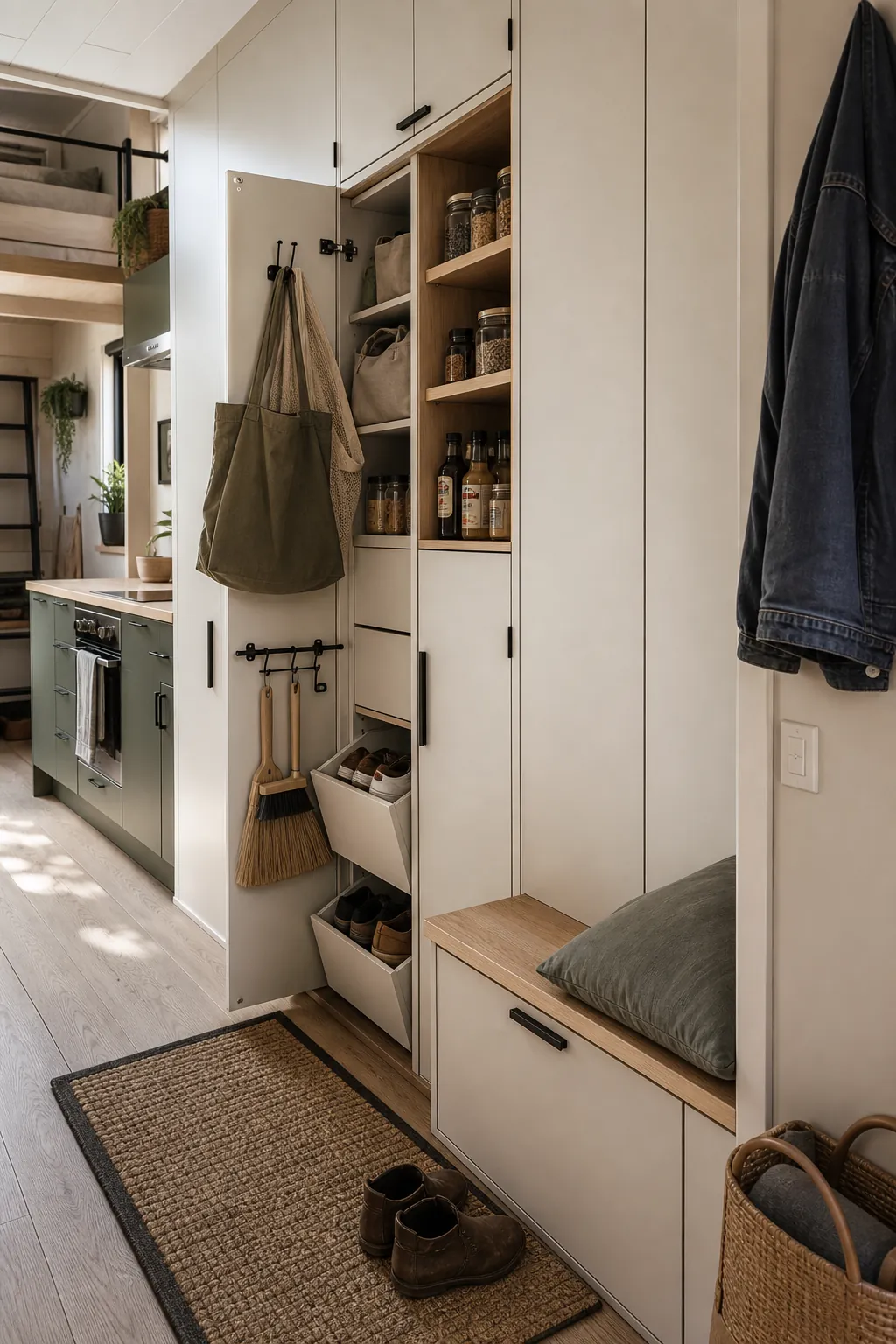
The best wall for storage is not always the biggest blank wall. It is the wall nearest to the routine that creates clutter. If shoes pile up near the door, the entry wall needs hidden storage. If pantry overflow lands on the counter, the kitchen wall needs shallow storage. If bedding, laundry, and cleaning tools migrate everywhere, a utility wall may matter more than another open shelf.
Start by listing what actually needs a home. Then group those items by where you use them. Storage should reduce movement, not create a scavenger hunt. A broom cabinet across from the kitchen is useful. A broom cabinet behind the sofa may be annoying enough that the broom stays out.
Also protect the walkway. A storage wall that is too deep can ruin a compact living plan. In many tiny homes, shallow built in storage is more livable than one deep cabinet. Twelve inches of organized wall storage can hold pantry jars, shoes, folded linens, tools, toiletries, books, and office supplies without turning the home into a narrow tunnel.
Use Flat Cabinet Fronts to Calm the Room
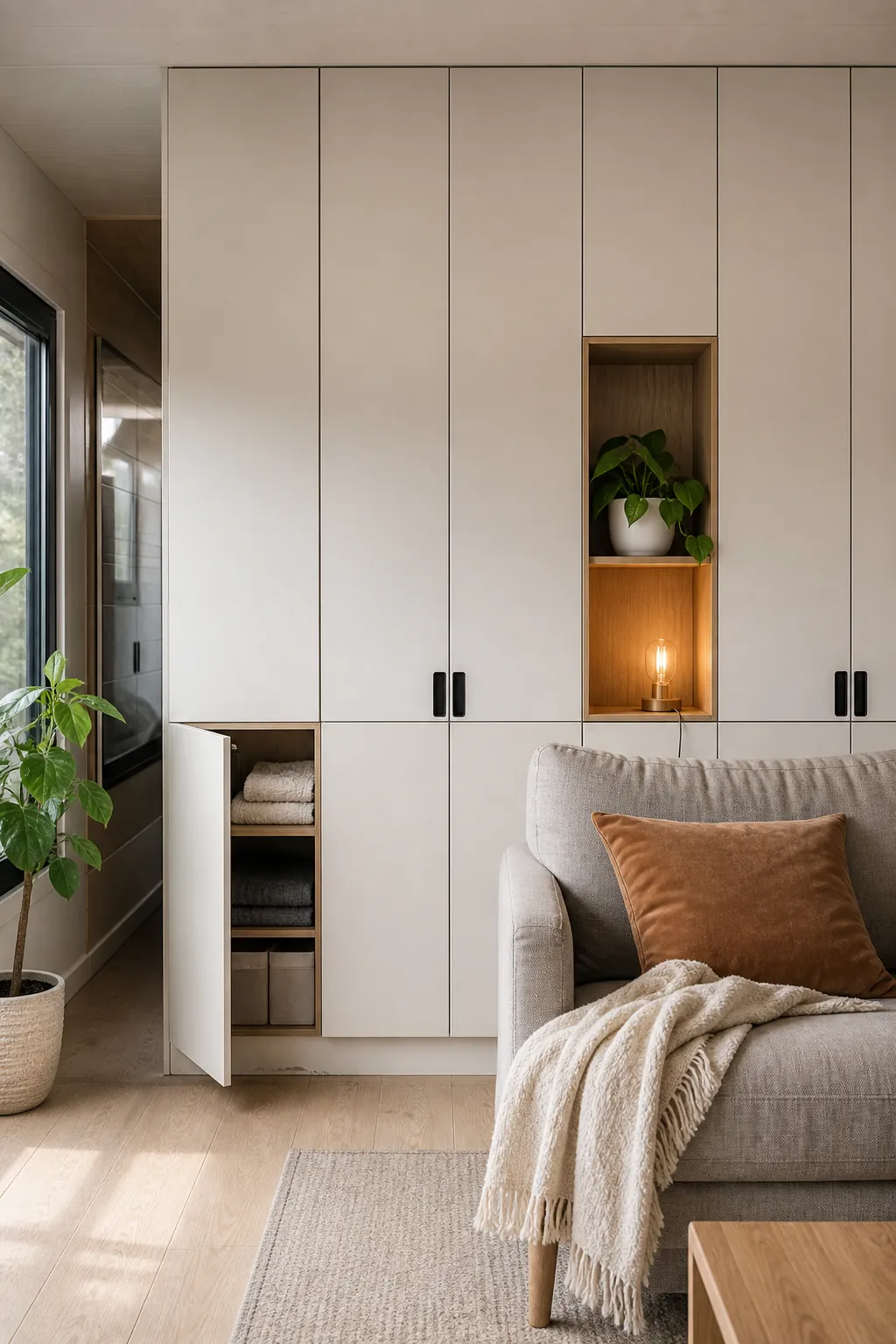
Open shelves can be beautiful, but a tiny house filled with open shelves can feel visually loud. Flat cabinet fronts create a calmer background. They hide the different colors, labels, shapes, and textures that make small space storage look busy.
For the cleanest look, use simple slab doors, touch-latch hardware, small recessed pulls, or vertical seams that blend into the wall paneling. You do not have to make every cabinet invisible. The goal is for the storage wall to read as architecture first and storage second.
A good hidden cabinet wall can hold clothing, office supplies, cleaning tools, pantry overflow, or bedding while still letting the living area feel open. Leave a few intentional display spots if you want warmth: a narrow ledge, one open cubby, a plant shelf, or a lamp niche. Too much hidden storage can look sterile. Too much open storage can look chaotic. The balance is the design.
Build Around Windows Instead of Blocking Them

Windows are precious in a tiny house, so wall storage should work around them whenever possible. A storage wall that blocks daylight can make the home feel smaller even if it adds useful capacity.
Try shallow cabinets below the window, a built-in bench with hidden drawers, tall cabinets on both sides, or a narrow shelf above the frame. This creates a full wall of function while keeping the center bright. It also turns the window into a natural zone: reading nook, dining bench, desk, plant shelf, or quiet morning spot.
Be careful with depth near windows. Deep cabinets can create awkward shadow pockets and make the window look trapped. Shallow side cabinets or drawers below the sill usually feel lighter. If the window opens, leave clearance for the crank, latch, or swing. Hidden storage is not successful if it makes ventilation harder.
Hide Utility Items in a Narrow Service Wall
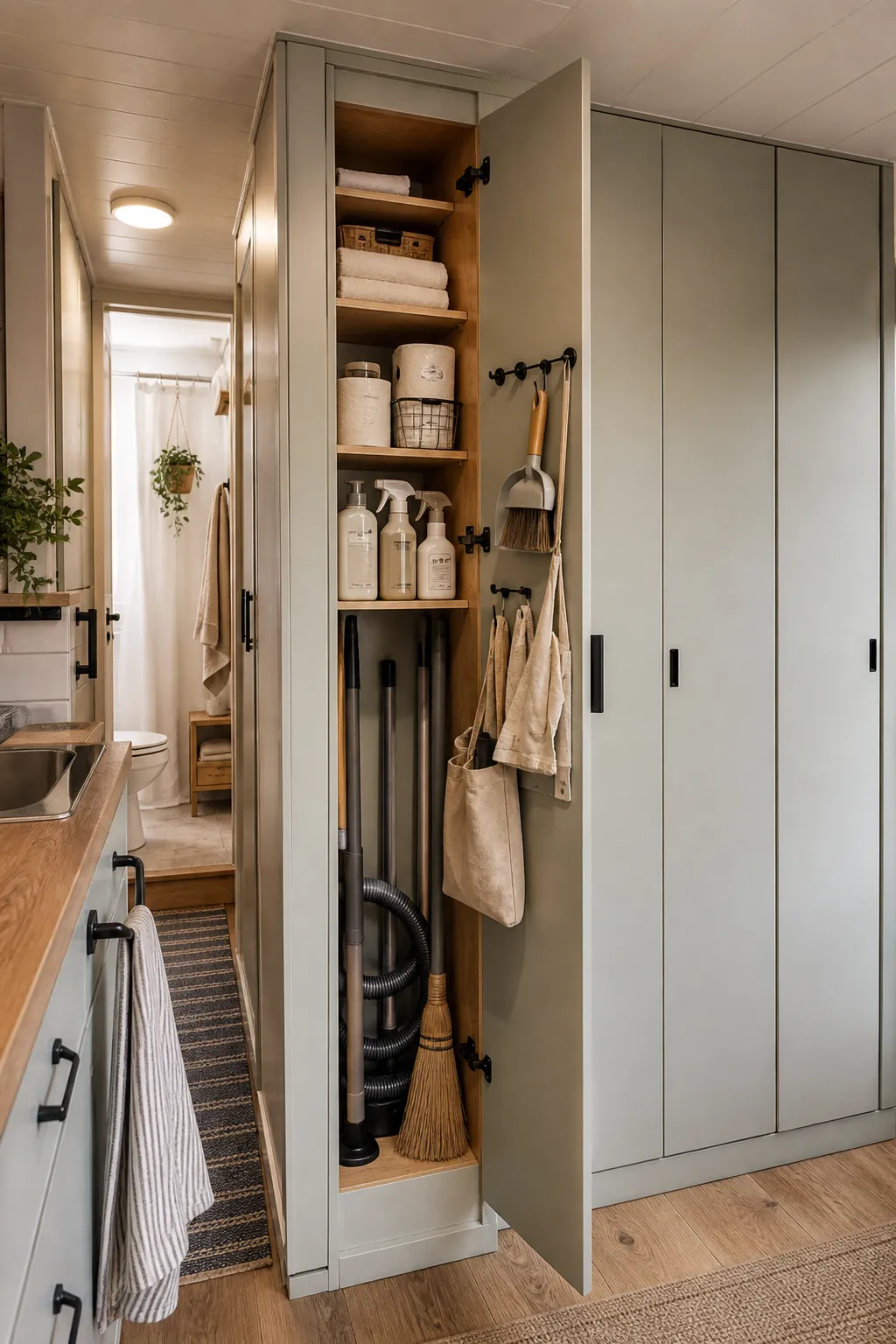
Every tiny home needs storage for unattractive things. Brooms, vacuum hoses, laundry detergent, extra paper goods, tools, pet supplies, and emergency items do not need to be on display. A narrow service wall can keep those items close without letting them take over the design.
This wall can be surprisingly shallow. Use vertical pull-outs, broom clips, peg rails inside doors, labeled bins, and adjustable shelves. If the service wall is near the kitchen or bathroom, it can also hold cleaning refills, towels, and compact laundry supplies.
The key is access. Hidden storage should open easily, use durable hardware, and not require removing five things to reach one thing. If the wall stores daily tools, design it for daily use. A beautiful concealed cabinet that is annoying to open will become a place where useful items disappear.
Turn the Entry Into a Concealed Drop Zone
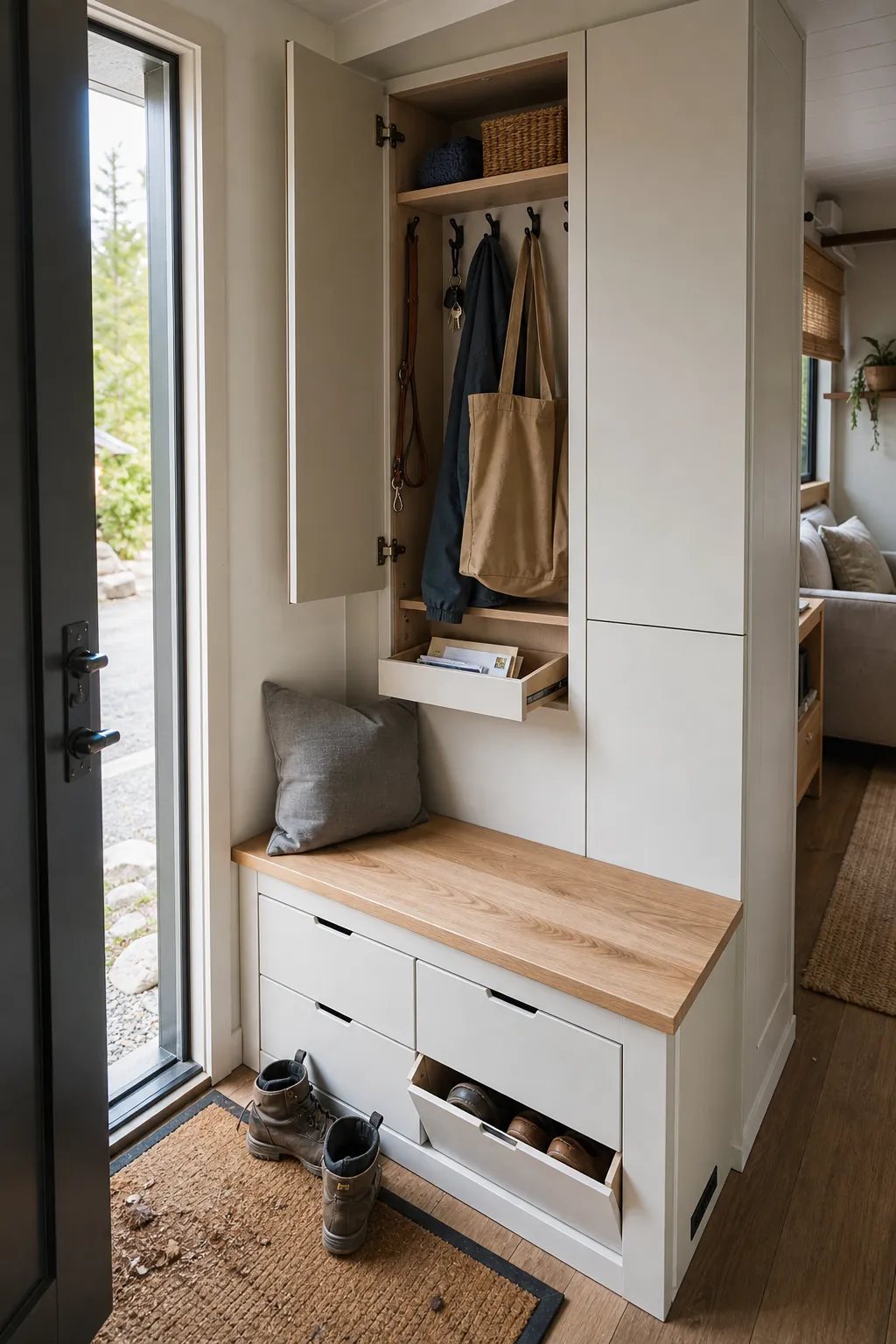
The entry is where tiny house organization either succeeds or fails. Without a landing spot, shoes, keys, bags, jackets, pet leashes, mail, and reusable totes spread into the living area.
A concealed drop zone can be as simple as a bench with shoe drawers, a shallow cabinet with hooks inside, a tilt-out shoe compartment, and a small tray hidden behind a lift-up panel. If the door opens directly into the living room, matching the entry cabinets to the wall color helps the storage disappear when closed.
Do not make the entry too precious. It will handle dirt, wet coats, grocery bags, and rushed mornings. Use wipeable paint, durable flooring, ventilation gaps for shoes, and hardware that can handle real use. Hidden storage is only useful if it tolerates daily life.
Use Toe-Kick Drawers and Low Wall Storage
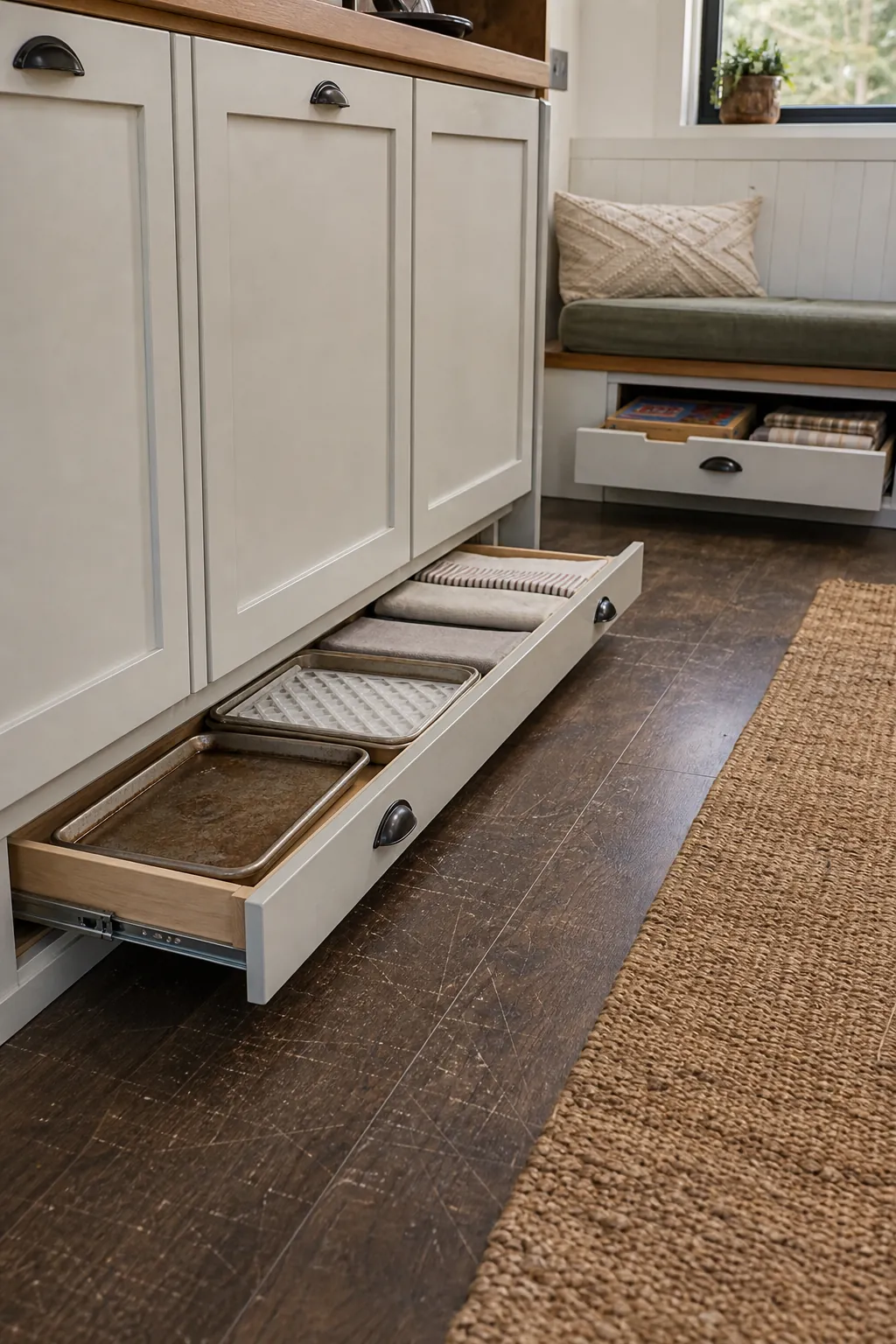
Hidden storage walls are not only tall. The low spaces matter too. Toe-kick drawers, baseboard pull-outs, low bench drawers, and shallow cabinets under windows can store flat or seasonal items without adding visual weight.
Use low hidden storage for items that are not needed every hour: baking sheets, spare filters, picnic supplies, board games, wrapping paper, pet gear, extra linens, and backup toiletries. Keep heavy items low, but make sure the drawer slides and handles are easy to use. A tiny drawer that scrapes the floor or needs two hands to open will quickly become dead space.
Low storage also helps keep the upper walls lighter. Instead of filling every vertical surface with cabinets, you can combine hidden base storage with a few open shelves or a clean window wall. The result feels less crowded while still giving the home a place for the things that usually create clutter.
Make Hidden Storage Easy to Remember
The risk with hidden storage is forgetting what is hidden. Use consistent zones, not random secret compartments. Pantry items should stay near the kitchen. Entry items should stay near the door. Bedding should stay near the sleeping area. Utility items should stay near the bathroom, kitchen, or service core.
If several flat panels look identical, add subtle cues: a slightly different pull, a tiny shadow gap, a label inside the door, or a consistent left-to-right order. The outside can stay quiet while the inside stays easy to use.
A tiny house with hidden storage walls should not feel like a puzzle. It should feel like the clutter finally has somewhere to go. When the walls hold the right things in the right places, the home feels larger because your eyes are not fighting every object you own.