
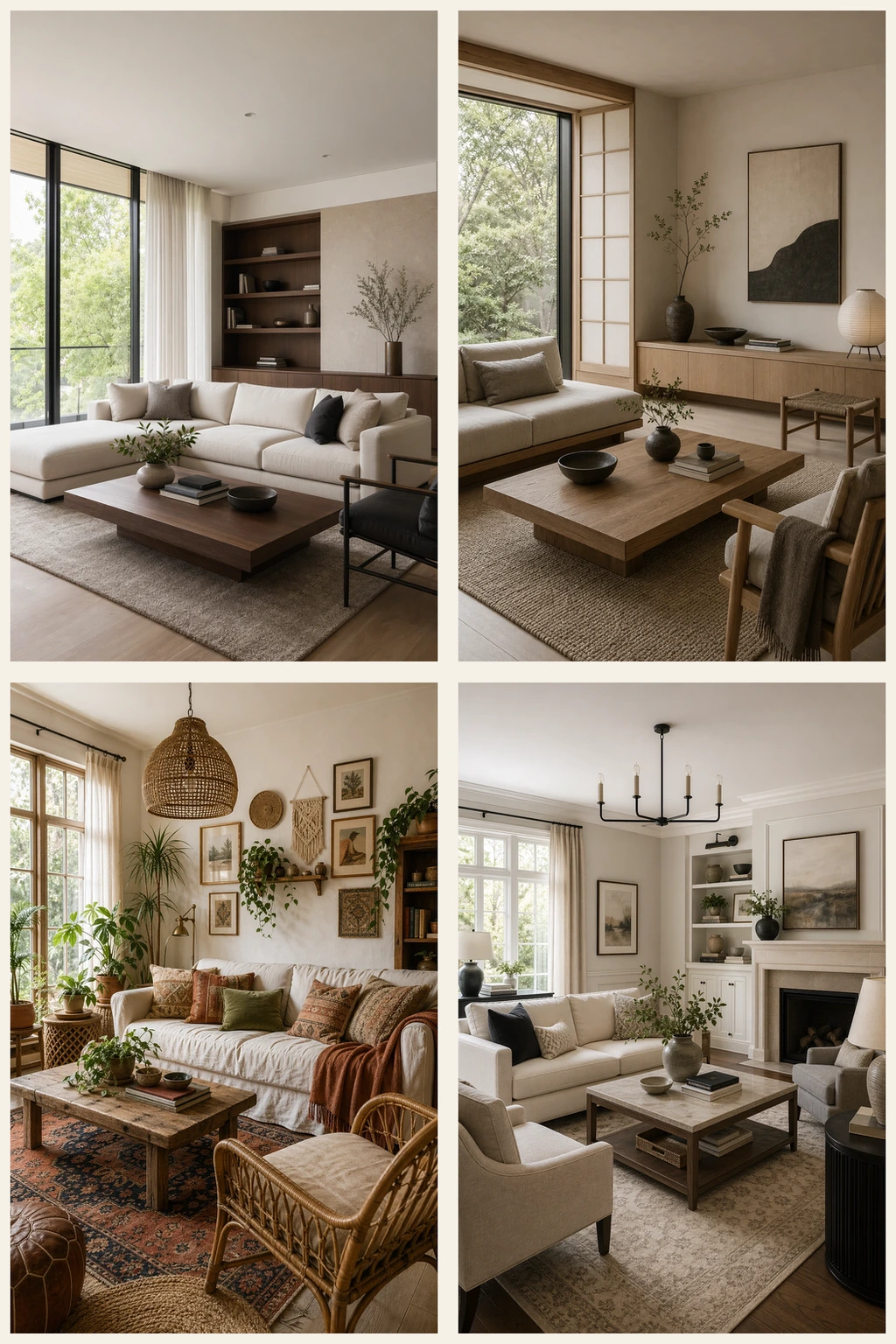
If your saved rooms jump from sleek white kitchens to cozy wood-filled living rooms to layered boho corners, you are not indecisive. You are still figuring out which design language feels right in your home. Learning the main house interior design styles makes it much easier to choose furniture, colors, lighting, and finishes that work together instead of feeling random.
The ten styles below are the ones people run into most often when planning a refresh or a full-room makeover. As you read, pay attention to the materials, silhouettes, and overall mood of each one. That is usually the fastest way to spot the style that fits your space, your habits, and the atmosphere you want to live in every day.
1. Modern Style: Clean Lines and Warm Woods
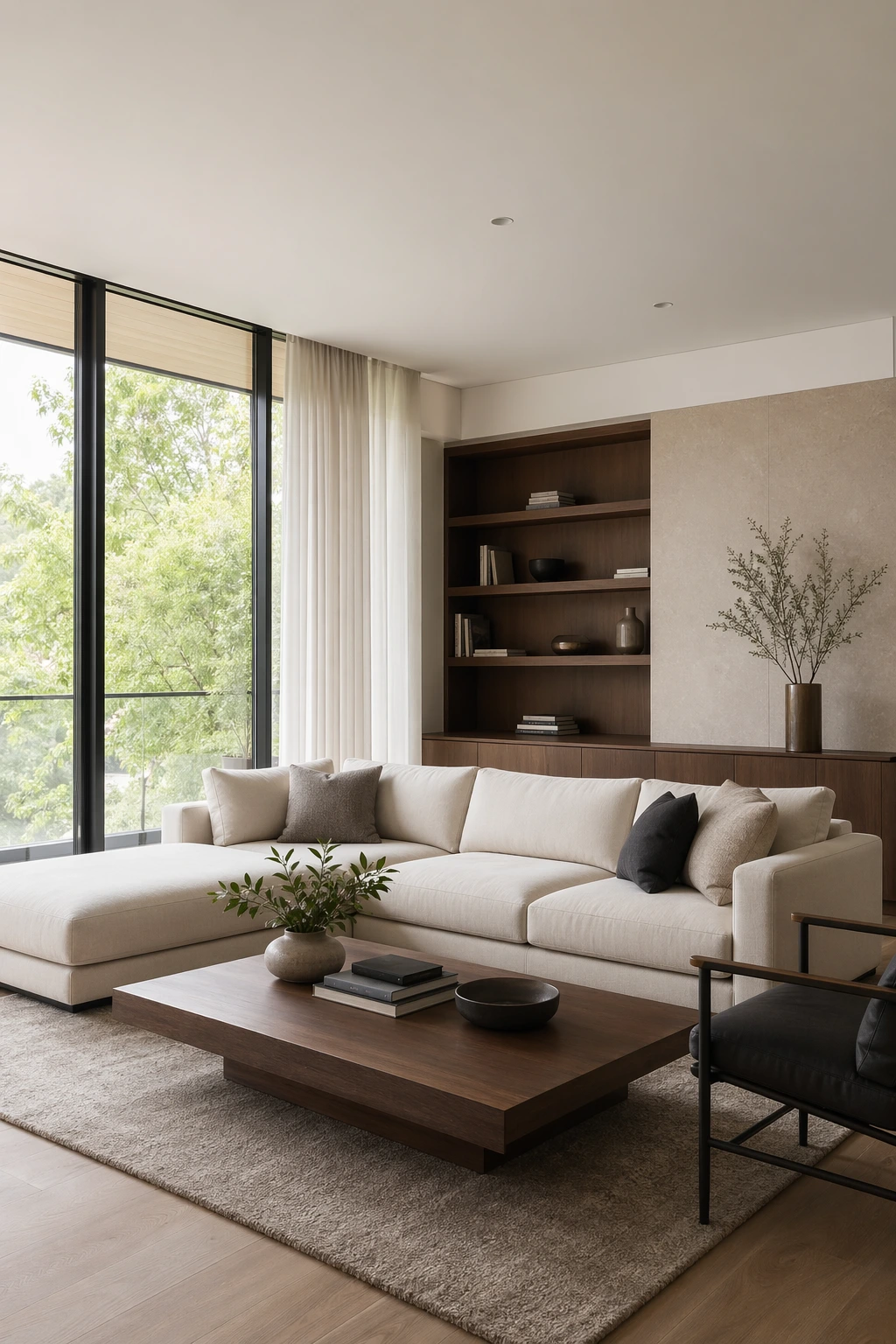
Modern style comes from a defined design era, so it tends to feel disciplined and intentional rather than trend-driven. Think low-profile sofas, simple silhouettes, warm walnut or oak finishes, and a palette built around earthy neutrals. Rooms in this style usually feel open, uncluttered, and practical, with every piece earning its place. If you like spaces that look polished without feeling cold, modern is one of the easiest styles to live with long term. It also gives you a clear answer to the modern versus contemporary question: modern is rooted in a specific design movement, while contemporary shifts with what feels current right now.
2. Contemporary Style: Soft Curves and Current Finishes
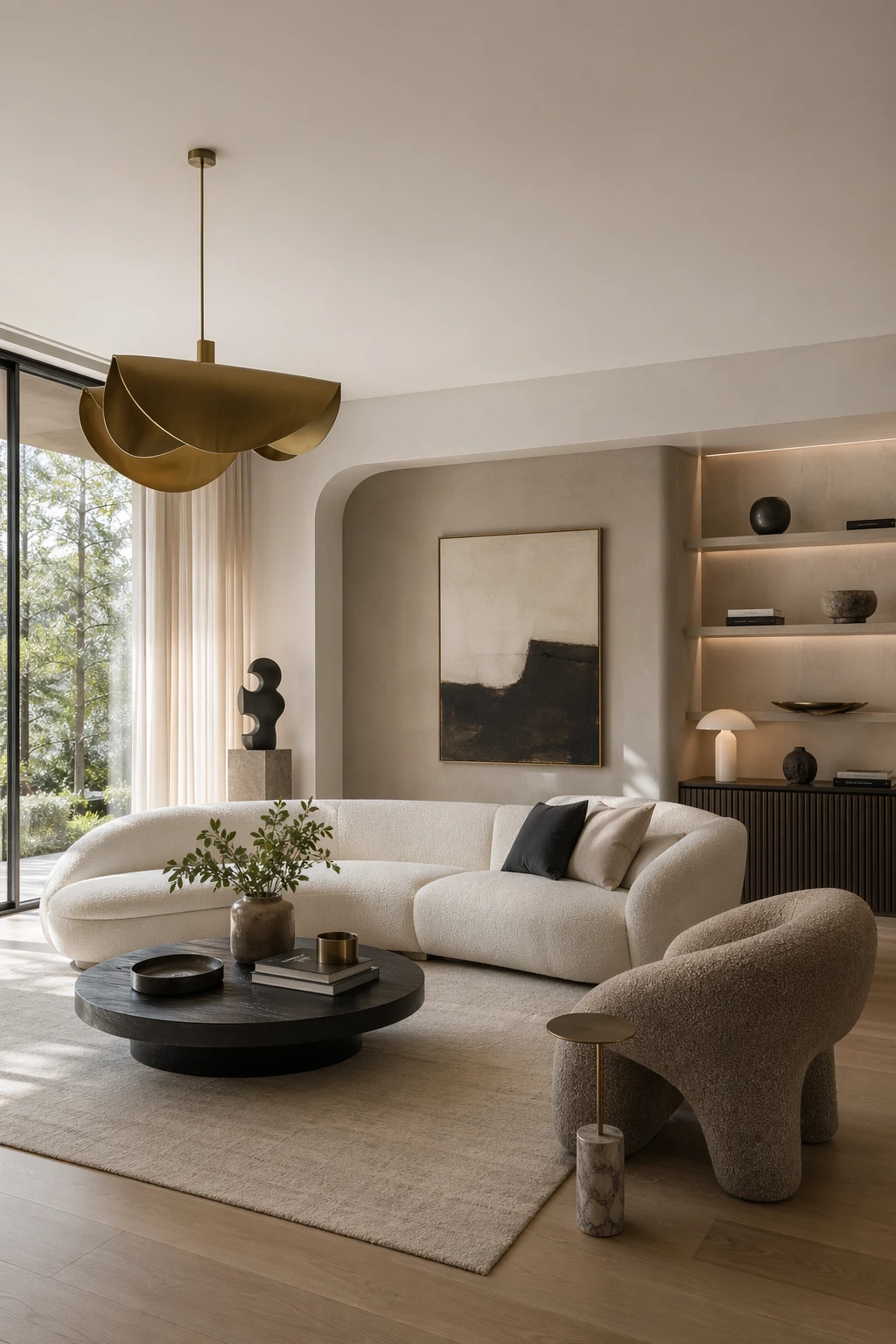
Contemporary style is about what feels current rather than what belongs to one historic period. That usually means cleaner rooms with softer curves, sculptural furniture, statement lighting, and a mix of smooth and textured finishes. Contemporary interiors often use a restrained palette of creams, taupes, black, and gray, then add movement through shape instead of heavy ornament. If modern style feels a little too strict, contemporary gives you more freedom to play with trending details while keeping the room streamlined. It is a strong fit for homeowners who want their house to feel updated, refined, and slightly more expressive than classic minimalist spaces.
3. Scandinavian Style: Light, Airy, and Functional
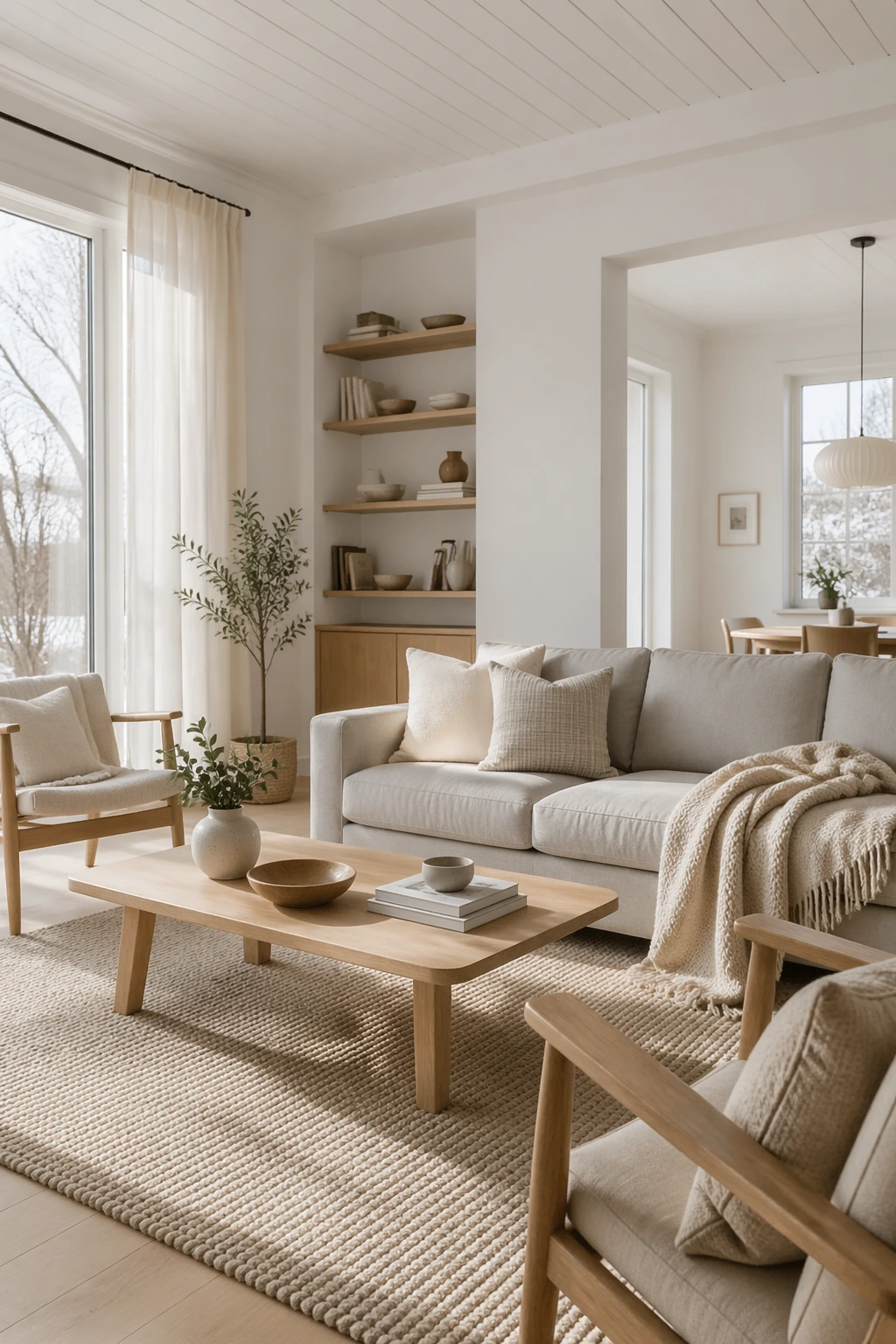
Scandinavian style is built around simplicity, comfort, and function. You will usually see pale woods, white or light gray walls, practical furniture, and cozy layers such as wool throws, linen curtains, and textured rugs. The rooms feel bright and breathable, which is one reason this style works so well in smaller homes and apartments. Scandinavian interiors avoid clutter, but they are not stark. The goal is warmth through natural materials and good light. If you want a home that feels calm, clean, and welcoming without looking overly styled, Scandinavian design is often the easiest place to start.
4. Japandi Style: Calm Minimalism with Natural Texture
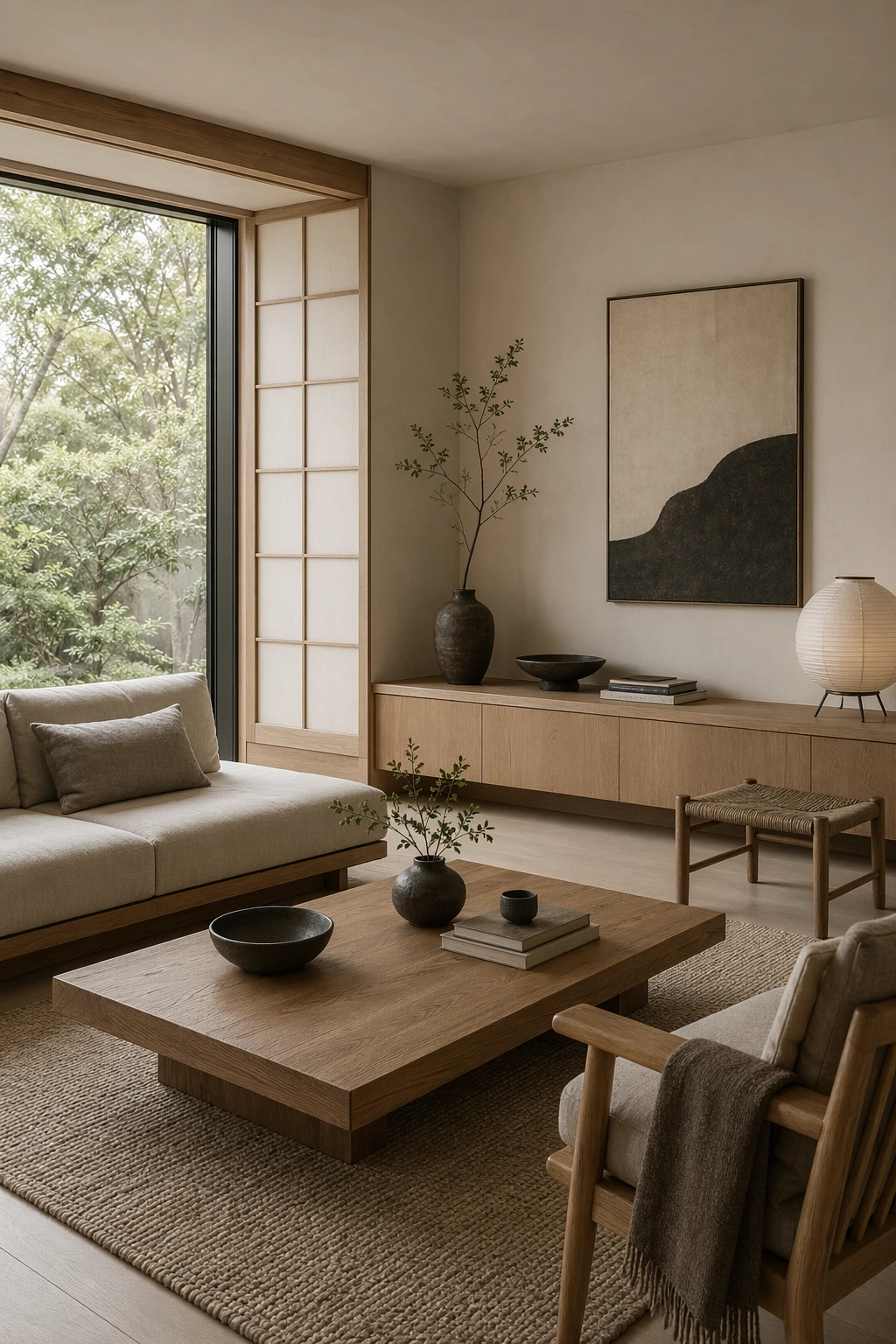
Japandi blends Japanese restraint with Scandinavian warmth, which makes it one of the most livable interior design styles for people who want peace at home. This look favors low furniture, simple forms, handcrafted decor, soft neutral colors, and honest materials such as wood, paper, stone, and linen. Negative space matters just as much as the objects in the room, so the result feels edited but not empty. If you are drawn to serene interiors that help you slow down, Japandi is a strong match. It also works especially well in homes where you want fewer items, better storage, and a more grounded relationship with everyday objects.
5. Midcentury Modern Style: Retro Shapes with Everyday Practicality
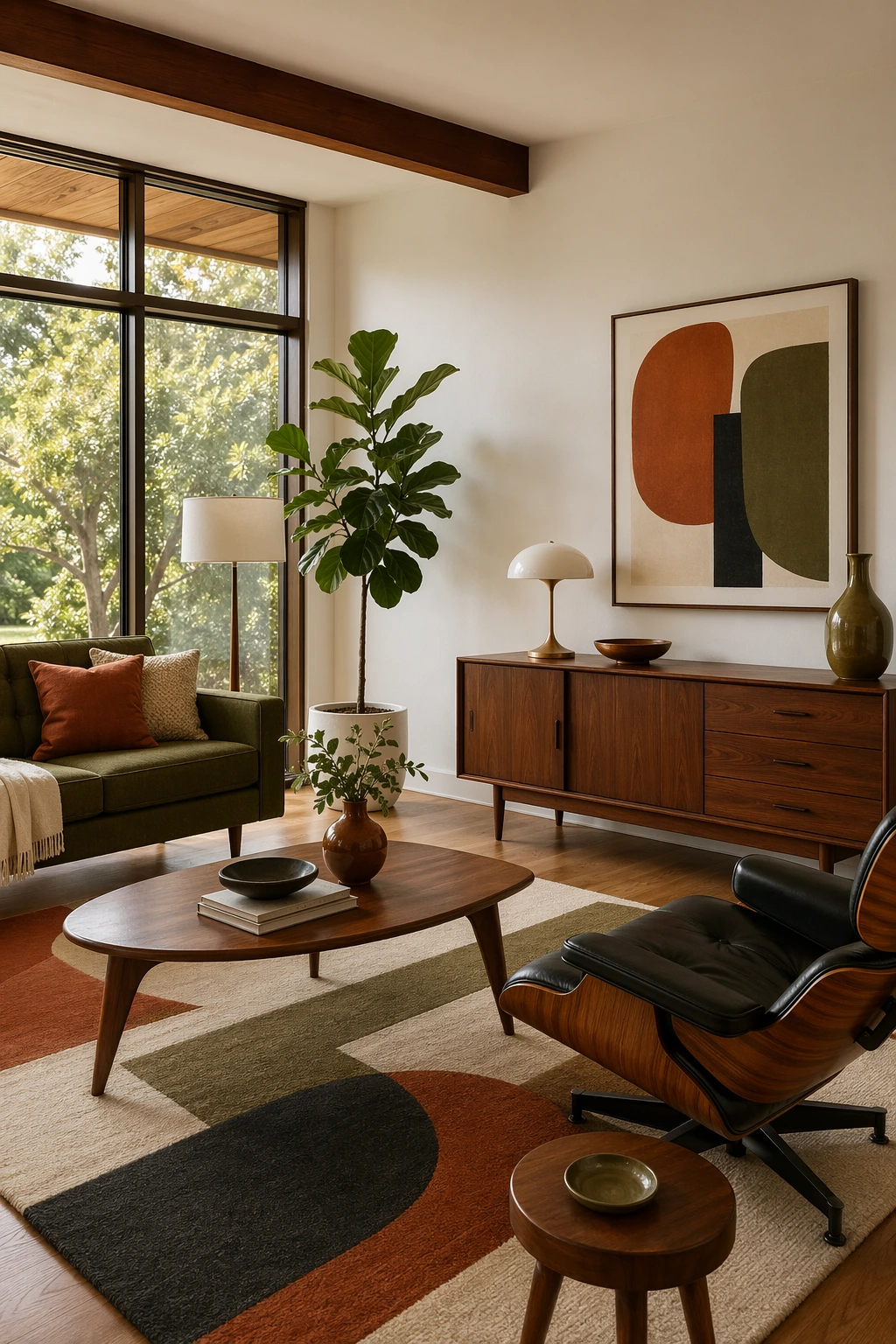
Midcentury modern is one of the most recognizable house interior design styles because its furniture silhouettes are so distinctive. Look for tapered legs, streamlined wood pieces, organic curves, graphic accents, and a mix of warm timber with simple upholstery. The style feels retro, but it still looks fresh because the furniture is practical and usually scaled well for everyday living. Midcentury modern works especially well if you like vintage finds but do not want your home to feel fussy or old-fashioned. A few strong pieces, such as a walnut sideboard or an iconic lounge chair, can establish the look without forcing the entire house into a time capsule.
6. Industrial Style: Raw Materials and Open Structure
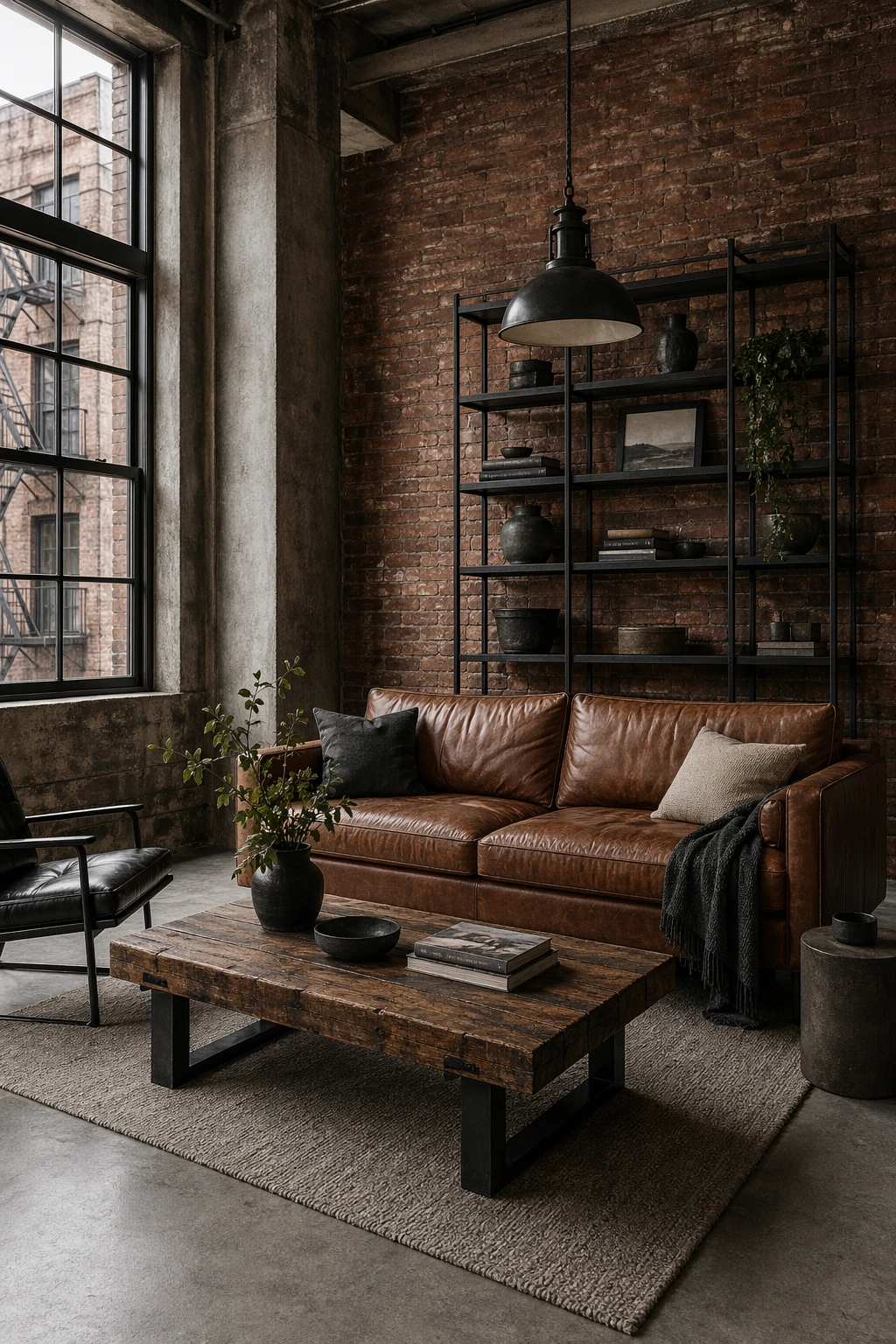
Industrial style borrows its character from warehouses and converted lofts, so the focus is on raw materials and visible structure. Exposed brick, black metal, concrete, aged leather, reclaimed wood, and oversized lighting are all common here. At its best, industrial design feels grounded and architectural rather than harsh. The trick is balancing the harder finishes with warmer elements such as wood tones, rugs, and soft upholstery. If you like interiors with edge and personality, industrial style gives you a lot to work with. It is especially effective in open-plan spaces, but even a standard home can borrow the look through lighting, shelving, and material choices.
7. Boho Style: Layered Textiles and Collected Character
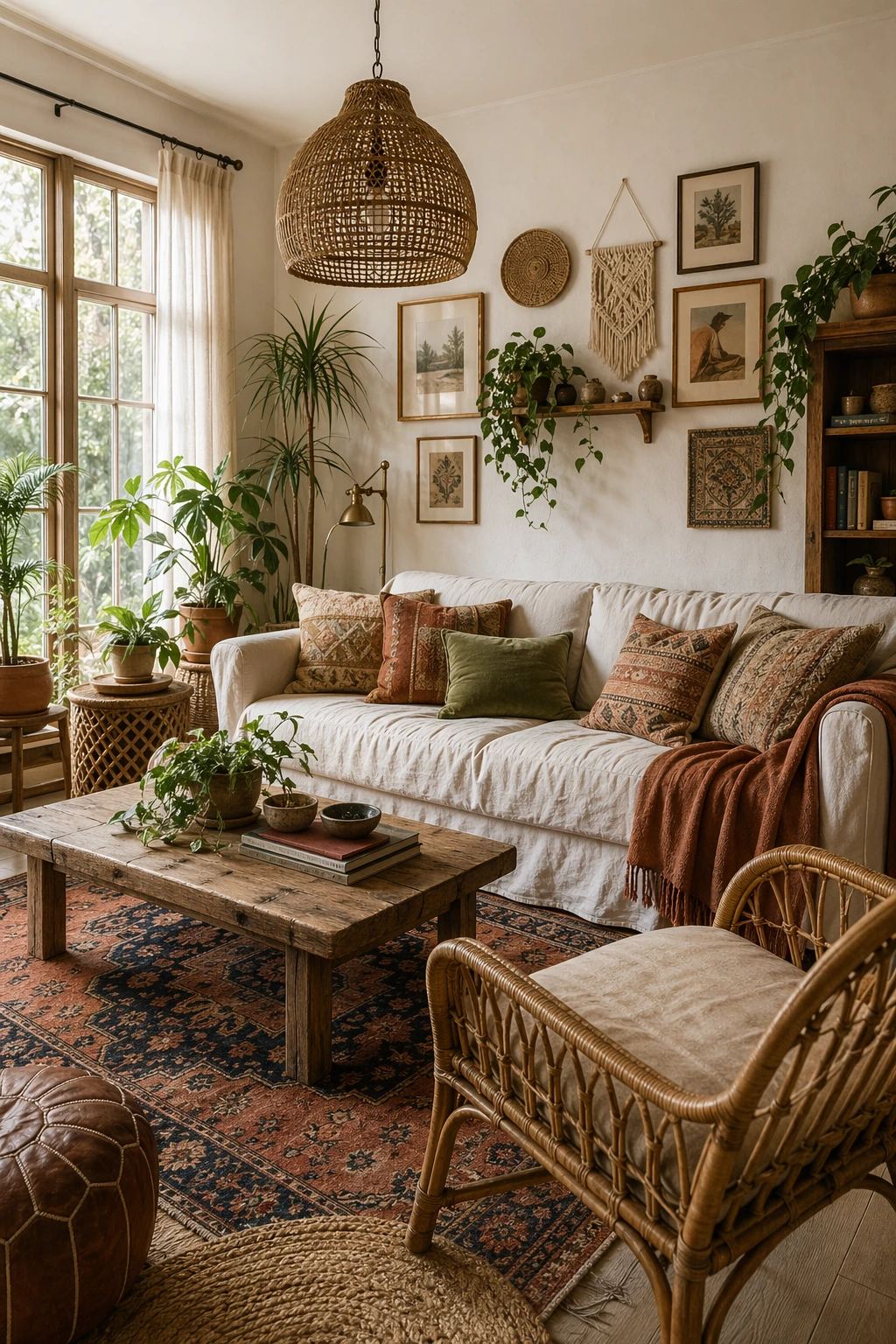
Boho style is relaxed, personal, and full of texture. Instead of matching sets, it leans on layered rugs, mixed pillows, woven materials, vintage pieces, plants, handmade decor, and art that feels collected over time. The color palette can stay earthy and muted or become richer with terracotta, olive, rust, mustard, or jewel tones. What matters most is that the room feels lived in and individual. If you want your home to tell a story instead of looking showroom-perfect, boho gives you permission to mix pieces that have meaning. It is one of the best styles for people who enjoy color, travel-inspired details, and rooms with softness and soul.
8. Farmhouse Style: Relaxed Comfort with Rustic Texture
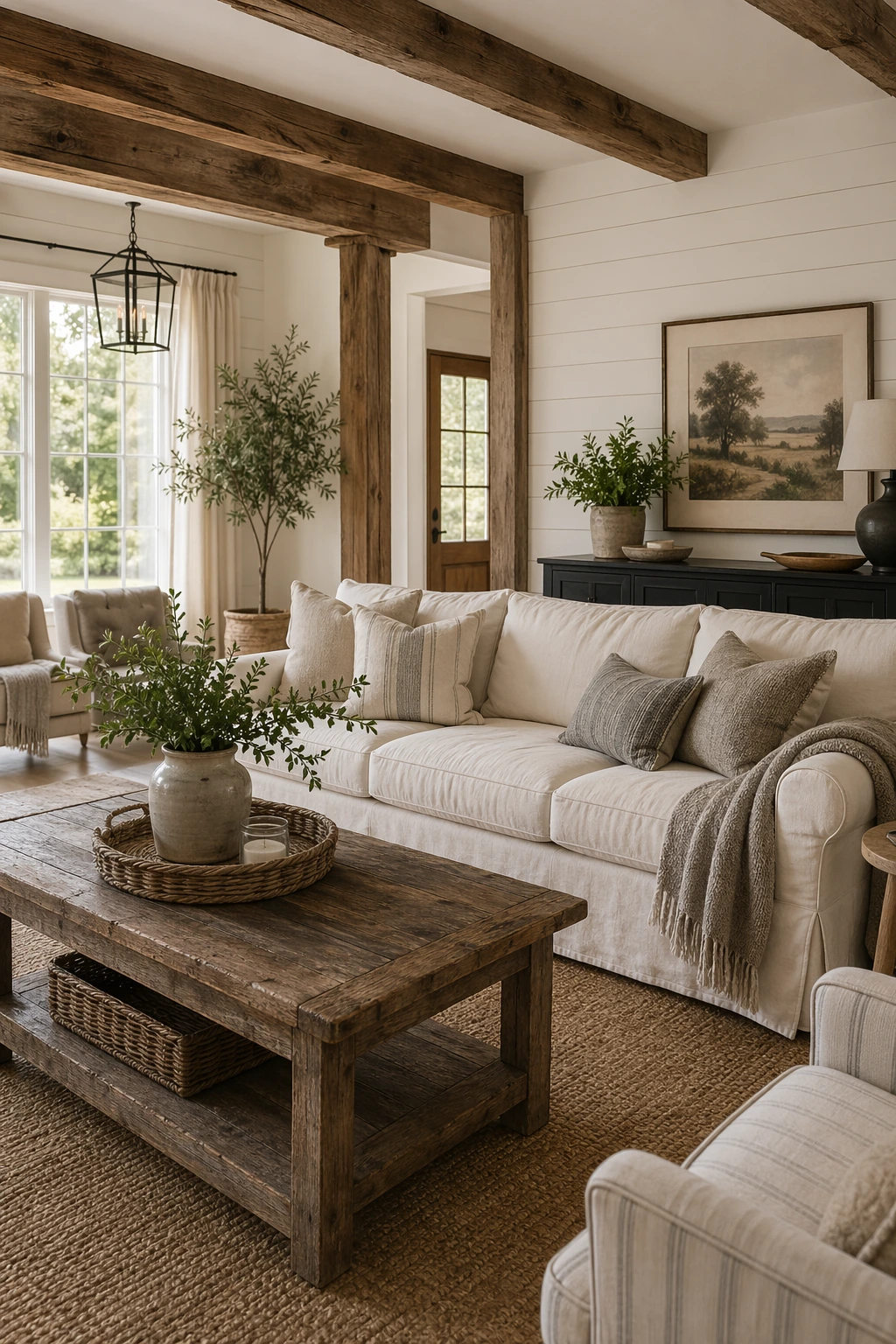
Farmhouse style centers on comfort, familiarity, and natural texture. You will often see soft neutral palettes, wood beams, sturdy tables, slipcovered seating, simple patterns, and finishes that look gently worn rather than formal. The modern farmhouse version cleans up the look with straighter lines and less decorative clutter, which keeps it from feeling overly rustic. If you want a home that feels welcoming and easy to live in, farmhouse style remains a practical choice. It works well for families, layered living rooms, and open kitchens because the mood is approachable instead of precious. The best versions feel warm and quiet, not themed.
9. Traditional Style: Symmetry, Detail, and Timeless Warmth
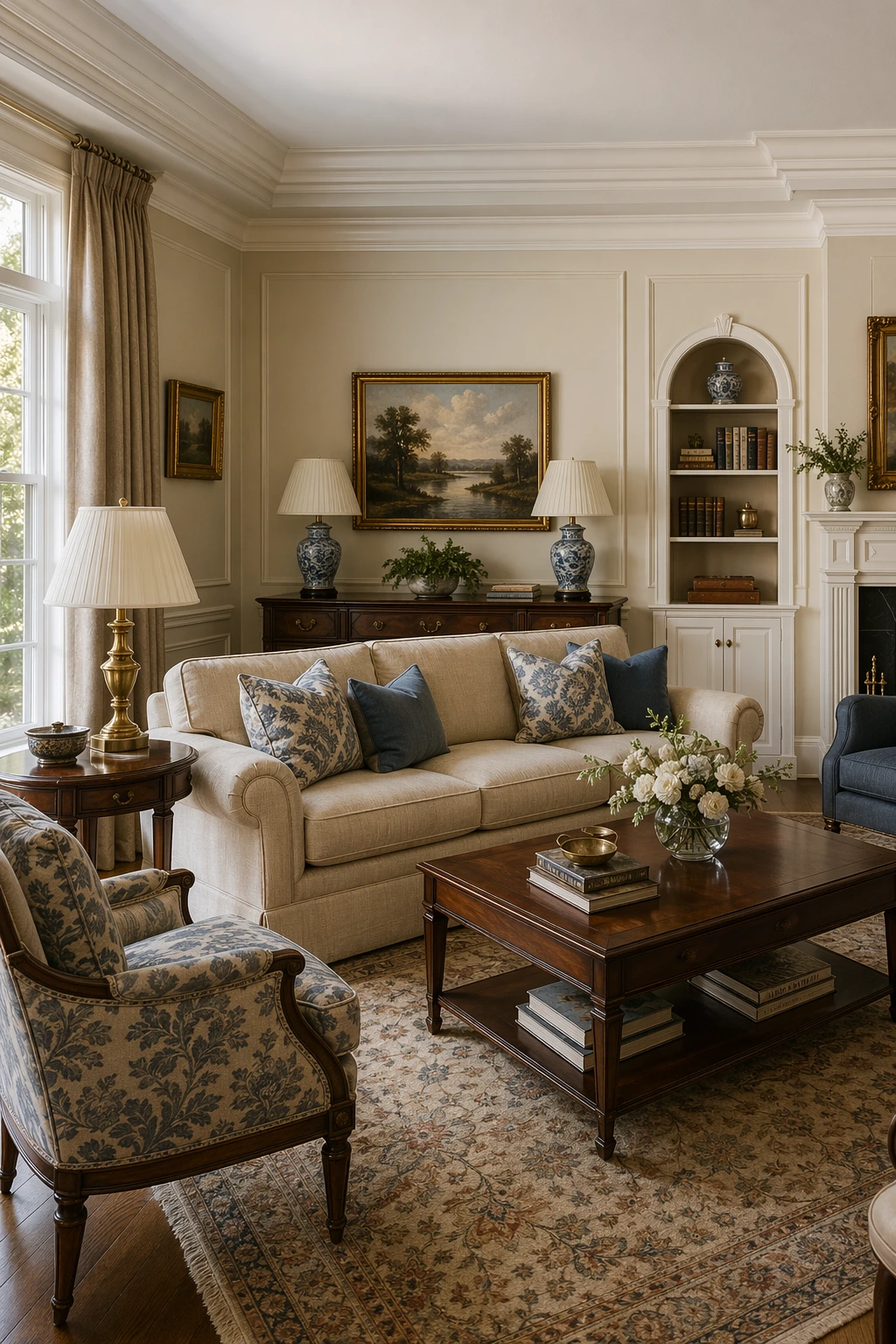
Traditional style is rooted in classic furniture forms, balanced layouts, and a stronger sense of detail. Picture tailored sofas, paneled walls, dark or warm wood furniture, patterned drapery, table lamps, framed art, and a room arranged with clear symmetry. Even when the palette is neutral, traditional interiors usually feel rich because they rely on texture, trim, and layers. This style is a good fit if you want a house that feels established, comfortable, and timeless rather than trendy. It also works especially well in homes with architectural character, where details such as molding, fireplaces, and built-ins can become part of the design story.
10. Transitional Style: A Balanced Blend of Classic and Modern
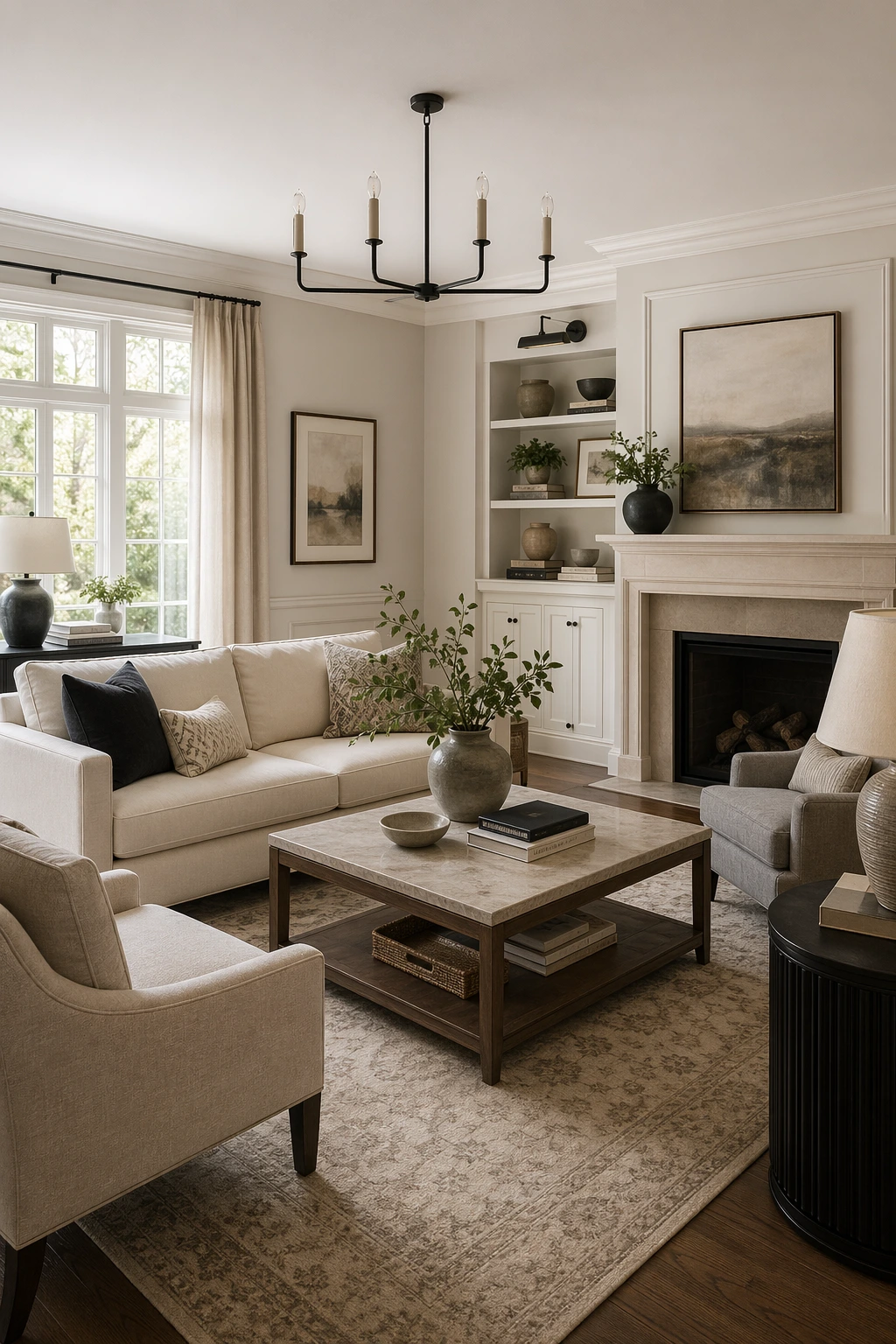
Transitional style sits in the middle of traditional and modern, which is why it appeals to so many homeowners. It keeps the warmth, softness, and familiarity of classic interiors, but pares back the extra ornament so the room feels lighter and more current. You will often see neutral palettes, upholstered seating, subtle patterns, mixed textures, and a blend of old and new pieces that share balanced proportions. If you want a home that feels polished without locking into a stronger design identity, transitional is often the safest and smartest choice. It is especially useful when two people in the same household like different looks and need a middle ground that still feels cohesive.
Choosing from the many types of house interior design styles gets easier when you stop chasing labels and start looking at what you consistently save. If you prefer clean lines and visual quiet, modern, Scandinavian, or Japandi may be the answer. If you want more texture and personality, boho, farmhouse, or traditional could feel better. And if you want a timeless middle ground, transitional is hard to beat. Once you pick a direction, repeat its core materials, shapes, and mood across rooms so the whole house feels connected instead of accidental.