
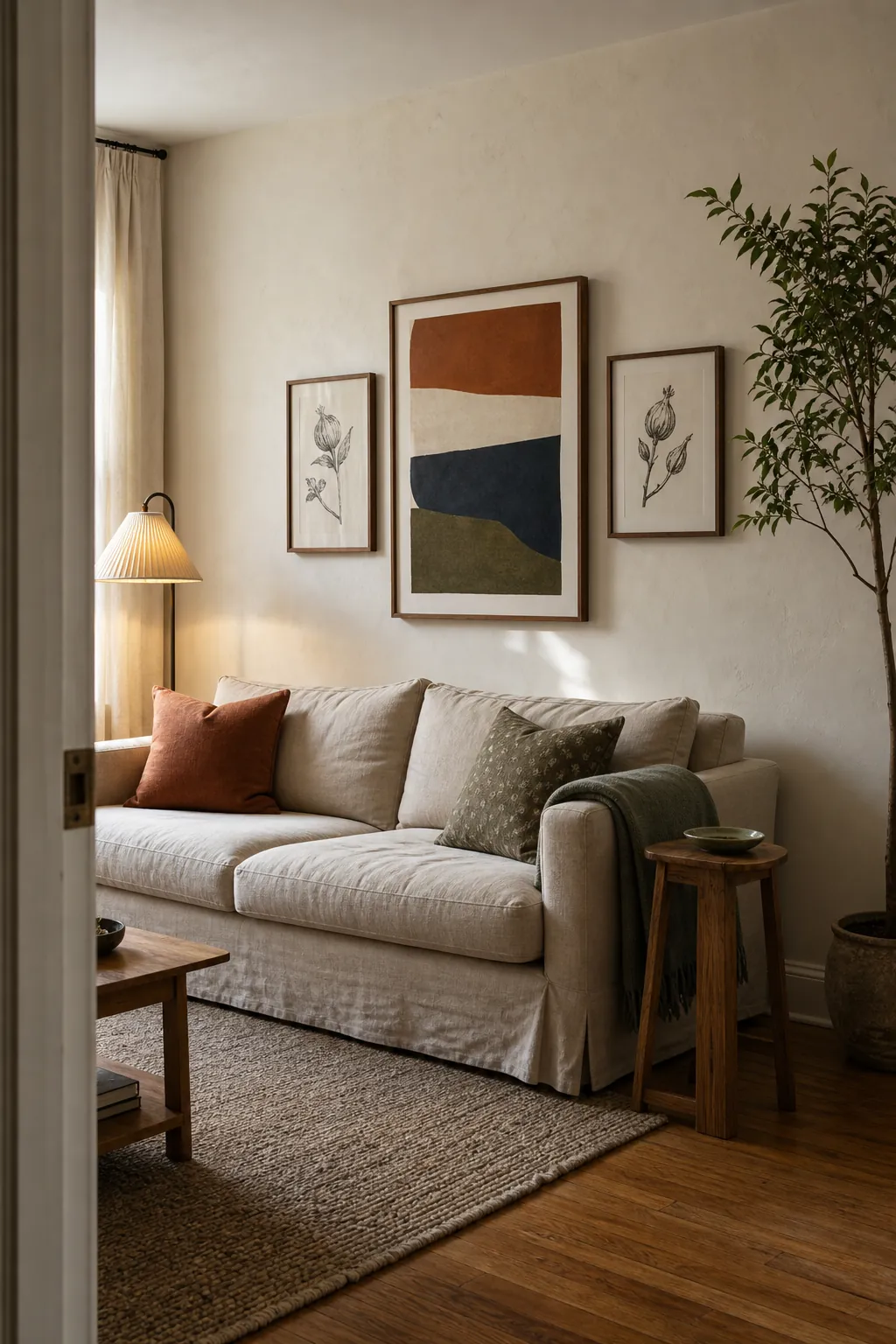
A room can be fully furnished and still feel strangely unfinished. Often, the problem is not that every bare patch needs filling. It is that the walls, furniture, lighting, and objects do not yet read as one composition. The fastest fix is to stop shopping for random small decor and decide which wall should carry the room.
That distinction matters. A quiet wall can give the eye somewhere to rest; an accidental blank wall makes the sofa, bed, or dining table look as if it was dropped into place. The wall decor ideas below solve the second problem while preserving enough breathing room to keep your home from feeling crowded.
Start With One Properly Scaled Anchor
The most common reason empty wall decor looks tentative is simple: the main piece is too small for what sits below it. A postcard-size print may be beautiful, but it cannot visually support a long sofa. Before choosing a style, measure the furniture and the usable wall area. Above a substantial piece of furniture, aim for an arrangement that occupies roughly half to two-thirds of its width. Treat that as a flexible visual guideline, not a building code.
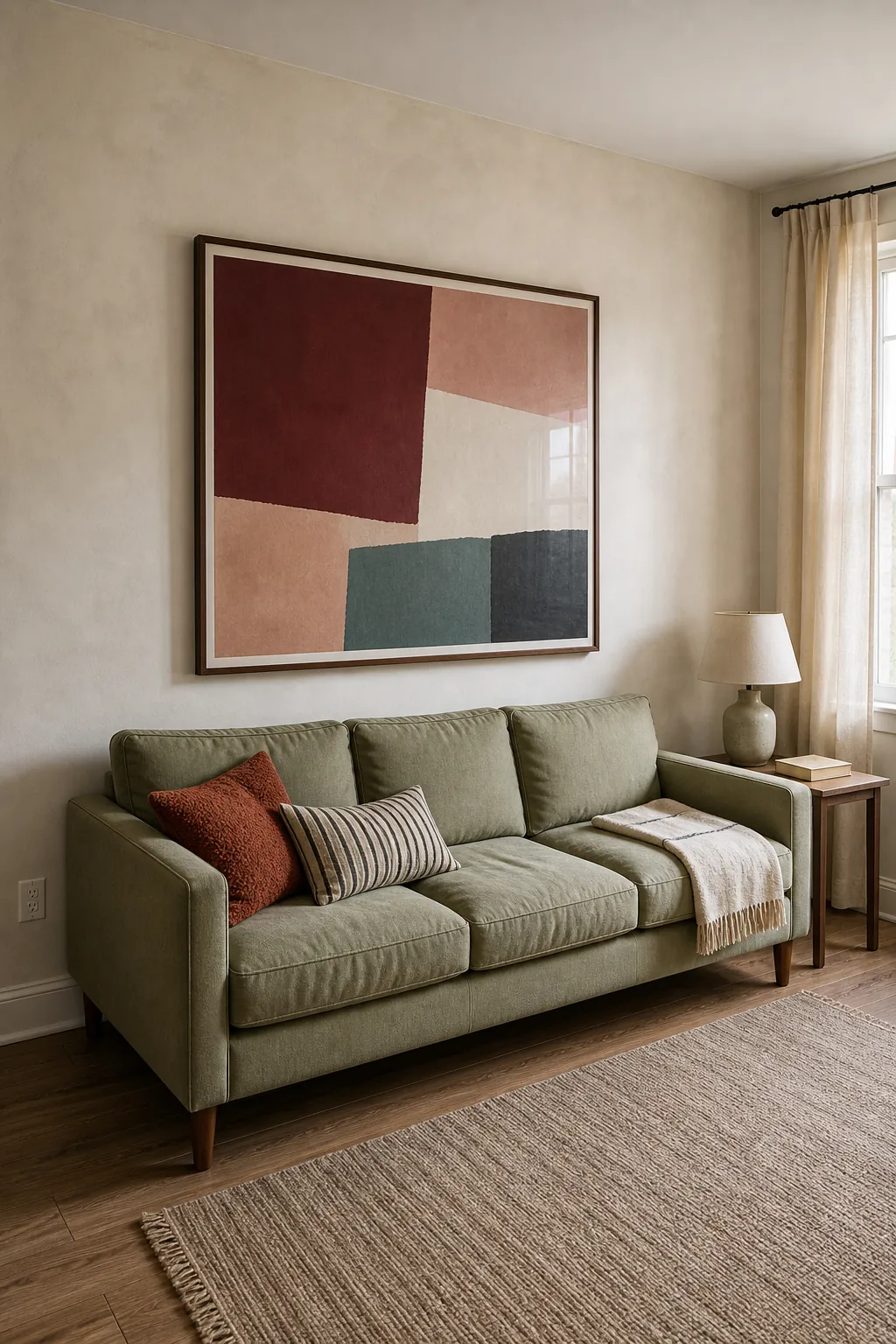
You can create that anchor with one oversized print, a pair of related works, or a triptych. The subject does not need to match the cushions literally. Instead, repeat one or two colors already present in the room and introduce one contrast. Mock up the footprint with painter’s tape before hanging anything. If the taped rectangle still looks like a postage stamp from the doorway, size up.
Build a Gallery Wall Around Visual Weight
A gallery wall works when it reads as one large shape. It falls apart when every frame is small, the gaps are inconsistent, or the collection floats too high above the furniture. Begin with two or three stronger pieces, then use smaller frames to connect the edges. Balance visual weight, not perfect symmetry: a dark frame or saturated print can carry as much weight as two pale pieces.
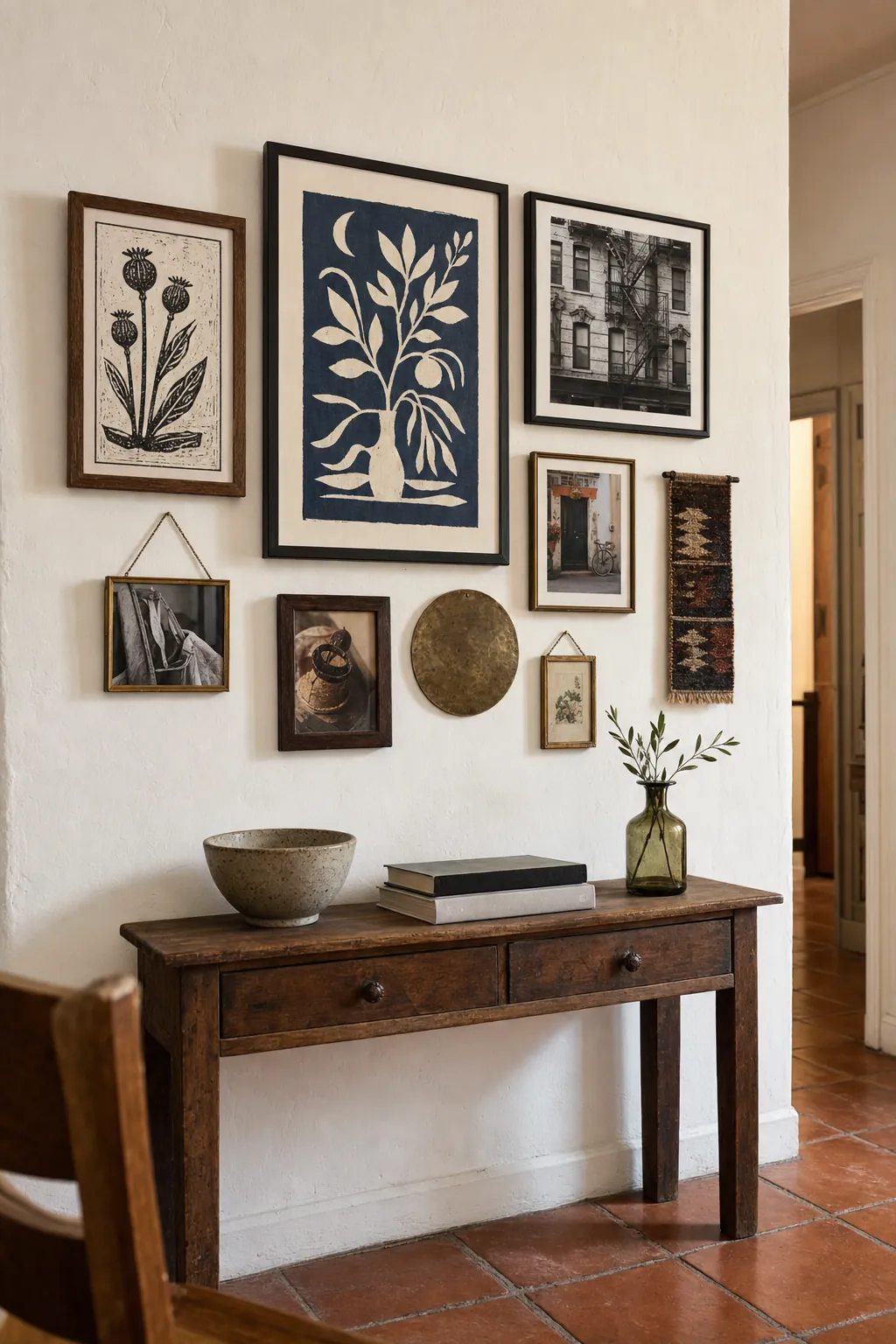
Arrange the whole group on the floor first, or trace each frame onto kraft paper and tape the templates to the wall. Keep a repeatable gap—often a few inches is enough—while allowing the outer silhouette to be slightly irregular. Mix photographs, drawings, a textile fragment, or a tiny dimensional object so the wall feels collected rather than ordered as a matching frame set. Keep the overall center connected to the furniture below, not to the ceiling.
Use a Mirror Where It Can Borrow a View
A mirror is useful wall decor only when its reflection improves the room. Place it where it can catch daylight, a pendant, greenery, or an attractive sightline. Avoid positioning it so it mainly duplicates a television, a cluttered worktop, or a blank opposing wall. In a narrow bedroom or dim entryway, a tall mirror can add height and spread light without adding visual clutter.
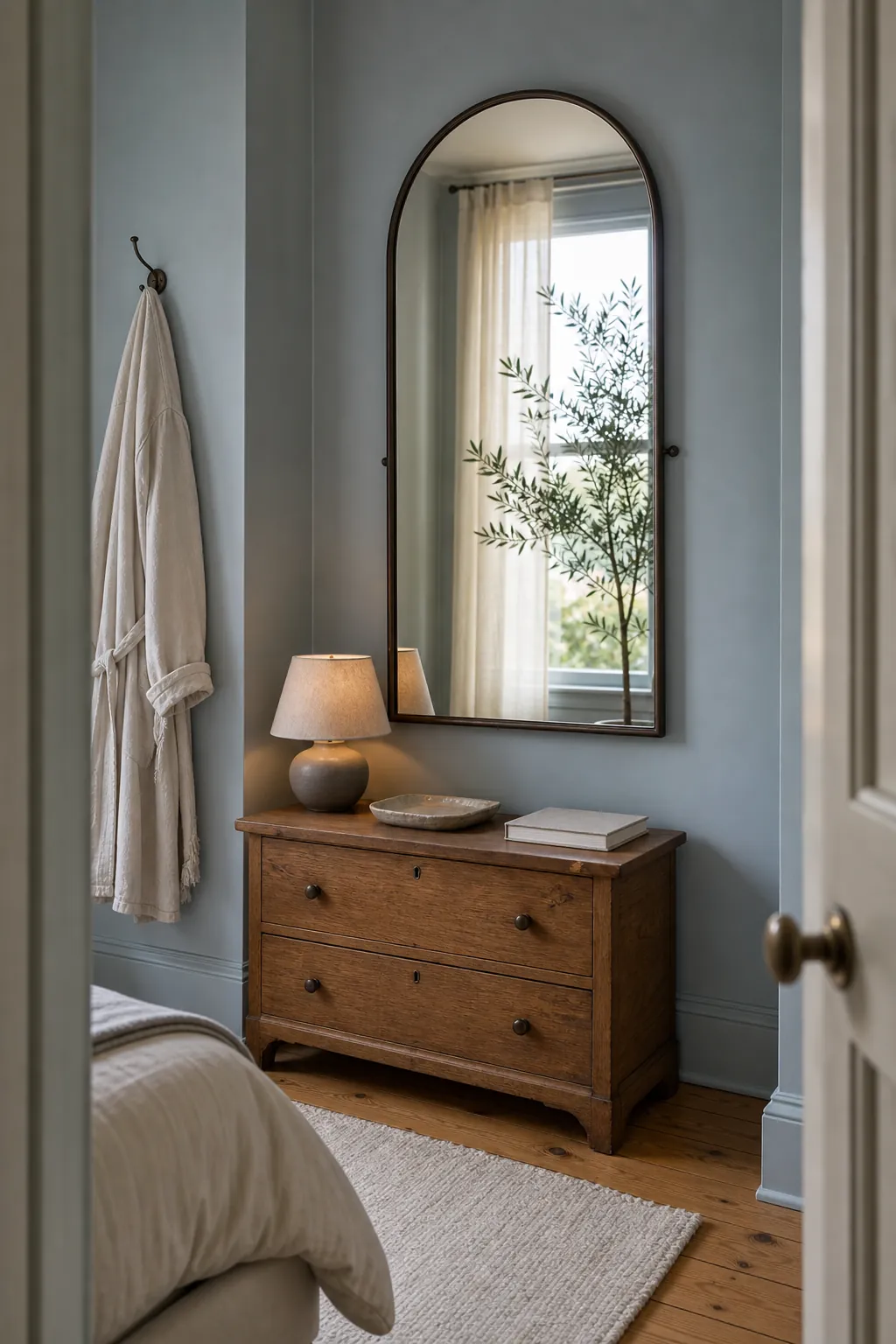
Scale still applies. One substantial mirror generally looks calmer than a scatter of tiny mirrored shapes. If the room already contains many rectangular frames, a softly arched or rounded mirror can interrupt the grid. For safety, anchor leaning and hanging mirrors according to their weight and the wall type, especially in homes with children or pets.
Add Depth With a Shallow Display Ledge
A picture ledge is the useful middle ground between fixed wall art and a storage shelf. Its shallow profile keeps the arrangement visually light, while allowing renters and frequent redecorators to layer frames without making a new hole for every change. Overlap pieces by a small amount, vary their heights, and leave part of the ledge visible so the display does not become a solid stripe of objects.
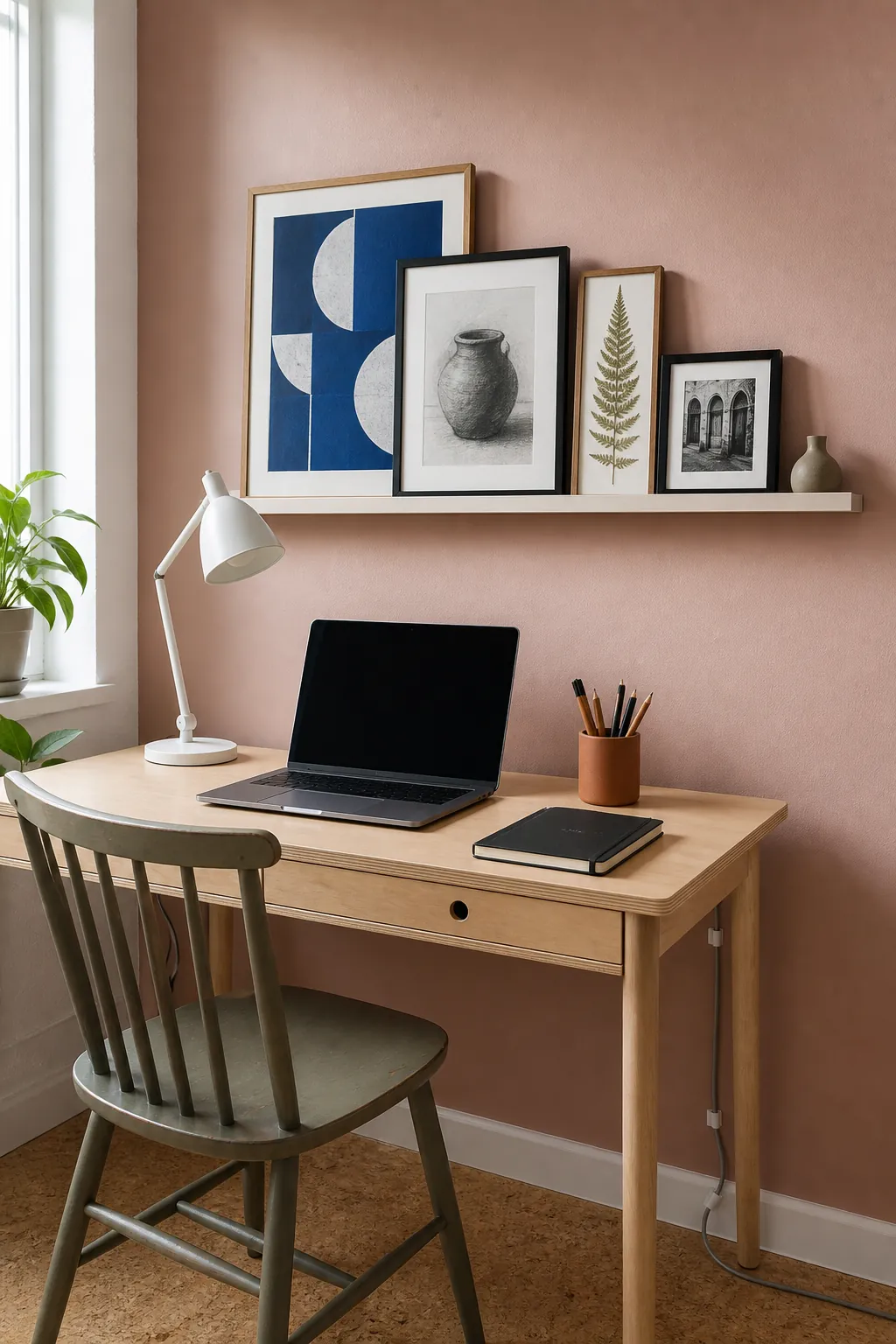
Choose objects that make sense at that height: a few framed prints, a small ceramic form, and perhaps one trailing plant if light and watering are practical. Do not turn the ledge into a parking space for unrelated trinkets. Three purposeful layers create more depth than fifteen tiny accessories. Confirm your wall fixing and lease requirements before installation; adhesive products are not damage-free on every paint finish.
Bring in Texture When the Room Feels Flat
If the sofa, rug, walls, and tables are all smooth, another flat print may not fix the sterile feeling. A woven textile, carved wood panel, basket grouping, fiber piece, or dimensional ceramic installation changes how light moves across the wall. Texture is especially effective in a bedroom, reading corner, or neutral living room where you want warmth without introducing a loud palette.
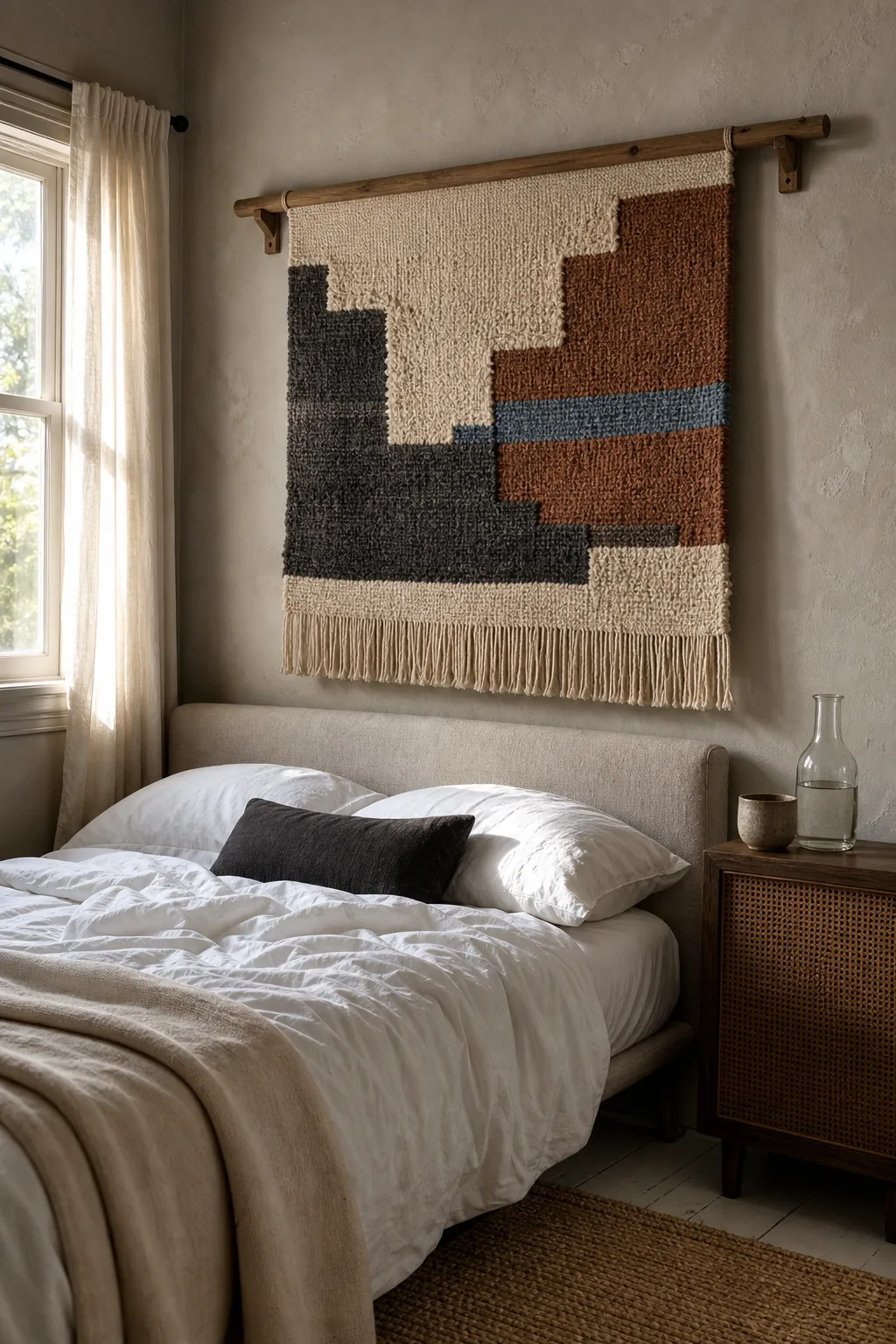
Let one material dominate and repeat it elsewhere in a smaller dose. A linen-and-wool hanging might connect to a nubby cushion; a warm wood relief might echo the bedside table. Check the piece from the side as well as straight on. Dimensional decor needs enough clearance that doors, shoulders, and chair backs will not knock it. In humid spaces, use materials and mounting methods suitable for changing moisture levels.
Finish the Wall by Styling the Space Around It
Sometimes the wall is blamed for emptiness that actually comes from the whole room sitting at one height. If the sofa is the tallest object, add a floor lamp, full-length curtains hung closer to the ceiling, or a tall plant beside the wall arrangement. These elements bridge the gap between low furniture and a high ceiling, so the wall decor no longer has to do all the work.
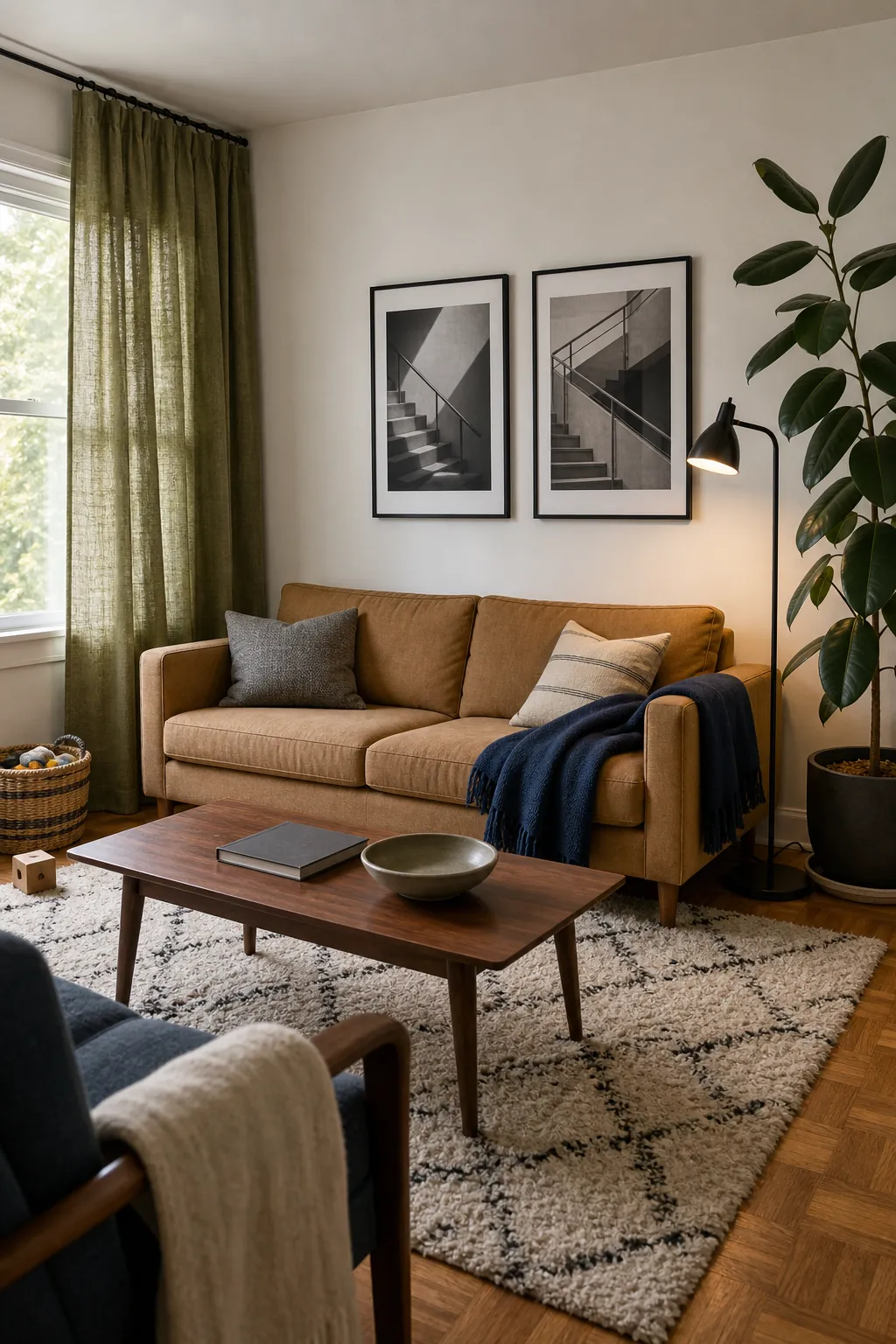
Then look lower. A rug large enough to connect the seating, a throw with visible weave, and one or two useful objects on the coffee table can make a bigger difference than another frame. Repeat a color from the art in one small textile or object, but resist matching every item. The goal is a conversation between surfaces, not a coordinated set.
Finally, photograph the room from the doorway and wait a day before adding more. A photo reveals off-center groupings and undersized pieces quickly. If the main wall now has a clear anchor, the room includes varied height and texture, and your eye has somewhere quiet to land, stop. A finished room is not a room with no blank space; it is a room where the blank space looks intentional.