
Wall mounted storage sounds simple until a small room proves otherwise. A shelf that is too deep becomes a head-bumping ledge, a hook rail turns into a coat pile, and a cute floating shelf can feel like clutter if it holds the wrong things. The best wall mounted storage ideas for small homes are not about covering every blank wall. They are about giving unused vertical space a clear job so the floor, counters, and chairs can stay usable.
The rule I would use before buying anything is this: mount storage only where it solves a daily friction point. If you always drop keys on the kitchen counter, build an entry landing strip. If pans steal cabinet space, use a rail where you cook. If bedroom furniture crowds the walkway, replace a nightstand with a shallow wall shelf. This keeps vertical storage useful instead of turning every wall into another place to manage.
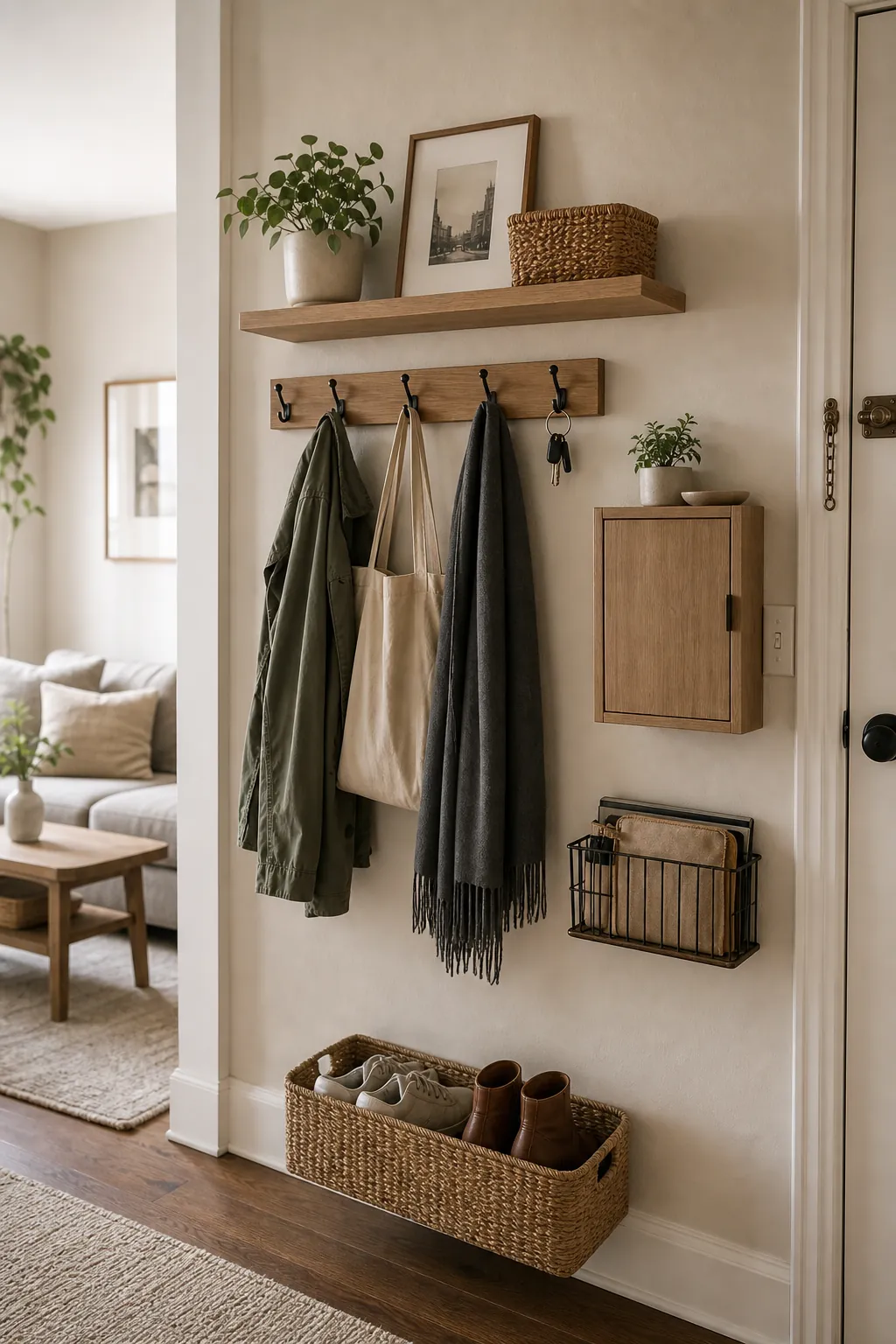
A Shallow Entry Landing Strip
The entry is usually the first place a small home starts to feel messy because every item there is in motion: keys, mail, bags, sunglasses, dog leashes, umbrellas, and shoes. A narrow shelf with hooks underneath creates a tiny command center without asking for floor space. Keep the shelf shallow enough that you do not brush against it when you walk past. In a tight hallway or apartment doorway, four to six inches of depth is often more useful than a deep shelf that becomes a dumping zone.
Use the top surface for one tray or bowl, not a row of random decor. Use hooks for items that actually leave the house. If the hooks start holding old tote bags, extra jackets, and things you forgot existed, the wall storage has stopped doing its job. The fix is not always more hooks. Sometimes it is a stronger rule: only daily items get the visible wall space.
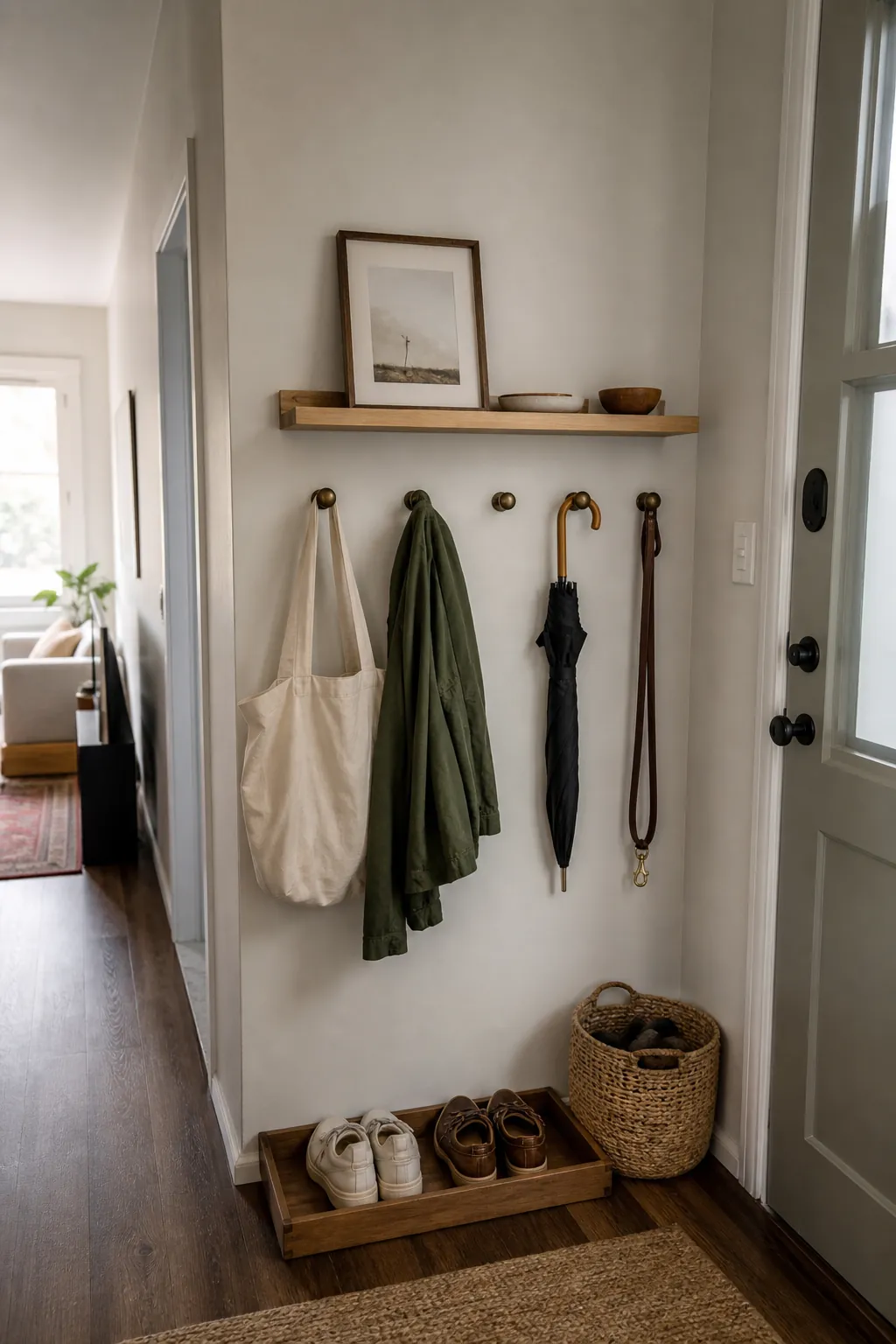
Floating Shelves That Stop Before They Crowd the Room
Floating shelves work best in small home storage when they are treated like thin ledges, not replacement cabinets. Over a sofa, beside a TV, above a small desk, or in a dining nook, shallow wall shelves can hold books, baskets, candles, framed prints, and a few pieces you enjoy seeing. The common mistake is choosing shelves that are too deep for the walkway. Shallow shelves protect traffic flow and make the room feel intentional.
If the shelf is open, edit what goes on it. Mix a few practical items with closed boxes or baskets so the wall does not read as clutter from across the room. A wall shelf can be both storage and decor, but only if it has breathing room. Leave some empty space between objects, use similar containers for small things, and place the heaviest-looking pieces toward the lower shelves.
- Best for: books, small bins, plants, candles, framed art, and lightweight display storage.
- Skip for: heavy appliances, unstable stacks, or anything you need to grab in a hurry.
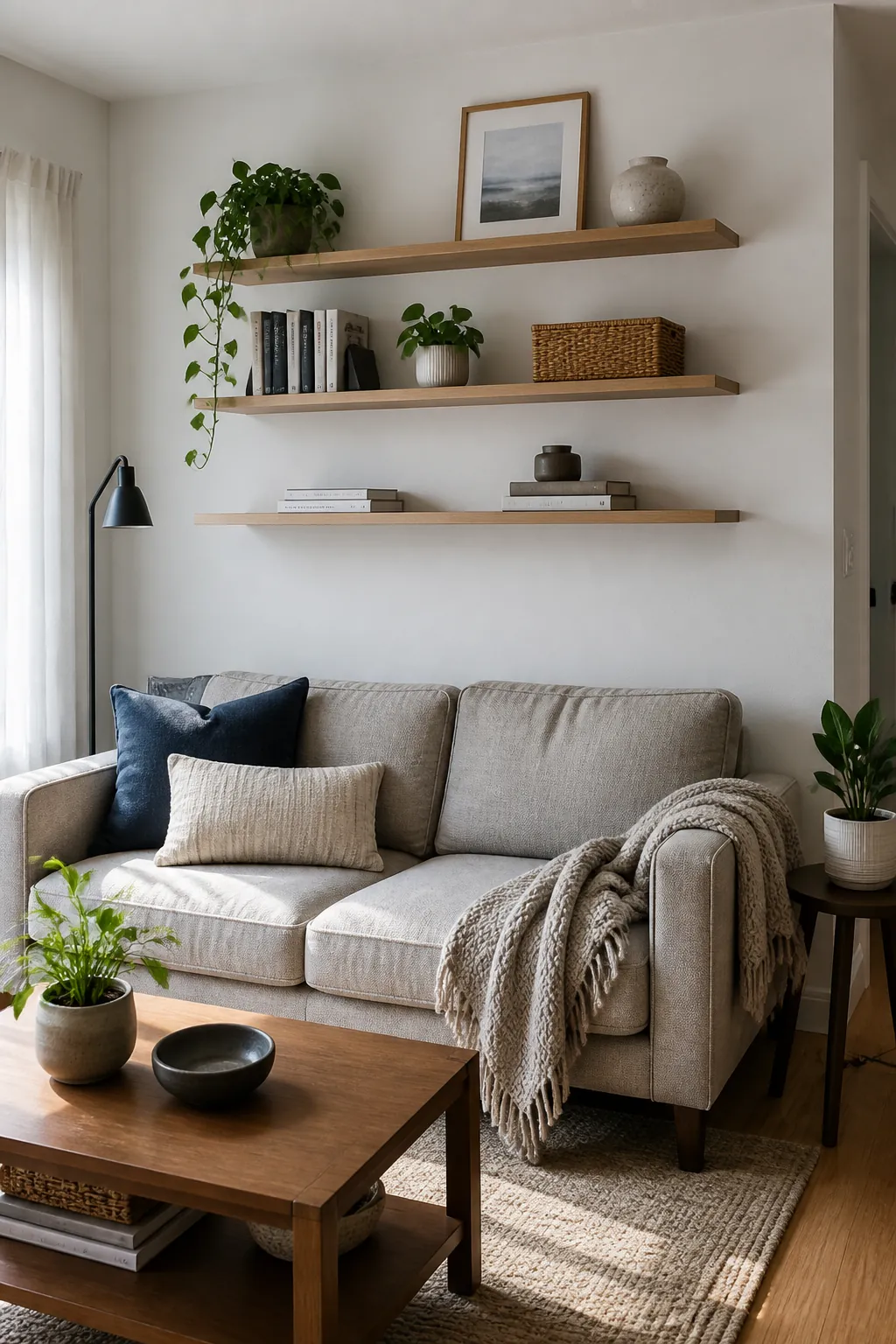
A Kitchen Rail for the Things You Reach Every Day
Small kitchens run out of drawers fast. A wall rail with S-hooks can move the daily-use items out of crowded cabinets: measuring cups, mugs, small pans, utensils, towels, scissors, or a compact basket for spices. The key is to mount the rail near the task, not wherever there happens to be wall space. Put cooking tools near the stove, coffee mugs near the coffee area, and dish towels near the sink.
This is where wall mounted storage becomes more than a pretty idea. It changes the path your hands take while cooking. If you use it every day, open wall storage can save more space than another bin inside a cabinet. If you use it once a month, it belongs higher up, behind a door, or in closed storage.
For renters, check the lease before drilling and be honest about weight. Adhesive hooks may work for light tools on smooth surfaces, but shelves and loaded rails need the right hardware for the wall and the item. Small space storage should make the room calmer, not make you worry about something falling at midnight.
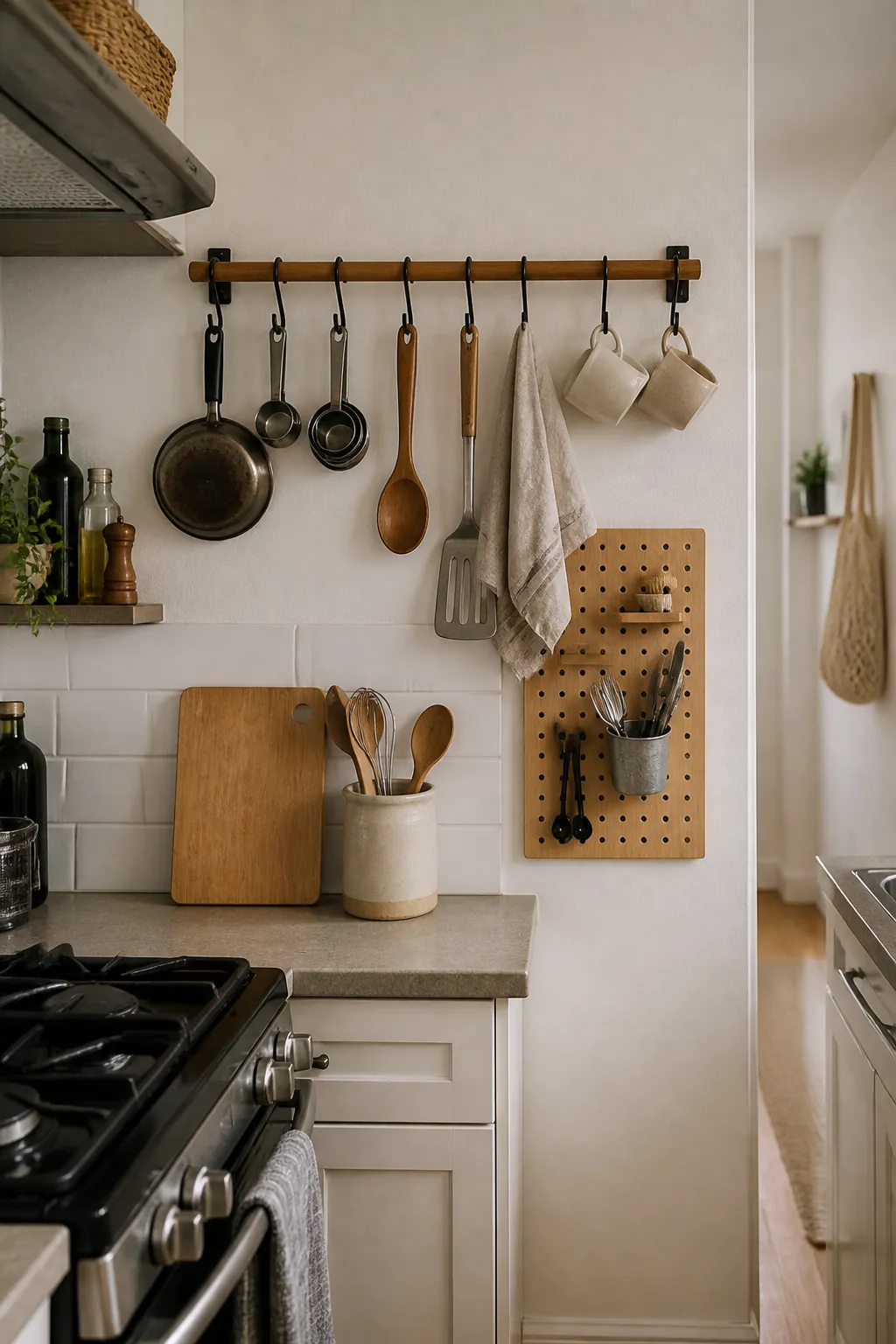
Pegboard Storage That Looks Planned
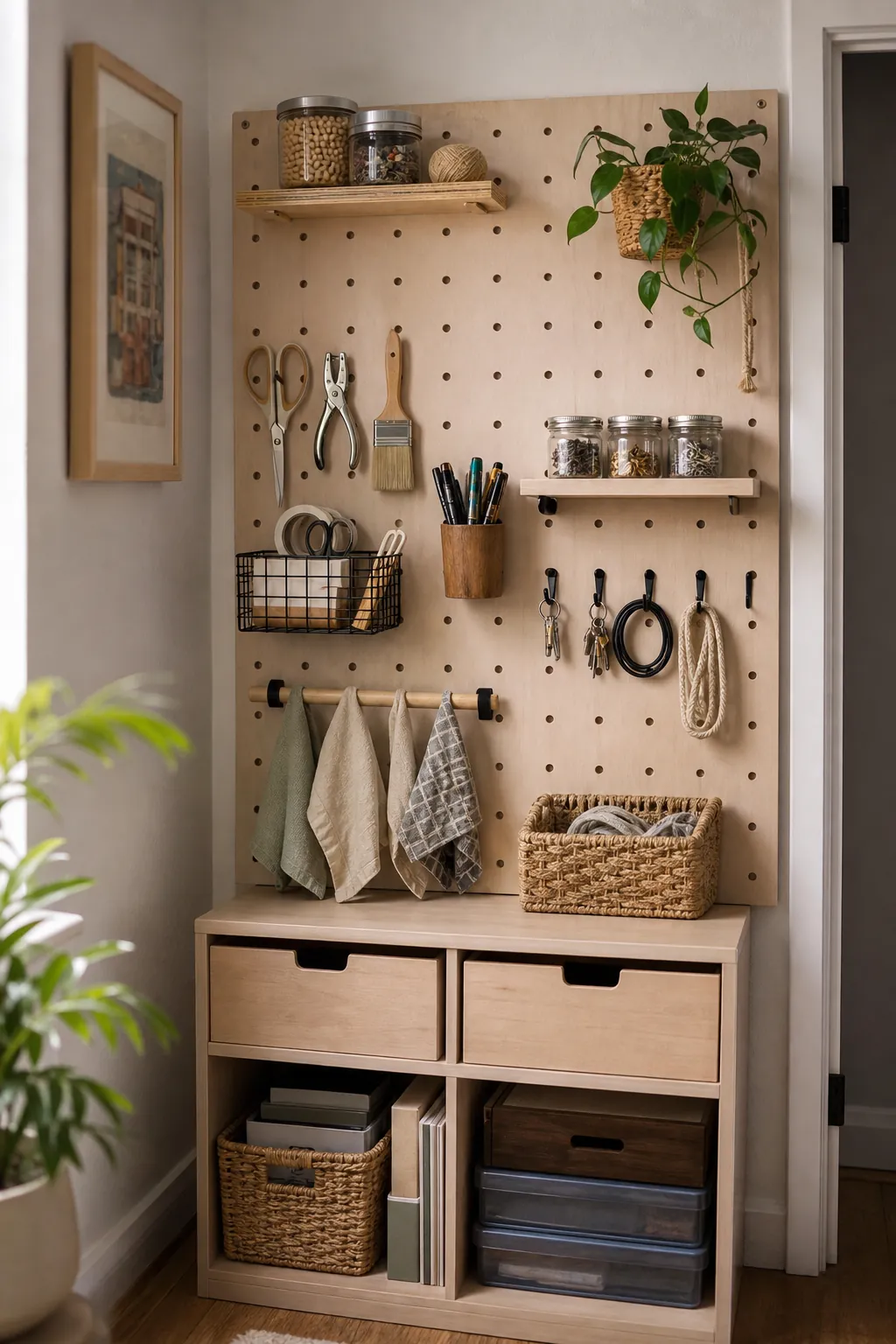
A pegboard is one of the most flexible vertical storage ideas because it can change as your needs change. It works in a kitchen, craft corner, utility closet, laundry nook, home office, or small entry. The danger is that a pegboard can quickly become a public junk drawer. The solution is to design it by zones: one area for tools, one for baskets, one for hanging items, and one small blank area so the board can breathe.
Choose accessories before you mount the board. If you need baskets, plan basket spacing. If you need hooks, plan hook spacing. If you want shelves, keep them light and shallow. Wall storage looks cleaner when the layout is orderly before the items go up. A pegboard should make objects easier to find, not create a vertical version of the drawer you were trying to escape.
A Wall-Mounted Desk Shelf for Work Supplies
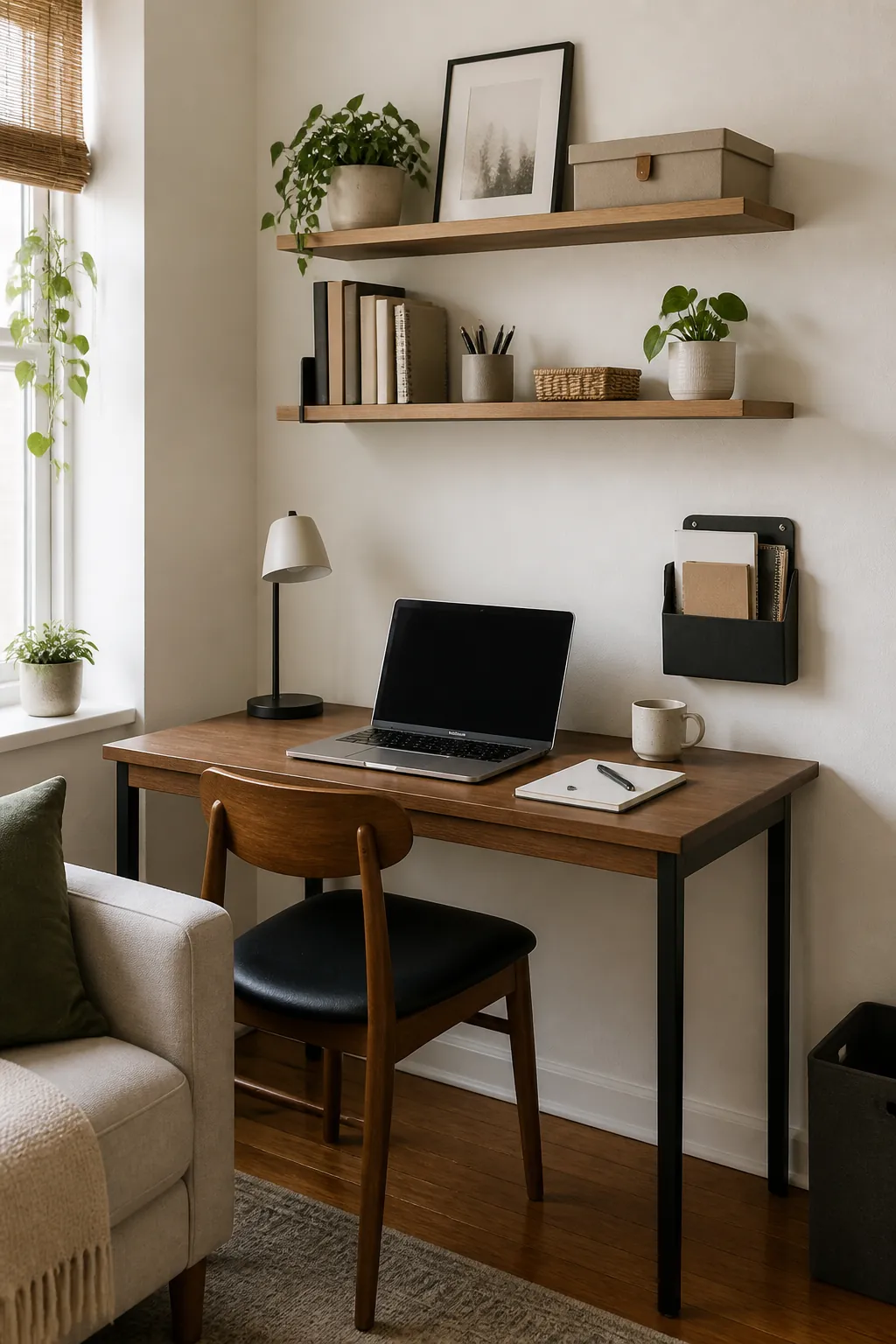
In a small home office, the desktop becomes the storage surface because there is no room for a filing cabinet. A wall-mounted shelf above the desk can hold notebooks, chargers, a pencil cup, a small box for receipts, and a tray for papers that need action. Keep it close enough to reach while seated, but high enough that it does not make the desk feel boxed in.
The most useful setup is a two-level system: open shelf for the few things you touch often, closed box or lidded basket for everything visually noisy. Do not make the work wall prove how busy you are. Make it remove friction. A calm wall behind a small desk can make a studio corner feel like a real work zone instead of a laptop parked in the living room.
Bathroom Shelves Above the Toilet or Sink
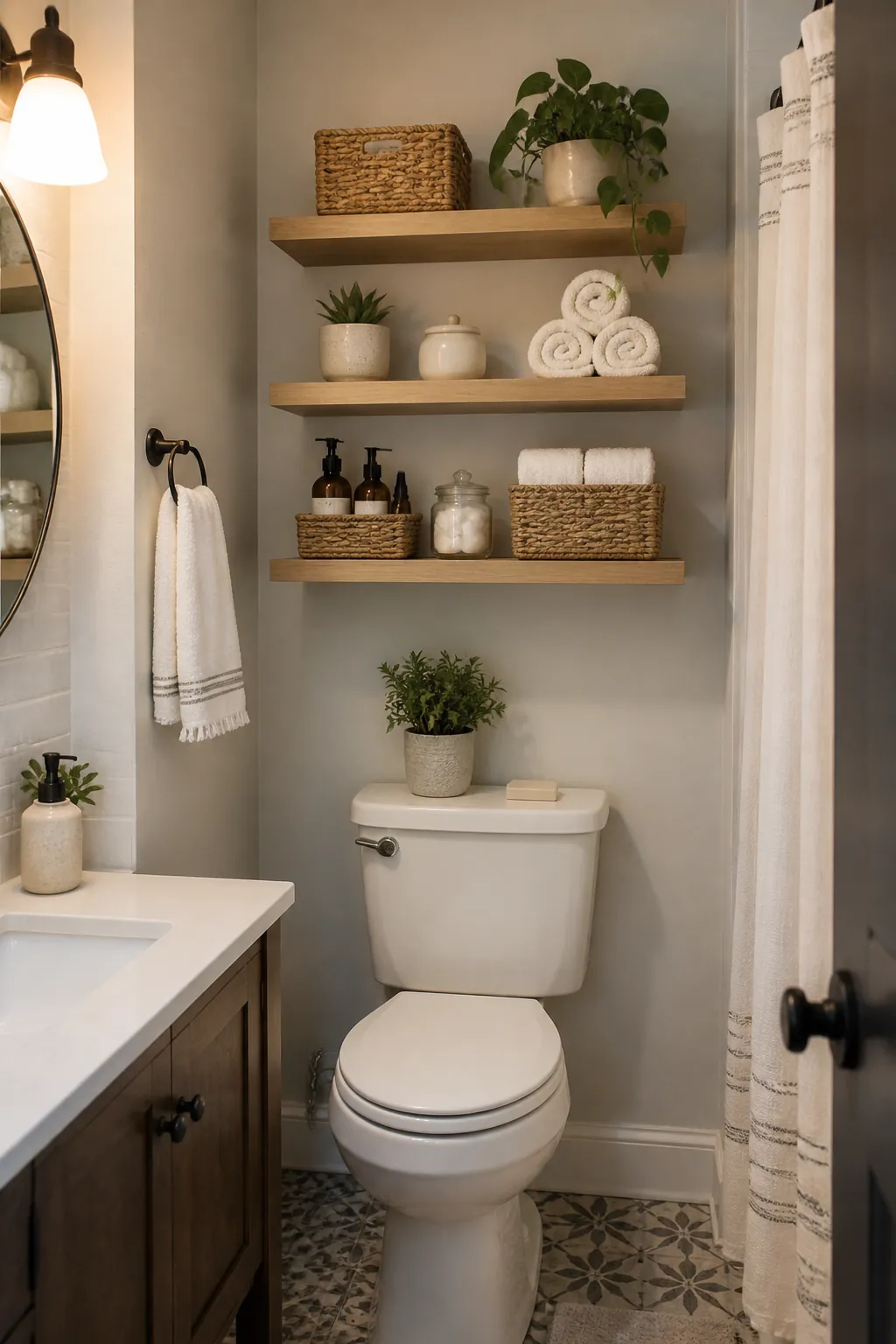
Bathrooms in apartments and tiny homes often have the least storage and the most small objects. The wall above the toilet, beside the mirror, or over a narrow sink can carry towels, jars, baskets, and daily products without taking floor space. This is one of the best places for compact storage because the items are small and the need is constant.
Open shelves in a bathroom need stricter editing than open shelves in a living room. Decant cotton swabs, hair ties, and bath salts into matching jars only if you will actually maintain them. Otherwise, use baskets. A basket hides product labels, half-used bottles, and backup items faster than any styling trick. Keep daily products on the easiest shelf and extras higher up.
A Floating Nightstand for a Tight Bedroom
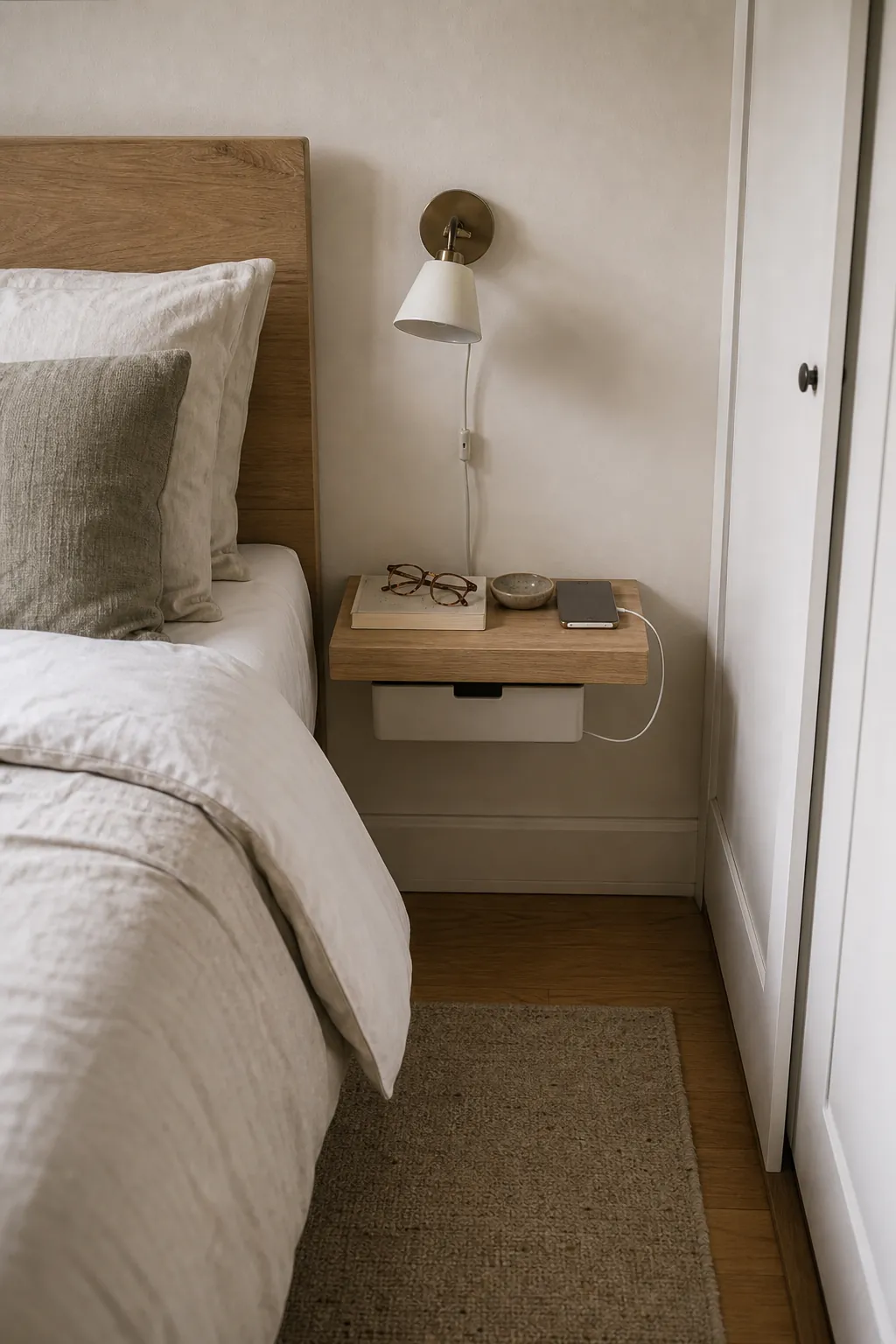
If a normal nightstand blocks the closet door, crowds the bed, or makes the walkway too narrow, a floating shelf can do the job with a much lighter footprint. You only need space for the essentials: a lamp or wall sconce, a book, glasses, lip balm, and a phone charger. Add a small drawer or wall pocket if you need to hide cords and personal items.
A floating nightstand works best when it is not overloaded. The more you store beside the bed, the harder the room is to reset in the morning. Let the wall shelf replace a piece of furniture, not become a tiny clutter stage. If you need more bedroom storage, pair the shelf with under-bed bins, a high closet shelf, or a wall hook behind the door.
A Narrow Hallway Hook Rail
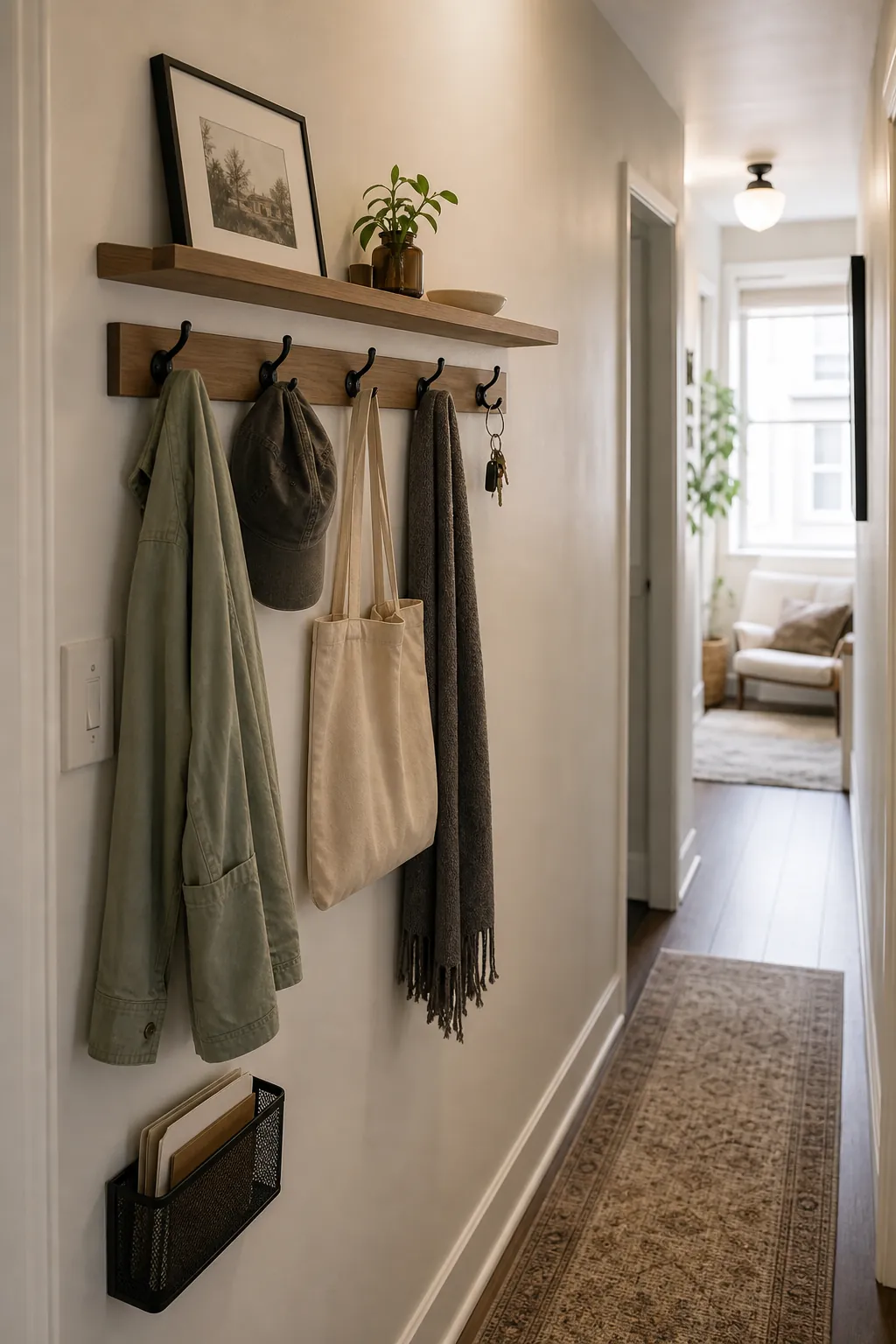
Hallways are often ignored because they are too narrow for furniture, but they can still hold a slim hook rail, a picture ledge, or a small wall-mounted basket. The trick is to keep everything flat to the wall. Use it for hats, dog gear, reusable bags, scarves, or one daily jacket per person. If the hallway is already tight, skip deep baskets and choose hooks that do not project too far.
Spacing matters. Hooks placed too close together encourage layering, and layered hooks look messy faster than almost any other storage zone. Give each item its own landing place, then prune the rail often. A narrow hallway can be useful without becoming a coat closet in public view.
Closed Wall Storage for the Messy Stuff
Open storage is not always the answer. Some things are useful but visually ugly: medicine, cables, cleaning cloths, backup toiletries, batteries, pet supplies, craft extras, and paperwork. A shallow wall cabinet can hide those categories while still using vertical storage. This is especially helpful in a small living room, bedroom, bathroom, or entryway where the same wall is part of the room’s overall look.
Closed storage is also useful when you already own enough hooks and shelves but the room still feels busy. If everything is visible, your eyes have to organize it all day. A simple wall cabinet, a medicine cabinet, or a shelf with doors gives the room a quieter background. Use open shelves for what is attractive or used daily. Use closed wall storage for the things that only need to be found, not displayed.
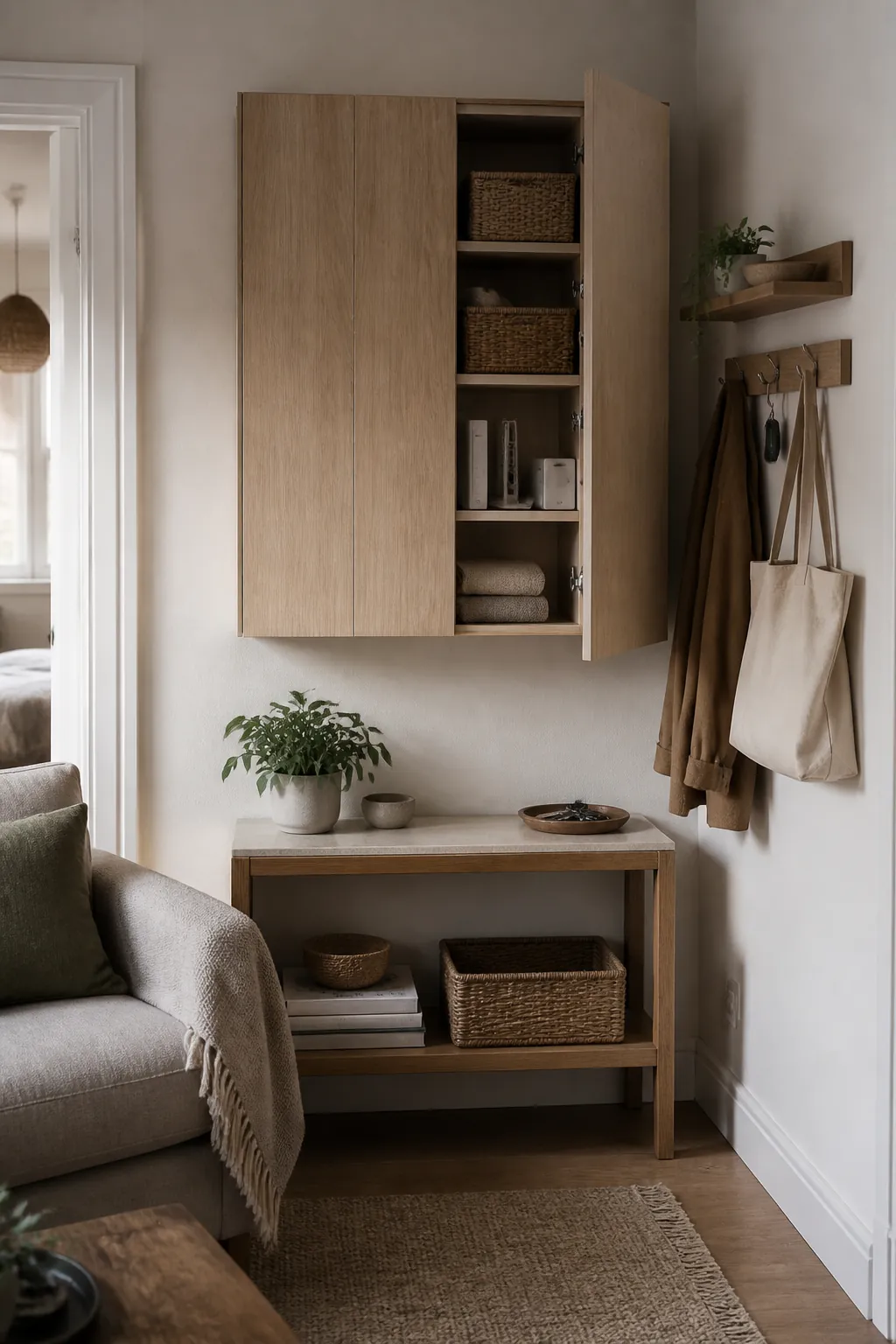
The strongest small space storage plan is usually a mix: one landing strip for items in motion, a few shallow wall shelves for useful display, hooks where they save daily effort, and closed wall storage for everything that looks chaotic in the open. Start with the wall that annoys you most, solve one specific problem there, and stop before the room begins to feel like a storage aisle.