
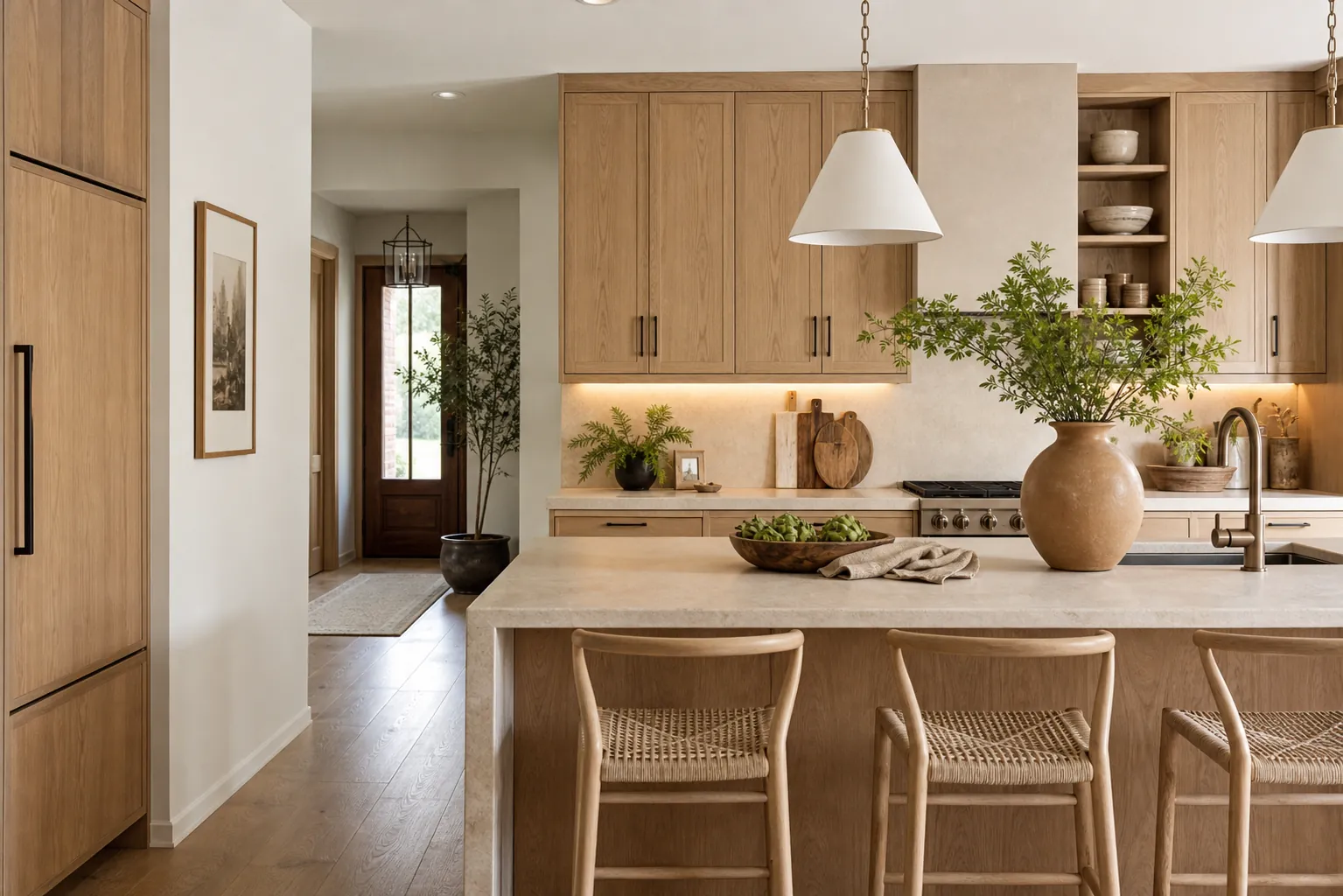
A warm wood kitchen does not have to feel rustic, heavy, or dated. The best soft modern kitchens use wood as the room’s temperature control: it warms up white walls, quiets hard stone, gives black fixtures a reason to be there, and makes everyday kitchen decor feel intentional instead of scattered.
That is the real problem many homeowners are trying to solve. A kitchen can be new and still feel cold. It can have clean cabinets, bright counters, and modern lighting, but if every surface is glossy, gray, or stark white, the room starts to feel more like a showroom than the place where breakfast, coffee, meal prep, and conversation actually happen.
Warm wood kitchen ideas work best when they are layered. Instead of adding one random cutting board and hoping the room softens, think in systems: wood tone, wall color, stone, lighting, woven texture, plants, and the dining area nearby. The goal is a natural kitchen that feels calm, practical, and lived in.
Start With One Main Wood Tone
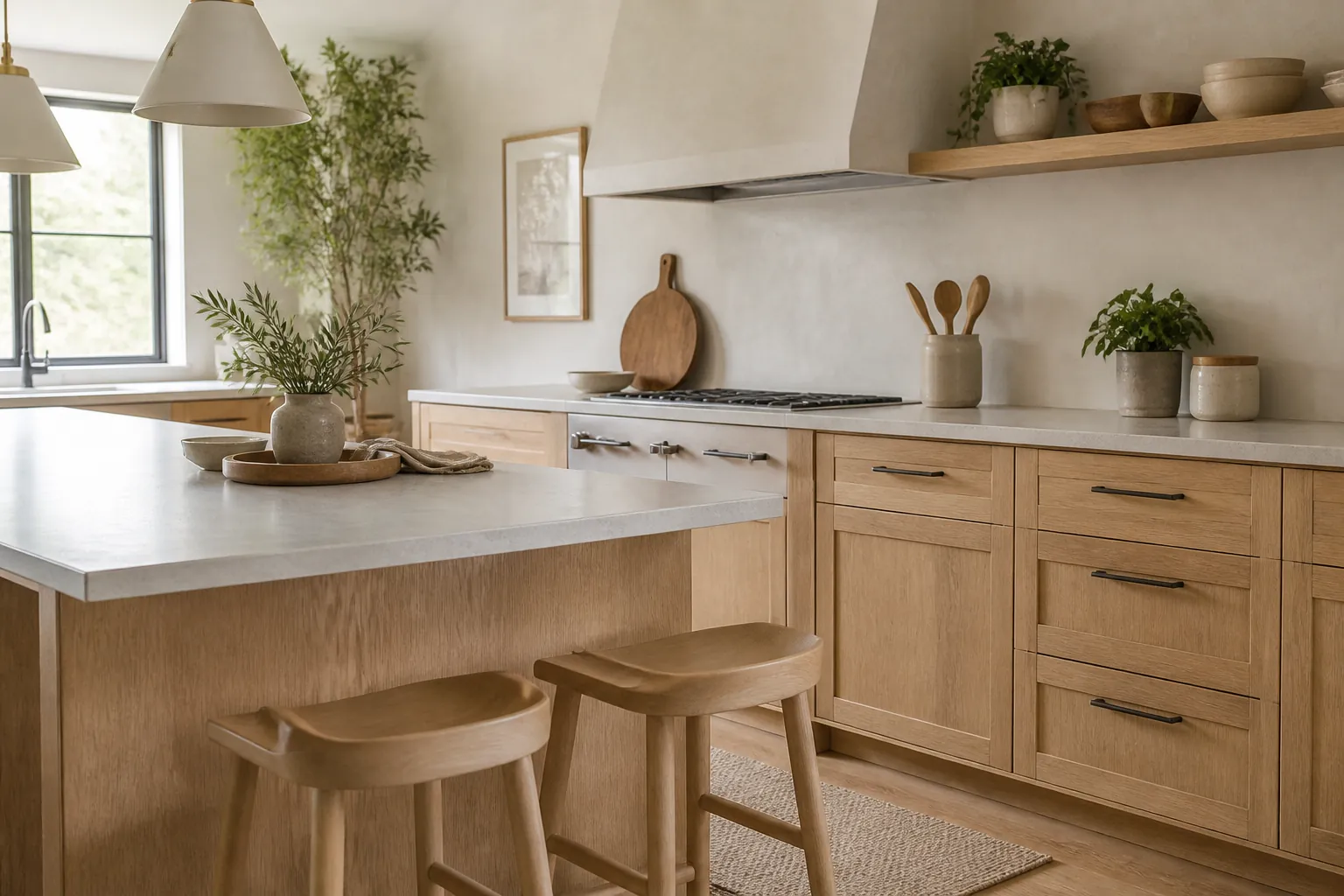
The fastest way for a wood kitchen to look busy is to treat every wood item as separate decor. Cabinetry, flooring, stools, shelves, trays, and bowls may all be beautiful on their own, but the room needs one dominant tone to hold them together.
White oak, natural maple, honey-toned ash, and pale bamboo are good choices when you want a soft modern look. Walnut, smoked oak, and deeper teak tones create more contrast and can feel elegant, but they need more breathing room around them. If your kitchen already has orange-toned wood cabinets, avoid adding more orange. Bring in creamy whites, muted greens, stone, and a slightly deeper wood accent instead.
A useful rule is to repeat the main wood tone at least three times. For example, white oak lower cabinets, a slim open shelf, and pale wood counter stools feel connected. A single wood stool in a white kitchen can look accidental; three quiet repetitions make it feel designed.
Use Matte Surfaces to Keep the Warmth Soft
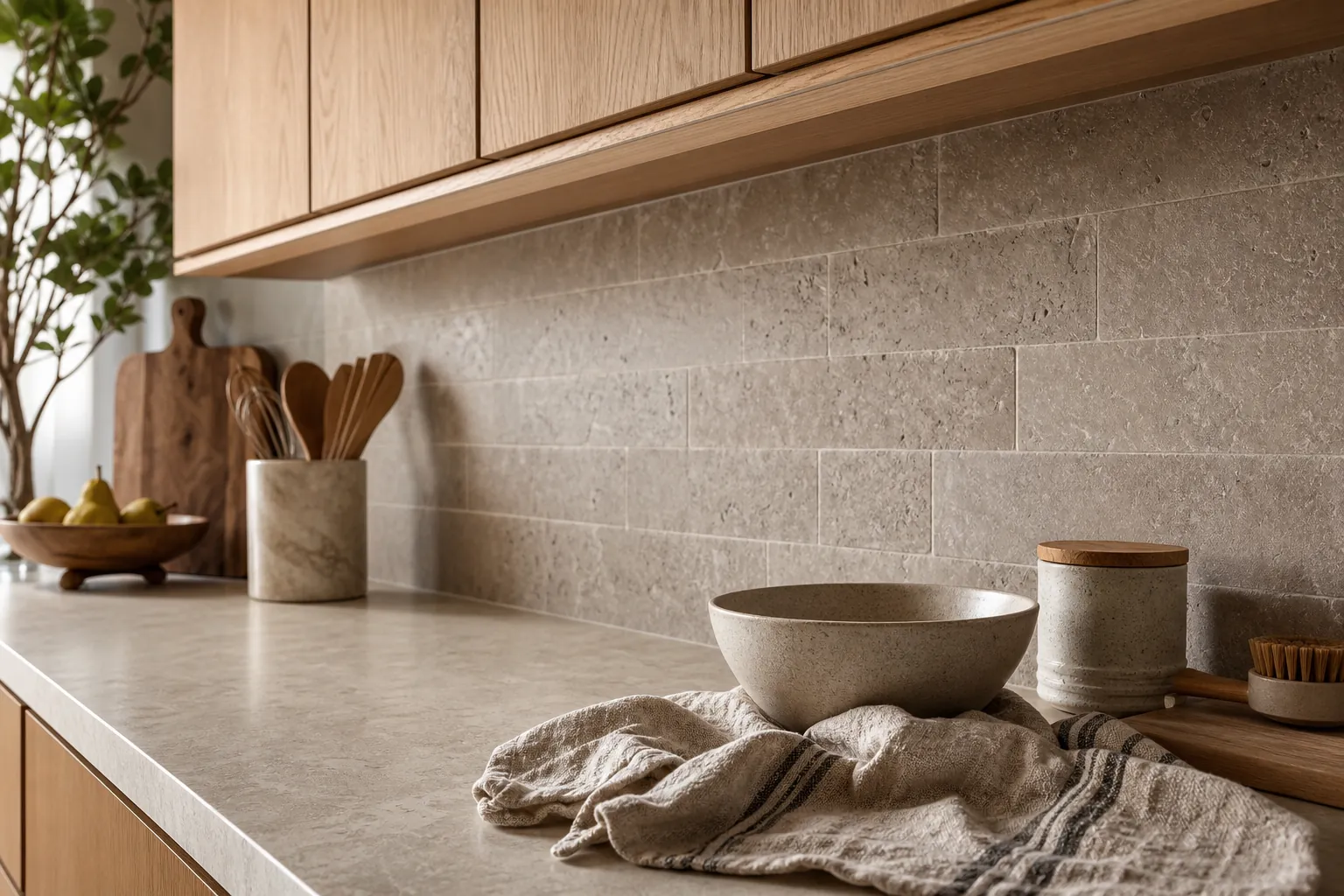
Warmth is not only about color. It is also about how light lands on each surface. Glossy tile, polished counters, chrome hardware, and bright ceiling lights can make even expensive wood feel harsh. Matte and satin finishes soften the reflection so the wood grain becomes the visual focus.
If you are planning a renovation, pair warm wood cabinets with a honed stone counter, handmade-look tile, zellige-style backsplash, or a quiet slab with subtle movement. If you are styling a finished kitchen, the same principle still helps. Choose a matte ceramic vase, linen cafe curtain, unglazed bowl, or stoneware crock instead of shiny accessories.
This is where organic kitchen style earns its appeal. The room can stay modern, but the surfaces do not feel sealed under glass. You see grain, clay, stone, fabric, and plant life. Those small physical cues are what make a cozy kitchen feel human.
Let Open Shelving Carry Natural Kitchen Decor
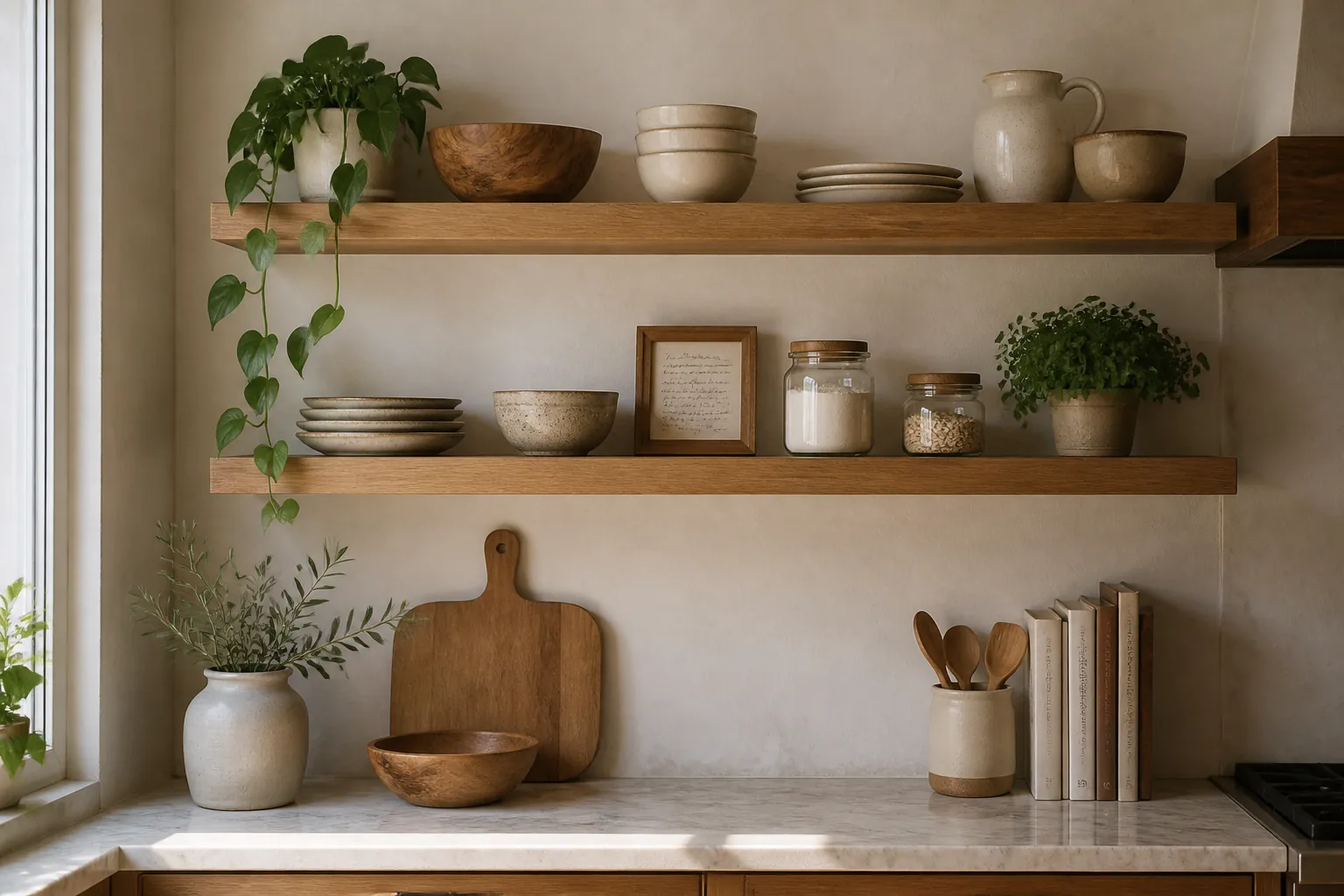
Open shelving is easy to overdo, but one or two warm wood shelves can make a kitchen feel softer without changing the cabinets. The key is restraint. Shelves should not become storage for everything that did not fit in a drawer. They should hold the pieces that make the room feel natural: wood bowls, stacked plates, glass jars, a small trailing plant, a framed recipe, or a handmade mug.
For kitchen styling, mix shapes more than colors. A low bowl, a tall crock, a round basket, and a small plant are more interesting than six objects of the same height. Keep the palette tight: warm white, pale clay, clear glass, soft green, and wood. That keeps the shelf from turning into visual clutter.
If your kitchen is small, use shelves near a window or above a coffee station rather than across the whole room. A small styled zone can carry the feeling of a natural kitchen without taking over your storage plan.
Fix the Lighting Before Buying More Decor
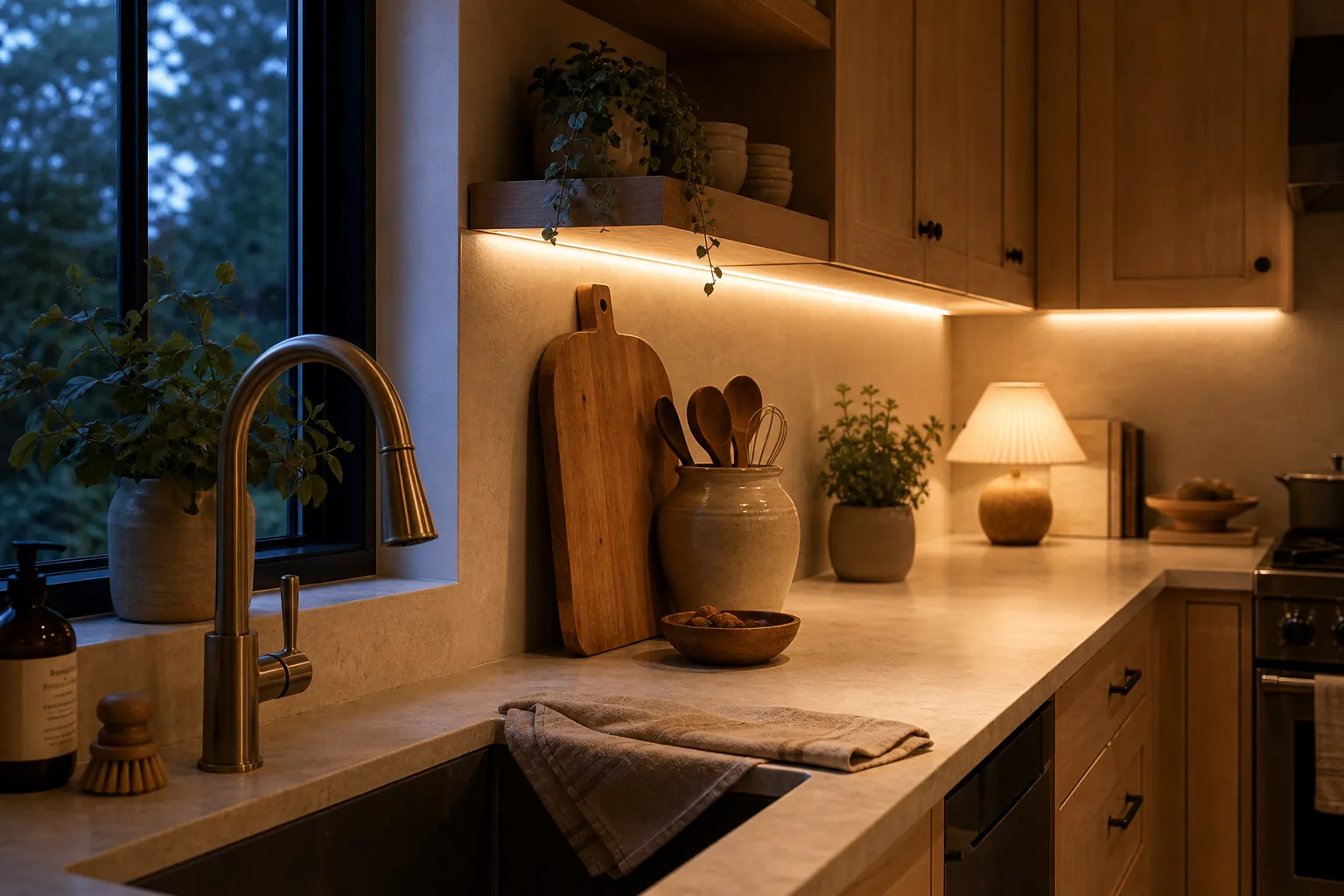
Lighting is the detail that decides whether warm wood looks rich or dull. Cool bulbs can make oak look gray and walnut look flat. Overhead-only lighting creates hard shadows, especially on counters and upper cabinets. Before adding more kitchen accessories, check the temperature and placement of the light you already have.
Warm white bulbs, under-cabinet task lighting, a small counter lamp, and softer pendants over an island or dining nook can change the entire mood. The room still needs enough light to cook safely, but it should not feel like every surface is being inspected.
This is especially useful in rental kitchens or builder-grade spaces. If you cannot replace cabinets, flooring, or countertops, better lighting can make the existing wood accents feel more intentional. A warm glow on a cutting board, a plant, or a bowl of fruit does more than another decorative object in a dark corner.
Add Woven Texture Where the Room Feels Hard
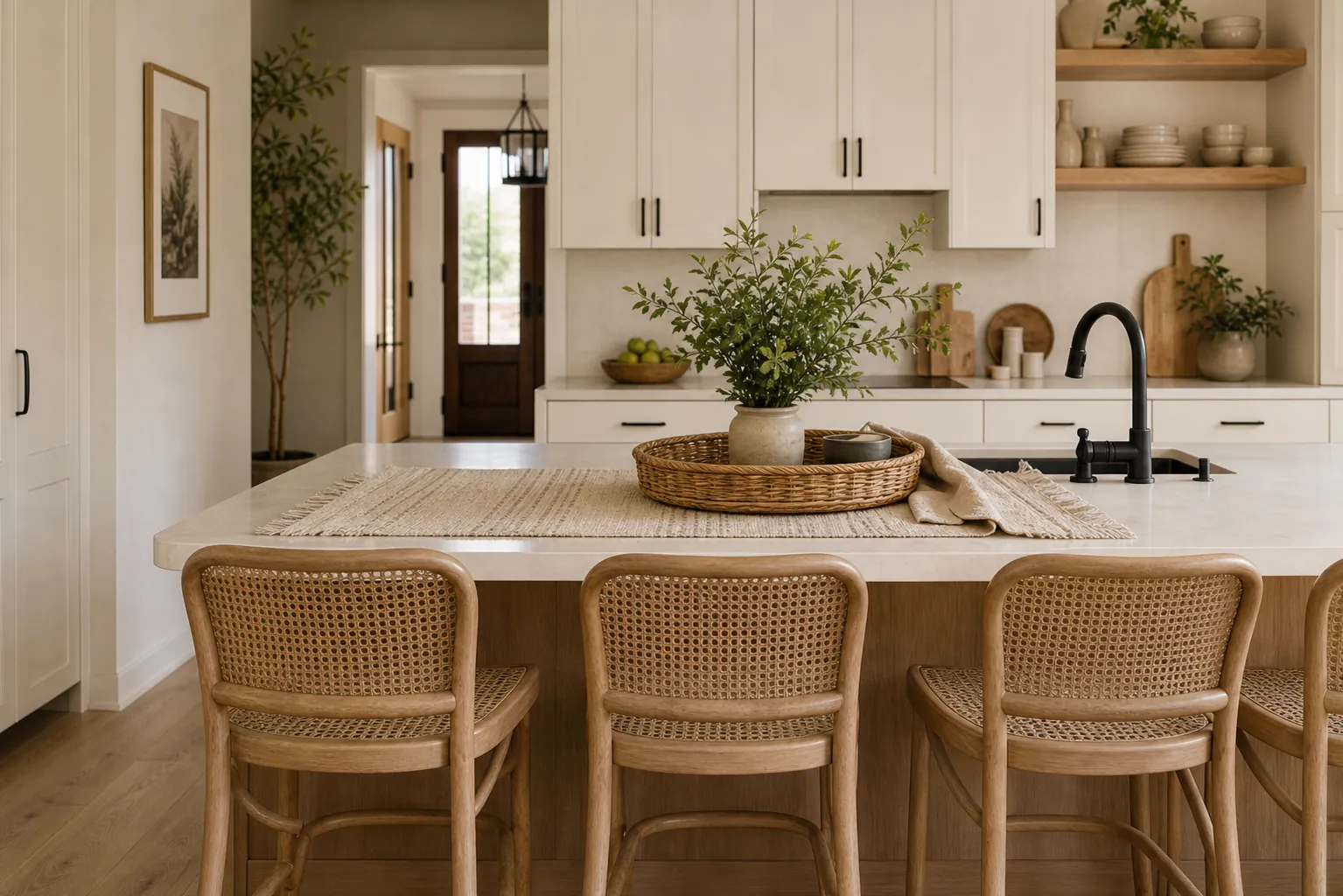
Modern kitchens have a lot of hard planes: cabinet fronts, counters, appliances, tile, and floors. Wood helps, but woven texture is often what makes the room feel relaxed. Cane stools, rattan pendants, seagrass baskets, linen runners, and bamboo trays add warmth without making the kitchen feel crowded.
The mistake is using woven pieces everywhere. Choose the places where softness is most needed. At an island, woven counter stools break up a long stretch of cabinetry. Near a pantry, baskets make everyday storage look calmer. On a counter, a single bamboo tray can gather olive oil, salt, and a small vase so they read as one styled moment instead of clutter.
Boho kitchen details work best in a soft modern room when they are edited. Keep the lines simple, avoid too many tassels or patterns, and let the texture do the work.
Connect the Kitchen to the Dining Area
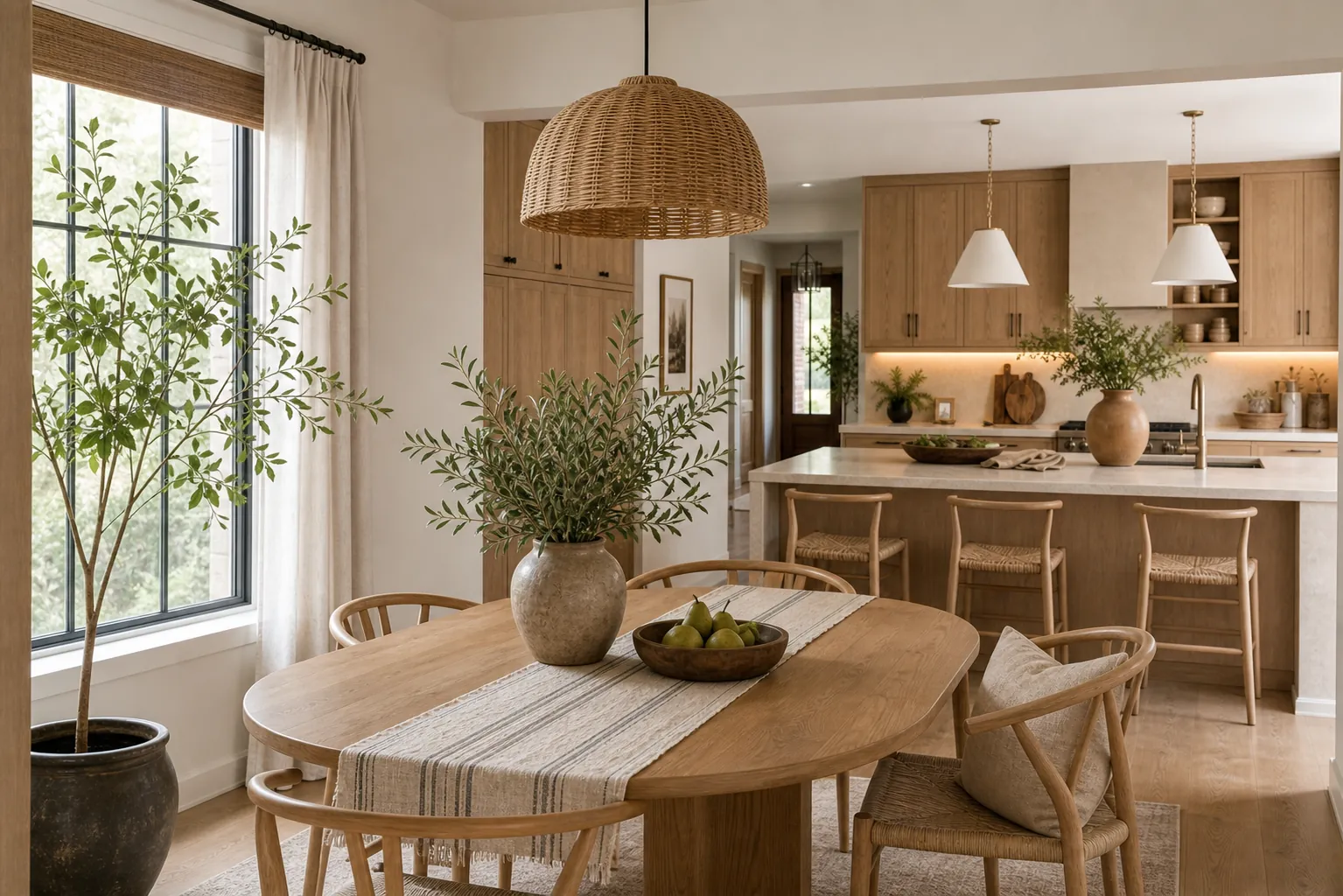
A warm kitchen often feels incomplete when the nearby dining room decor tells a different story. If your kitchen opens to a dining nook or breakfast table, use that area to repeat the same materials in a softer way. A wood table, woven shade, linen seat cushion, ceramic bowl, or leafy plant can make the kitchen feel like part of a larger home instead of a work zone attached to a room.
This does not mean every finish must match. In fact, a little variation keeps the space from looking flat. Pair pale wood cabinets with a slightly deeper dining table. Use black or bronze chair frames if the kitchen has dark hardware. Add a plant near the window if the kitchen shelves already include smaller greenery.
The connection should be felt, not forced. When the kitchen and dining space share wood accents, warm lighting, natural texture, and a calm palette, the whole area feels softer.
Keep the Palette Warm, Not Yellow
The most common fear with warm wood is that the kitchen will turn too yellow or too brown. The fix is balance. Use creamy white instead of stark white, mushroom or taupe instead of cool gray, muted sage instead of bright green, and aged brass or bronze instead of high-shine gold.
Black can still work in a warm kitchen, but it should act like punctuation. Thin black frames, simple cabinet pulls, a dark faucet, or a charcoal stool base can make the wood feel modern. Too much black, especially with cool white walls, can bring back the cold feeling you were trying to avoid.
If you are choosing paint, test it beside the wood in morning and evening light. A color that looks soft in the store can turn peach, gray, or green once it sits next to your cabinets. The right warm neutral should make the wood grain look calmer, not louder.
A Simple Formula for a Soft Modern Wood Kitchen
If you are starting from scratch, build the room around wood cabinets, a quiet counter, a matte backsplash, warm lighting, and a few natural textures. If you are updating what you already have, begin smaller: one repeated wood tone, one woven piece, one plant, one warm light source, and one edited shelf or tray.
The goal is not to fill the kitchen with decor. It is to remove the coldness. When the wood tone has support from stone, fabric, lighting, and simple styling, a warm kitchen can still feel clean, modern, and easy to live with.