
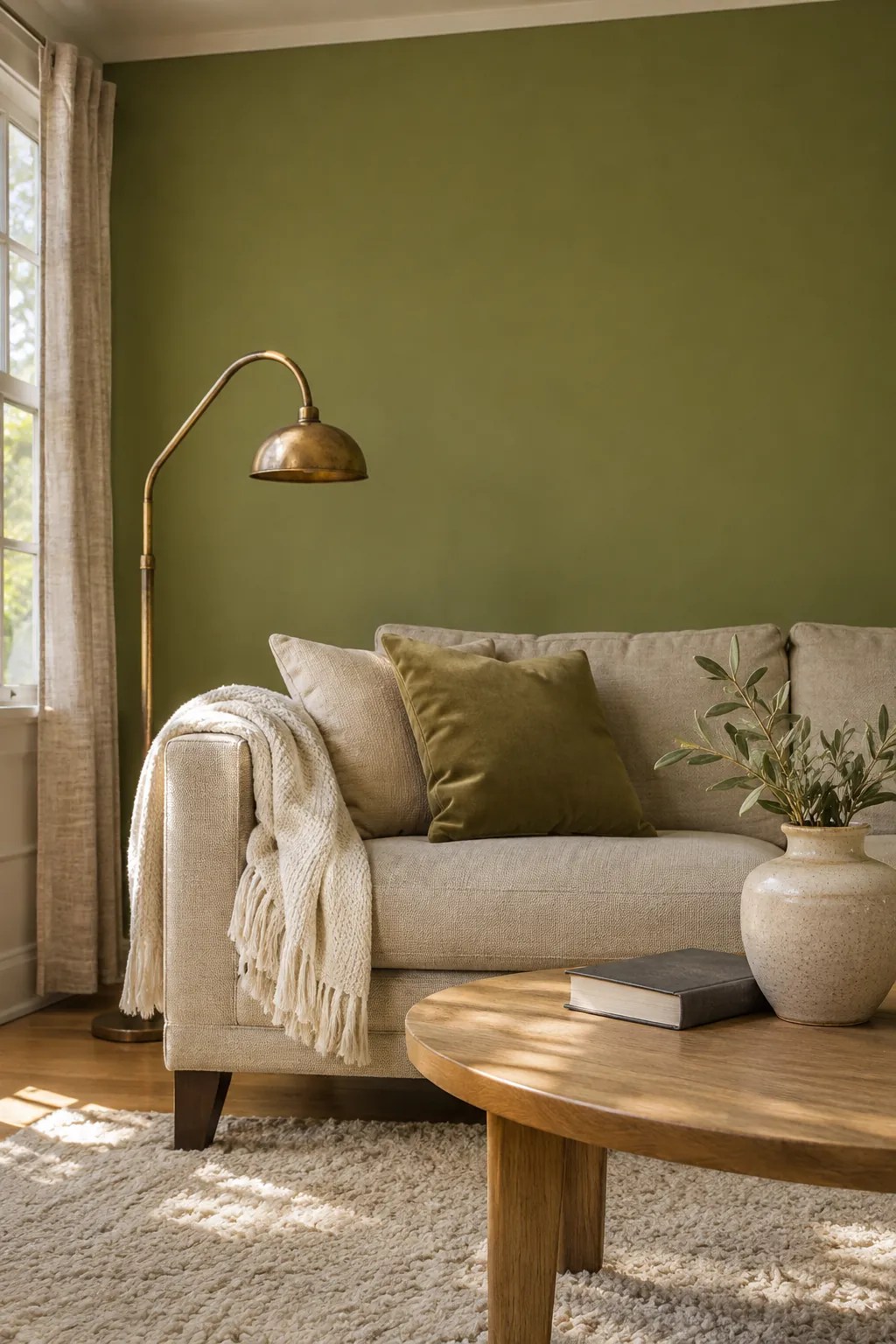
A paint chip can look earthy in the shop, almost gray at home, and unexpectedly brown after sunset. Olive green changes because it sits close to several neighboring color families. The useful answer is not one rigid swatch. It is a way to recognize the color, compare its undertone, and test it in the light and materials of your room.
The simple color answer
Olive green is a muted yellow green. Imagine natural green softened with yellow, then quieted by a small amount of gray or brown. That mix gives it an earthy character that recalls olive leaves more than bright grass or emerald gemstones.
Most olive greens sit between green and yellow on the color wheel, but the visible balance varies. A greener version feels fresh and botanical. A browner version feels warmer, older, and more grounded. Gray can make either version look calmer and less saturated.
Why olive green can look brown or gray
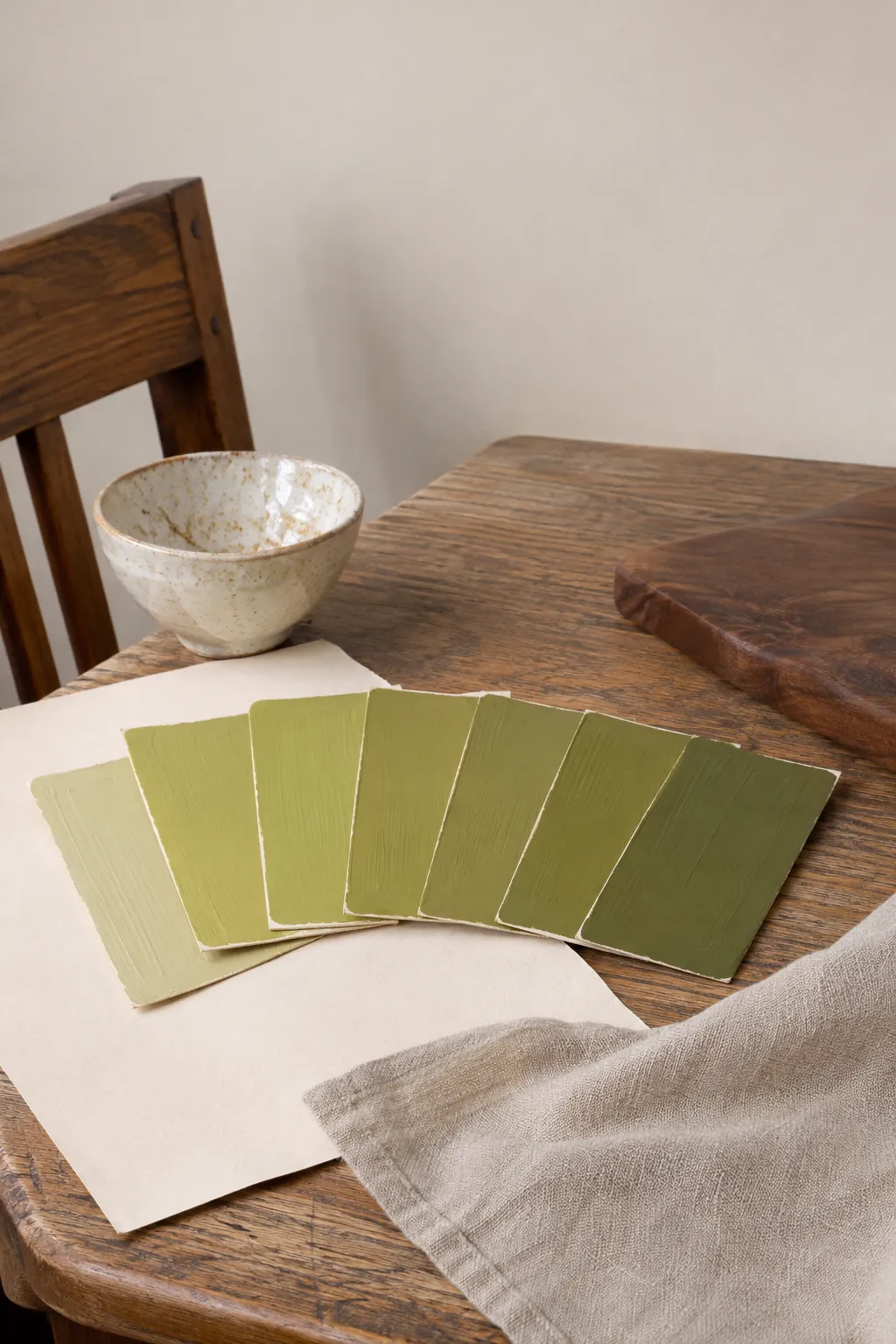
Undertone and light cause most of the confusion. Warm bulbs strengthen the yellow and brown notes, especially at night. Cool northern daylight can reveal more gray. Strong southern sun often makes the same color look livelier and greener.
Nearby surfaces matter too. Honey toned wood can pull forward the warmth in olive. White stone and cool metal can make it appear more subdued. This is why a color name or a screen sample cannot predict the final room with certainty.
Olive compared with nearby greens
Olive is warmer and more yellow than forest green. It is softer and less pure than a classic leaf green. Sage usually contains more gray and often feels lighter, while moss green often appears deeper and slightly cooler. Khaki green sits close to olive but commonly leans further toward tan.
These names overlap in shops because color labels are descriptive, not universal standards. Compare actual samples side by side. The olive sample should reveal a muted yellow green center even when its brown or gray undertone is strong.
How olive green behaves on walls
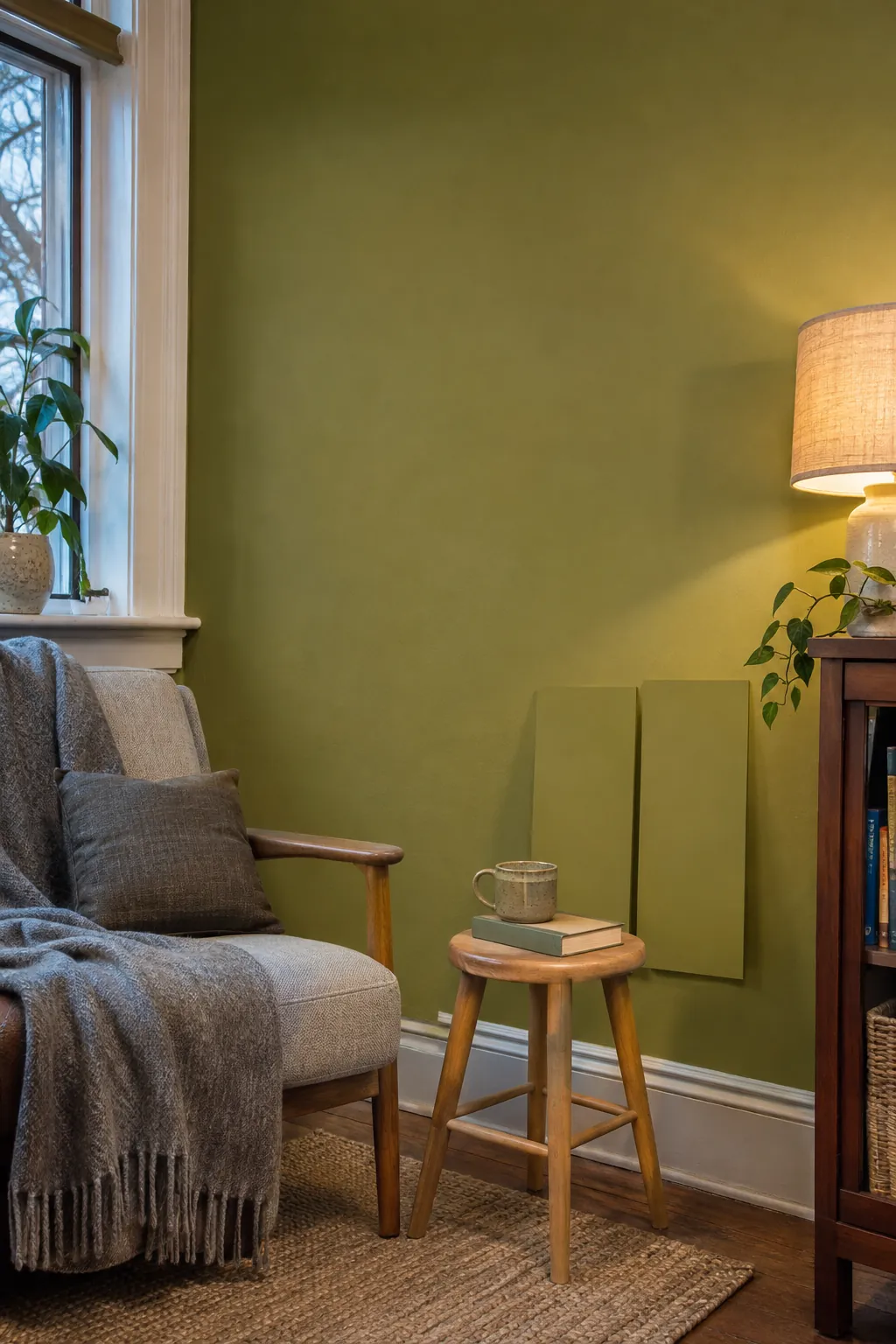
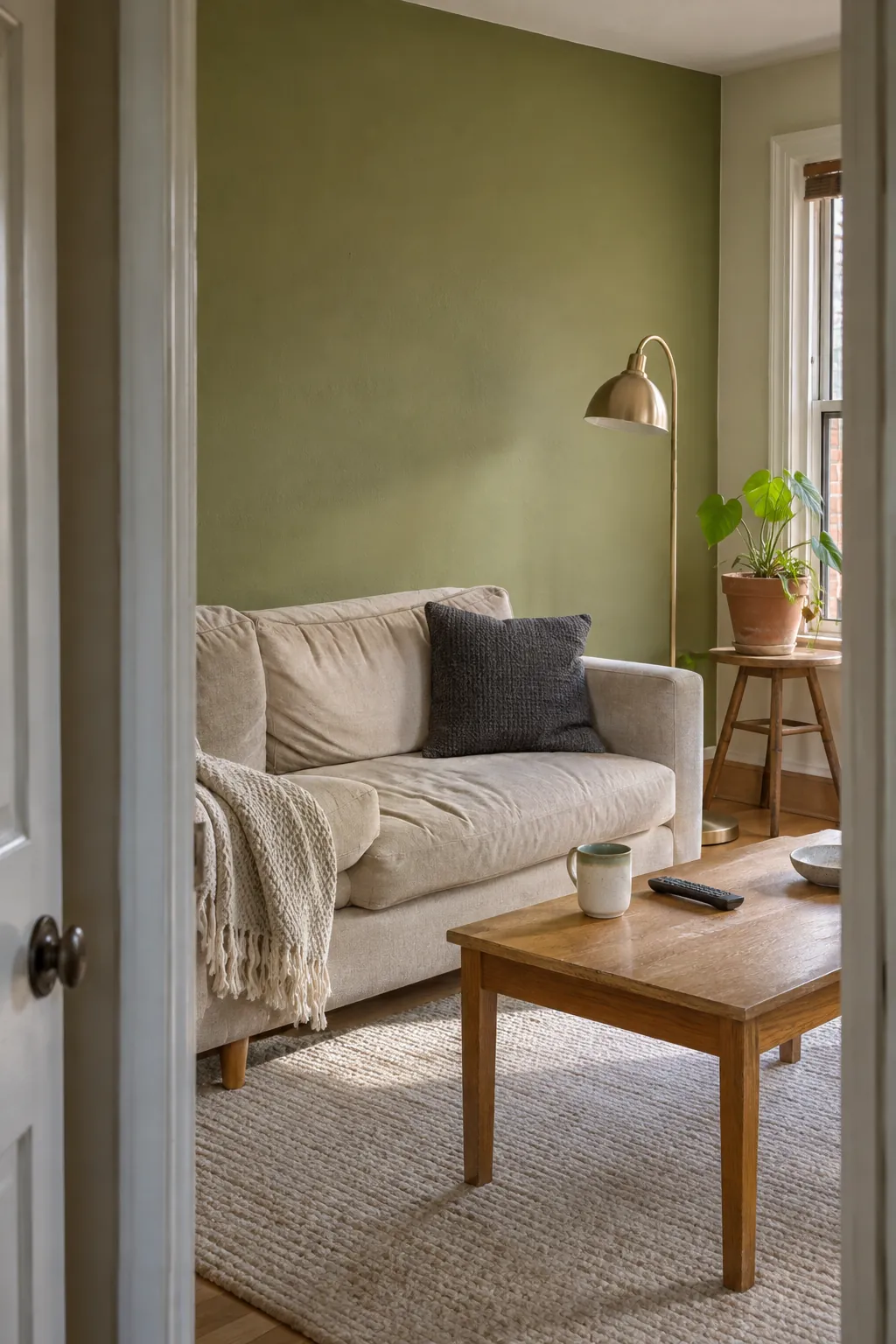
An olive green paint color can make a room feel sheltered and calm. Mid depth shades work especially well in a living room, study, or bedroom because they provide color without the sharp energy of a clear green. In a small dim room, however, a deep olive can absorb light and feel heavier than the sample suggests.
Use a large movable sample and observe it on more than one wall. Check it in morning light, afternoon light, and after dark with the lamps you normally use. Leave white space around the sample so the old wall color does not distort your judgment.
Materials that clarify its character
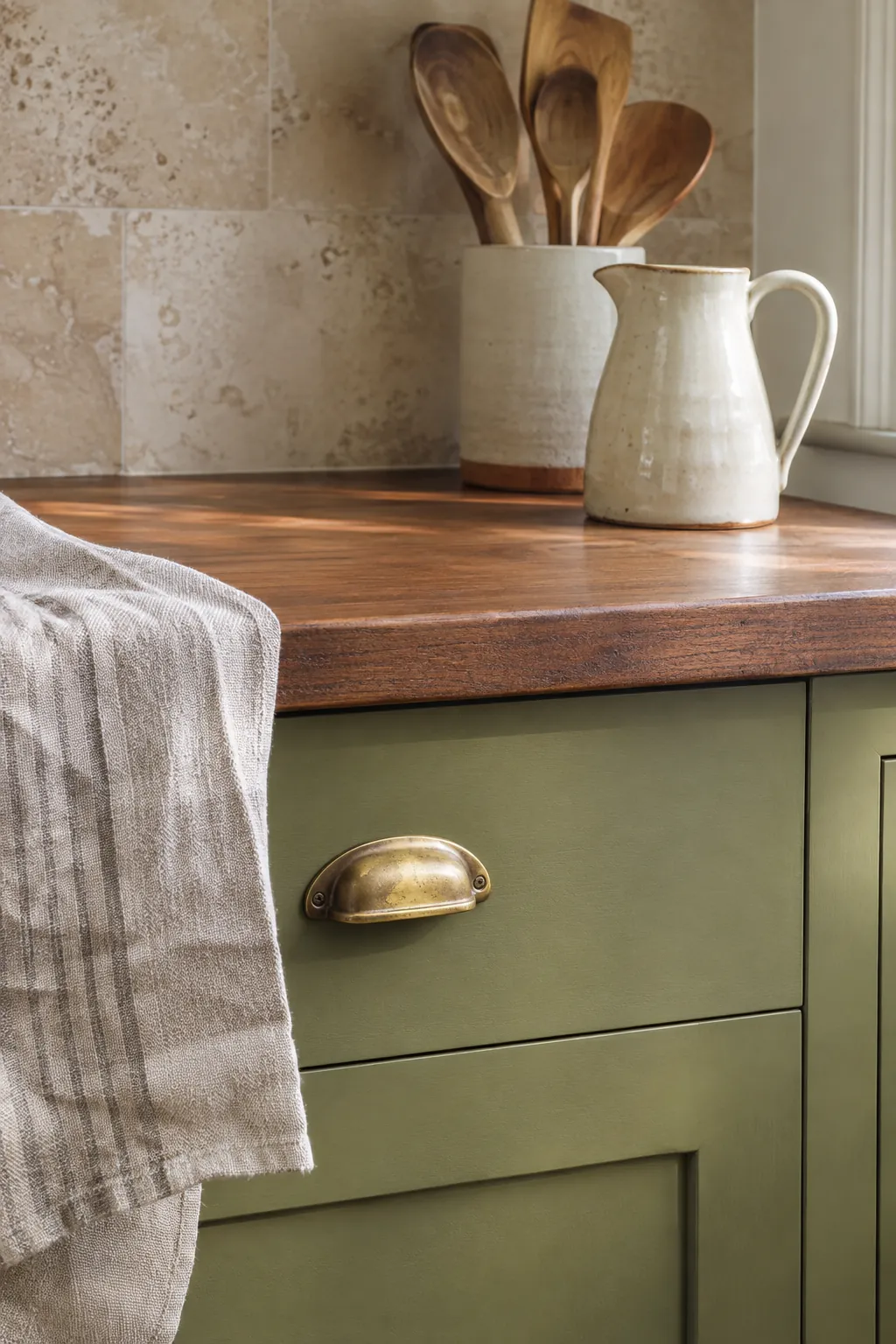
Olive green with brass and wood emphasizes its warm, natural side. Oak and walnut support the brown undertone, while aged brass adds a restrained golden note. Cream linen, pale wool, and handmade ceramic pieces keep the combination soft rather than formal.
For a cleaner look, place olive beside chalky white, light stone, or blackened steel. These materials create a clearer edge around the color. Avoid choosing every item in the same muddy mid tone, since the room can lose depth. Mix light, medium, and dark values even when the palette stays quiet.
Using olive green without painting a room
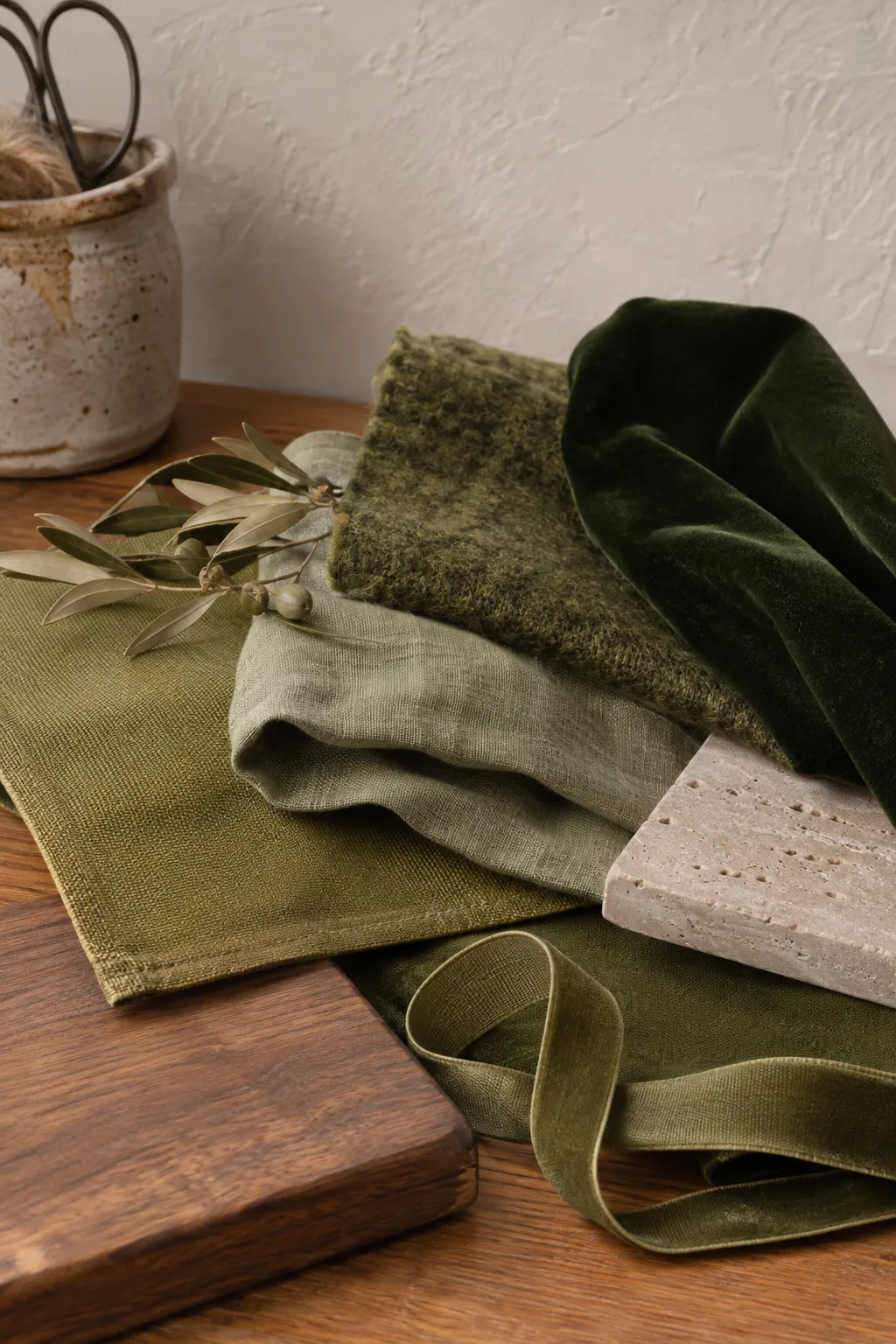
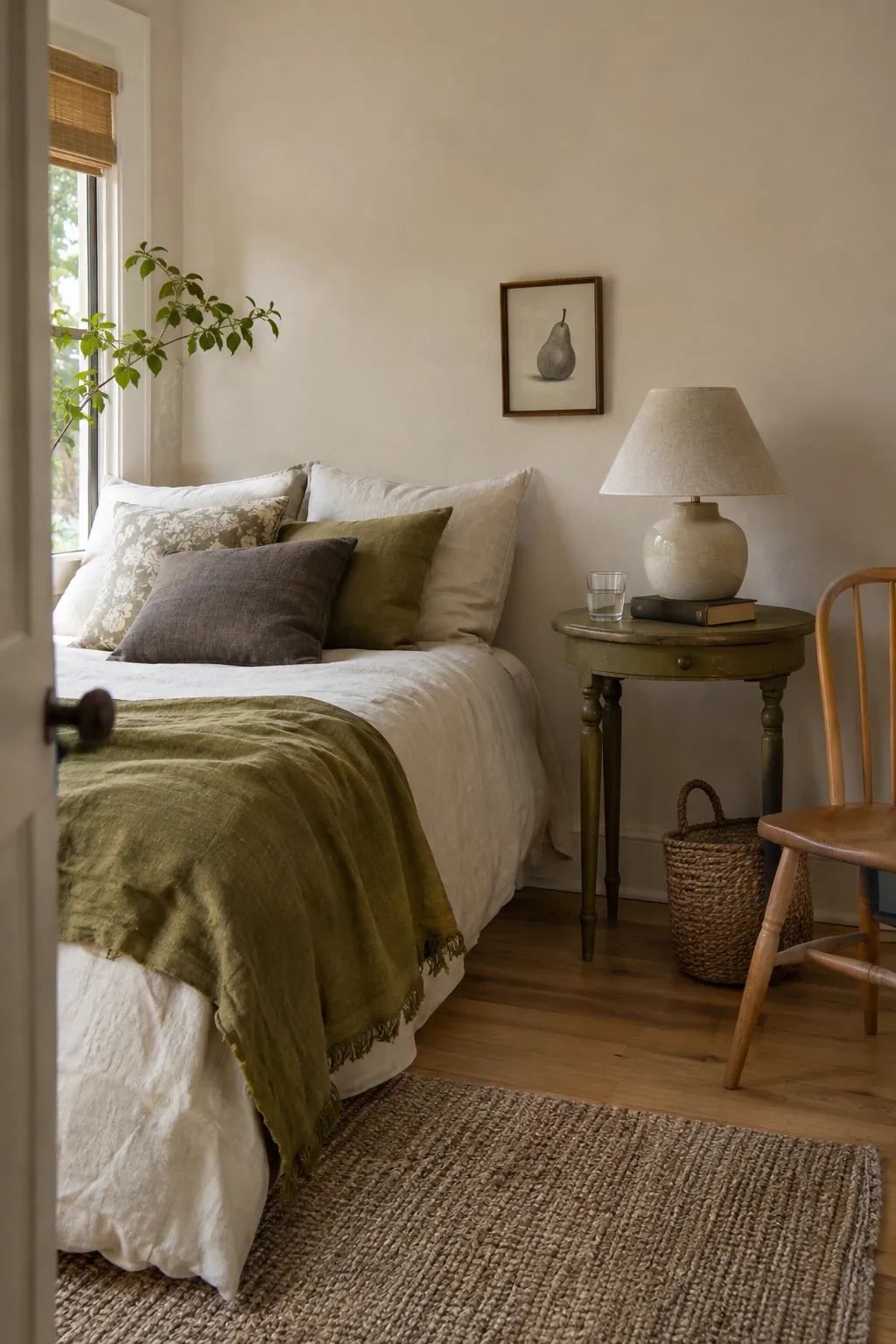
Furniture accents are a useful test when you are uncertain about permanent color. An olive chair, cotton throw, cushion cover, or glazed lamp can establish the palette while leaving the walls neutral. Repeating the shade in two or three places makes the choice feel intentional.
Keep the repeats varied in texture. Velvet makes olive look deep and luxurious, washed linen makes it casual, and matte pottery makes it feel mineral. Small samples also help you decide whether your home suits a warmer brown olive or a cooler gray olive before you buy paint.
A reliable way to choose your shade
Start with three samples: one warm olive, one balanced olive, and one gray olive. Place them beside the flooring, largest furniture piece, and window trim. Remove any sample that looks dull, dirty, or too yellow during the part of the day when you use the room most.
Then compare the remaining choices after dark. The best shade should still look recognizably green under your normal lamps and should support the fixed materials you cannot easily change. This simple test is more dependable than choosing from a small chip, a color name, or a photograph on a screen.
Olive green is therefore not one exact formula. It is a family of muted yellow greens shaped by gray, brown, light, and context. Once you identify the undertone and test it with real surfaces, the color becomes much easier to use with confidence.