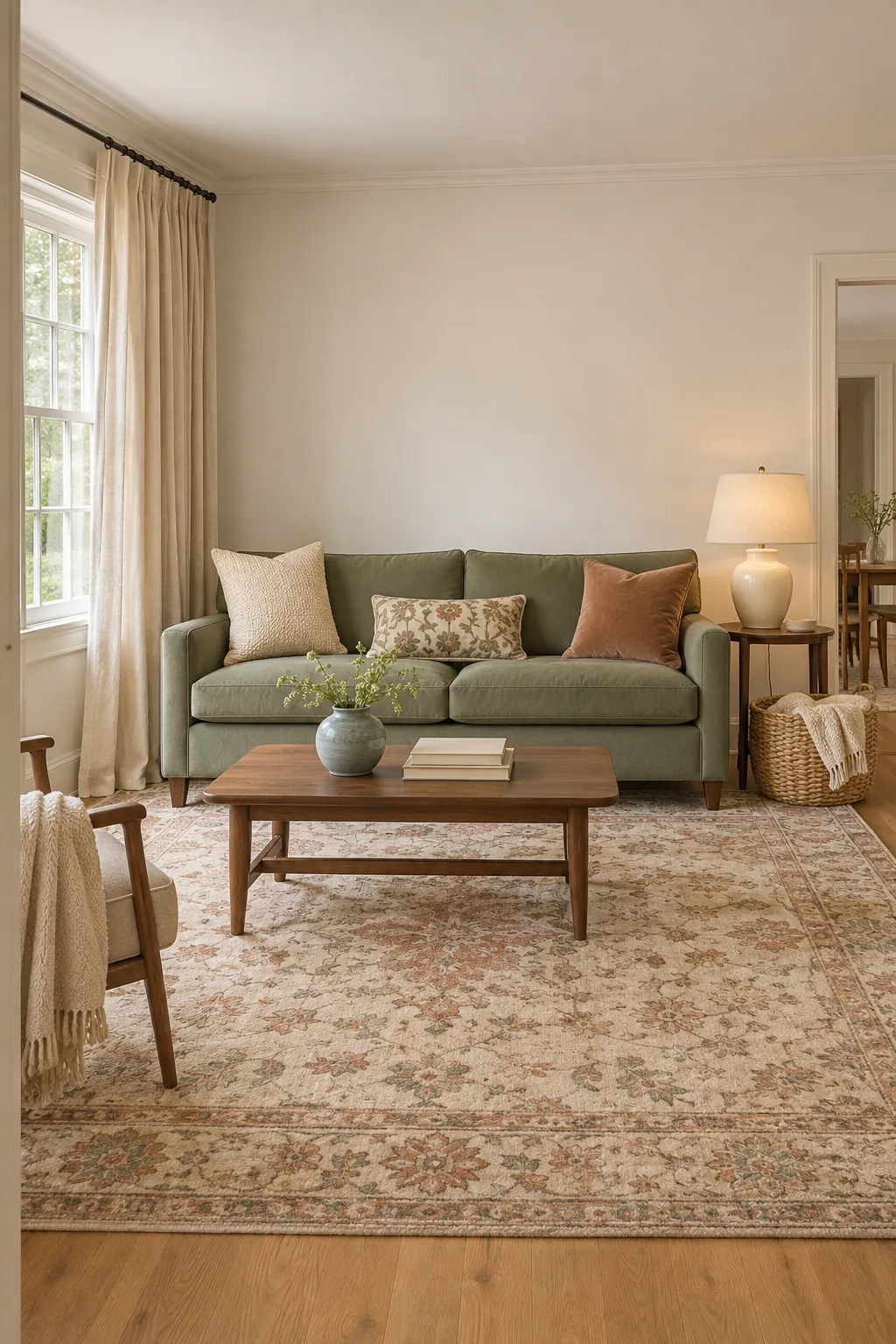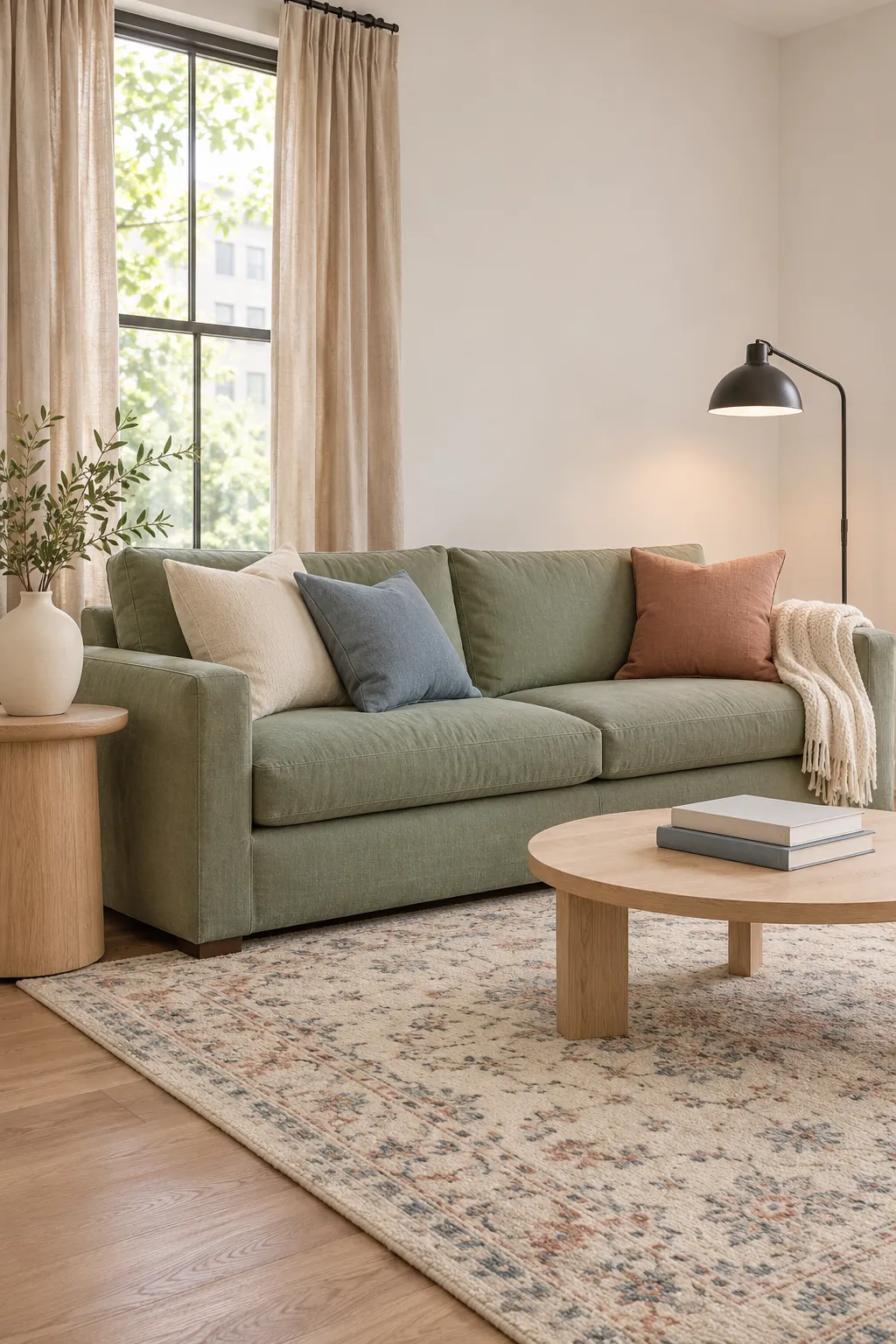
Sage is quiet enough to act like a neutral, yet it still changes with the colors around it. Cream can make it feel warm and natural, blue can sharpen its cool side, and terracotta can bring out its earthy character. The safest approach is to identify the sofa undertone, choose one mood, and repeat a small palette across the room.
Read the Sage Undertone in Your Room
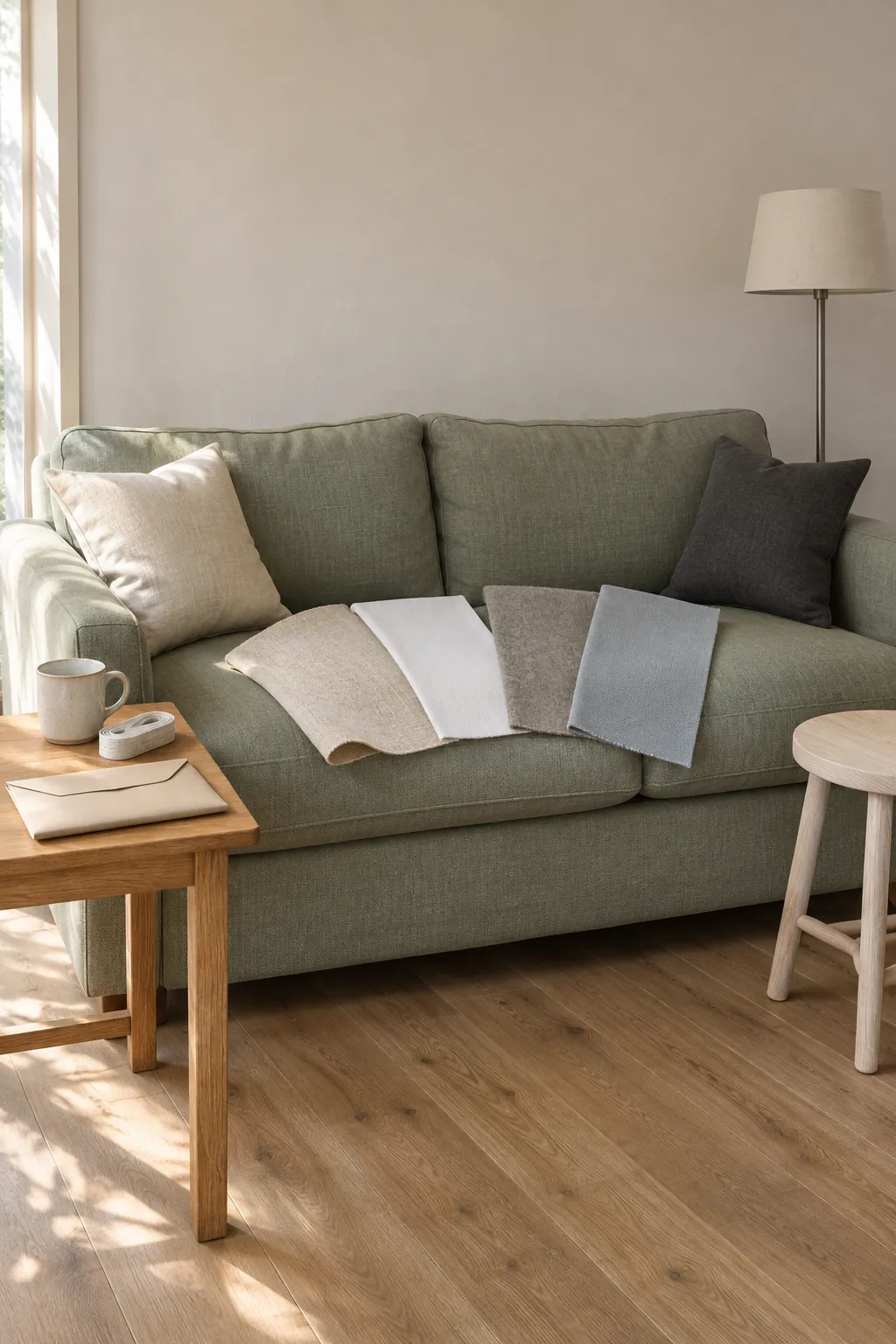
Place a sheet of white paper beside the upholstery in daylight. If the sofa looks yellow or olive next to the paper, favor warm cream, camel, clay, and honey wood. If it looks gray or slightly blue, pair it with chalk white, mushroom, dusty blue, charcoal, or pale oak.
Check the color again after sunset because warm bulbs can turn soft sage muddy. Samples for rugs, curtains, and pillows should sit beside the couch for a full day before you commit. This small test prevents a color that looked balanced online from fighting the actual upholstery.
Build a Soft Sage and Cream Living Room
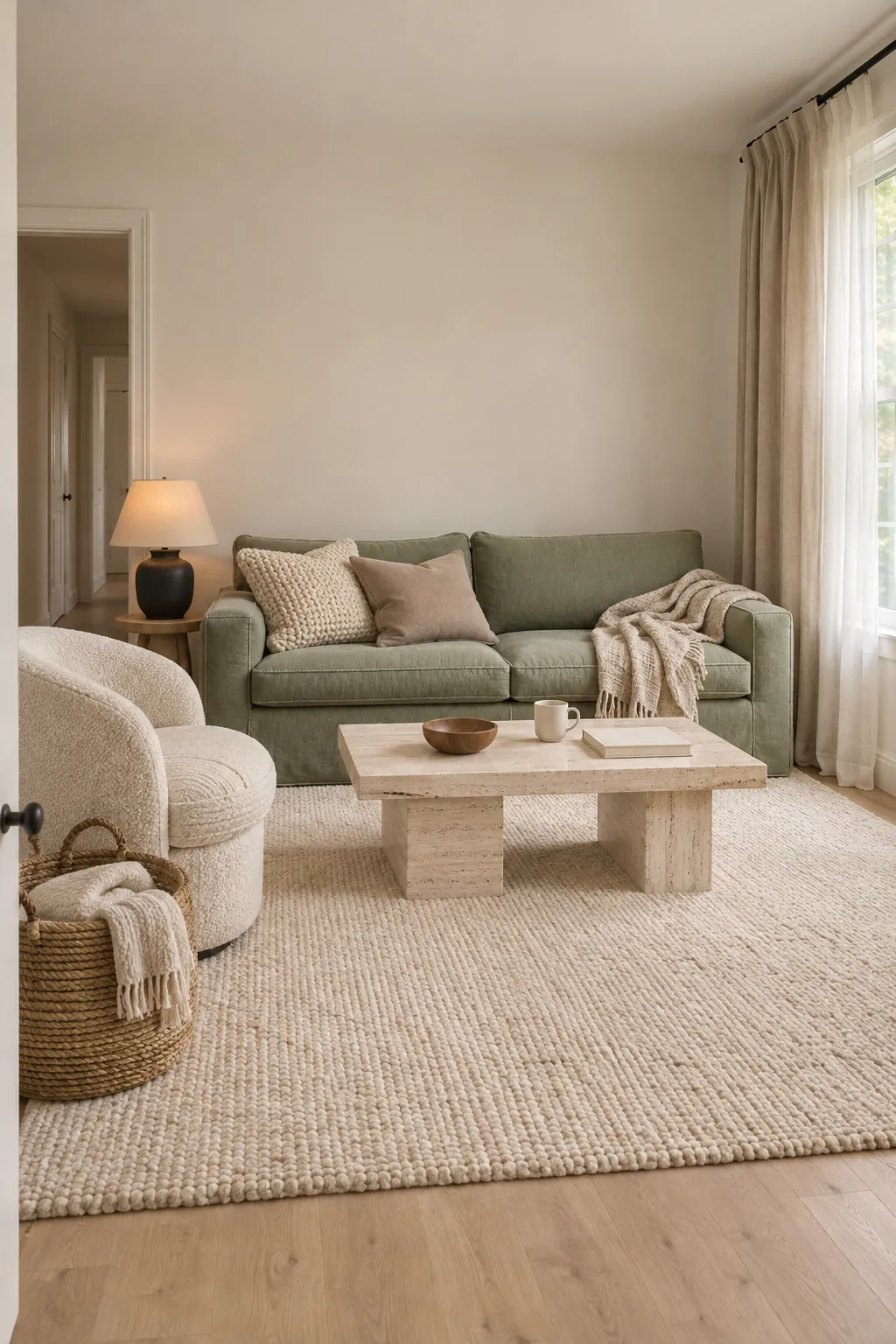
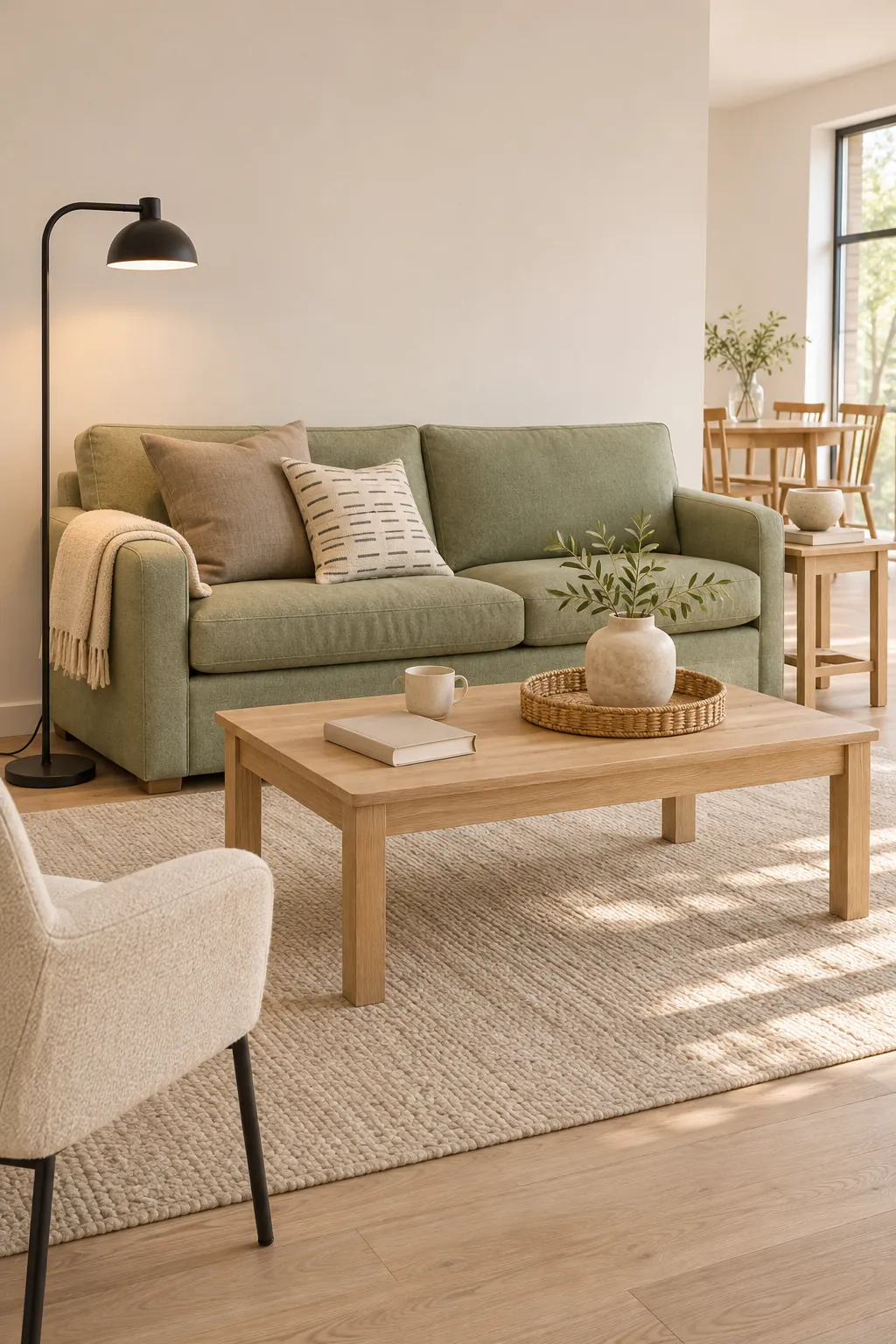
Cream is the most forgiving partner for a sage green couch because it adds light without the hard contrast of bright white. Use more than one pale value, such as warm white walls, an ivory rug, and oatmeal curtains, so the room has depth. A little taupe or mushroom keeps the combination from feeling sugary.
Texture carries this quiet palette. Linen curtains, wool rugs, woven baskets, and boucle or cotton pillows create visible differences even when their colors are close. Keep upholstery and large surfaces calm, then add darker notes through lamp bases, table legs, or a few book covers.
Warm Sage With Clay Blush or Muted Gold
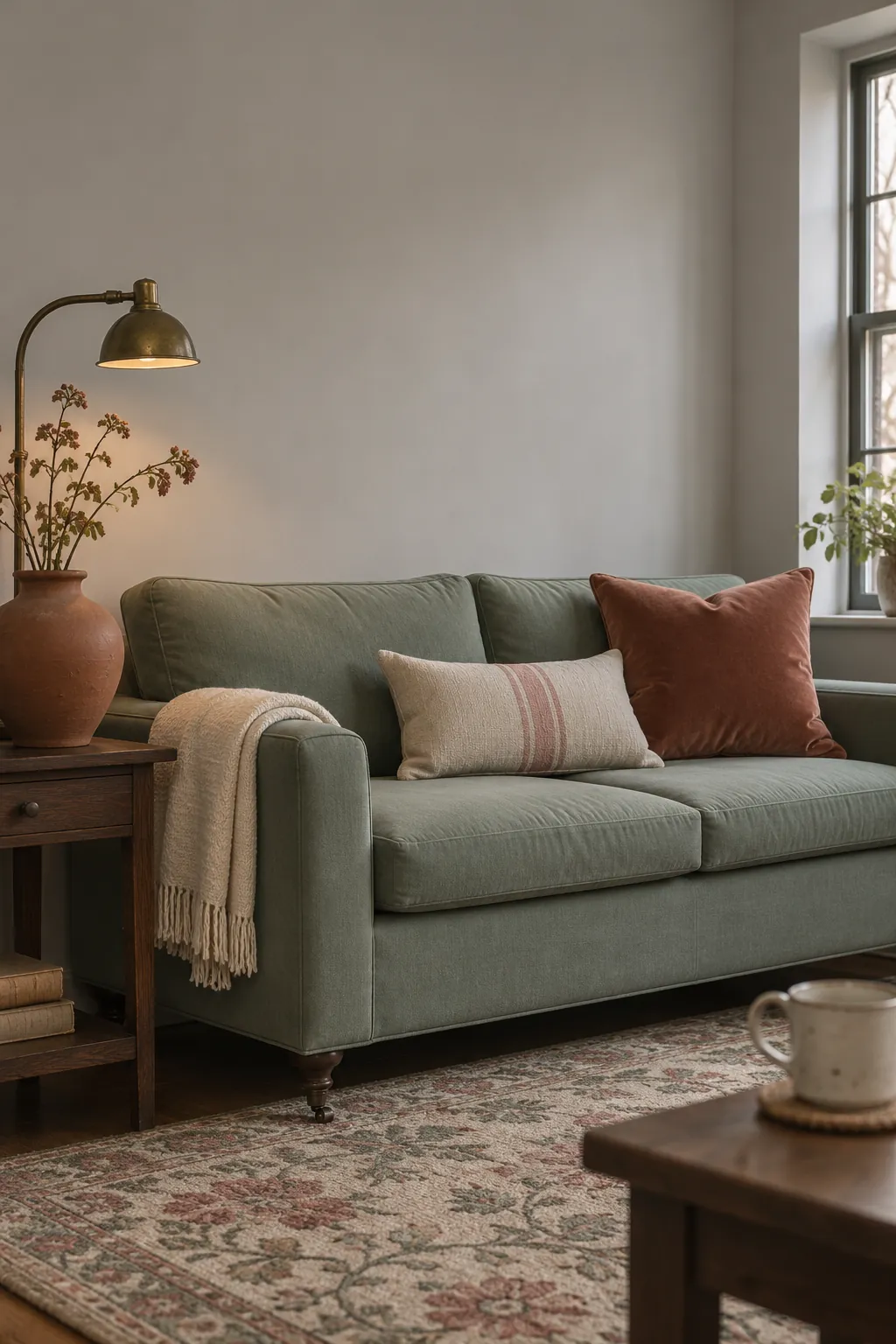
Clay, dusty blush, and muted gold sit opposite the cooler part of sage, so they add energy without looking harsh. Choose softened versions that have some gray or brown in them. A dusty coral pillow, clay vase, or faded gold thread in a rug is usually enough.
Do not use every warm accent at equal strength. Pick one as the main accent and let the others appear in tiny supporting details. The result feels deliberate and gives a neutral decor scheme with a sage couch more personality.
Use Dusty Blue for a Cooler Palette
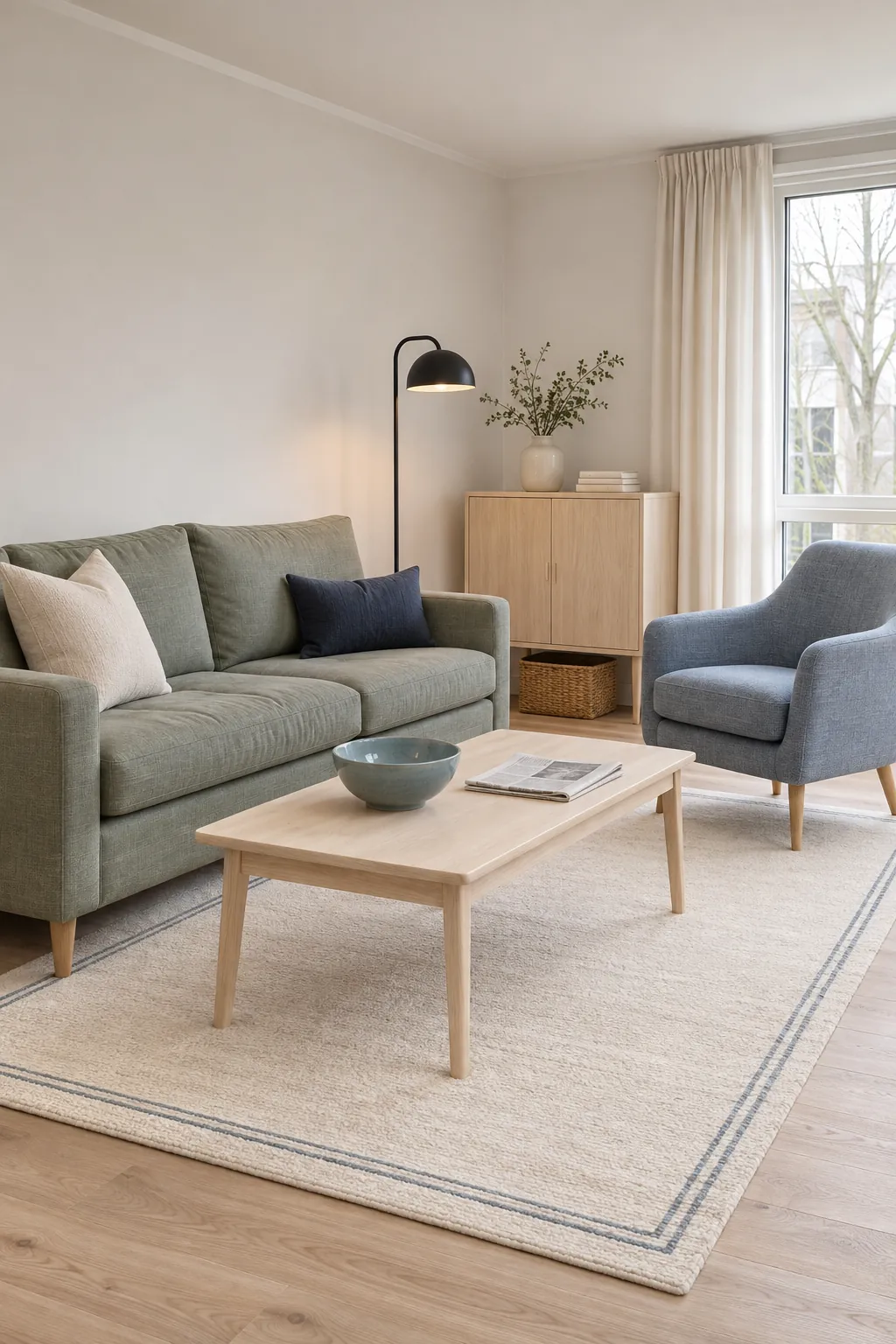
Dusty blue, slate, and muted navy suit a sage sofa that leans gray. They create a calm connection because both colors contain softened cool notes. Bring blue in through a patterned rug or one substantial chair, then repeat it once in a pillow or small accessory.
Add cream or pale wood between the green and blue so the room does not become cold. Black can outline the palette through a floor lamp or narrow frame, but large black furniture may overpower pale sage. This combination works especially well in bright rooms where daylight keeps the cool colors clear.
Choose Wood and Metal That Support Sage
A sage sofa with wood furniture can move from light and airy to deep and traditional. Pale oak, ash, and rattan emphasize freshness, while walnut gives the sofa more warmth and weight. Repeat the chosen wood in at least two visible places so a lone table does not look accidental.
Black metal adds crisp structure and aged brass adds warmth. Select one as the main finish for lamps and table details, then use the other only if the room already contains it. Silver can suit very cool sage, but highly polished chrome often feels sharper than the muted upholstery.
Connect the Rug Curtains and Pillows
Choose the rug before the small accessories because it covers the largest area after the walls and sofa. A natural textured rug creates a quiet base, while a faded pattern can introduce cream, clay, blue, or brown. Let the front sofa legs rest on it so the colors and furniture read as one group.
Cream, flax, and pale taupe are reliable curtains with a sage green sofa because they preserve light. Pull one accent color from the rug for the pillows, then add a neutral cushion with a different texture. When each color appears in at least two places, the room feels connected without becoming overly matched.