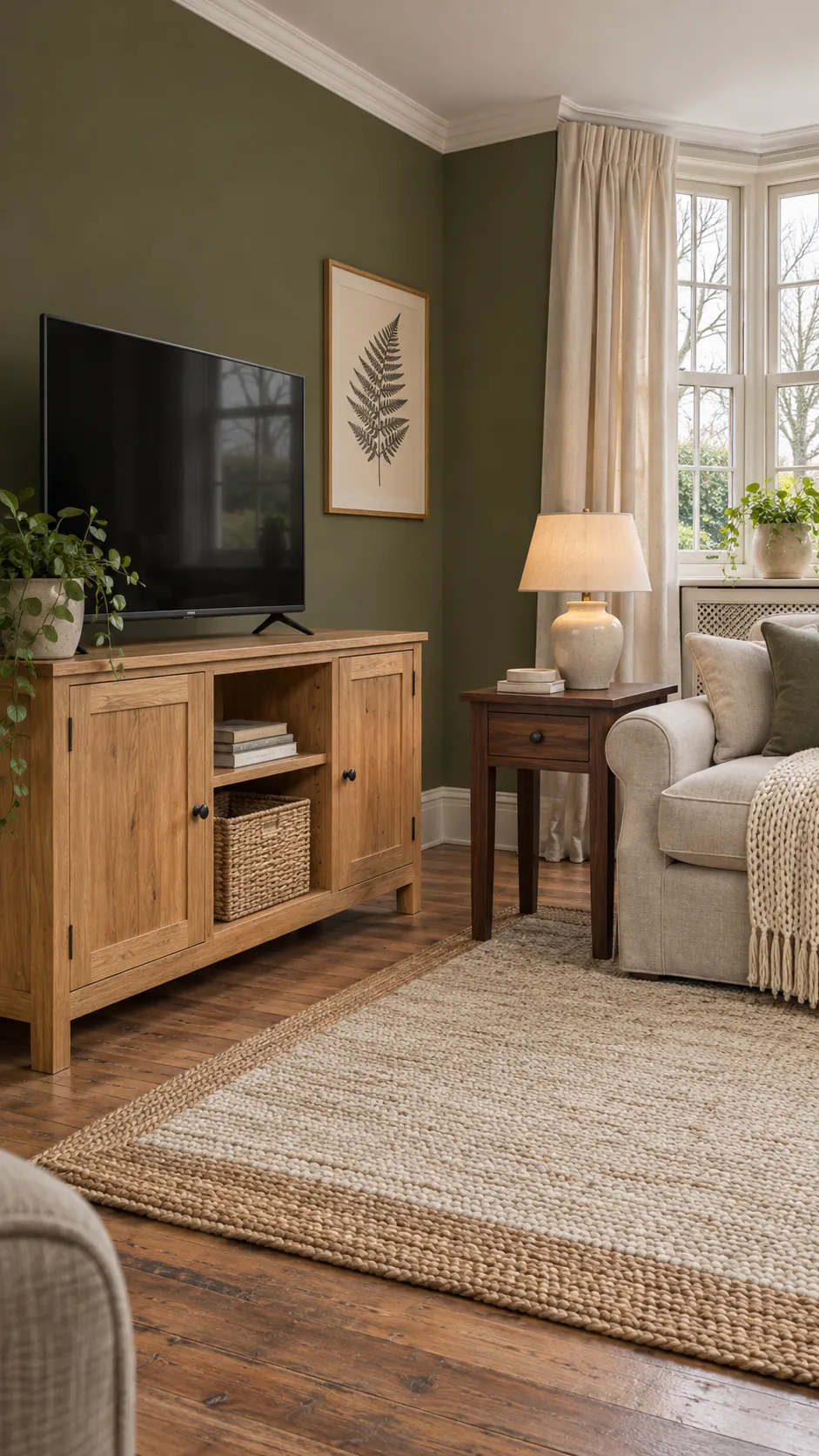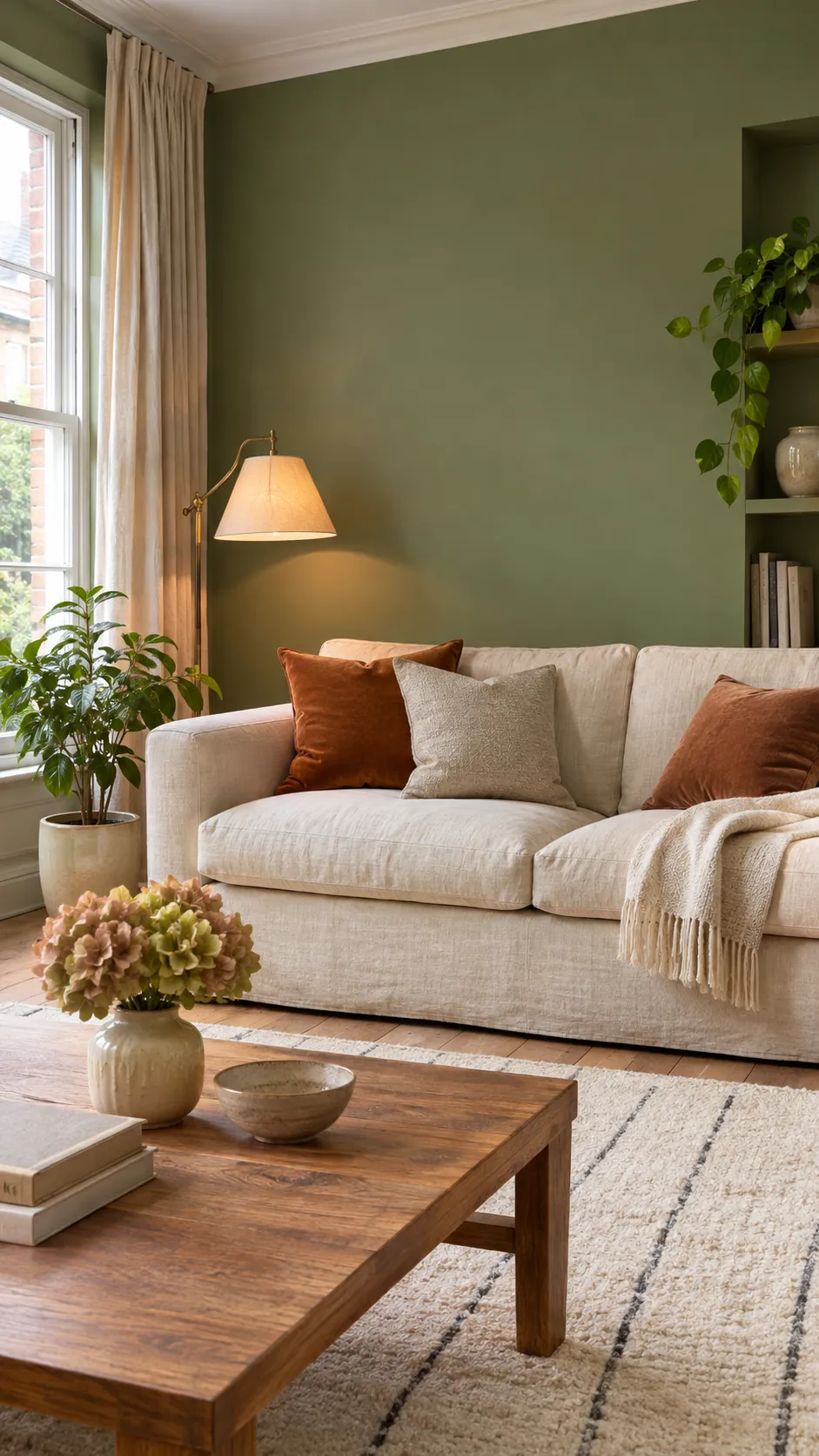
Green paint rarely fails on its own. Trouble starts when a curtain, rug, or sofa brings out an undertone that was almost invisible on the sample card. The safest approach is to identify whether the wall leans warm, cool, grey, or blue, then build a small palette that gives it contrast instead of trying to match it exactly.
Look at the wall beside your fixed floor and largest piece of furniture in morning light, afternoon light, and lamplight. Place fabric or card samples directly against the paint for several hours. A useful room usually needs one light resting colour, one material tone such as wood, and one smaller accent colour.
Start With Warm Neutrals
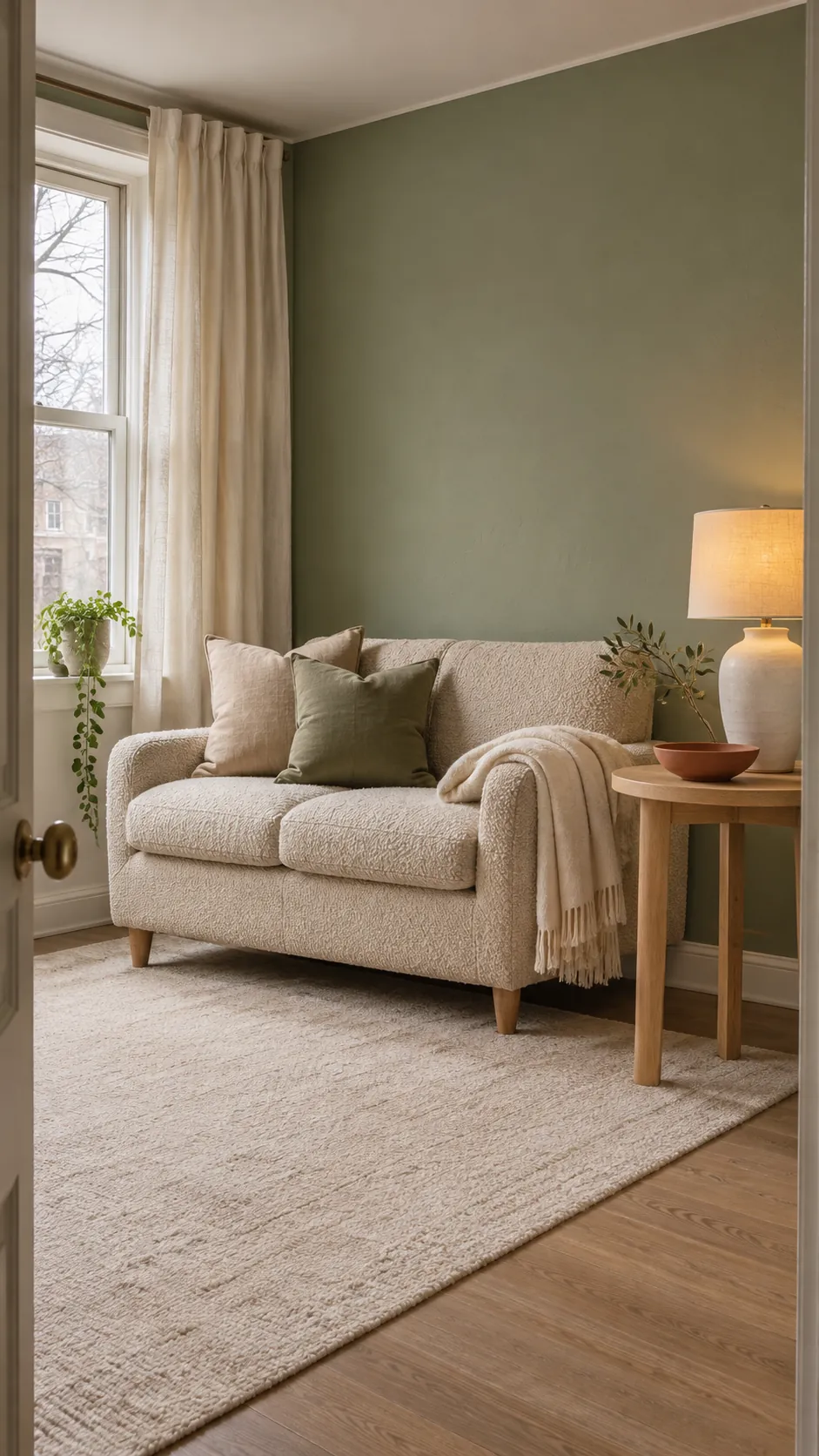
Ivory, oatmeal, warm white, mushroom, and flax are dependable partners for sage, olive, moss, and forest green. These colours create visual breathing room without the hard contrast that a brilliant blue white can produce. If your green looks earthy or slightly yellow, choose cream that has a quiet beige or stone undertone.
Use variation within the neutral family so the scheme does not look flat. Linen curtains can be lighter than the sofa, while a rug sits between both in value. Check cream samples at night because some become strongly yellow under warm bulbs.
Add Rust, Clay, or Soft Terracotta
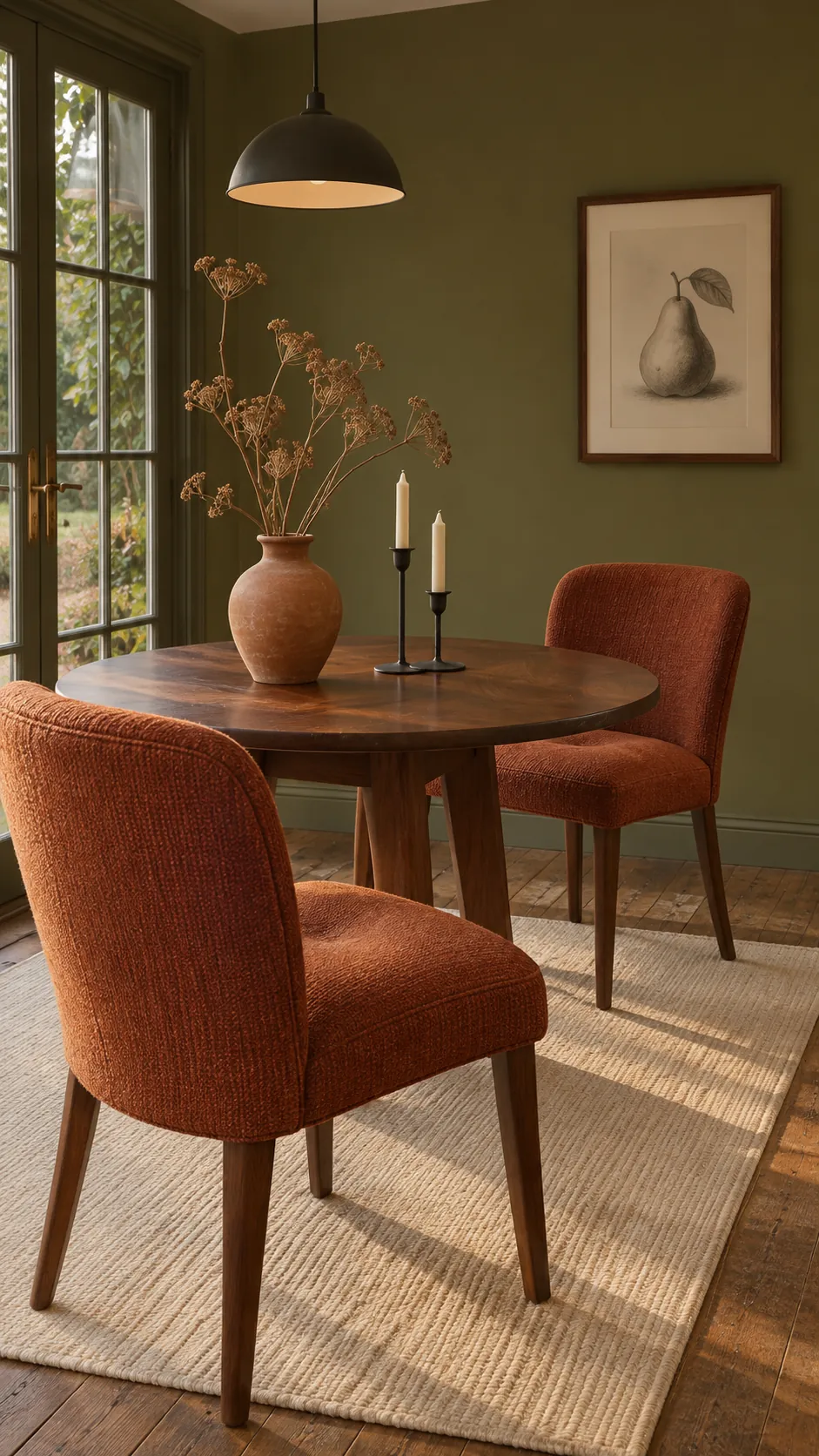
Muted red based colours sit opposite green in the colour wheel, so even a small amount feels lively. Rust chairs, clay pottery, or a cinnamon cushion can warm an olive or muted green room without overwhelming it. The key is to soften the contrast with cream, natural fibre, or wood.
Choose one main warm accent and repeat it once in a much smaller dose. Avoid scattering several versions of orange and red through the room, since that can make the palette feel busy. Dark walnut and aged brass support this family particularly well.
Use Navy or Dusty Blue for a Cooler Scheme
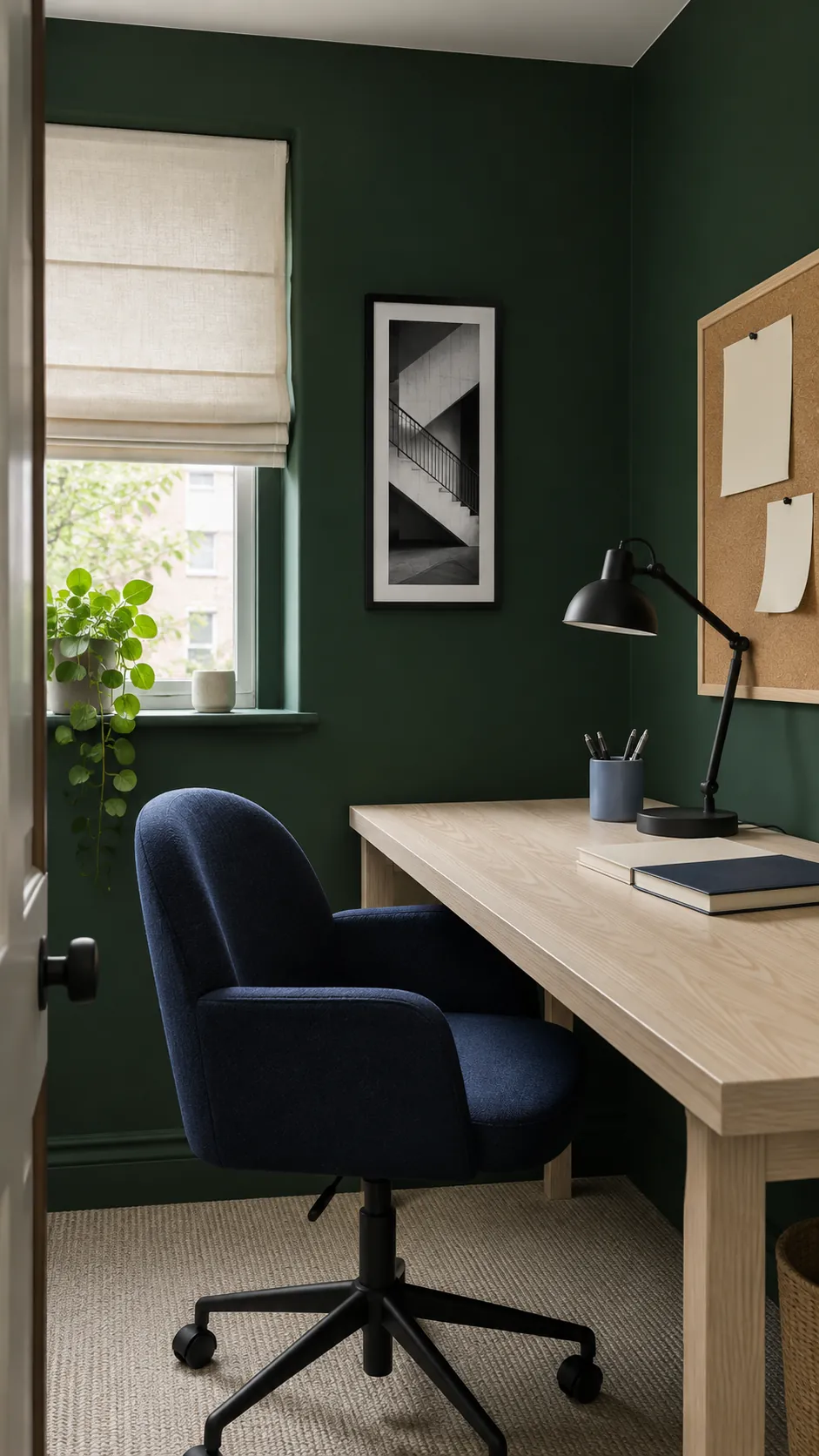
Navy can give deep green a tailored character, while dusty blue feels gentler beside sage. Both work best when the room includes a pale element such as an off white blind, light rug, or ash wood desk. That break stops two dark colours from merging into one heavy block.
Blue is easier to control in upholstery, a rug detail, or one painted cabinet than across every accessory. Compare samples in the darkest corner first. If navy turns almost black there, use it on a smaller object and let a softer blue carry more of the scheme.
Soften Green With Blush and Burgundy
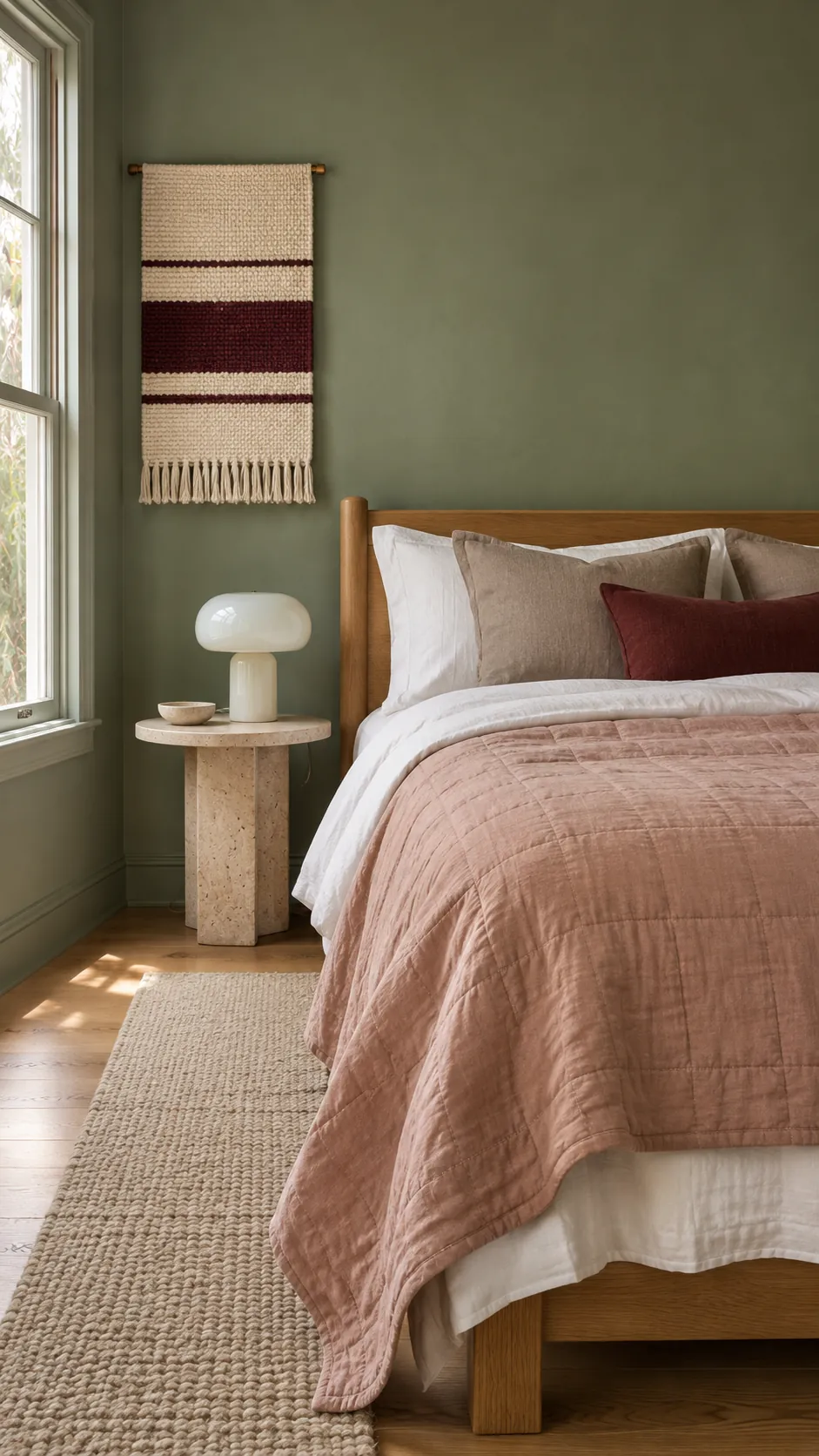
Dusty blush softens eucalyptus and sage, especially in bedrooms where linen and cotton already create a quiet surface. Pick a pink with grey or brown in it rather than a bright sweet pink. Mushroom, white, and pale stone keep the result calm and adult.
A small burgundy detail can give this gentle combination more structure. Use it on one cushion, a narrow woven pattern, or a book cover. It should read as punctuation rather than a second dominant colour.
Sharpen Saturated Green With Black and Brass
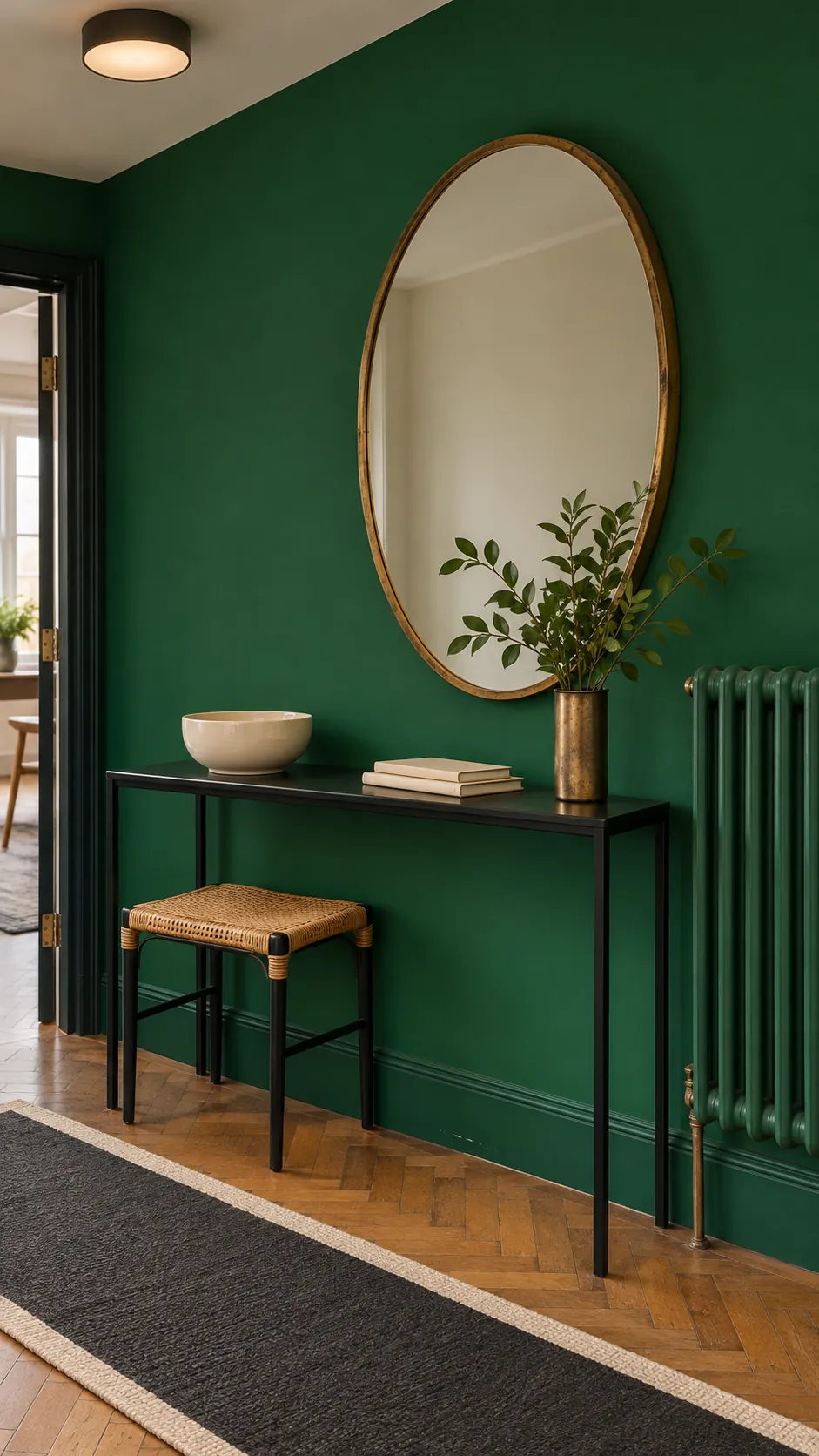
Black gives emerald and rich forest green a clear edge. It works best in slim outlines such as a table frame, lamp arm, curtain pole, or picture frame. Large black furniture can absorb too much light unless the room is spacious and bright.
Aged brass adds warmth without competing with the wall. Keep the finish quiet and repeat it in no more than a few connected details. Bright polished gold can look harsh beside a complex green, while a softly tarnished surface feels more settled.
Let Wood Tone Bridge the Whole Room
Medium oak is the easiest wood partner for many green walls because its warmth is clear but not forceful. Pale ash suits cooler blue green paint, while walnut gives moss and forest shades more depth. Very orange stains can make yellow green walls look sharper, so compare a sample before committing.
Mixed woods can still work when one tone leads and the others appear in smaller pieces. Connect them with a rug that contains cream, tan, or charcoal, and repeat one upholstery colour across the room. The wall then becomes part of a balanced material palette instead of the only feature.