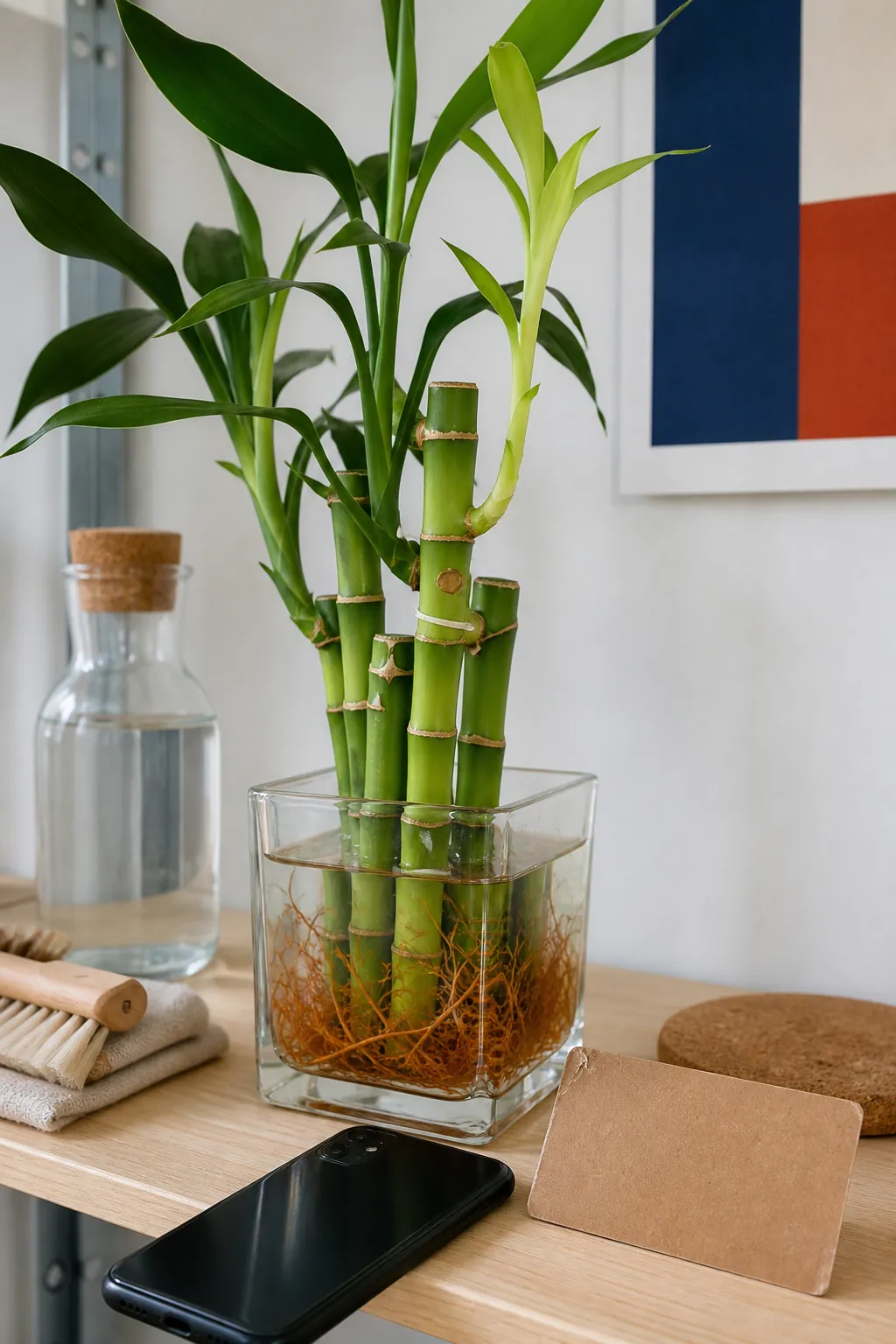
Yellowing is not one diagnosis. It is a visible sign that part of the plant has lost chlorophyll, and the location, texture, speed, and growing method reveal what to check next. A single aging lower leaf is very different from a cane that turns yellow and soft within days.
First Confirm That It Is Lucky Bamboo
Most indoor plants sold as bamboo are lucky bamboo, or Dracaena sanderiana, rather than true bamboo. Lucky bamboo has fleshy segmented stems and strap shaped leaves, and it can grow in water or potting mix. True bamboo is a grass with woody canes, fine branches, and many narrow leaves, so seasonal leaf turnover and outdoor weather stress require a different diagnosis.
For lucky bamboo, note whether the yellow color begins in one old leaf, several new leaves, a leafy shoot, the top of a cane, or the cane base. Touch the affected cane and smell the water or soil. Firm tissue and clean roots suggest environmental stress, while softness, dark roots, or a sour smell point toward decay that needs prompt attention.
Read What Yellow Leaves Are Telling You
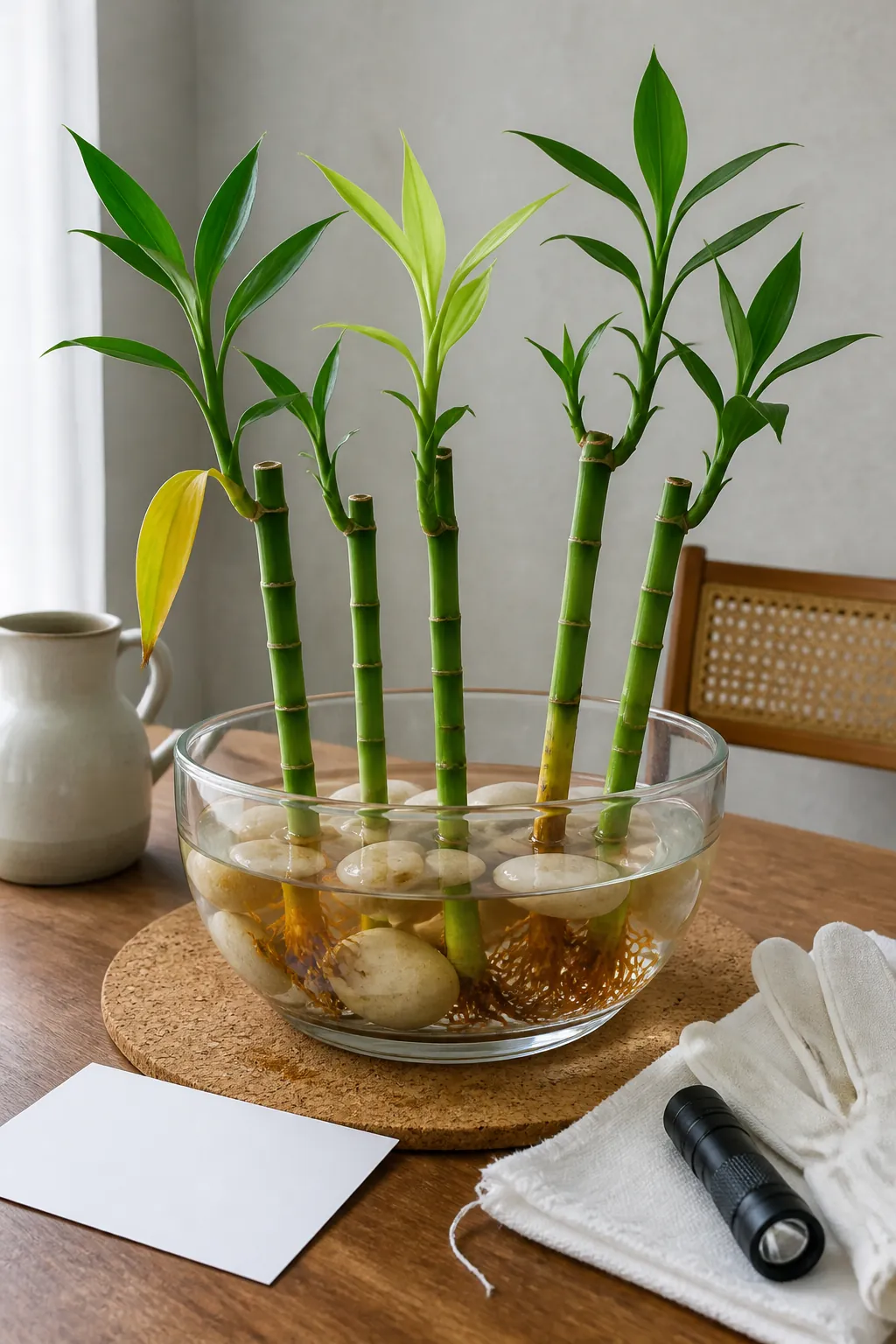
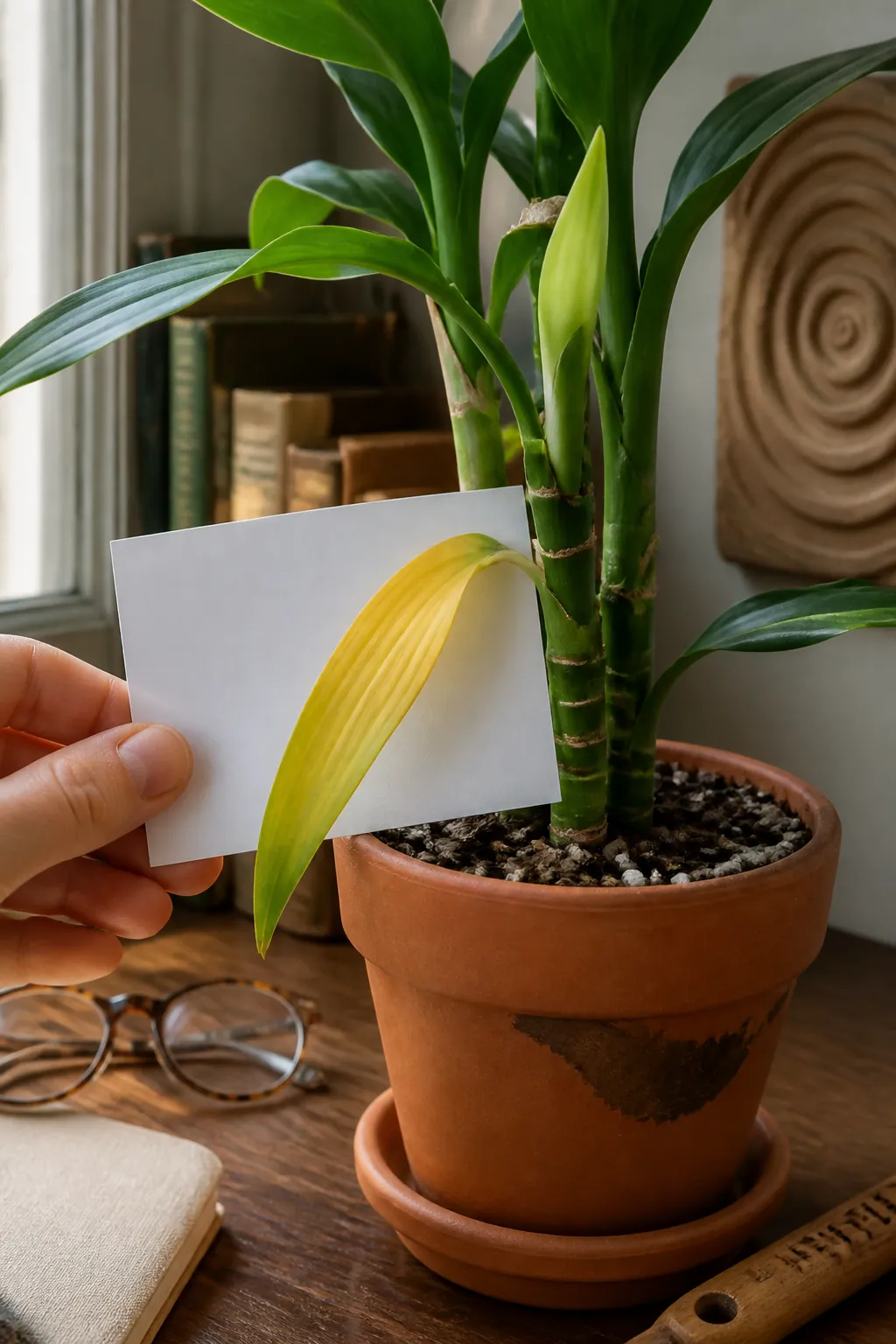
One lower leaf turning evenly yellow while fresh growth remains green can be normal aging. Remove it only after it has mostly changed color or releases easily, then watch the next leaves. Several yellow leaves appearing together usually mean the plant is responding to a change in water, light, temperature, moisture, or root health.
Bleached patches on the window side often follow direct sun, while broad yellowing in wet soil can indicate roots are short of oxygen. Pale new growth may reflect weak roots or a nutrient problem, but adding fertilizer before checking moisture and roots can make matters worse. Treat the pattern and the growing conditions, not the color alone.
Treat a Yellow Cane as a More Serious Warning
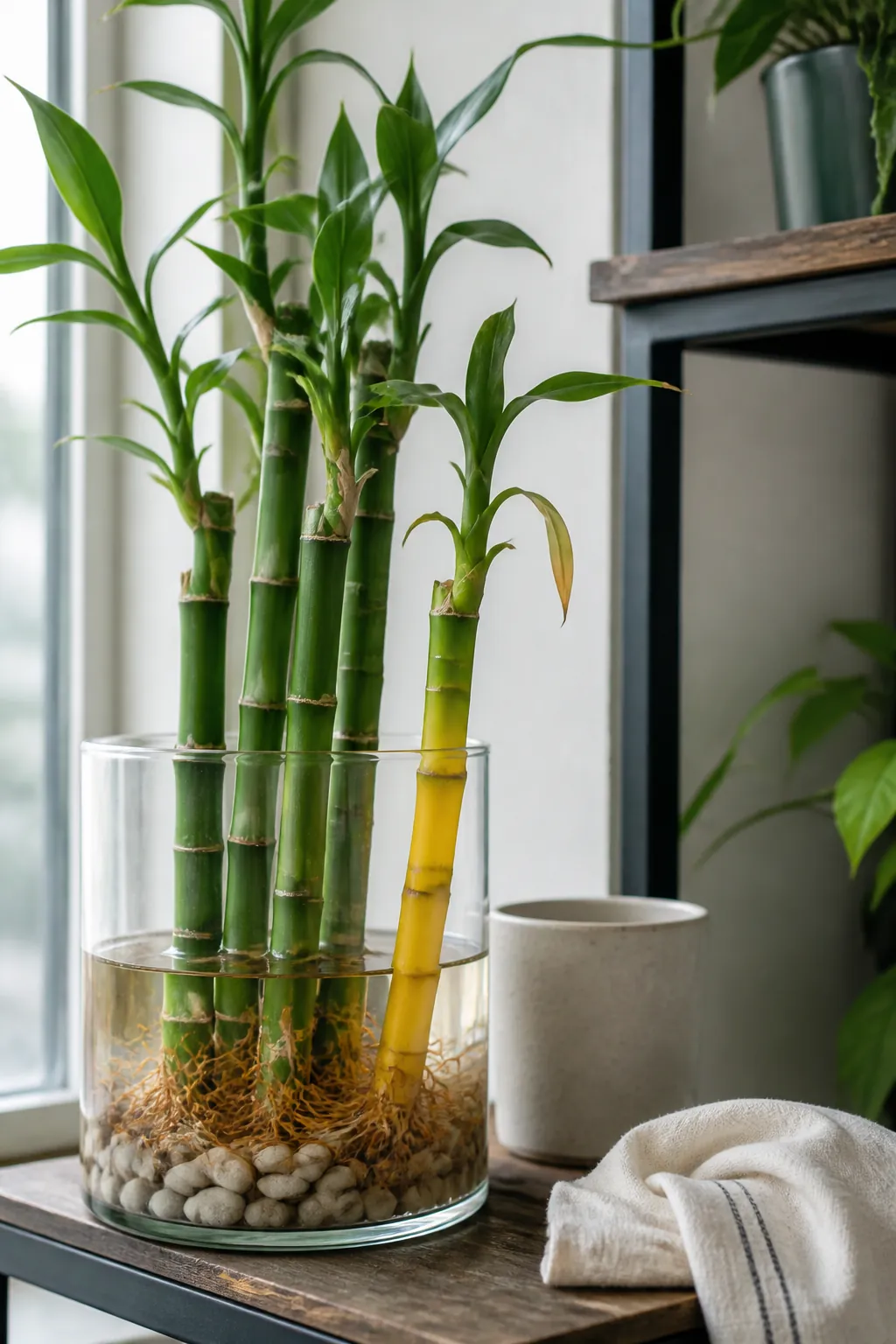
A yellow cane is more concerning than one yellow leaf because cane tissue rarely becomes green again. Isolate the affected stalk from a shared vessel if possible, especially when the yellow area is spreading or feels soft. Clean the container and tools before handling healthy stalks.
If a healthy green side shoot remains above the damaged area, it may be possible to cut that shoot with a sterilized blade and root it separately in clean water. Discard soft, foul smelling, or fully yellow cane sections rather than keeping them beside healthy roots. Do not make repeated tiny cuts into advancing damage, since every delay can reduce the amount of firm green tissue available for rescue.
Check Roots, Water Level, and Drainage
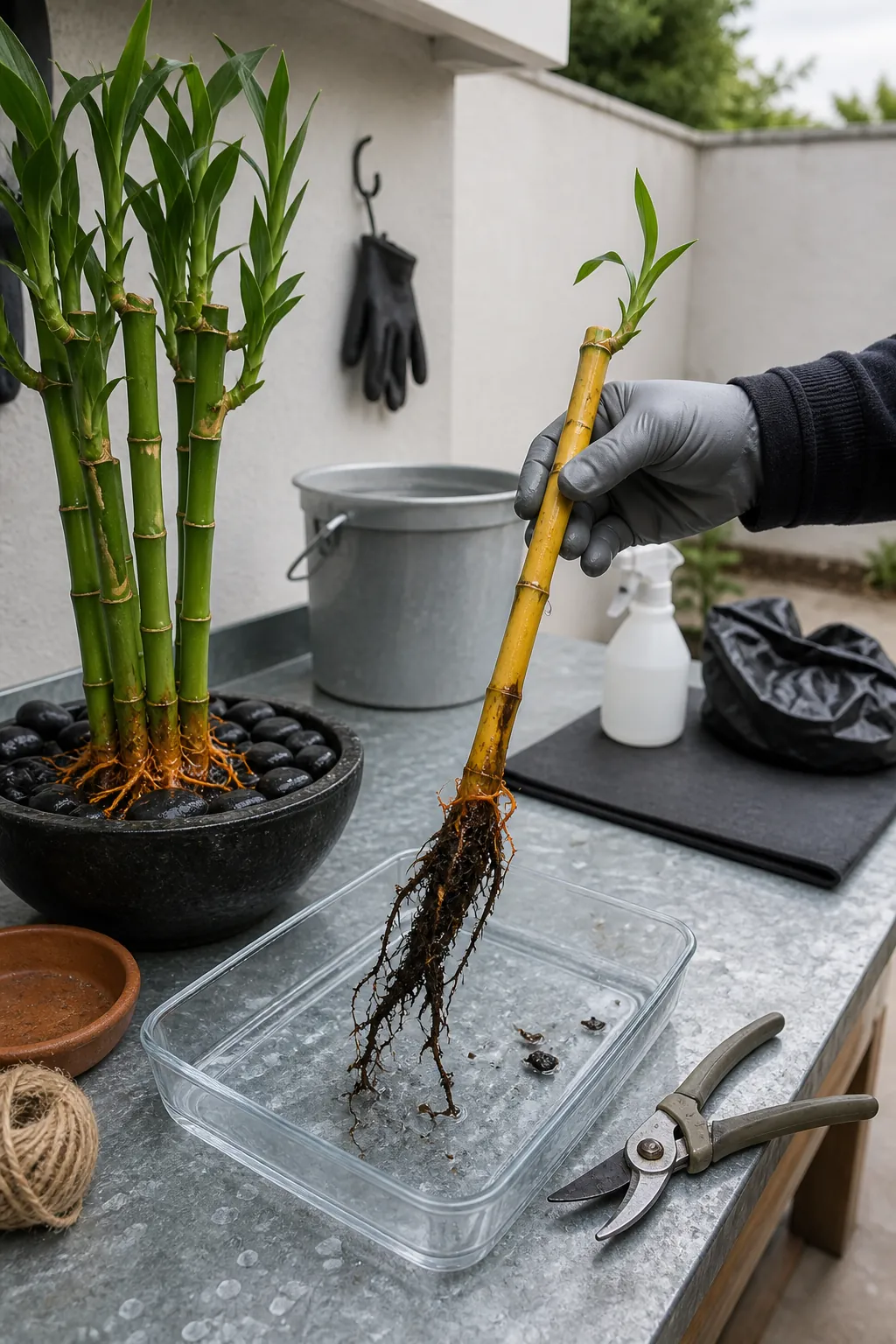
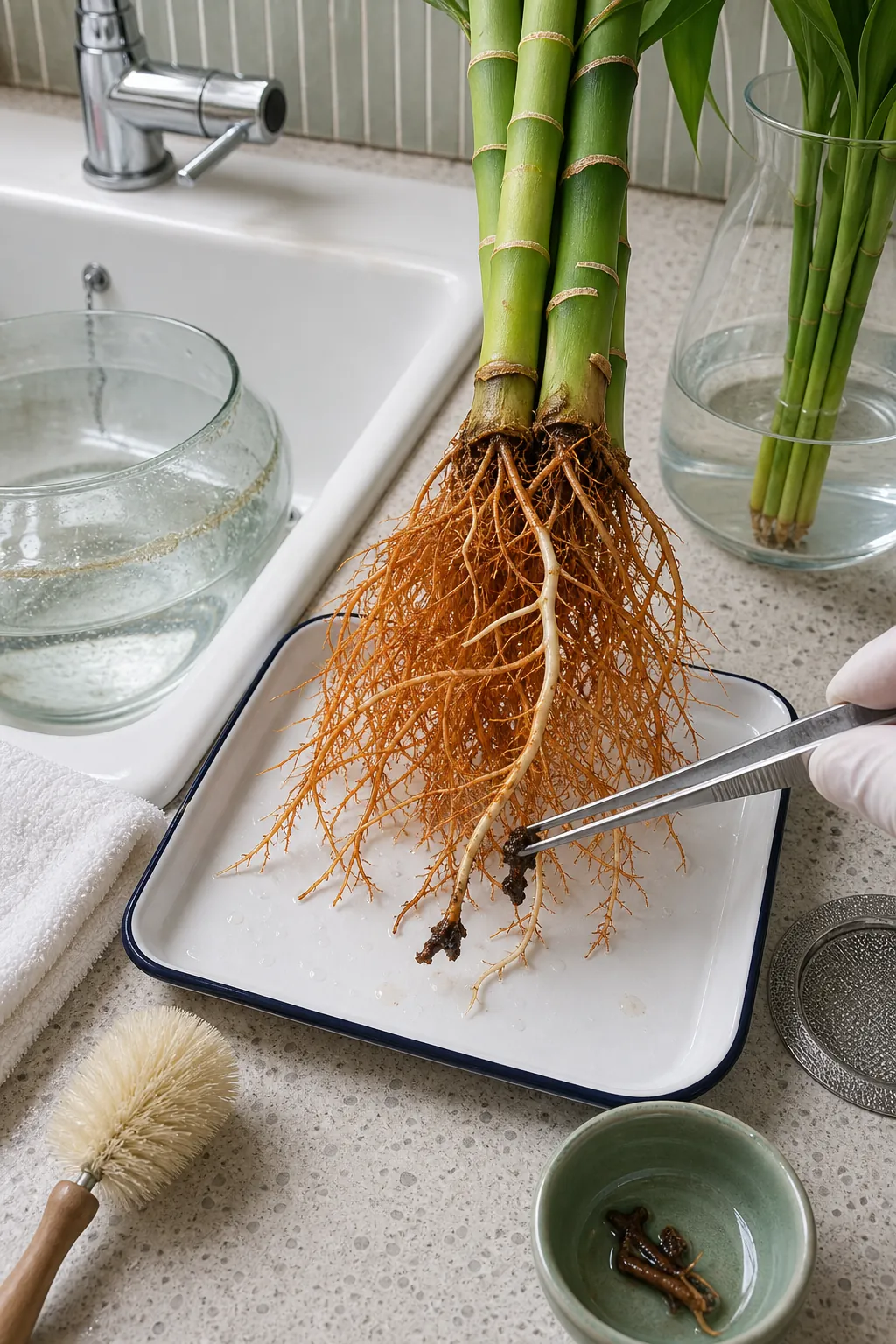
Healthy water grown roots may be orange or pale, but they should feel firm and smell fresh. Rinse away loose debris, clean algae from the vessel, and add enough clean water to cover the roots without submerging long sections of cane. Refresh the water regularly instead of only topping it up, because dissolved salts and organic debris accumulate over time.
For a soil grown plant, slide the root ball out carefully and inspect it. Healthy roots are firm, while root rot produces dark, soft, easily broken tissue and often a stale odor. Move the plant into a container with drainage and an airy mix after removing clearly dead roots with clean scissors. A large decorative pot without a drainage path can stay wet long after the surface appears dry.
Correct Water, Light, and Temperature
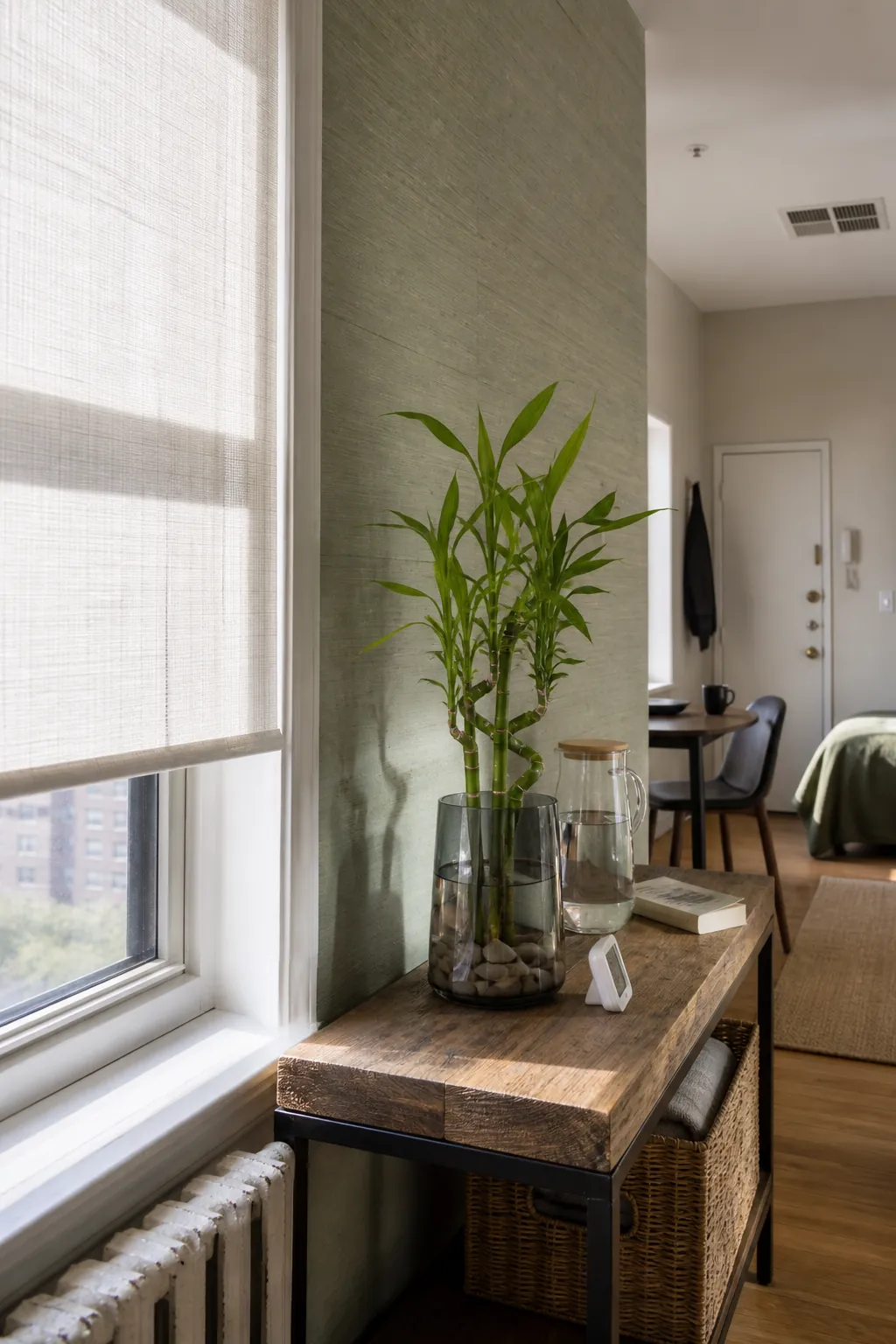
Lucky bamboo prefers bright indirect light and steady indoor warmth. Move it back from hot direct sun, cold glass, heaters, and air conditioning vents, but do not place it in a dark corner as a permanent cure. Make one location change, then observe new growth rather than moving the plant every day.
Hard tap water and fluoride can damage Dracaena foliage, so filtered, rain, reverse osmosis, or distilled water may help when local water is harsh. Letting tap water stand may reduce some chlorine, but it does not reliably remove every dissolved mineral or treatment compound. Use a clean vessel and room temperature water, then keep the routine consistent enough to judge the response.
Feed Cautiously and Measure Recovery in New Growth
Fertilizer is not first aid for a yellow plant with damaged roots. Wait until the water, drainage, light, and temperature are stable, then use only a very dilute product suitable for Dracaena if active growth appears weak. Plants growing in water need especially cautious feeding because nutrients reach the roots immediately and excess cannot disperse through a large soil volume.
Yellow tissue will not become green again, so recovery appears as firm stems, clean roots, stopped discoloration, and healthy new leaves. Photograph the plant in the same light once a week and compare the boundary of the yellow area. If the yellowing stops and new growth opens normally, resist the urge to keep changing the care routine.