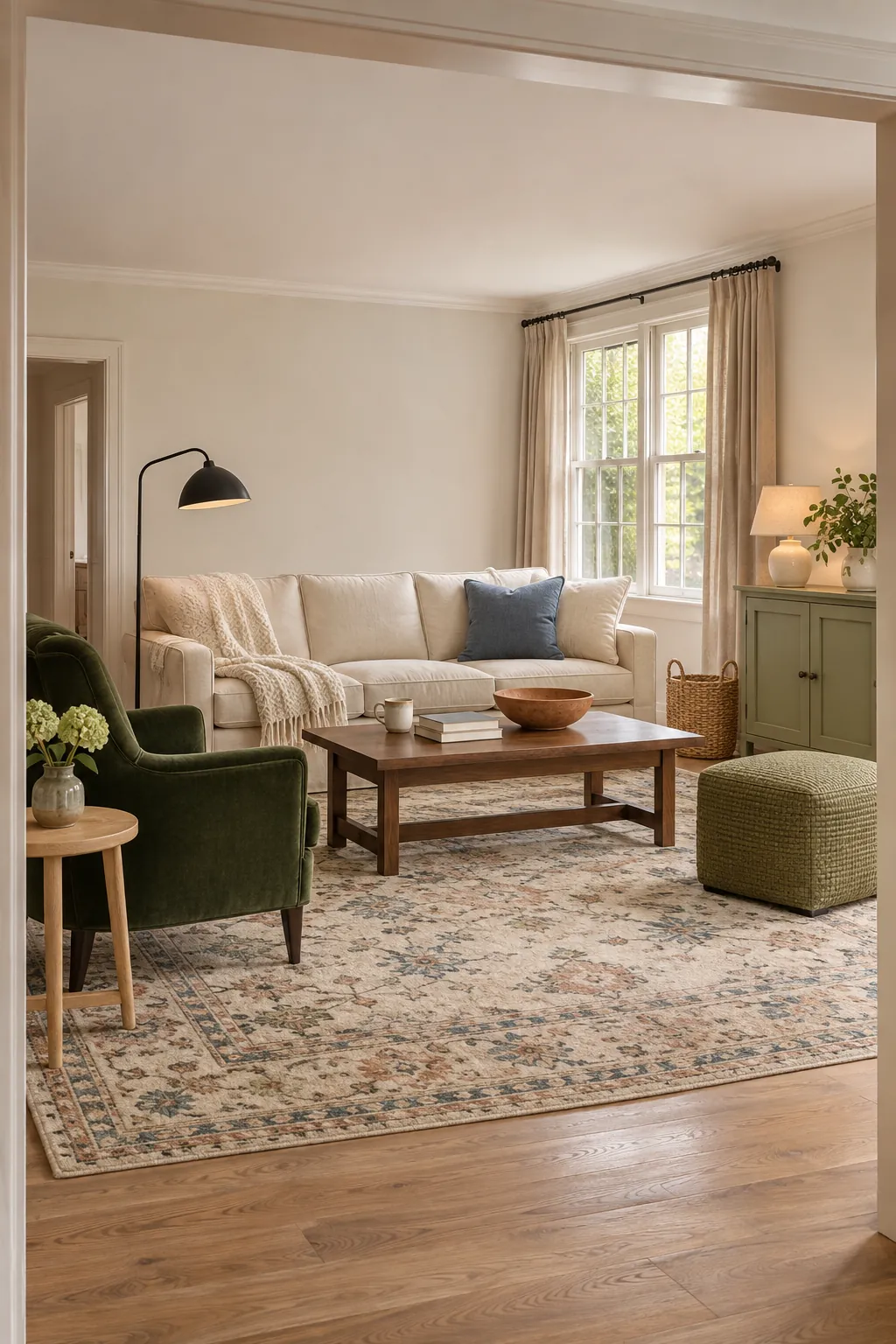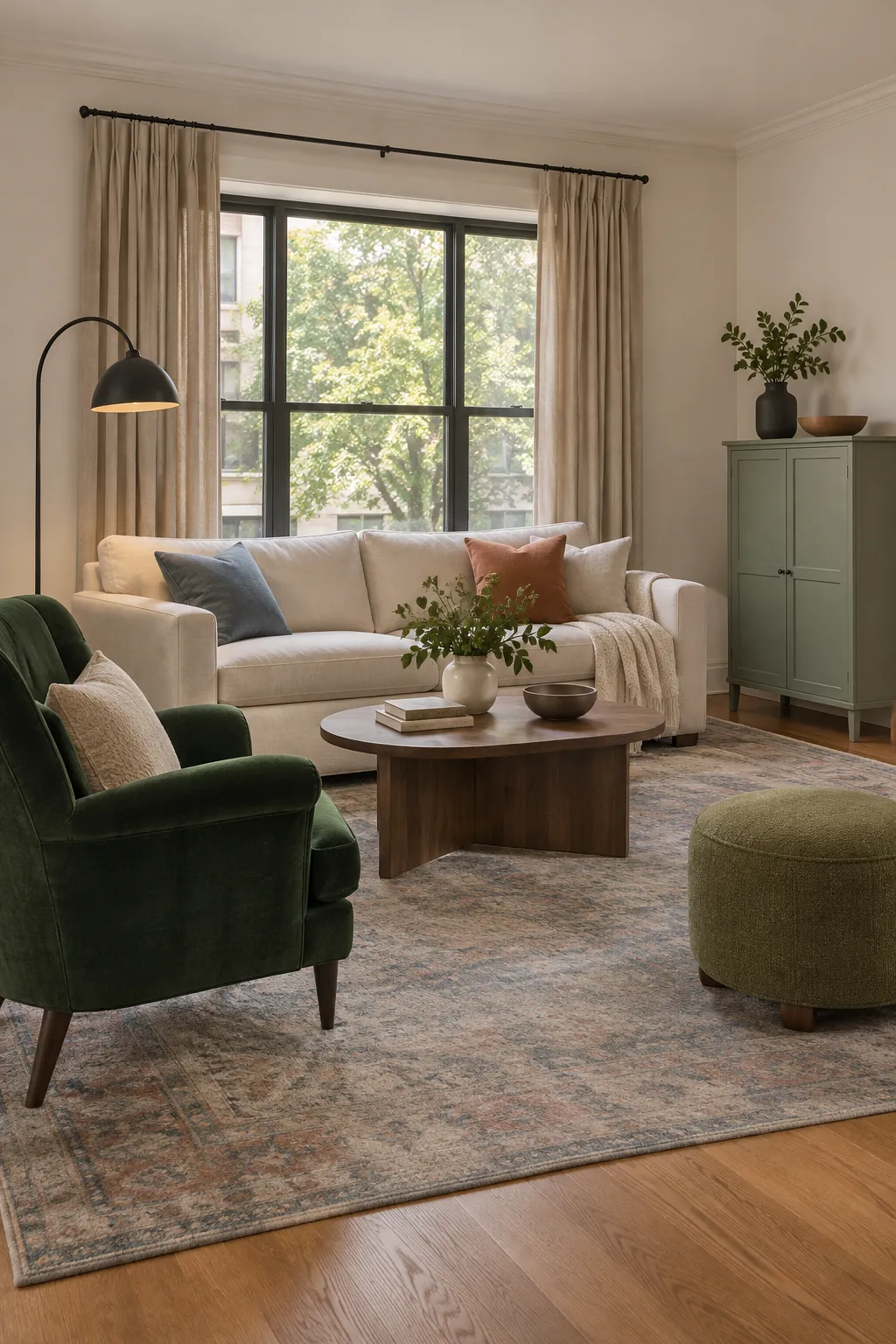
Green furniture can be a sofa, chair, cabinet, table, or painted dresser, so the best companion colors depend on its size and finish. A large upholstered piece needs lighter surrounding surfaces, while a small accent chair or cabinet can support stronger contrast. Start with the green undertone and the fixed floor color, then build a palette that repeats across the room.
Match the Green Undertone
Yellow greens such as olive and moss work naturally with cream, camel, terracotta, and warm wood. Blue greens and emerald tones feel sharper beside cool white, charcoal, navy, and walnut. Muted sage can sit between both groups, which makes it useful as a neutral.
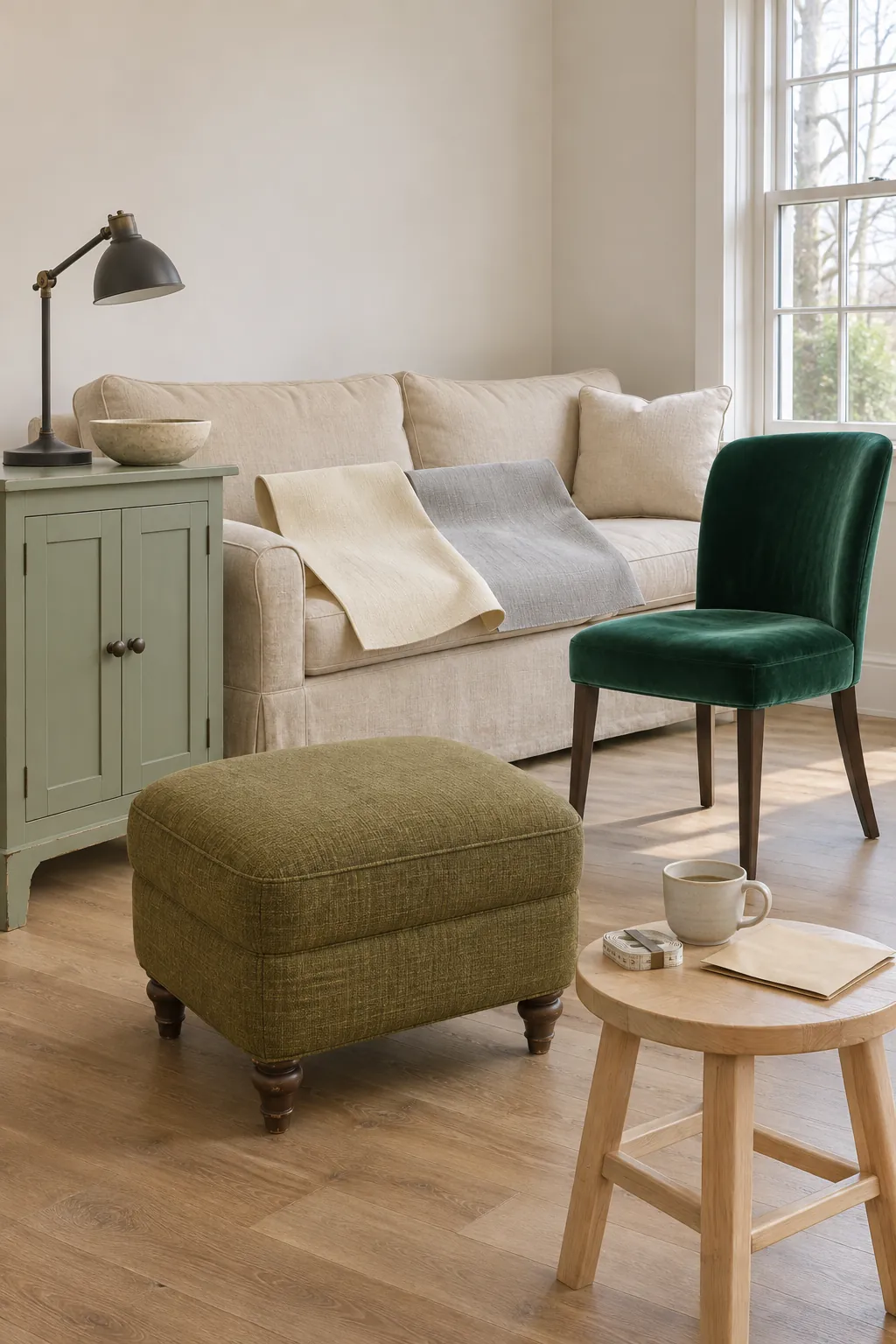
Compare the furniture with plain cream and gray fabric in daylight. One will usually make the green look cleaner. Use that winning neutral for the largest background surfaces, then add only one or two accent colors.
Use a Green Accent Chair as the Focal Point
A single green accent chair looks intentional when another small green note appears elsewhere. Repeat the shade through a rug detail, a ceramic object, or a plant rather than adding another large green seat. The rest of the room can stay cream, taupe, wood, and black.
Choose contrast in value as well as color. A dark forest chair needs a pale rug or wall behind it, while a light sage chair benefits from a walnut table or charcoal lamp. Test a fabric sample in the room and photograph it from the doorway before ordering.
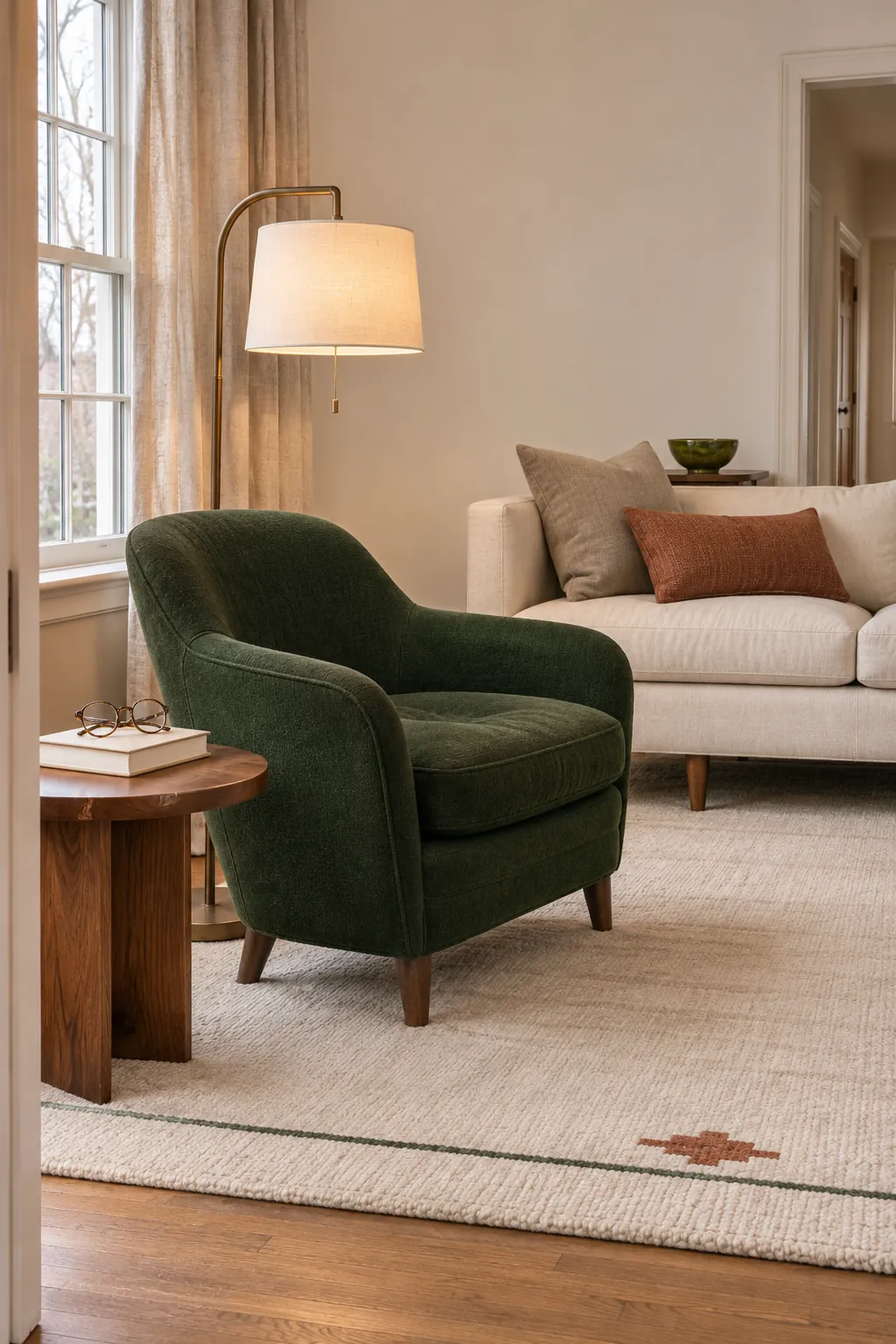
Balance Green Painted Furniture
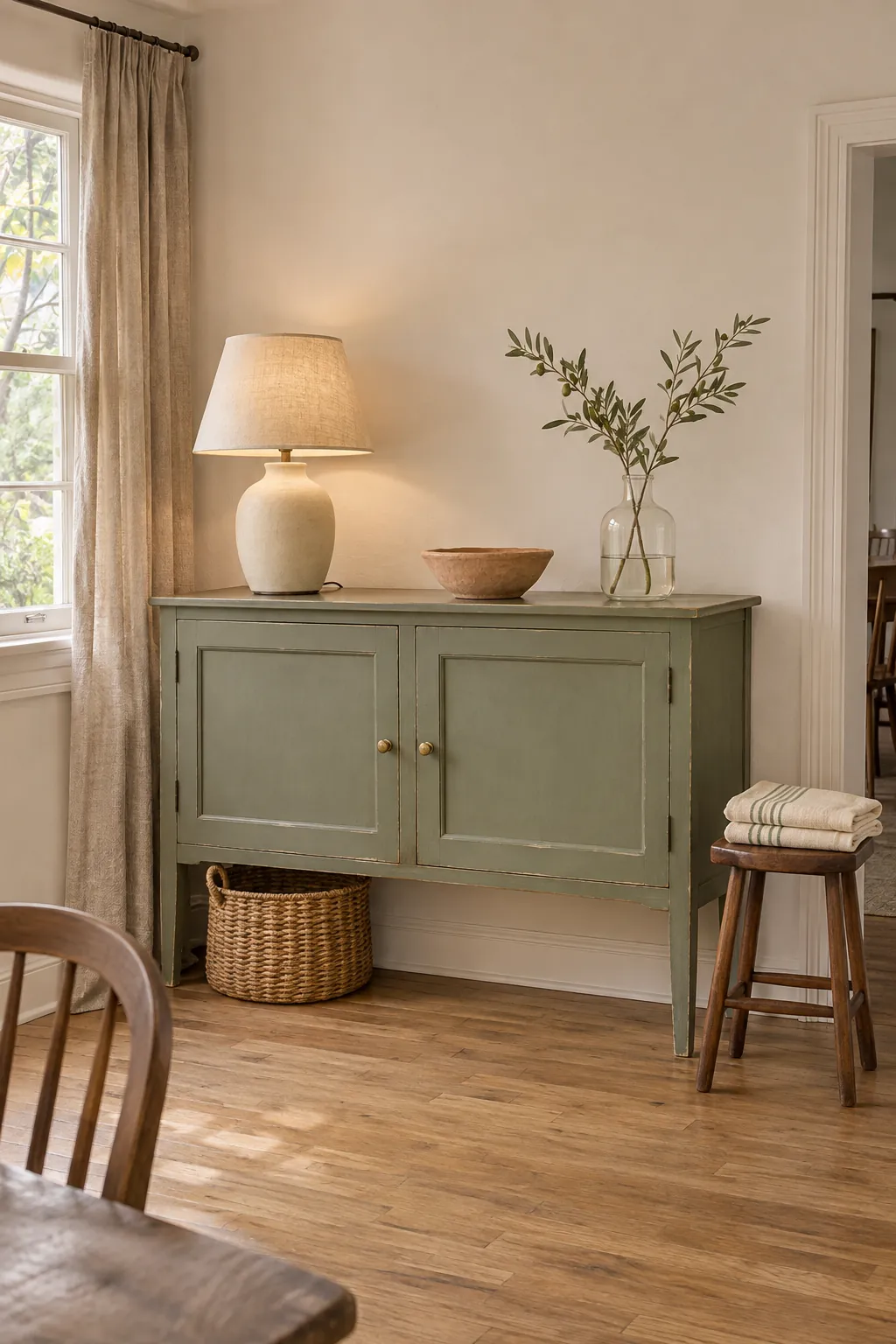
A painted green cabinet or dresser has a harder visual surface than upholstery, so natural texture helps it settle into the room. Add a woven basket, ceramic lamp, linen curtain, or wood mirror. Keep the objects on top limited so the painted form stays clear.
Warm white walls work with most muted greens. Darker painted furniture can also stand against pale blush or soft clay, while bright green usually needs a quieter neutral. Repeat the cabinet color only once in a small textile or decorative detail.
Choose Wood Tones With Green Upholstery
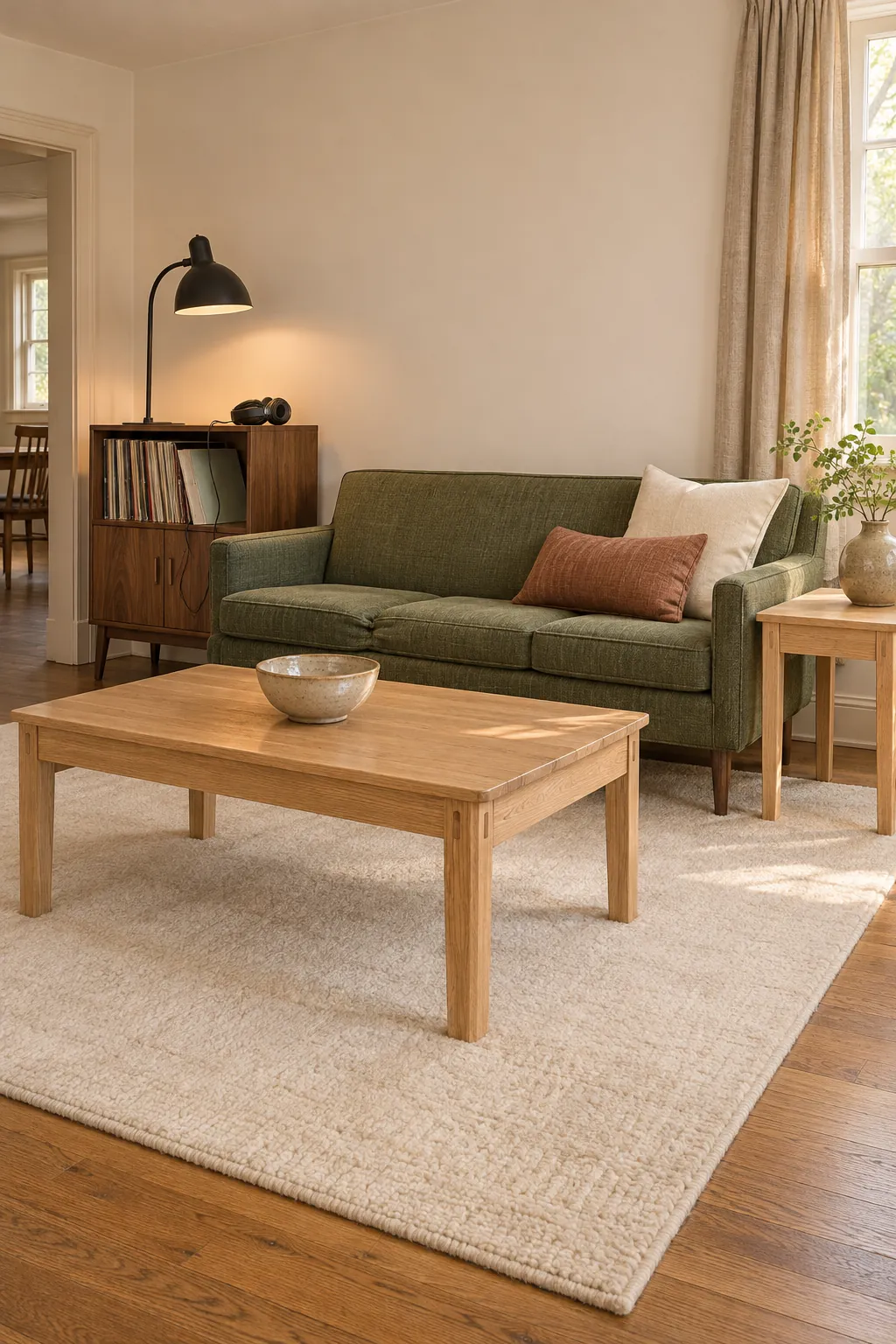
Light maple, birch, and pale oak keep green upholstery casual and airy. Walnut creates a deeper, more tailored look, while medium oak bridges warm green with cream and tan. The wood does not need to match the floor, but its undertone should feel compatible.
Repeat the main wood tone in at least two pieces, then allow one secondary wood in a smaller amount. A rug between furniture and flooring prevents similar browns from blending together. Black metal or aged brass can define the palette without adding another wood.
Let the Rug Connect Different Pieces
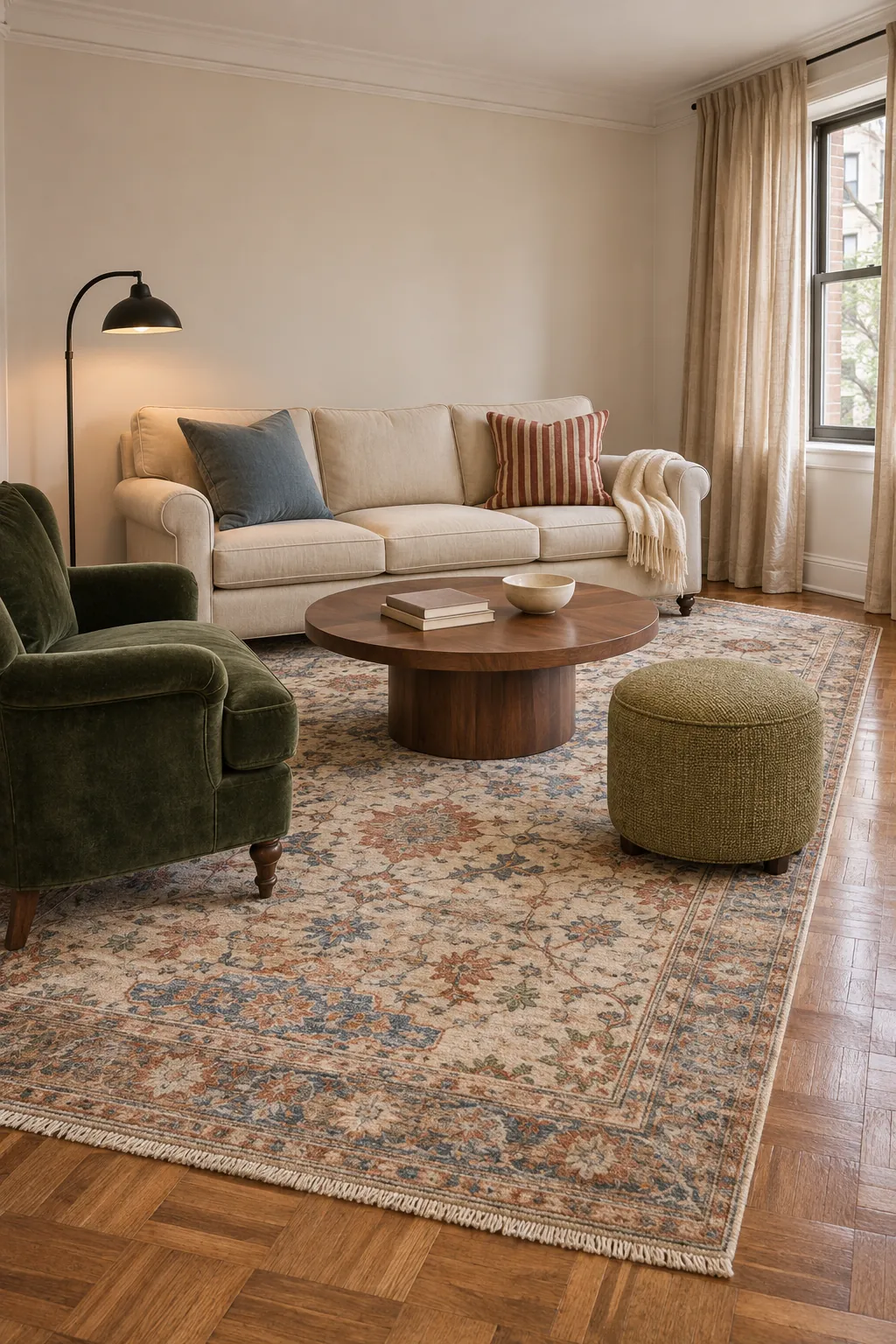
Rugs with green furniture can either calm the room or build the palette. A textured ivory or beige rug gives several green pieces more space. A patterned rug can connect green with rust, blue, cream, or brown, then provide colors for pillows and curtains.
Scale matters more than a perfect color match. The front legs of the main seats should rest on the rug, and the rug should extend beyond the widest furniture. A small floating rug makes separate colors feel even more disconnected.
Finish With Neutral Layers and Repeated Accents
Neutral decor with green furniture works when the surfaces are not all the same. Mix linen, wool, wood, stone, leather, and matte metal across cream, taupe, and warm gray. These textures give the room depth while allowing the green piece to remain prominent.
Repeat each accent color in two or three places at different scales. A blue rug detail can return in one pillow, and a clay bowl can connect to a small stripe in a throw. Stop before every object matches, because the furniture should look collected rather than arranged as a set.