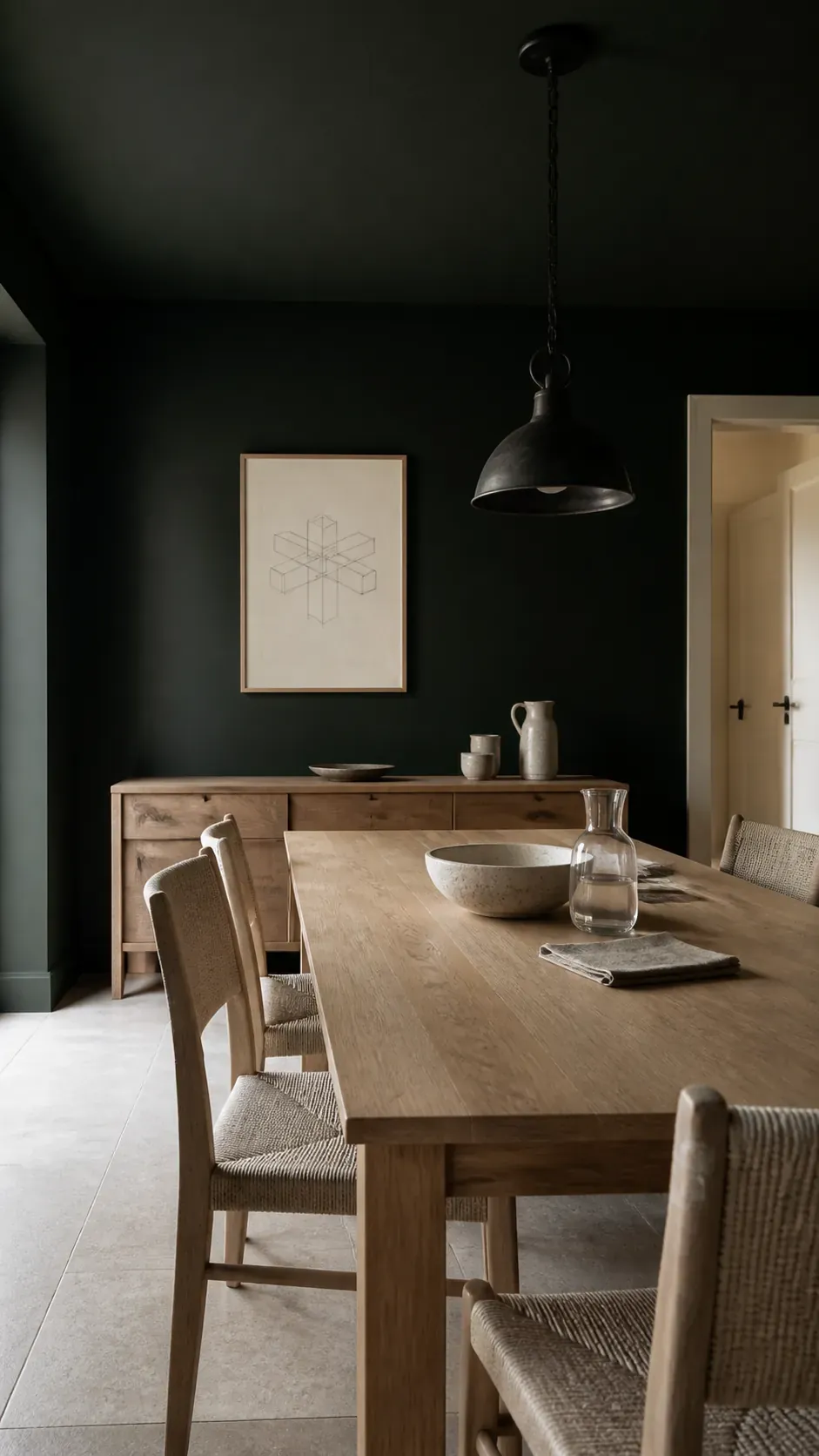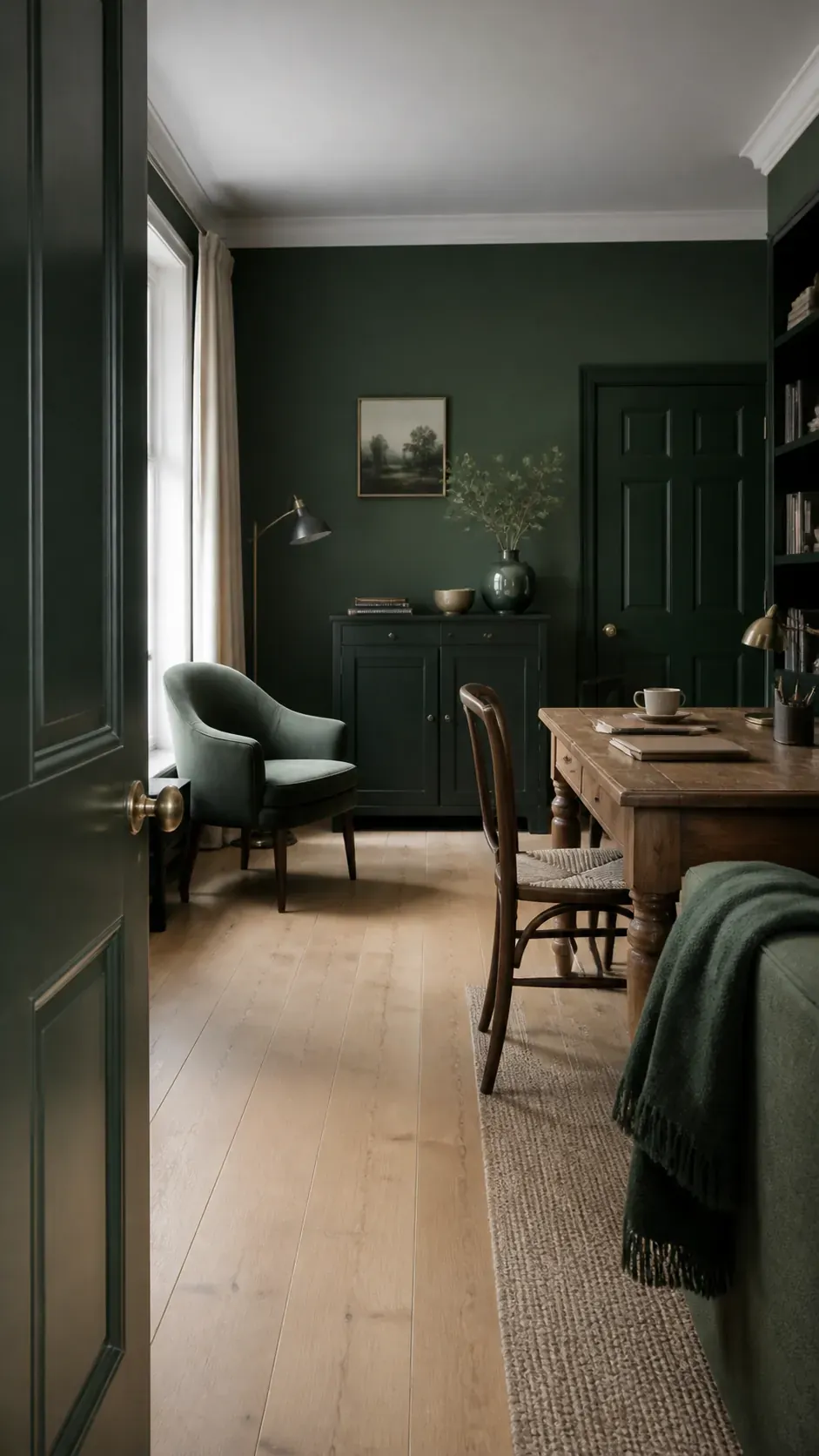
A dark green does not have one fixed name because depth and undertone change what the eye sees. A colour that looks like bottle green in daylight may read almost black at night, while a warmer sample can move toward olive. Use the shade family as a starting point, then confirm it with a large sample beside the room’s permanent materials.
Forest Green
Forest green is the broadest everyday name for a deep natural green that still reads clearly as green. It usually feels balanced rather than strongly blue or yellow, which makes it useful for walls and larger furniture. In bright rooms it appears leafy and grounded, while low light makes it more dramatic. Choose this label when the colour feels natural and recognisably green without a dominant undertone.
Hunter Green
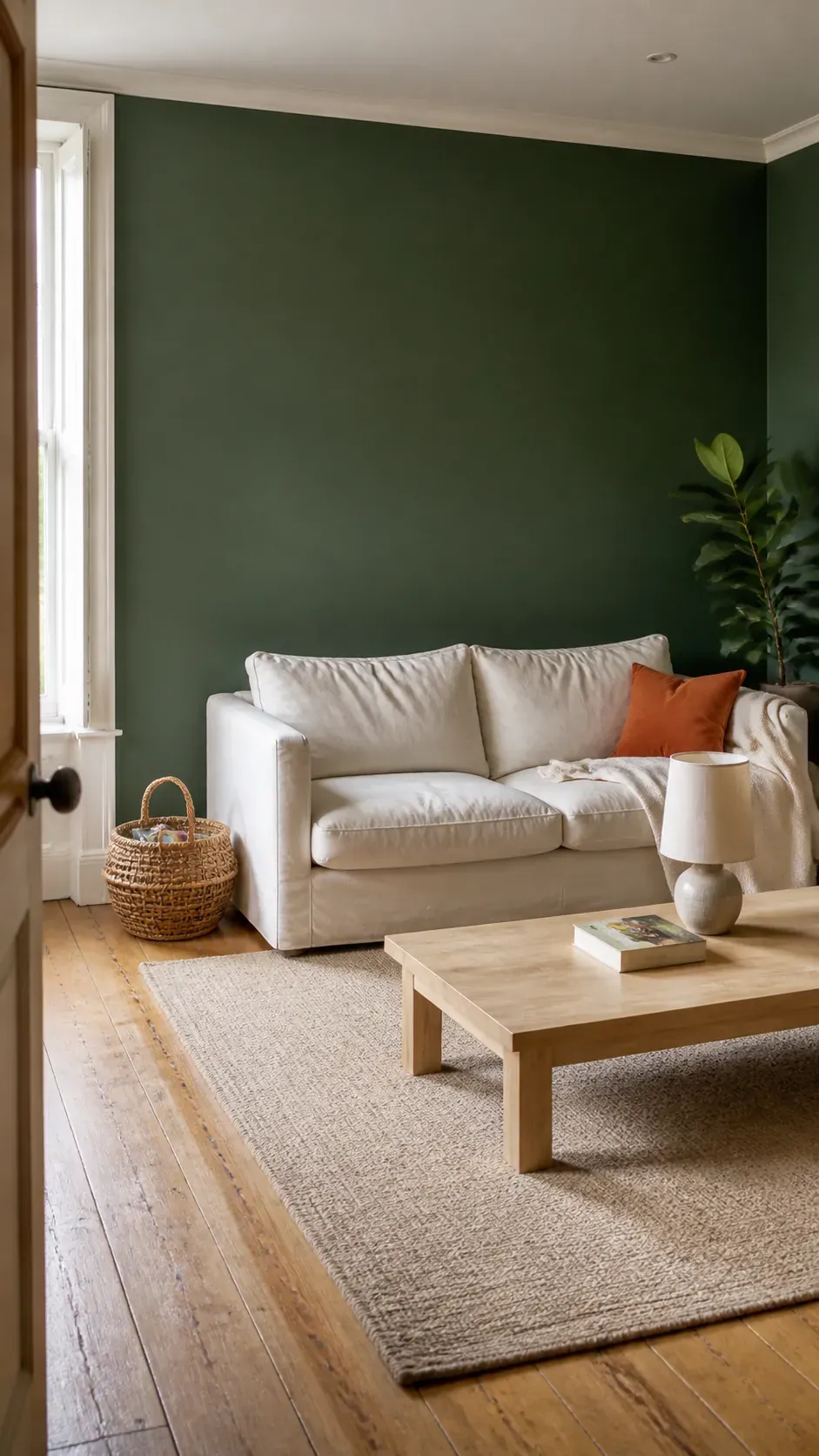
Hunter green is a dark heritage shade that often carries a cool or slightly blue influence. It can look crisp beside cream, brass, and dark wood, especially in traditional rooms. Because brands use colour names differently, one hunter green may be warmer than another. Compare the actual dried paint rather than trusting the label, particularly when matching curtains or furniture.
Bottle Green
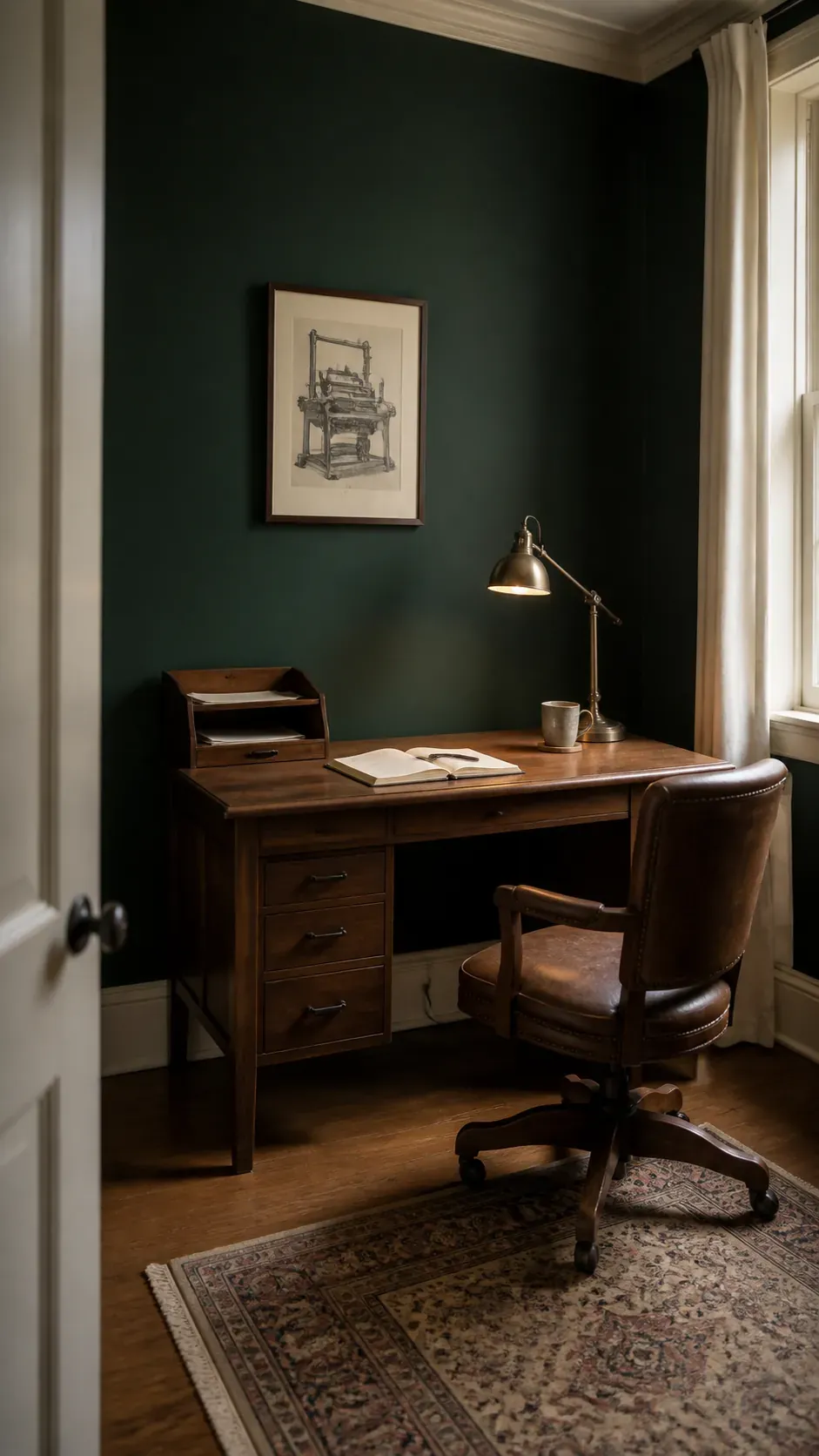
Bottle green describes a rich dark green with a noticeable blue lean, similar to thick coloured glass. It feels polished on cabinets, velvet, and painted joinery because the cool undertone gives it clarity. Warm light can soften that blue influence, while cool daylight makes it more obvious. Use bottle green when the shade looks jewel like but deeper than emerald.
British Racing Green
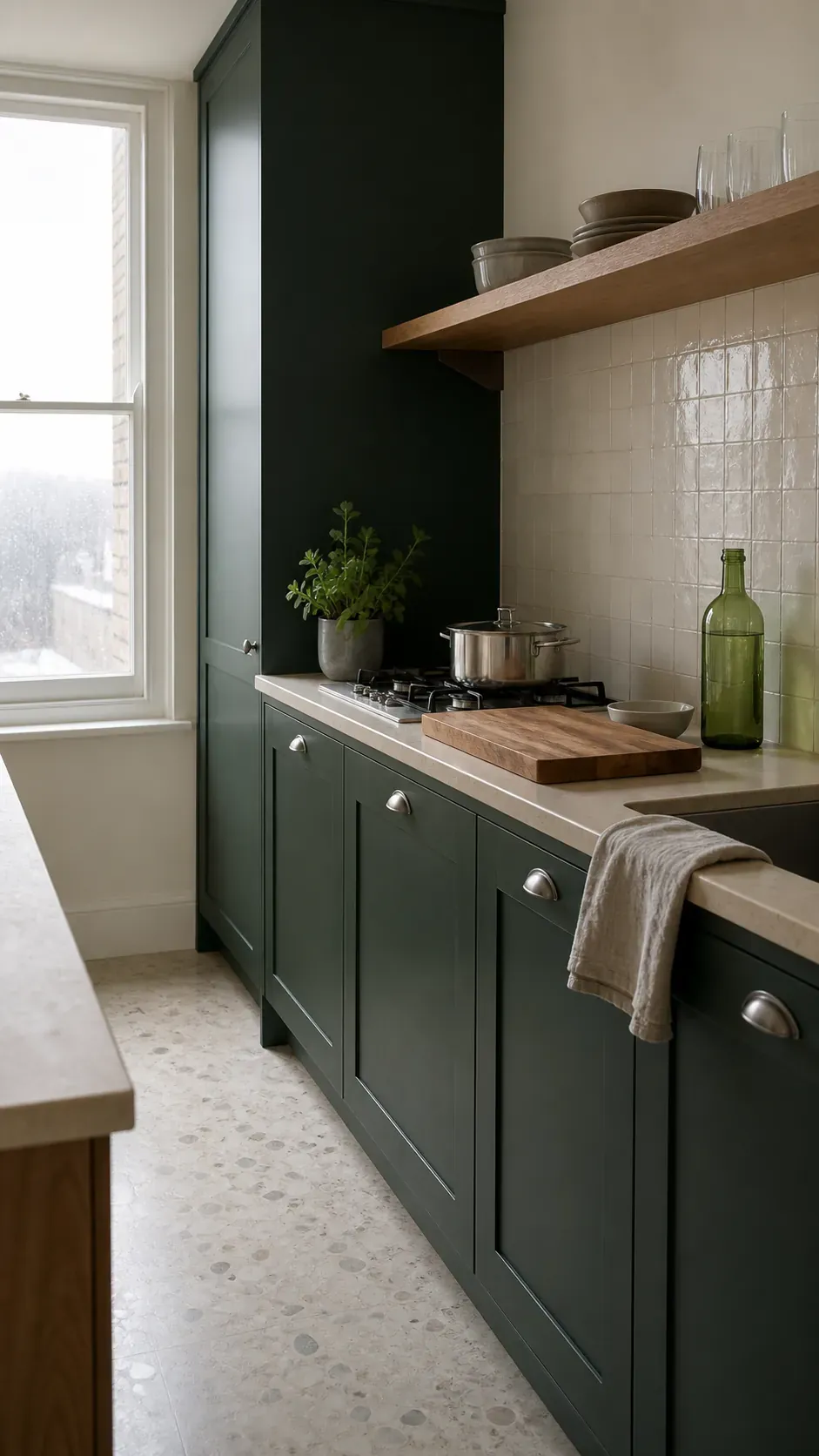
British racing green is extremely deep and can approach black in dim conditions. The name suggests a classic, formal colour, but the exact tone has varied historically and across modern products. It suits doors, panelling, and compact accent pieces when the surrounding surfaces offer enough light. Reserve this name for a green whose darkness is part of its character, not merely a medium forest shade.
Pine Green
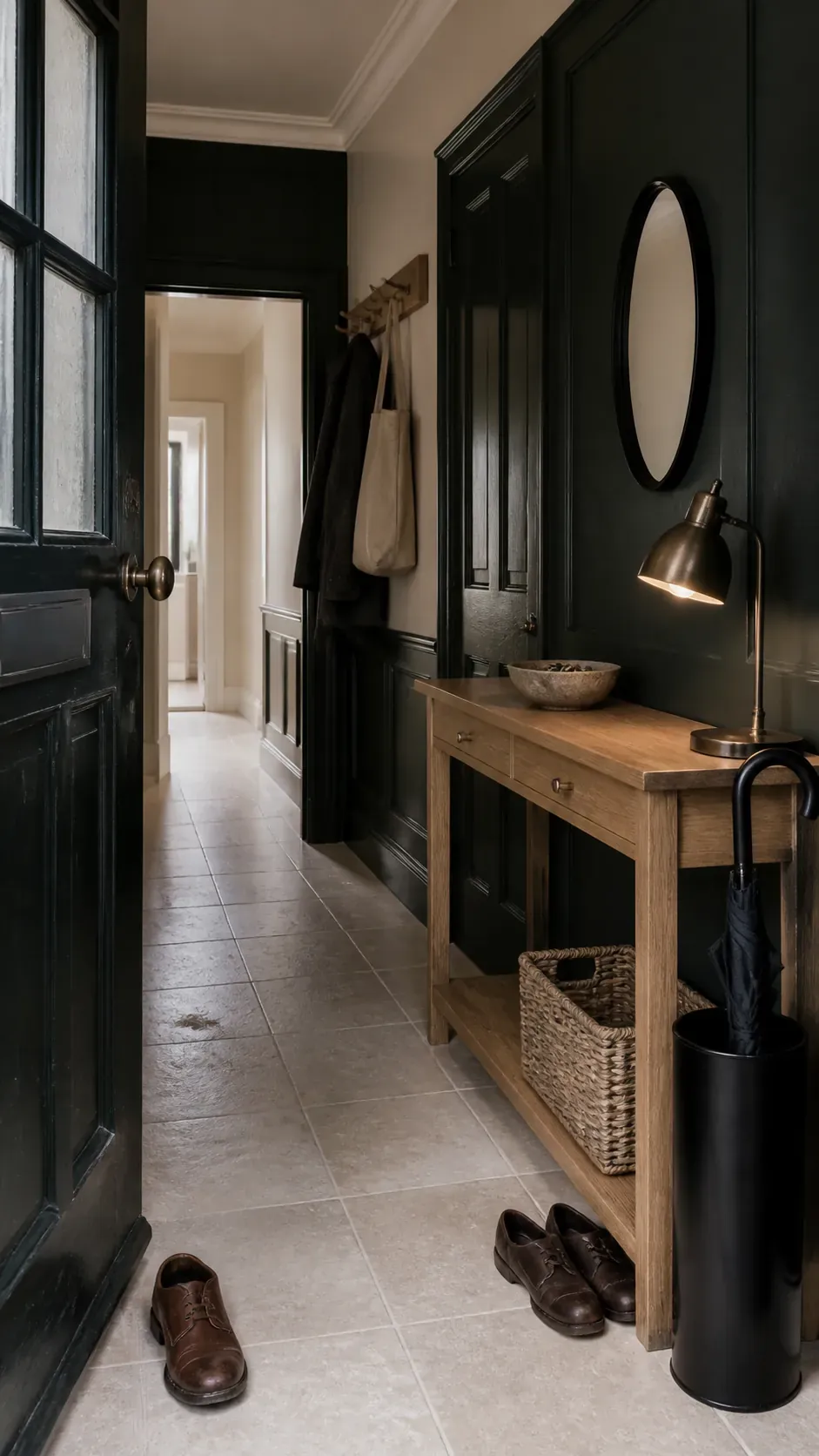
Pine green sits near the boundary between green and deep teal because it contains a cool blue note. It is generally clearer and slightly fresher than black green, making it effective in bedrooms and bathrooms with neutral stone. The shade can change sharply beside warm timber, so test those materials together. Call it pine when the colour recalls cool evergreen needles rather than moss or olive leaves.
Black Green
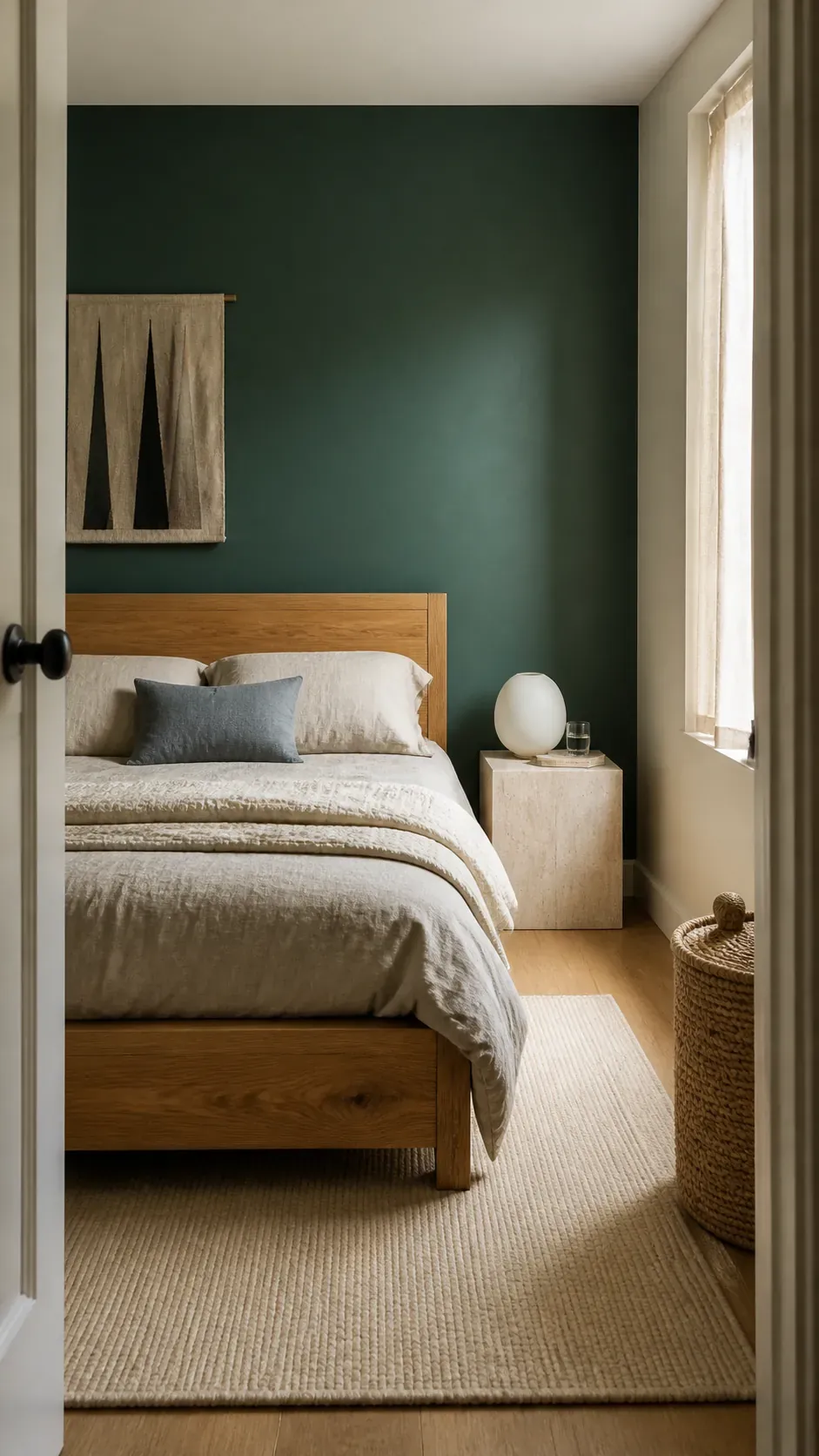
Black green is the practical description for a shade so deep that green appears mainly where light strikes it. It creates a strong backdrop for pale textiles, natural wood, and aged metal, but it can merge with dark furniture. Large sample boards reveal whether the room has enough daylight to keep the undertone visible. If the surface reads black first and green second, black green is the clearest name.