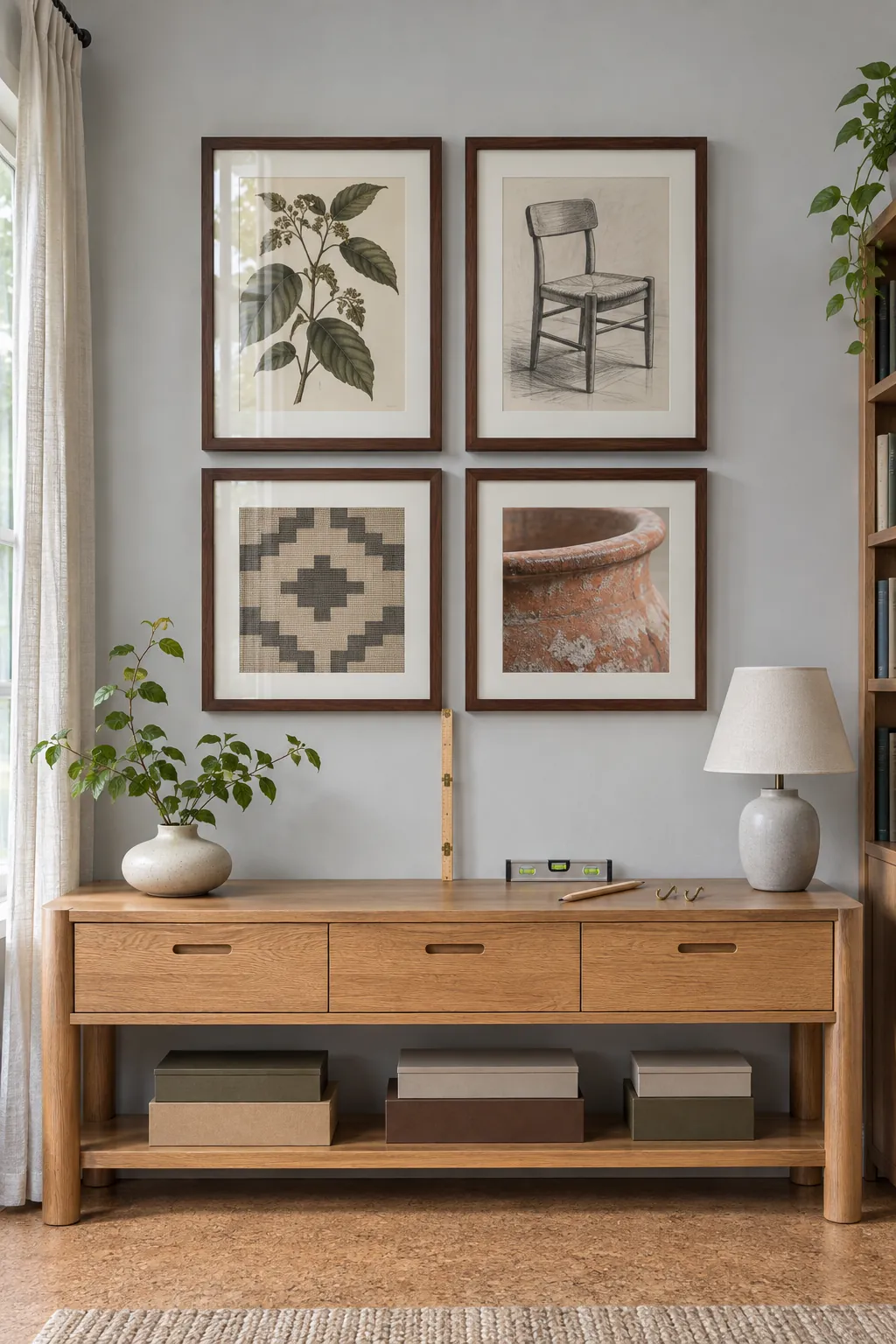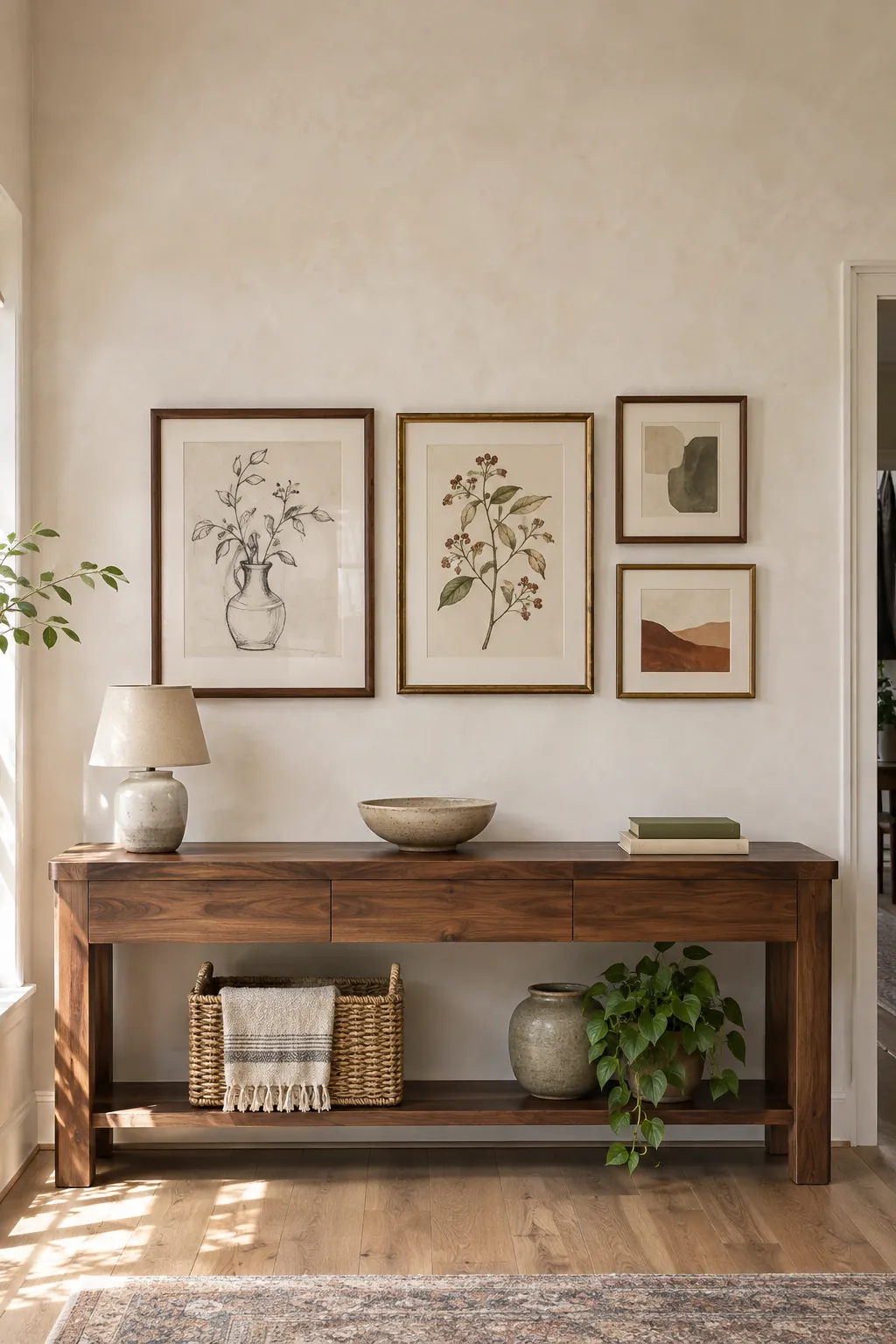
A console can be exactly the right size for a wall and still look unfinished when the art above it is too narrow, too high, or broken into pieces that do not read as one group. The useful measurement is not the width of one frame. It is the total visual width of the full arrangement.
For a 72 inch console, aim for an art arrangement about 48 to 54 inches wide. That range is roughly two thirds to three quarters of the furniture width. It gives the console and the art a clear relationship without making the wall feel crowded.
Start With a 48 to 54 Inch Total Width
Measure the outer edge of the complete arrangement, including gaps between frames. A group that is 48 inches wide leaves 12 inches of console showing on each side. A 54 inch group leaves 9 inches on each side, which gives the display a fuller and more dramatic scale.
Use the narrower end when the console has tall lamps, branches, or other objects that rise beside the frames. Use the wider end when the surface styling is low and the wall needs a stronger focal point. Painter tape on the wall can show both outlines before you buy or hang anything.
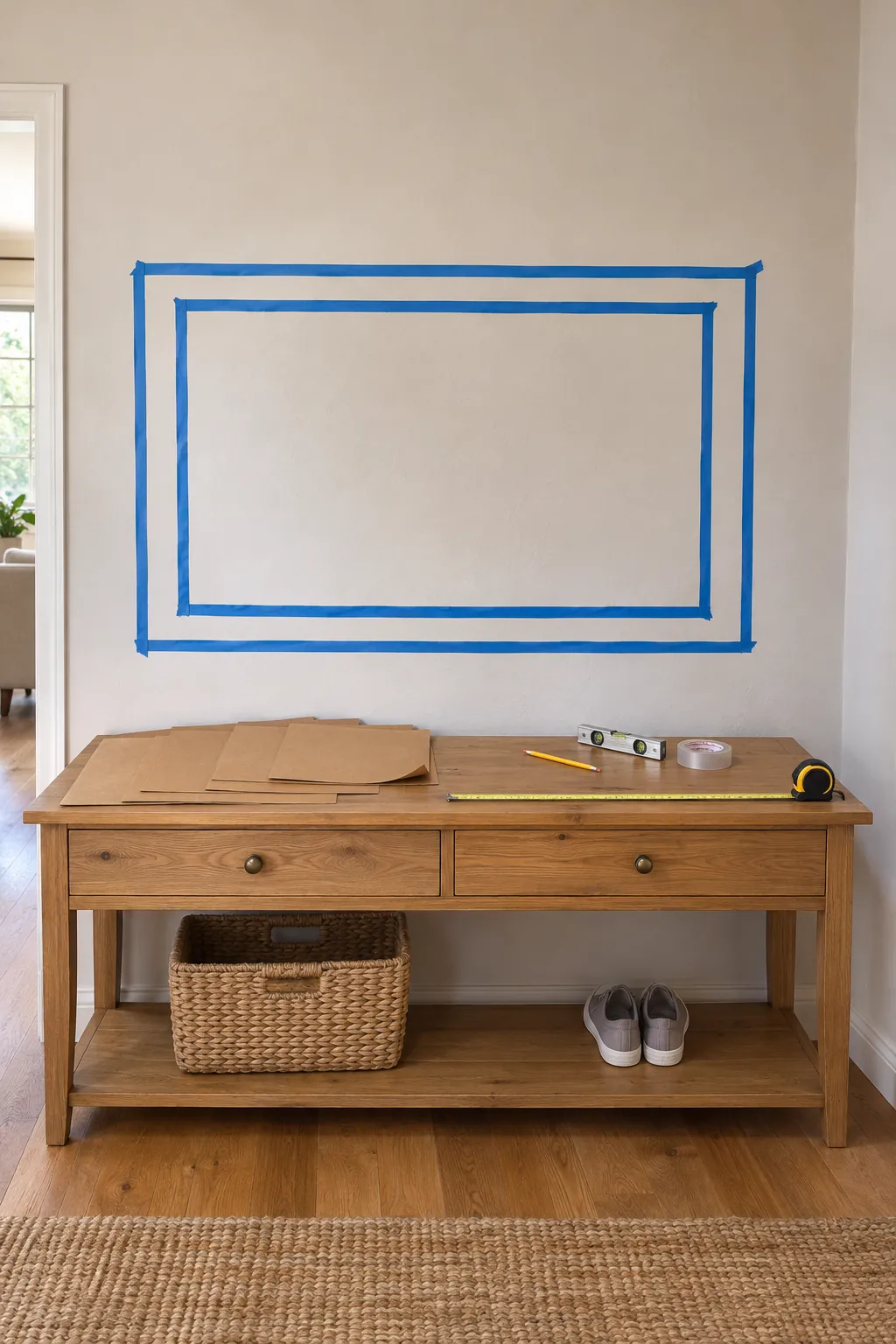
Choose One Large Frame for a Calm Look
A single frame around 48 by 36 inches is the simplest choice. A 50 by 40 inch frame also works when the wall is broad and the console has little visual weight. These dimensions refer to the outside of the frame, so check the finished size rather than the print size.
Landscape orientation usually follows the long line of the console more naturally than a tall portrait. Keep the image itself bold enough to hold that scale. A tiny subject floating inside a very wide mat can still feel weak even when the frame measures correctly.
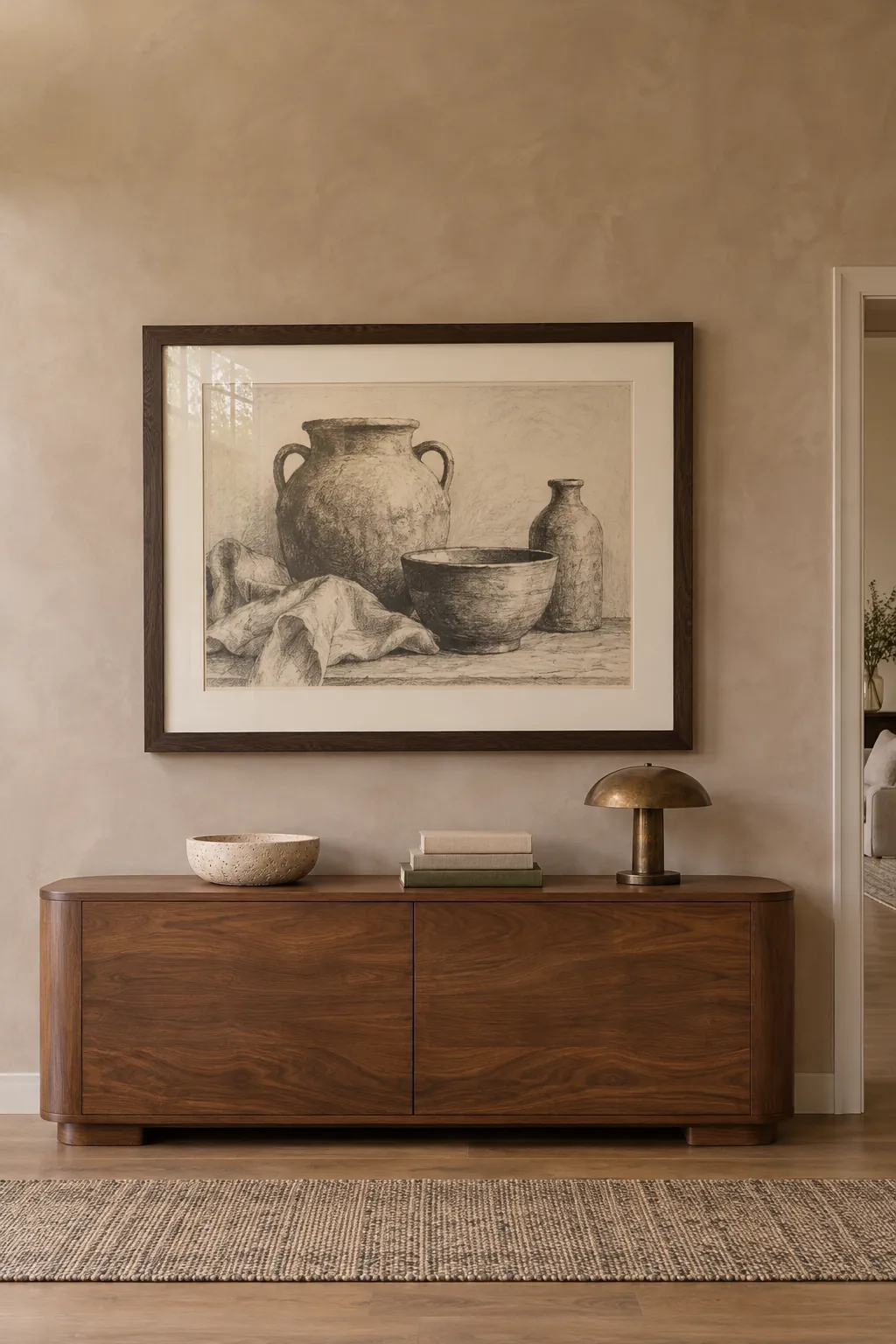
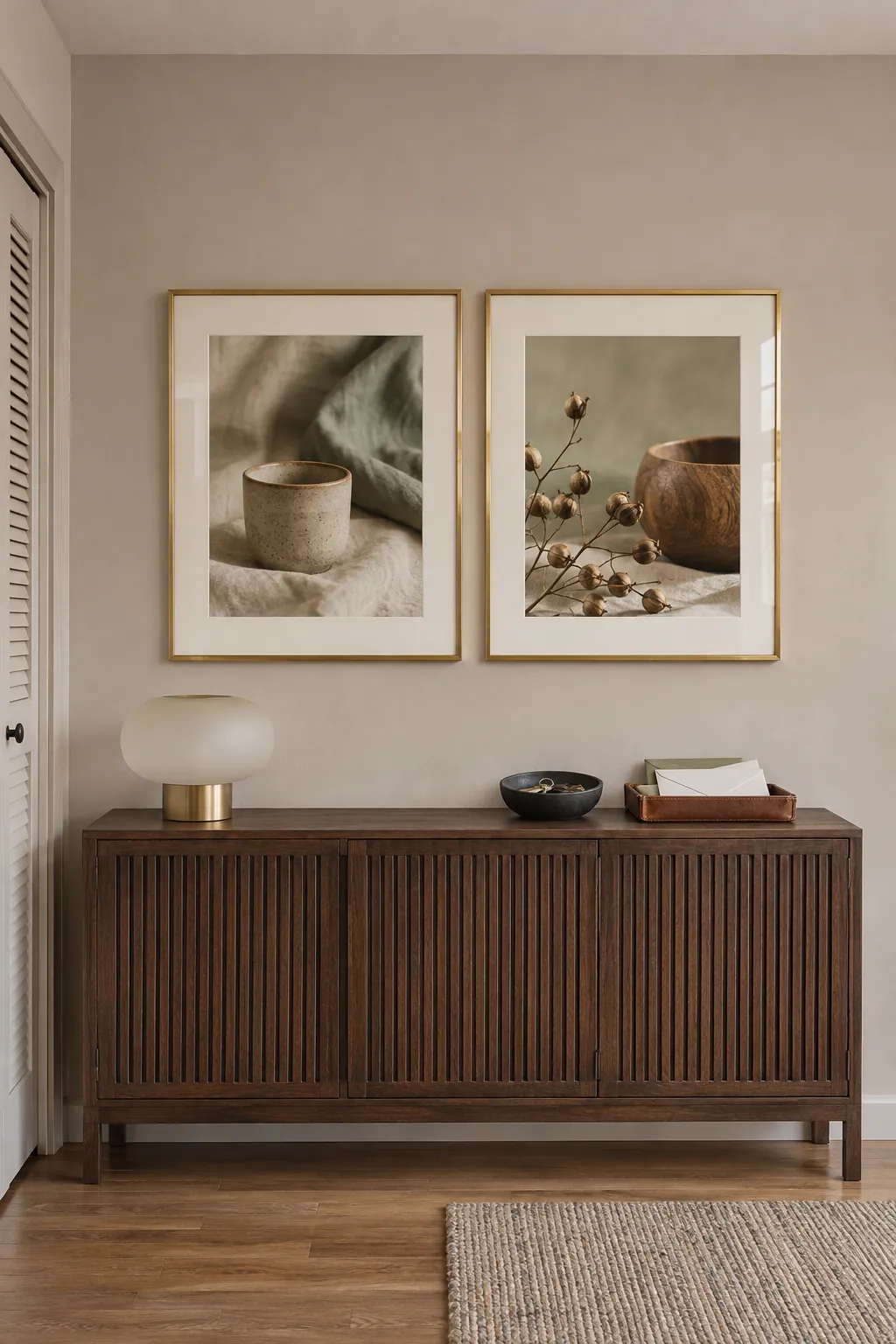
Use Two Frames for Easy Symmetry
Two matching frames with outside dimensions near 24 by 30 inches create an easy pair. Place them about 3 inches apart and the combined width becomes about 51 inches. Frames around 20 by 28 inches can also work, but a wider gap will not compensate for art that already looks too small.
A pair is useful when you want balance but do not want one oversized piece. Match the frame profile and mat width so the pair reads as a single composition. The images can differ, provided they share a clear color or subject connection.
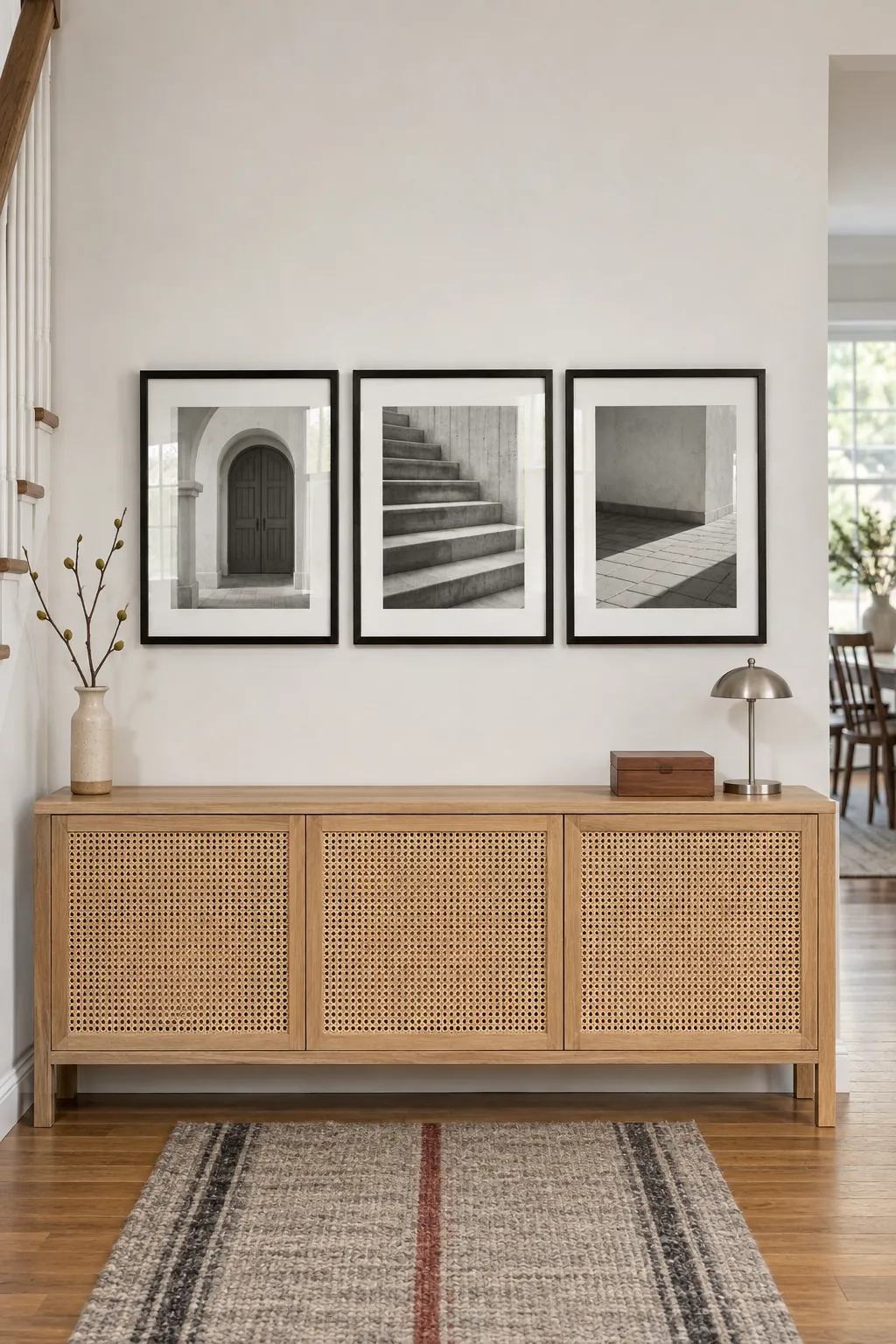
Build a Three Frame Row With Controlled Gaps
Three frames around 15 by 20 inches make a compact row. With two gaps of about 3 inches, the total width is 51 inches. Three frames around 16 by 20 inches with 2 inch gaps total 52 inches, which sits close to the center of the ideal range.
Keep the frame tops and bottoms aligned because small errors become obvious in a straight row. Lay the frames face down on paper, mark the hanging points, then transfer the full paper guide to the wall. This avoids measuring each hook from a different reference point.
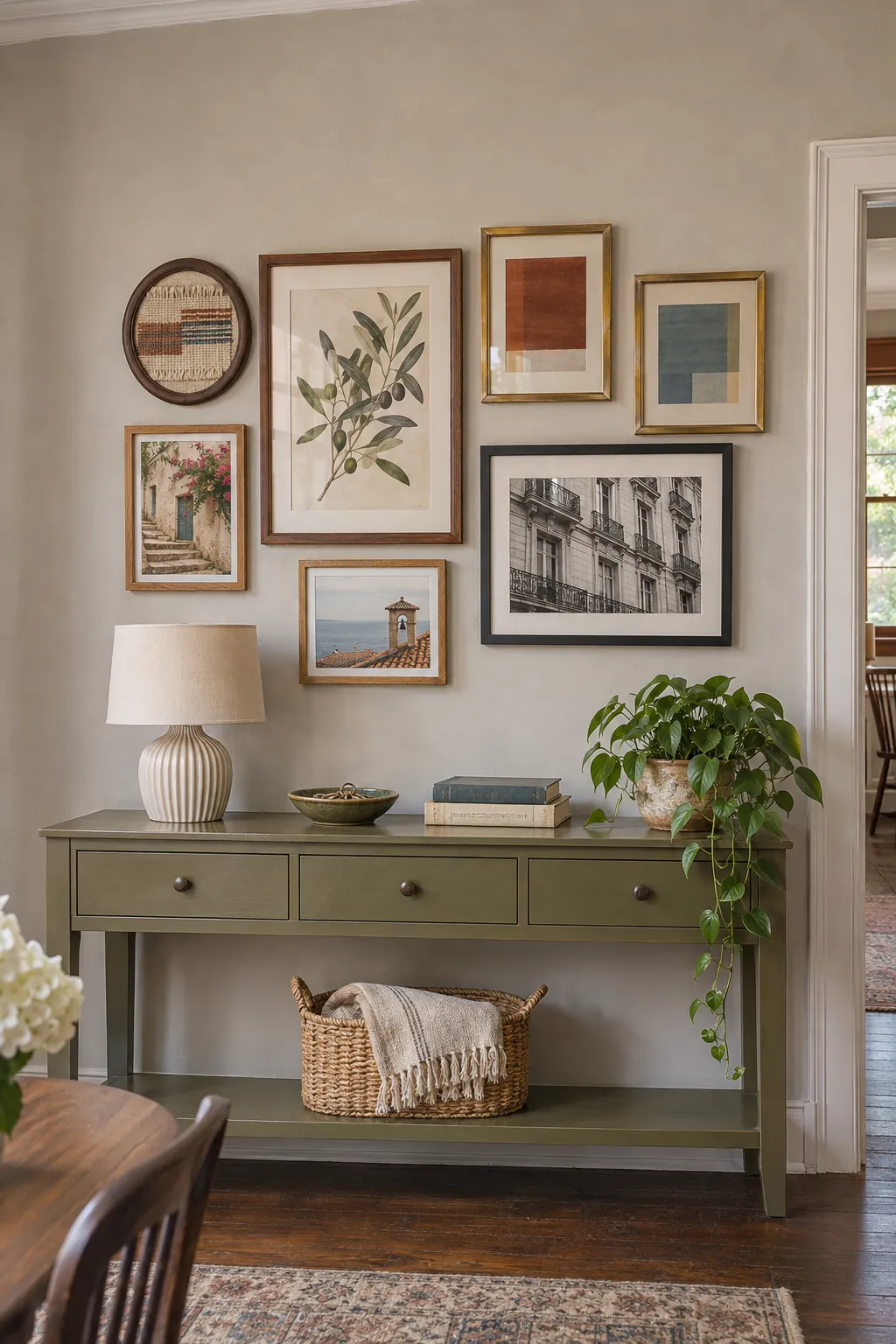
Treat a Gallery Wall as One Large Shape
A mixed gallery wall should still fit inside the same 48 to 54 inch envelope. Start with the largest frame slightly away from the exact center, then balance it with two or three smaller pieces. Keep most gaps between 2 and 3 inches so the group feels connected.
Check the outer silhouette before adjusting individual pieces. A group can have perfect gaps and still lean too far to one side. Photograph a paper layout on the floor, then look at the small screen image because the reduced view makes imbalance easier to notice.
Set the Bottom Edge 6 to 10 Inches Above the Console
Place the bottom of the frame group about 6 to 10 inches above the console surface. The smaller distance creates a connected furniture vignette. The larger distance gives room for modest objects without making the art float away from the console.
Measure from the tallest permanent object on the console as well as from the furniture itself. Leave visible breathing room around a lamp or vase, but do not lift the whole arrangement simply to clear one temporary decoration. Center the group over the console, check it from the main doorway, then confirm that the top does not crowd nearby trim or a low ceiling.