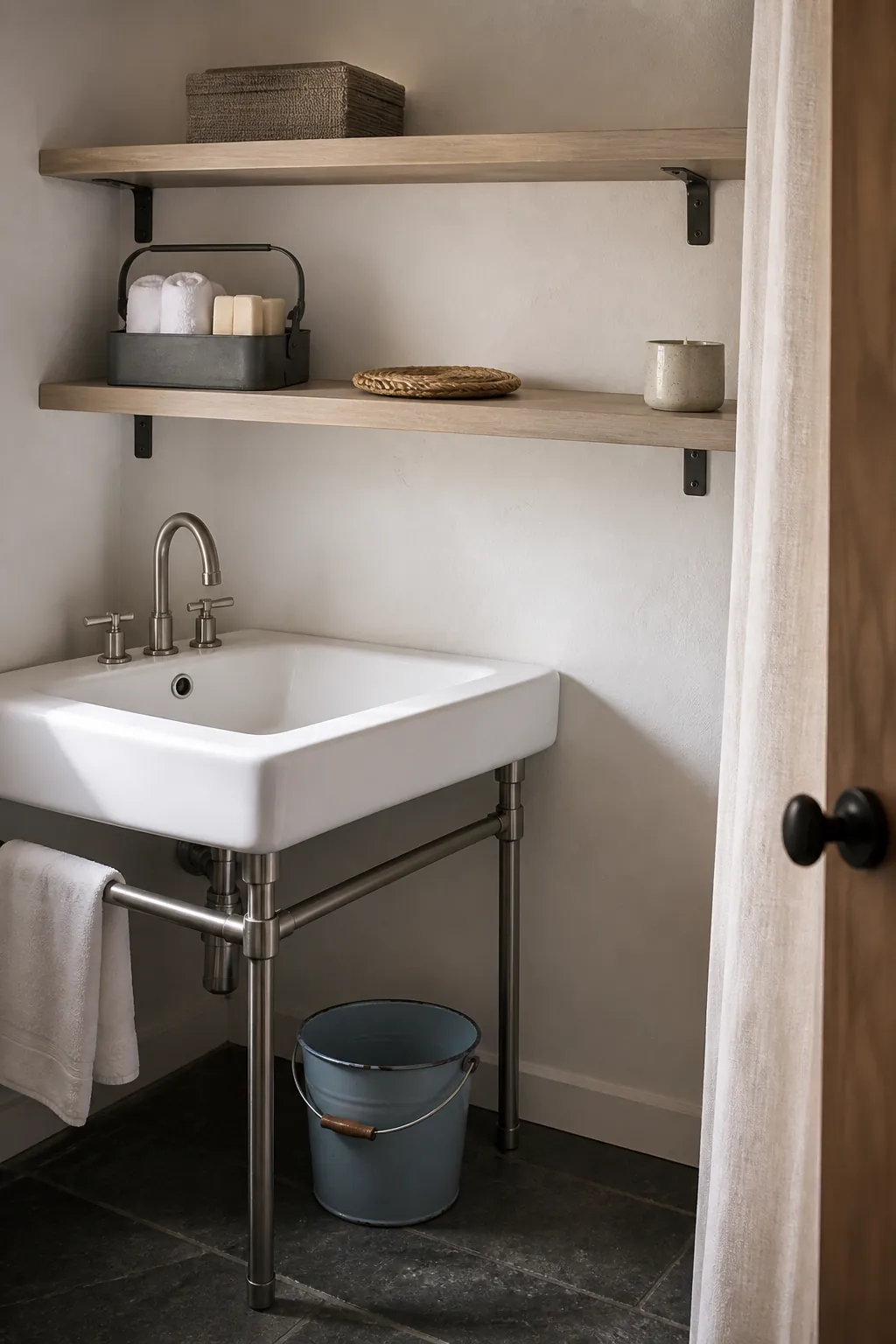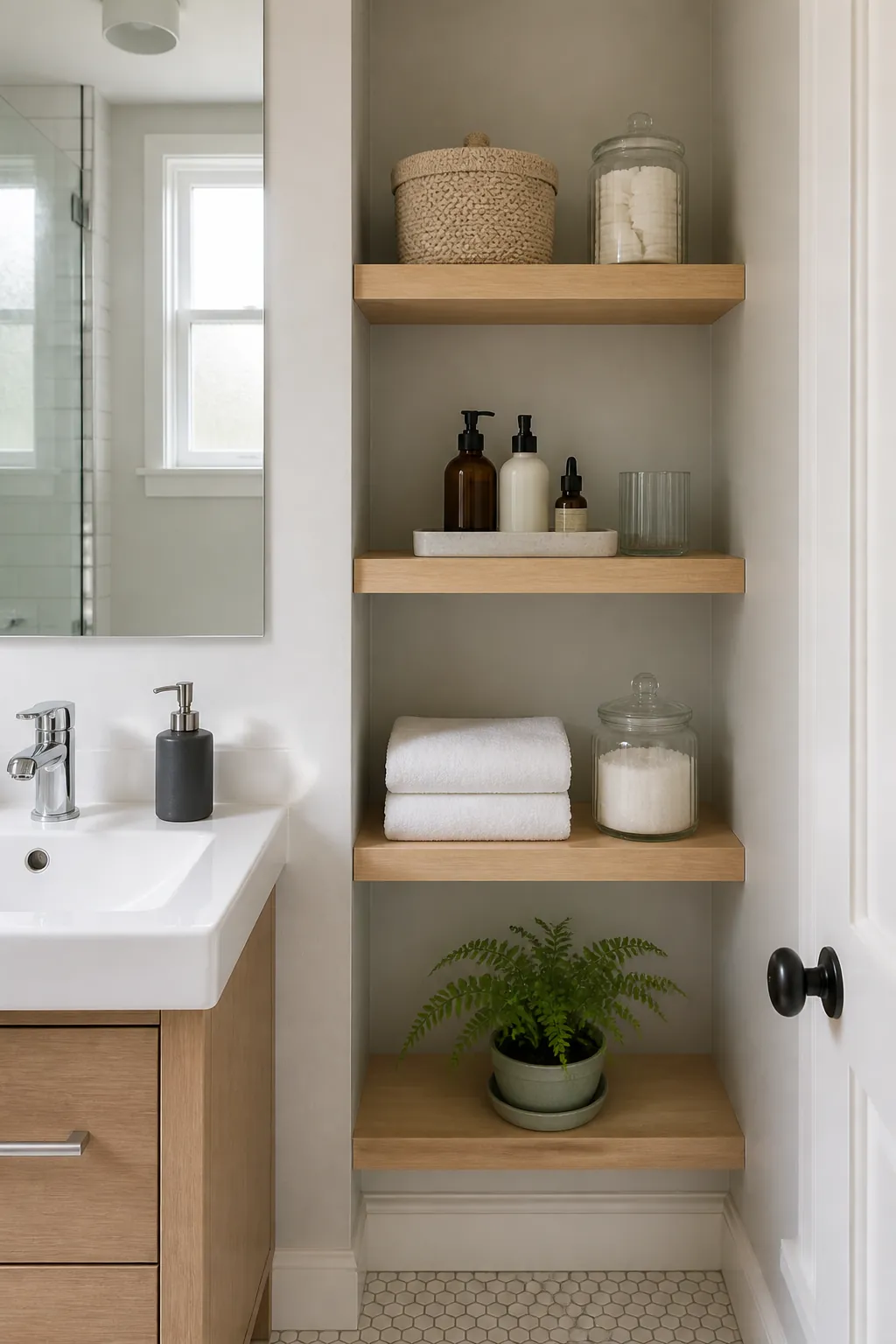
Bathroom shelves work best when they reduce the number of decisions you make during a rushed morning. The right objects are easy to reach, simple to clean, and contained well enough that packaging does not take over the room. Before adding decor, decide which supplies genuinely need to live outside a drawer or cabinet.
Put Daily Essentials at the Easiest Reach
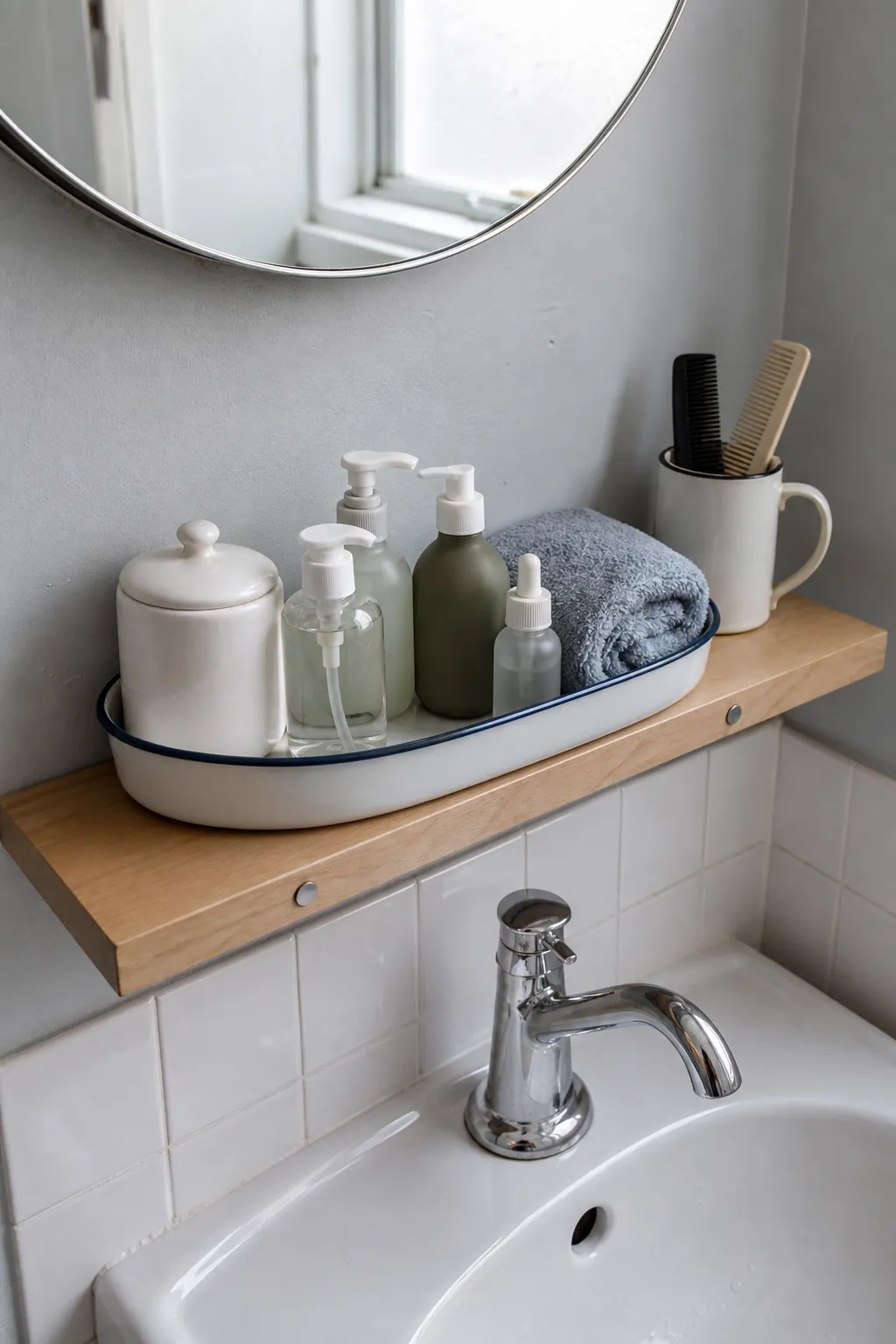
Reserve the shelf between waist and shoulder height for items used every day. Hand soap refills, skin care, cotton pads, and a clean washcloth belong here only when their containers are stable and easy to wipe. Group small bottles in a shallow tray so one accidental bump does not scatter them.
Keep medicine, razors, and chemical cleaners in secure storage that suits the people using the room. A shelf should improve access without creating a safety problem. If an item needs its original directions or child resistant packaging, do not decant it for appearance.
Display Only the Towels That Will Be Used Soon
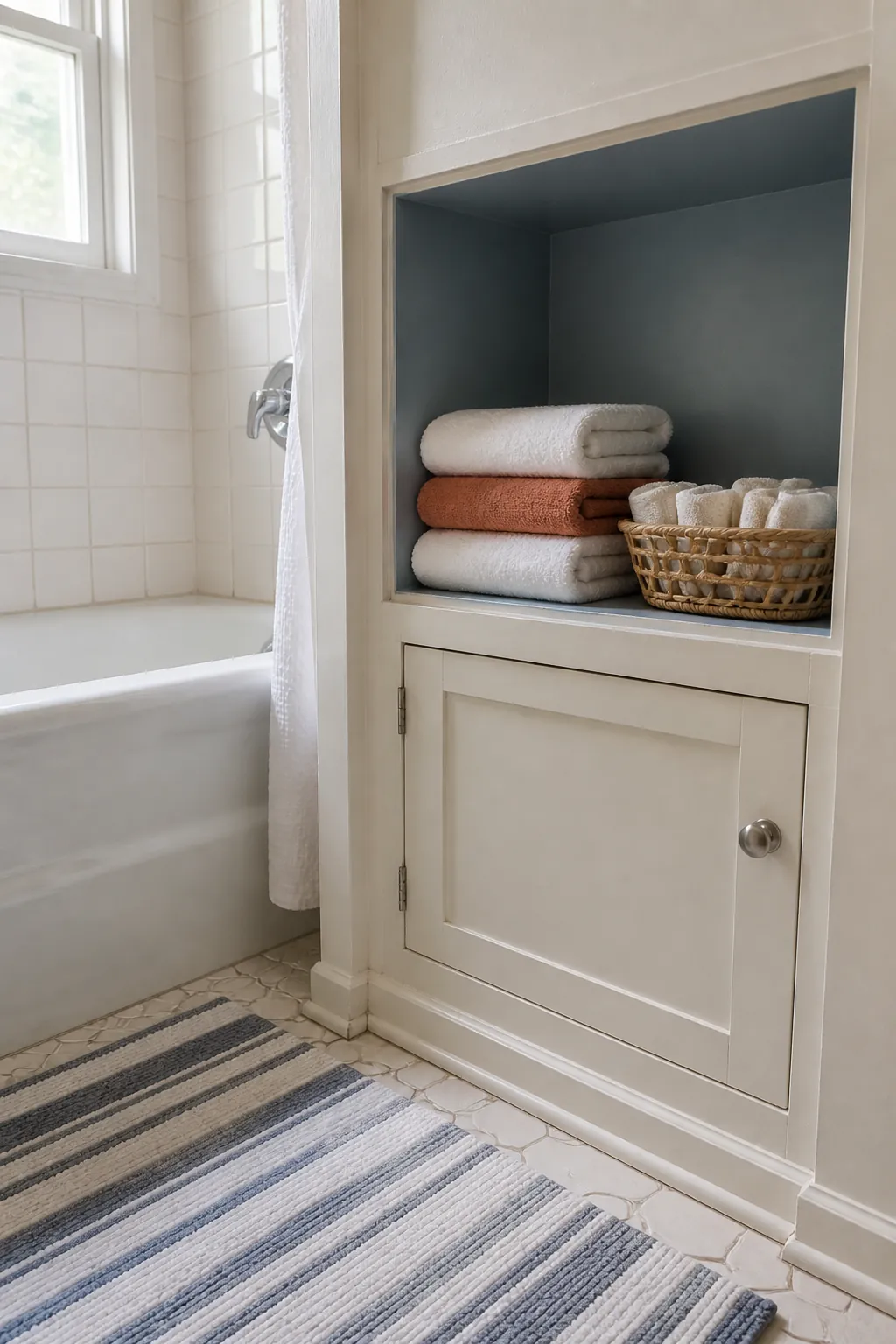
A folded towel display adds softness, but exposed fabric also collects dust and humidity. Keep a small rotation of hand towels or washcloths on the shelf and store the rest behind a door when possible. Matching the visible fold depth makes an ordinary stack look calm without turning it into hotel staging.
Roll towels only when the shelf is deep enough to prevent them from shifting forward. A low basket gives small washcloths more stability and can be lifted away for cleaning. Skip tall piles that are difficult to remove without disturbing the whole arrangement.
Use Clear Jars for Simple Dry Supplies
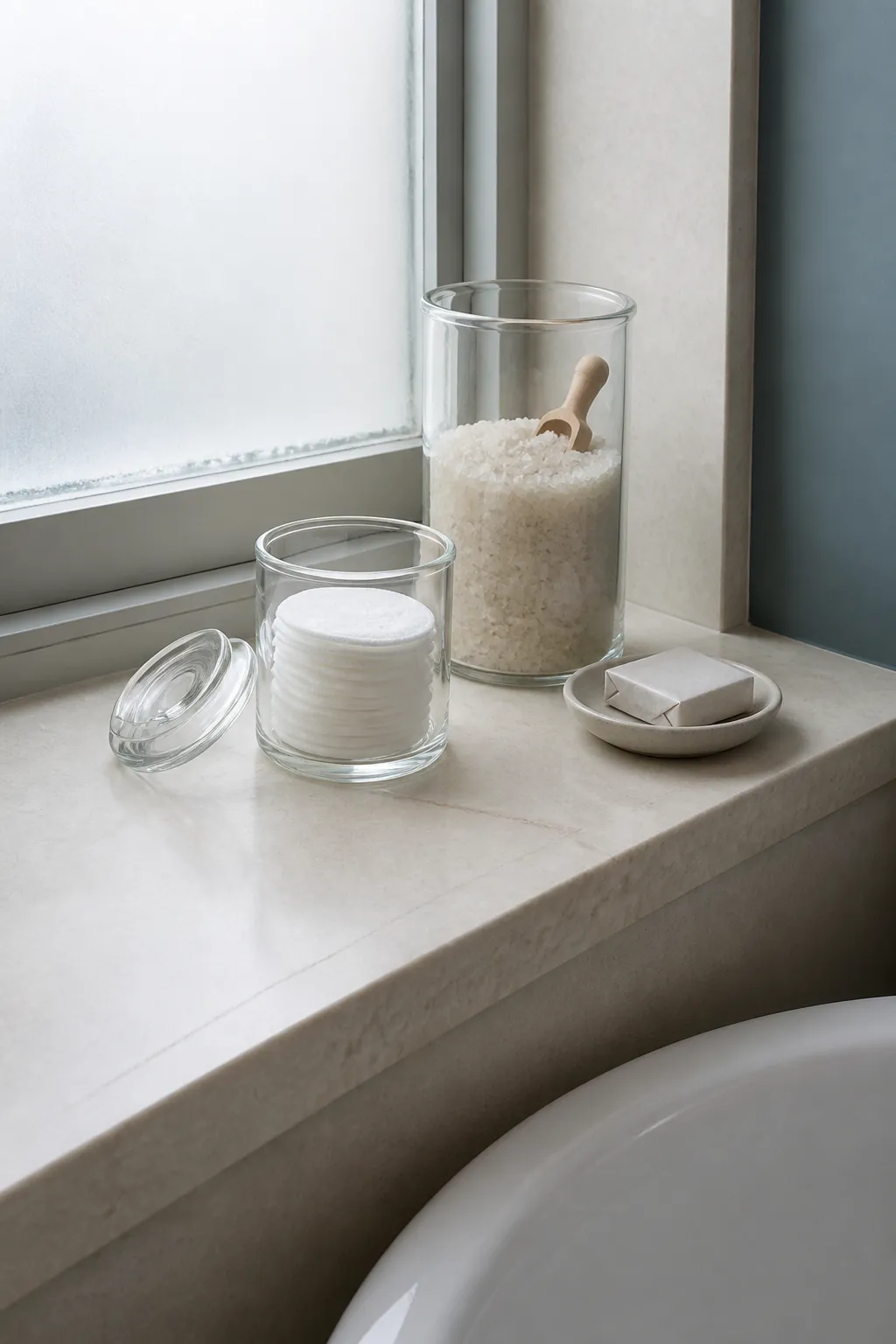
Apothecary jar storage is useful for cotton rounds, bath salts, and other dry supplies that are safe to identify at a glance. Choose wide openings that fit your hand and lids that lift without forcing you to hold the jar in place. Keep glass away from narrow ledges or any spot where it can fall into a sink or toilet.
Two jars are usually easier to read than a full row of identical containers. Vary their height slightly and leave open surface around them. The clear material then feels light instead of creating another wall of stored objects.
Hide Refills in Fitted Baskets
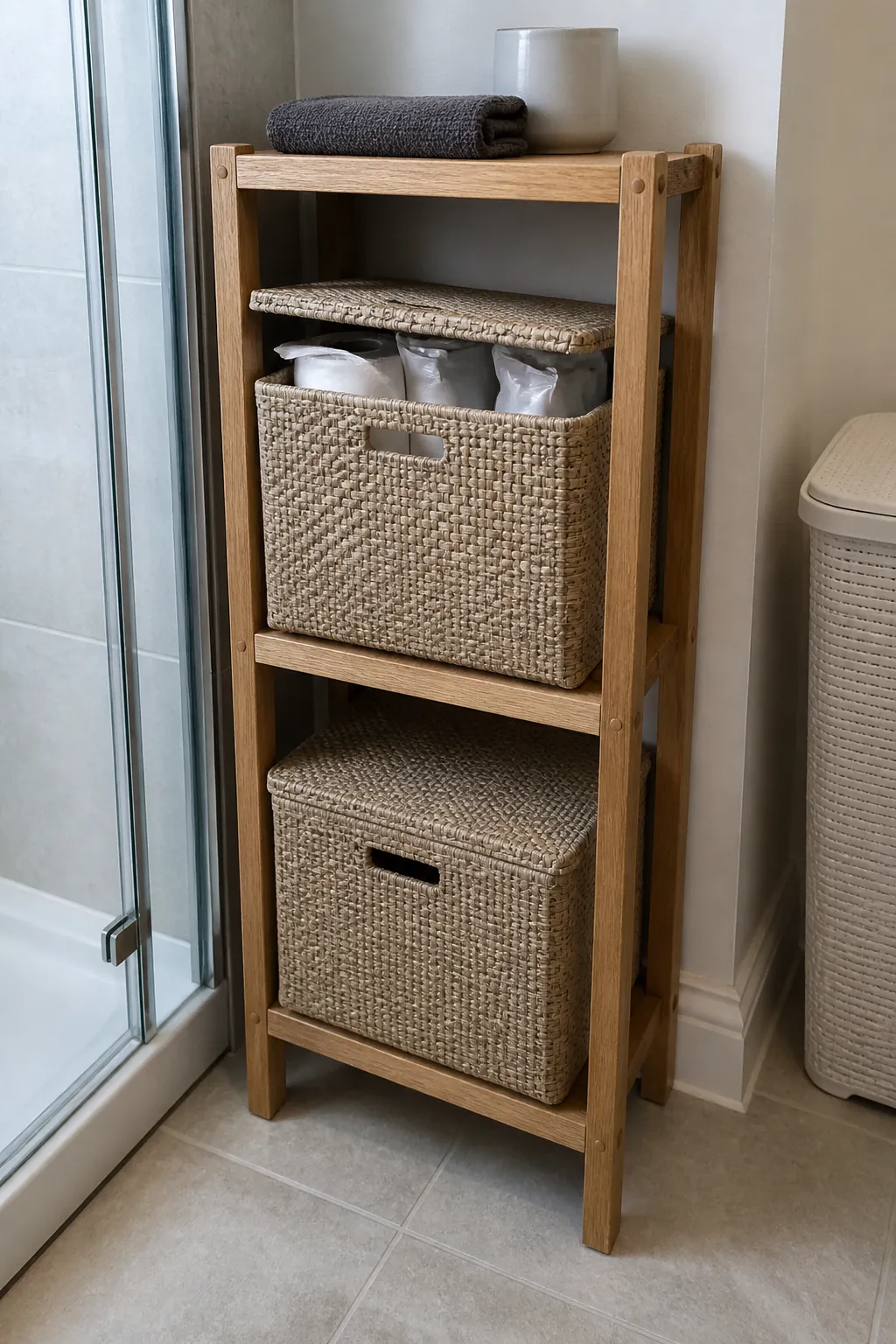
Woven bathroom baskets are ideal for colorful refills, personal care supplies, and spare paper products. Measure shelf width, depth, and vertical clearance before buying them, then leave enough room for your fingers to grip each side. A lid protects fabric and paper from dust, while an open basket makes frequent restocking faster.
Give each basket a single broad category rather than filling it with unrelated leftovers. This prevents searching and makes it obvious when supplies are running low. Use washable or moisture resistant materials in a full bathroom where steam is common.
Add One Living Accent Where Light Allows
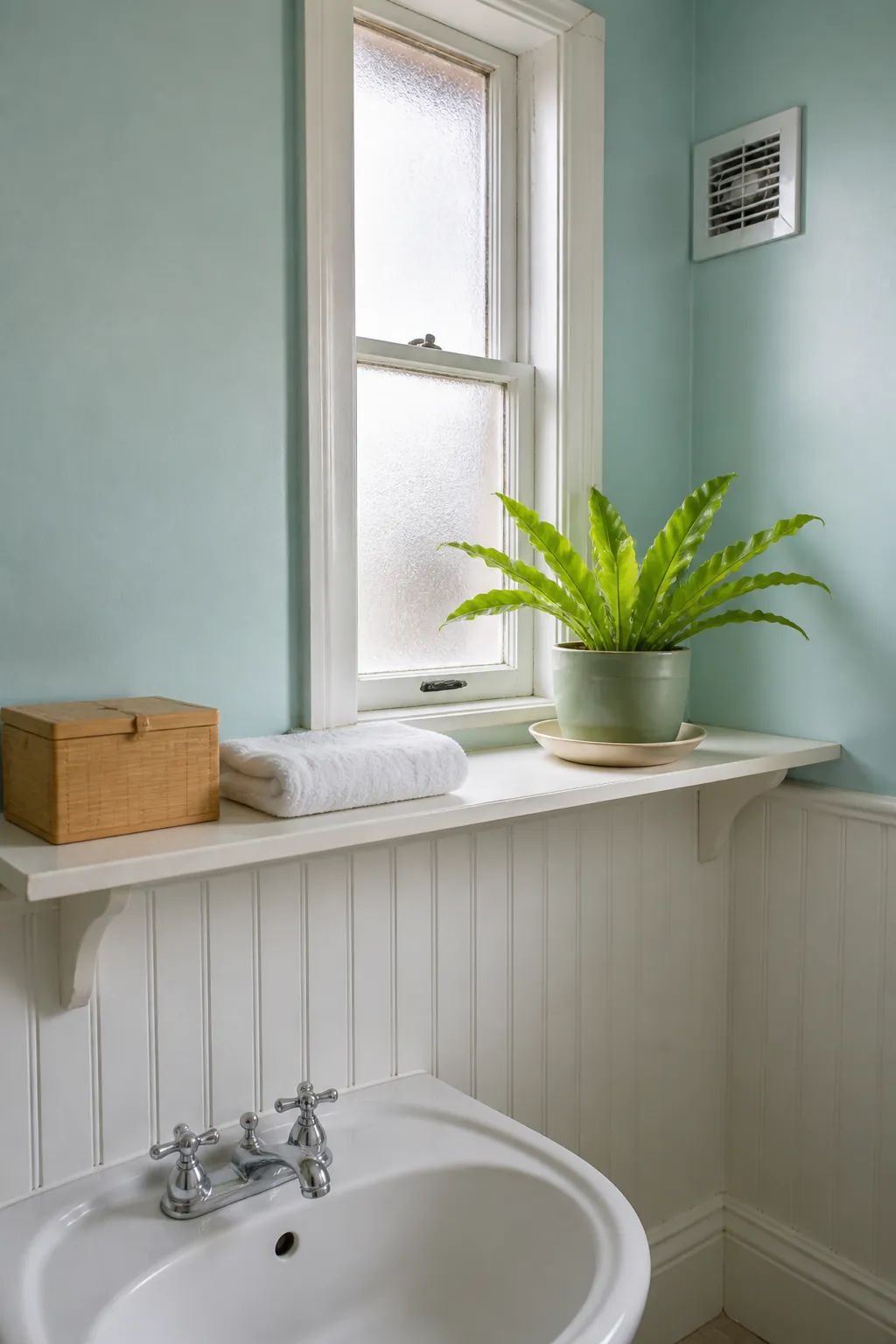
Small bathroom plants can bring color to a shelf dominated by white fixtures and containers. Match the plant to the actual daylight and ventilation, then place its pot in a glazed saucer that protects the shelf. A single compact plant usually has more impact than several tiny pots competing with daily supplies.
If the room has no suitable natural light, use a simple ceramic object or a washable artificial stem instead. Choose a shape that contrasts with the straight shelf lines, but keep it smaller than the storage it accompanies. Decor should support the room rather than displacing something useful.
Keep the Final Shelf Easy to Clean
Use the least convenient shelf for reserve items in closed containers, not for a dense row of decorative objects. Leave enough empty surface to pass a cloth around each group without unloading everything. Candles can soften a guest bathroom, but keep them unlit near towels, paper, plants, and low shelves.
Step back from the doorway and remove anything that repeats the same function, color, or shape without adding value. The strongest functional shelf styling usually combines one useful group, one soft or organic element, and visible empty space. When every item can be lifted in a few quick motions, the shelves are far more likely to stay tidy.