
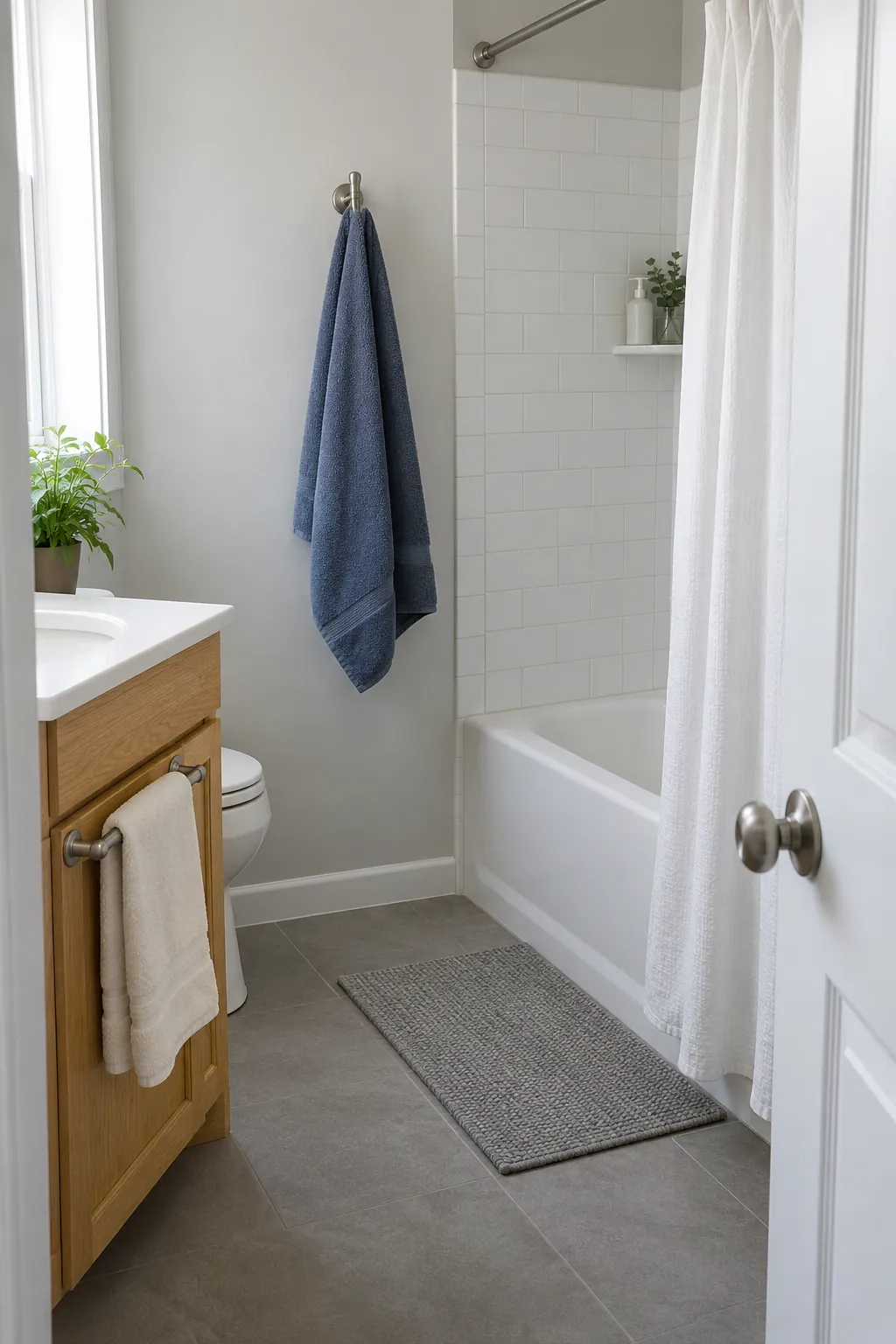
An empty patch of wall is not automatically a useful place for a towel. If you must step around the toilet or reach past a moving screen to grab it, the fitting has solved storage and missed daily use. Start with the place where you finish bathing, then find separate room for drying and clean spares.
Find the place where you need the towel
Start from the shower exit, not the largest remaining wall. Put the towel where you can reach it from a stable dry position without leaning across glass, taps, or the toilet. A short nearby hook can hold the towel you will use even when the main drying rail belongs elsewhere.
Test that position with the actual towel and the shower door or curtain in its normal open position. Keep the towel out of the spray path and clear of switches or other electrical equipment. A towel fitting is not a grab rail, so it must never become the support you rely on while stepping out. If the only reachable position is unsafe, change the arrangement rather than adding a hook there.
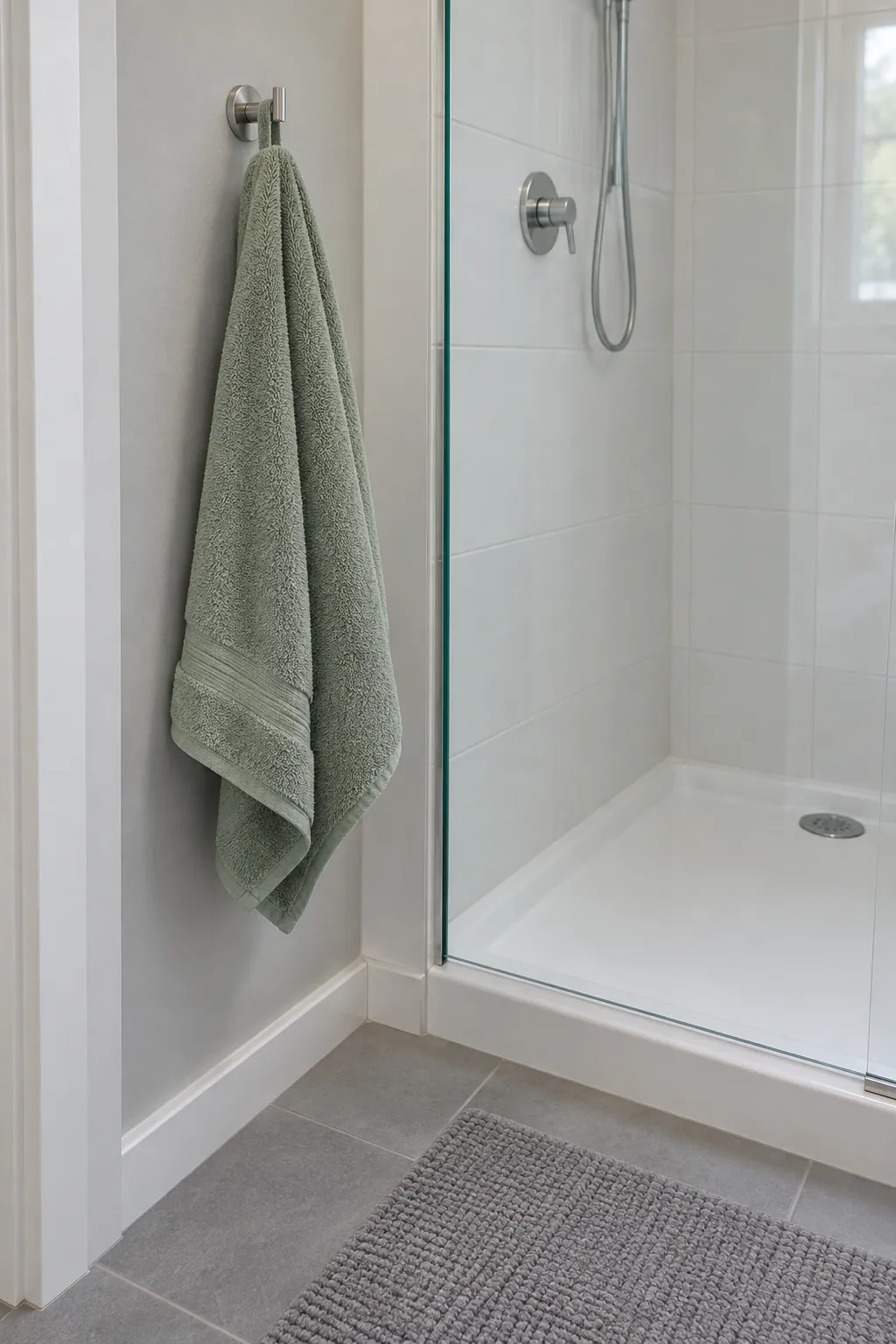
Use a door only after checking its movement
The back of the door can provide useful towel space, but the rack becomes another projecting object. Check the door fully open, partly open, and closed with a towel hanging at its normal length. Include the handle and any adjacent cabinet, since the towel can cover a latch or the rack can strike a wall.
An over door rack must suit the door thickness and the gap at the top. If the door no longer closes freely, do not force it or shave the frame to accommodate an unsuitable rack. Use manufacturer guidance for padding, load, and fixing, and check the door construction before choosing screws.
In a rental, obtain permission for permanent fixings and choose a product compatible with the surface. Adhesive hardware has specific surface preparation, curing, humidity, and load limits. It is not a universal substitute for proper support, especially with a heavy wet bath sheet.
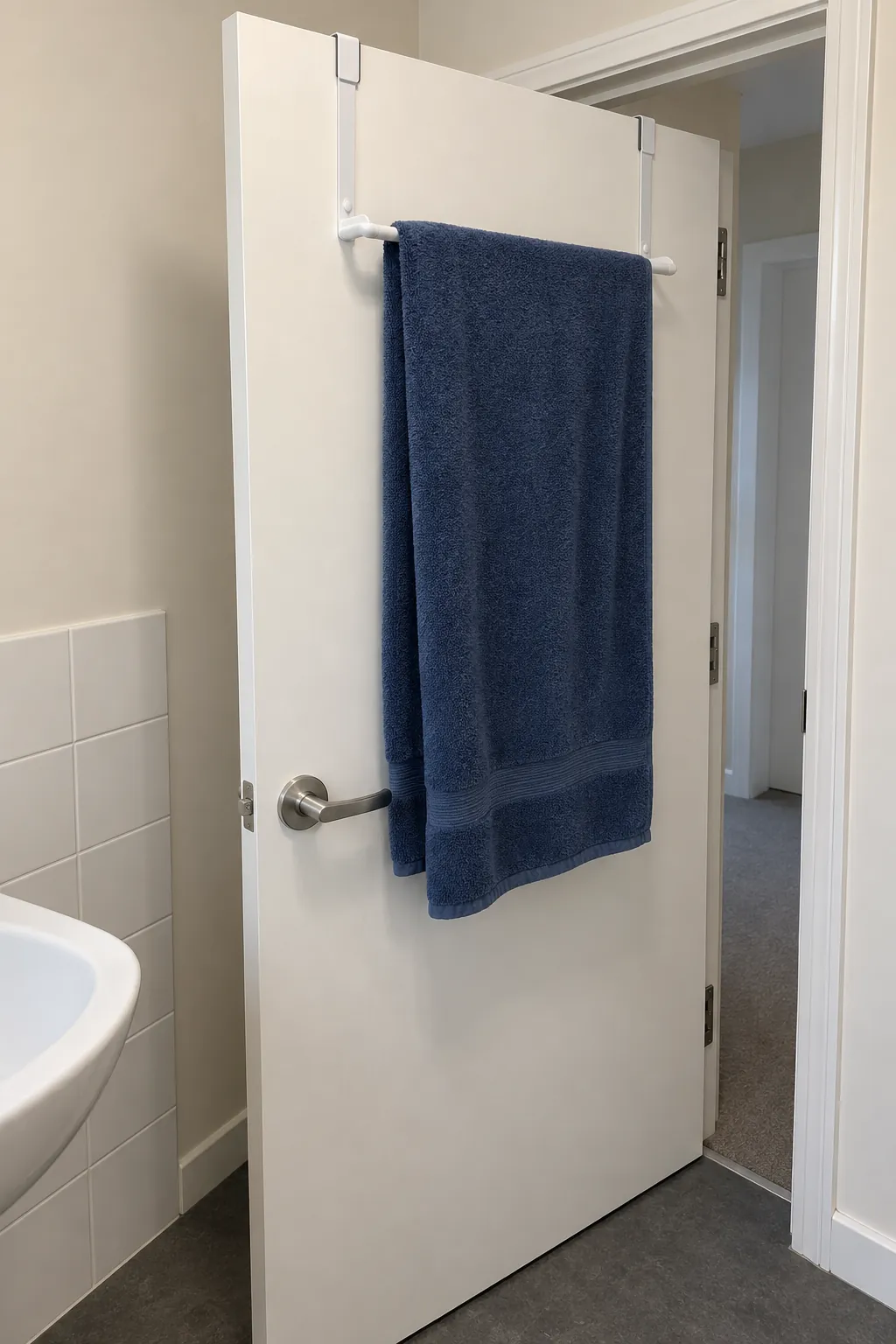
Give hand towels the side of the vanity
A vanity side can be a good home for a hand towel when the wall above the basin is occupied by a mirror. The towel belongs close to hand washing, which keeps a bath towel location free for shower use. Check that the bar does not project into the main walking route or stop the cabinet from opening.
Confirm the cabinet side is suitable for the proposed fixing and that hidden plumbing is not in the drilling path. Hang the towel during the test so its lower edge clears the floor and the cabinet fronts. A bar on a weak thin panel or a damp towel pressed against an unsuitable finish can create another problem. Use the cabinet and hardware instructions to choose the mounting method.
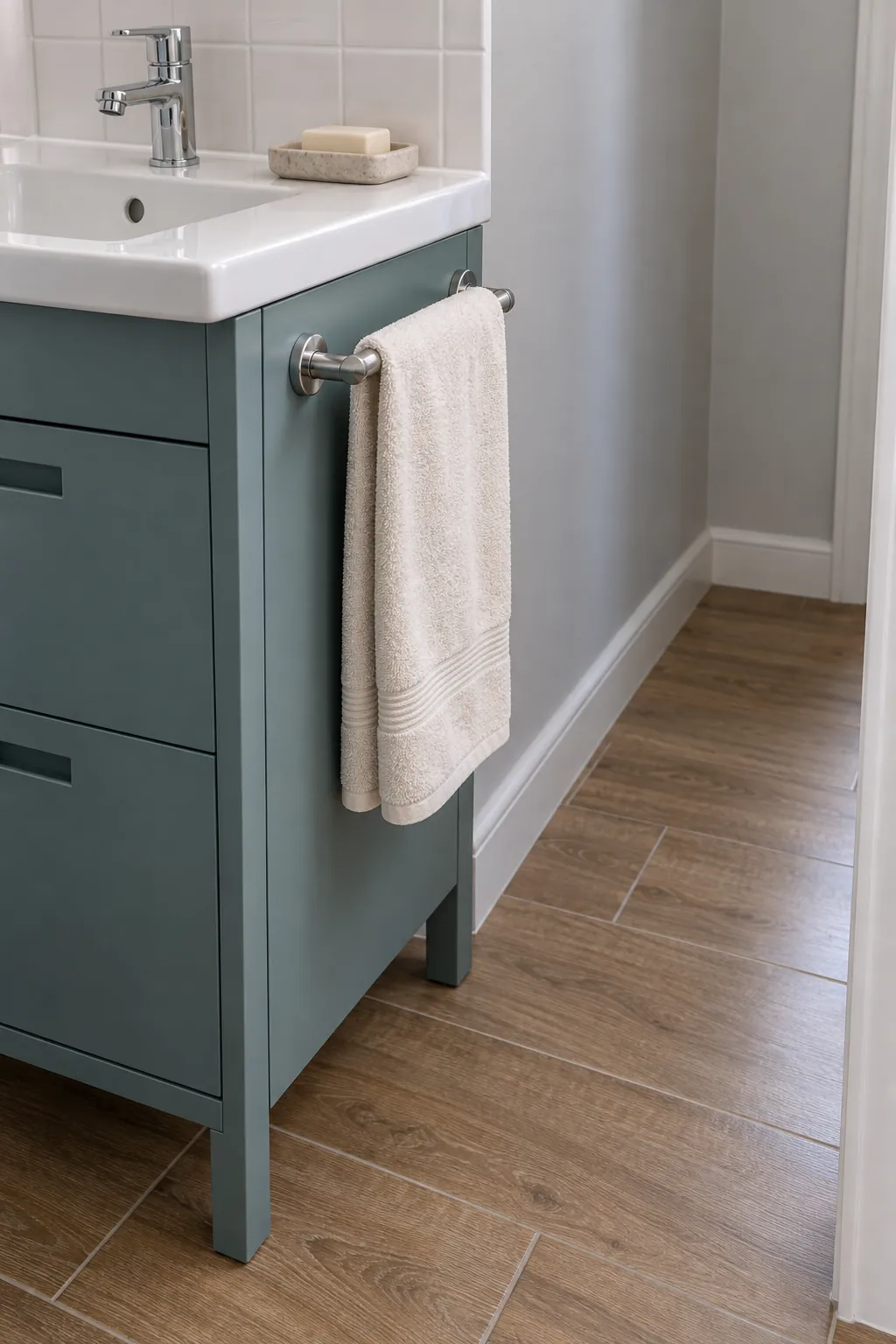
Use a narrow wall strip for the right towel size
A short rail can make a small wall strip useful, but it should suit the towel rather than merely fit the gap. A hand towel needs less hanging space than a bath sheet. Fold the actual towel as you intend to hang it and check its width, drop, and distance from neighboring surfaces.
A space behind the door may work only when the door leaves the towel and rail clear. Verify the full swing and the wall support before drilling. Do not hang towels over sockets, controls, ventilation grilles, or an access panel that needs to open.
Use a removable tape mark to compare positions before fitting the rail. Try reaching it with the room arranged for normal use, including a bath mat and any bin. The useful wall strip is the one you can use without moving another object first.
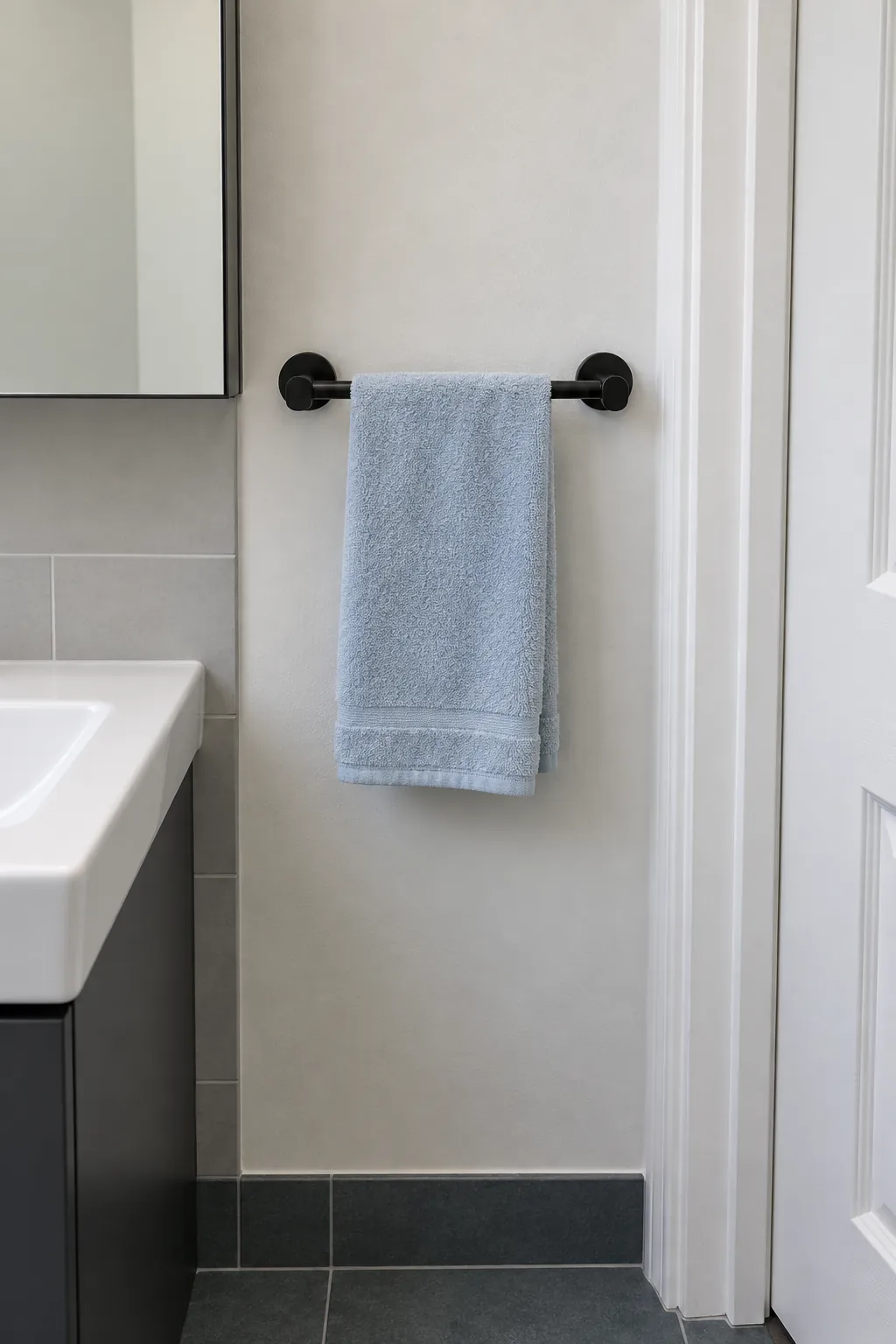
Choose hooks for reach and rails for drying space
Hooks occupy little wall width and are convenient for a towel ready to grab. They can also leave a wet towel bunched, particularly when several towels share one fitting. A rail that allows fabric to spread gives more exposed area, but it still needs air movement and enough separation from the wall.
Count the towels used daily and plan a drying position for each rather than stacking them on one bar. Check any double rail with the real towels, because the inner layer may sit against the outer one. Run suitable bathroom ventilation and follow the towel care instructions; adding a rail does not solve a persistently damp room.
A heated towel rail needs a compatible location and installation review. Ask the relevant qualified installer about electrical or plumbing requirements, clearances, and the selected product. Do not treat a convenient spare wall as permission to install powered equipment there.
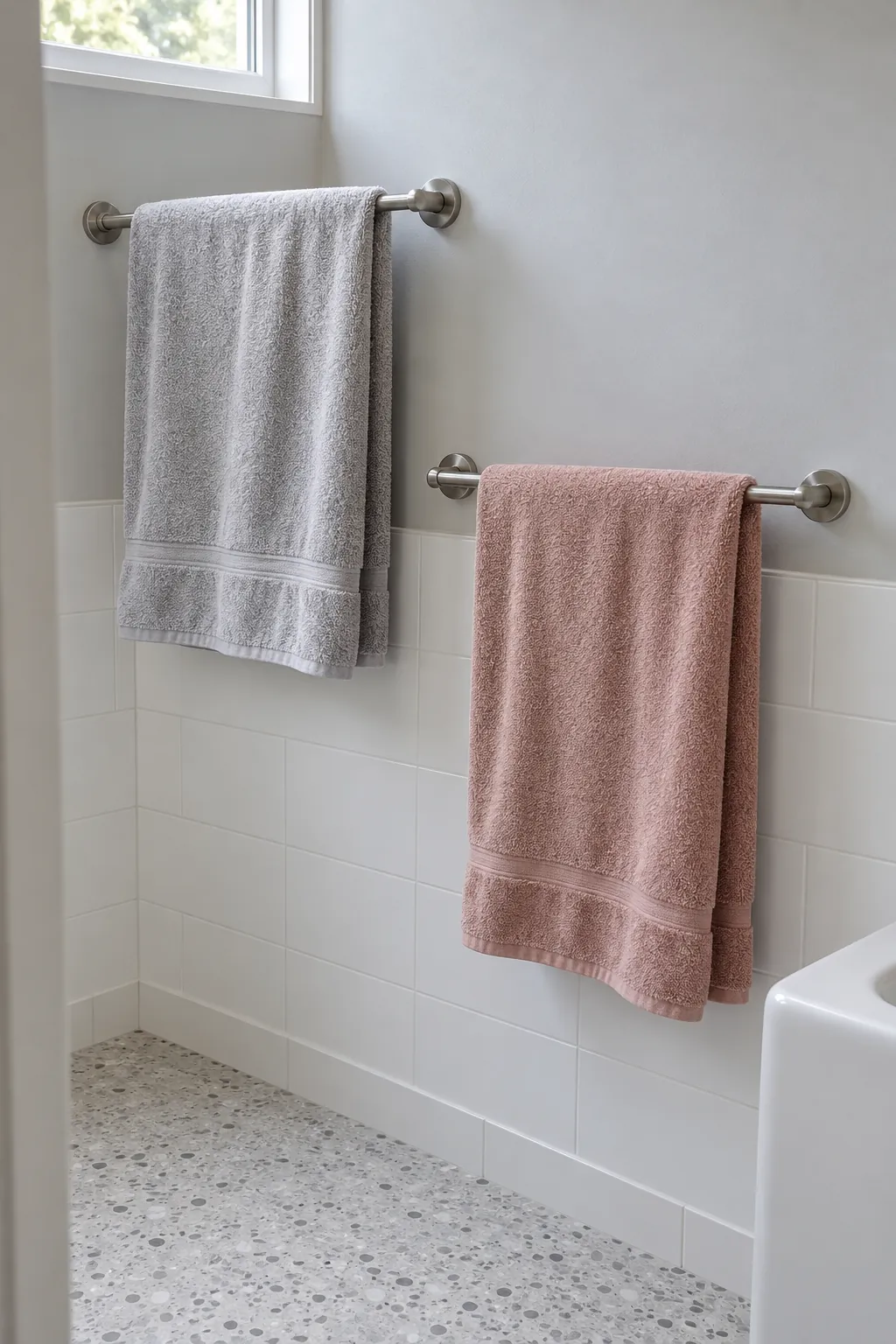
Move clean towel storage out of the reach zone
Clean spare towels do not need the same position as the towel used after a shower. A nearby linen cupboard or dry shelf outside the bathroom can reduce pressure on the limited walls inside. Keep the used towel location reachable and the spare supply protected from splashes and damp surfaces.
If you use a freestanding rack inside the room, test its complete footprint, including the hanging towel. It must stand securely without narrowing the shower approach or door route. A basket can store dry towels, but it is a poor place to hide damp ones. Moving the spare supply is often more practical than adding another large fitting to an already occupied wall.
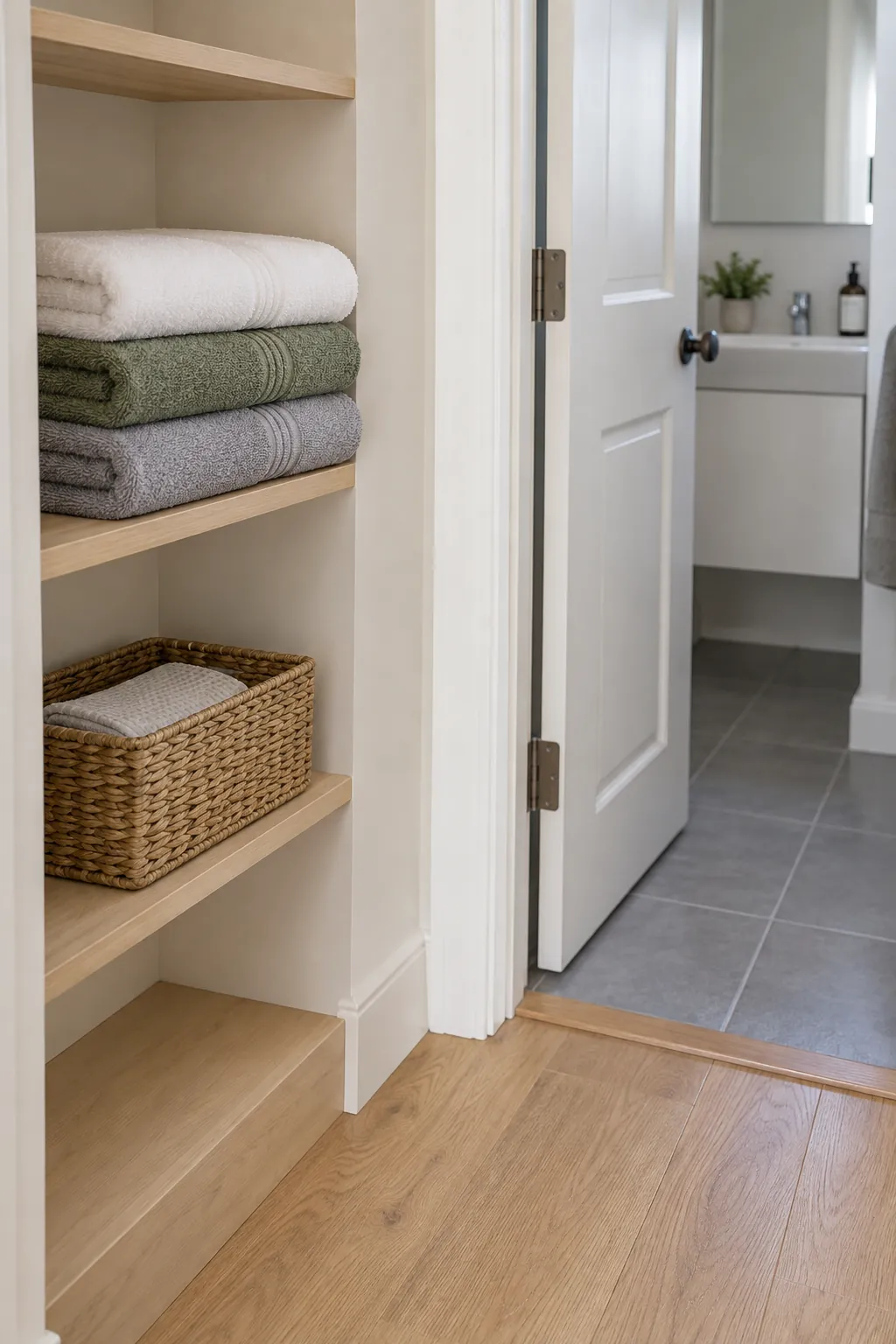
Pick the position with a towel and a movement test
For a crowded bathroom, start with one reachable dry towel position near the shower exit. Then look for a suitable door rack, vanity side bar, or short rail that leaves every moving part clear. Decide separately where the wet towel will spread and dry, and where clean spares will live.
Hold the actual towel at each candidate position and open the door, shower screen, and cabinets. Confirm the mounting surface and load with the product instructions, then check hidden services before any drilling. If every option blocks movement, reduce the stored items or move the drying location rather than squeezing in a longer rail. A towel place succeeds when you can reach it, the room still works, and the fabric has room to dry.