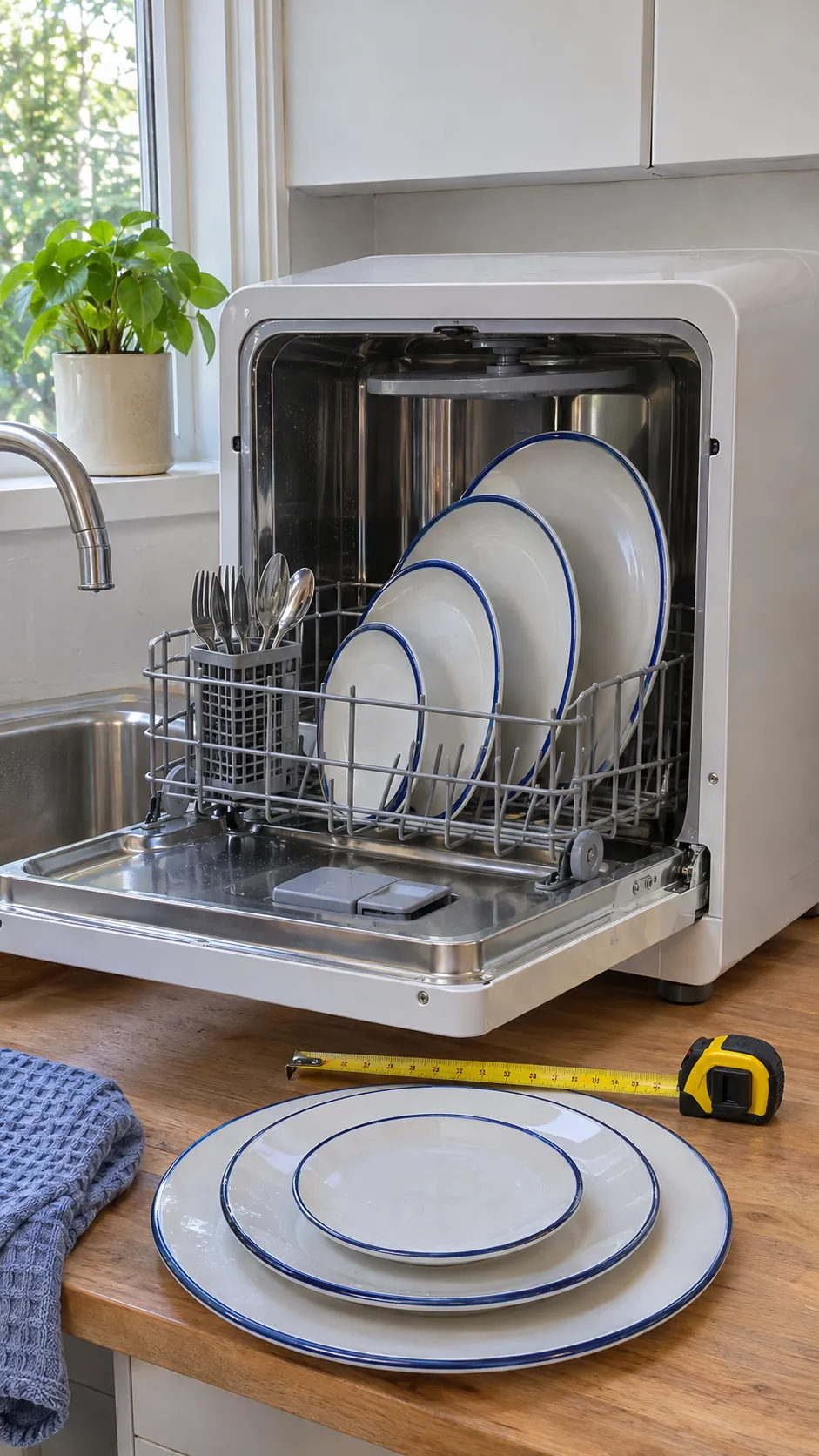
A plate can slide through the dishwasher door and still be too large for a safe wash. The rim may touch the ceiling, force the rack into a steep angle, stop the spray arm, or prevent the door from closing without pressure.
Place setting capacity does not answer this problem because manufacturers use standard test pieces. Your own dinner plate diameter, rim shape, rack height, and loading pattern decide what fits. A few measurements before buying can prevent an appliance that washes mugs well but leaves every dinner plate for the sink.
Measure the widest plate you use often
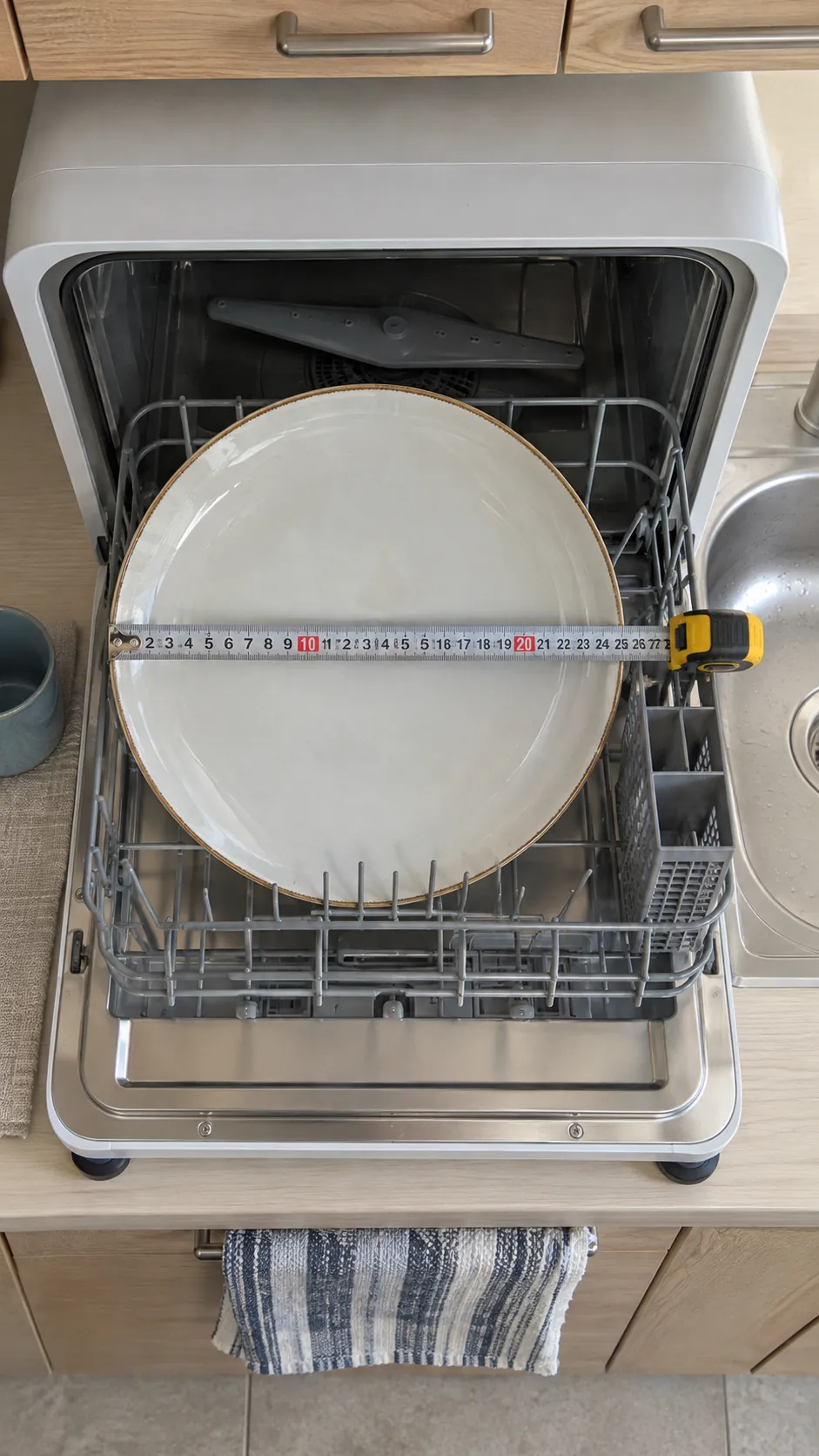
Lay the plate flat and measure across its widest point through the center. Include the outer rim, not only the eating surface. Measure the largest plate you use during a normal week rather than a rarely used serving platter.
Record the diameter in the same unit used by the appliance manual. If your plates vary, measure each common set because a broad raised rim can change how a plate sits in the rack. Do not rely on a label such as standard dinner plate, since real sets differ.
Find the usable rack height
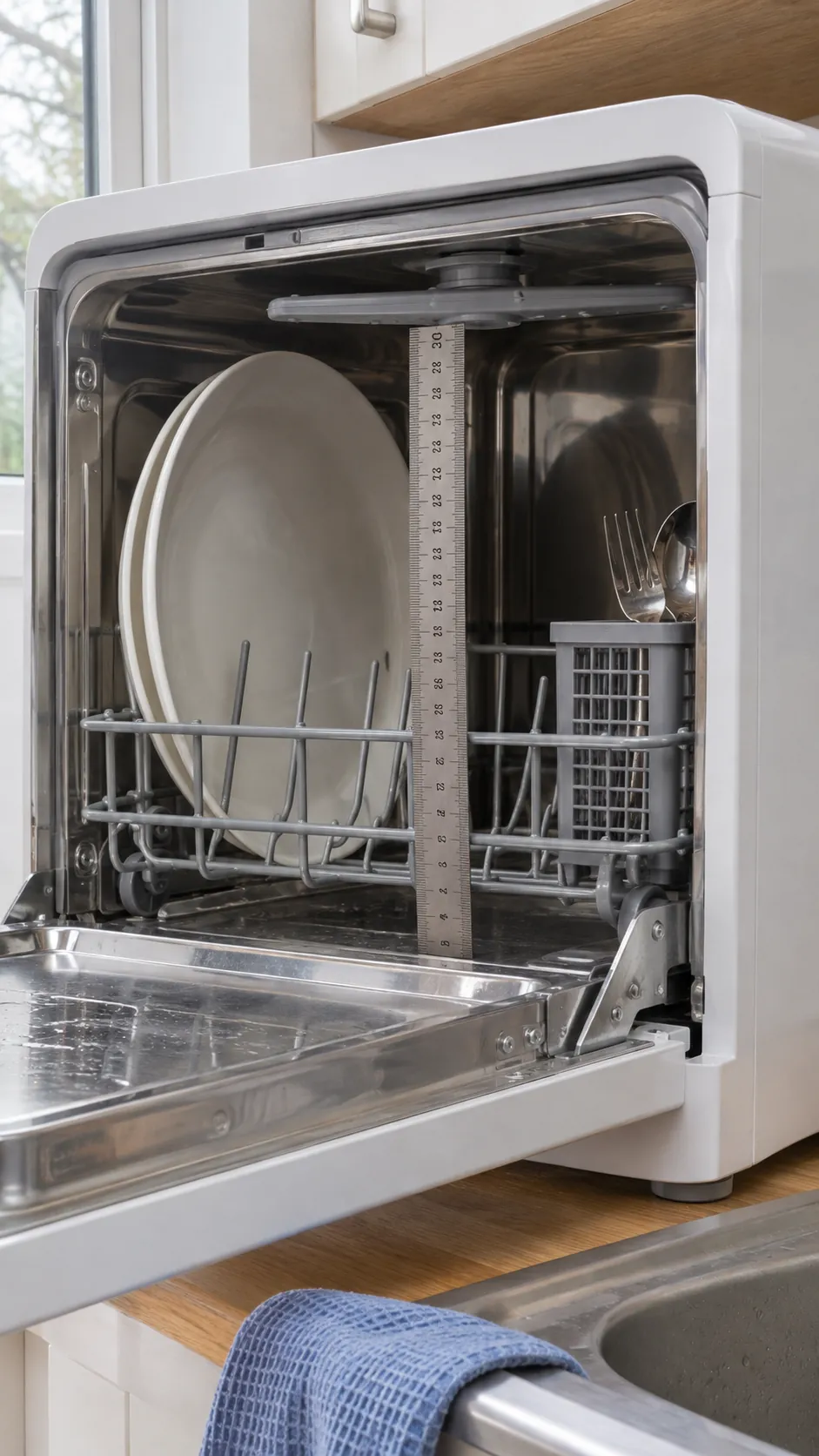
Usable height starts at the point where the plate rests in the rack and ends at the lowest obstruction above it. That obstruction may be the tub ceiling, an upper spray arm, a shelf, or a rack support. Exterior appliance height does not reveal this space.
Look for a manual diagram that states the maximum plate size and shows the intended slot. If the maker gives only overall capacity, ask for an interior rack drawing or measure a display model. Allow a little clearance instead of treating an exact match as safe.
Account for the angle of the rack slots
A plate that leans uses less vertical height, but it takes more horizontal room. One large plate placed at a low angle can occupy several rack positions and sharply reduce the real countertop dishwasher capacity. A published maximum diameter may therefore describe one plate, not a useful dinner load.
Check how the plate rim follows the rack tines. Deep bowls, coupe plates, and thick stoneware sit differently from thin flat porcelain. The best fit keeps each piece stable, separated from its neighbor, and exposed to water on both sides.
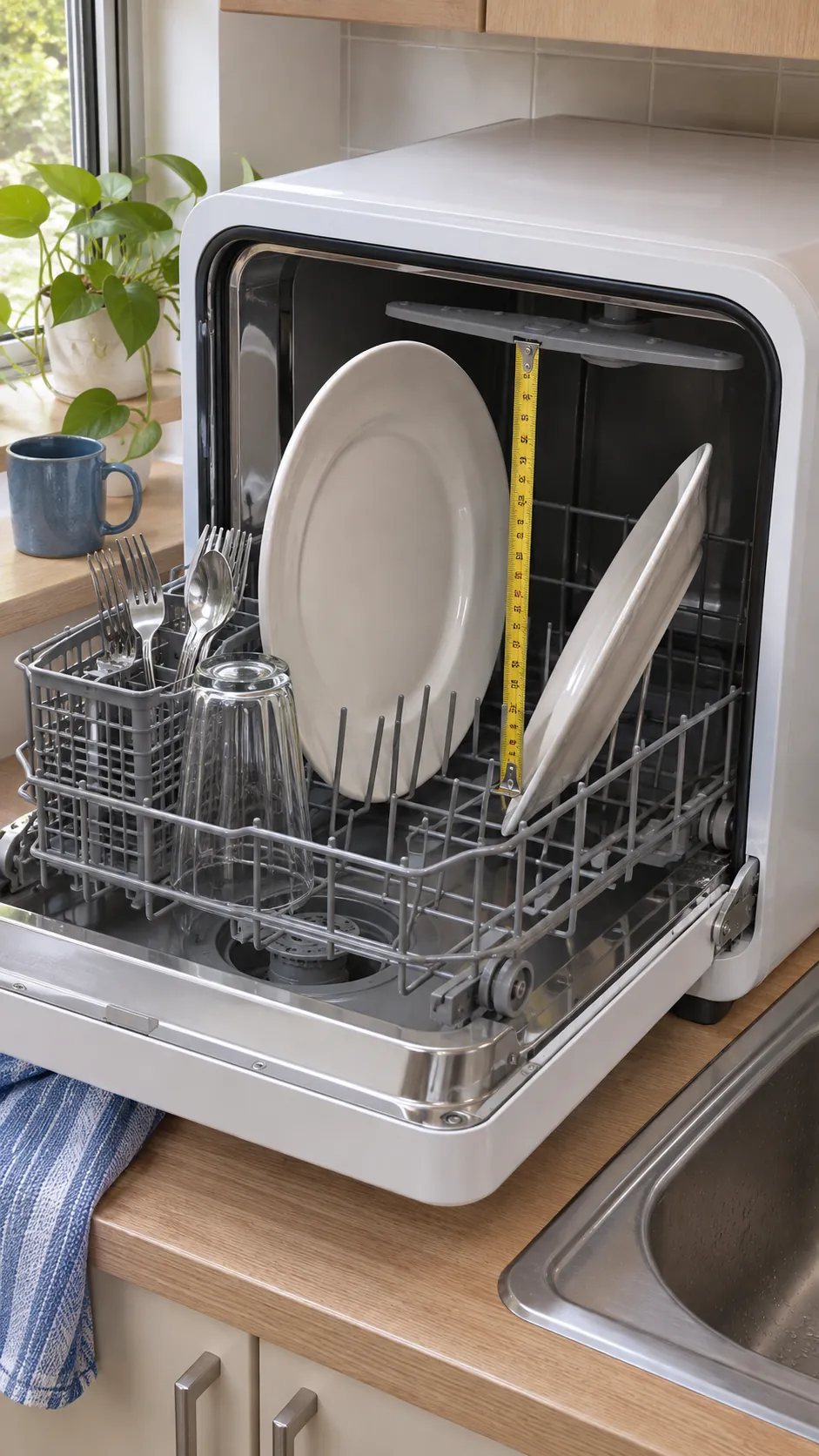
Protect spray arm movement
Load the tallest plate in the intended slot, then rotate every spray arm by hand before starting a cycle. The arm should complete a full turn without brushing a rim, utensil, or bowl. Contact can stop water distribution even when the door closes normally.
Check the gap again after adding nearby dishes because a plate can shift when another item presses against it. Follow the manual when an upper rack or shelf has adjustable positions. A new position may create plate clearance while reducing room for mugs or bowls elsewhere.
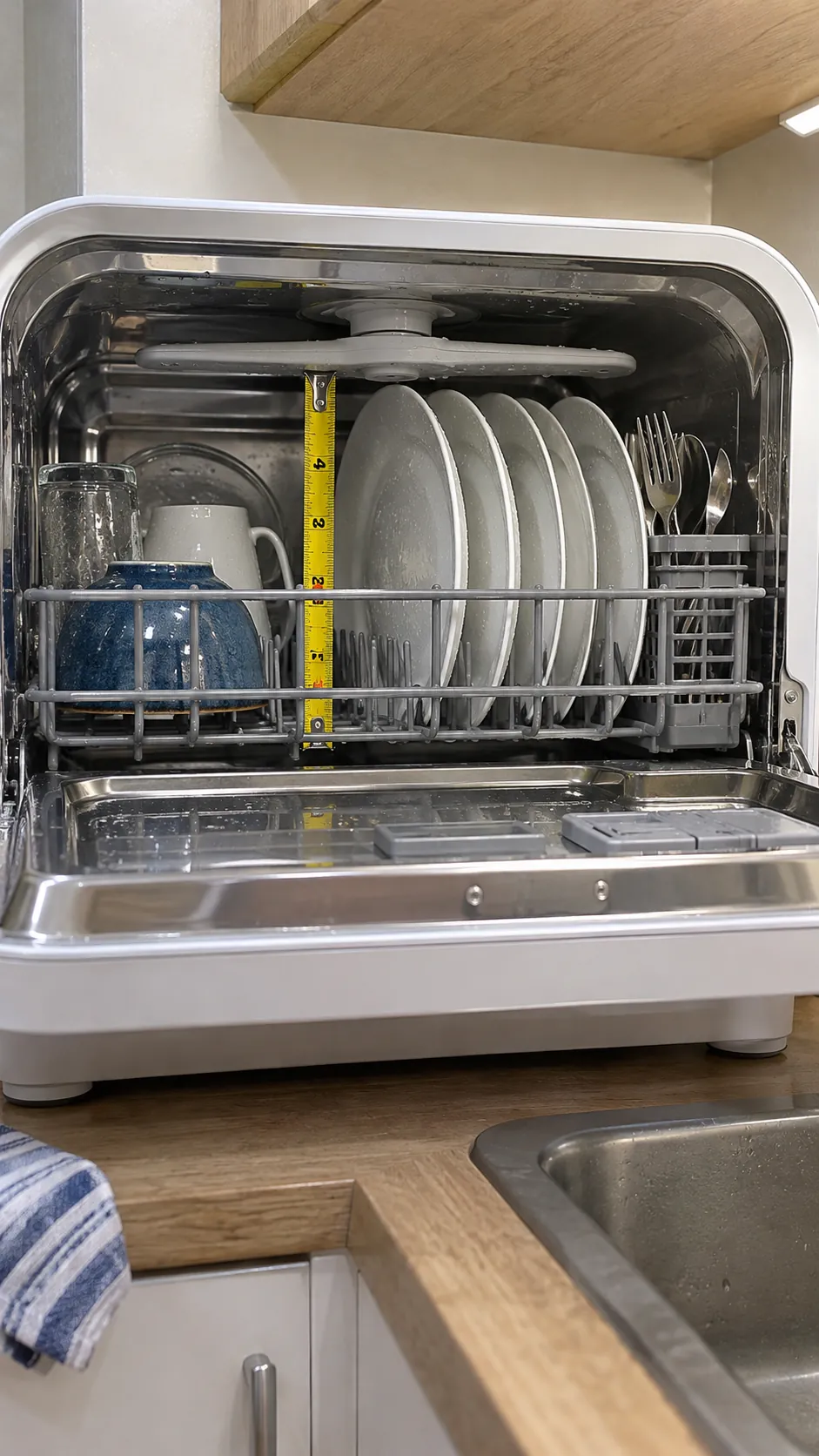
Build a realistic daily load
Count the plates, bowls, mugs, glasses, and utensils created by one ordinary meal. Arrange them on paper in the rack pattern shown by the manufacturer. This exposes whether the advertised place setting capacity matches the mix you actually wash.
Large dinner plates may fit only when side plates move to another row, and tall mugs may compete with bowls for the same height. Decide which items you are willing to wash by hand. A small kitchen dishwasher is useful when its rack matches your habits, not when every load becomes a puzzle.
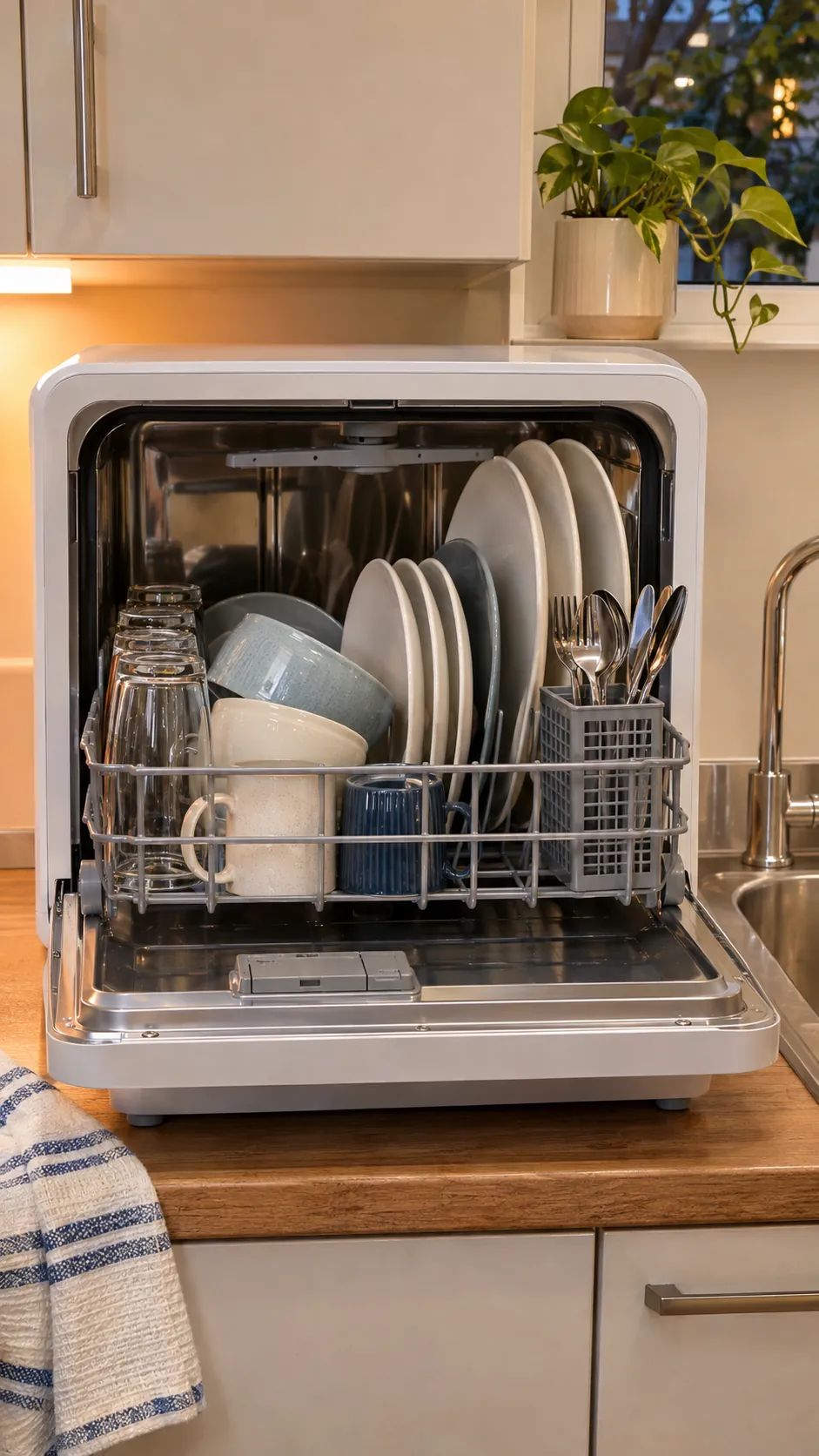
Use a template before you order
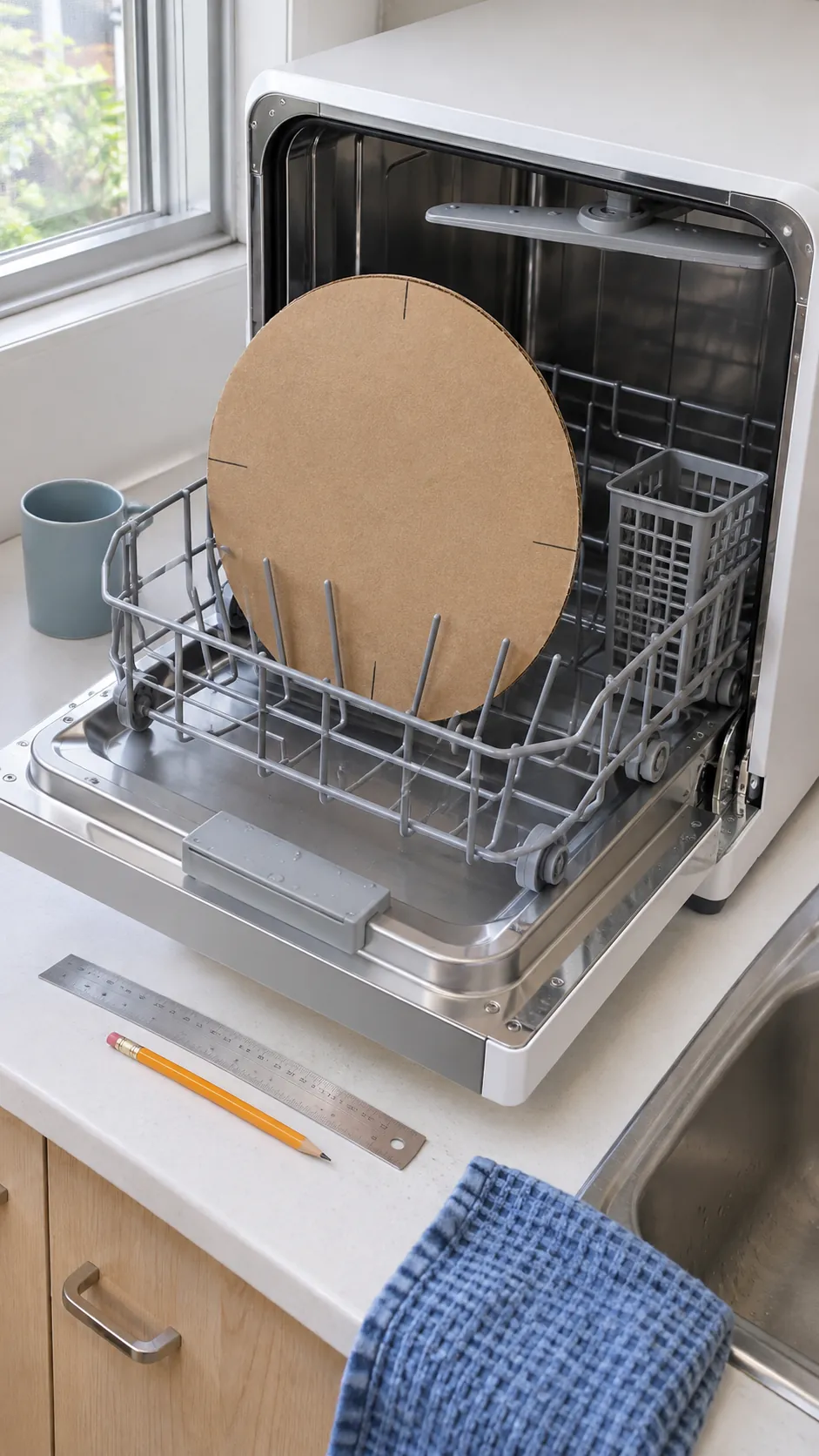
Cut a circle from cardboard to match your largest common plate, including the full rim. Take it to a showroom when possible or compare it with a reliable rack diagram. The template is lighter and safer to test than carrying a ceramic plate.
Confirm the template clears the ceiling and spray arm at the rack angle you plan to use. Then repeat the check for a bowl and mug that matter to your routine. Combine those results with the exterior counter measurements, open door depth, hose reach, and faucet requirements before making the final choice.