
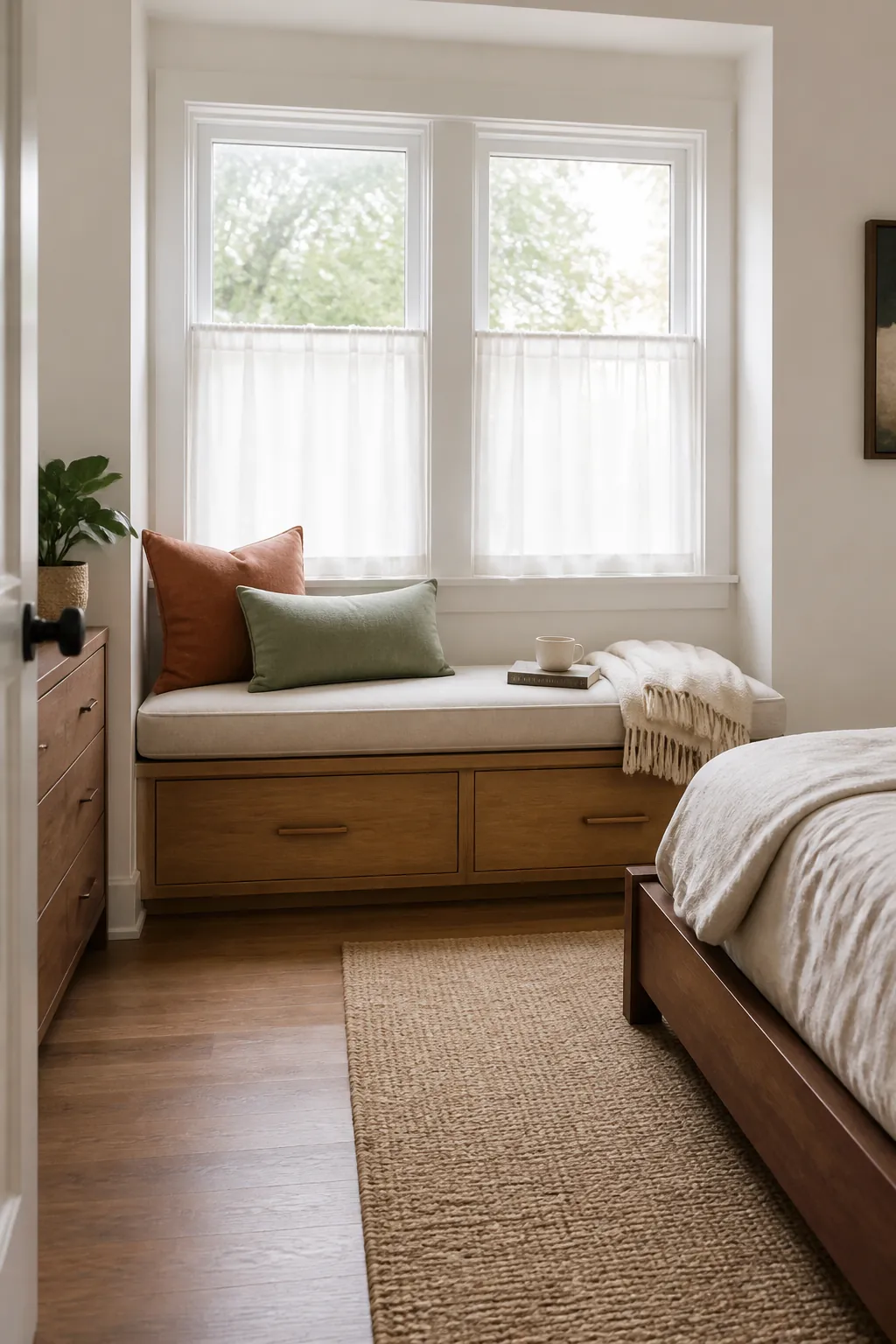
A beautiful nook can become the most useful few feet in a bedroom, but only when it respects how the room actually works. The seat must feel comfortable, preserve daylight, avoid blocked vents, and earn its footprint through storage or daily use. Start with those practical decisions, then choose the cushions, color, and styling that make the corner inviting.
Measure the nook around real sitting habits
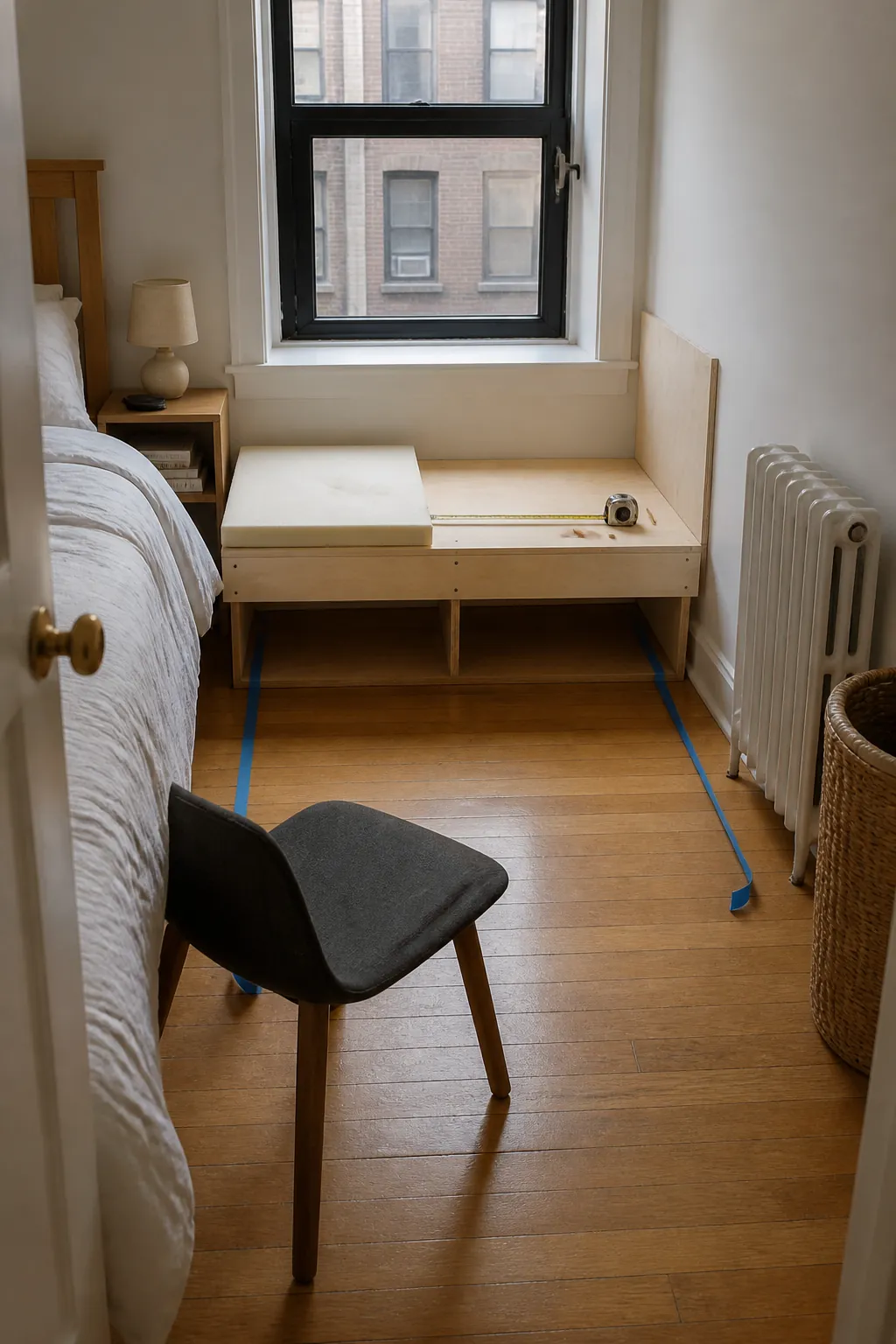
Measure the full width, usable depth, sill height, and the clearance needed for curtains or shades. A finished seat near standard chair height usually feels natural, while a very shallow ledge works better as a perch than a reading spot. Mark the proposed footprint with painter tape and sit beside it before ordering anything, because a bedroom window bench that looks compact on paper can still pinch the path around the bed.
Protect daylight and privacy together
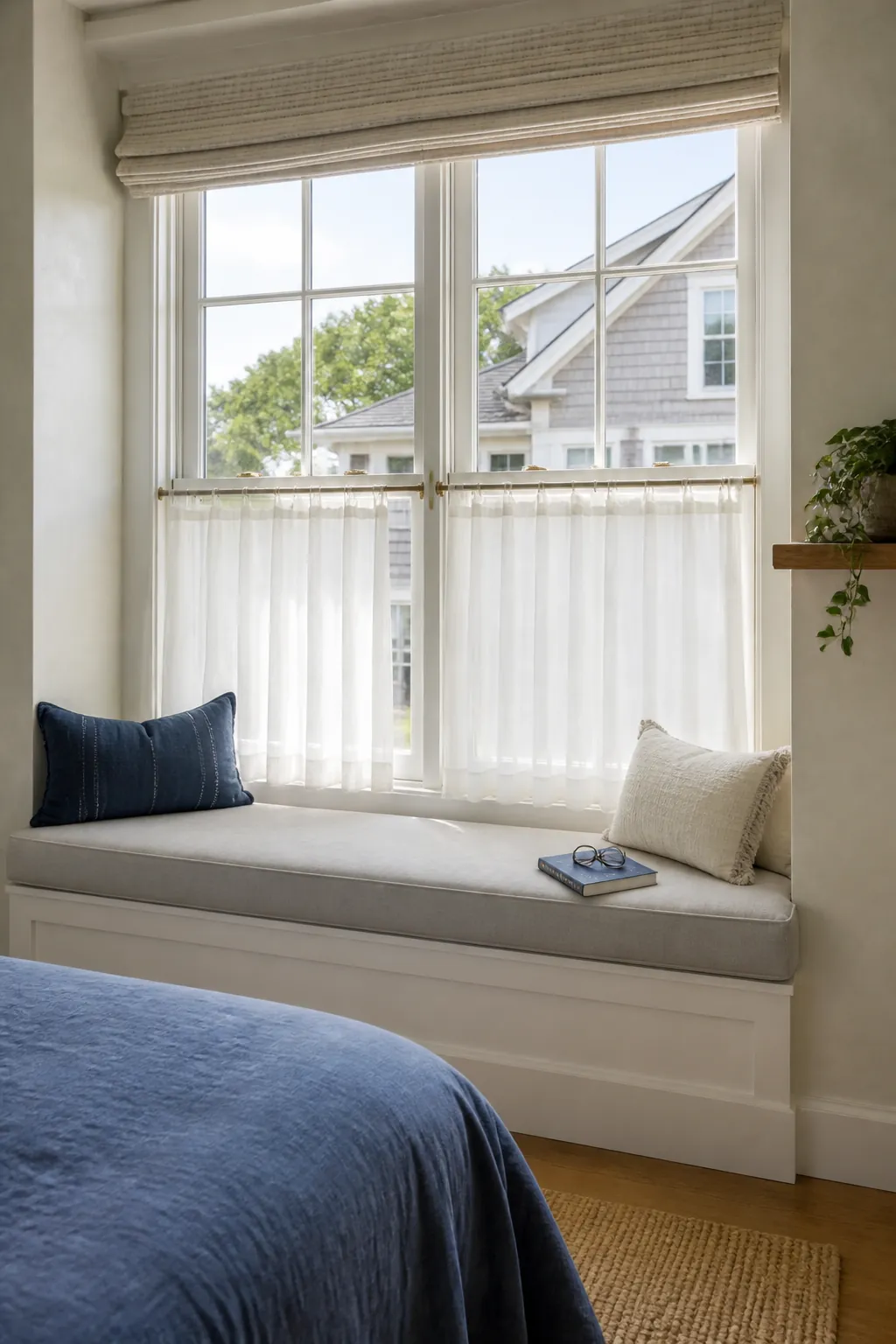
Too many tall pillows can cover the glass and make a bright room feel dim. Keep the center of the window visually open, then place supportive cushions against the side walls where possible. A top mounted shade, cafe curtain, or privacy film can soften views from outside without sacrificing the useful light that makes a window nook bedroom feel calm.
Choose storage that opens easily
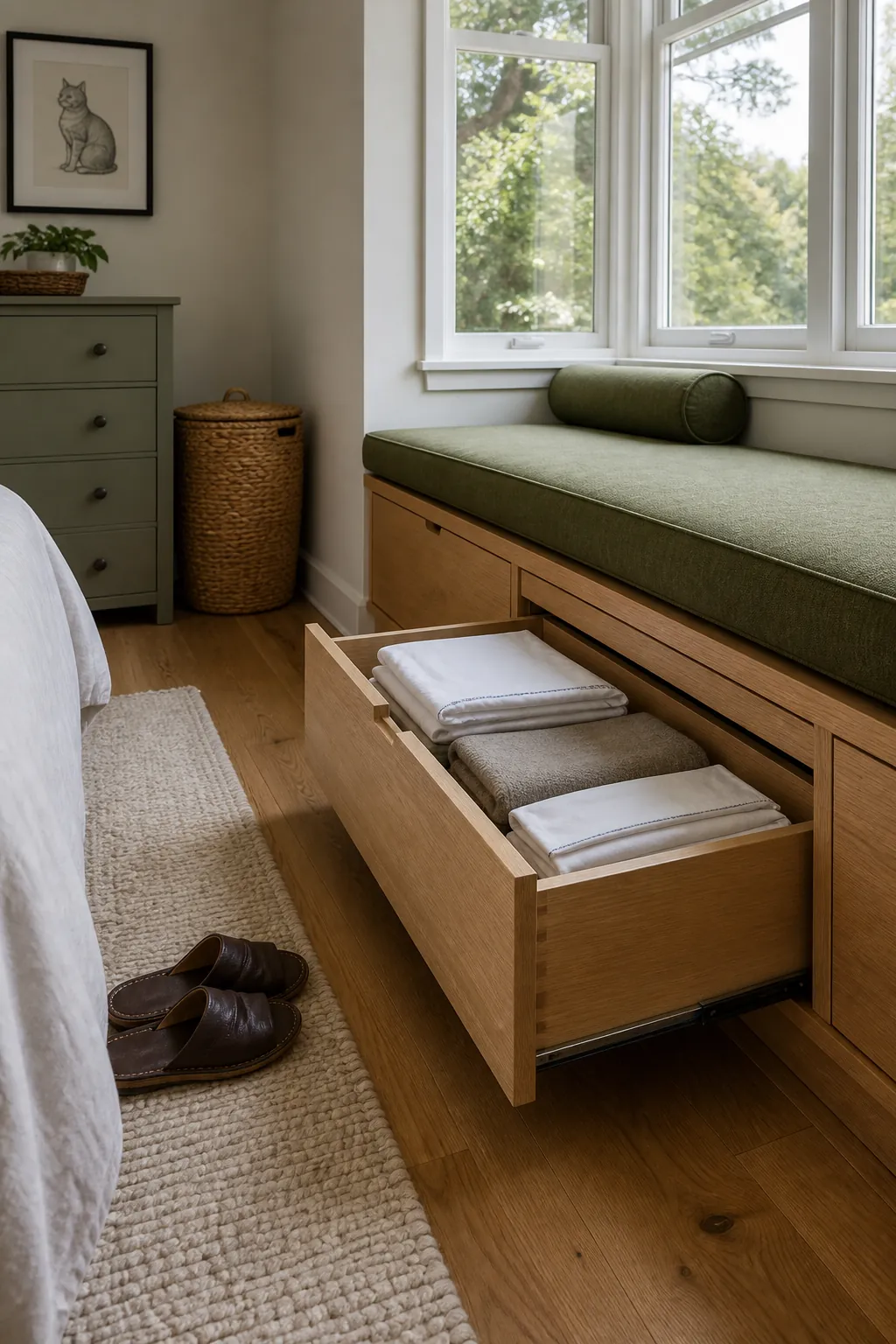
Drawers are convenient when there is clear floor space in front of the bench. Lift lids can hold bulky bedding, although the cushion must be moved each time and safe lid supports are essential. Open cubbies suit books and baskets, while hinged cabinet doors are often the simplest choice for small window seat ideas where every inch needs a defined job.
Build comfort from the cushion upward
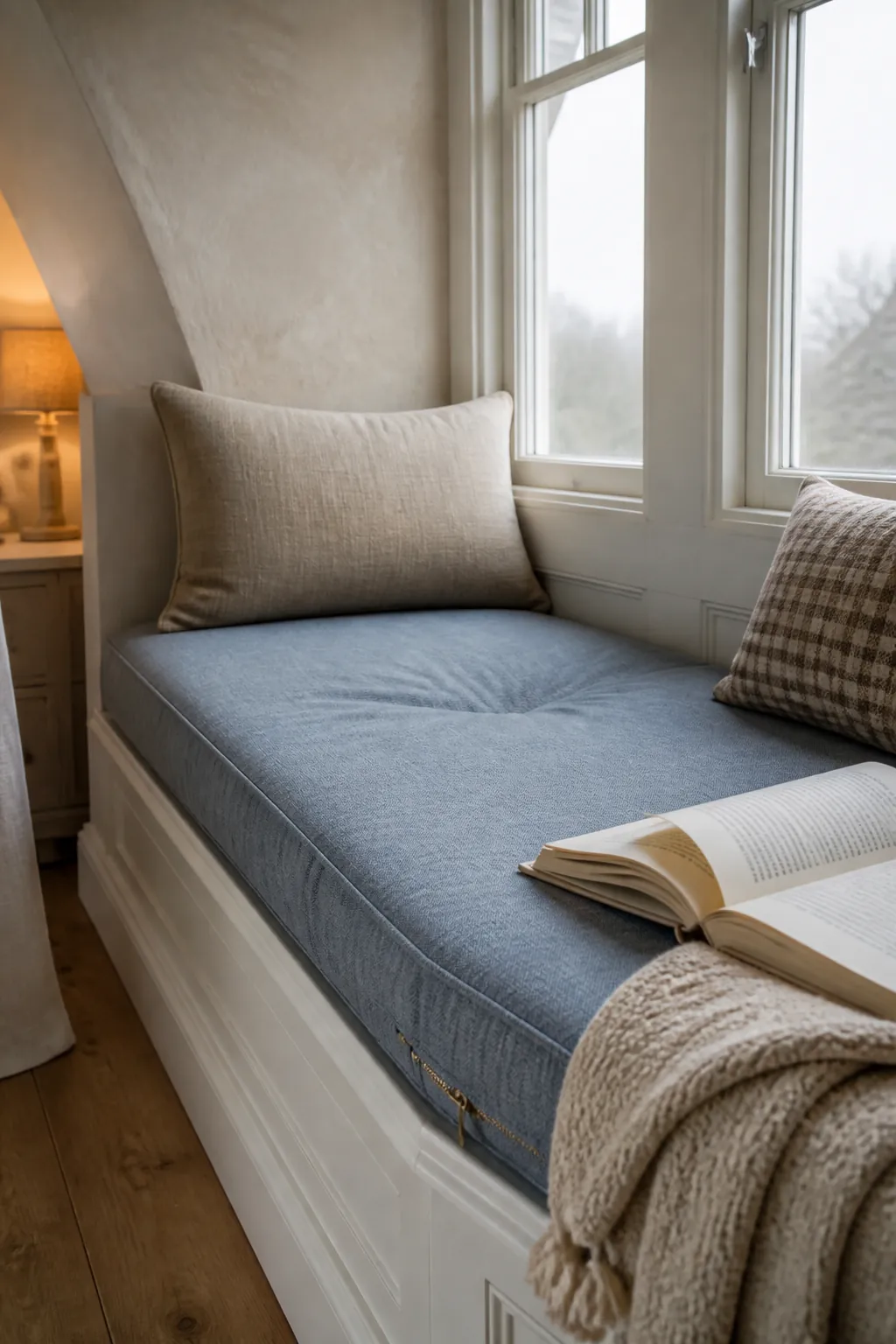
A thin decorative pad rarely supports a long reading session. Use firm foam with a softer top layer, select a removable washable cover, and include one lumbar cushion that supports the lower back. Limit extra pillows so the seat remains available instead of turning into a place where cushions are constantly moved to the bed.
Work around vents, outlets, and cold glass
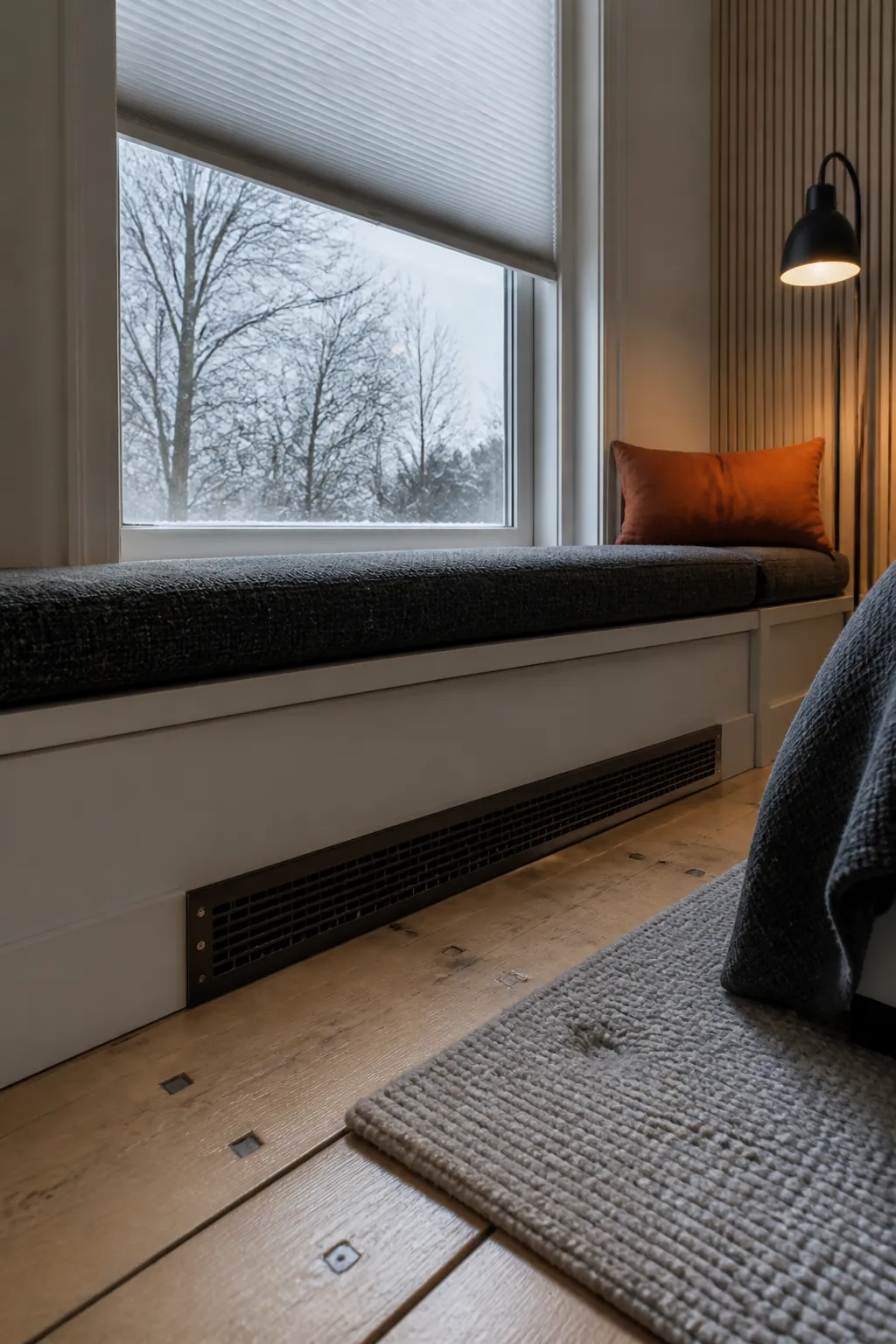
Before construction, locate heat registers, return vents, electrical outlets, and any signs of condensation. Airflow must continue into the room rather than disappearing inside a closed base, so a contractor may need to redirect a register through a proper lined channel. In a cold climate, insulated window treatments and a small gap behind cushions can improve comfort while reducing trapped moisture near the glass.
Make a renter friendly version feel intentional
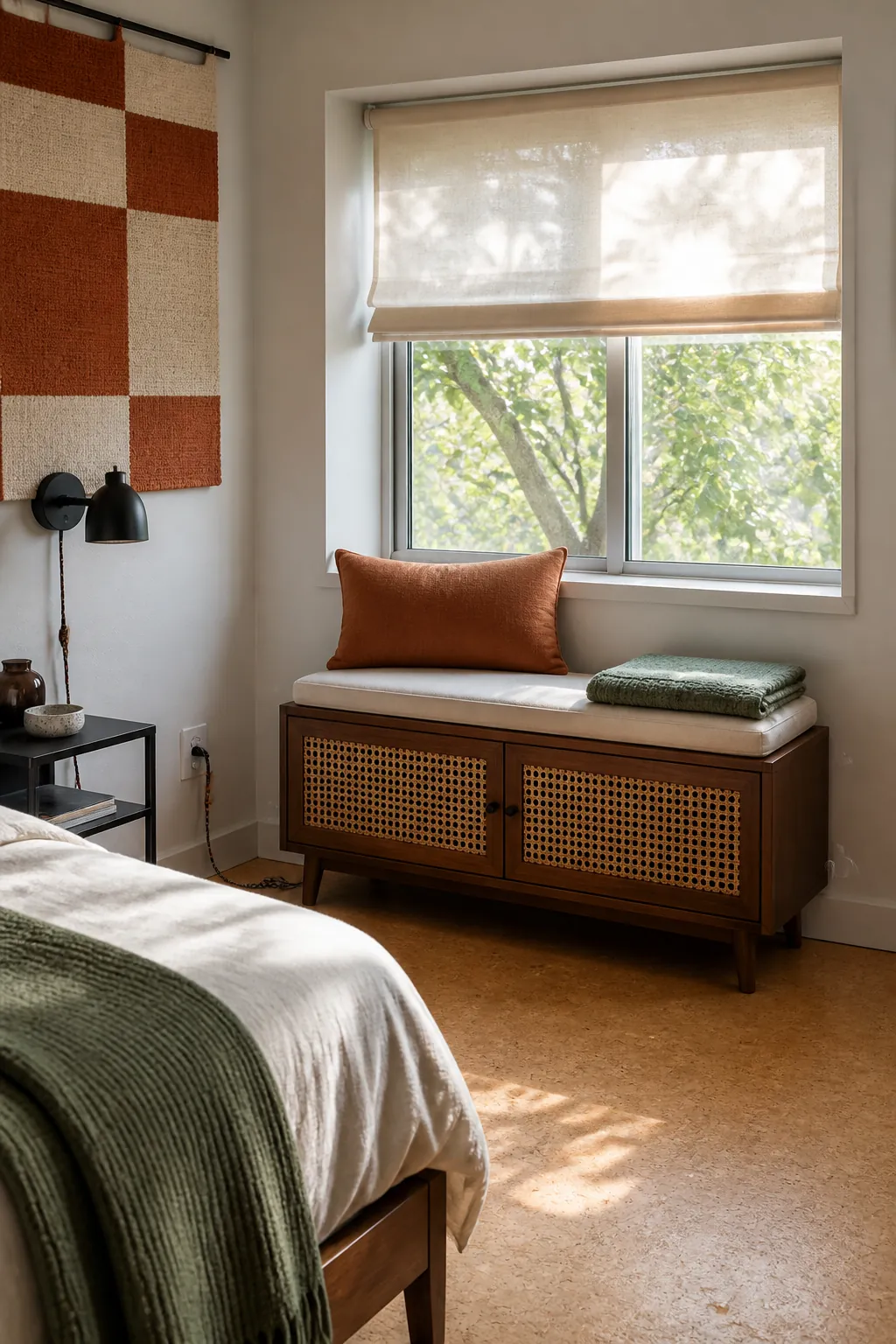
A custom built in is not the only route to a convincing window sofa bedroom. A sturdy storage bench can fit below the sill, with wall protection behind it and nonslip material beneath the cushion. Match the bench color to nearby trim, repeat one textile color from the bed, and keep the arrangement simple enough to move without leaving permanent changes.
Connect the seat to the rest of the bedroom
The strongest bedroom inspirations treat the nook as part of the whole room rather than a separate display. Repeat a wood tone, fabric color, or rounded shape already present near the bed, then leave enough open space for the window to remain the focal point. A slim reading light and a small place for a cup are more useful than layers of decorative objects.
Test the finished nook through an ordinary week
Use the seat for reading, dressing, folding laundry, and storing the items it was meant to hold. Notice whether the cushion slides, a drawer catches on a rug, or morning glare makes the spot uncomfortable. Small corrections based on real routines create a corner window seat that stays useful long after the first photograph.