
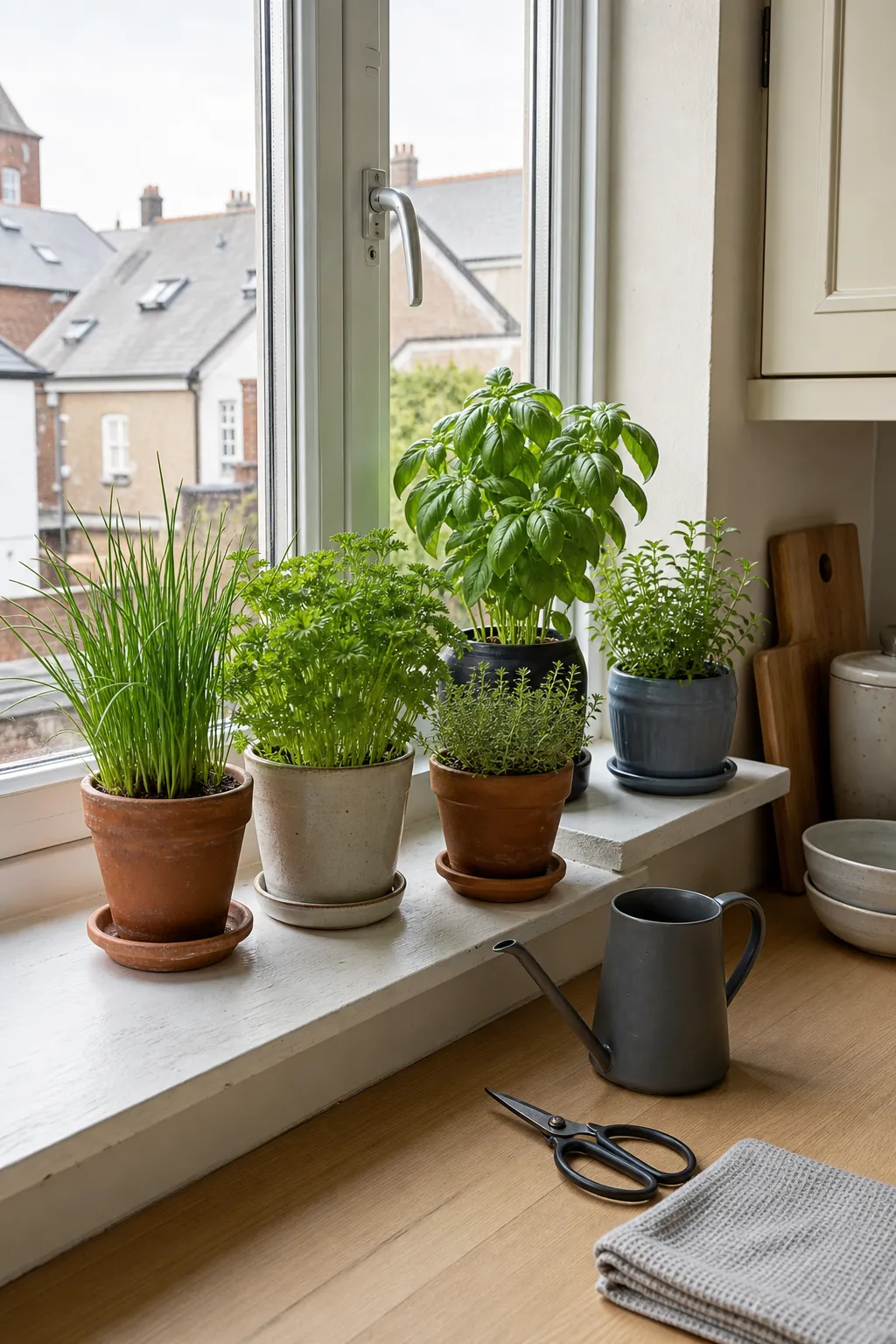
A windowsill herb garden succeeds or fails on details that starter kits rarely mention: the sill must be deep enough for stable pots, the window still needs to open, winter glass can chill basil, and a bright-looking room may deliver only a few useful hours of sun. Treat the windowsill as a growing environment, not just an empty shelf.
The goal is not to fit the most plants beside the glass. It is to build a small, workable system that you can water without damaging trim, rotate without knocking pots over, and move when temperatures change. This guide turns the common frustrations reported by first-time indoor growers into a practical setup.
Measure the usable sill, not the visible sill
Measure from the glass or window stop to the inside edge, then subtract room for the handle, lock, curtain, and any inward-opening sash. A pot should sit fully supported with its saucer beneath it; an overhanging base is easy to tip during watering. Check whether condensation collects on the paint and whether the sill slopes.
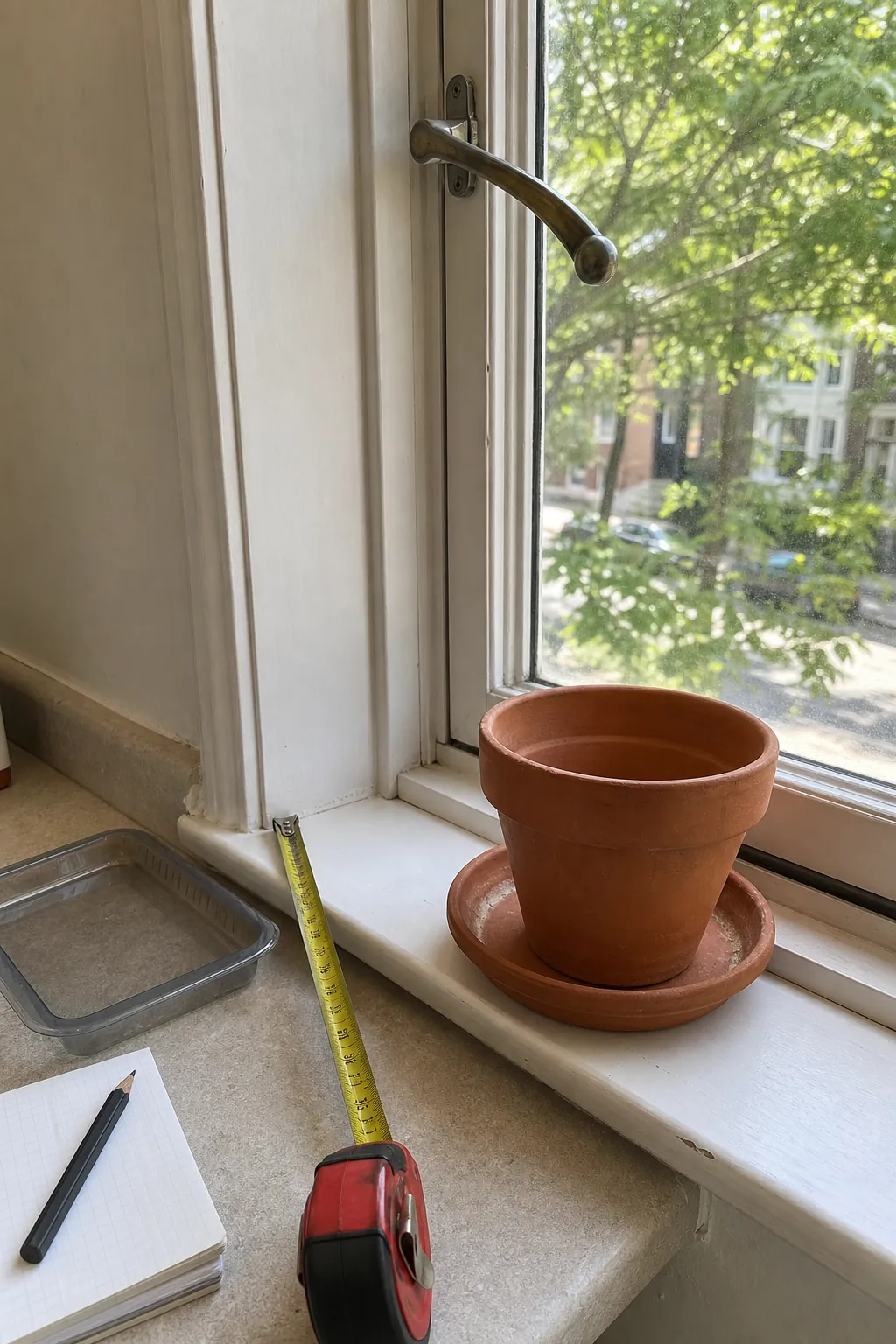
If the ledge is too narrow, do not balance tiny containers on it. Use a freestanding shelf pulled close to the window or a properly supported sill extender with a waterproof top. Keep radiators, forced-air vents, and frequently used blinds in the plan. Clearance is part of the garden.
Match herbs to both light and temperature
South-facing glass often provides the strongest indoor light, while east light can work for chives, cilantro, parsley, and other herbs that tolerate a gentler exposure. Rosemary, thyme, and bay want a bright position. Basil likes strong light too, but it is sensitive to cold; a winter sill that drops near 50°F can damage it even when daytime sun looks excellent.
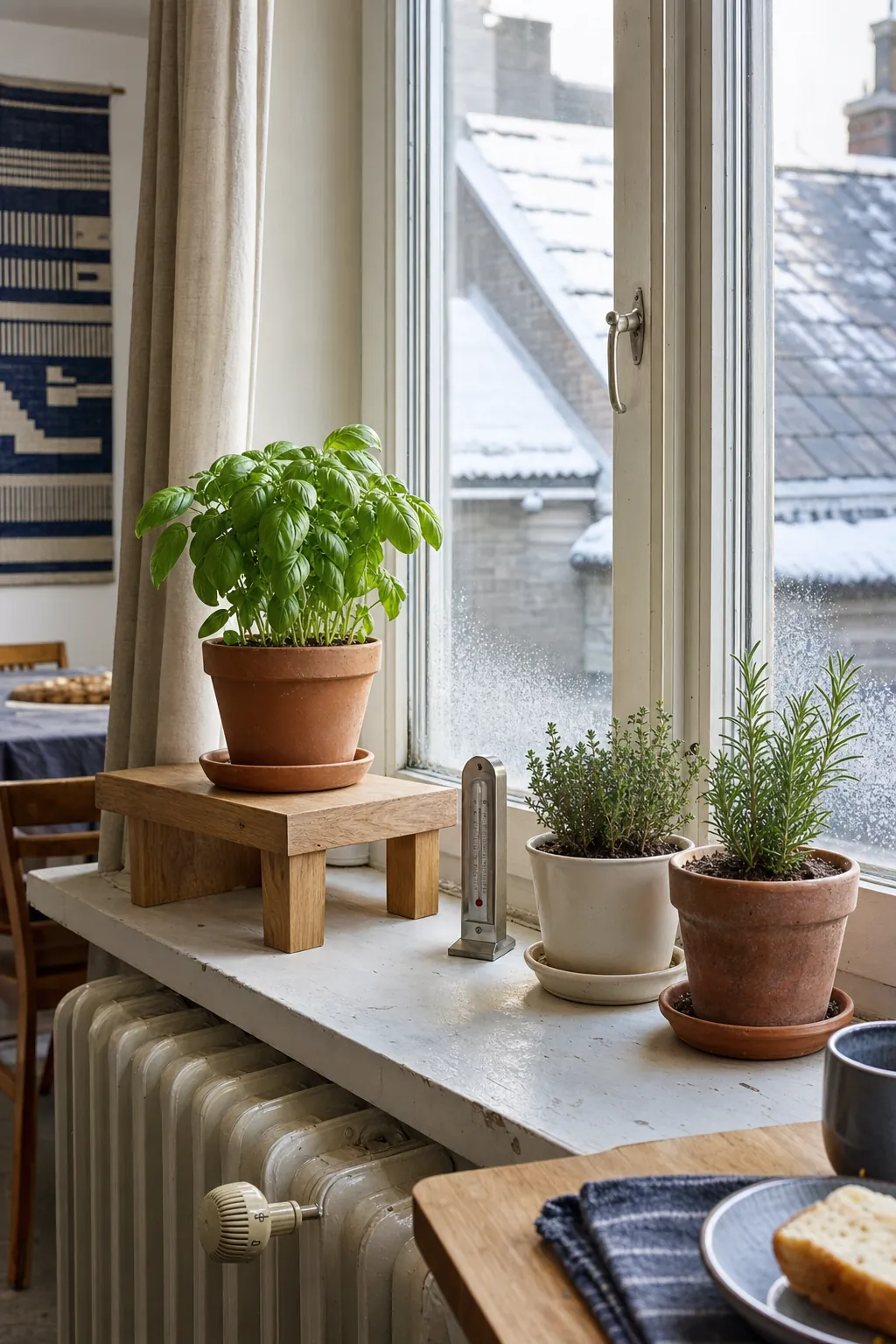
Use a basic min-max thermometer for several nights if the window feels cold. Move tender herbs a few inches inward after sunset while keeping them in the brightest daytime position. Do not let leaves press against freezing glass, and avoid blasting them with hot dry air from a vent. A small grow light is more reliable than repeatedly relocating light-starved plants.
Protect the sill with a real drainage system
Plant in pots with holes and use a fitted saucer or one continuous waterproof tray with a raised lip. Water each pot until a little drains, allow it to finish, then remove the excess. Never leave terracotta sitting in water on painted wood. A thin cork pad may stop scratches, but it is not a waterproof barrier.
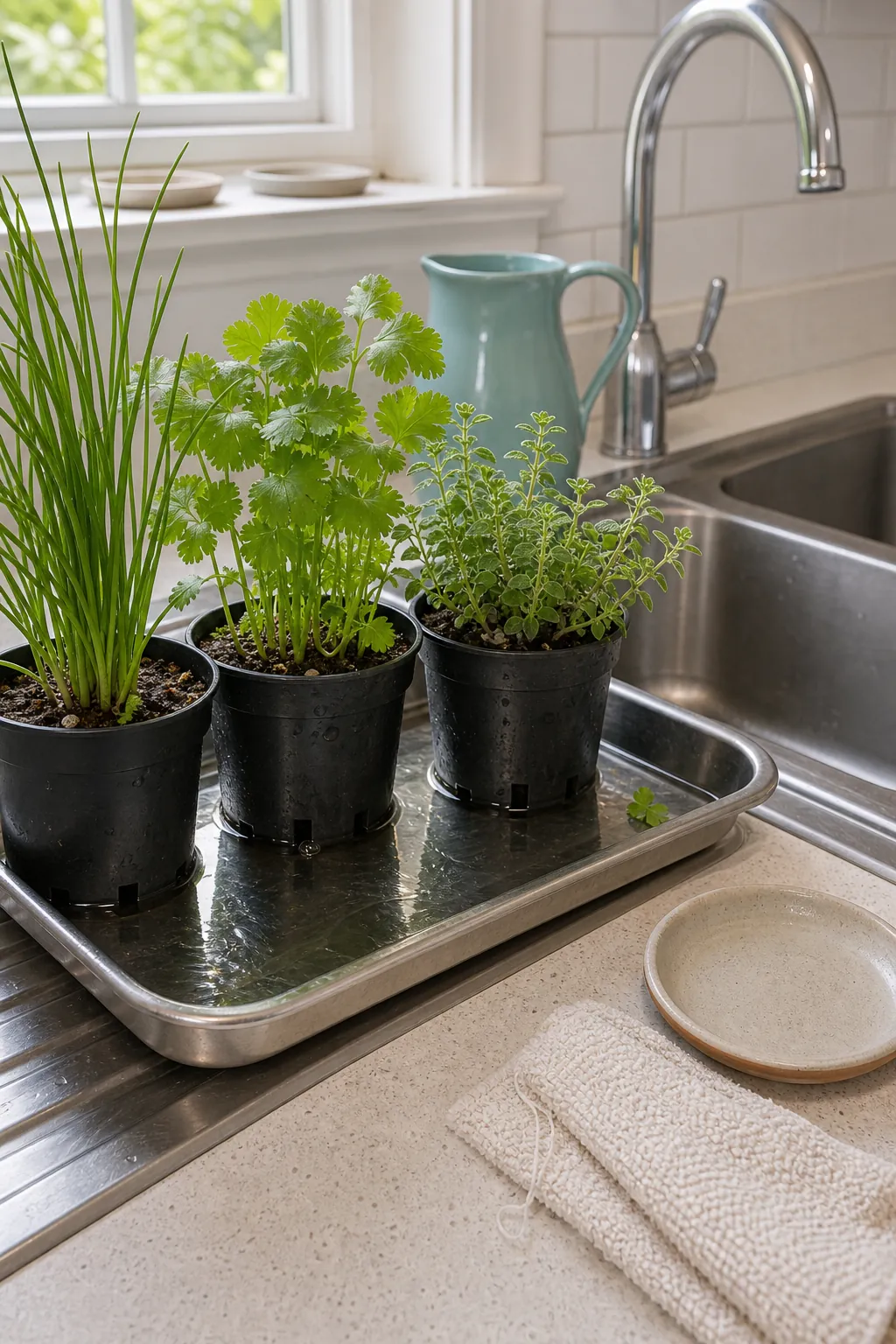
For a window sill herb garden above a sink, convenience does not replace drainage. Splashing foliage every day can keep the surface wet without properly soaking the root ball. Water the potting mix, keep leaves reasonably dry, and wipe condensation or spilled water before it reaches seams in the trim.
Arrange for even growth instead of a perfect lineup
Plants naturally lean toward the strongest light. Rotate each pot a quarter turn every few days, and move taller herbs so they do not shade shorter neighbors. Stagger heights with stable risers, not stacks of plates or upside-down bowls. Keep enough gap to inspect the soil and lift each container without brushing every leaf.
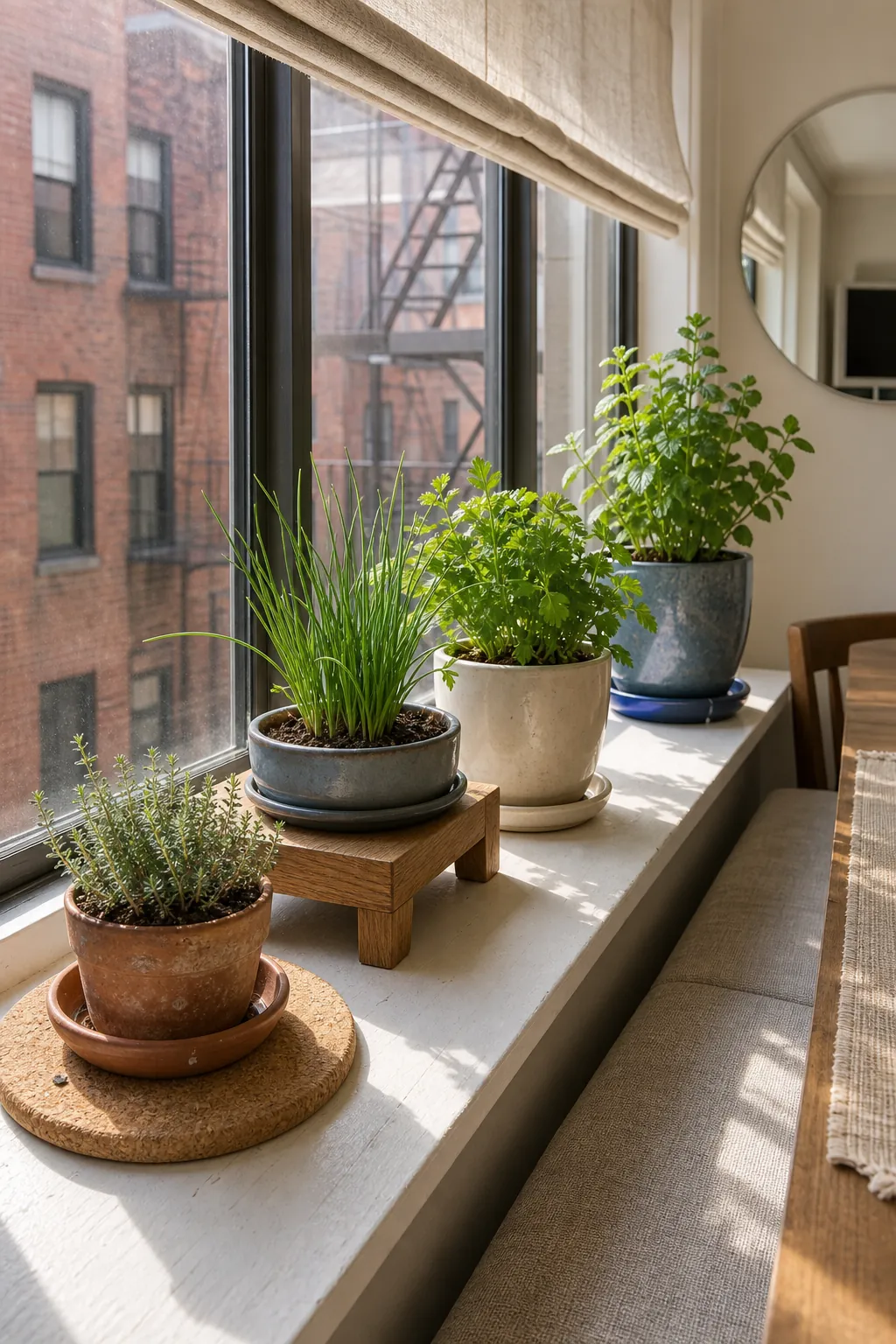
Separate pots are especially useful for apartment herb gardens because basil, mint, rosemary, and thyme do not dry at the same rate. Check the mix below the surface and learn the weight of a recently watered pot. A fixed Sunday watering schedule ignores weather, plant size, pot material, and season.
Build a seasonal windowsill routine
In spring and summer, stronger light and active growth usually mean more frequent checks, regular pinching, and occasional feeding at a modest rate. In winter, growth slows, the glass becomes colder, and wet mix remains wet longer. Reduce watering based on actual drying and harvest lightly when the plant is not replacing foliage quickly.
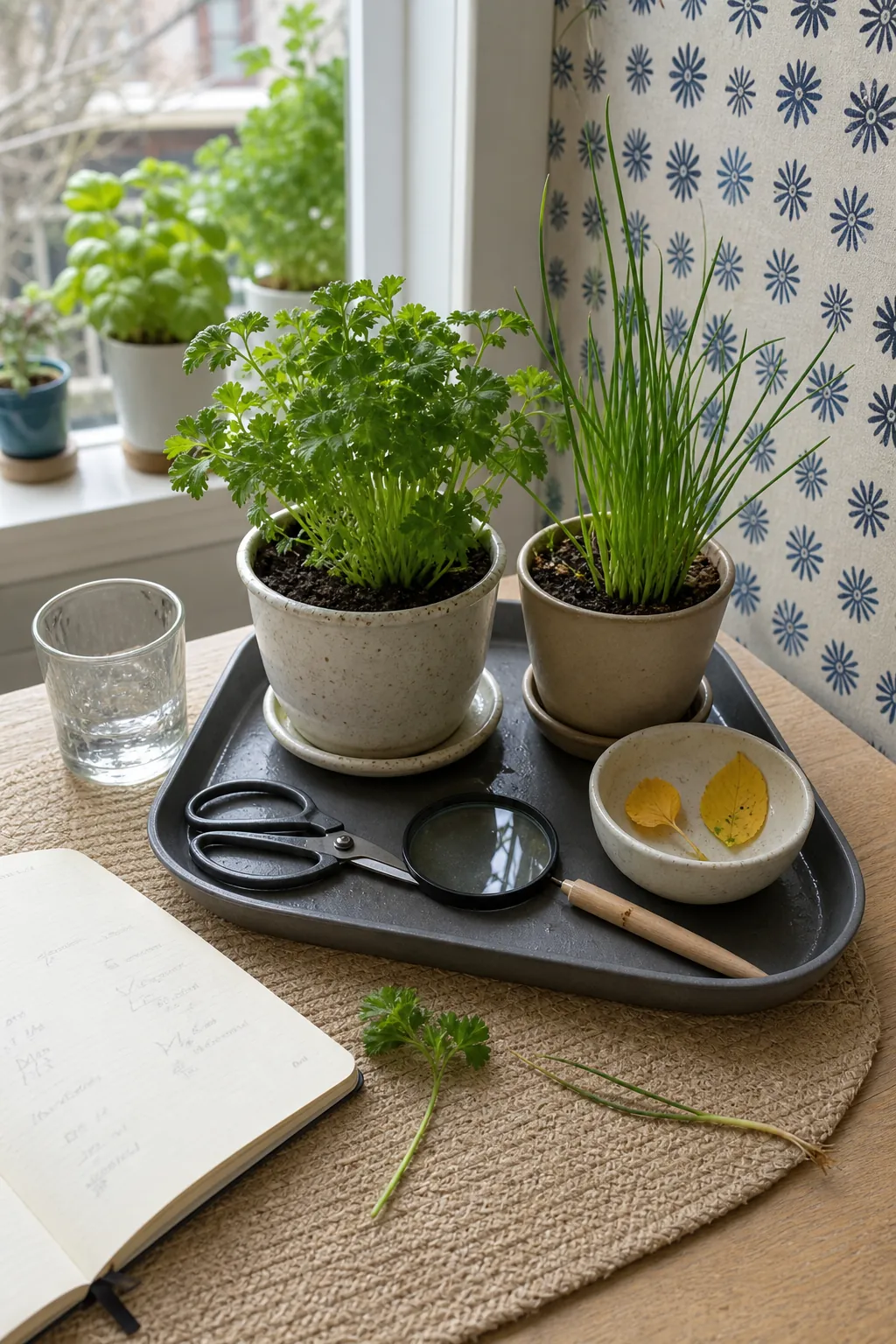
Rotate pots, remove dead leaves, wipe the sill, and look under foliage during one short weekly inspection. Keep notes only when something changes: first sign of leaning, how long a pot stayed wet, or when growth slowed. This creates a useful record without turning three herb pots into a complicated project.
Make the garden safe from pets and pests
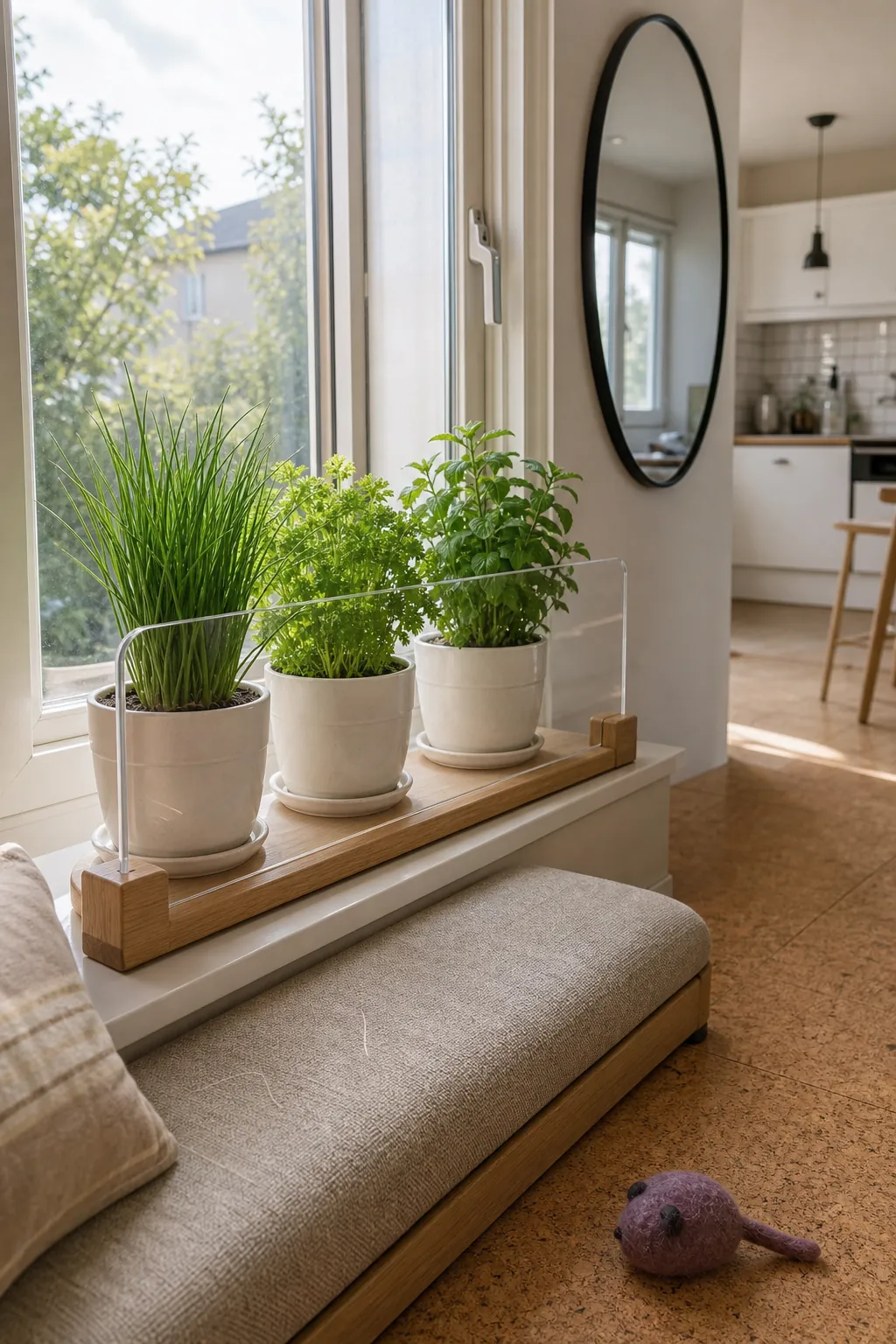
Choose herbs appropriate for your household and verify plant safety if pets can reach the sill. Use a stable freestanding riser, a clear guard that does not restrict airflow, or a nearby shelf that preserves light while preventing a curious cat from pushing containers. Avoid loose hanging cords and lightweight pots near the edge.
Inspect new plants before they join the window herb garden. Check leaf undersides and stems for aphids, mites, scale, or sticky residue, and isolate suspicious plants. Fungus gnats often point to persistently wet mix; correcting watering and drainage tackles the environment that supports them. Wash culinary herbs before use and follow any product label exactly.
Let the first month decide what comes next
Begin with two or three herbs that fit the light, temperature, and width you measured. A healthy chive pot and compact parsley plant on an east sill can be a better result than forcing rosemary or basil into conditions they dislike.
After four weeks, expand only if the existing plants are producing new growth and the window remains easy to use. A successful windowsill herb garden leaves room for sunlight, drainage, maintenance, and the life already happening around the window.